
This is the way.
Onimusha has a very interesting video game history. What started out as a Resident Evil spin-off for the PS1 eventually found its footing on the PS2 as something else entirely. Sure, it felt like Resident Evil with swords, but it evolved beyond that and became something truly special. Each entry felt familiar, but tried to push the series forward.
It’s ridiculous to imagine that it has been twenty years since the last mainline entry. Since that time, we’ve had the entire run of the Souls series and its Soulslike cousins, both Ghost of Tsushima games, and the entire Nioh trilogy. In that absence, the industry has drastically evolved, and if Capcom is wanting to renew this series for a modern audience, it will need to evolve with it. So, does Way of the Sword push the series forward? Yeah it does, and then some.
Given that Nioh 3 released this past February, it was a title that I always felt shared in what I imagined an open world Onimusha entry would feel like. Both share in much of the same aesthetic, and even take part in their own twisted version of Kyoto, Japan. Hell, both even feature the Kiyomizu-dera Temple Stage, a prominent fixture of Kyoto that was built in 1633, all surprisingly without a single nail. Still, regardless of its setting, the games share in their fondness of grotesque creatures and hellish environments, creating their own version of alternative history in the process.
While Nioh 3 was on my mind through much of the game’s first few hours, Onimusha: Way of the Sword finally clicked with me once I started to really feel the difference in its combat system and how the game sets up their encounters through its sword play. That said, Onimusha also has a better sense of its characters and supporting cast, and a more compelling lead. It also has a vastly more coherent storyline.
If I had to pick a favorite out of the two, Nioh 3’s co-op shenanigans just provided me far too much entertainment, not to mention the vastness of its world and the near limitless buildcrafting that you have available. However, if Nioh 3 was strictly singleplayer, then Way of the Sword is the vastly better game. Regardless, both games are damn impressive, and any one of them could be my favorite of the two depending which way the wind blows.
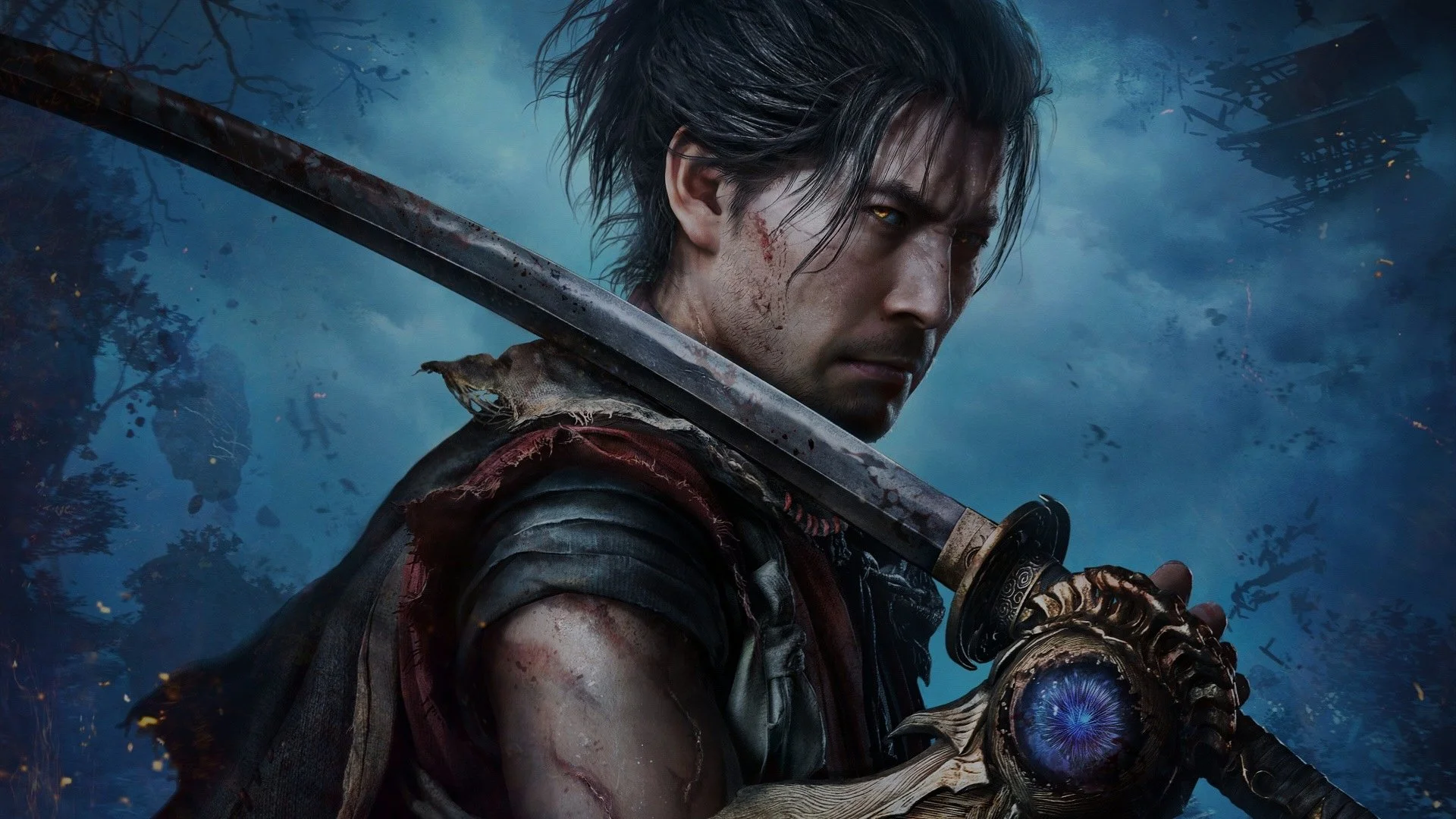
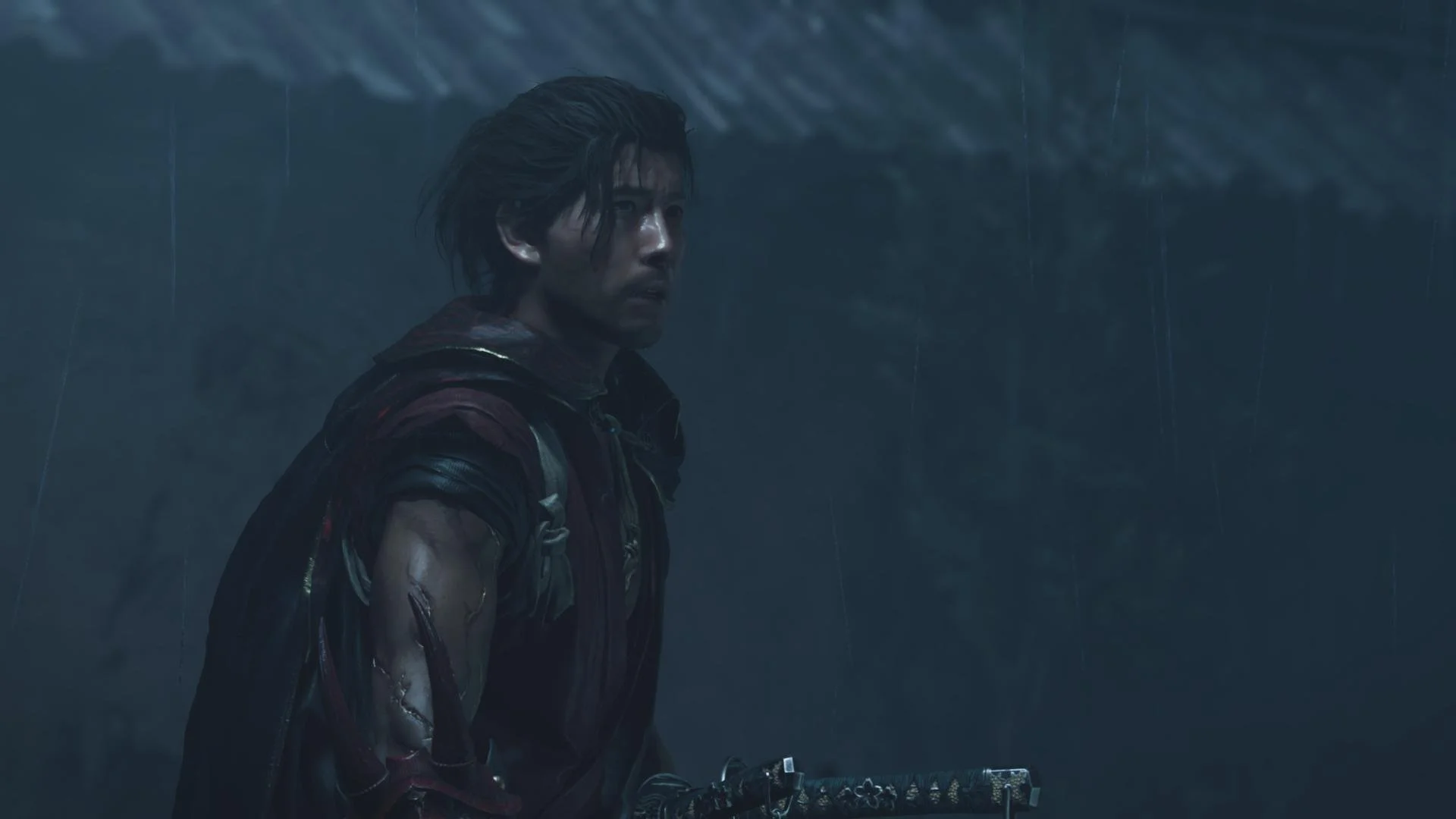
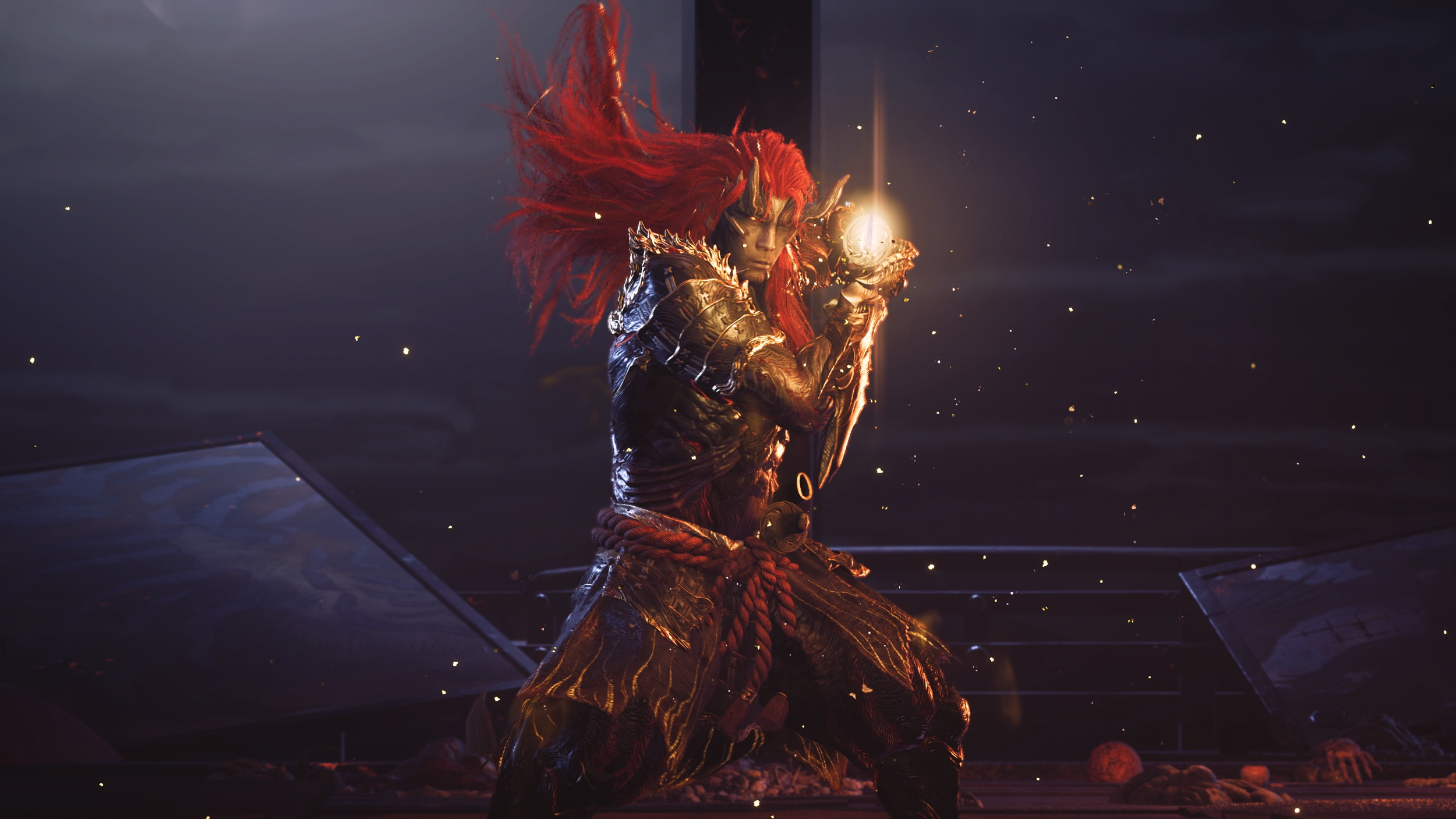
Way of the Sword is frankly the perfect title for what this latest Onimusha provides. Our main protagonist, Miyamoto Musashi, is based on the real-life swordsman of the same name, a man renowned for his undefeated streak, a trait that is carried through here with Musashi never tasting defeat. Musashi is a firm believer in the art of swordplay being a testament to his strength as a warrior. So, when Musashi has the gauntlet forced upon him, augmenting his strength, he actively pushes against its power, wanting to be rid of it. While other avenues of narrative fill this story, Musashi’s acceptance of the gauntlet, and the power it provides him, is one of many arcs he will overcome.
Musashi’s character is one I wasn’t initially on board with, but that is largely due to Capcom injecting a bit of odd humor in the game’s opening moments that felt a tad weird at first. It does fit his cocky attitude and works as an eventual consequence for his actions, but to say it caught me off guard is an understatement. His reluctance to accept the power of the gauntlet is one of the more interesting parts of his character, especially as previous protagonists welcomed the power to defeat the Genma.
It’s worth pointing out that oddly enough, this isn’t the first time Miyamoto Musashi has been the protagonist of an Onimusha story. The 2023 Netflix Onimusha series featured the prominent swordsman, but the two versions of this man are not even remotely connected. The fact that the two most recent iterations of Onimusha use the same character is odd enough, but they thankfully have entirely different personalities and are not really comparable in the slightest. If anything, Capcom's version has far more depth and a significantly better performance behind the voice.
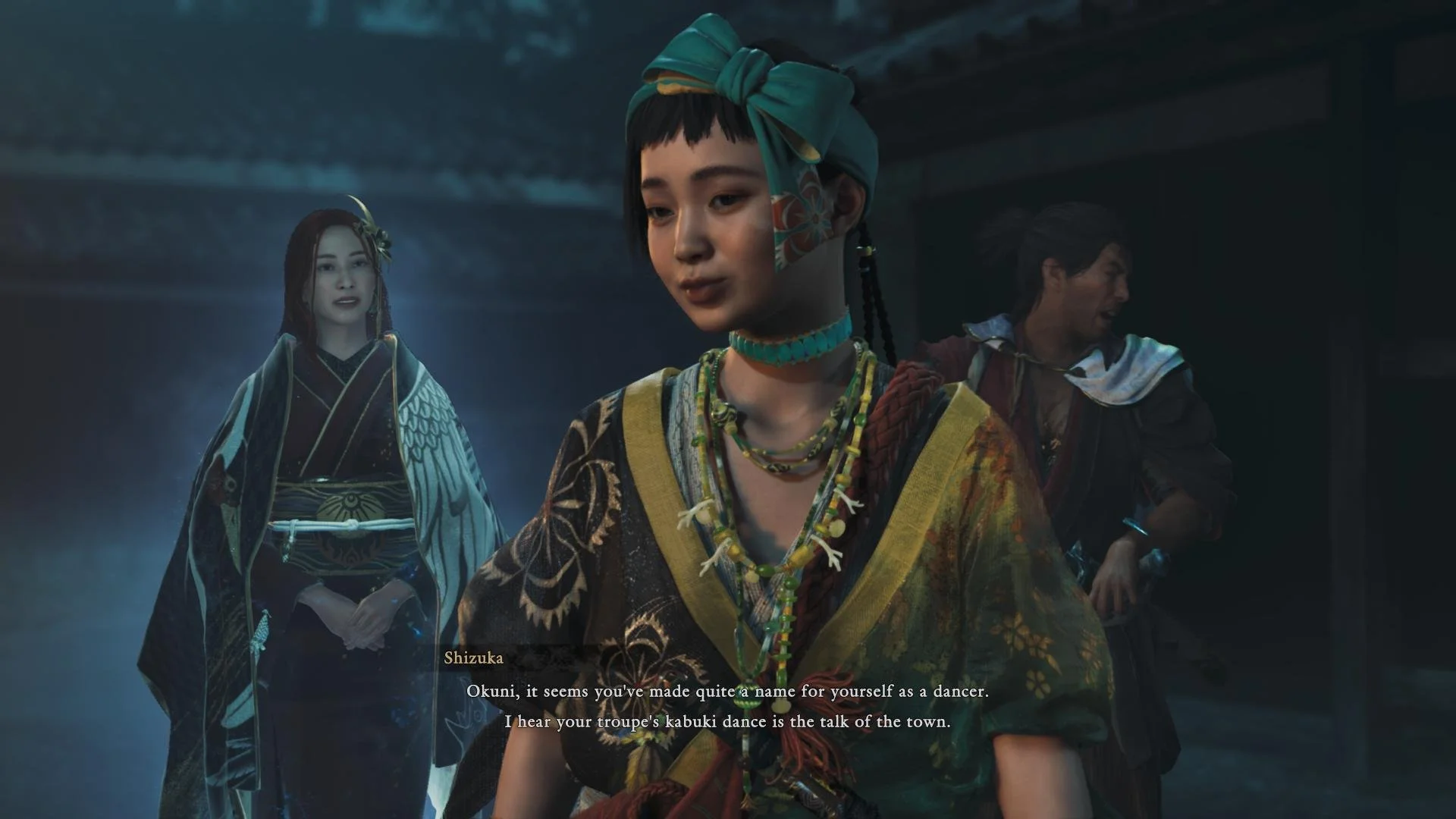
Way of the Sword also has a small assortment of supporting characters that play rather well alongside Musashi. Okuni, a young dancer who is fearless against the Genma, has playful little sister energy toward her relationship with Musashi, and it causes some fun moments to arise when the two are paired together. Takamura, a welcomed warrior and subsequent trainer to Musashi, acts as a mentor to the swordsman, and many of his words strike a chord with what Musashi needs to hear as a reluctant hero, especially one who is caught up in a demonic powerplay over Kyoto.
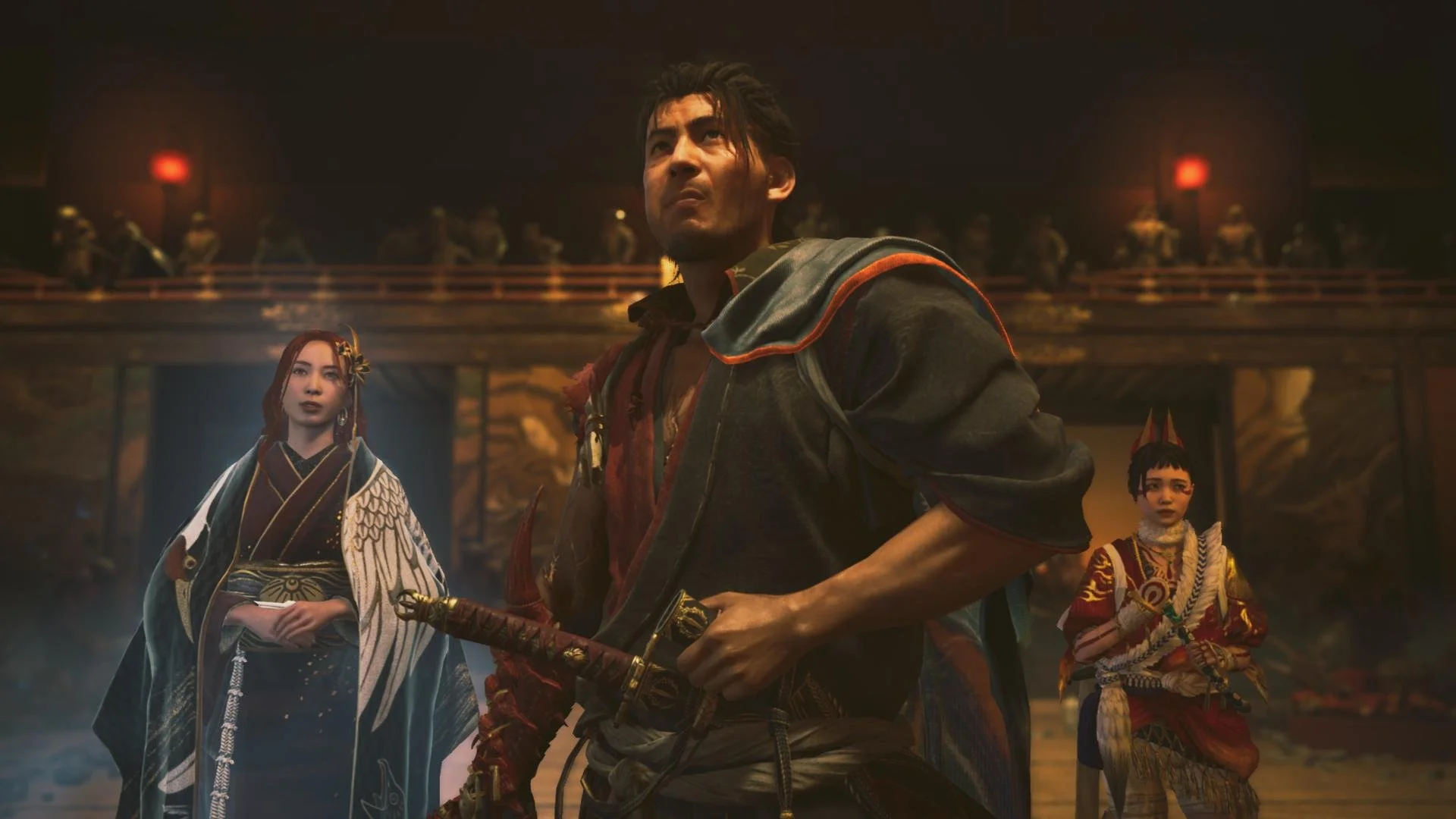
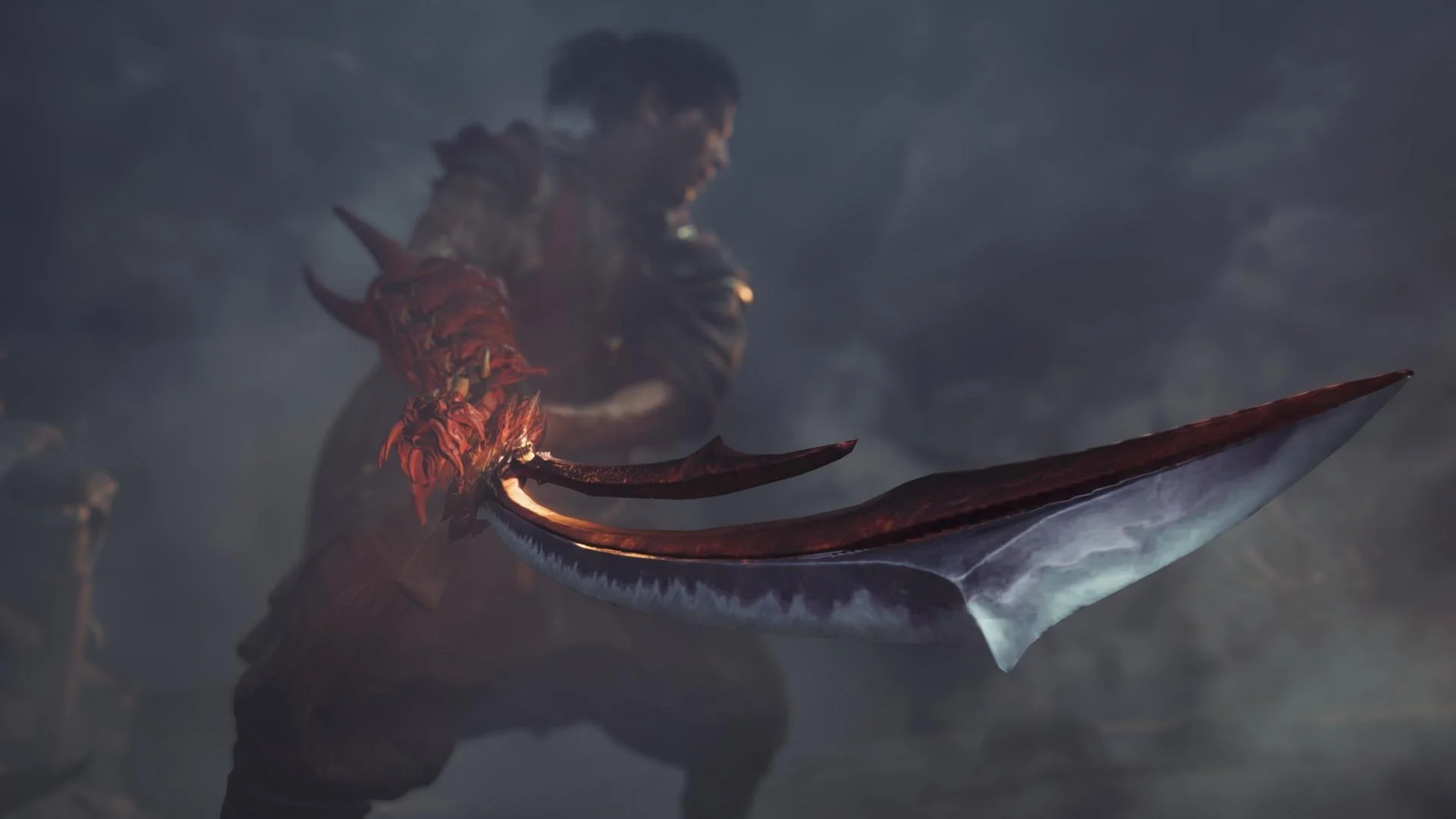
Musashi’s gauntlet is also a supporting character in itself, but not in the same annoying way as something like Forspoken or Shadows of the Damned. Here, an Oni spirit named Shizuka is trapped in the gauntlet against her will, something she technically shares with Musashi and his current situation. She can manifest her form outside the gauntlet and connect and converse with Musashi and his allies. She also serves as a way to guide Musashi through this ordeal, given her connection to the Oni world. And, for as much as we learn about Musashi, Shizuka shares in being a big part of the narrative as well, and thankfully becomes just as fleshed out as him.
And as connected as Shizuka is to the threats Musashi will face, given her past, he too has a deep connection to what awaits him. Ganryu Sasaki, is a rival that has constantly challenged Musashi to a series of duels, and eventually wields his own gauntlet, even though he pursues a darker path due to his lack of honor. The pair continue their need to battle throughout the game in different circumstances that test their abilities. Ganryu can initially be a bit one dimensional, but does start to see some depth added to his chaotic nature.
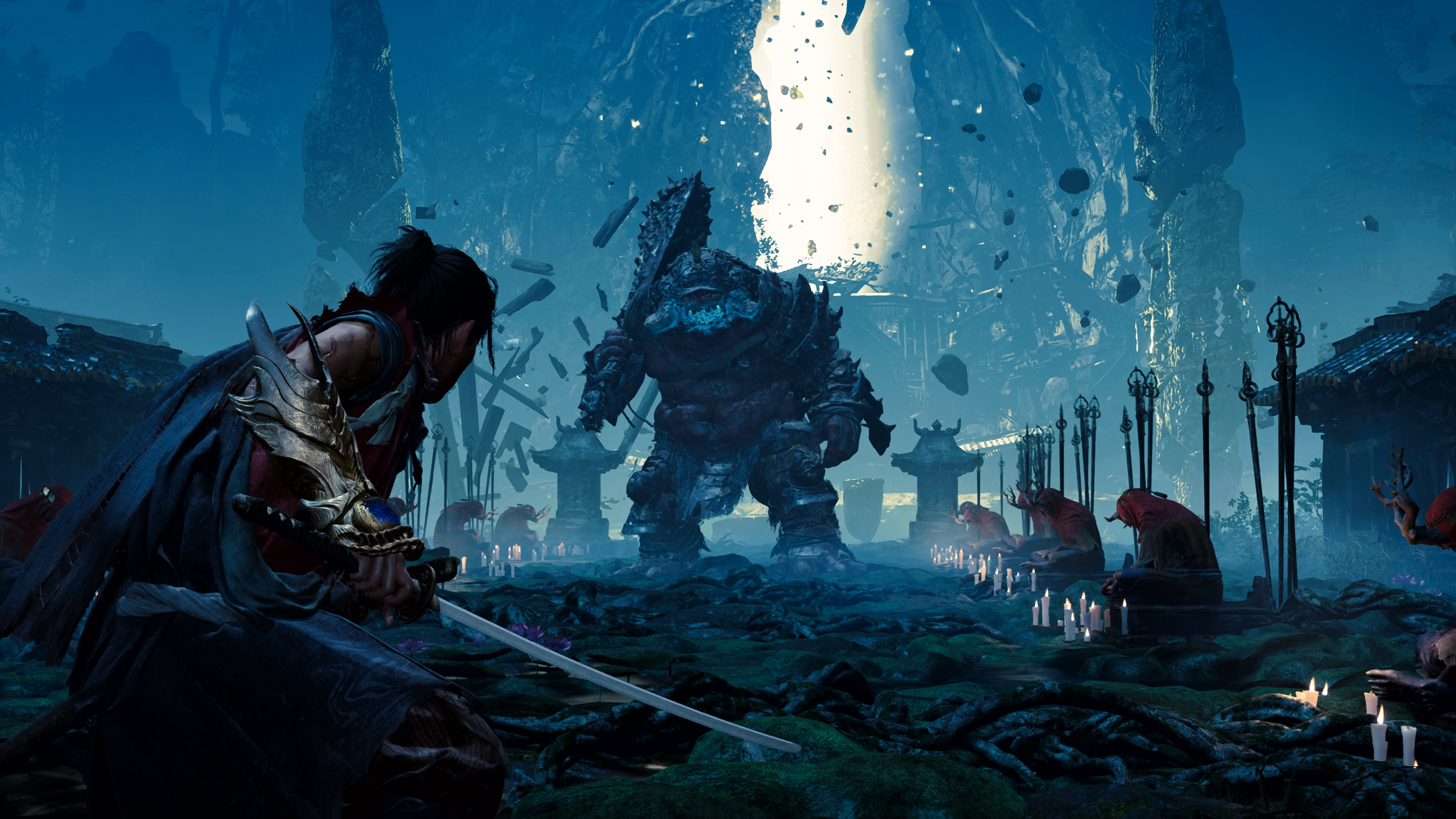
What I really enjoyed about both Musashi and Ganryu is that they were real-life rivals, even if some of the stories built around the rivalry were dramatized a bit in novels that would recount their past. Still, it’s rare to see an actual real-life rivalry replicated in a game, despite the vast differences of how this rivalry compares to the one set in Japan’s history.
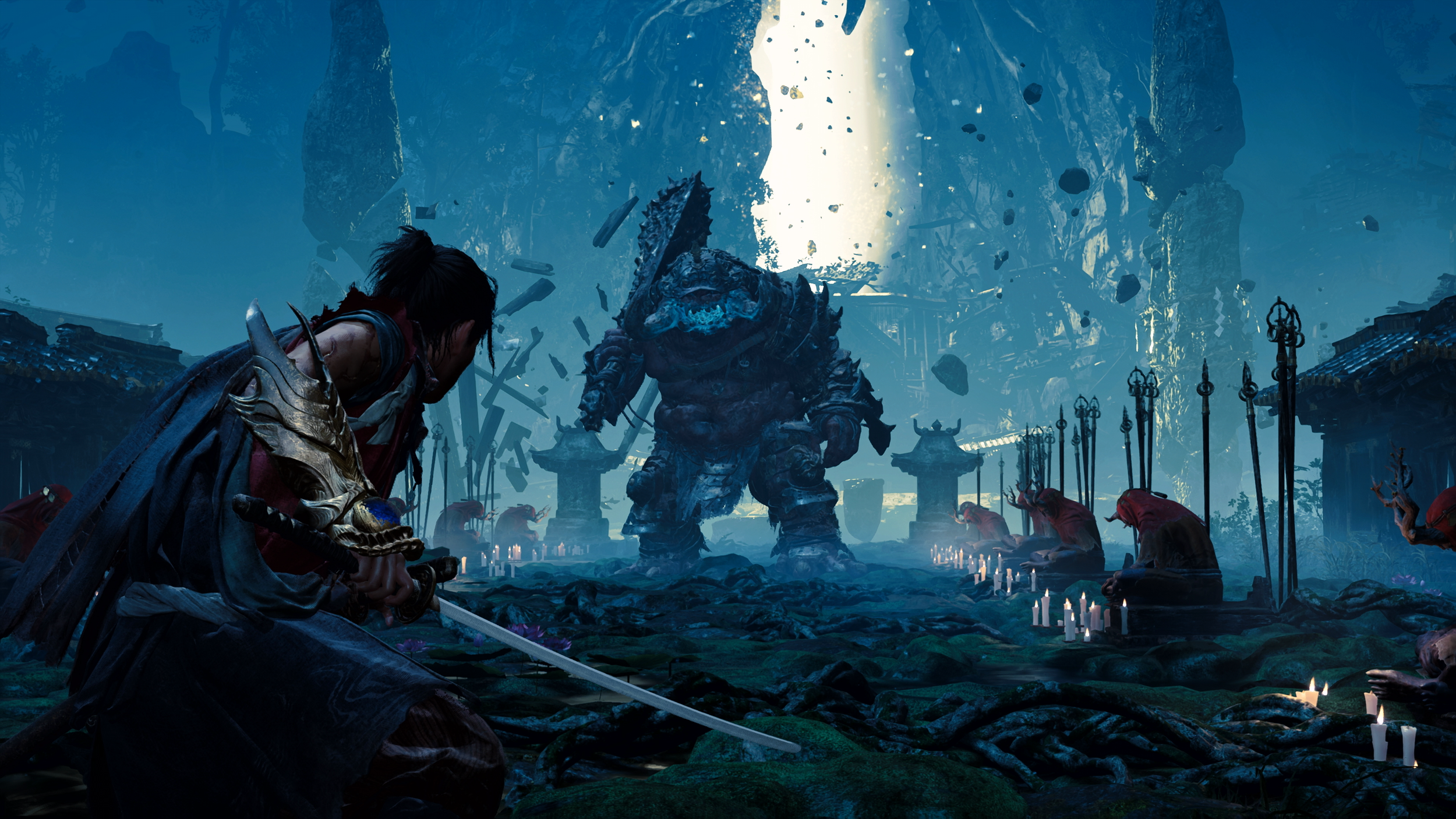
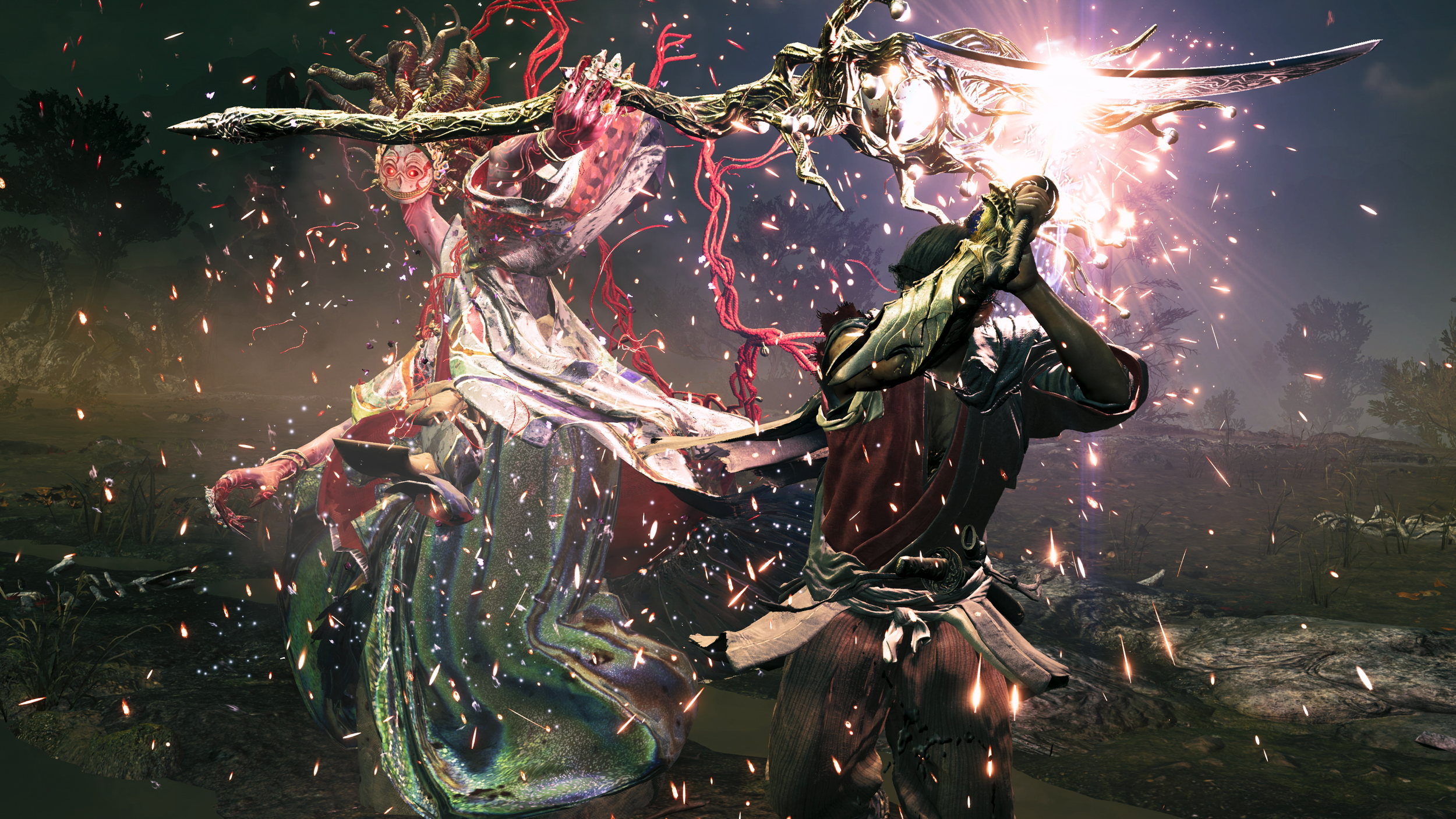
While I am unclear if other villains presented here are based on historical figures or rooted in Japanese history, apart from two that I’ll leave for you to discover, the bosses here are a wild time and incredibly fun, both in their designs and the overall gameplay of their encounters. The central antagonists to the story are handled fairly well, especially Dokyo, who has deeper connections to the Genma that make her wildly unpredictable.
There is one fight that I enjoyed between a pair of warrior brothers, who you’ll initially fight individually. The fight I loved the most had one teleporting via a lightning storm. If you deflect it in time, he dives onto you and is left staggered, losing his footing, and falls down on his face. In fact, most of the bosses have extremely fun deflection animations that add some personality to their bouts.
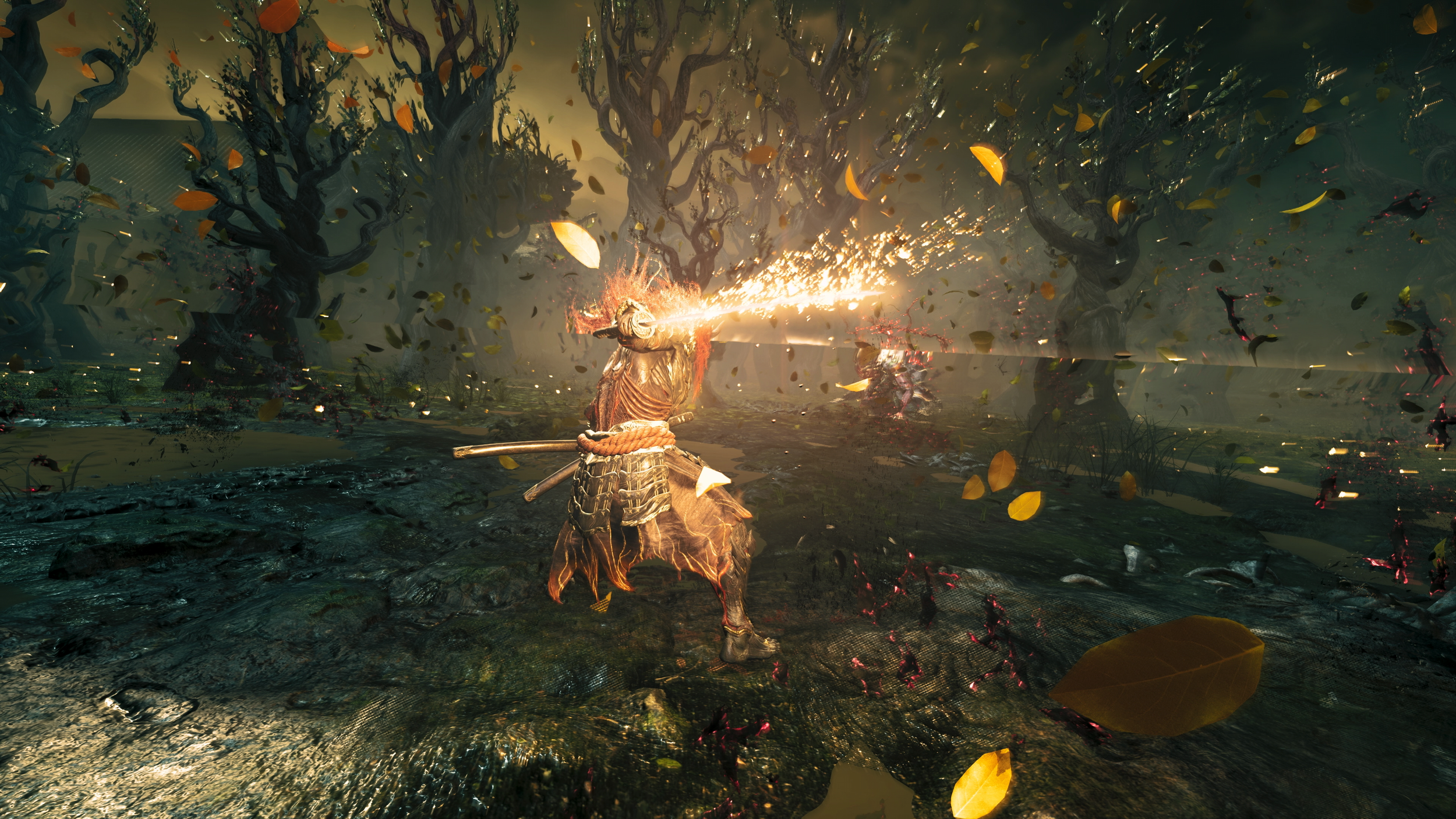
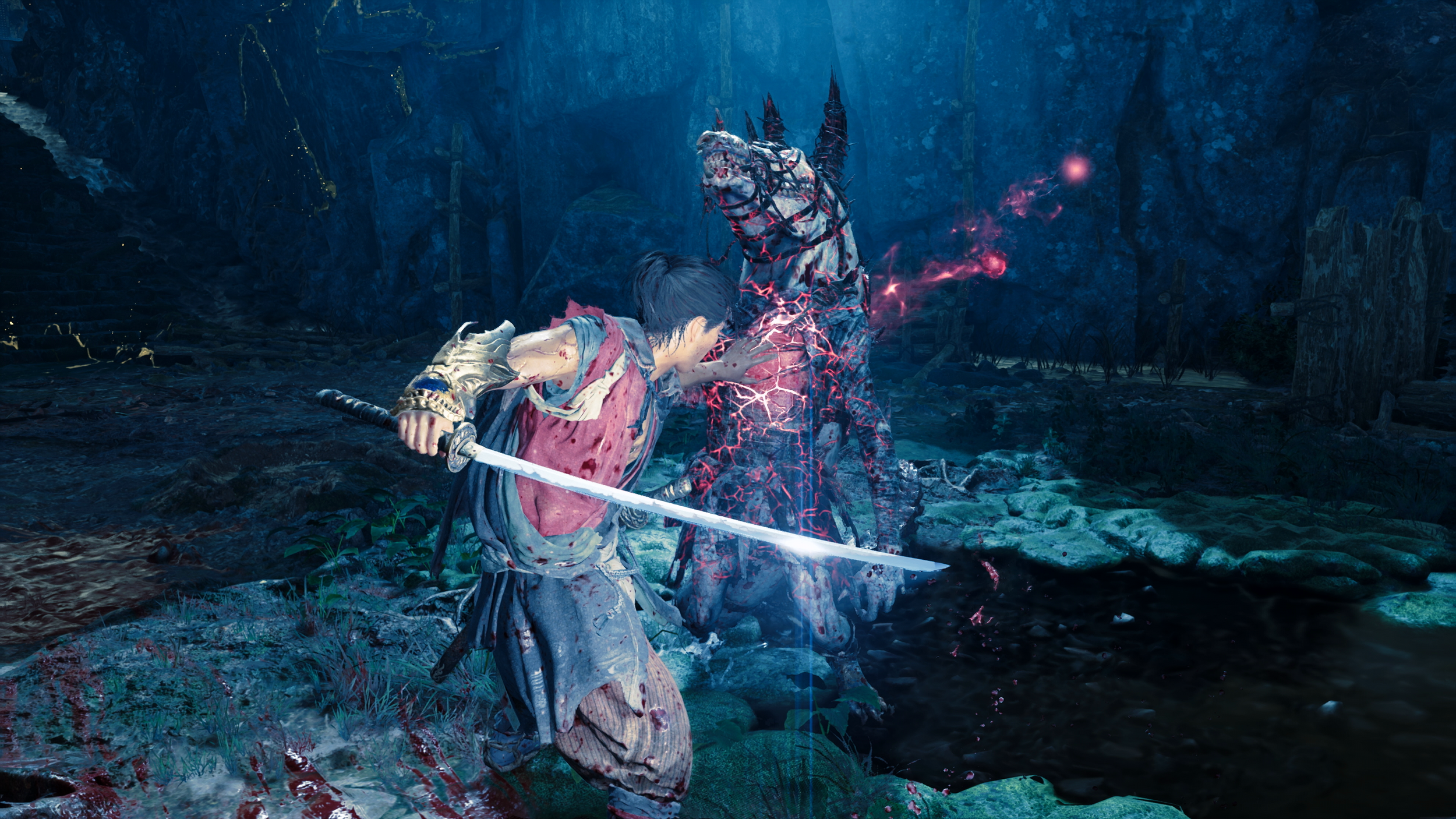
The general fodder of foes are what you’ll typically expect from an Onimusha title. Some are general attackers, archers, floating blobs that are nothing but heads and wings, to some really unique rolling creatures that are almost lizard-like in nature. The basic foes are mainly there to overwhelm you and give you an excuse for combat, but you’ll often encounter stronger enemies who actively fight back and have a greater degree of defense. These require you to really dig deep into the combat system and work out whether a parry or deflect is needed to really counter them.
While Way of the Sword still maintains the classic Onimusha feel, many were under the impression that Dark Souls would influence how combat functions here. However, that really isn’t the case. Sure, bosses can have that sort of feel, but I never really felt the Souls inspiration here. There are two general difficulties here with Story and Action, each providing their own means to make the game easier or harder. Story offers up button prompts when enemies attack, allowing you to know how to counter them easily while normal has you paying attention to their movements to gauge what they are planning, keeping you on your toes.
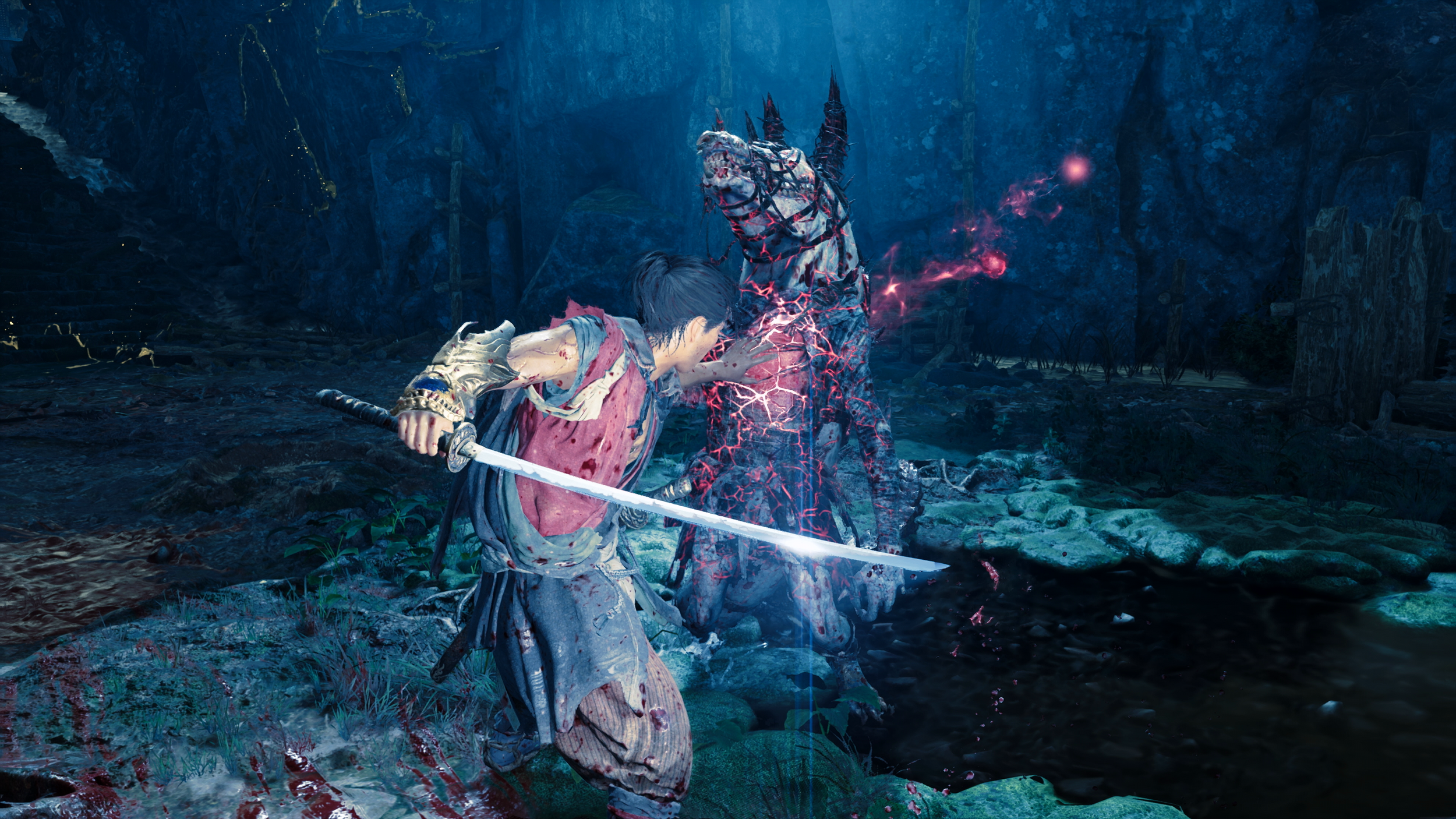
Now, the combat system is very similar to what we’ve had in previous games, but does evolve here a bit due to an overall better camera and a full 3D degree of movement. Issen attacks are back, as are blocks and parries. Issen attacks are harder to pull off as you must attack at the direct moment you are struck. This is followed up with a very cinematic strike that does considerable damage. Blocks will obviously do what they are designed to do, but deflecting is easy to pull off as you hold block and then tap the attack button when struck. This increases the damage to their stamina gauge, making it easy to pull off a critical strike and cut into their core health. A parry will leave them open for an attack, but is a bit harder to pull off than a deflect.
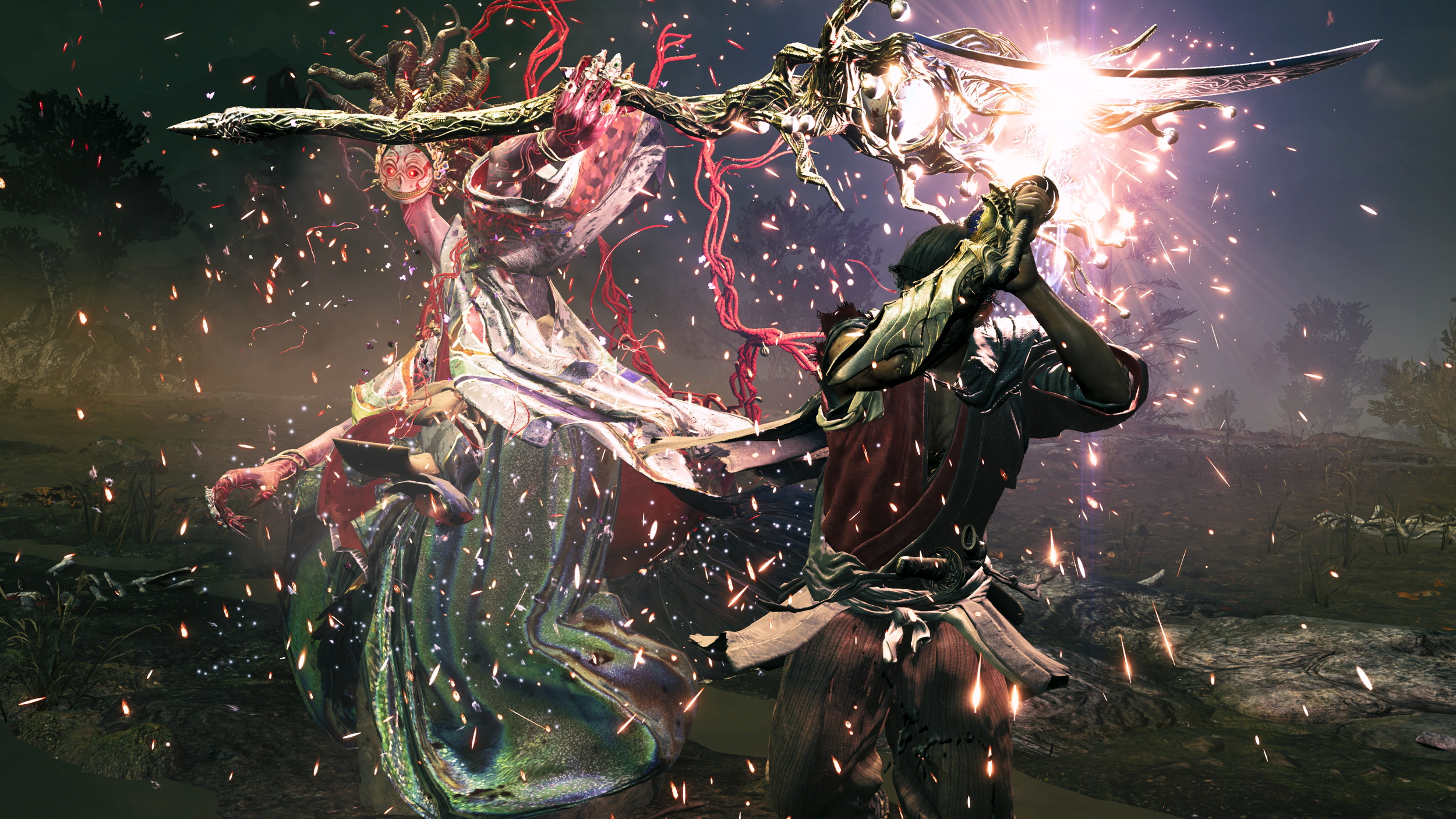
I found a good balance between relying on blocking, or parrying, but deflect was my go-to nearly every battle, given it really impacted their stamina meter and left them open for a critical strike finisher. I also love the deflect animations and the flash and spectacle of their impacts. That, and deflect is very easy to pull off once you get the timing down. Parrying can be equally as deadly, but I often failed more than I succeeded when trying to parry, given I was more inclined to hold the button down than tap it due to the panic that can set in when attacks are just coming out of the woodwork.
Apart from evading and using your Oni bow, you can also use the environment as a weapon. You can run carts into enemies, pull up a plank of wood as a shield, and even kick it into them. Additional attacks have you chaining together finishers to weakened and staggered enemies, or locking blades and then slamming down the attack button to win the duel. These all add to giving the combat variety amongst the abundance of blocking, parrying, or deflecting attacks.
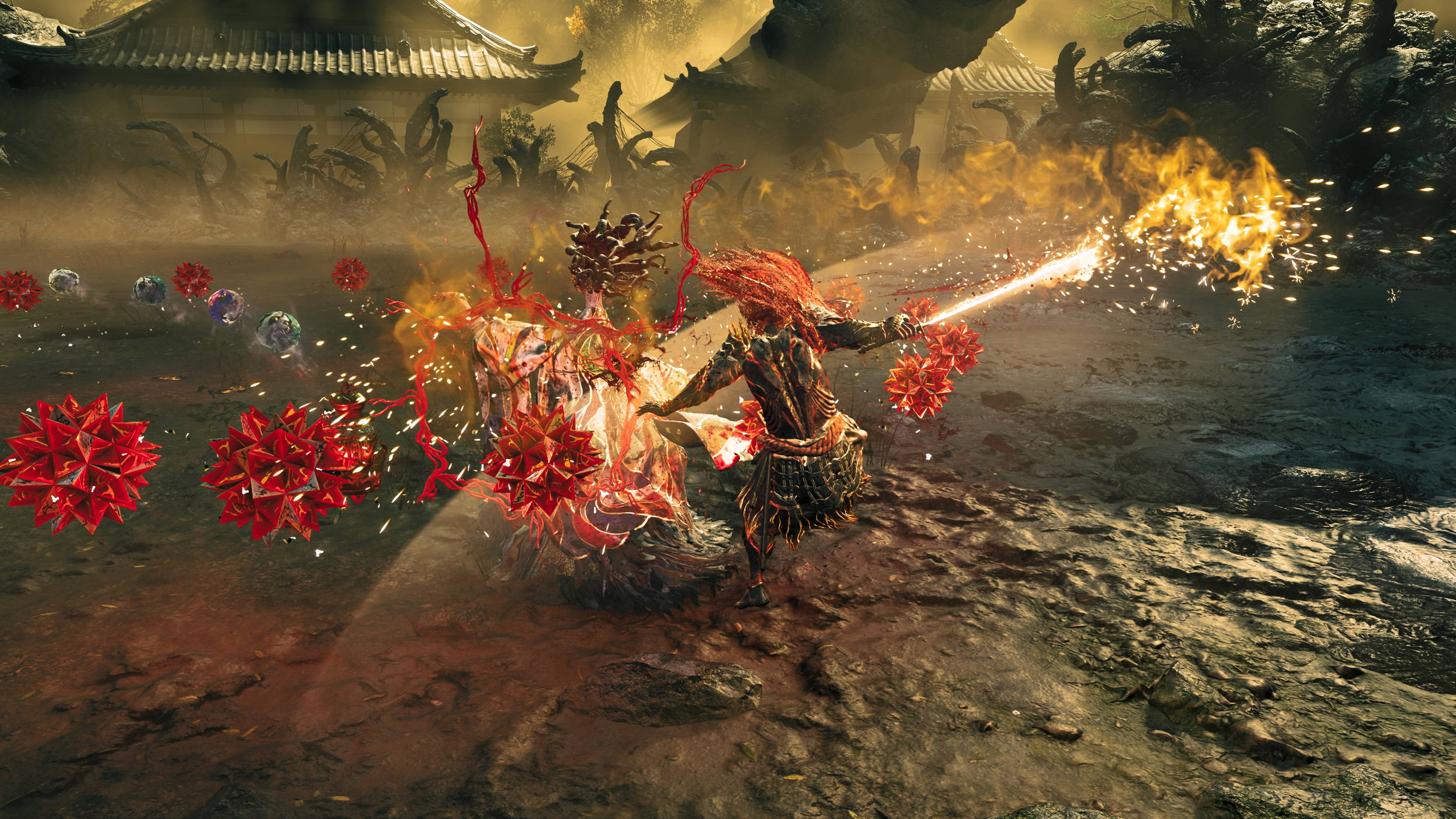
However, Armaments are likely the part of combat that will vary depending on the player. These are special Oni weapons that you’ll discover that can radically affect how you deal with crowd control or bosses. While I won’t detail all of them, I will point out a few standouts. The Two Celestials are a pair of dual blades that attack enemies and unleash yellow healing souls. It’s a great weapon to use when you are low on health, and building up your meter can often be pretty easy as you have attacks, such as holding down your attack button, that generate those blue souls for the meter. Granted, you do have to unlock that skill first. This single armament can keep you alive in the most crucial moments.
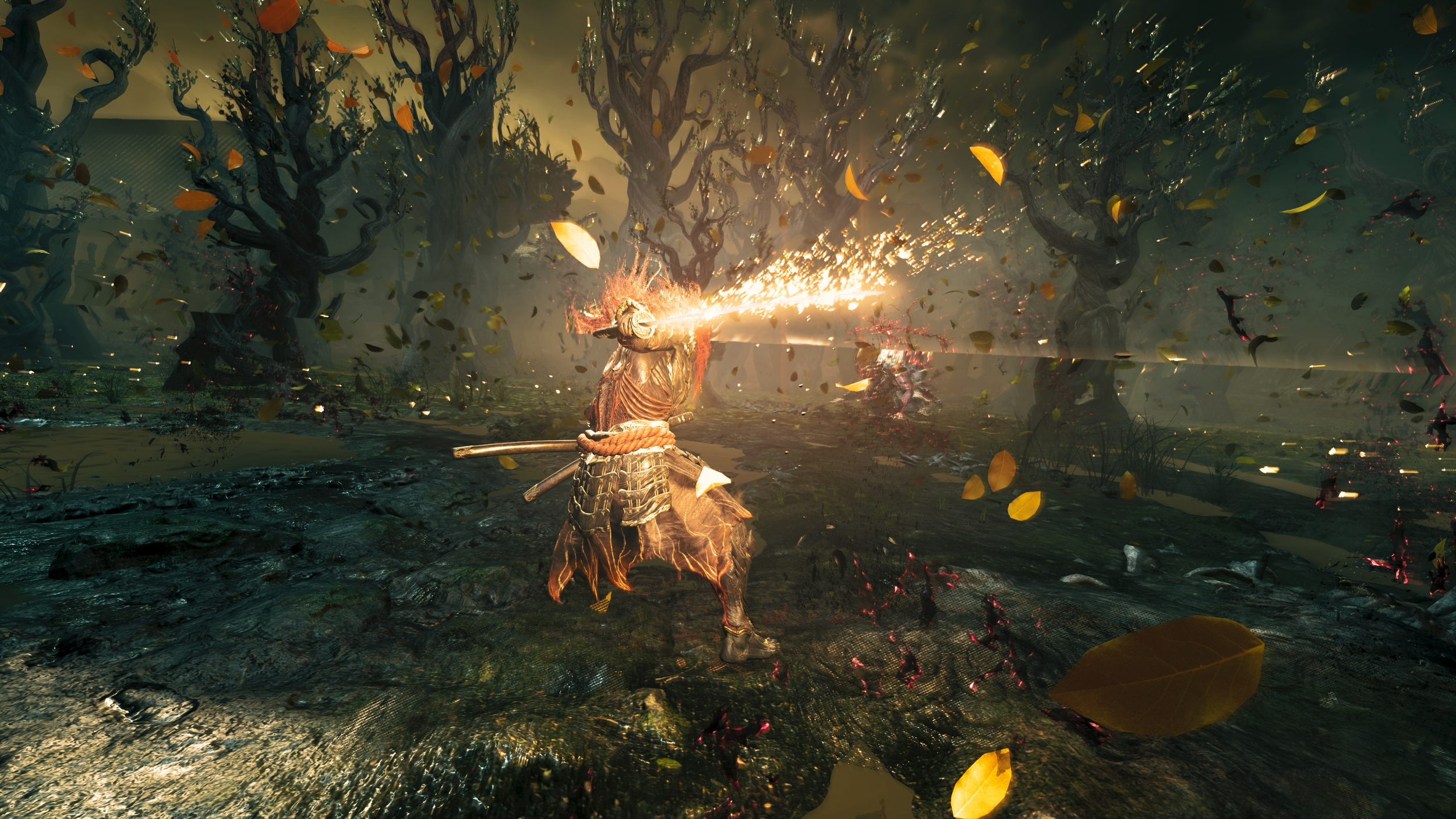
The Earth Shakers are a pair of hammers that almost destroy the very fabric of space, cracking the air around you as you break down an enemy's defense with a well-timed hit. The Wind Whippers; however, stayed with me during almost my entire playthrough. The reason? Well, this whirlwind attack won’t miss, regardless where your foe is, and if it reaches a flame, the whirlwind becomes an inferno. This attack can leave bosses open for some crucial attacks as you attempt to gather the various souls that are floating around you.
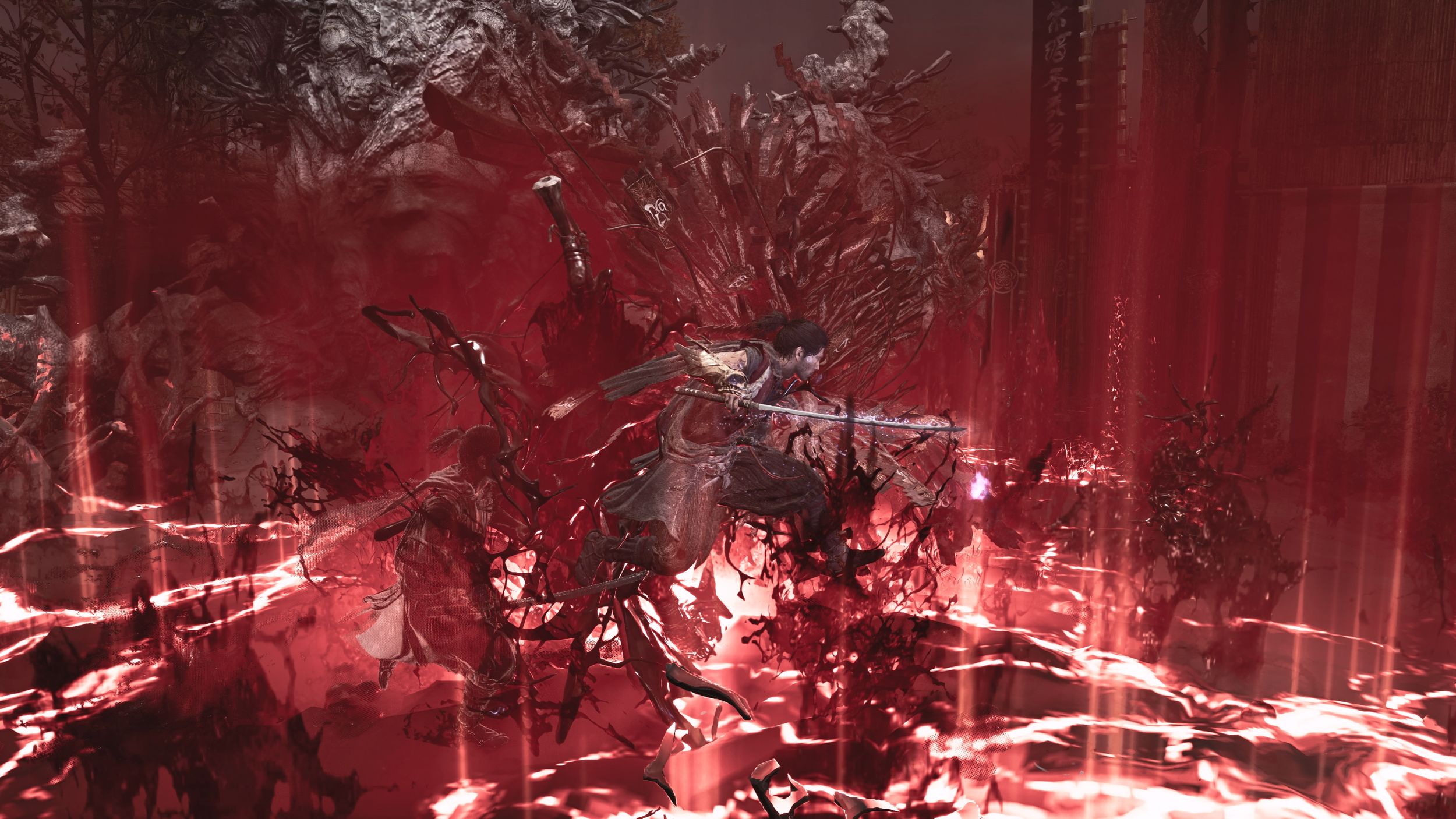
All these systems at play really work and combat feels fresh for the series yet immediately familiar for those who have wanted to see the series come back. There is a nice fluidity to the animations, and the armaments, being very different from one another, are a nice touch, and gives Musashi a sort of escape plan to back up, observe, and focus on what is in front of you. Combat feels impactful and crunchy, with not a single strike, ability, or attack, that feels floaty or weightless.
Lastly, Musashi has a Oni-vision mechanic where you see things not visible by the human eye. From special chests, to the location of certain collectibles, it comes in handy when certain elements are invisible, such as special Oni objects that can grant rewards. Thankfully, the game requires this very sparingly, so you are not always spamming its use and becoming too distracted. While it isn’t used in combat too much, there is one boss fight where their duplicate can be detected via this power, and the first time you use it on them, they even comment on how confused they are that you figured it out. It’s a nice touch and adds a level of personality to the game I never saw coming.
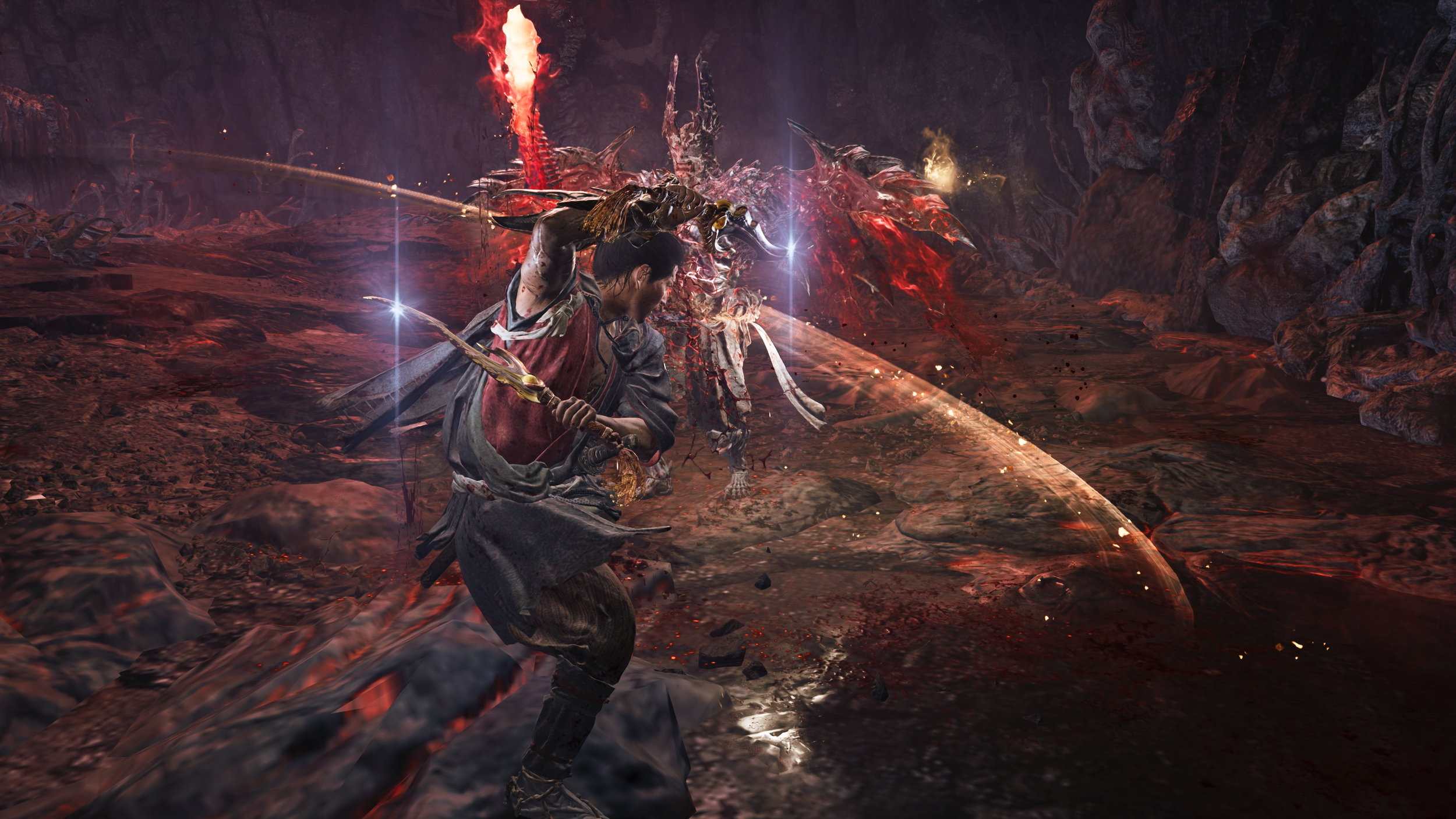
Souls obviously play a big role in Onimusha, and it’s hard to detach yourself from it as during my play sessions with Mortal Shell 2, I was constantly pressing the button to suck in all the souls, then realizing what game I was actually playing. For those unaware, the souls are how Musashi will regain health, charge his armament, or purchase and upgrade gear, which is done via the red souls. While you can move during this act, you cannot attack, until you upgrade a skill that allows you to do so. However, in Way of the Sword, several enemy types, including bosses, can absorb those same souls, making it a competition for them. Part of the strategy for Onimusha was knowing when to absorb them into the gauntlet and how to prioritize survival while doing so. Now, it makes it even more of a risk/reward mechanic.
To boost Musashi’s power and have him grow, you will have two upgrade systems at play. One is powering up his sword, gauntlet, or clothing. Each upgrade uses currency or materials that you’ll obtain freely, such as leather or iron, but also other materials that you only get from defeating certain enemies, which you’ll find quite frequently. There is also a vendor that increases their stock as the game goes on, allowing you to buy cotton, leather, or iron, and their varieties, quite easily, provided you have the red souls to do so.
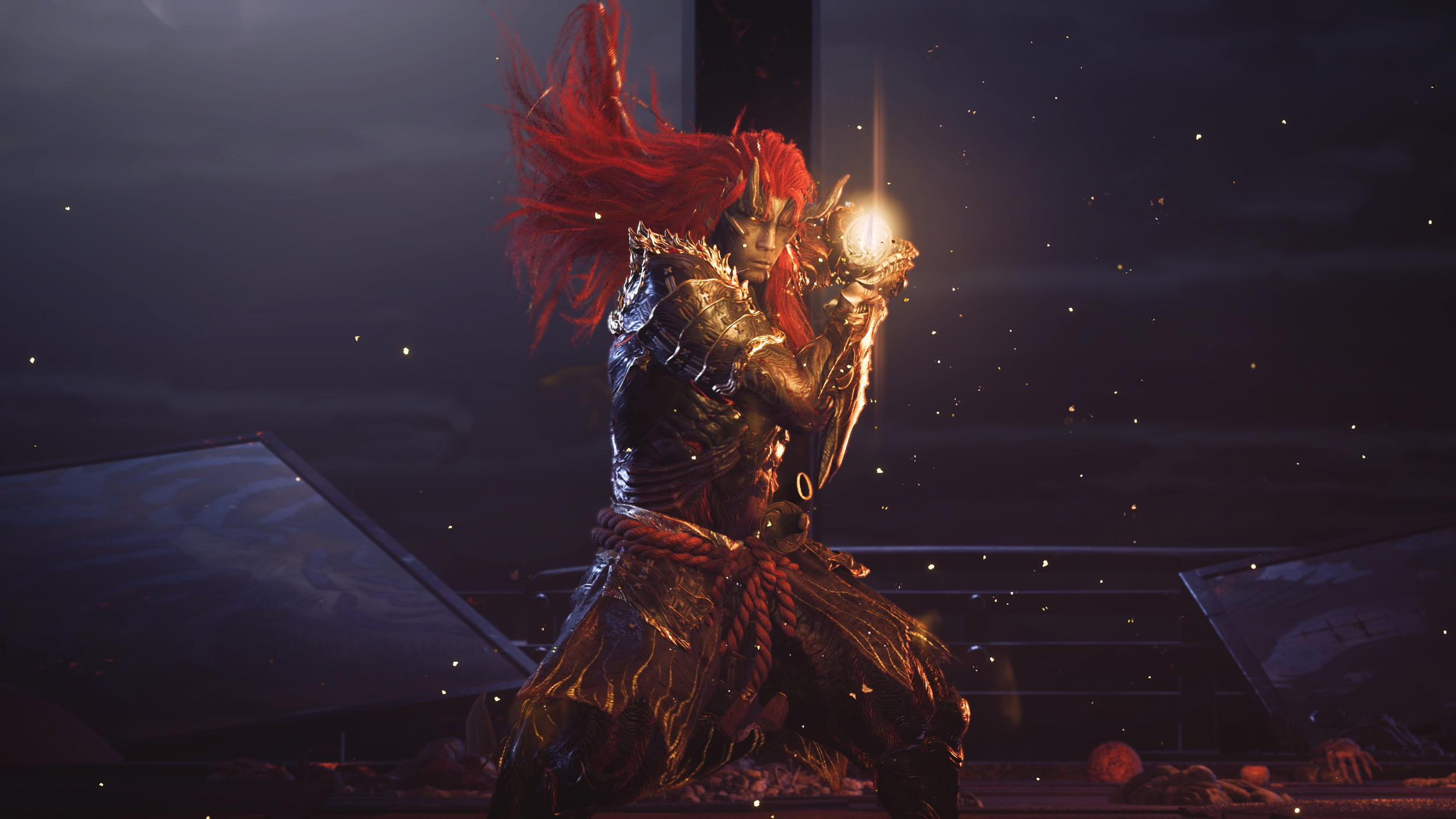
These upgrades greatly boost your stats, making you absorb more damage, collect souls more efficiently, or deal more damage. While you only have the one single sword during the entire game, you can outfit it in skins, which is about the only customization you get here, apart from outfits and coats. So, leveling this attribute is the only way to get a more powerful sword.
The second way to upgrade Musashi is through a skill tree that is based on certain abilities and his armaments. Each armament has several upgrades, such as making the Wind Whipper vastly more powerful or charging up the Firebird Flute to launch a flaming flock at your enemies. These require materials that you’ll find in special chests or by defeating specific enemies.
You can equip charms to Musashi, which aid in receiving more health, increase the status ailment length on your foes, faster stamina recovery, or increase the power of your armaments, among others. While you can only equip one at first, you eventually can equip three. By the time the credits had rolled, I found around 20 charms so far.
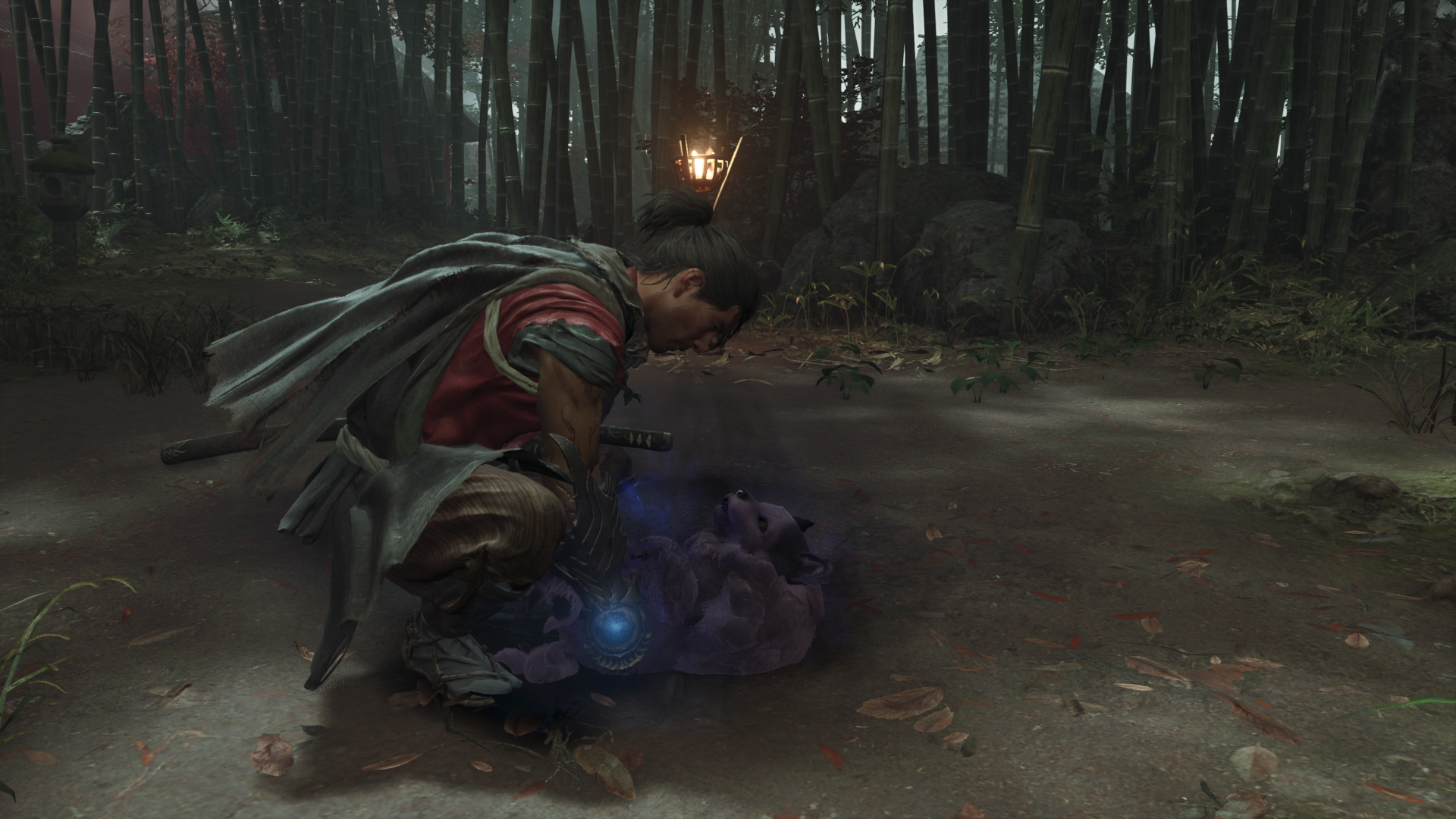
Lastly, you have your Hozuki Pound, and this is generally how you heal at first. You pouch can be upgraded to work better for you but you have a variety of pouches that do different things, should healing not be up your alley. These other alternatives range from slow health and stamina regen, refilling your oni power and reflex gauge, to other variations of health, stamina, or oni power regen. Personally, the default Pouch never left my side.
Despite the lure of going open world with Onimusha, this is still a level based action game with only teases of a massive in scale world. The Kyoto village is a huge hub location that you'll constantly look to keep safe, unlocking new areas as you cleanse the miasma that is flooding various corners of the map. This mechanic is also present in various levels as the red fog can damage your health. You’ll then have to track down special Genma flowers and destroy them, cleansing the environment around you.
This of course comes as the game progresses, and opens each location up to track down more collectibles, and, in the case of the village, solve a series of mundane and mostly repetitive side quests, none of which are really well done or felt important. Most have you simply returning to old locations and killing a set number of enemies, or tracking down an item. There is a secondary character that places a few quests on you, and she will recap the side quest with a short narrative summary of it, as she is something of a writer herself. Her quest, or rather her need of you tracking down her collectibles, was at least pretty cute each time I would find her target.
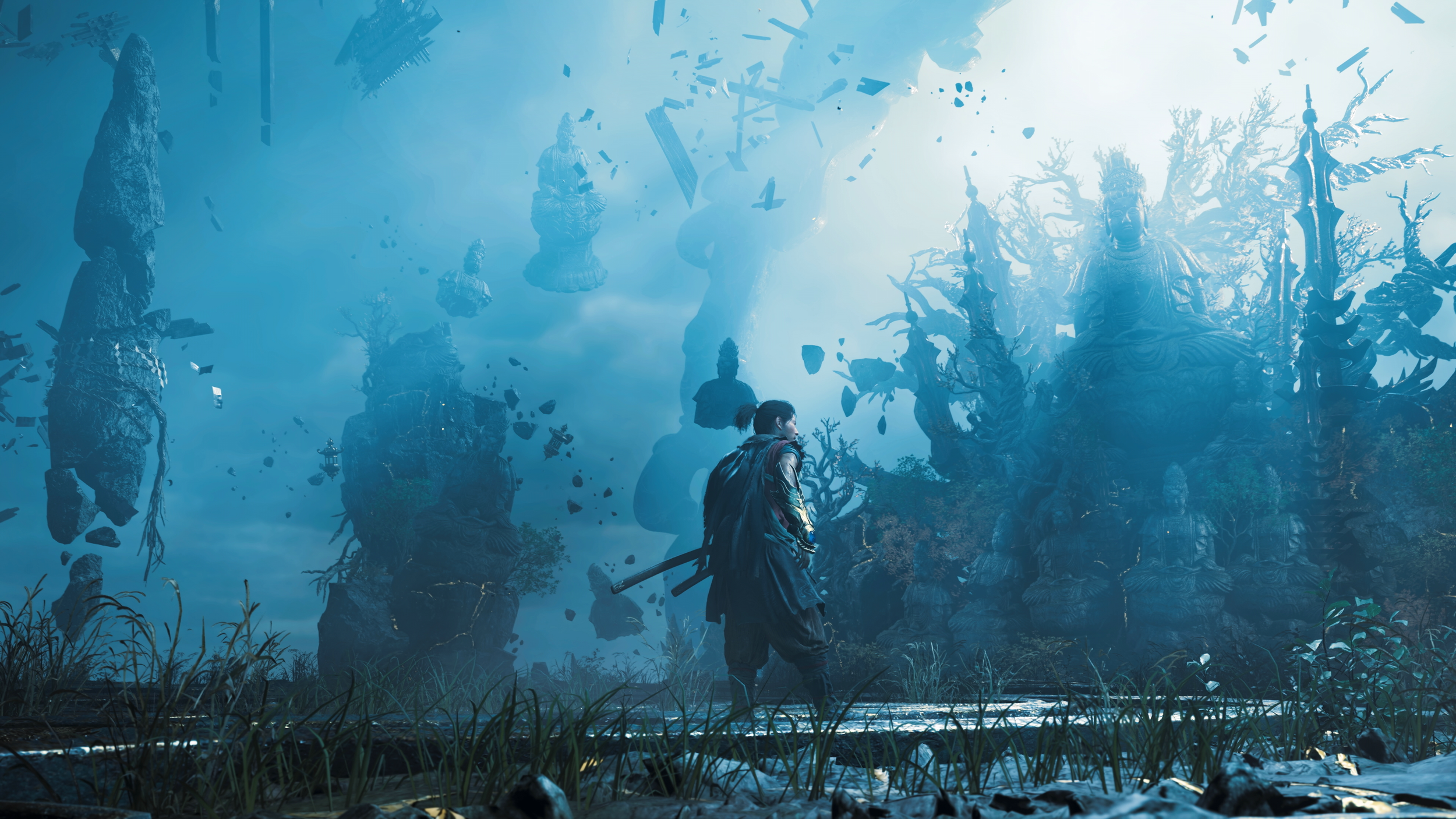
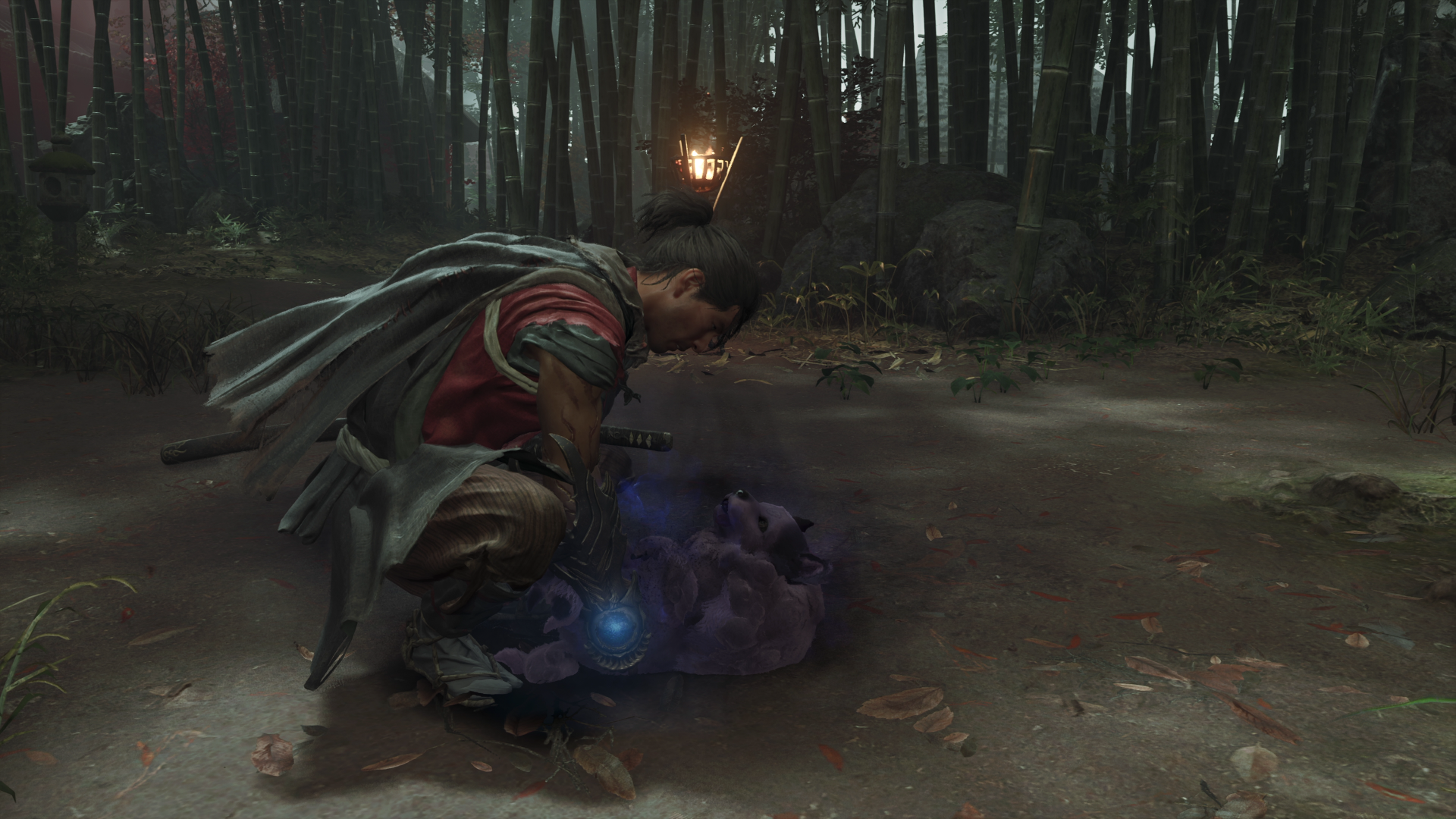
Missions take place all over Kyoto, ranging from the Kiyomizu-dera Temple, underground labs, to mountain ranges, castles, temples, and an imperial palace. These are typical of the series with a fairly linear pathing and the occasional big open area. The Laboratory is the only real indoor location that you’ll visit that is similar to the older Onimusha games where interiors were more frequent than exteriors. Eventually, you'll gain the ability to wall run, which is rather cool, and I like the way it is given to you. Oddly enough, it's not just a skill you learn, but you feel you are almost gifted with it.
Thankfully, to get around, you have mirror shrines that can help you fast travel. They also serve other purposes as well with enhancing your equipment and skills, changing your Hozuki Pouch, costumes, or visiting the practice grounds, which have their own set of rewards and challenges. Fast traveling is between these shrines, so it is easy to return to an area and track down your target or objective with minimal back tracking.
Now, at certain points throughout the story, you'll visit the Oni realm. This is more of a traditional videogame level where the environment doesn't need to make sense from a realism standpoint. You use your bow to hit switches that create and move platforms, and generally just move to the end to trigger a cutscene that details more about certain characters. It's an interesting location, but is built more for narrative than being a whole new unique location for gameplay.
One of my main criticisms with environments, especially the Kyoto village is that it feels far too maze-like without much in the way of traversal systems to speed up navigation. While this is intentional, to hide collectibles, and funnel you down certain roads, it doesn't work well once you've explored those zones and just need to get by. Rise of Ronin has a similar set up for its villages, but it has traversal system built in to make navigating those spaces far more intuitive.
Secondly, while there are certain destructibles, like boxes and barrels, which will drop more loot, at least once you unlock that perk, there are tons of other objects, which should be just as fragile, that are unable to be smashed or interacted with. This limits the immersion of playing around in the environments, when even the most basic indie games constantly have everything being usable in their sandboxes.
Visually, Way of the Sword is fantastic, with the RE Engine yet again producing a stunning visual experience. I've been impressed with the facial animation of prior RE Engine games before, but Way of the Sword is easily the best of the bunch. Musashi has so many thoughts going through his head, a range of emotions as he is trying to rely on the gauntlet or protect his allies, and you see them all in his expressions, all with the need of dialogue.
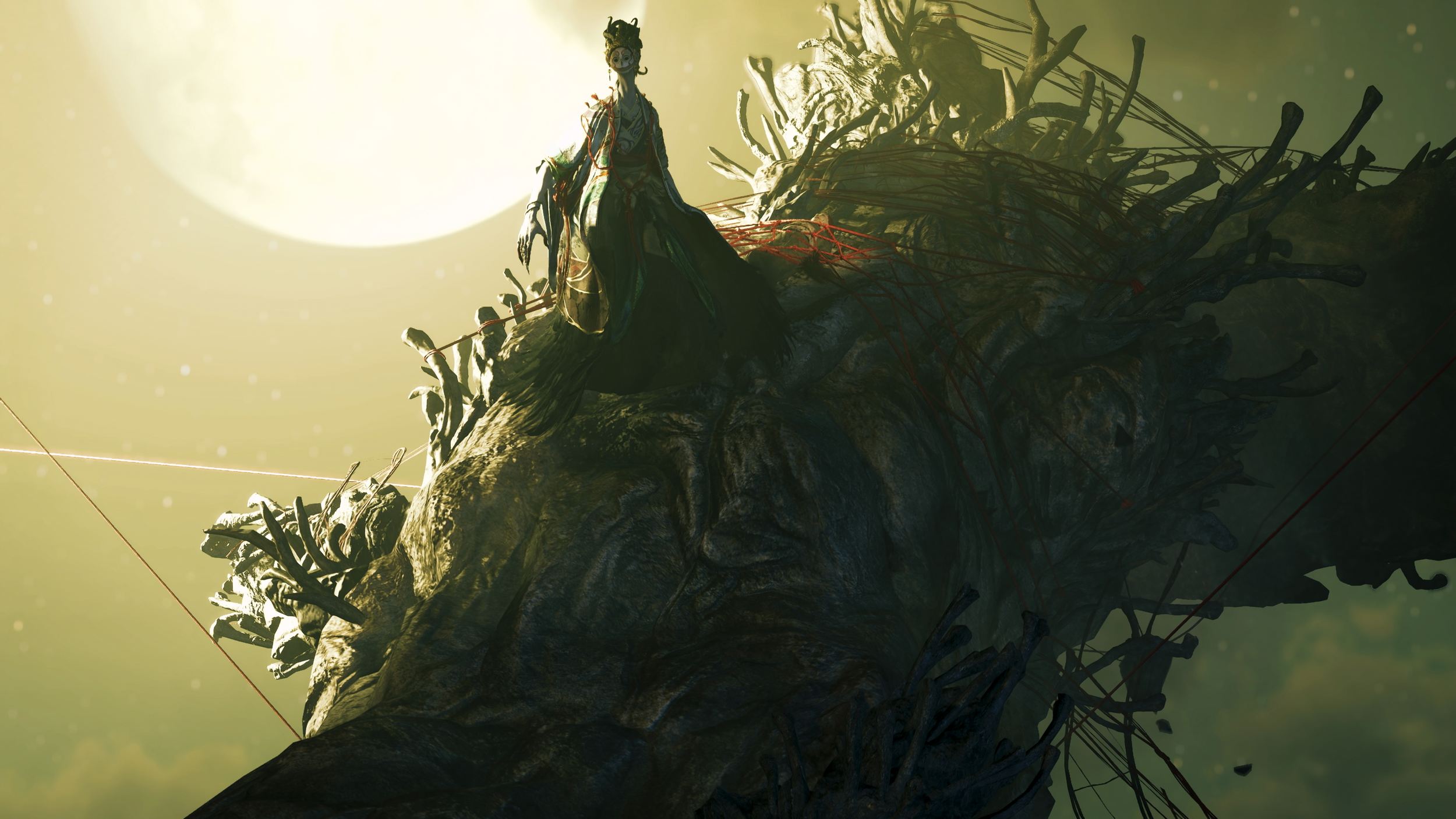
Environments and creature designs are equally as impressive, with the additional cast also having some nice detail and animations that are extremely solid. I never got tired of the boss designs that continued to be revealed, and found some of the later locations to really help sell where the story was going. While the aesthetic isn't entirely original, Capcom nonetheless took a lot of care with designing this game, ensuring it felt very Onimusha.
While an actor known for the show, The Diplomat, Kenichiro Thomson, makes his videogame debut here as Miyamoto Musashi. While the late actor Toshiro Mifune is the basis of his face, it is the performance of Thomson that really makes Musashi be such a great character. Another stand out is Tashinga Bepete as Ganryu. Bepete isn't a stranger to gaming, especially Capcom, as he has had roles in Dragons Dogma 2 and Kunitsu-Gami: Path of the Goddess, among others. His portrayal of Ganyru is downright chilling at times.
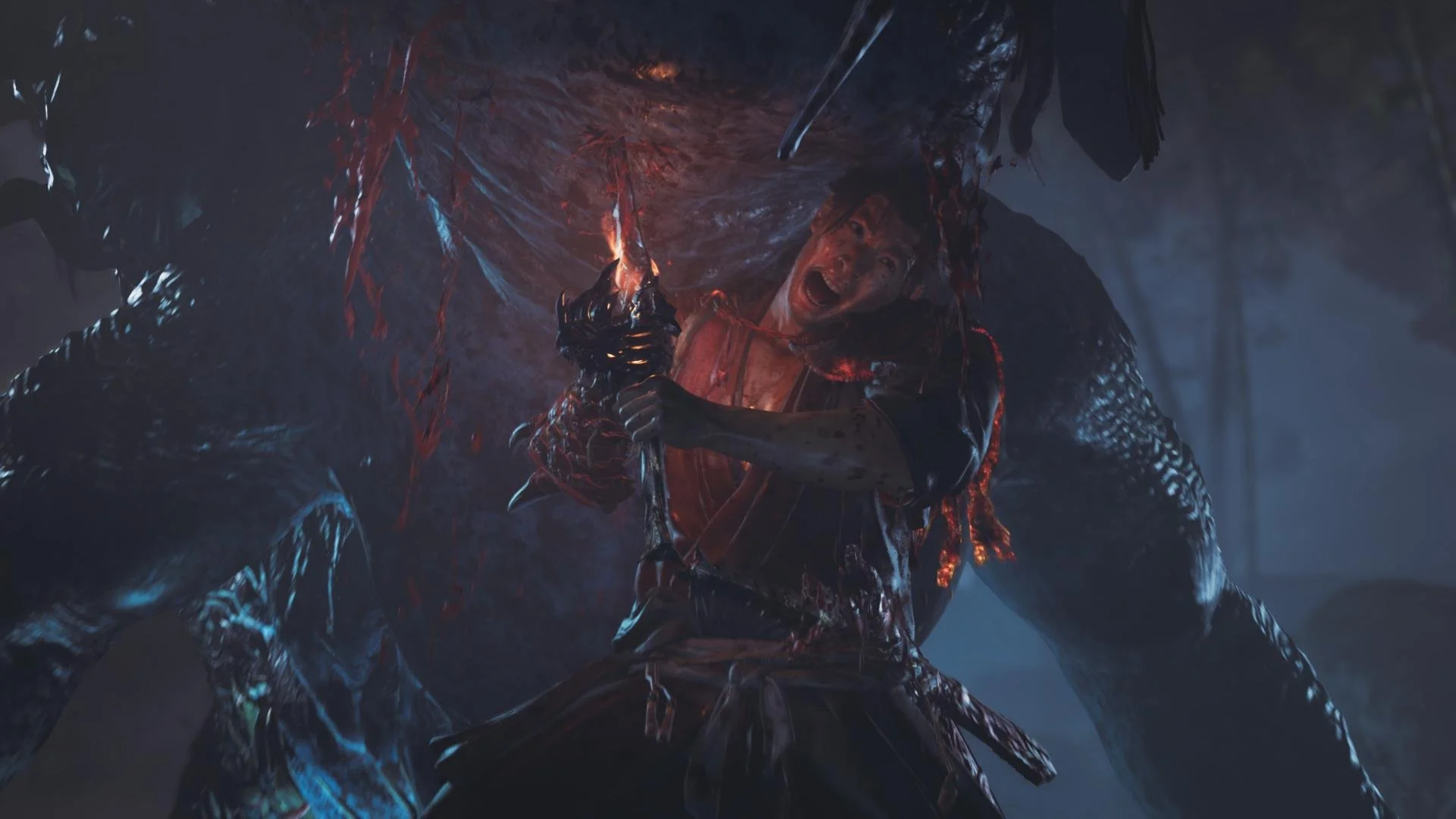
Way of the Sword ran flawlessly in performance mode, hitting a rock solid 60fps, and even the series S, which drops down to 1080p, also maintains 60fps pretty reliably, with some noticeable visual blemishes when compared to the PS5 and Xbox Series X. Both the PS5 and Series X hit an upscaled 4K in performance mode, while the quality mode hits a fixed 4K image at 30-40 fps with more details present in the environment.
Onimusha: Way of the Sword is some damn good fun, providing an action packed adventure I thoroughly enjoyed. Musashi's journey may obviously detour from his real life exploits, but the bond of strength he has with Ganryu makes for a compelling rivalry that sets this game apart from its peers. Nioh 3 may be the best version of an open world Onimusha we’d had, but what Capcom has done here channels a lot of the series' past with some smart modern changes. From compelling combat to a fantastic cast of characters and bosses, Way of the Sword was well worth the wait, and I can’t help but want more.

Developer - Capcom. Publisher - Capcom. Released - Sept 4th, 2026. Available On - PlayStation 5, Xbox Series X|S, Nintendo Switch 2, and PC. Rated - (M) Blood and Gore, Intense Violence, Strong Language, Suggestive Themes. Platform Reviewed - Xbox Series X/S. Review Access - A review code for Onimusha: Way of the Sword was provided by the publisher for the purpose of this review.
Jeff is the original founder of Analog Stick Gaming. His favorite games include The Witcher III, the Mass Effect Trilogy, Hi-Fi Rush, Stellar Blade, Hellbade: Senua’s Sacrifice, and the Legend of Heroes series, especially Trails of Cold Steel III & IV.