
Building Momentum
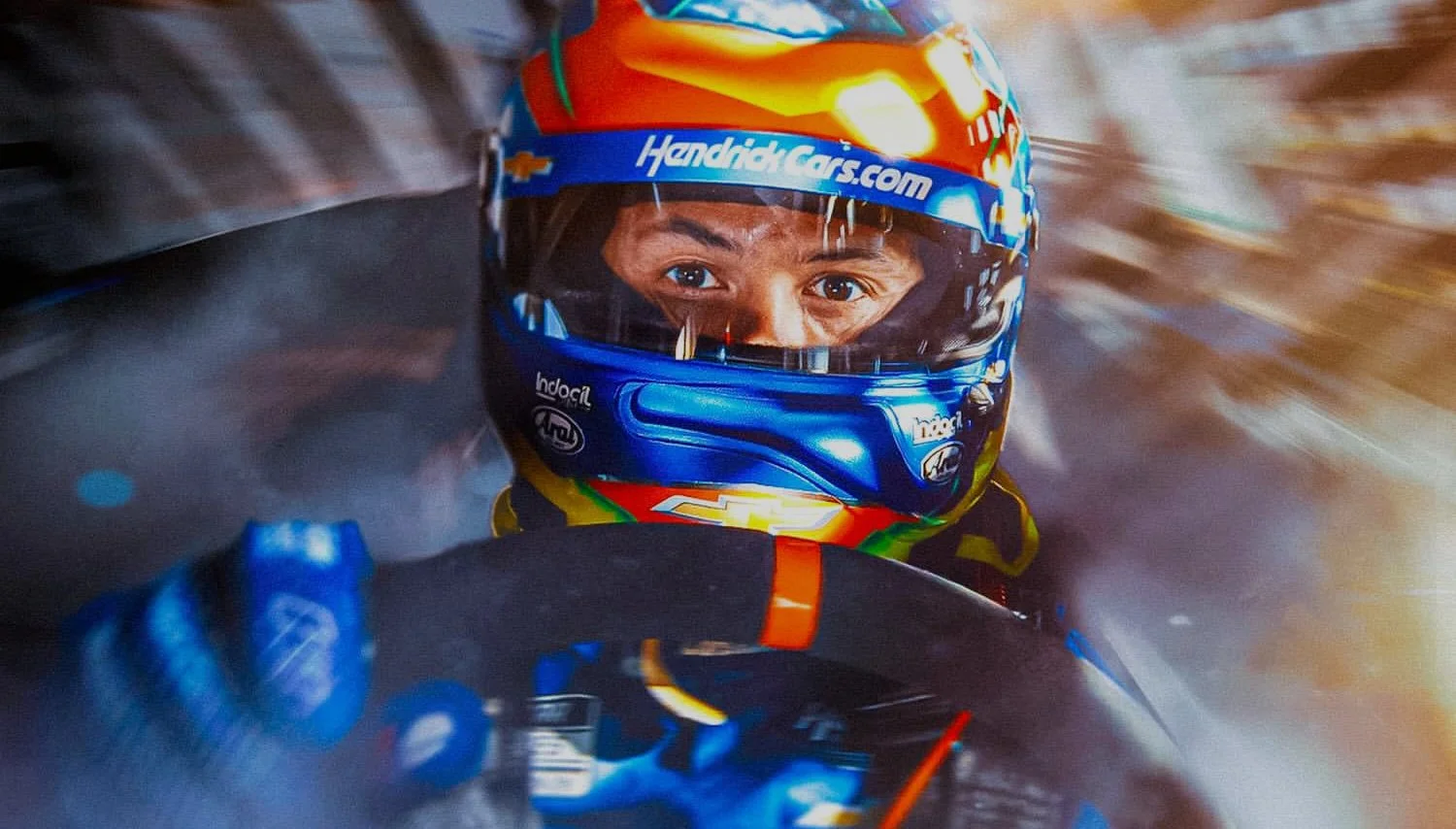
NASCAR 26 builds upon the promising foundation of its predecessor, delivering better racing, improved AI, dynamic track conditions, and a more rewarding career mode. It still lacks the polish and presentation of the best sports games, but iRacing Studios continues to move the series in the right direction.
NASCAR fans have spent years waiting for a game capable of capturing the speed, strategy, and controlled chaos of the real sport. NASCAR 25 was a promising return that established a strong driving model, but inconsistent AI, technical problems, and a lack of polish prevented it from becoming the complete package. NASCAR 26 does not reinvent that foundation, but it makes enough meaningful improvements to provide a noticeably better experience.
The handling remains the game’s greatest strength. Stock cars feel heavy without becoming unresponsive, requiring careful throttle control and smooth steering through every corner. Driving assists make the game approachable for casual players, while experienced racers can disable them and explore a much more demanding simulation.
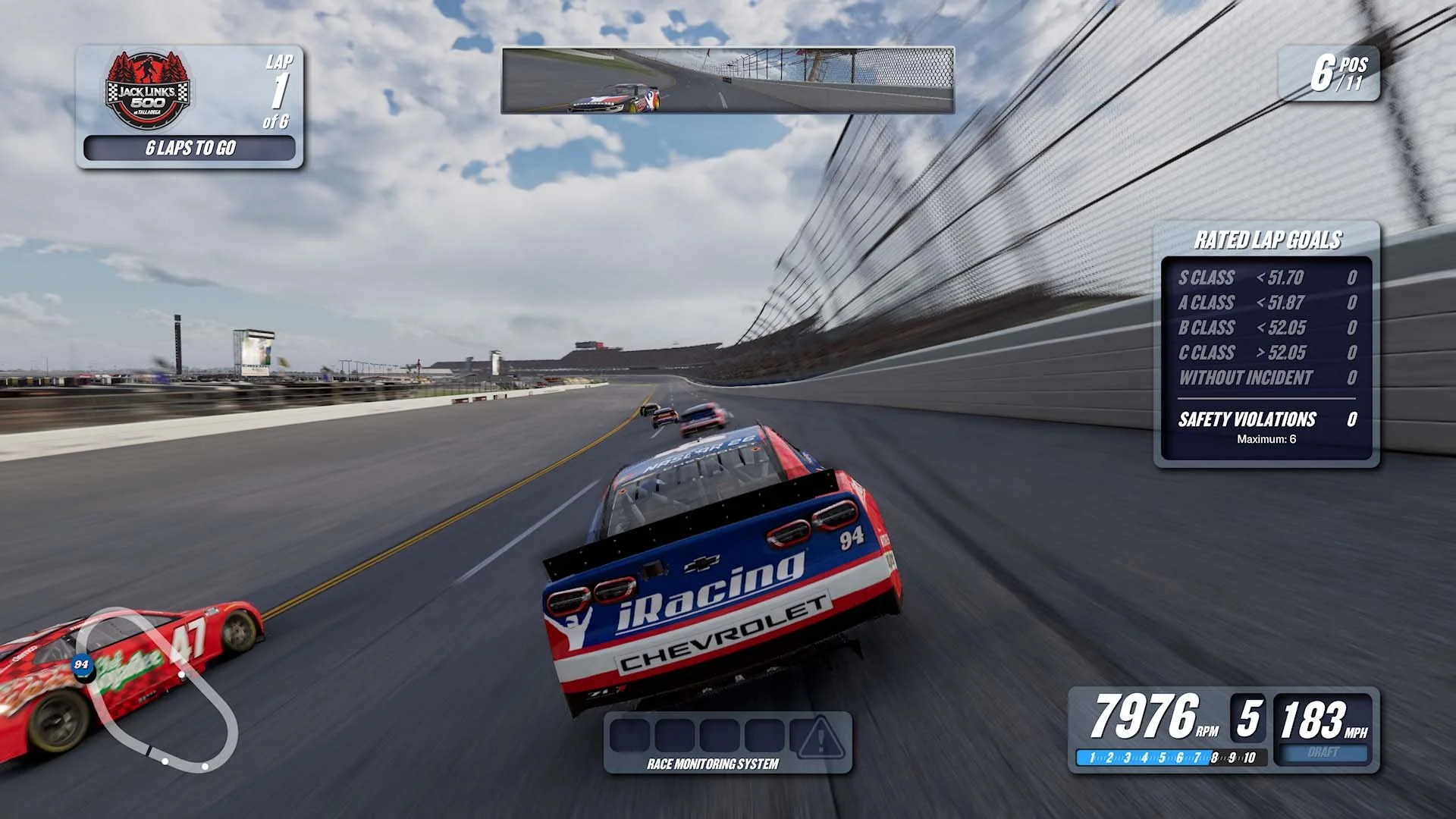
Each NASCAR division also feels sufficiently different. Moving into a faster series requires more than simply adjusting to higher speeds, as every vehicle has its own handling characteristics. Car setups matter during longer races, particularly as tires begin to wear and the balance of the vehicle changes. Drafting is another highlight. Superspeedway events regularly produce intense multi-car battles as drivers form lines, switch lanes, and wait for the right opportunity to attack. Finding assistance in the draft can take you from the back of the field to the front, but one mistake can cause a massive accident involving half the grid.
The AI has improved and generally behaves more naturally than it did in NASCAR 25. Computer-controlled drivers defend positions, use alternate racing lines, and make believable mistakes. AI drivers can now suffer mechanical failures and record a DNF, creating more unpredictable results throughout a season. However, the AI still has occasional problems. Drivers can become overly passive when the player reaches the front, while some incidents appear to develop because an opponent refuses to abandon its racing line. These moments are frustrating, but they are less common than they were in the previous game.
One of NASCAR 26’s most important additions is its dynamic track system. Rubber builds on the surface throughout an event, changing grip levels and gradually altering the ideal racing line. The effect is most noticeable during longer races, where the fastest route around the circuit can change considerably.
This adds another strategic element to events. A car that feels perfect during the opening stage might become difficult to control later, forcing players to adjust their driving or make changes during a pit stop. Tire wear, fuel consumption, cautions, and changing track conditions combine to ensure races rarely follow an identical pattern.
Career mode remains the primary destination for solo players. You begin with limited equipment before working your way through NASCAR’s different divisions. Prize money can be invested in cars, components, and employees, giving each successful result a sense of importance.
The progression loop is satisfying, especially during the opening stages when every improvement can produce a noticeable difference. Managing several vehicles and championships eventually becomes demanding, but it also reinforces the impression that you are building an entire racing organization.
Career mode still lacks personality away from the track. Contracts, rivalries, sponsors, and team relationships are present in some form, but they never develop into memorable storylines. NASCAR 26 successfully simulates the process of becoming a successful driver, although it does not completely capture the characters and drama surrounding the sport.
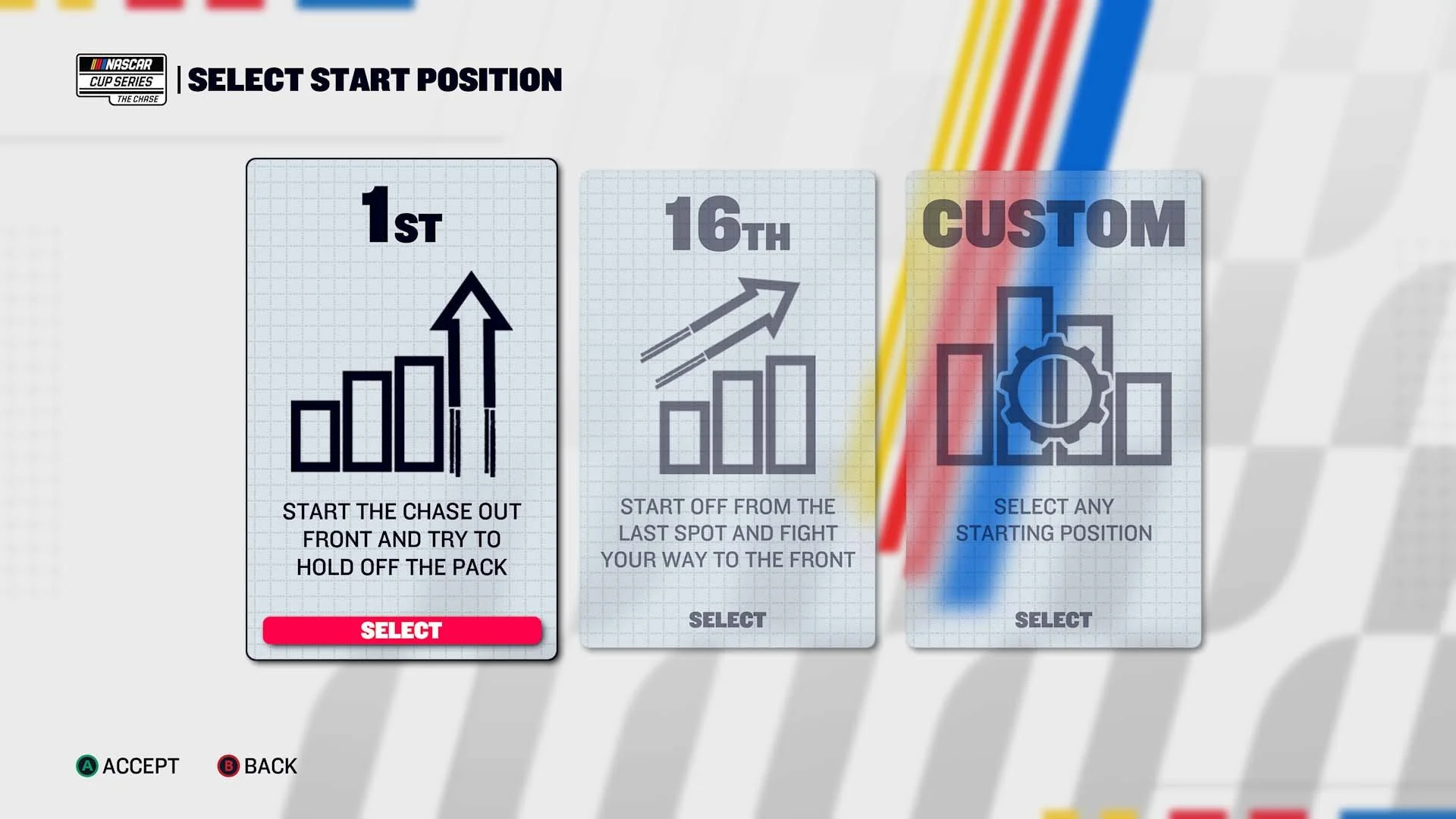
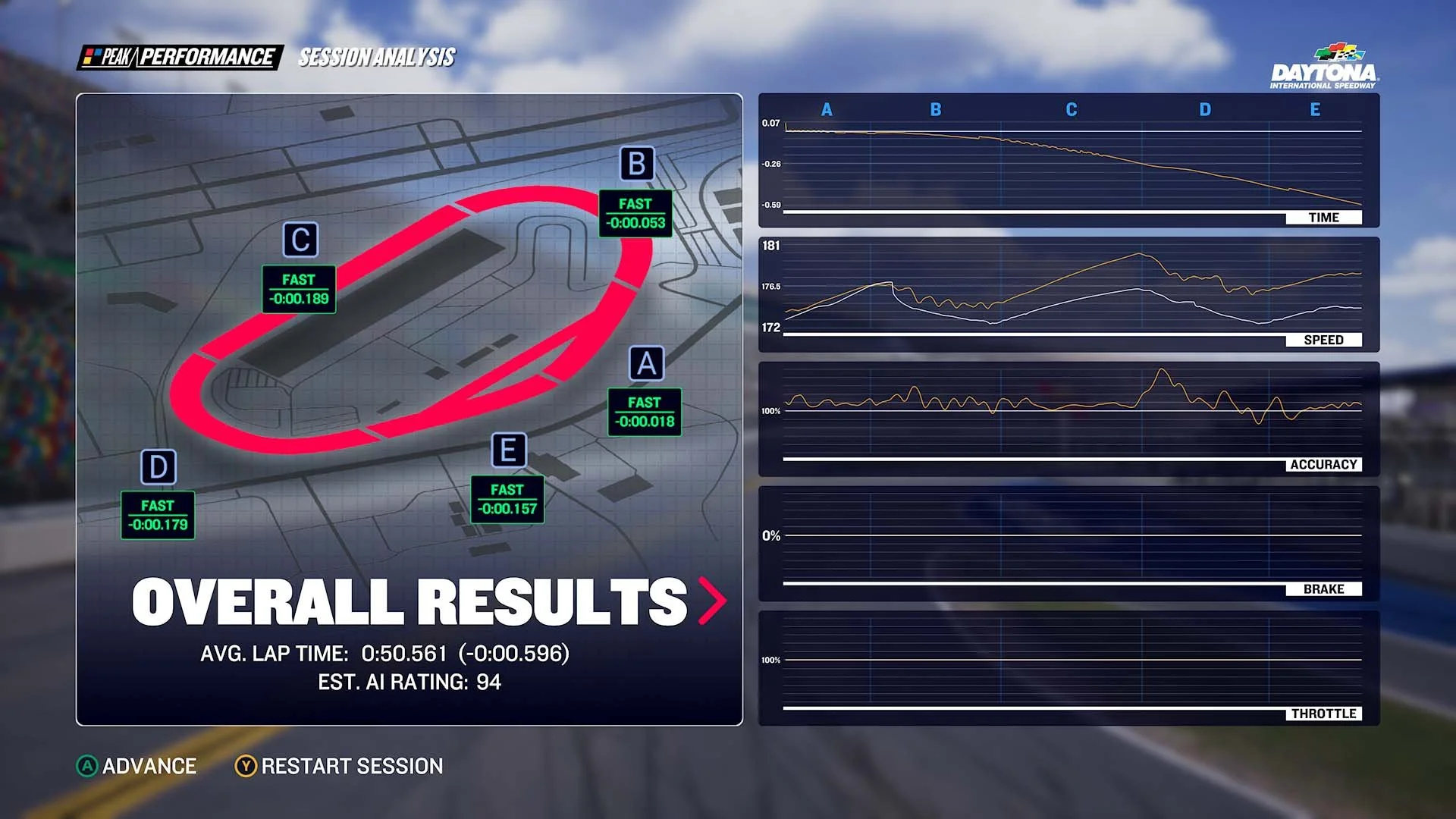
Peak Performance offers a useful alternative for players wanting to improve their skills. Jamie McMurray acts as a coach while telemetry data helps identify where time is being lost. Instead of simply showing a recommended racing line, the mode encourages players to understand why they are slower through a particular section.
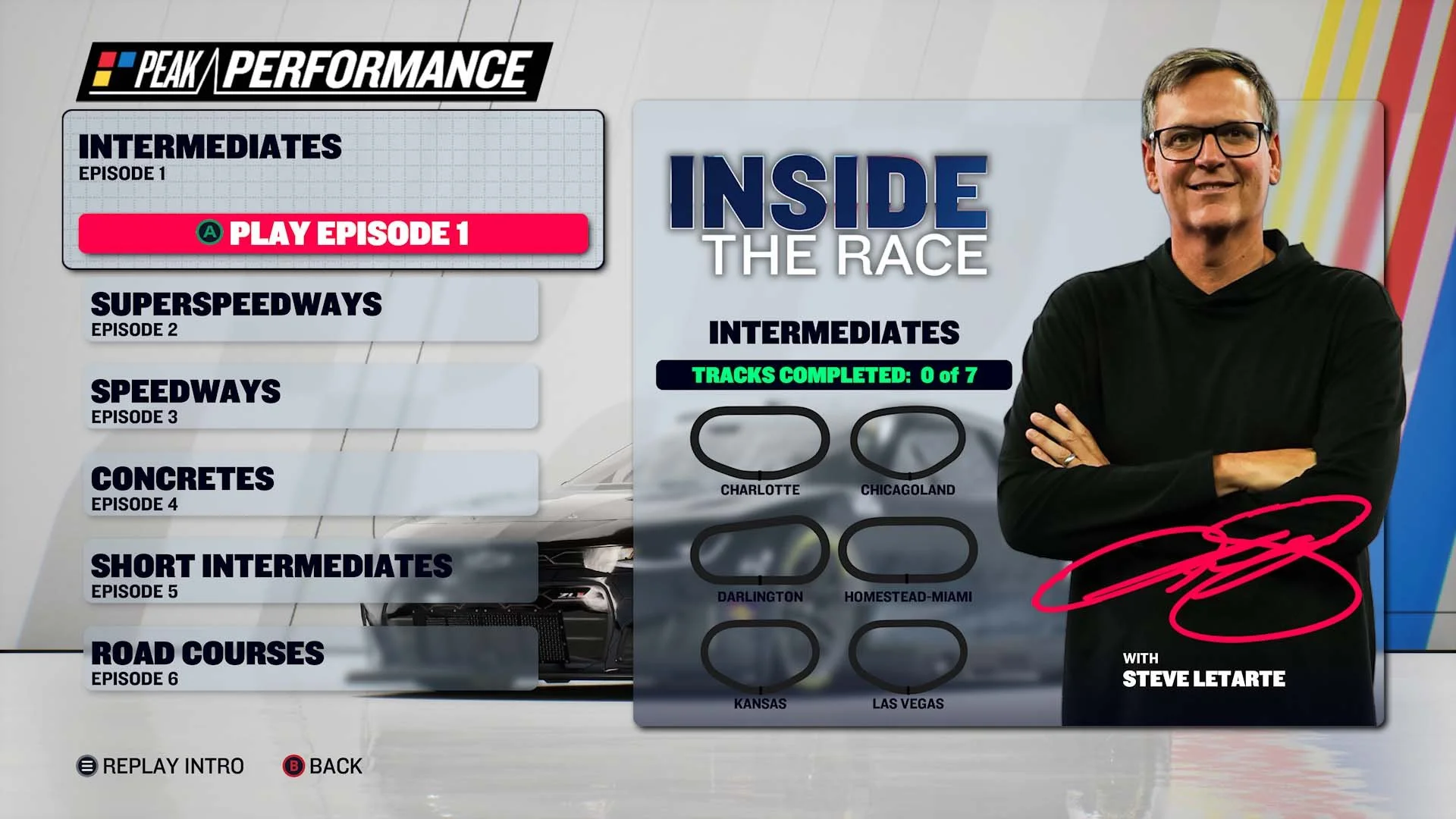
The Chase is another welcome addition, allowing players to create a customized ten-race championship. It provides an enjoyable way to recreate NASCAR’s postseason or experiment with alternative drivers and schedules without completing an entire season.
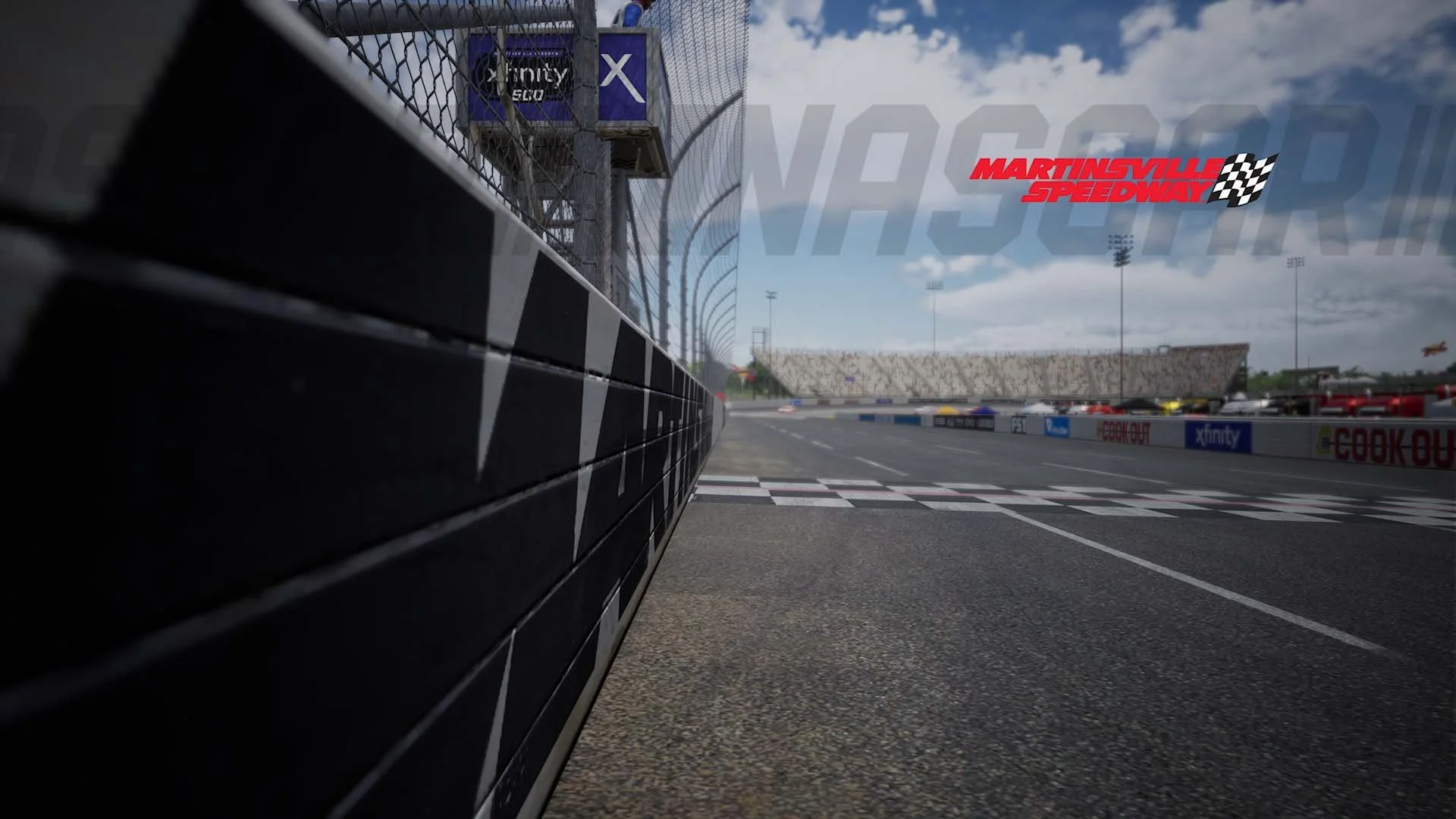
NASCAR 26’s official license delivers current teams, drivers, tracks, sponsors, and paint schemes. Driver ratings were created with NASCAR Racing Insights and can be adjusted, giving players greater control over the competitive order. The cars are visually impressive, especially during night races. Paint finishes reflect the surrounding lights, track surfaces contain plenty of detail, and seeing an entire field racing together can produce some excellent moments. The engine audio also effectively communicates the power and aggression of the vehicles.
Unfortunately, the surrounding presentation is less convincing. Pre-race sequences quickly become repetitive, pit stops lack spectacle, and the replay system does not always provide the camera angles expected from a televised NASCAR event. Crowds and trackside objects can also look basic compared to the detailed cars. Technical performance remains inconsistent. Frame-rate drops can occur when several vehicles are involved in an incident, while visual glitches and occasional AI issues remind players that NASCAR 26 could have benefited from additional polish. Updates should improve the experience over time, but some problems remain difficult to ignore.
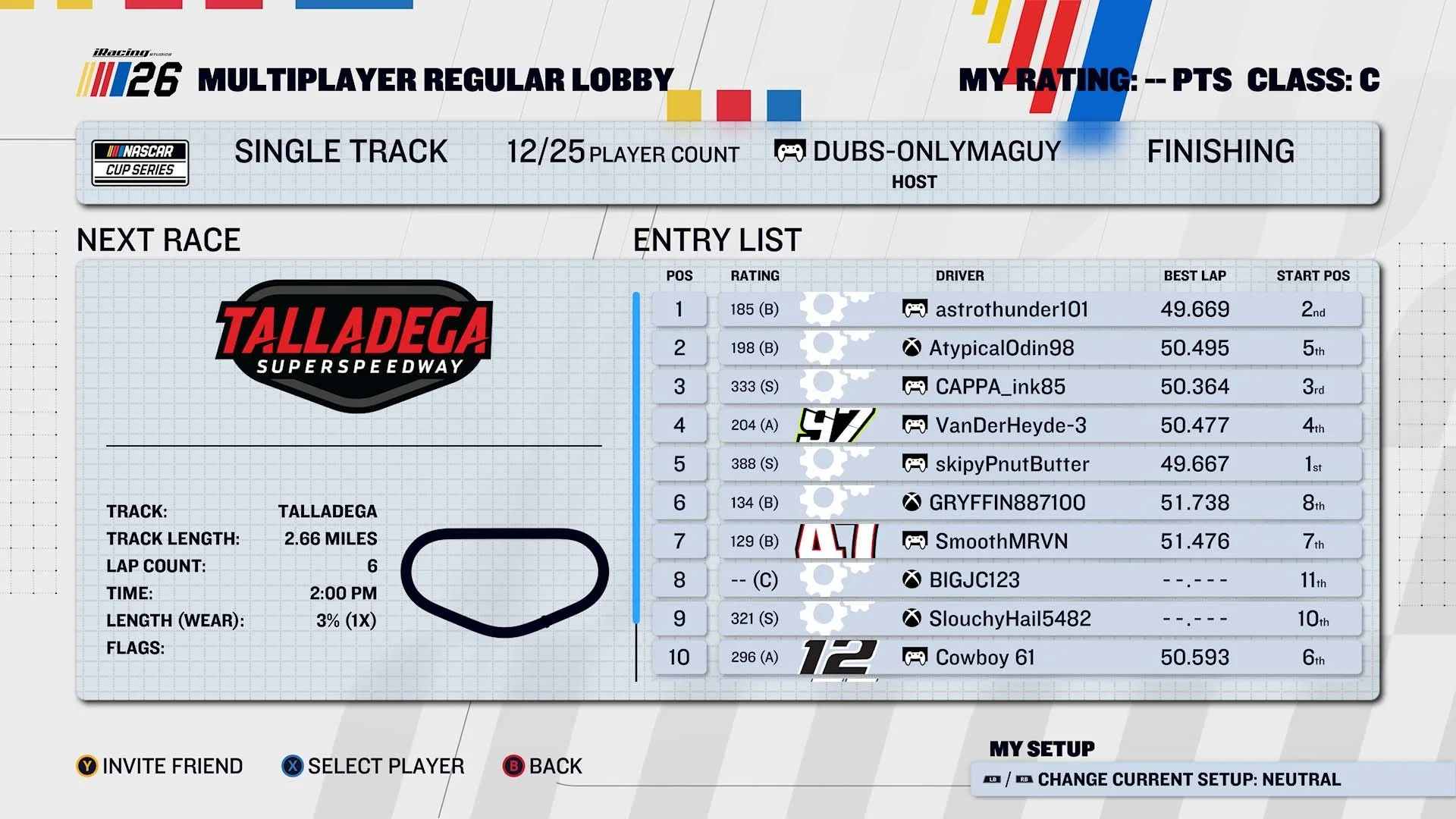
Cross-platform multiplayer connects the PC, PlayStation 5, and Xbox Series X|S communities. When every driver takes the competition seriously, NASCAR 26 produces some fantastic online racing. Unfortunately, public lobbies can also descend into chaos because one reckless player can ruin an event before the first lap is completed.
More comprehensive stewarding, penalty, and league-management features would significantly improve the multiplayer experience. NASCAR 26 offers the tools needed to create exciting online races, but the quality of those events often depends on the people participating.
NASCAR 26 is ultimately an evolutionary sequel, but its improvements make a genuine difference. The excellent driving model is supported by smarter AI, evolving track conditions, expanded modes, and more strategic racing.
Career mode still needs more off-track personality, while the presentation and technical performance prevent NASCAR 26 from competing with the most polished sports games. Even so, few console racers capture the tension of running inches away from dozens of cars at nearly 200 miles per hour this effectively.
NASCAR 26 may not be the definitive NASCAR experience just yet, but it proves that iRacing Studios is building toward something special. Its rewarding handling, smarter racing, and greater strategic depth capture the tension of stock-car competition better than any console NASCAR game in years. There are still rough edges to smooth out, but when the green flag drops and 40 cars charge into the opening corner, NASCAR 26 delivers the speed, danger, and excitement fans have been waiting for.
Developer - iRacing Studios
Publisher - iRacing Studios
Released - September 18th, 2026
Available On - PC, PS5, Xbox Series X/S
Rated - (E) - Alcohol Reference, Users Interact
Platform Reviewed - Xbox Series X
Review Access - A review code for NASCAR 26 was provided by the publisher for the purpose of this review.
James, has been a gamer for as long as he can remember with a particular passion for sports games, shooters and adventure games. He only started writing reviews last year over at The Outerhaven, but has quickly become extremely passionate about this part of the industry.