

A Step In The Right Direction
Every year, EA Sports faces the difficult task of convincing players that its latest football game is more than an updated collection of kits, transfers, and player ratings. EA Sports FC 27 makes a stronger case than some of its predecessors, particularly through its more skill-focused gameplay, expanded Career Mode, and ambitious new social space. However, familiar frustrations and an increasing reliance on live-service progression keep it from becoming the complete football experience it could be.
The most important changes are naturally found on the pitch. EA has reduced the effectiveness of AI-controlled defenders in competitive matches, requiring players to take greater responsibility when attempting to regain possession. Defenders are less likely to automatically step in and take the ball, while teammate contain keeps more distance from the player in possession. Manually switching, jockeying, and choosing the right moment to tackle are now essential. This creates a noticeable learning curve, especially for anyone used to letting the AI protect the penalty area. Initially, defenders can seem strangely passive as attackers move around them, but the system starts to make more sense once you get comfortable switching between players. Well-timed tackles feel rewarding, while poor positioning is punished more consistently.
The player-switching system still selects the wrong defender at times, which is particularly frustrating now that manual defending plays such an important role. Rebounds and loose balls can also produce the sort of unpredictable chaos that has been part of the series for years. Nevertheless, defending generally feels more deliberate and less dependent on assistance.
The attacking movement has received similar attention. Teammates make smarter runs and better recognize open space, making it easier to build moves without constantly issuing manual instructions. Overlapping and underlapping runs offer more tactical control, while improved positioning helps reduce the number of attacks that fall apart because a striker has wandered into an ineffective area. Crossing has also become more dependent on the player’s aim and power. Rather than automatically locating a nearby teammate, crosses are frequently played into open space. This creates more varied attacking situations but also means poorly judged deliveries can miss everyone. Headers require greater precision, although clean contact is more reliable and satisfying than before.

Corner kicks are one of the more interesting additions. After selecting the intended delivery area, you can control a player inside the penalty area. You can make a run, shield your position, or use the new Avoidance mechanic to move through a crowded box before the ball arrives. It adds another layer of control to set pieces, even if managing everything during a hectic online match can feel overwhelming at first. The downside is that, combined with AI not defending as much, the ball sometimes ping-pongs around in the box, usually resulting in a goal.
The cumulative result is a football game that places more responsibility in the player’s hands. FC 27 is at its best when a goal comes from a smart run, carefully directed cross, or well-worked passing move. Unfortunately, it has not escaped all of the series’ long-standing problems. Players occasionally take an unnecessary touch, goalkeepers remain inconsistent, and physical challenges do not always produce the outcome you expect. FC 27 offers improved football, but it is still recognizably built on the same foundation.
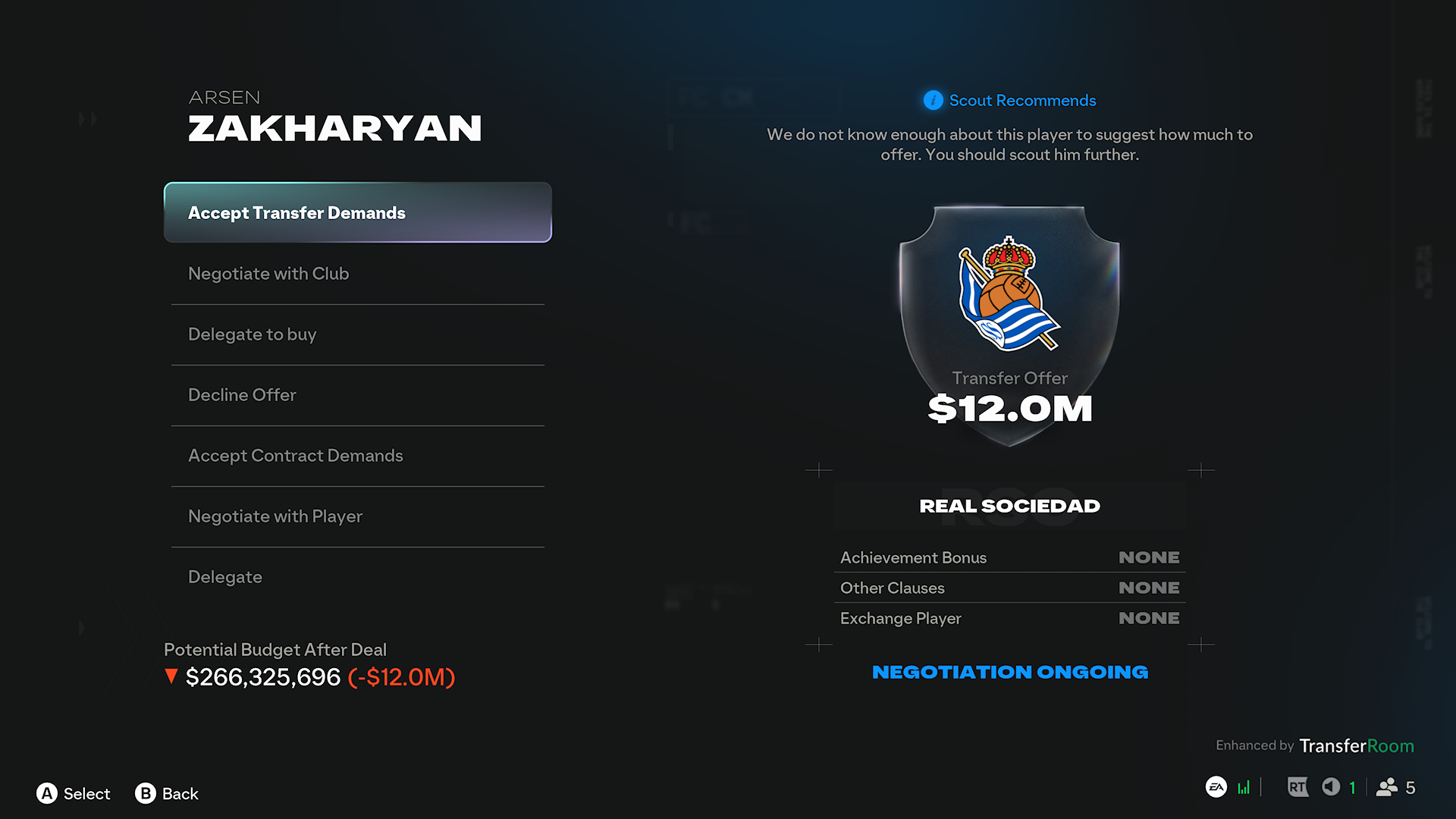
Career Mode receives some of this year’s most substantial improvements. The rebuilt transfer market makes buying and selling players a longer and more strategic process. Transfers progress through multiple stages, beginning with an enquiry before moving into negotiations with the club and player. Rival clubs can enter the race, agreed terms may be revisited, and deals can collapse if demands change. This creates welcome uncertainty during transfer windows. Signing a major player no longer feels like completing a single predictable conversation. New clauses, instalment options, performance bonuses, buy-back agreements, and future transfer rights provide considerably more flexibility. Players who prefer to concentrate on matches can still delegate negotiations to their Director of Football.
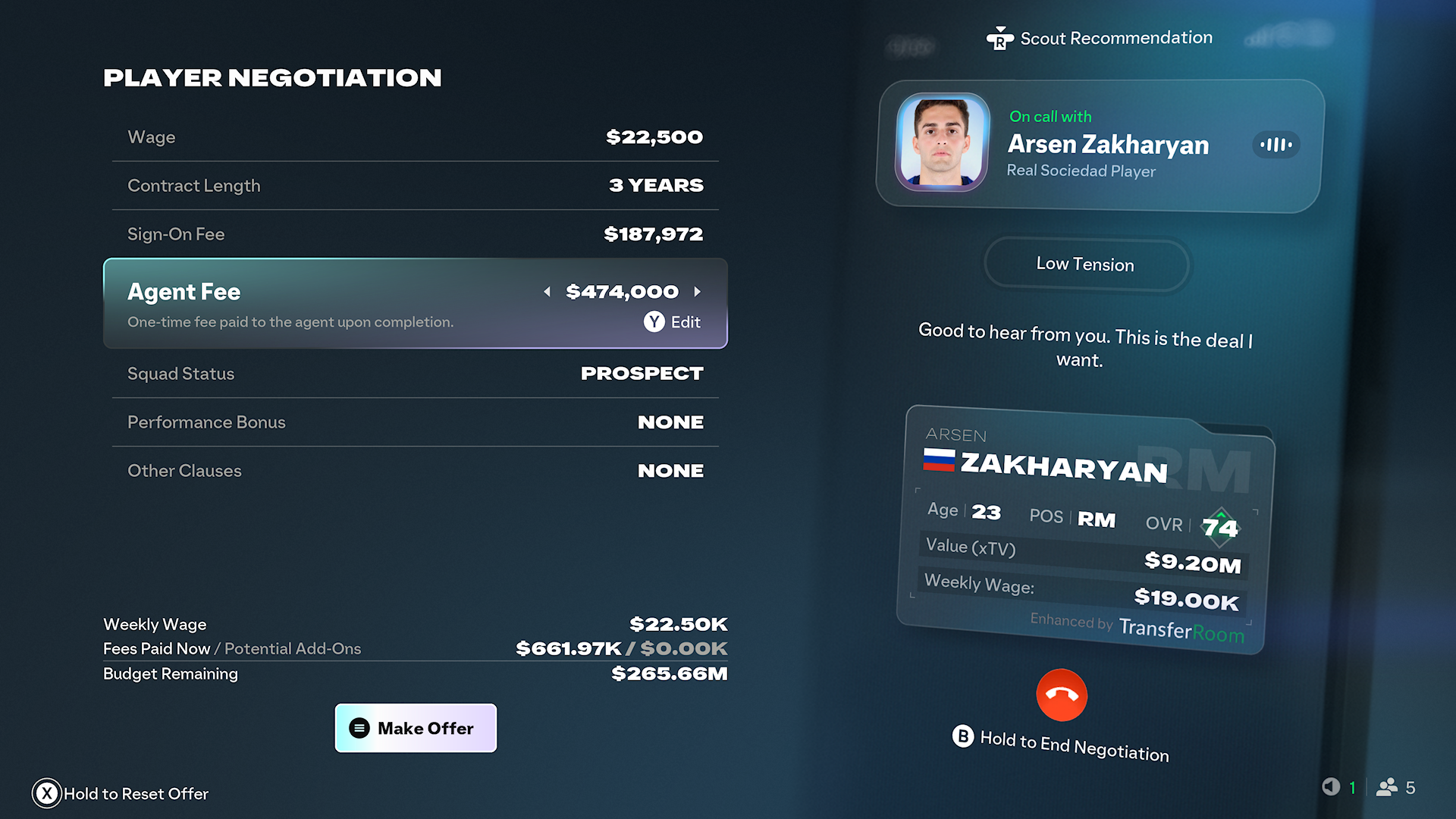
The redesigned Transfer Hub presents information clearly, separating scouting from active negotiations and providing a useful overview of contracts, clauses, incoming offers, and financial commitments. Dynamic player ratings also respond to form, morale, fitness, and injuries, helping squads feel less static over multiple seasons.
These changes make Career Mode deeper, but they also slow it down. Completing several deals at once can involve a lot of menu navigation and waiting for responses. That will appeal to players who want a more involved simulation, but anyone hoping to assemble a dream squad as quickly as possible may find the process tedious. Some familiar presentation elements and repetitive interactions also remain, reminding you that this is an extensive renovation rather than a completely new mode.
The Grounds is FC 27’s biggest attempt to introduce something different. Available on current-generation platforms, it transforms Clubs into part of a shared social football environment. Up to 100 players can occupy the space, which is divided into districts inspired by different football cultures. Players can access traditional Clubs matches, compete in small-sided games, join Rush events, or participate in lighter activities such as Bucket Ball, Balloon Ball, and Team Keepaway. These games offer a welcome change of pace and give groups something to do when they don't want to commit to a full match. Clubs tournaments and shared objectives also provide teams with additional reasons to continue playing together. Amps, which provide limited-use benefits to player Archetypes, are particularly difficult to embrace in a mode that should ideally be decided entirely by teamwork and ability.
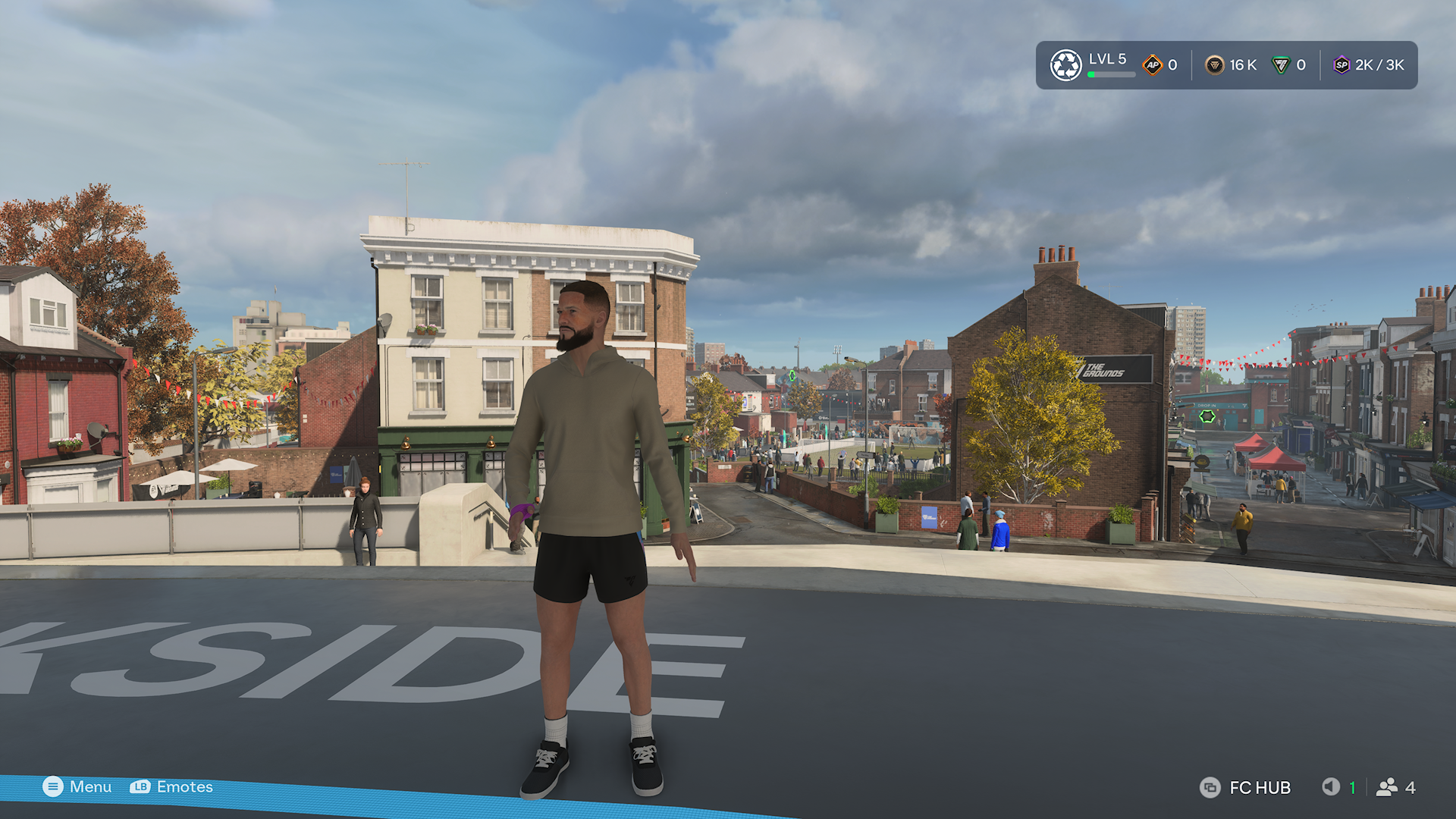
The Grounds is entertaining to visit with friends and can make Clubs feel like a broader experience rather than a collection of menus. At the same time, moving through a social space is not always more convenient than selecting a mode directly. The large number of cosmetic items, consumables, seasonal objectives, and progression systems also makes the mode feel busy.
Ultimate Team remains as compelling and controversial as ever. The new FUT Gallery records many of the player items that have passed through your club and lets them contribute to themed sets. Improving these collections raises your Gallery Level and unlocks additional rewards, giving previously owned cards some lasting relevance after they have been sold or placed into a Squad Building Challenge.
Branching Evolution pathways provide more choice when developing players, while streamlined Squad Building Challenges make common tasks easier to complete. These are sensible refinements, although the mode remains dominated by card acquisition, seasonal content, premium rewards, and the pressure to keep pace with an evolving competitive environment. Holographic items add another collectible variation to the market. They perform identically to standard versions of the same cards, but their rarity and presentation make them more valuable within the Gallery. The feature will appeal to dedicated collectors, but it also reinforces Ultimate Team’s increasing resemblance to a digital trading-card platform.
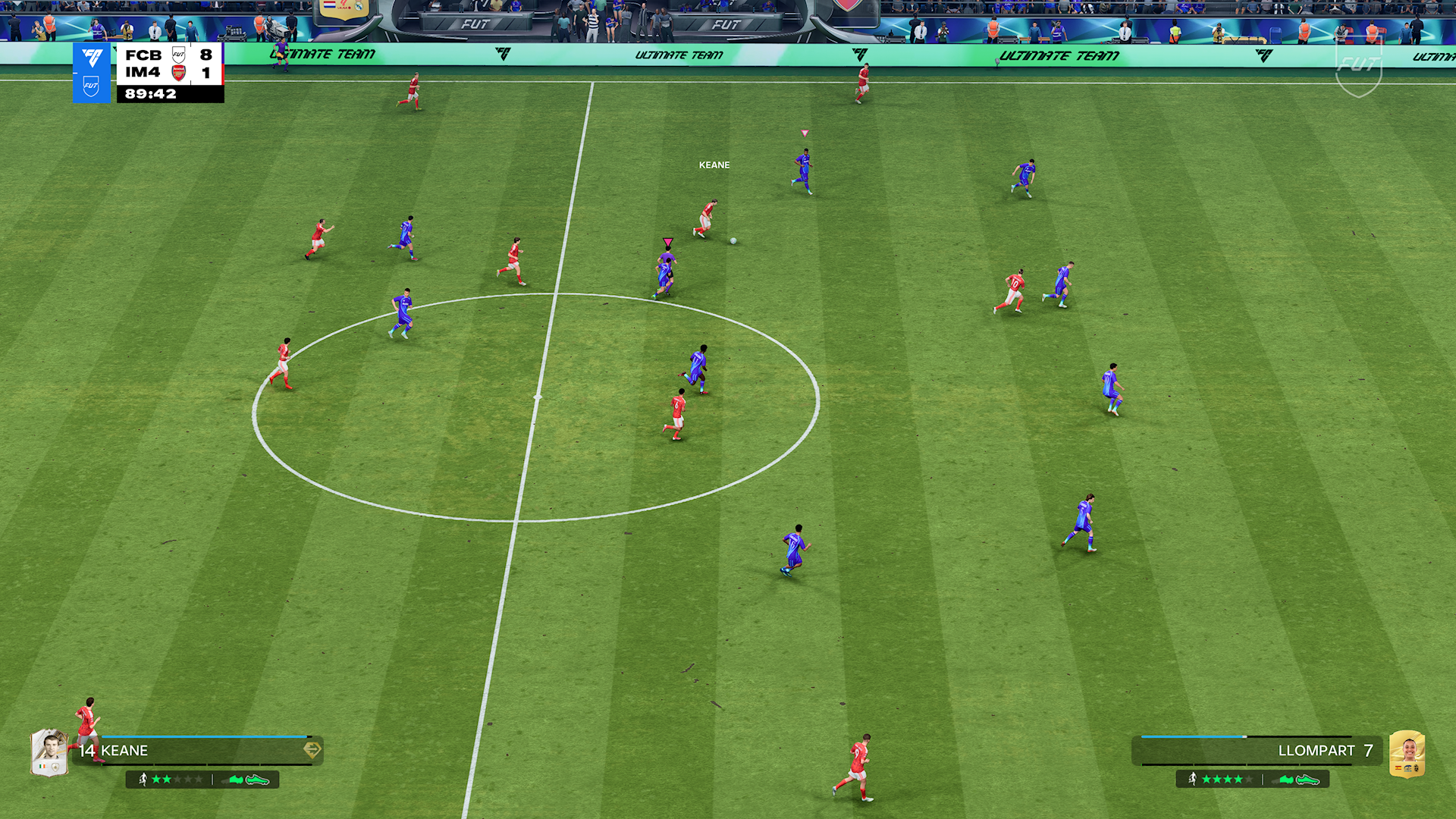
Visually, FC 27 remains impressive on Xbox Series X. Stadiums are packed with atmosphere, players animate smoothly, and licensed broadcast elements add authenticity to major fixtures. Smaller clubs and less prominent competitions don't get the same attention, but the overall presentation remains among the strongest in sports games. The soundtrack is energetic and varied, though menus can still feel cluttered as the game tries to direct players toward multiple modes, objectives, and rewards at once.
EA Sports FC 27 is a better football game than its predecessor. Less defensive automation, smarter attacking movement, and improved crossing create matches that feel more dependent on player input. Career Mode’s transfer overhaul provides welcome depth, while The Grounds gives Clubs players a substantial new environment to explore.
The problem is that nearly every positive comes with a qualification. Manual defending is undermined by inconsistent player switching, Career Mode’s added depth creates more menu work, and The Grounds surrounds its entertaining football with progression systems and consumable advantages. Ultimate Team continues to improve as a mode while becoming even more focused on collecting increasingly elaborate versions of player cards.
FC 27 does enough to justify its existence and offers several encouraging ideas for the series' future. It is enjoyable, polished, and capable of producing some excellent matches, especially once its more manual approach begins to click. However, it remains an evolutionary annual release rather than the major transformation many football fans are waiting for.

Developer - EA Canada, EA Romania
Publisher - EA
Released - September 25th, 2026
Available On - PC, PS5, Xbox Series X/S, Nintendo Switch + Switch 2
Rated - (E) - No Descriptors
Platform Reviewed - Xbox Series X
Review Access - A review code for EA Sports FC 27 was provided by the publisher for the purpose of this review.
James, has been a gamer for as long as he can remember with a particular passion for sports games, shooters and adventure games. He only started writing reviews last year over at The Outerhaven, but has quickly become extremely passionate about this part of the industry.