
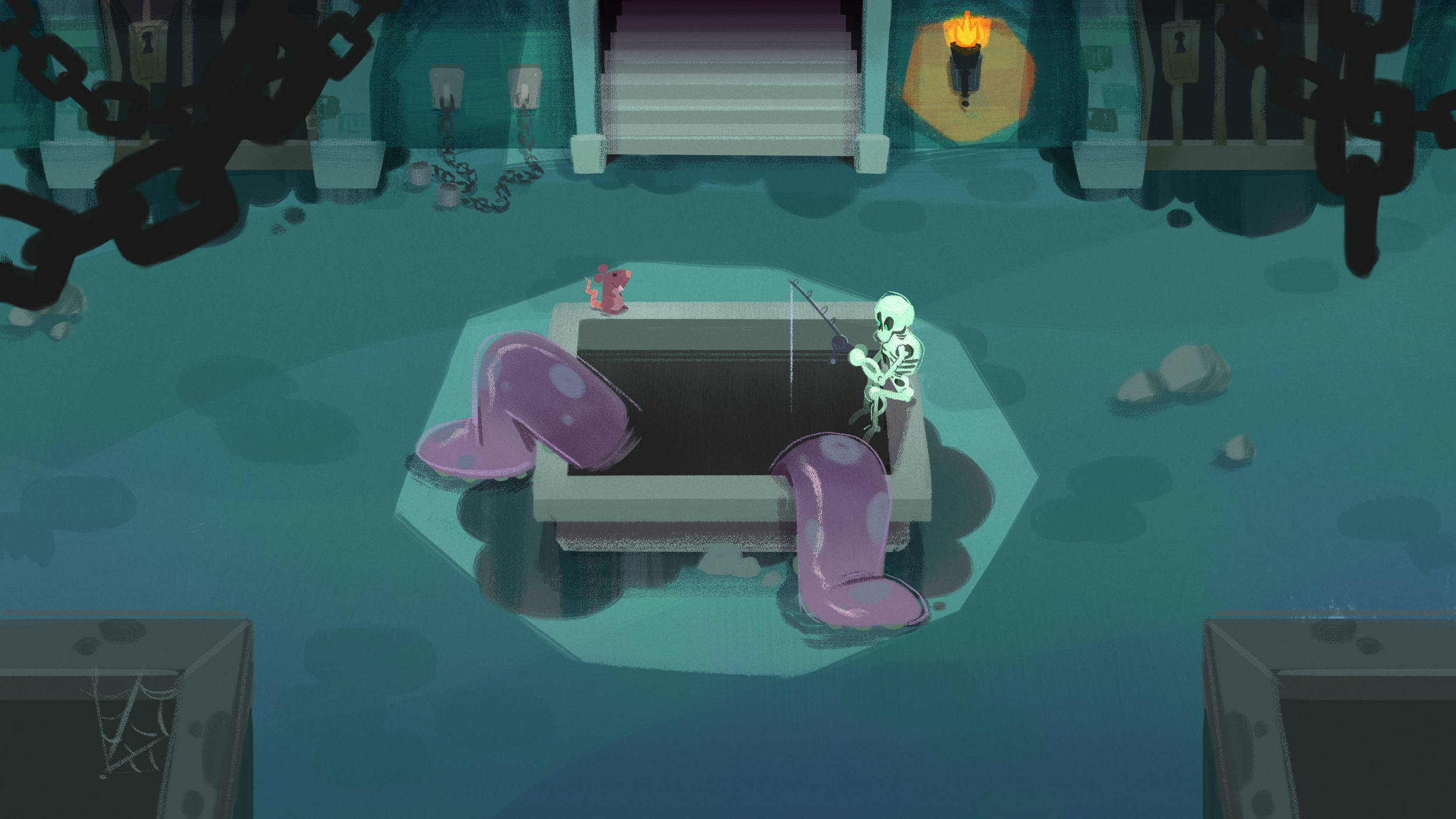
Even a broken crayon can be useful.
Ink Inside has a fascinating history. It was once pitched as a Nickelodeon cartoon series, only to find its way to video games after it was rejected by the cartoon giant. However, Ink Inside seemingly works better as a game, given its dodgeball and action premise, as well as the ability to let so much of its world shine through the experience of the player.
While Ink Inside released on Steam around a year ago, it's finally available on consoles. My time with the game was solely on Switch, played through the Switch 2, and while I am unsure of the quality of the game on Steam or other platforms, the Switch version is largely busted. While a patch is apparently days away, my experience has been that of the launch audience and not pre-release. It's playable for sure, but it suffers from a wealth of glitches and technical issues that could easily frustrate most players. From blacked-out characters, missing assets, to entire sections where you cannot even see your character, it's a wonder this passed any sort of certification on Nintendo’s behalf.
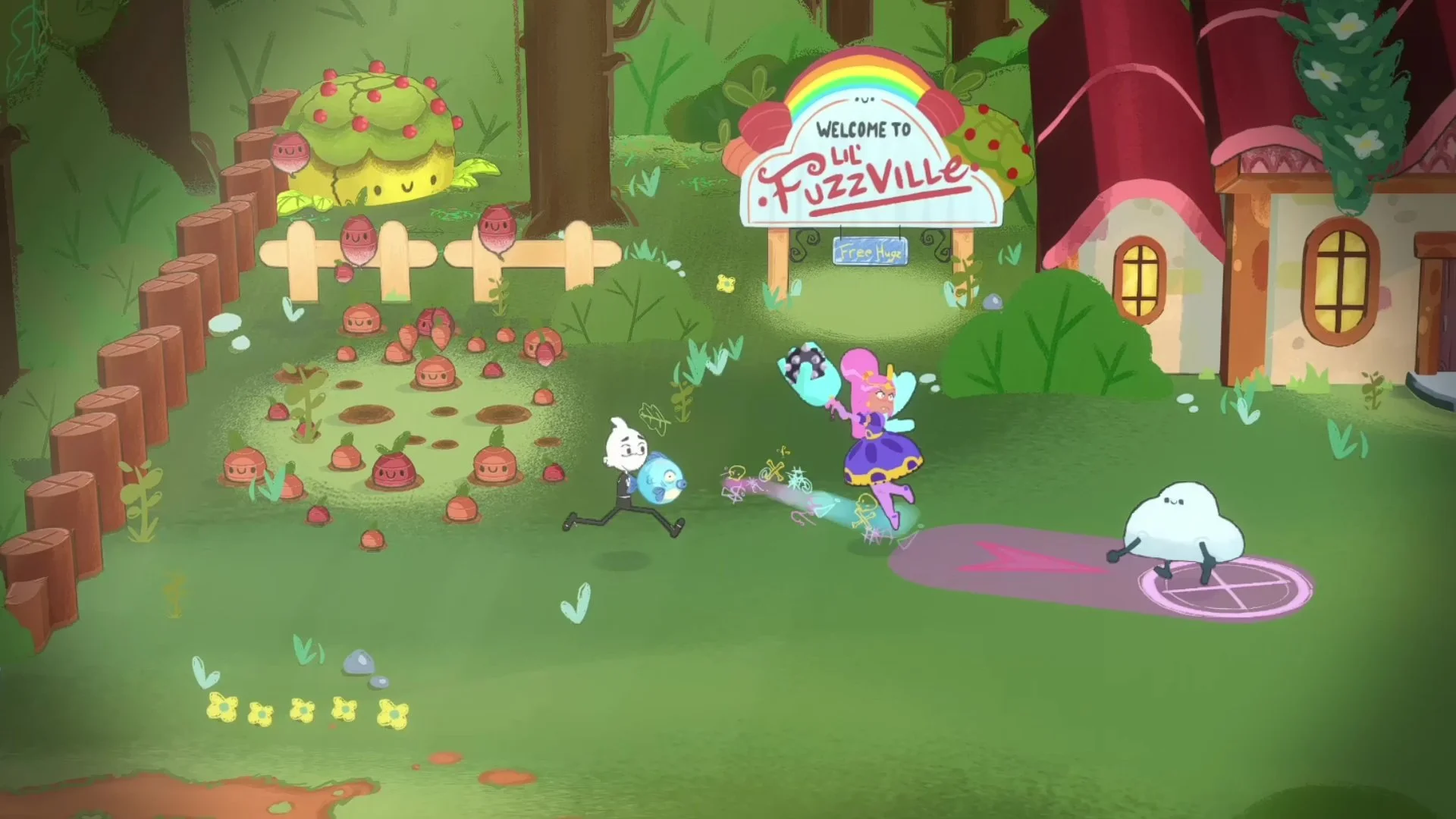
I do want to stress that Ink Inside has a lot going for it. The voice acting is exactly what you expect from a would-be kids' cartoon, and the cast of unique characters really does play into this strange world that has been crafted. Brian David Gilbert is a featured voice talent on the game, as Stick, but he's a YouTube personality I have zero history with or any sort of attachment to. While I do have issues with its combat system, it is at least fairly unique and works extremely well in co-op, due to brain-dead AI that often ignores any and all combat scenarios.
Ink Inside takes place within a notebook of a young girl named Hannah, who created a variety of characters throughout her childhood. Various notebooks are shown stashed away in a box, and that box is then placed in a closet. However, sometime later, the roof begins to leak, causing the contents of her notebooks to become wet and soggy. All of this is shot with real footage, with real actors, while the game itself takes place within the hand-drawn limits of the notebooks.
This mixture of hand-drawn visuals and real actors works well to drive the narrative forward, even if the game’s most intriguing questions are left open for a sequel. According to the developer, Ink Inside is planned as a trilogy, playing out like a three-season cartoon. While Ink Inside does have some resolution by its finale, as well as another quest for our heroes to embark on, there is likely a fairly long wait now to see this story progress forward. Thankfully, we at least know the subject matter of the next game due to a very lengthy tease.
This story is centered around a drawing named Stick. Well, that is at least what people call him. He is known as an unfinished, given his missing arm. An unfinished is a drawing that Hannah failed to complete, making him more of a doodle than a real finished work of art. He is brought back to life by a new ally, Detective Fuzz. His character is more or less a device used to explain the world and offer all the exposition you could need. While there is some growth for Fuzz, the story is largely around Stick attempting to discover who he is, and get to the bottom of a series of visions he is experiencing.
These visions are of Hannah, the young girl who created everything that makes up this notebook, as well as the others. Each drawing has an origin, the genesis of its creation. However, Stick is experiencing visions that are not just attached to his creation, making him rather unique amongst those around him. There is certainly a mystery around Stick, but much of what is in store for him is not answered in this game, at least.
Stick is a very positive force, often ignoring the path of disappointment and often seeing the light at the end of the tunnel. The game is very focused on what you can be as a person, regardless of how people may see it. The game, much like how a child’s cartoon operates, is a tool used to spread such a positive message, much like my years growing up with He-Man and GI Joe.
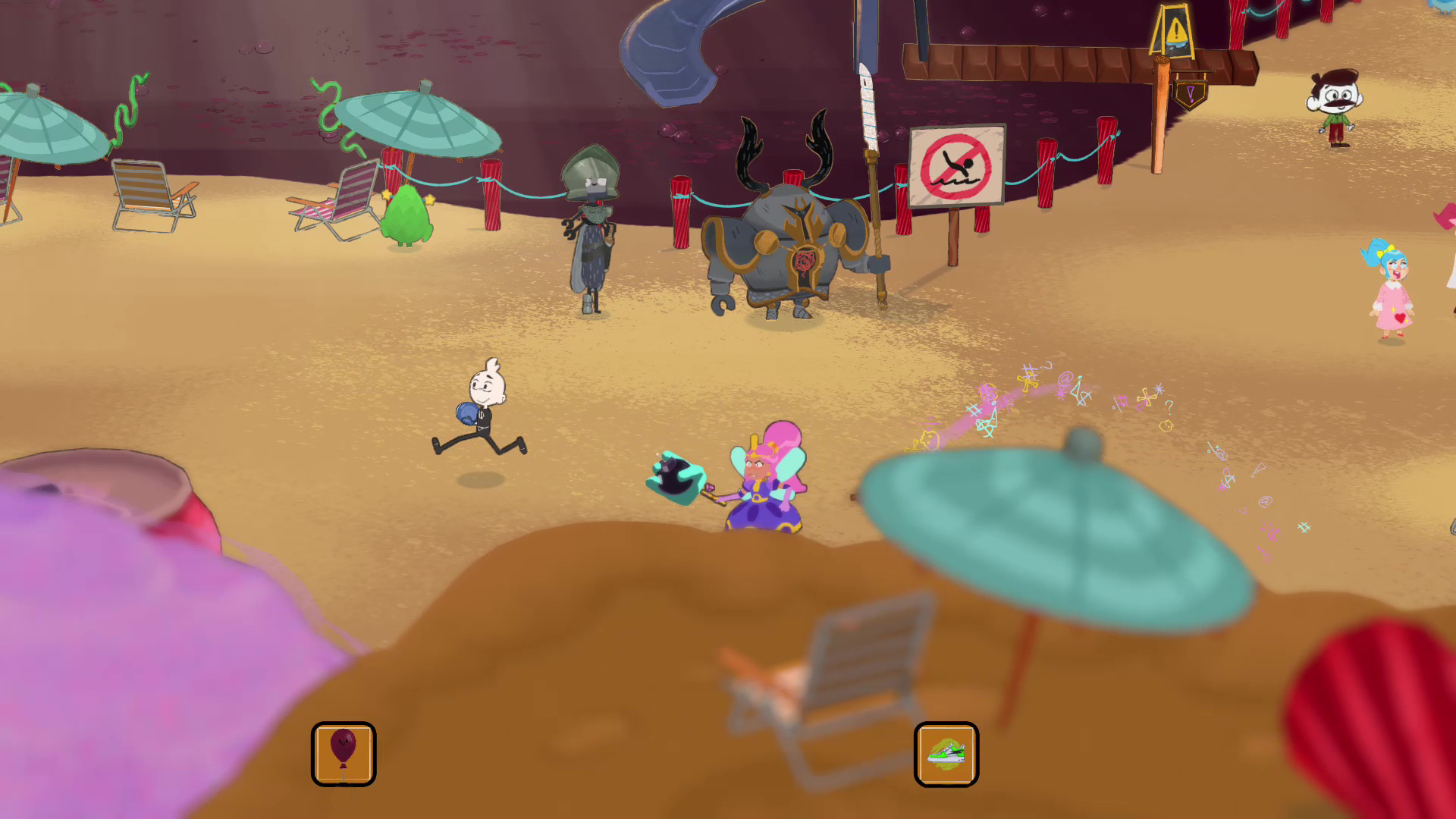
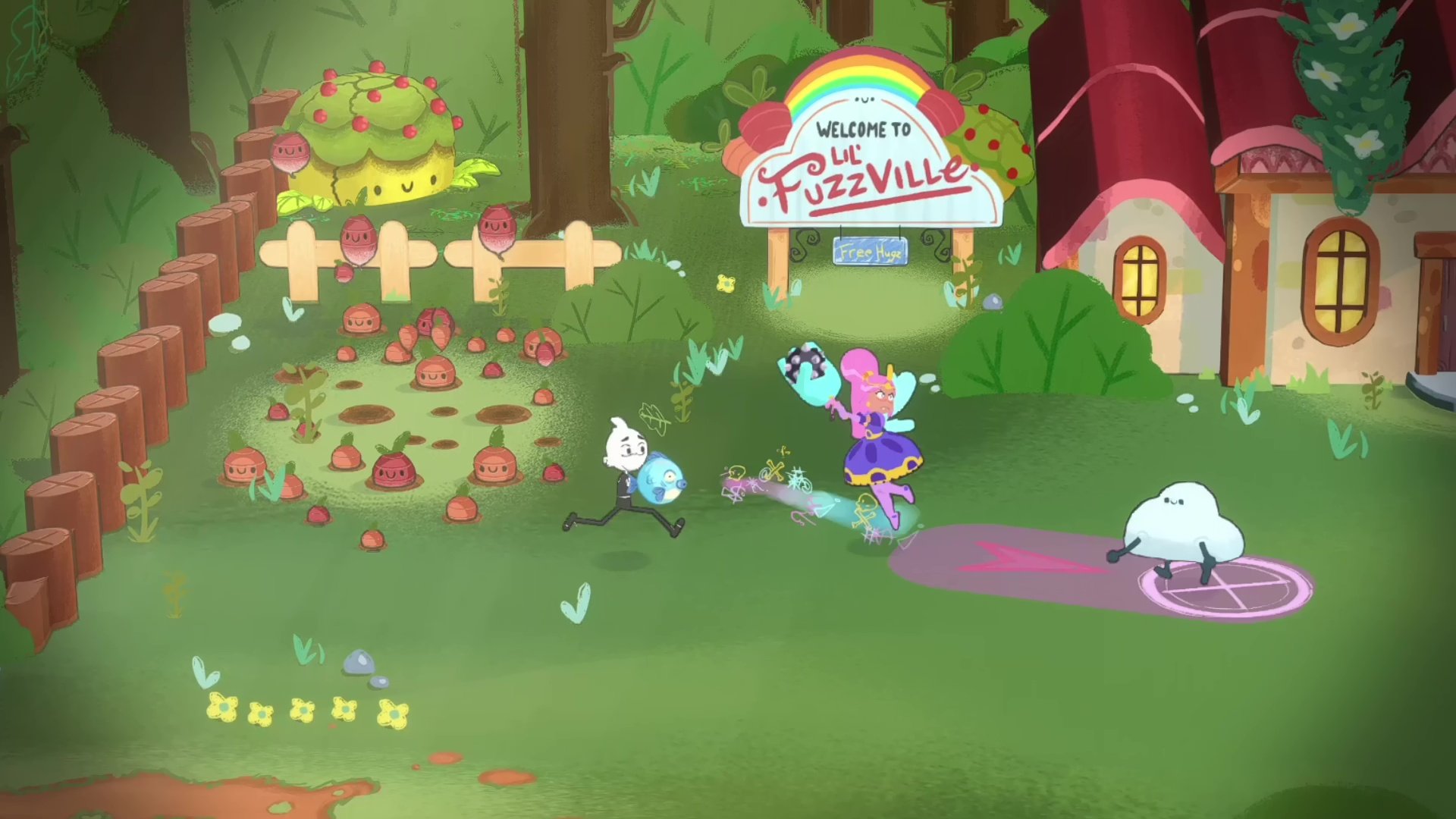
Stick will gain a few allies throughout his journey, most notably Detective Fuzz and then Traff, the foul-mouthed princess of cursing. While her cursing is bleeped out in a way that actually makes her dialogue far funnier than it should be, she does have a softer side that Stick does get to experience once her guard is down. There is some good character building here as we discover who she is, why she was banned from the kingdom, and generally just more to explore with her character.
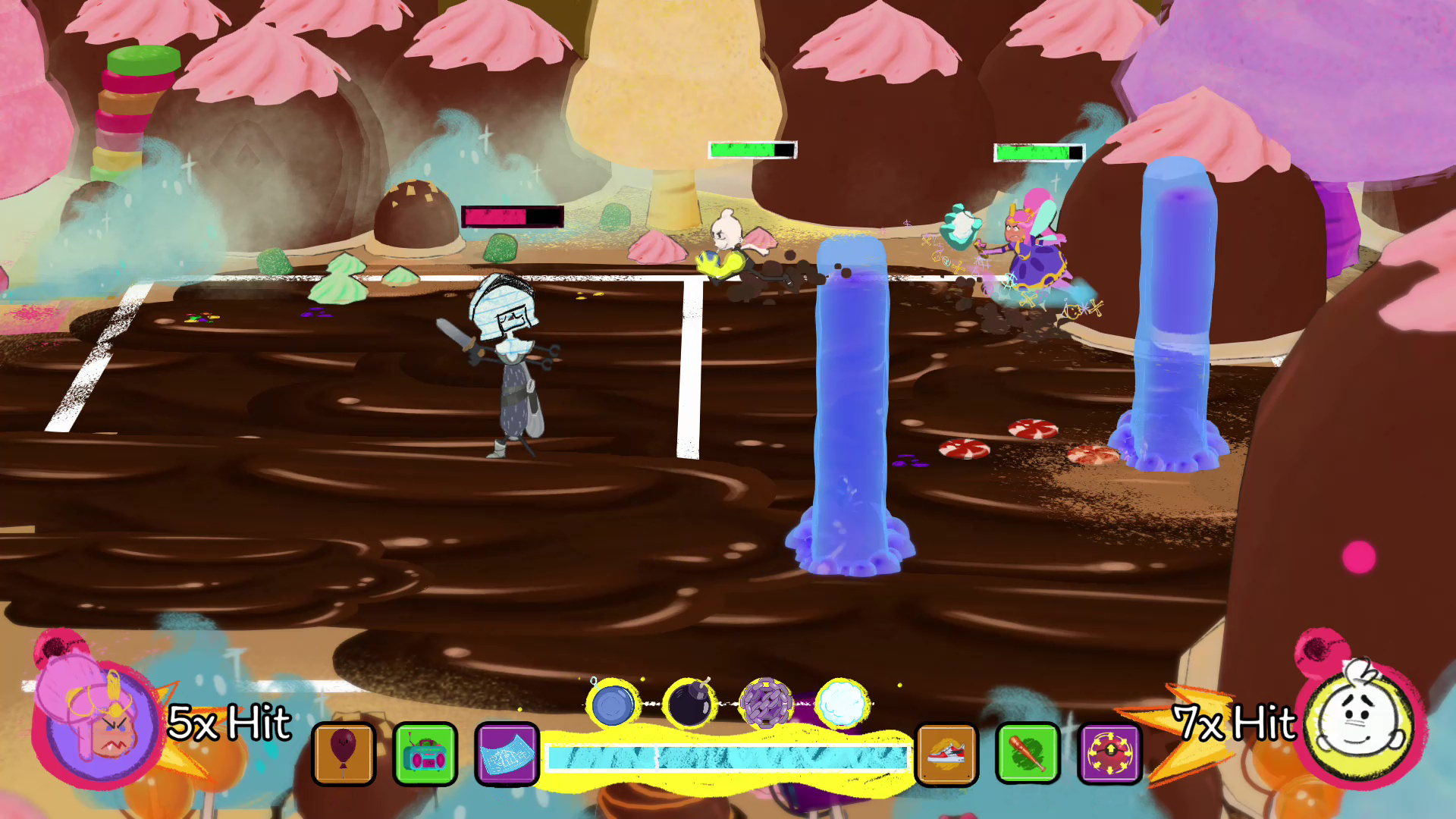
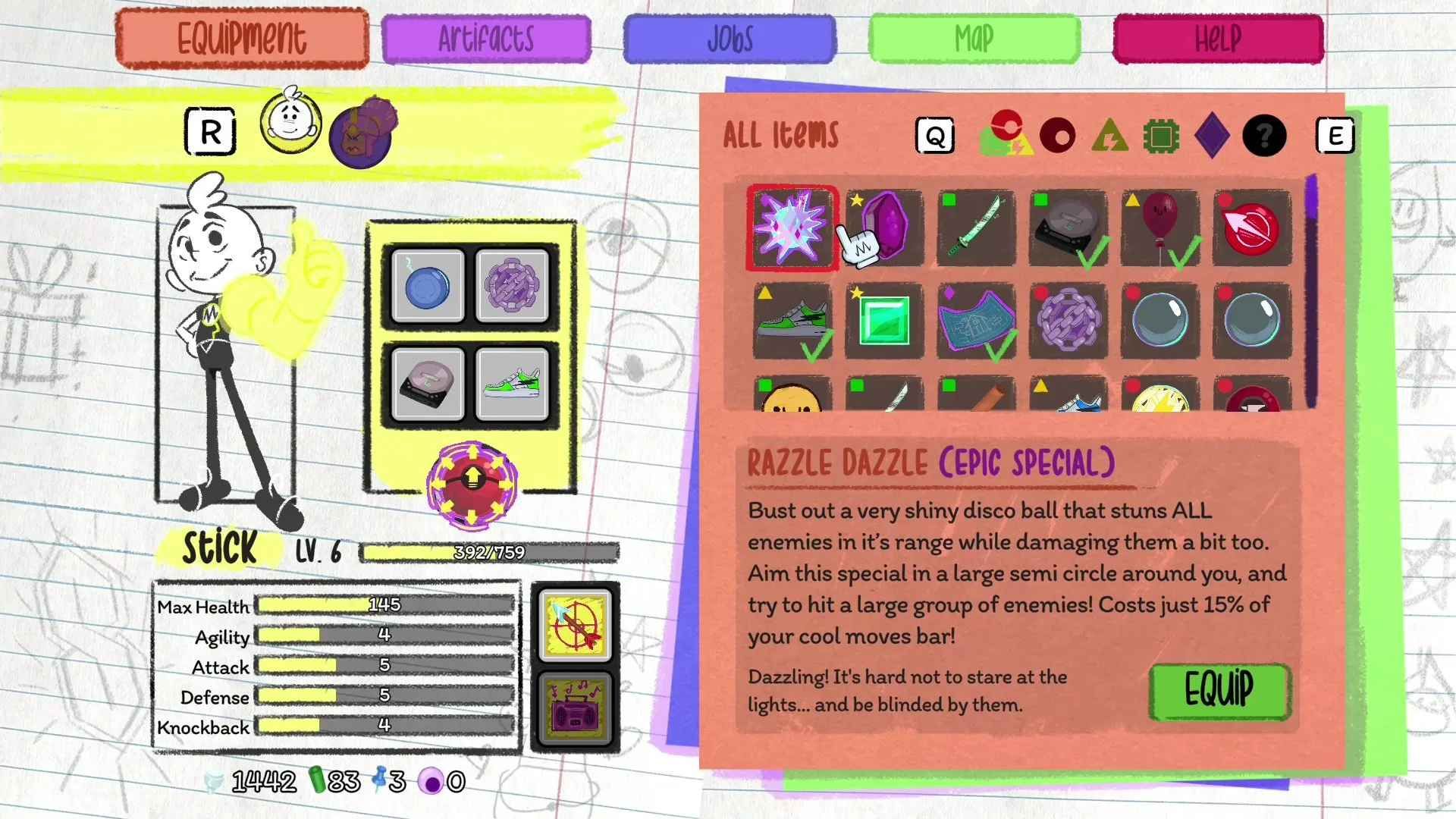
Stick and Traff can be swapped at any point in solo play, whereas your co-op partner will take control of her. Each character can be outfitted with various items to affect their speed, dodge capabilities, and the core dodgeball weapons, of which you can equip two types of dodgeballs, which here are called cores.
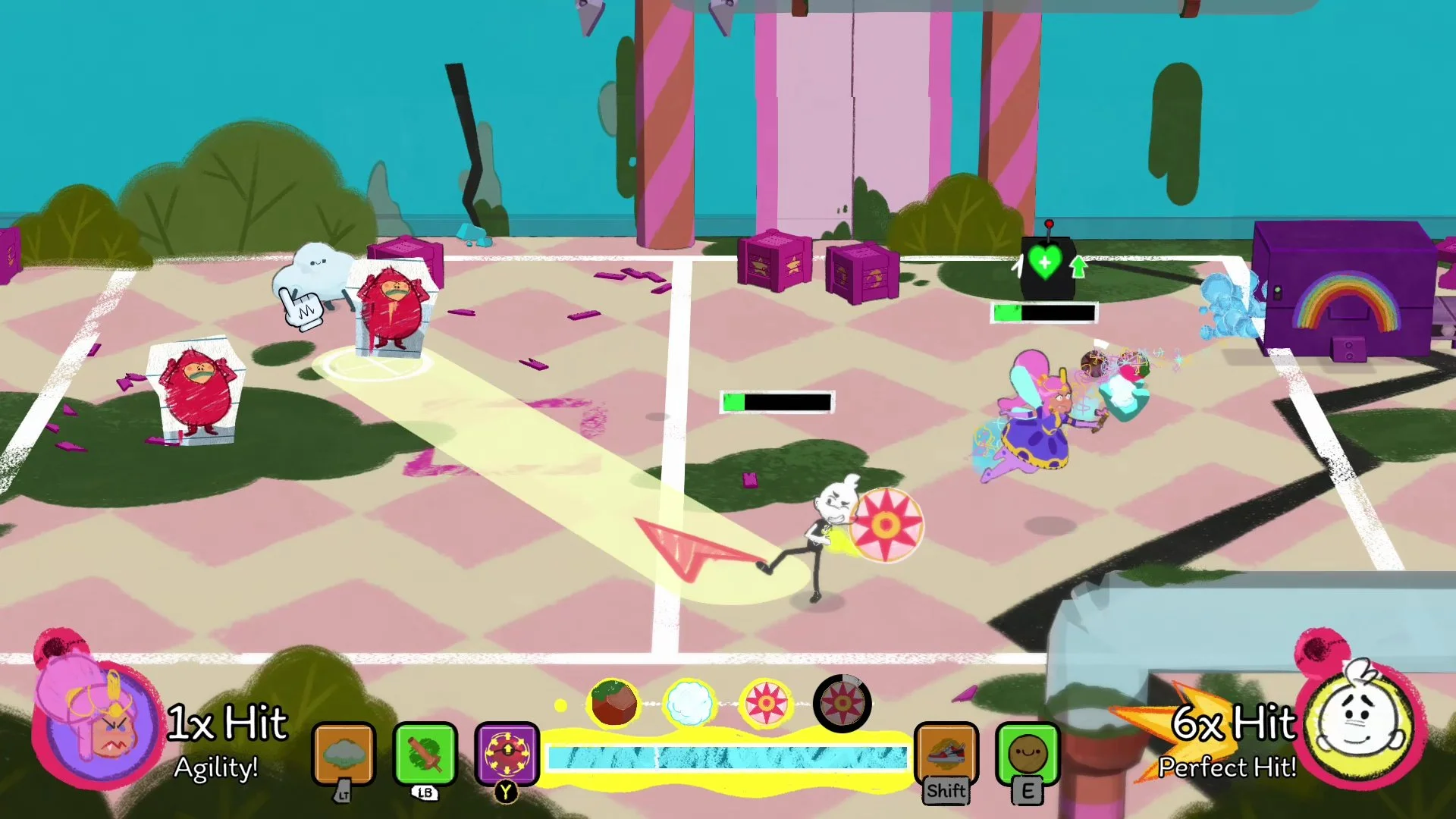
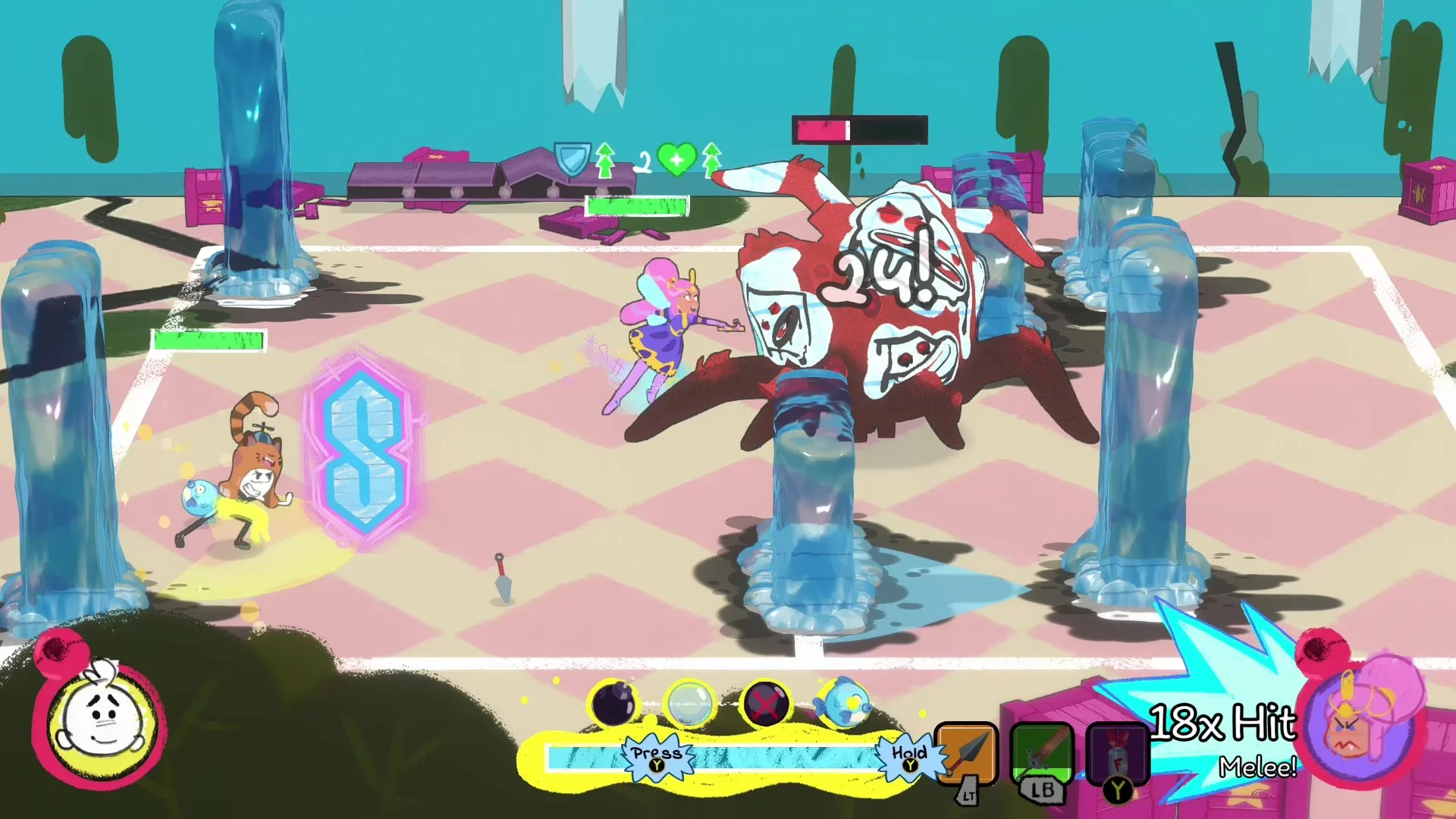
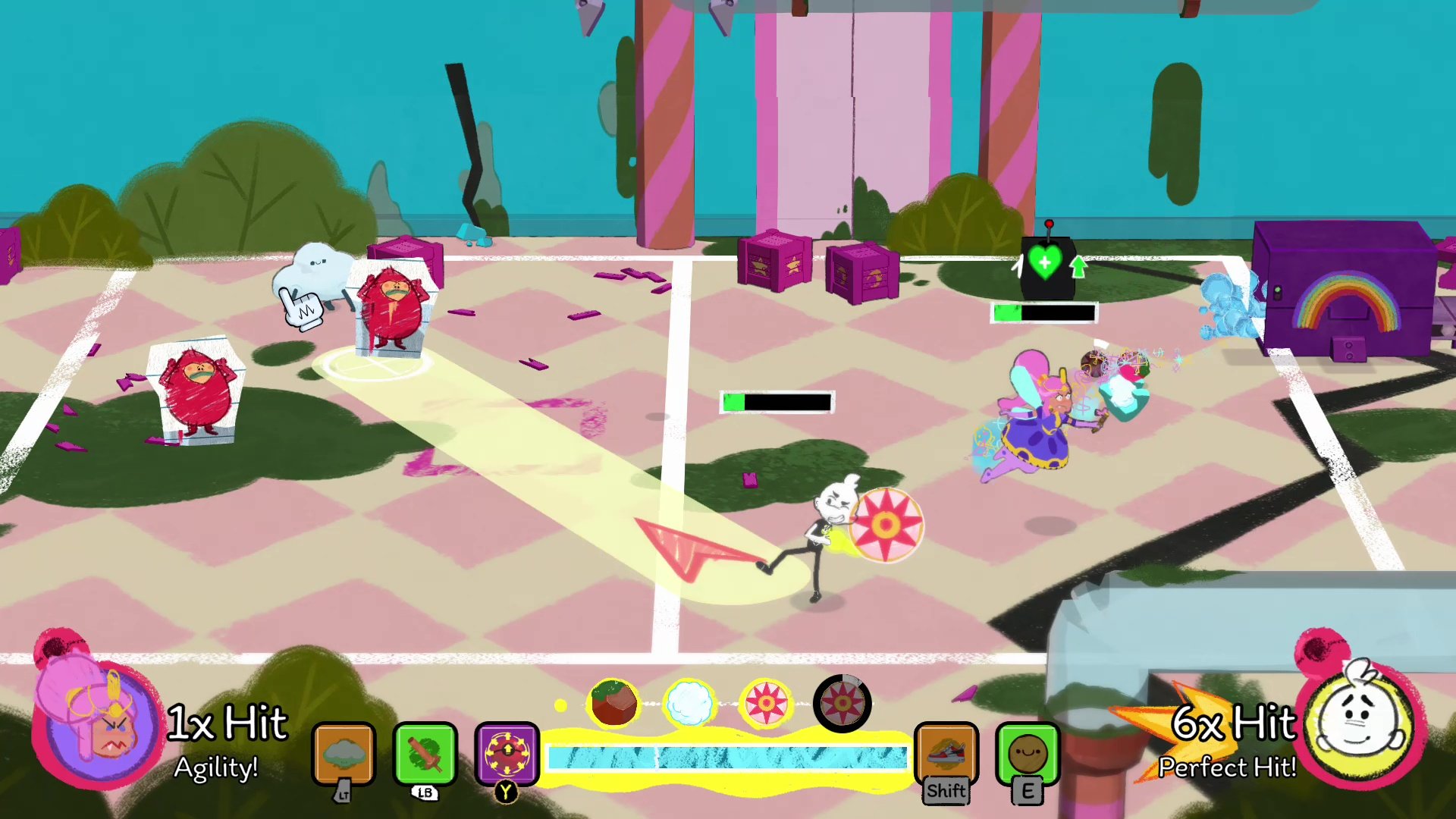
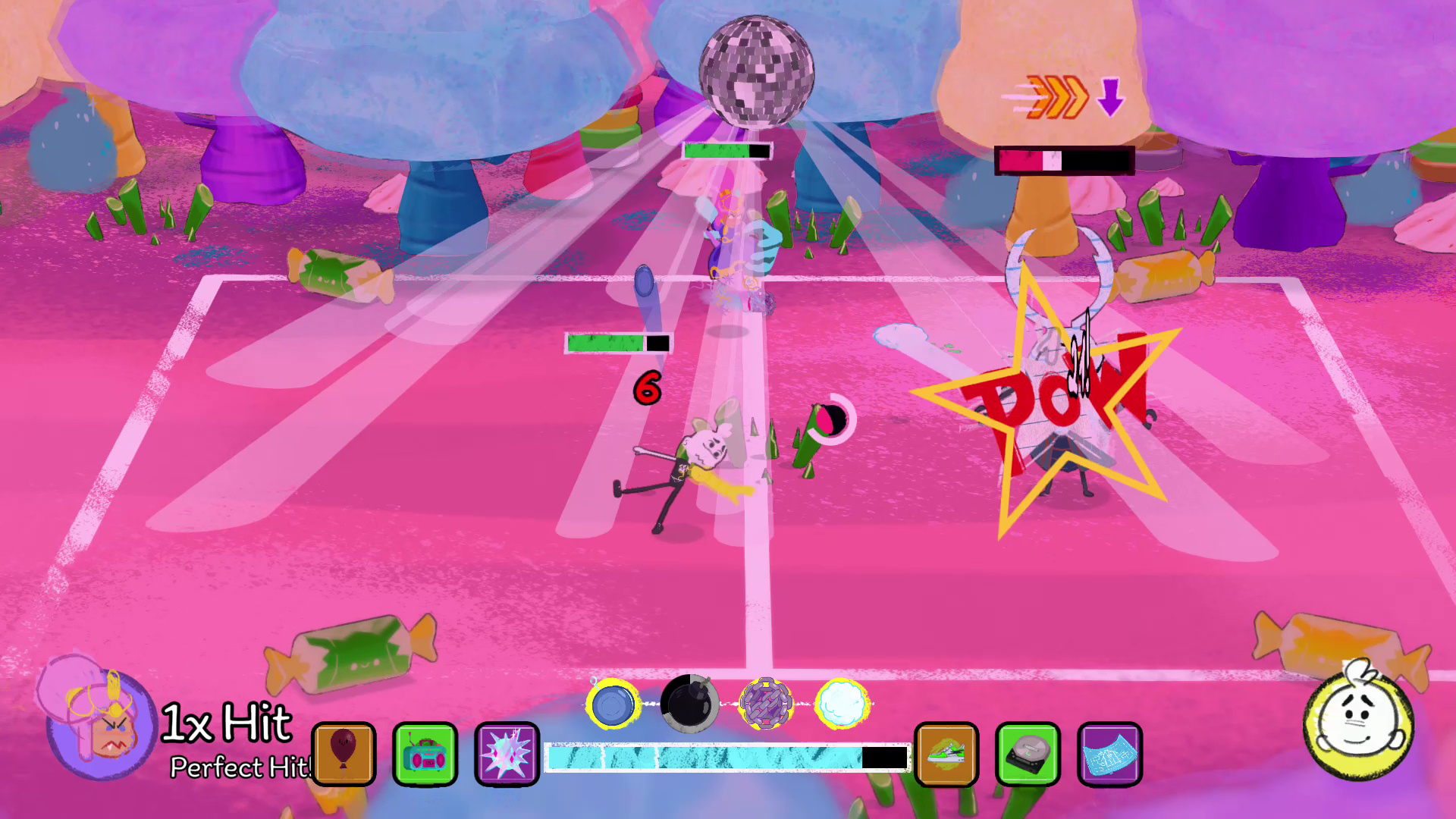
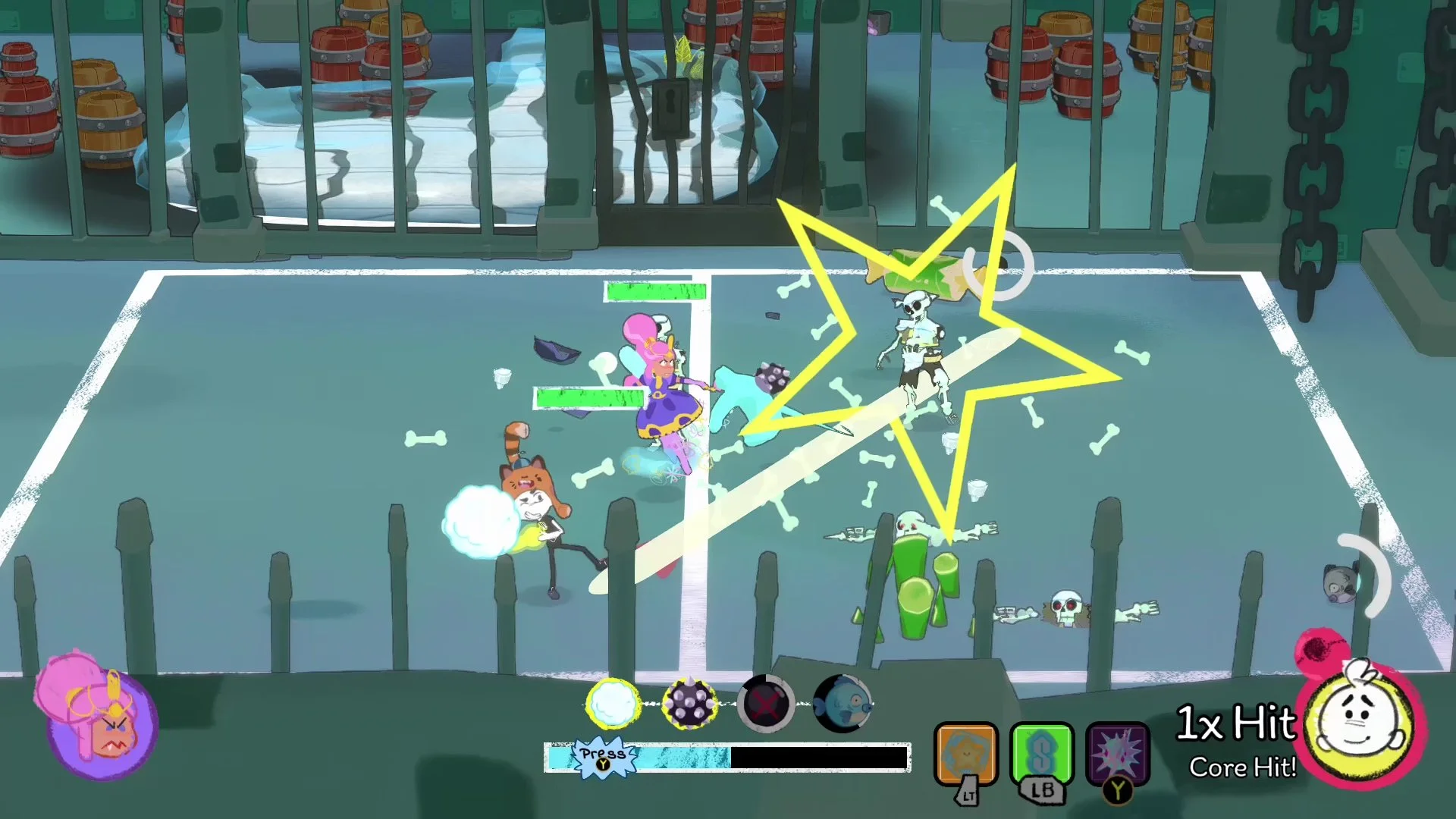
Combat is pretty straightforward. You encounter enemies as a court then materializes around you, throwing you into battle. There are no random battles; you'll simply run into an enemy and begin your round. You throw your ball, hope to catch the rebound, and also attempt to not get hit yourself. If you don't have a ball, you need to go retrieve it, which can ruin the flow of combat considerably, especially when the cores are invisible, but more on that technical issue later.
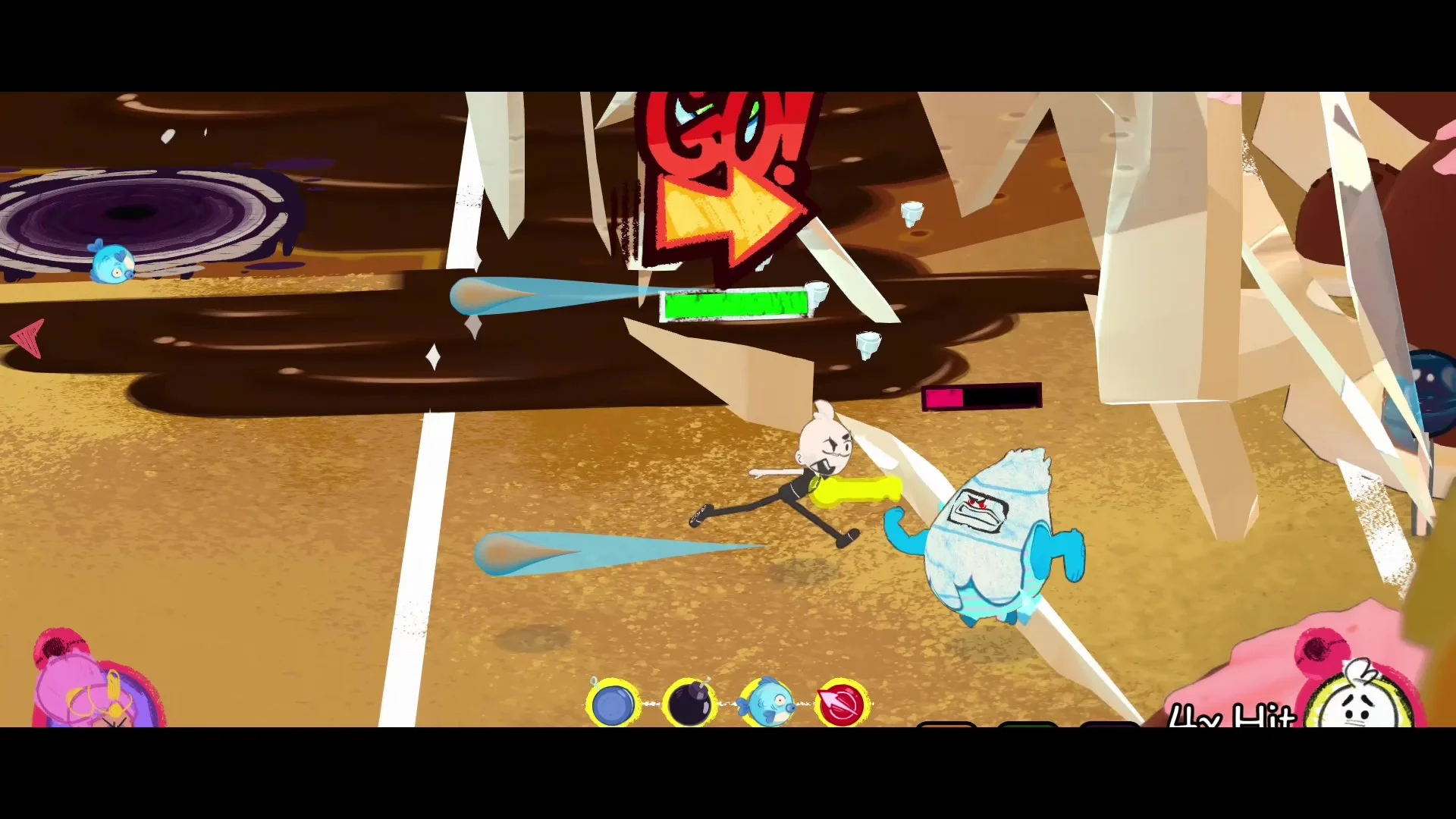
Each ball and ability you have will affect combat differently. However, early on, the game foreshadows a beloved hero who could break the rules and cross the center line. And of course, Stick gains this ability. This ability is called “Breaking the Rules,” and it allows you to cross the center line to deal melee damage or simply get up close to let those cores fly. However, while Stick only initially has one arm, he suddenly grows a yellow-highlighted arm, oddly similar to the ability the aforementioned foreshadowed hero used themselves. This foreshadowing continues as Stick continues to gain new abilities. I will say that if Stick is this mysterious hero, it would be a poor choice to do so, given how heavily foreshadowed that there is some connection.
Cores vary in type. Some are slow but powerful, fast but lacking in impact, or fueled by varying elements. Some are used to solve light puzzles or activate switches or shoot through paper walls. Each core has a type of rarity, using the standard colors used in hundreds of games. You'll upgrade them with resources you'll find as you encounter shops and vending machines. Duplicate cores can also be broken down and converted into said resources.
As the notebooks are being damaged by a leaky roof in the closet, the water is making several drawings soggy. These sog-monsters are your foes. You'll use the cores to bash the sog out of them, reverting them back to their former selves. Bosses are also part of these monstrosities, and the few encounters are challenging and more or less the same combat flow as some of the more intense battles.
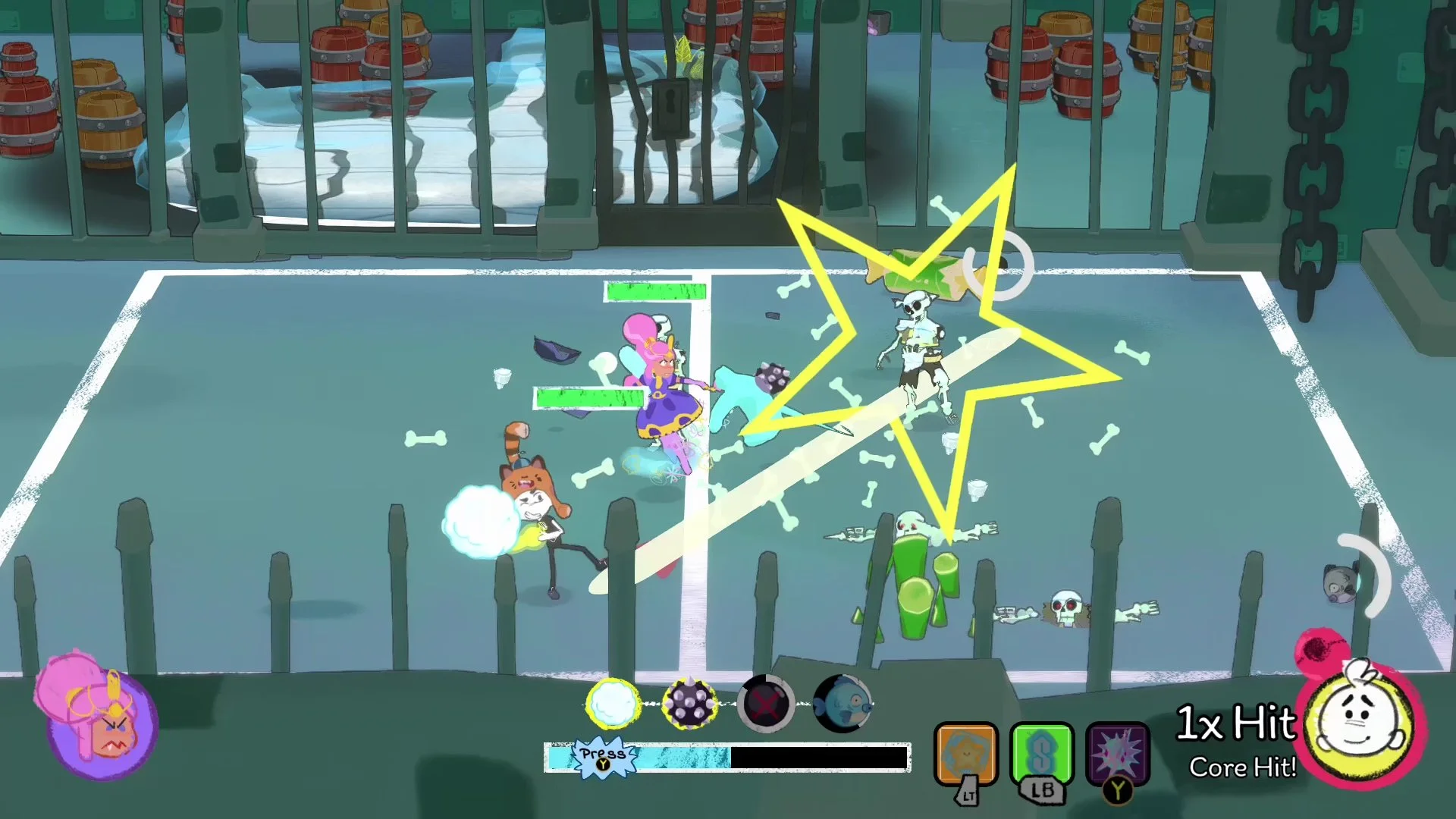
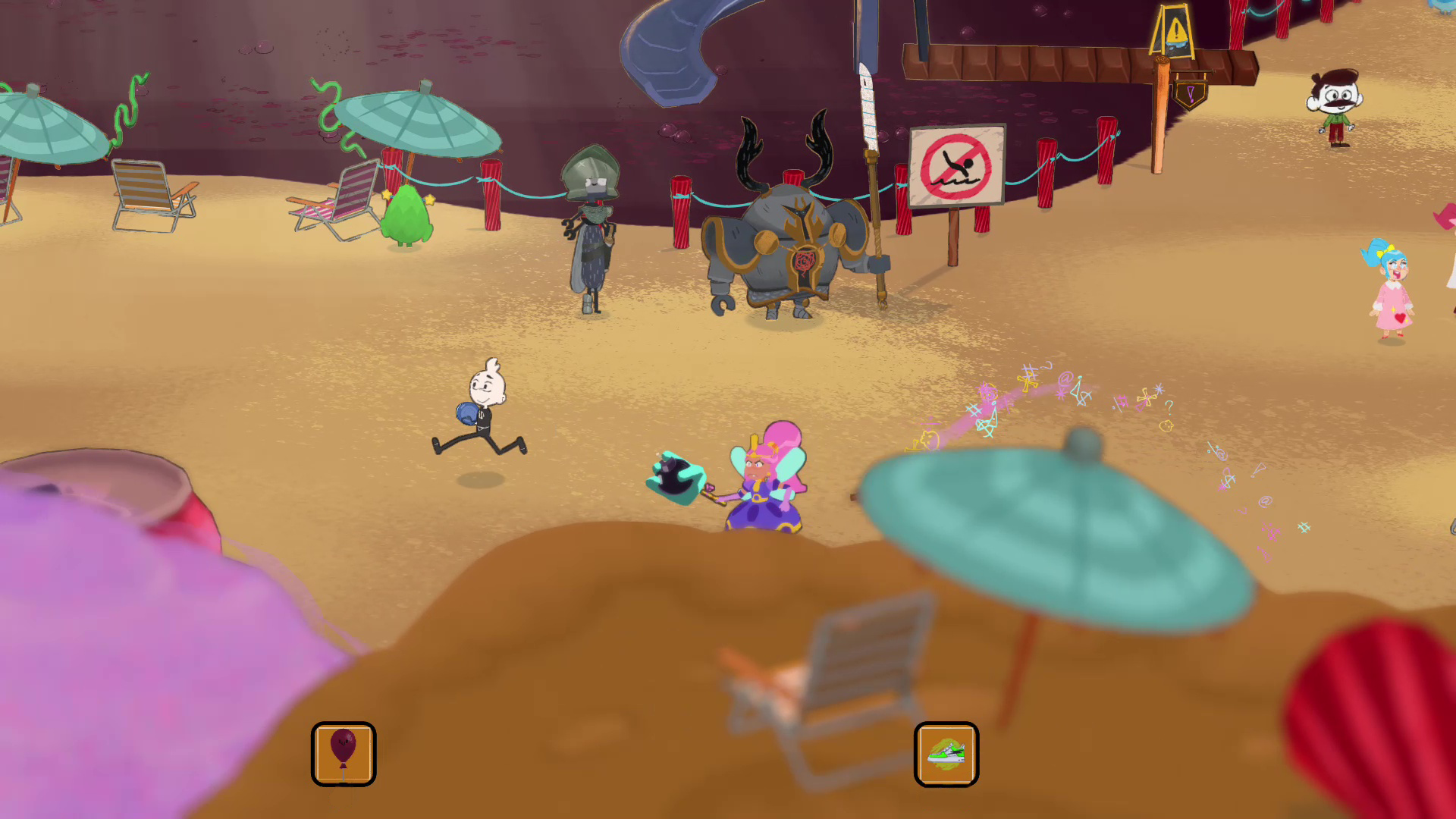
Exploration around this kingdom is fun, with some well put-together locations that have you moving from biome to biome. From forests to candy valleys and the depths of the Sugar Dungeon, the game does a good job of moving you around. I will say that the Sugar Dungeon is the first time you'll likely get lost, given the need to find four switches, of which three are very easy to find. That fourth one? What a nightmare.
Later on, you'll finally get a map. While this should be useful, the way the map is implemented in the UI is wildly underwhelming. Often, the map will be black, until you move the screen around to eventually find it. I'm not sure why each map location doesn't just lock itself to be front and center, but here we are. There is also a side menu for quick travel, but I have no idea how to use it, as not a single button allows me to select those options. That said, when the map works, it generally is fine, but rarely great.
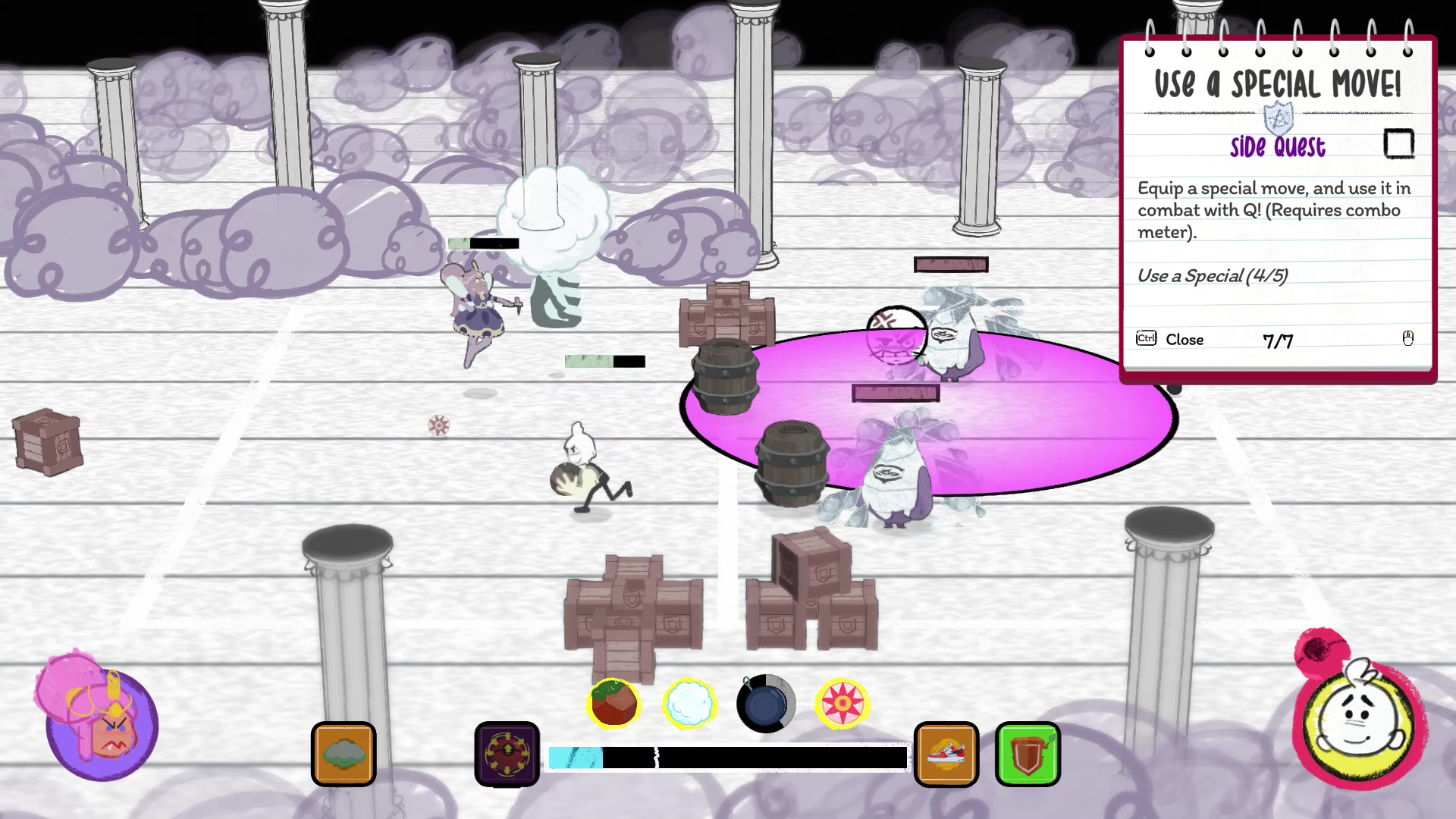
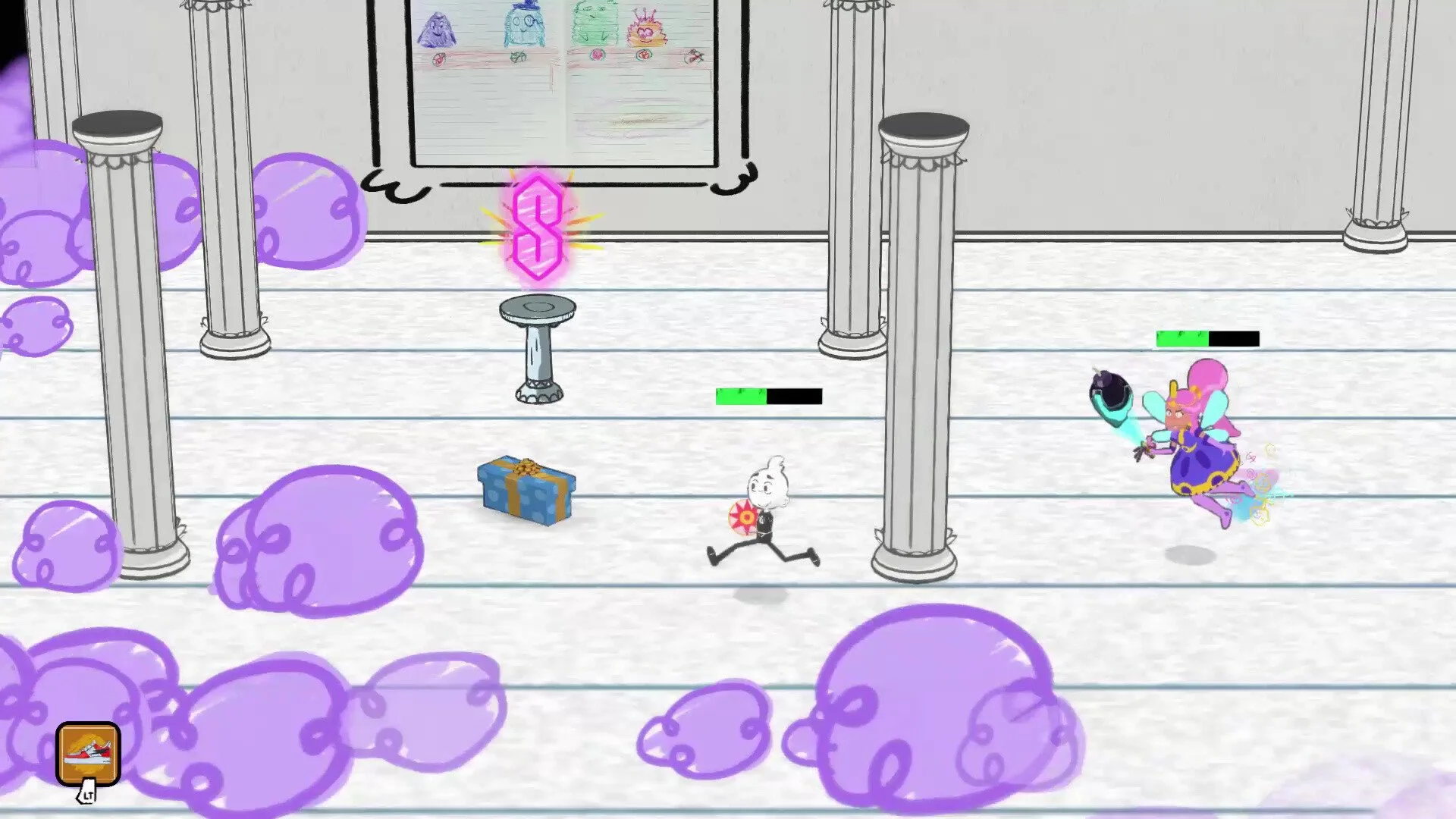
In the game's early hours, you'll run into tears in the notebook. These allow you to teleport to new locations. You'll travel through a notebook-themed corridor as you seek out a ladder to go to the desired location. What suffers here, aside from an issue I'll point out shortly, is that Stick is a black and white stick figure, and with this area being almost entirely white, it is hard to place him during combat.
Currently, the Switch version is pretty broken. When you enter into these tears, your character can often be invisible. While a reload will fix this, I would go two or three visits to these areas, and the issue would show up again and again. The same goes for your cores going invisible during battles. Throughout the bulk of my time, I couldn't see my cores at all. This also affected the shops and upgrades, as all assets were invisible. Since combat relies on you picking these cores up, I had to run around and hope I ran into them. These are only two big issues out of several more that could fill up a review on their own. While all these issues were resolved upon a reload of the game, they would return in force and become incredibly frustrating. Also, as you put the game to sleep on the Switch, returning to the game would trigger these issues reliably.
Ink Inside is a good attempt at bringing this story to life, but a host of technical issues greatly hold it back. However, aside from its performance woes, there is a solid RPG here with some interesting combat and engaging characters. While Ink Inside couldn't find its way to being an animated series, its life as a game certainly fits the property in vastly more interesting ways.
Developer - Black Field Entertainment. Publisher - Entalto Publishing. Released - December 11th, 2025. Available On - Nintendo Switch, PS4/PS5, Xbox One/Series S/X, PC. Rated - (E) Mild Fantasy Violence. Platform Reviewed - Nintendo Switch. Review Access - A review code was provided by the publisher for the purpose of this review.
Jeff is the original founder of Analog Stick Gaming. His favorite games include The Witcher III, the Mass Effect Trilogy, Hi-Fi Rush, Stellar Blade, Hellbade: Senua’s Sacrifice, and the Legend of Heroes series, especially Trails of Cold Steel III & IV.