
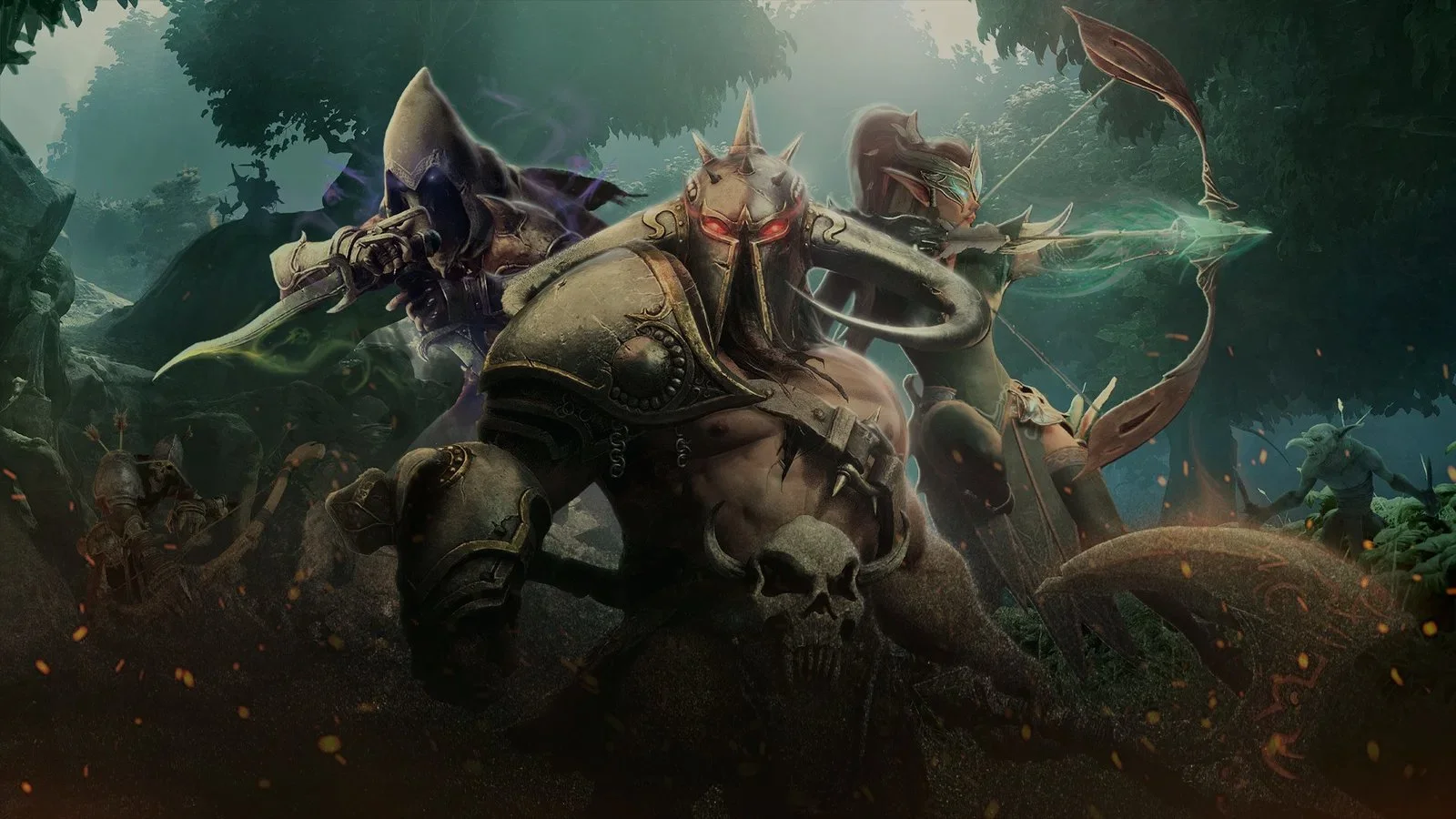
Fantasy Wars Extraction
Extraction-style games have rarely enticed me, largely due to the player vs player systems and the prospect of having them take away much of the progress I’ve made on my gear. However, when games like Eldegarde offer up PvE throughout its offerings, it certainly changes my mind about the genre and gets me intrigued.
Eldegarde is an MMORPG extraction-style experience that takes place in a medieval fantasy setting. During my time with it, I’ve certainly felt some Dungeons and Dragons vibes in extraction mode. Whether it was just me, or the classes you can play as, it certainly aided in that feel of that classic property.
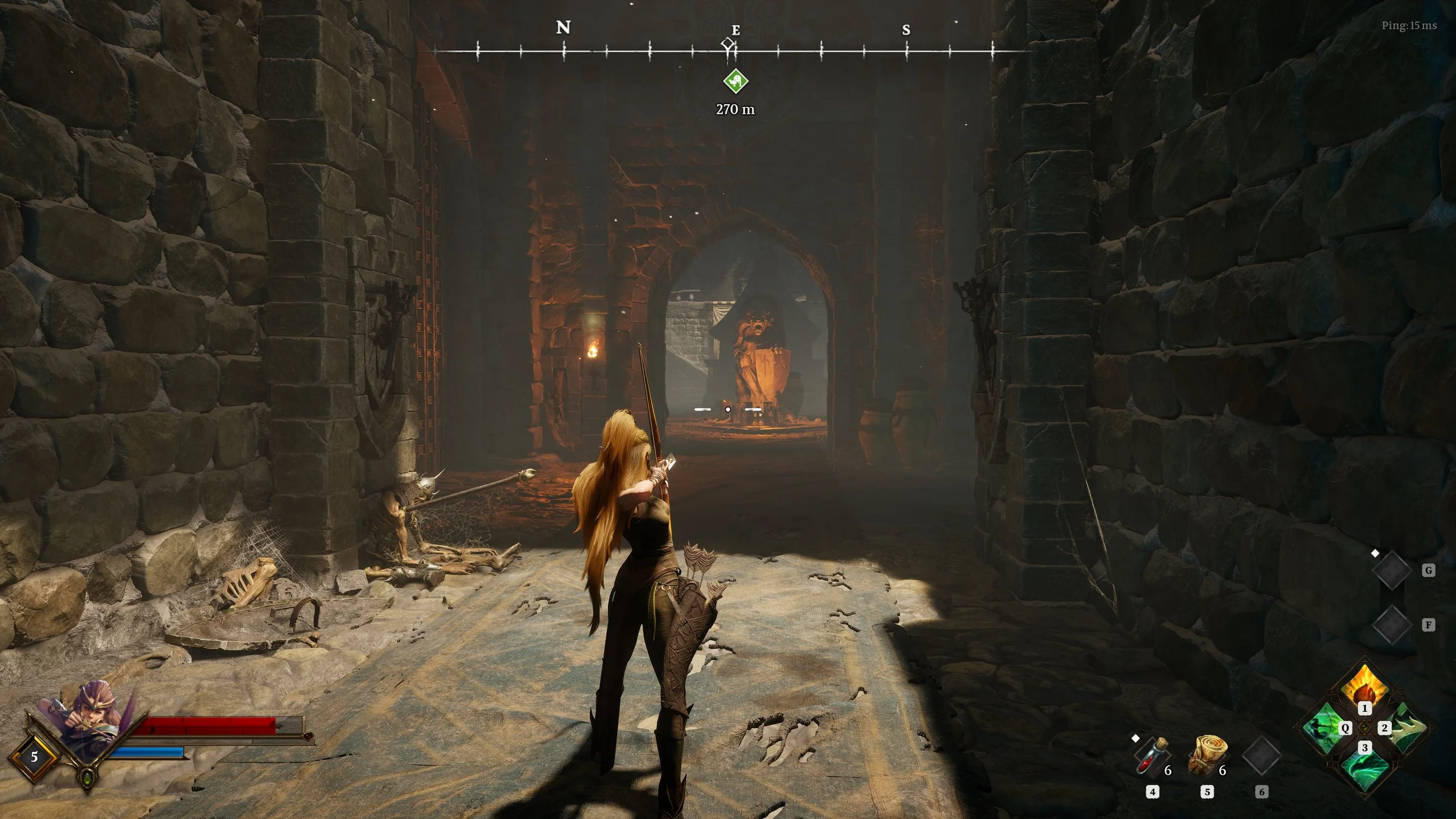
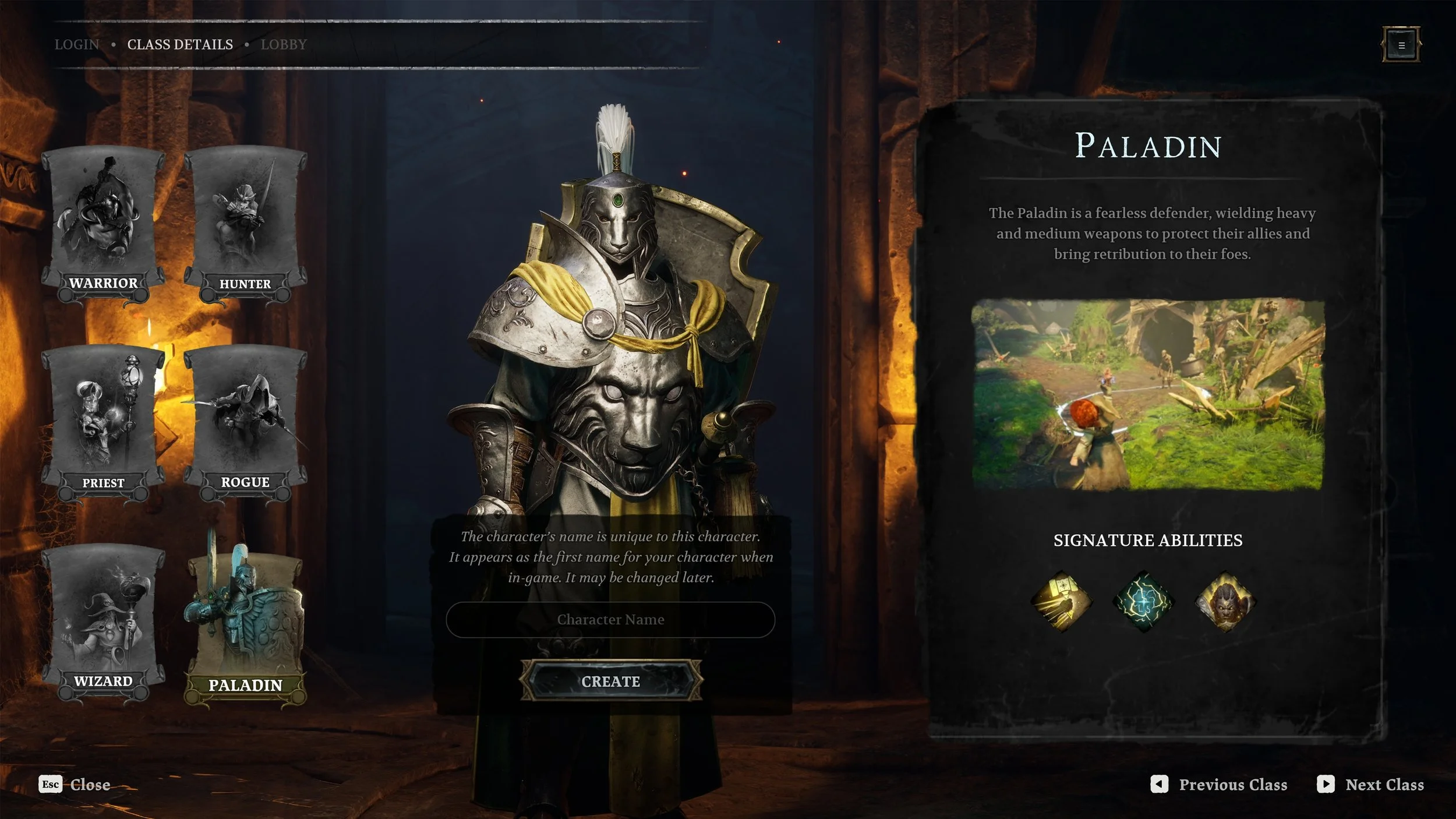
There are six classes you can pick from, ranging from Wizards, Rangers, Rogues, and Paladins. Each has different skills, armor, and play-styles, so you are bound to find one perfect for you. Once you’ve picked your class, you’ll likely want to jump into some in-depth tutorials; guides that offer up substantial tips to set you on your way. Well, about that…
When you enter into what the game offers as a tutorial, you are dumped into the first map and essentially told to figure it out. Luckily, after the first run, you can find a section in the lobby and character tab to help you learn what this “tutorial” was unable to do. It’s rather bizarre how this is handled, but you’ll likely pick up on what you’re meant to do and how to do it fairly quickly.

That said, it would be nice if they gave a small area as a way to learn how each class works, as some classes have some aspects to them that I still haven’t figured out at the time of this writing. For example. The Priest is such a class as I could not for the life of me figure out where their Spirit Flask is, which is needed to restore prayer for their spells. You can imagine that this makes it kind of hard to play and enjoy the class.
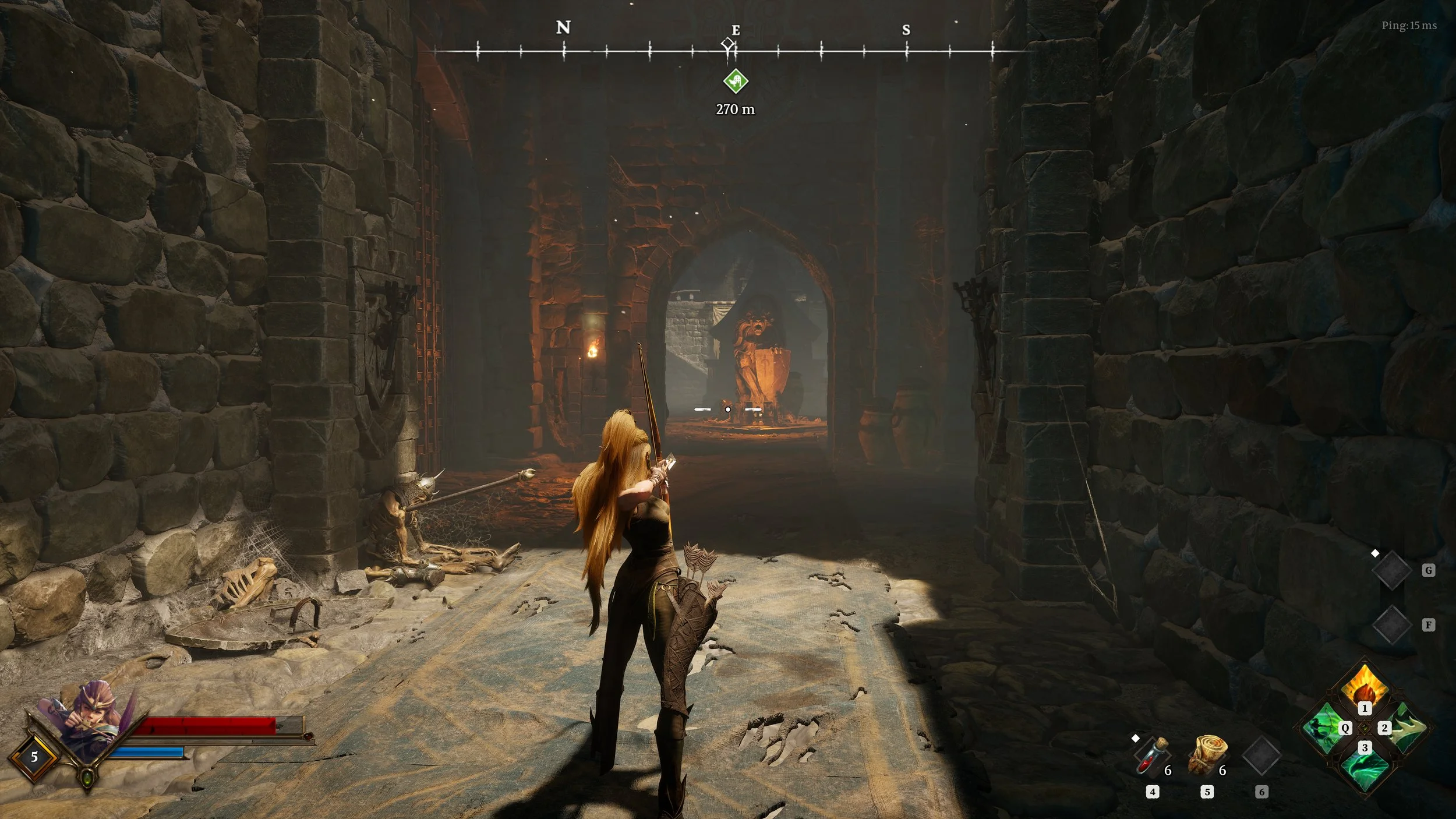
As mentioned, the classes available are as follows: You have the Warrior, who is a frontline fighter that is built around taking damage, dishing out serious damage, and benefits from rage-based mechanics. Next is the Rogue, who is a stealth-oriented class that focuses on close-range stun attacks. The Hunter, who is a tracker that utilized a bow, is a solid choice for those who wish to remain as far away from their foes as possible. Then we have the Paladin, who, like the Warrior, can dish out some good damage, also doubles in a support role. Finally, we have the Priest and the Wizard, with the former being a support class and the latter being a ranged magic dealer.
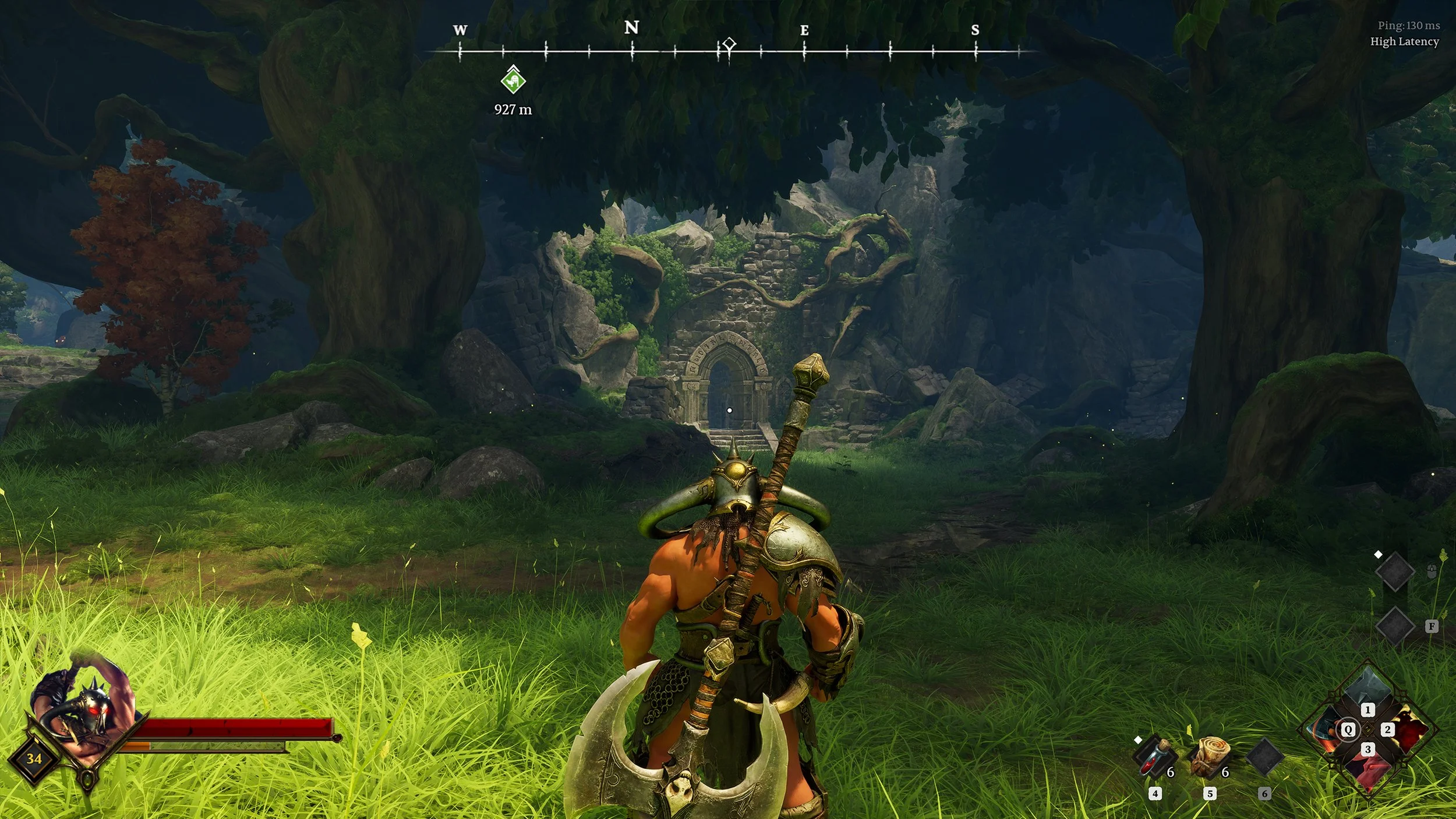
Now, once you figure out your class and how they play and serve your playstyle, it’s time to have some fun exploring and taking in some combat. You have five maps that you can choose from, with the first being Goldbrook. This one is always available and is the easiest to play on. This makes it a great point to start from, learn your character, and rebuild if you’ve recently died and lost your gear.
The next maps are Greenwood, which is available as both a day and night variant, and Dawnhammer Crypt. These maps yield higher-tier loot and tougher enemies than Goldbrook. They also rotate every two hours to when they are available, so yes, if you want to play in the Crypt and it is not available, you need to wait. These maps are also on a PvPvE rotation as well. This then results in weighing your options and your risk-reward of exploring a map with other players or waiting for a more PvE experience, like myself.

The last map you can play to get new gear is the boss dungeon, Mor’thog’s Lair, where you’ll really look to test your skills in PvE. This map has an hour timer instead of the thirty-minute timer the other maps have, and frankly, the extra time is a bonus. This map holds the strongest enemies in the game, at launch, so you’ll need to bring your best gear and potions when you attempt to try this map out. Apart from the included maps is the Area. This is simply for PvP, so you’ll use it to test your skills against other players.
In each map, apart from the arena, you’ll find new gear, weapons, and resources that can help you get stronger. These resources can help build or upgrade your gear, or be used to make consumables needed to keep you alive. However, they can also be used to build up your lodge in the city to expand your capabilities and the items you can craft.
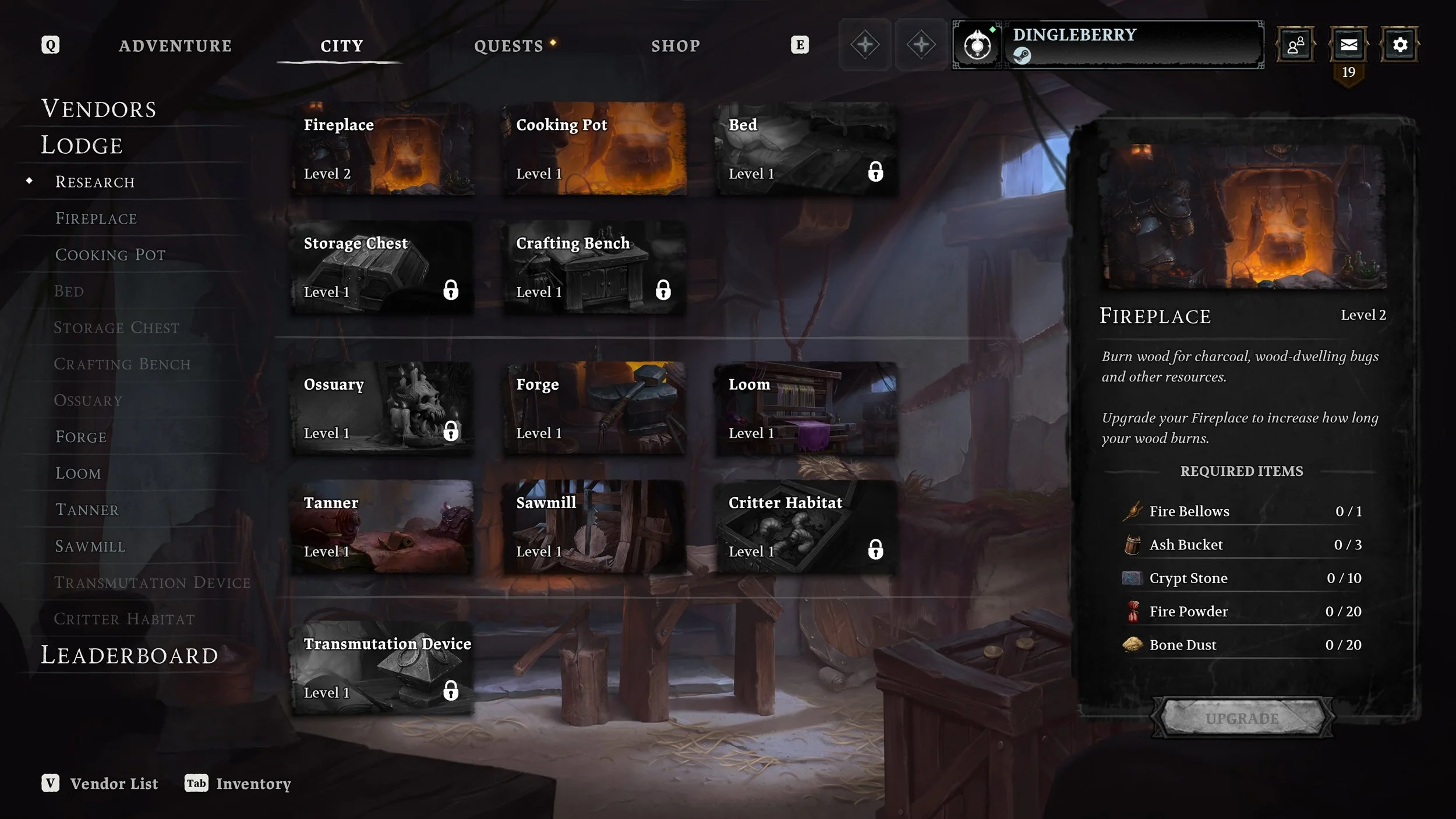
The Lodge is a major component of the game as it is needed for a variety of things. For example. The Lodge is required to grant buffs to help you in your expeditions. Each facility in the Lodge is useful and should be upgraded as soon as you can. From the cooking pot that gives you buffs, to the storage chests that can hold your resources, you can even make facilities that can make your own lumber, metal bars, cloth, and leather, all used to upgrade your gear.
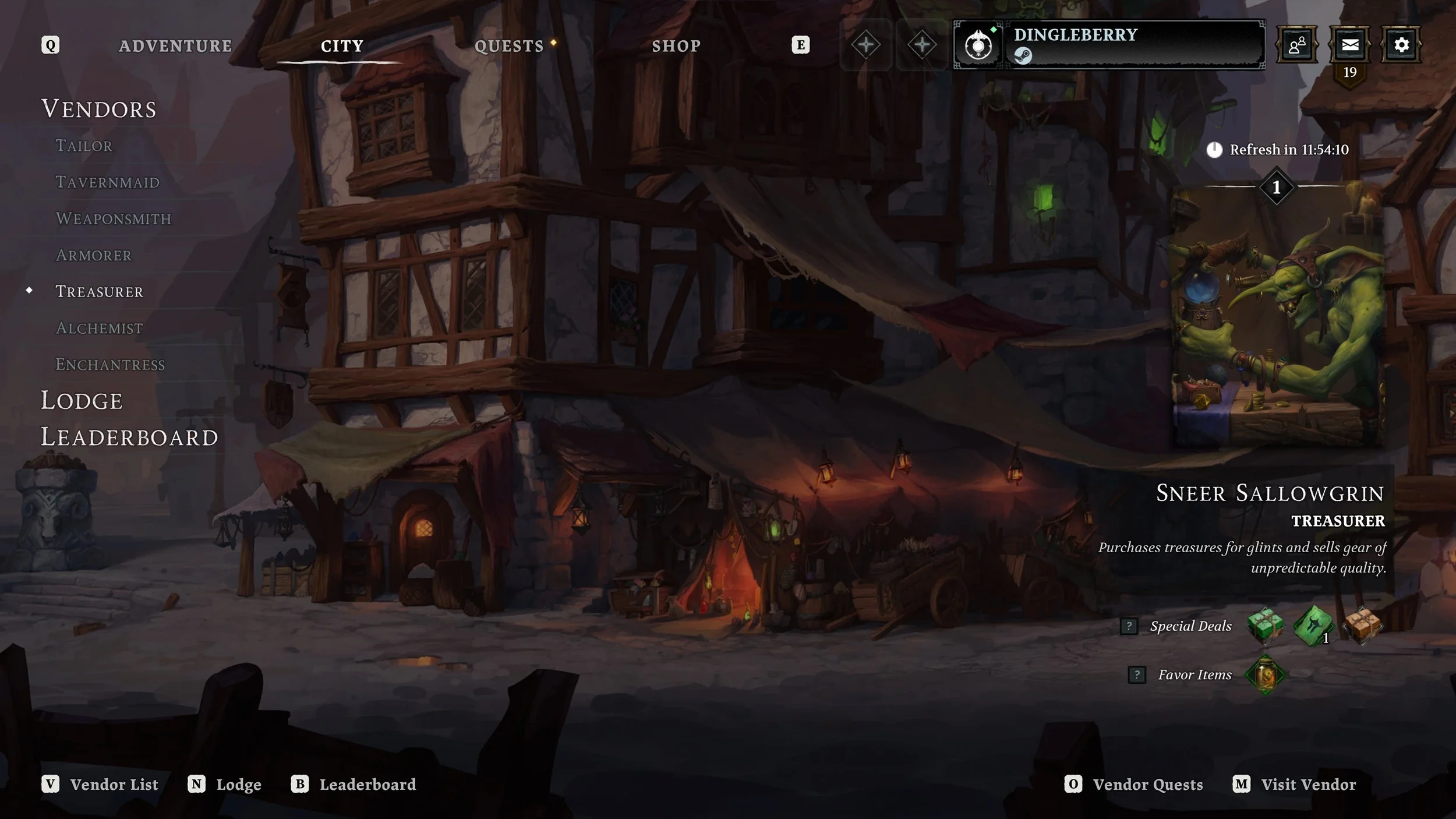
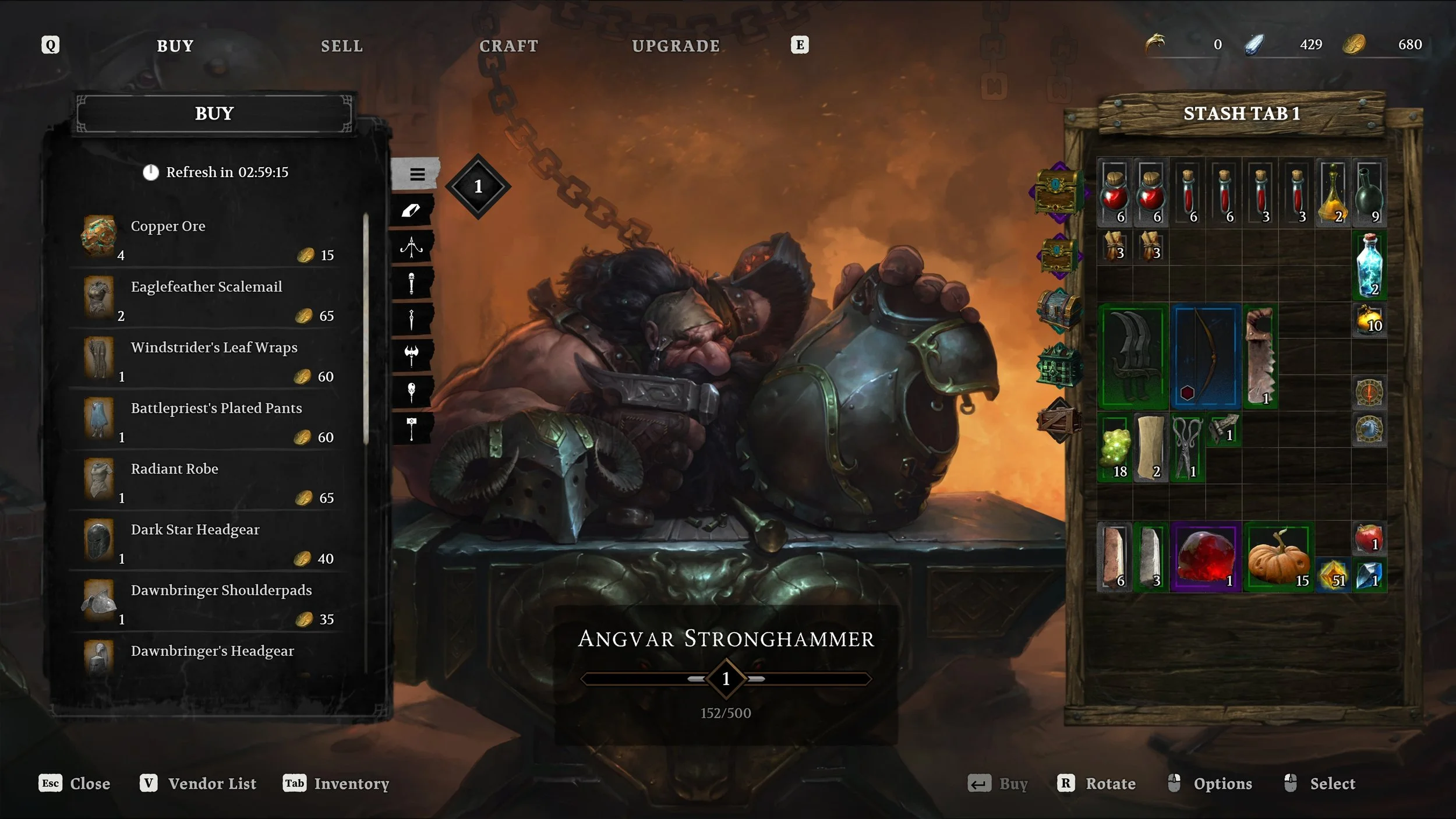
The city itself also holds multiple vendors that can do a variety of things. As expected, they can sell you a variety of items to aid in your expeditions, like potions and new packs to carry back your loot. They are also the main way to upgrade your gear when you have the resources to do so.

One of the vendors in the city can be especially useful in getting the resources needed to make gear: the Enchantress. She can break down items you don’t need into useful resources that you can use. For example, should you find a blue piece of gear for another class, she can exchange it for a blue forging crystal to upgrade your own gear. This allows gear that is not usable for your class to benefit your current class.
Now, Eldegarde does have a few drawbacks, and that is how repetitive the experience can feel, especially due to the limited maps and the times you need to wait to jump into something else. While quests do break up the monotony of slashing your way through the same five maps, four if you forgo the time of day in Greenwood, these objectives only do so much heavy lifting.
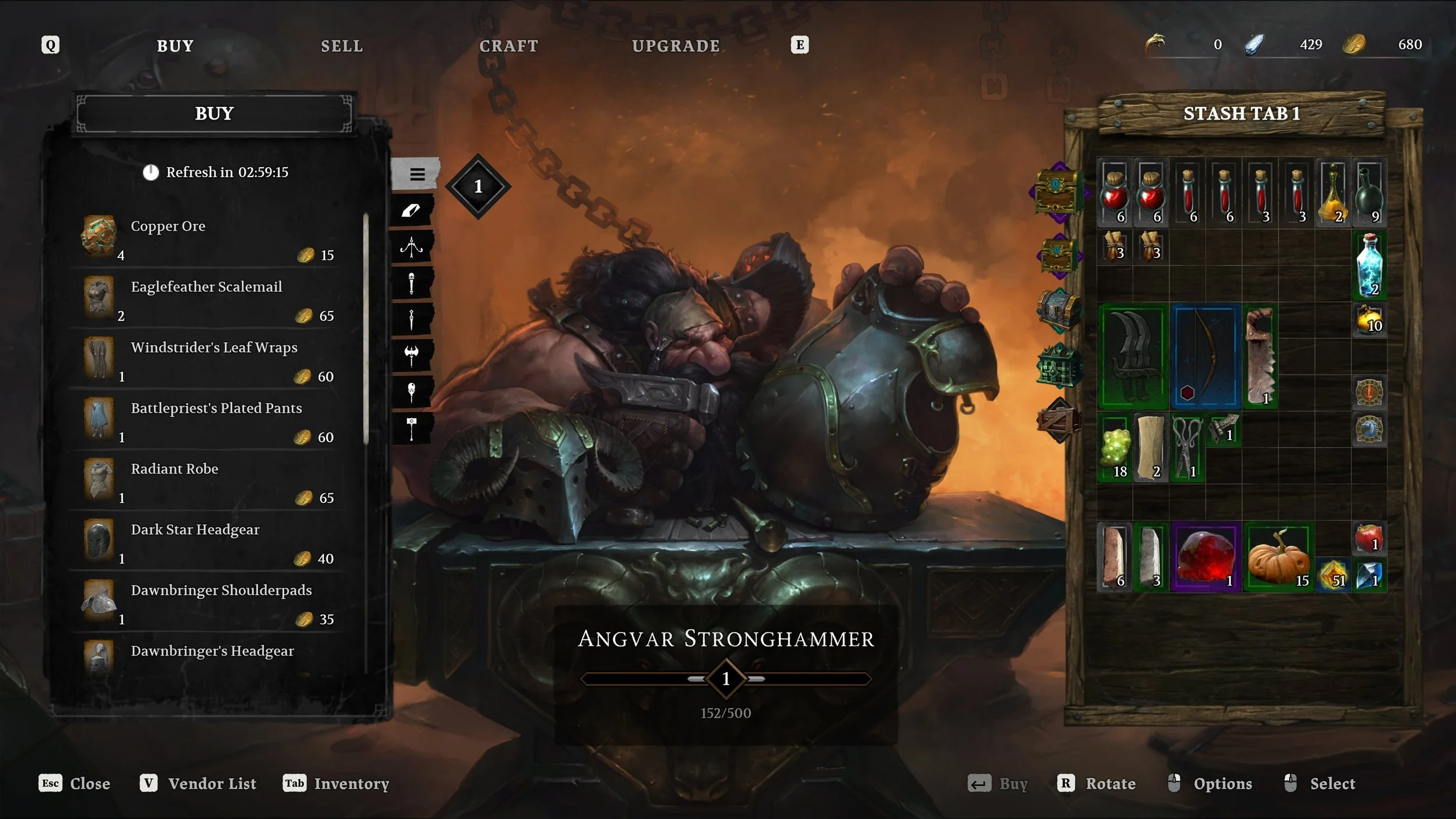
The graphics of Eldegard are very crisp and vibrant, making the world feel more alive. From the environment to character armor, which gets more detailed as you upgrade. Even the spells and attack effects help to build the fantasy aspect of the land you play in. And what's nice is the graphics don’t hurt the performance at all.
Performance-wise, Eldegarde is very stable, and I’ve had very few issues while playing. One bug I did have was when my house icon was changed from what I had chosen, with no way to apparently fix this. It’s a minor issue, but the fact that I was given the opportunity to pick my own and then see it represented by something I did not pick is a weird thing that really frustrated me, despite how trivial it may seem.
All said, Eldegarde is still an extremely fun time, especially with a group of good friends to play together with. It is definitely one that I recommend that you play to enjoy the combat and the classes, as while the repetition can rear its ugly head from time to time, there is still a great game here that is begging to be explored.



Developer - Notorious Studios.
Publisher - Notorious Studios.
Released - January 21st, 2026
Available On - PC - Steam.
Rated - (T) - Fantasy Violence, Blood, Suggestive Themes.
Platform Reviewed - PC
Review Access - A review code for Eldegarde was provided by the publisher for the purpose of this review.
Kelvin is a big fan of survival crafting, simulator, base management, and RPG's. From 7 Days to Die to Deep Rock Galactic. When not trying to survive the post apocalypse you will find me fighting in the field for democracy in Helldivers 2.