
Grand Theft Zombie
Throughout the years, we’ve had countless games looking to capture that co-op experience we all had with Left 4 Dead. From Back 4 Blood, Killing Floor, GTFO, and one of my personal favorites, Vermintide, the genre has certainly had its moments and also provided some experiences that sadly didn’t quite land. John Carpenter’s Toxic Commando is the latest entry to the genre that brings something to it that many others have not: vehicles.
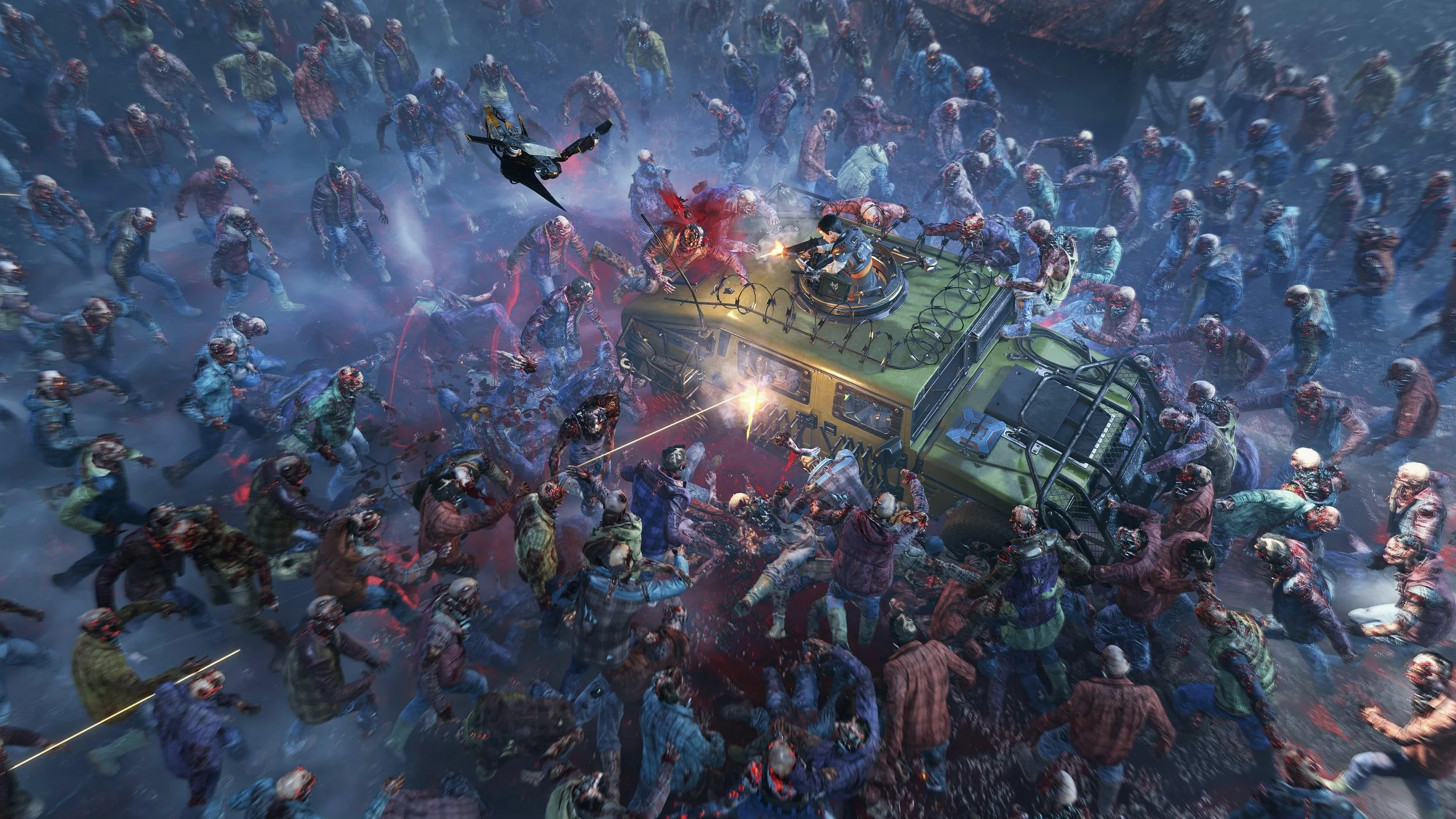
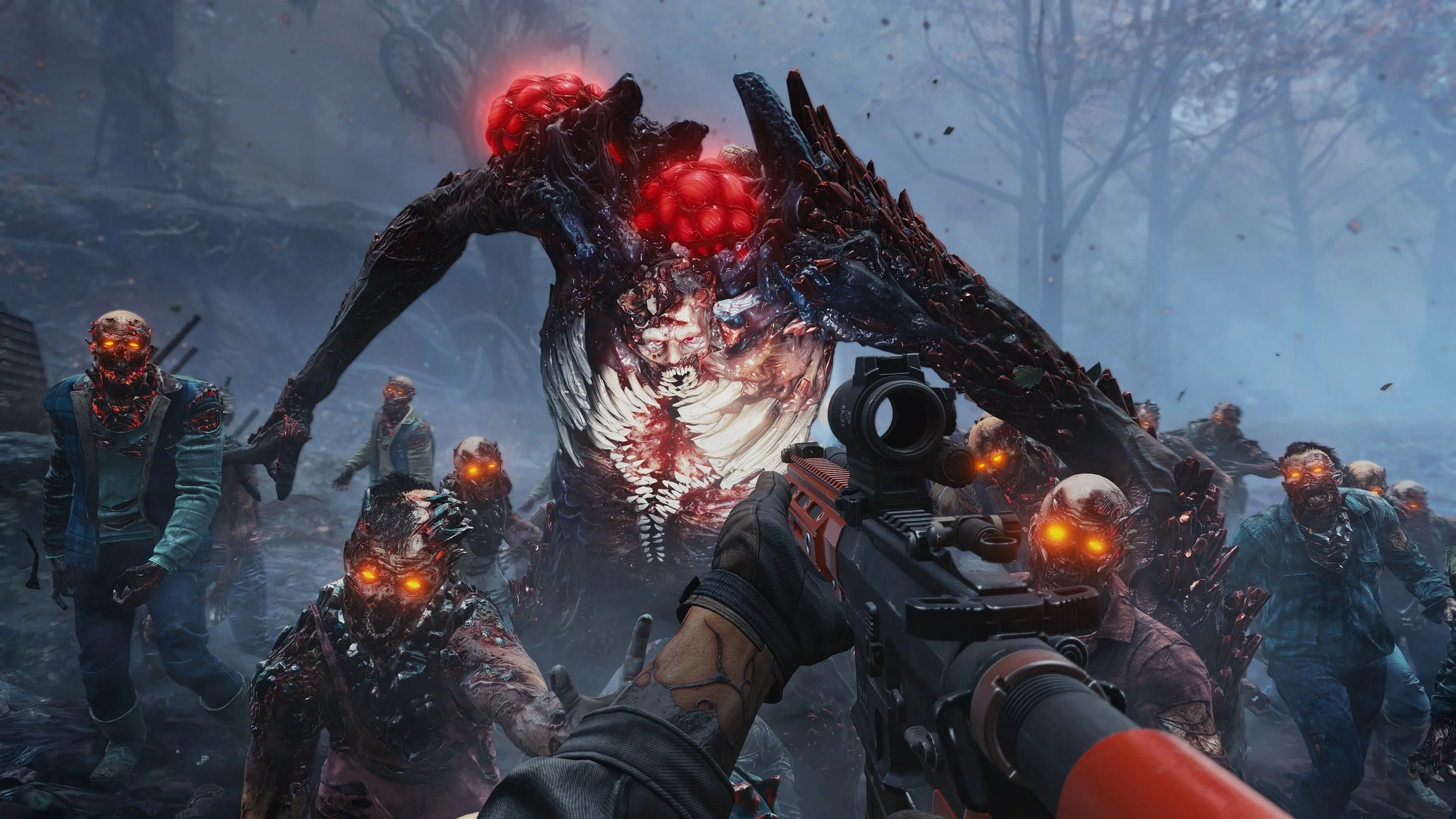
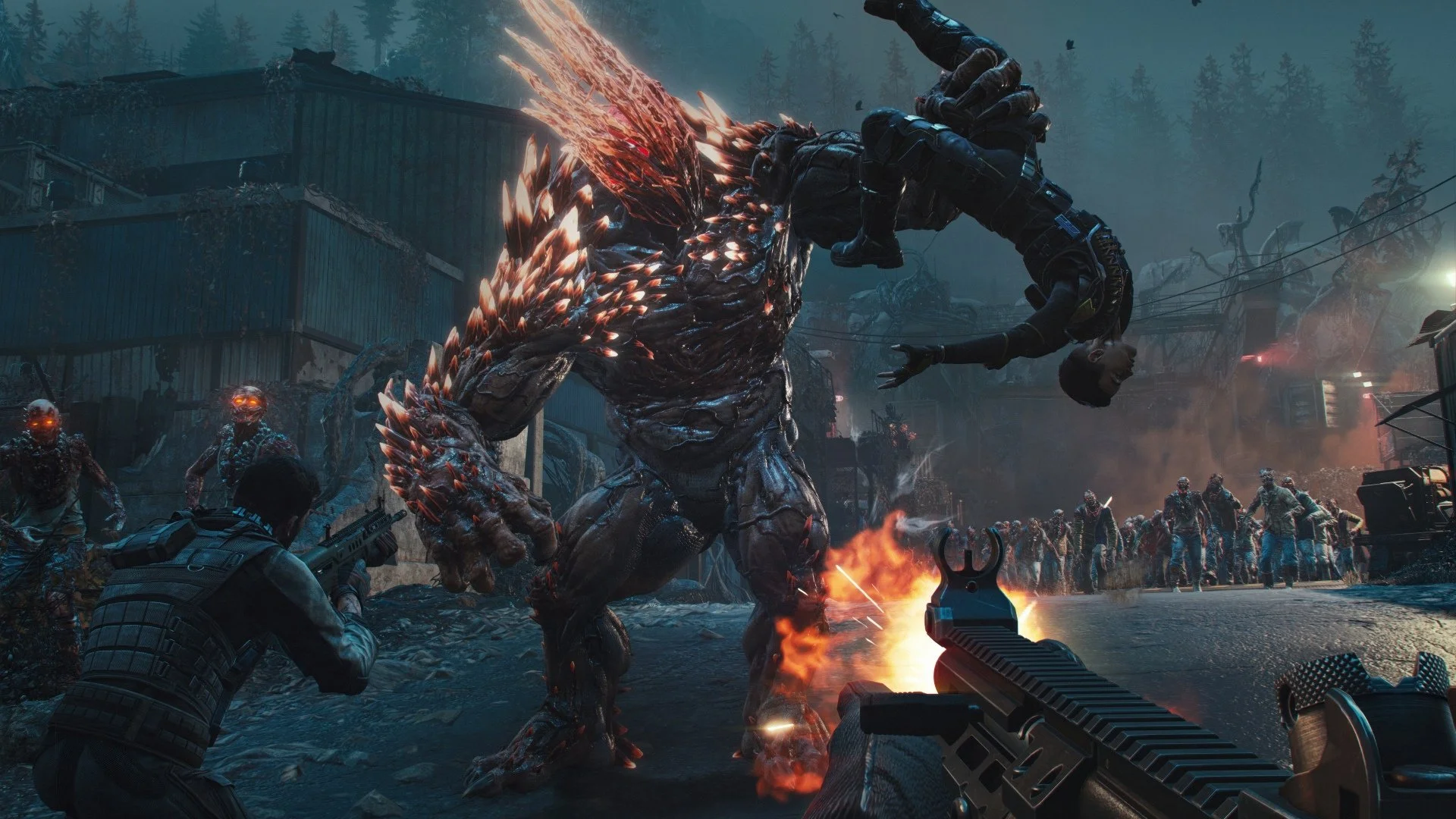
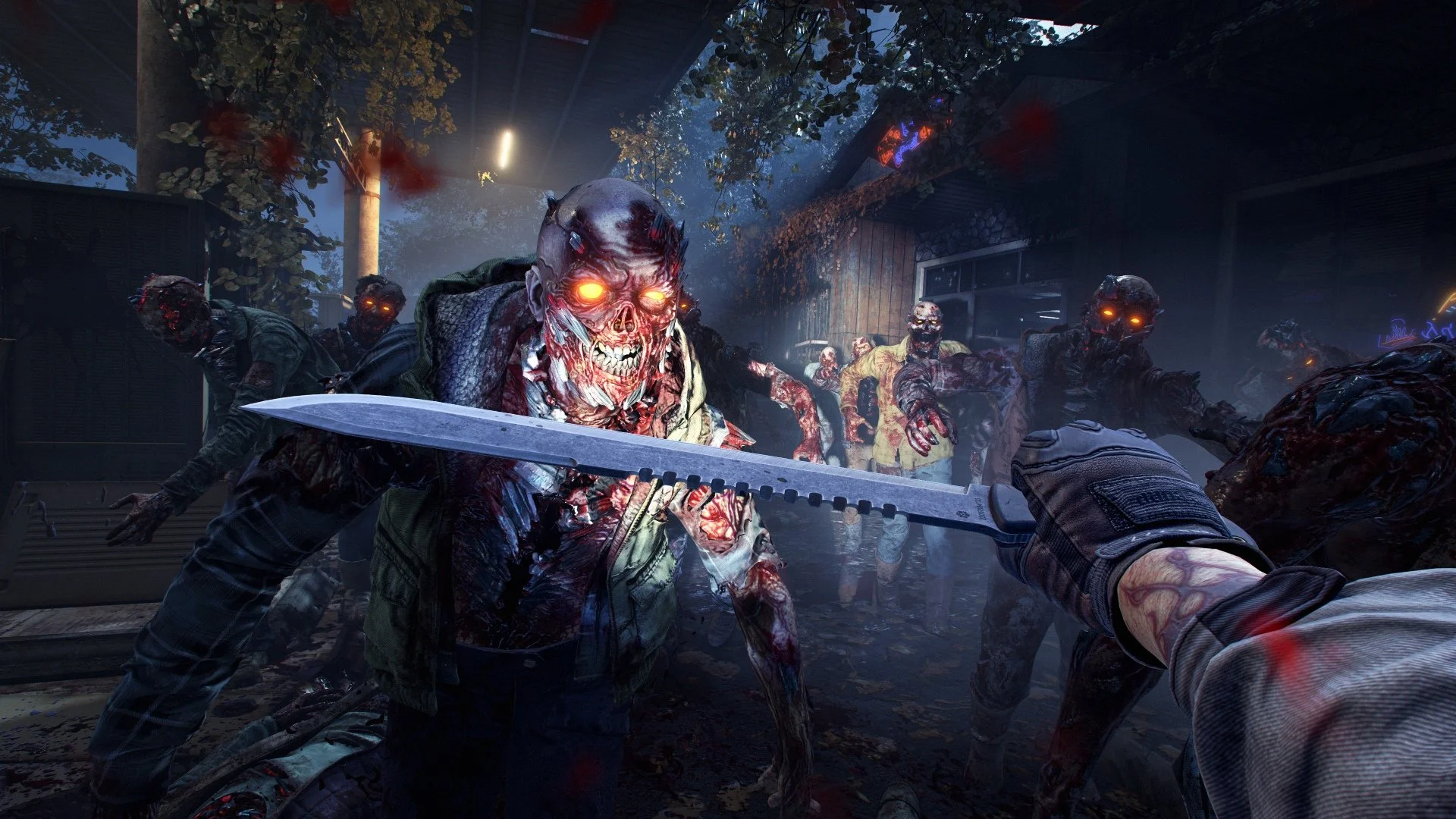
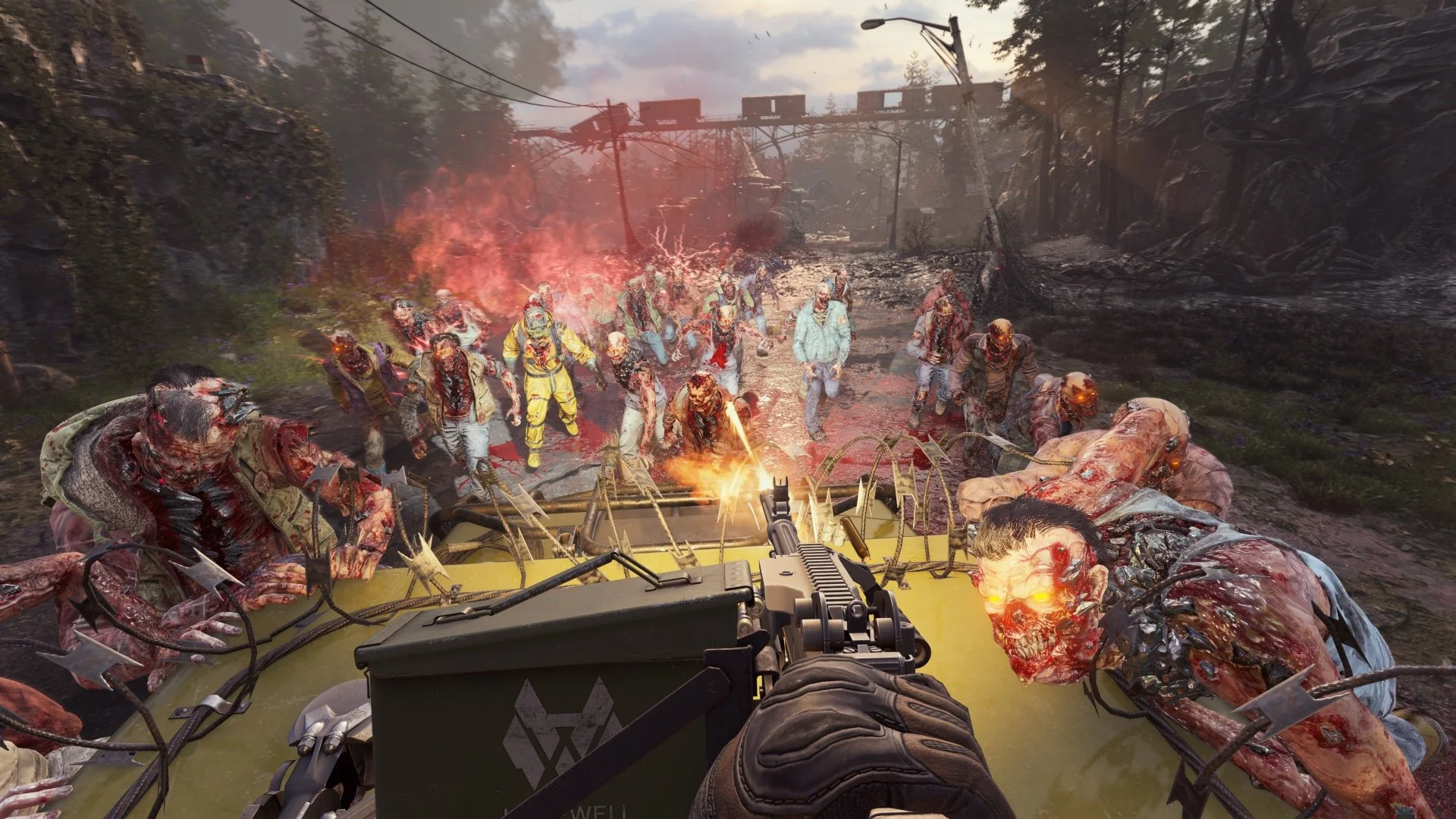
Developed by Saber Interactive, and more specifically, the same studio that gave us World War Z, Toxic Commando is an over the top, gory, open zone vehicle-focused zombie horde game that amps up the population of zombies to almost insane degrees. While Left 4 Dead had enough zombies to fill a small club, Toxic Commando is looking to sell out Madison Square Garden.
Now, when it comes to most co-op shooters, especially those that are based more on existing ideas than being a trailblazer with some of its own, Toxic Commando does start to lose a bit of its appeal the deeper into the game you get, as the environments don’t really feel different from one to the next, and missions don't really evolve.
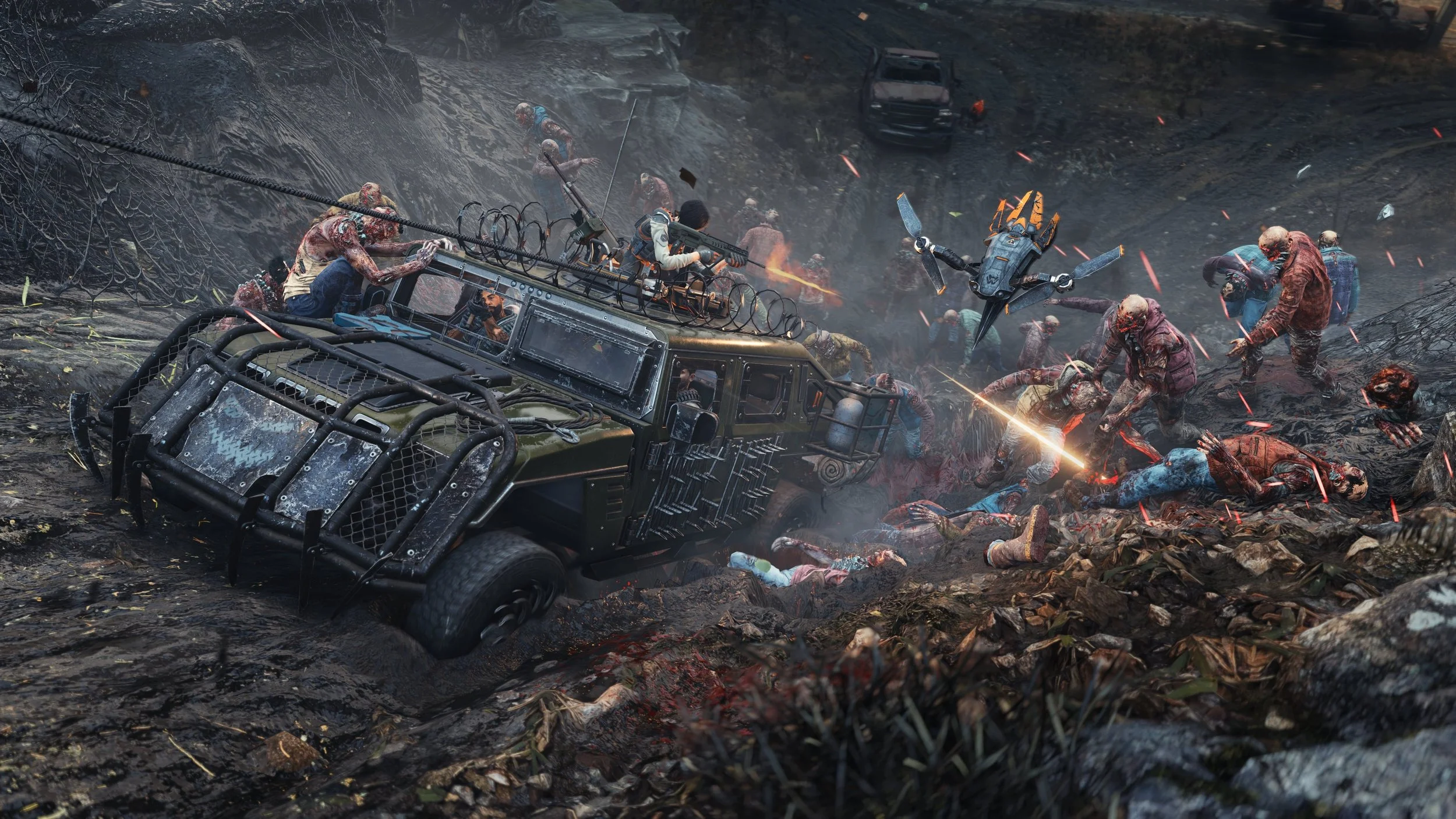
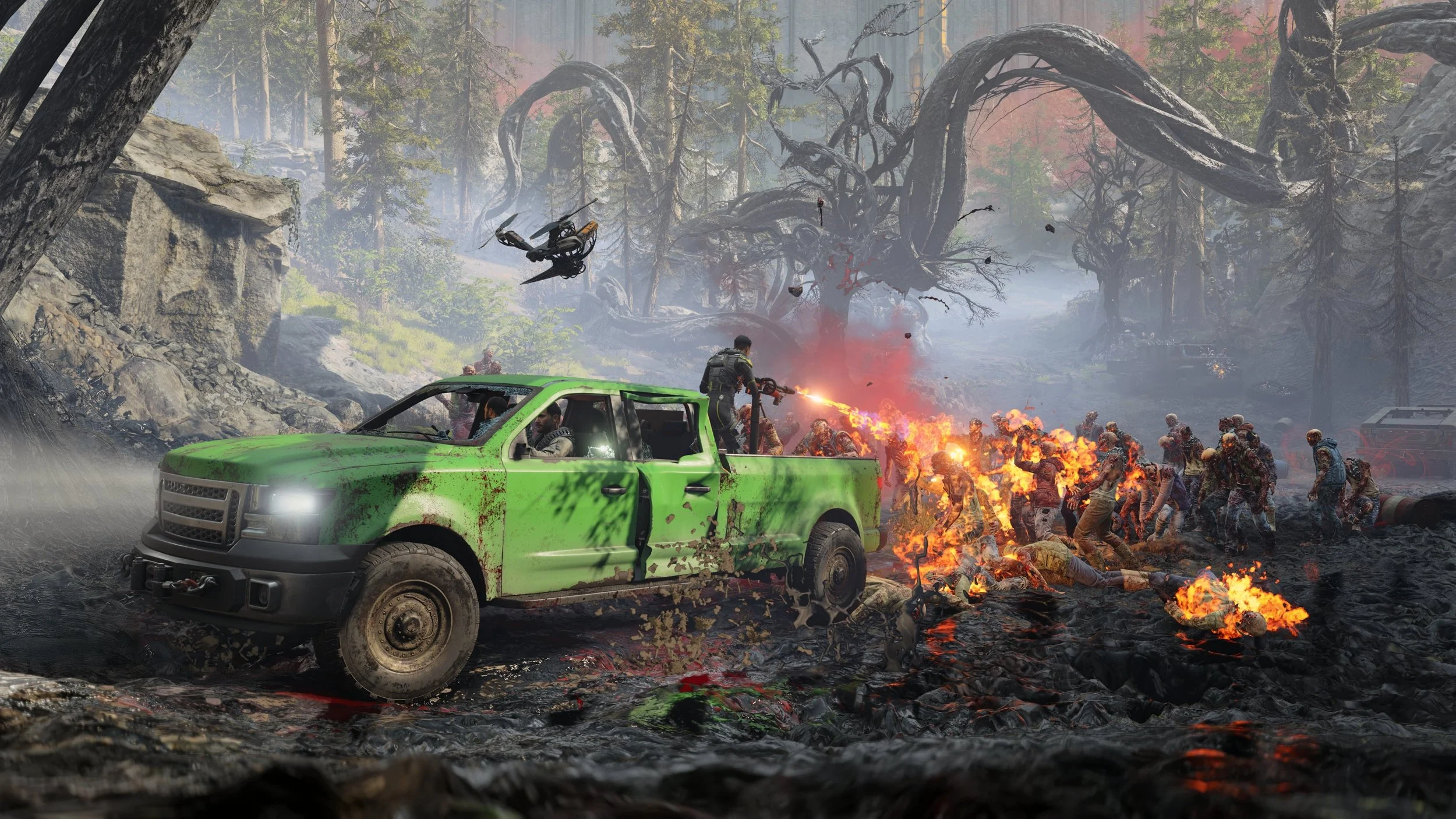
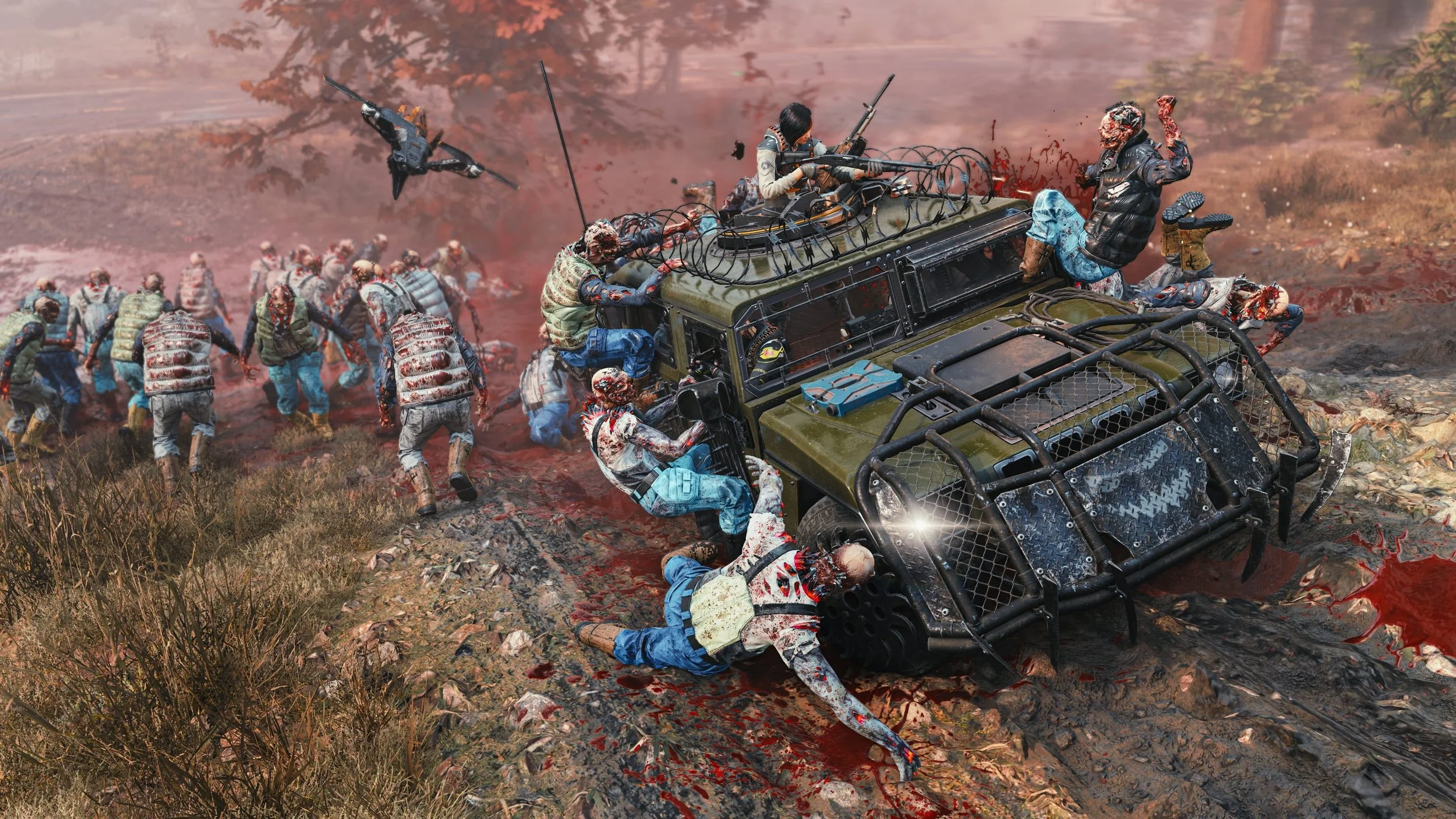
Most locations almost feel ripped right out of titles like SnowRunner and MudRunner, complete with the same rugged terrain, rolling hills, and swampy marshes. This is furthered by the fact that certain vehicles have a winch that you’ll use to navigate those particularly muddy paths.
Levels are fairly large with closed-off roads, ammo caches, and various points of interest, including the need to explore to procure supply items needed for laying down defenses or opening weapon chests, an item that has far too many uses for how crucial they are to your survival, and rare they are to find. While you can certainly main path each mission, it becomes increasingly difficult to do so on harder difficulties, almost forcing you to exhaust the map to ensure you're ready for the final push.
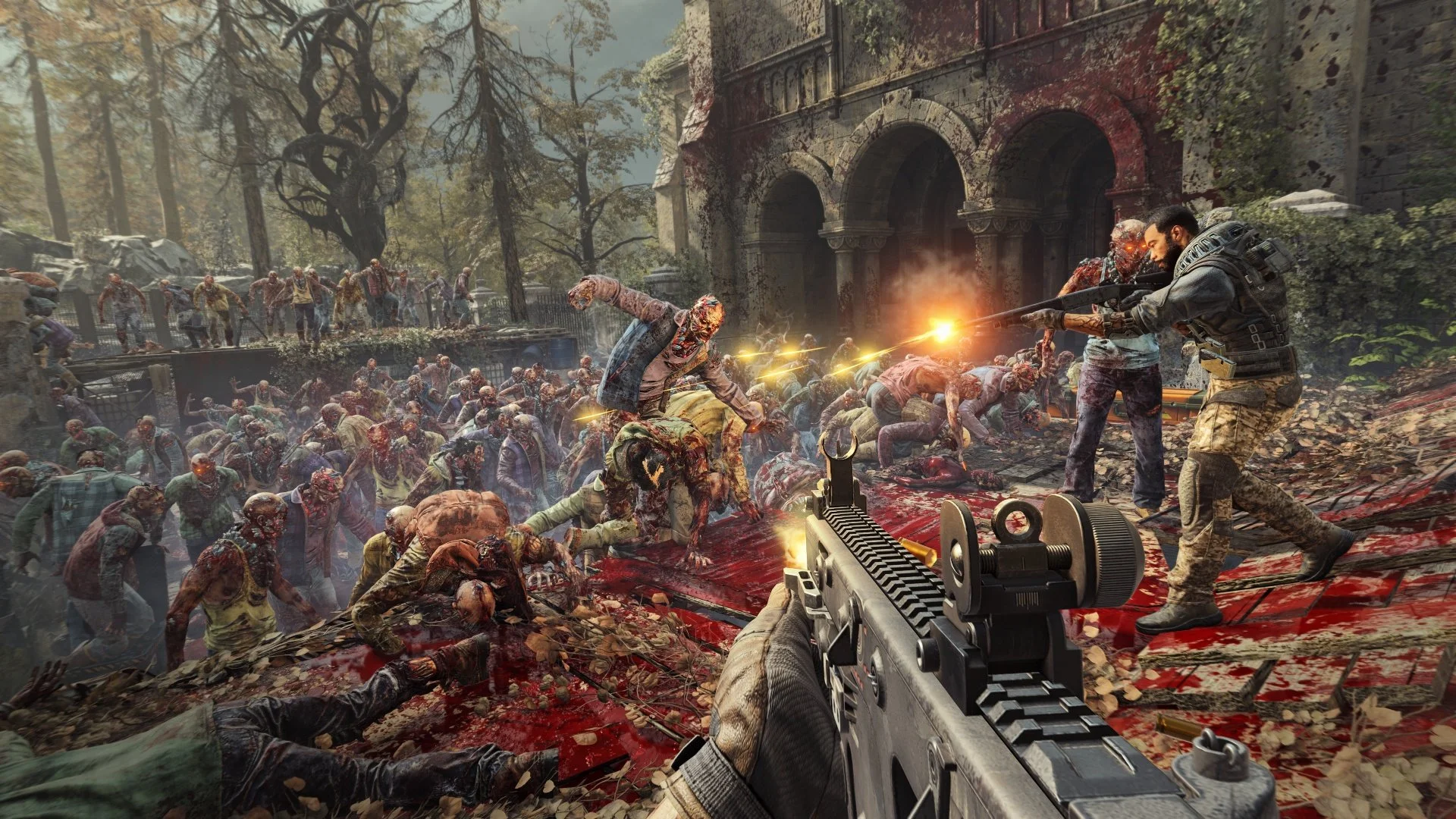
The premise of Toxic Commando sees humanity partially wiped out through an energy experiment that unleashed a monster known as the “Sludge God”. Meanwhile, humanity has been turned into zombies, and the world around them is transformed with monstrous tentacles and abominations running amok, not to mention being covered in toxic sludge. You play as hired mercenaries who team up with a scientist who is attempting to kill this Sludge God, and before they can deliver a fuel canister to this scientist, they are infected with a virus that requires the lot to wear specialized vests that channel that infection into powers that fuel each of the four classes.
Now, the cast is more or less there to set the tone, with the game shooting for a 1980s pulpy horror action movie. And, despite my criticisms of the cast, it does more or less nail that. The problem is that not a single character is even remotely likeable or memorable, and often just there to spout out one liners.
You have the supposed leader in Walter Irons, who no one really seems to like, often hating his jokes and questioning his ability to book jobs. Then you have Cato Arman, who is described as the team’s heart, without really giving any reason to believe so. Finally, there is Astrid Yu and Ruby Pelicano rounding out the group. Astrid is likely the most direct and professional of the group, while Ruby, who was my main throughout the entire campaign, was the developer's way of adding Ruby Rose into their game without actually hiring the actress. They honestly couldn’t be more obvious here.
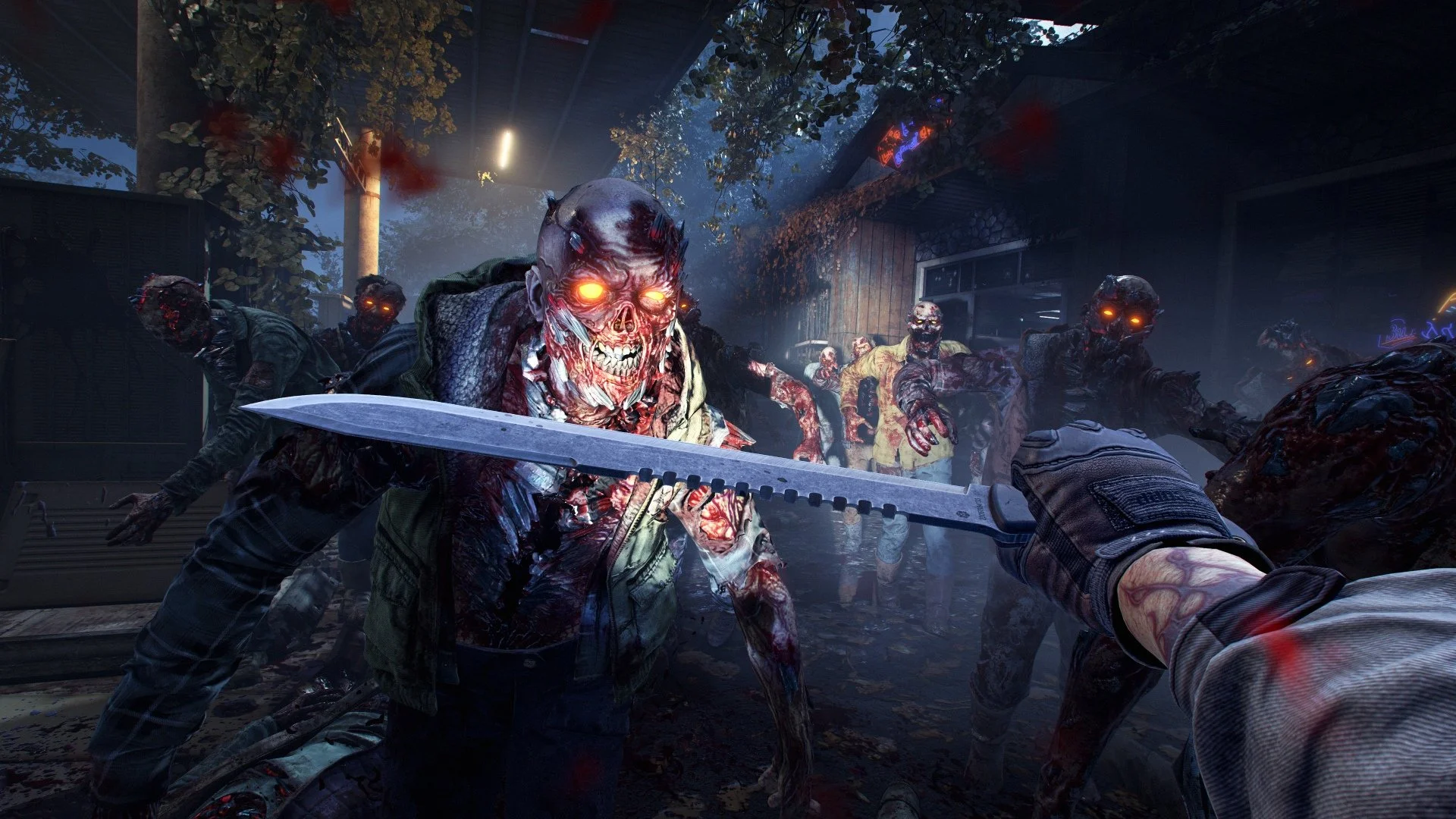
Toxic Commando has you navigating nine missions (One being the tutorial zone), killing thousands upon thousands of zombies, collecting various currencies and loot to enhance your soldier, not to mention adding skill points to four distinct classes. The overall loop is sound, but the mission variety becomes nothing more than a series of fetch quests or defending a base as you wait for that mission’s objective to complete. While Toxic Commando is a solid time with friends, I’ll absolutely state that this should not be played solo.
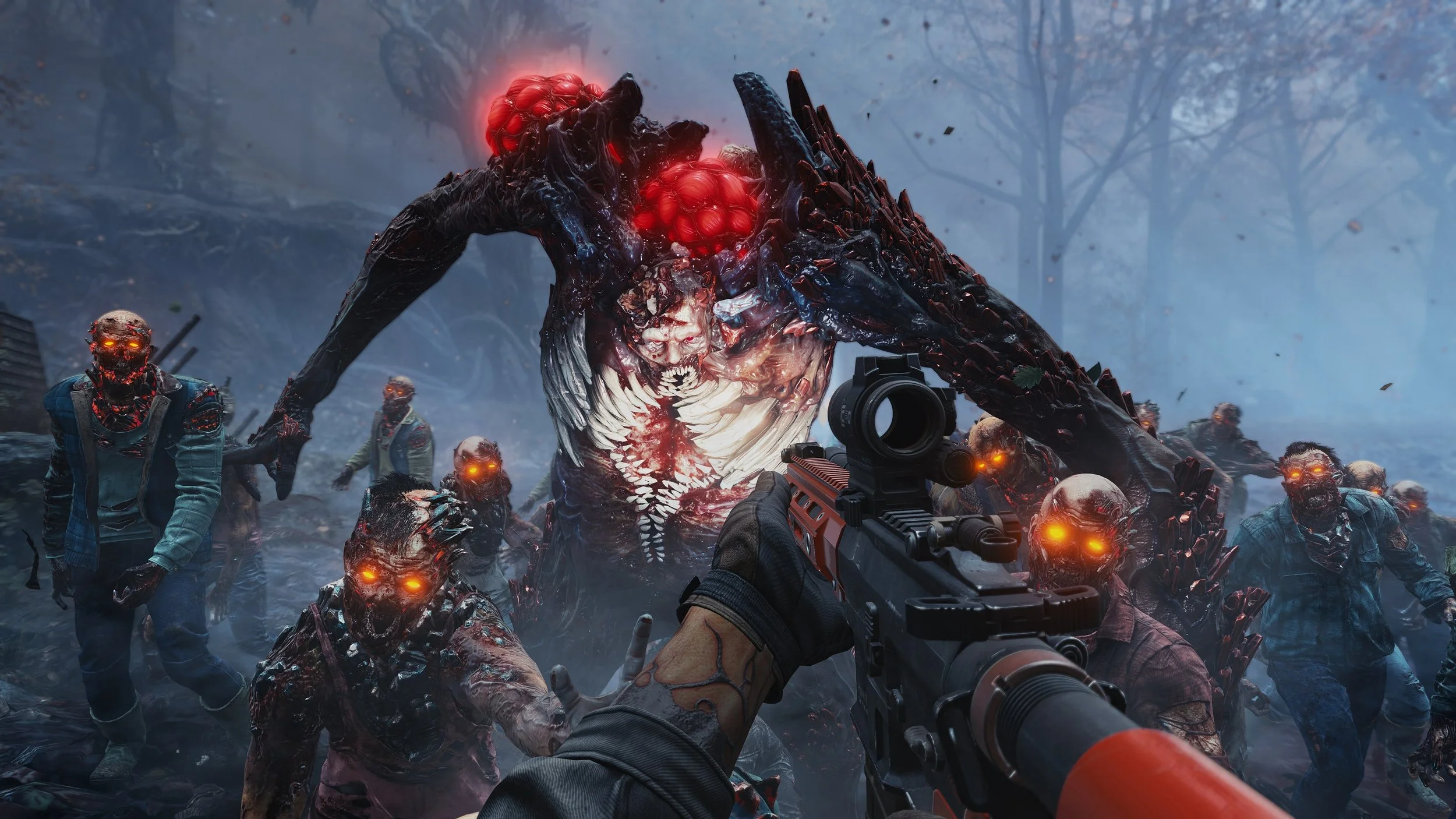
While built for 4-player co-op, Toxic Commando can be played solo with 3 AI companions that collectively form a single braincell. Sure, they will get you up when you go down, often ignoring any threats around you, but you have to babysit each particular non-combat action, and often handle all the heavy lifting when it comes to defending your base, holding onto mission-critical items, and even handling all the driving. While these efforts are easily handled with friends, certain missions have you needing to operate multiple story items at once, meaning you have to keep dropping or throwing these items as you try to get to your objective.
While there will be defenses you can use in your base, or traps you’ll need to set up during a few missions, your AI companions won’t engage in a single aspect and just follow you around. Hell, there was one mission where two characters needed to interact with a laptop, and I was sure I was going to get screwed as I was playing solo at the time. Thankfully, they did interact with their respective laptop, but this was likely the only scripted collaboration I witnessed in the game with the AI.
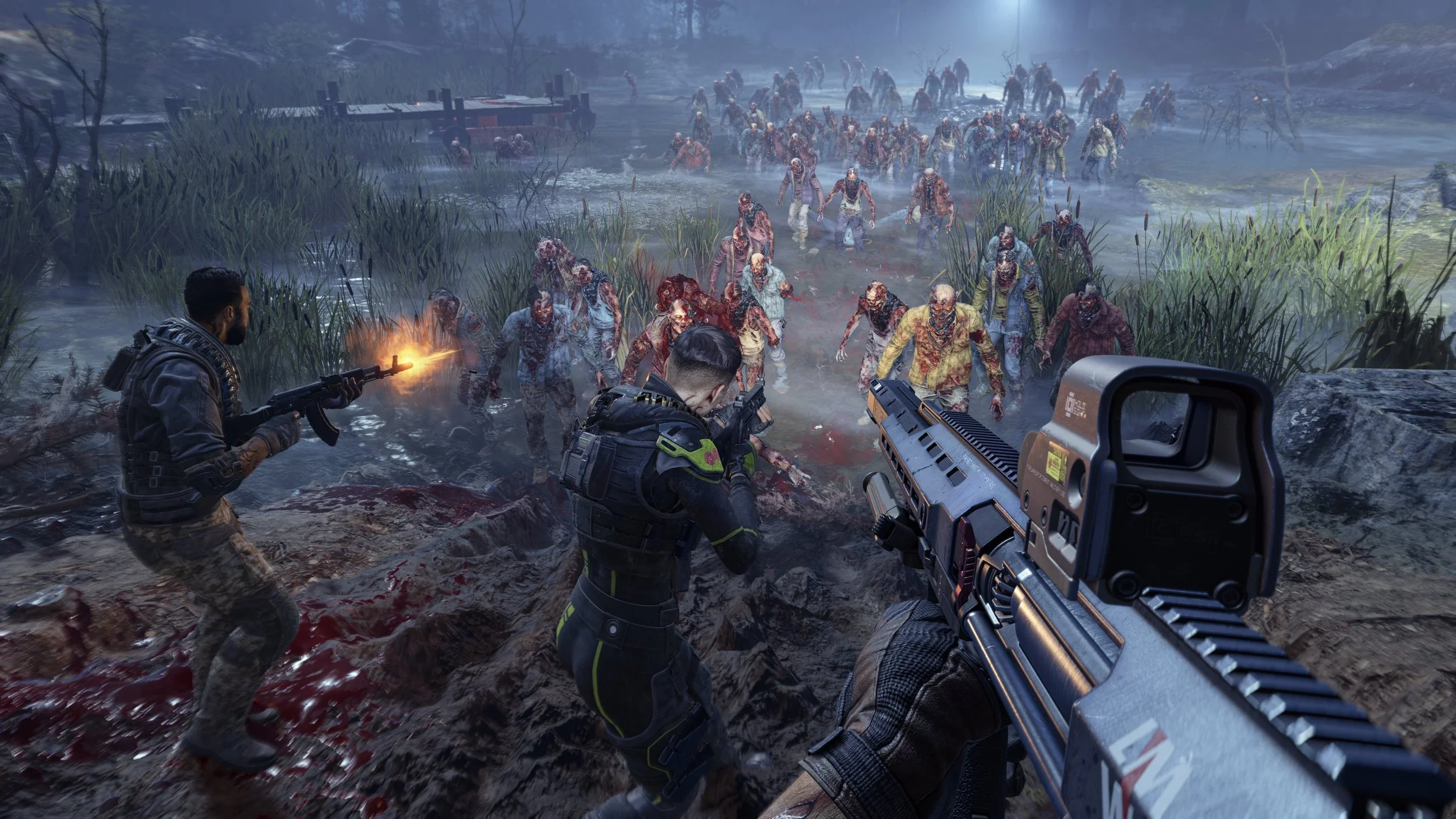
When you do have a full team of friends playing, Toxic Commando is the type of game you’ll get a few good weekends of play out of before likely sunsetting your Toxic Commandos and moving on to the next co-op game. It’s fun for the few hours it takes to press through, but with a lack of compelling objectives, side quests, or meaningful mission variety, or any sort of endgame, it’s not a title I mean to revisit, despite my enjoyment of it. If a friend of mine were down to play, then I likely would jump back in, but there really isn’t a compelling reason to keep playing once the credits have rolled.
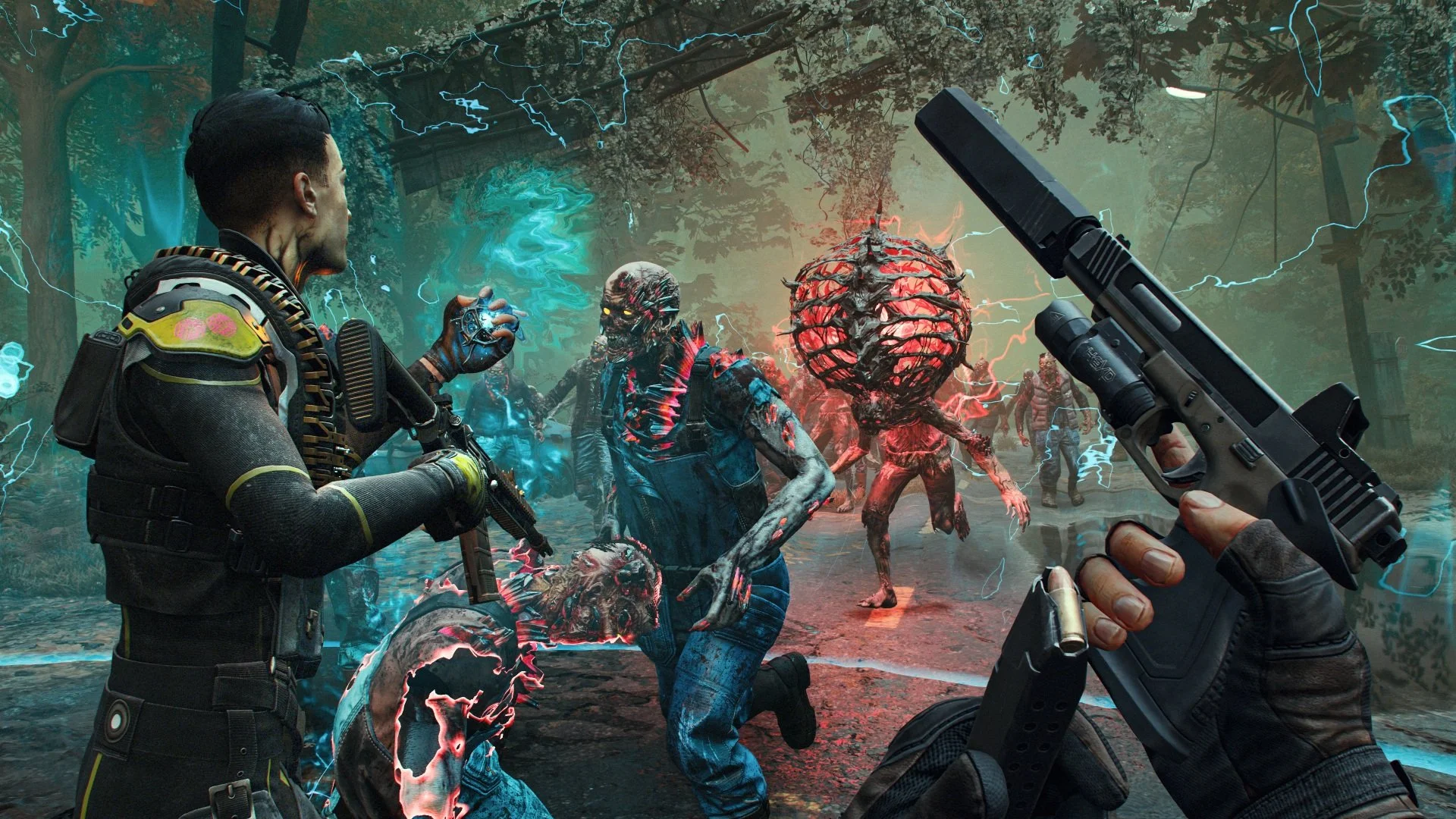
Progression is handled through a few outlets here. Firstly, you have four classes that you can drop in and out of: Strike, Medic, Operator, and Defender. These range from being able to throw fireballs, generate a healing or defensive AOE, or operate a drone. Each class also enhances other aspects, such as vehicle durability, additional ammo reserves, or reload speed, to how their respective traits can be improved, such as increasing the capability of the drone, or how effective your flame blasts are, such as their duration, area of effect, or how much damage is inflicted.

The class system is furthered by having four different special attacks per class as you level up. The Strike, which offers the fire blast, can either fire out a single blast, several smaller ones, or leave a plasma cluster that fires at nearby enemies, as well as one last option in a mega fireball that clears out a wide area. This same variety of a single idea is then bounced around to the other classes, with the medic ranging from simple AOE healing to more intense variations, to eventually throwing out ranged heals to your allies. When it comes down to it, it is like having the same ability but from a small, medium, large, or extra-large set of options.
So, ‘superpowers’ aside, the gun variety is pretty sparse, with not a lot of variety here. You’ll find more interesting loot that you can supplement your kit with, but as for loadouts, there isn’t much here. You have Assault Rifles, Sniper Rifles, Shotguns, and SMGs, as well as your Pistols, with few options per category, but that is about it. Again, you’ll find temporary weapons across the map, such as grenade launchers, or hand cannons, but as far as primary weapons and your handguns go, there isn’t too much here, despite some solid customization that sees you equipping sights, barrels, underbarrels, stocks, muzzles, clips, grips, and rail accessories, not to mention skins and charms as well.
Weapon customization is handled through three currencies. You have your standard currency, which is called Sludgite, and you’ll find these orange crystals everywhere. This is the currency used to buy weapon modifications. Then, as you move onto Normal Difficulty, you’ll also find Residium, which is used on cosmetic items. Finally, on Hard Difficulty, you have Mortite, which is used on the more colorful cosmetics, such as weapon charms and character cosmetics, of which there is almost nothing there of note, at least yet.
While I wish the game's visuals could elevate the rest of the package, that isn't the case here. While characters look fine enough in cutscenes, their actual models are not great, especially as the game wants you to grind out the Hard Difficulty currency to unlock color variants of the same outfits. The main problem is when the game attempts to feature these lower-quality models front and center or part of the cutscenes that use the vastly better models. Monsters and the environments look fine, and those elements are all great, especially the mud and tech used there, which have always been Saber’s bread and butter.
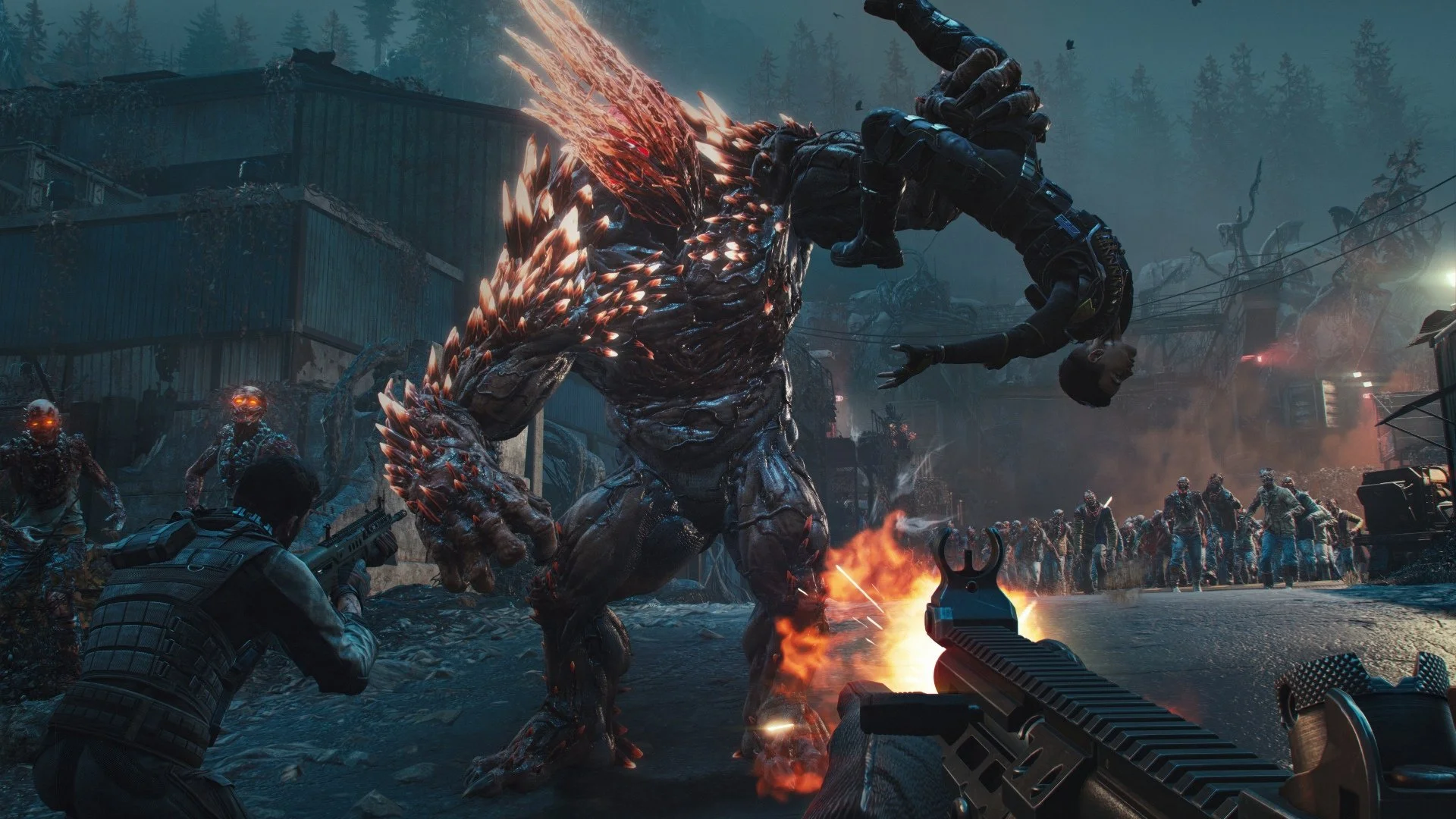
Aside from some generic voice acting, the overall audio here is good. Like Left 4 Dead, the bigger monsters have an audio cue that announces them, and the overall music and ambience work with what they are providing here. That said, playing with a group of four, you are likely going to be talking over everything anyway, so the lack of anything impressive here doesn't really change much.
Toxic Commando is enjoyable, but in that way where it is through its inspirations more than anything unique to this game. This is one of the better Left 4 Dead clones, and a lot of that is due to the excellent driving and winching systems. Generic characters aside, the classes are fun, but had the game leaned more into its bizarre elements, like throwing fire, there could have been some insane class combinations that could have risen above the mediocrity. Toxic Commando is good for a few nights of co-op, but nothing more.
Developer - Saber Interactive.
Publisher - Focus Home Entertainment,
Released - March 12th, 2026.
Available On - PS5, Xbox Series X/S, PC.
Rated - (M) - Blood and Gore, Intense Violence, Strong Language.
Platform Reviewed - Xbox Series X/S.
Review Access - A review code for John Carpenter’s Toxic Commando was provided by the publisher for the purpose of this review.
Jeff is the original founder of Analog Stick Gaming. His favorite games include The Witcher III, the Mass Effect Trilogy, Hi-Fi Rush, Stellar Blade, Hellbade: Senua’s Sacrifice, and the Legend of Heroes series, especially Trails of Cold Steel III & IV.