

Held Back By Technical Gremlins
Styx: Blades of Greed marks a long-awaited return for Cyanide Studio’s stealth-focused goblin, wasting little time reminding you exactly what kind of game it aims to be. Being a semi-linear stealth experience, it harkens back to an era when stealth action games were more mainstream.
However, before diving into what works and what doesn’t, I need to be upfront about something important. After roughly ten hours into the story, a crash during a cutscene corrupted my save file, meaning I had to restart my stealth adventure. Unfortunately, this prevented me from seeing the story to completion during the review period.

By that point, I had unlocked several abilities, explored multiple large environments, and settled into the game’s rhythm. Losing that progress was frustrating, especially when combined with the game’s ongoing performance inconsistencies. It’s important you have that context, because technical stability became part of my experience with the game itself.
What I did play made one thing clear: in a landscape where stealth often takes a backseat to spectacle, Styx refuses to dilute its focus. Styx is not built for open confrontation, and the game makes no effort to pretend otherwise. If you are spotted and attempt to fight your way out, you will likely fail. Success comes from patience, planning, and understanding how the systems interact.
The early hours are not overly punishing, but they do feel somewhat limited. With only a small selection of tools and abilities available at the start, encounters can feel repetitive until your options begin to expand. As more abilities unlock, particularly the Quartz-based additions, the experience opens up in a much more satisfying way. In fact, instead of Amber, Styx is now fixated on tracking down Quartz, pushing him into a new chapter of his adventure.

The level design is easily a standout element. Environments are large, layered, and built around vertical movement. Rooftops, beams, hidden passages, ledges, and alternate routes give you genuine freedom in how you approach objectives. Rarely does the game funnel you toward a single solution. Instead, it encourages experimentation and rewards observation. Staying above patrol routes often proves far more effective than navigating ground-level chaos.
The only real downside to the level design is how frequently the game asks you to revisit previously explored areas. While the environments themselves are well constructed, returning to the same locations multiple times can slightly diminish what is otherwise strong environmental variety. Objectives may change, but familiarity inevitably softens some of the initial tension.
That said, revisiting these areas is not without its advantages. Returning later with additional tools, especially traversal-focused abilities like the grapple and glider, opens up routes that were previously inaccessible. Spaces that once felt restrictive can suddenly feel fluid, and verticality becomes even more pronounced. In those moments, the game does a clever job of recontextualising its environments rather than simply recycling them. It does not always fully offset the sense of repetition, but it does add meaningful gameplay variety when new tools are introduced. In some ways, this latest adventure borrows a touch of Metroidvania DNA.

Abilities such as cloning and invisibility return, joined by new options that add flexibility without breaking balance. Resource management remains important, preventing any ability from feeling overpowered. Mind Control became one of my favourite tools as infecting a guard and subtly repositioning them never lost its appeal. The Acid Mine also stands out as a satisfying option for those who prefer careful setup over improvisation.
Traversal generally feels solid, with climbing, gliding, and grappling forming an essential part of survival. However, transitions between certain movement states can occasionally feel abrupt. It is not enough to derail the experience, but in moments that rely on precision, those small rough edges become noticeable.
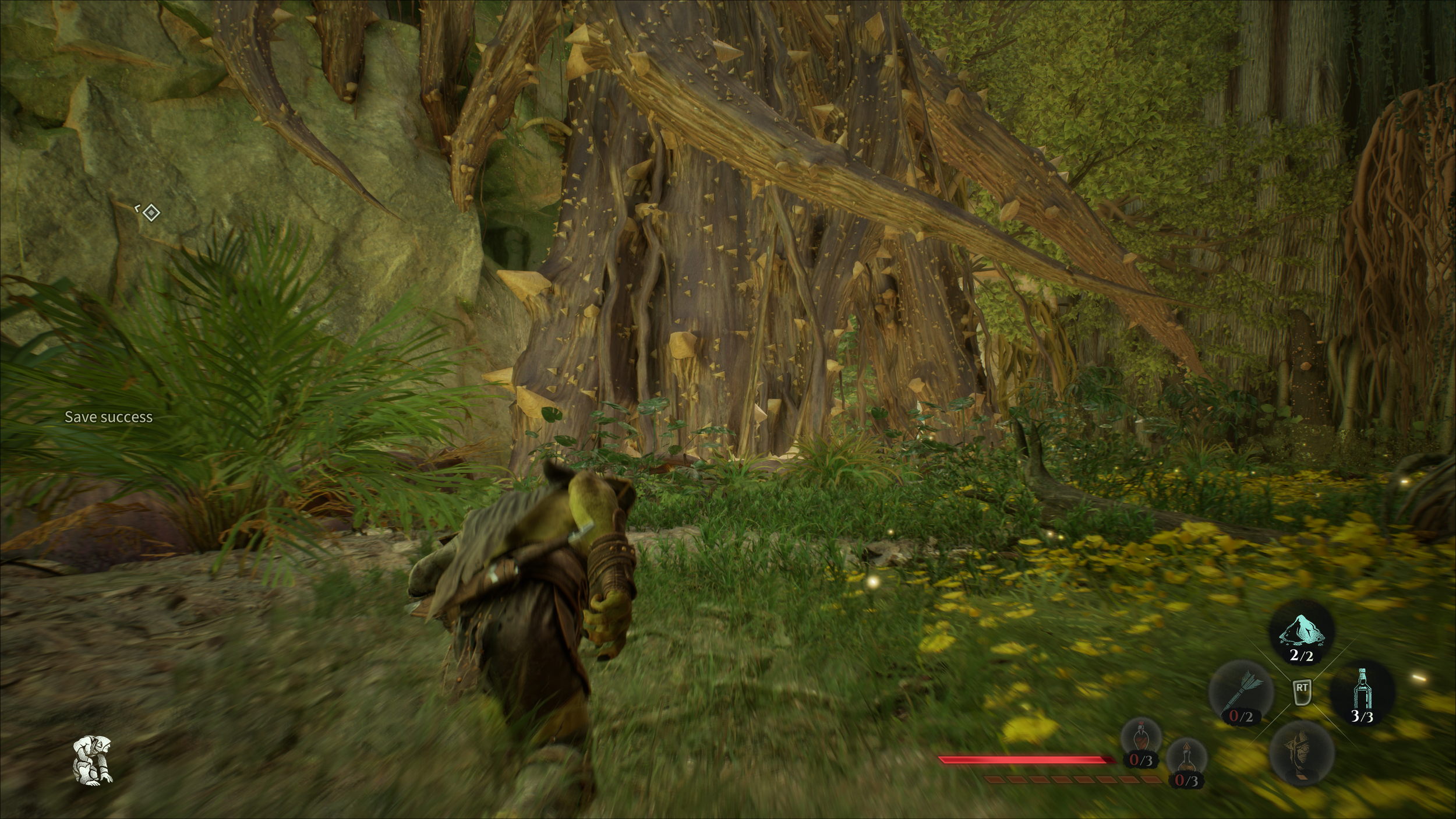
Visually, the PC version leans on strong art direction rather than technical spectacle. That being said, Styx: Blades of Greed is by far the best-looking game in this trilogy. Environments feel dense and deliberate, with lighting and shadow playing a key role in stealth. Audio design supports this well. Guard footsteps, ambient noise, and environmental cues are vital to decision-making, and silence often heightens tension more effectively than music. Styx himself remains as sarcastic as ever, bringing personality without undermining the atmosphere.
Unfortunately, technical issues on PC were difficult to overlook. As mentioned earlier, the crash occurred during a cutscene shortly after absorbing a shard, when the game froze before closing to the desktop. When I relaunched it, my save would no longer load. Being forced to restart after ten hours is not a small inconvenience. It disrupted momentum and ultimately prevented me from completing the story. While a save was provided by the publisher, I ultimately wanted to get my thoughts out via this review, to provide much-needed coverage to what is, otherwise, a mostly solid stealth experience.
Beyond that crash, I experienced noticeable stuttering in certain areas, particularly during traversal-heavy sections. I also encountered several bugs, including becoming stuck in environmental geometry and falling through the map on more than one occasion. While none of these issues made the game unplayable outright, they were frequent enough to consistently pull me out of the experience. It’s disappointing and something that I hope can be improved on quickly.

Styx: Blades of Greed delivers a focused stealth experience with thoughtful level design and systems that reward patience. When everything aligns, it captures the satisfaction that only pure stealth games can provide, and there are moments where it genuinely shines.
However, limited early variety and ongoing technical instability, particularly on PC, consistently hold it back. Losing ten hours of progress to a crash is not something that can be brushed aside, and the stuttering and environmental bugs only add to the frustration. There is clearly a strong stealth game here, but it feels undermined by issues that should not be present at launch.
For dedicated stealth fans, there is still enjoyment to be found. But as it stands, Styx: Blades of Greed feels like a good game that needed more time in the oven, one that falls short of greatness because of problems that distract from what it does well.


Developer - Cyanide Studio
Publisher - Nacon
Released - February 19th, 2026
Available On - PS5, Xbox Series X/S, PC
Rated - (M) - Blood, Drug Reference, Strong Language, Violence
Platform Reviewed - PC
Review Access - A review code for Styx: Blades of Greed was provided by the publisher for the purpose of this review.
I’m Jordan I have a background in game design and am deeply passionate about accessibility in gaming. My favourite games/franchises include Shenmue, Red Dead Redemption 2, Plague Tale: Requiem, Metal Gear Solid 3, Yakuza, Splinter Cell, and Assassin’s Creed.