
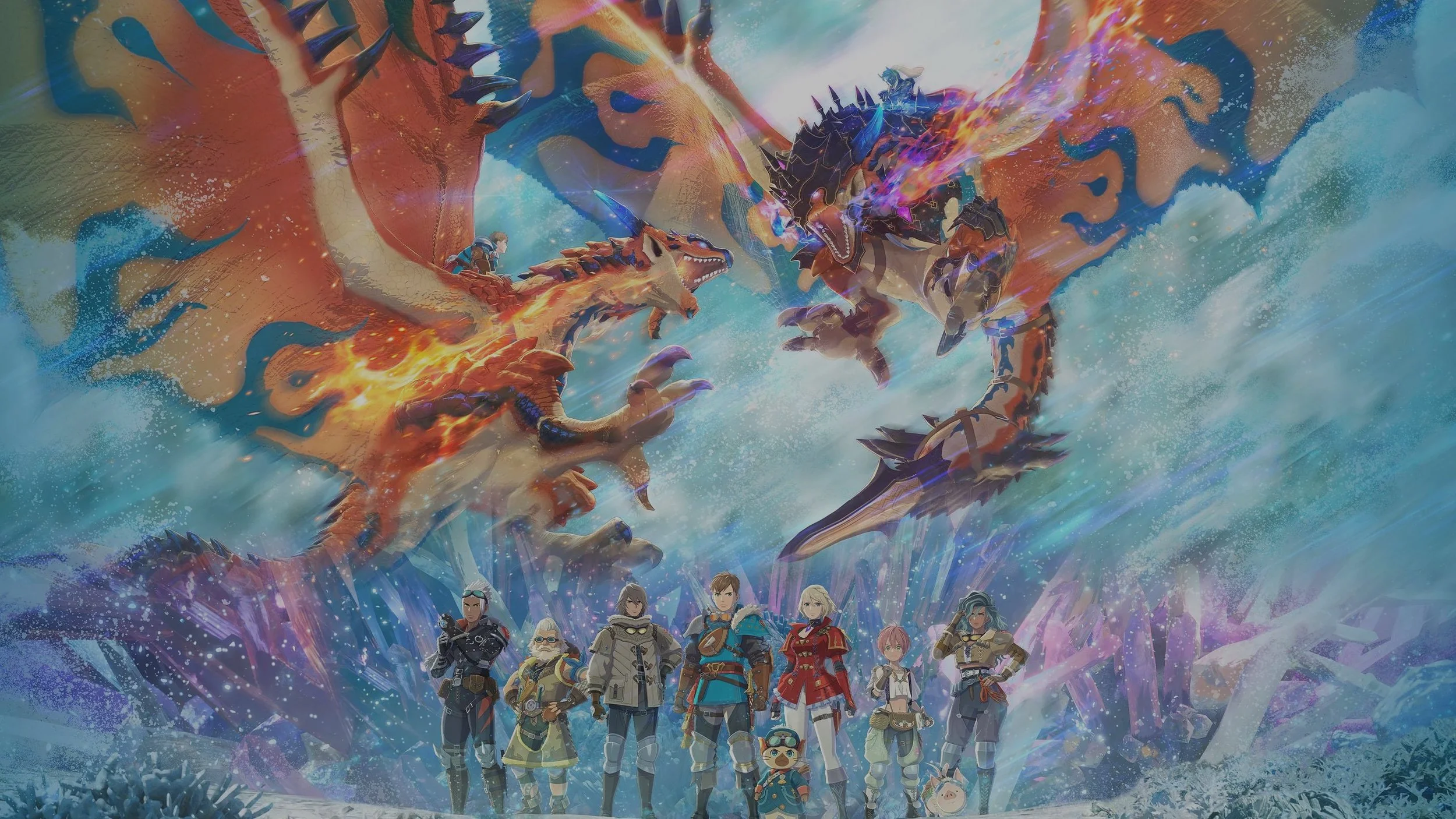
Into the brave unknown.
Monster Hunter has been a beloved series for many years and has been enjoyed across a host of different consoles, starting with the PlayStation 2. It is a game about overcoming the odds of titanic proportions to aid the people and the land they reside in. Throughout it all, you honor your hunts by utilizing bits and bones to craft the equipment to make ready for the next challenge. The series was then expanded on with Monster Hunter Stories, which released on the 3DS back in 2016. These were endearing and soulful turn-based RPG tales with a colorful anime style, answering the question I'm sure many of us have had during our many hunting adventures: what if we could befriend the monsters we shared the land with instead?
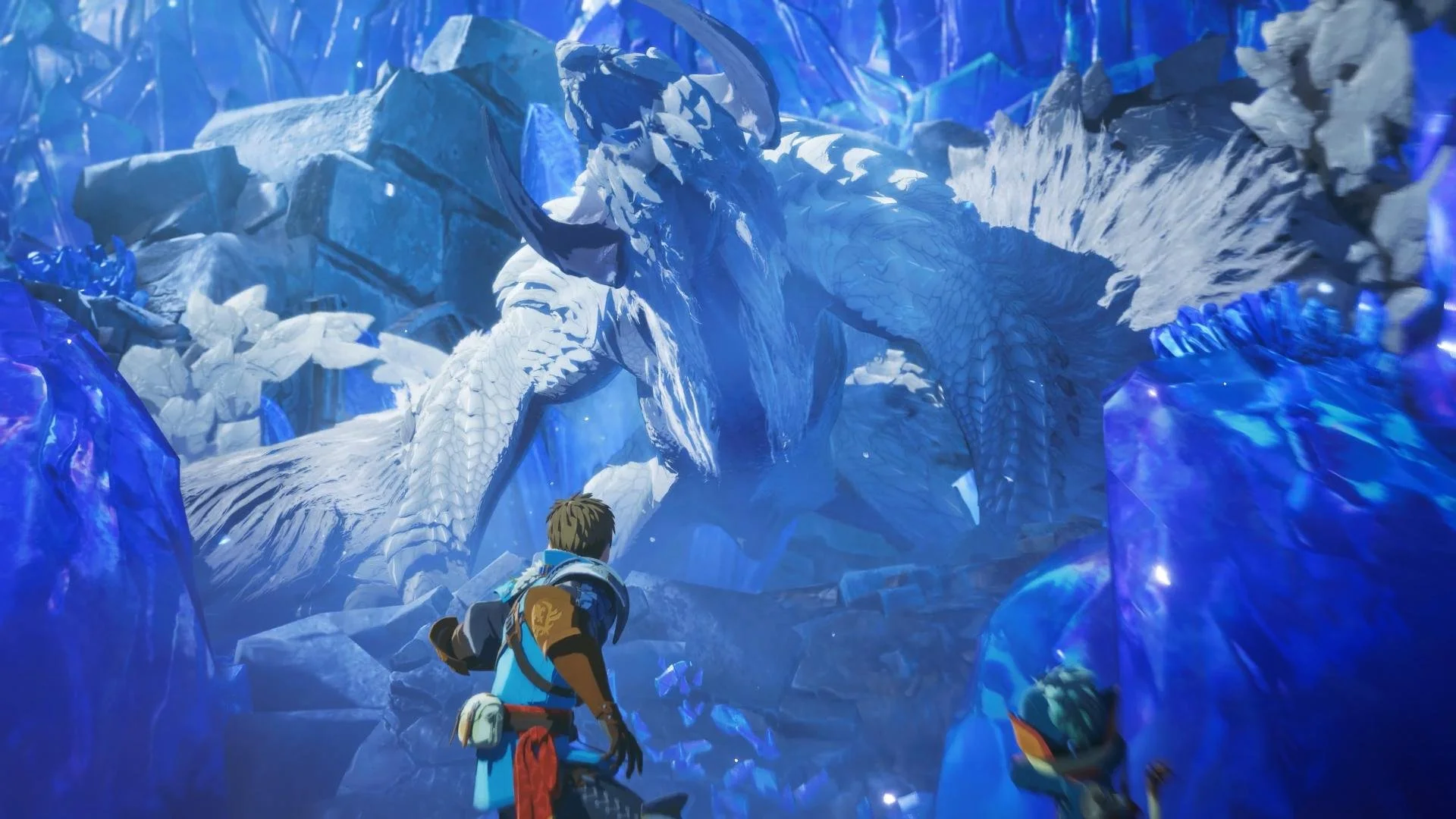
The story begins with a host of well-suited figures moving purposefully through an environment that's been overtaken by eerily beautiful crystalline structures. They all watch the area apprehensively as they move, careful not to disturb too much of their surroundings. Carefully nestled amongst the crystals at the end of the area they travel is a large, round, and semi-opaque shape. A prominent person in the lead breaks from the group and approaches it. It looks as though there is a large egg encased inside. After a quick and gentle examination of the shape, they begin to chisel away. Chunks of crystal break off, and they are able to remove the egg.
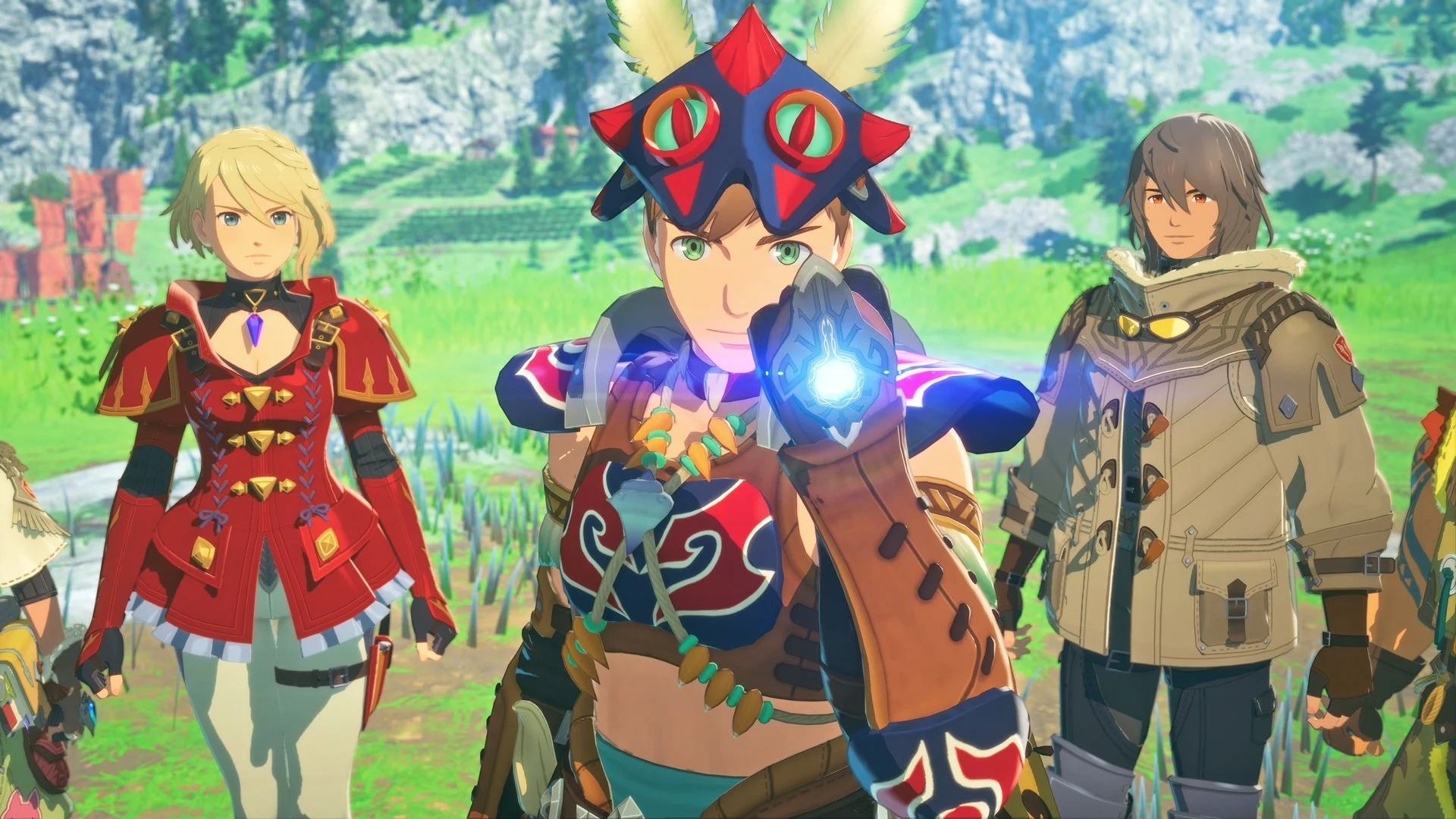
We are then brought to a throne room lined with many official-looking people. The atmosphere is humming with expectations. They mutter amongst themselves before their king and queen and their bright-eyed child. A fabric-covered object is wheeled before the monarchs and revealed to be a large crimson egg with blue designs mimicking flames. A short ritual begins and ends when the egg hatches, not just one but two Rathalos offspring! The excitement is quickly overtaken by nervousness and even fear. Someone can even be heard speaking of ill omens the twin wyverns represent. As the royal couple listens to the urgent advice of those in their court, the child curiously approaches the Rathalos twins. One of the Rathalos babies steps eagerly towards the child who reaches a hand towards it, and the stone that adorns the child’s wrist begins glowing brightly. The light washes over the scene, and the title of the game comes into view with a swell of music.
If there has been one constant across the Stories trilogy, it is the threat of prophecy regarding the Rathos. While having a general threat is crucial to how these stories play out, it does feel like a missed opportunity to highlight some of the other amazing monsters across this series. Now, don't get me wrong, the Rathalos is a series icon, and the look, intensity, and energy behind what they do here is palpable, and does pay off in spades; it just becomes this thing of wanting some of the other icons to step into the spotlight that looms overhead.
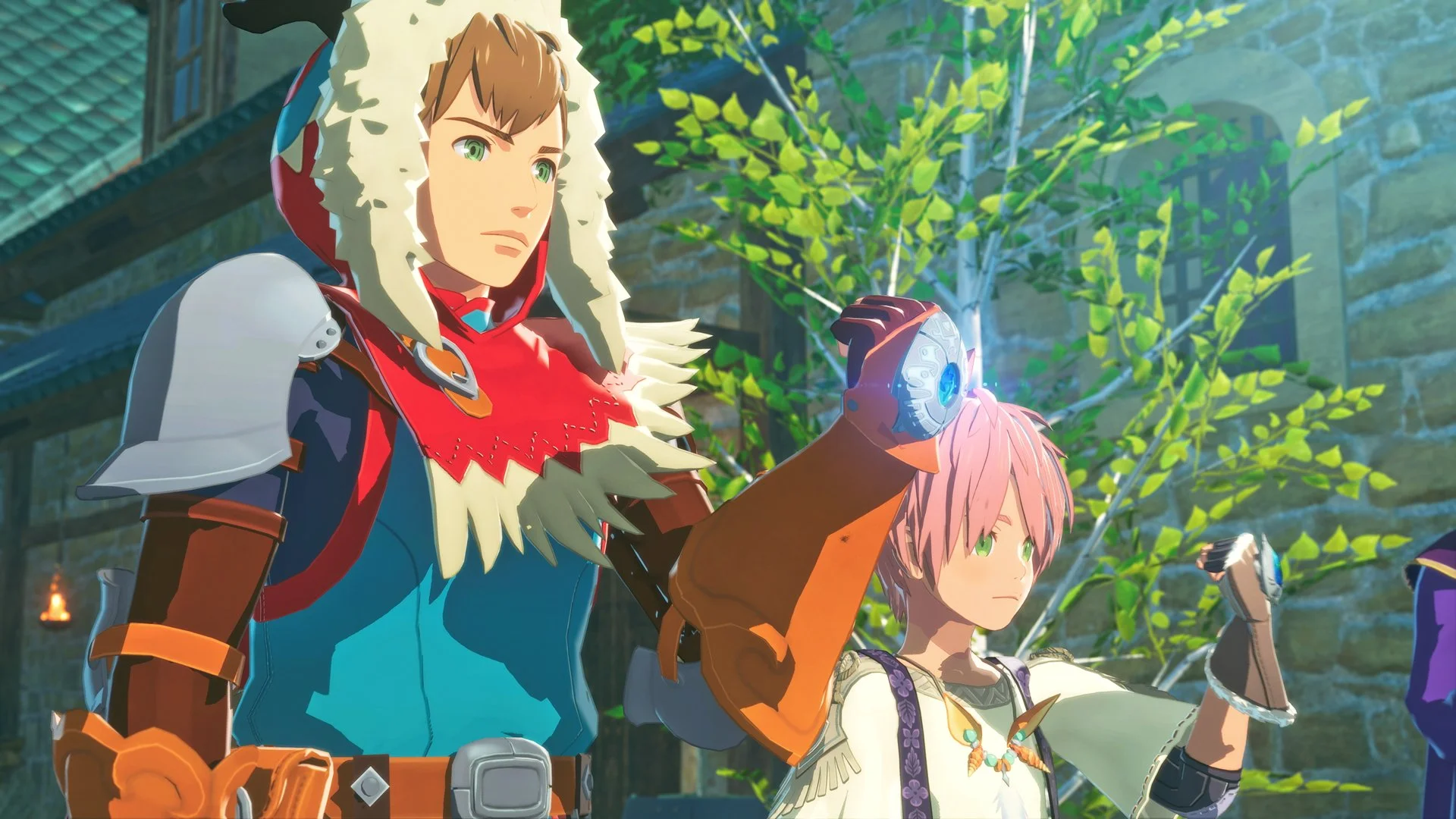
Even before you are enveloped in the beautifully animated opening cinematics, you are able to create your character, which is a grown-up version of the child in the opening scene. While the character creation does not have any height or weight sliders, likely due to armor designs, you still have a nicely varied system of options to craft your appearance. You are the princess or prince of the kingdom of Azuria and the Captain of a group of Rangers. As you find out in a short introduction to your fully grown-up character, your life's work is to research and observe the encroachment of a mysterious disaster that is slowly swallowing the land. You also care for and help with the conservation of the many species of monsters that call the environments of Azuria home.
What allows Stories 3 to stand out from its predecessors is the fact that the main character is fully voiced with their own personality. Previously, the past two protagonists have had Navirou talk for you, and thankfully, as the game takes place 200 years after the events of the second game, Navirou is nowhere to be found. This allows your hero to truly stand on their own, having a real impact on the story in a more compelling and natural way.
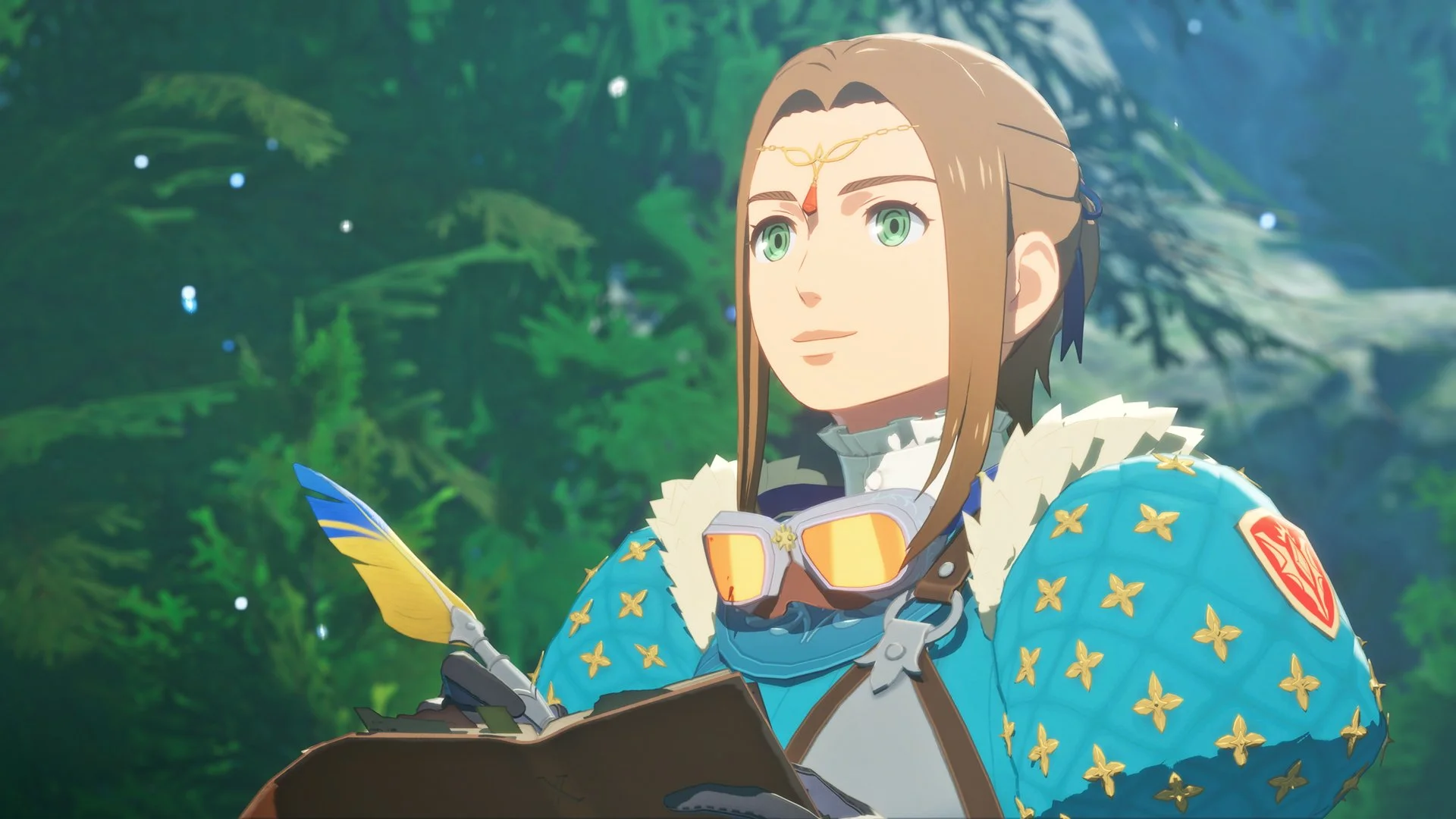
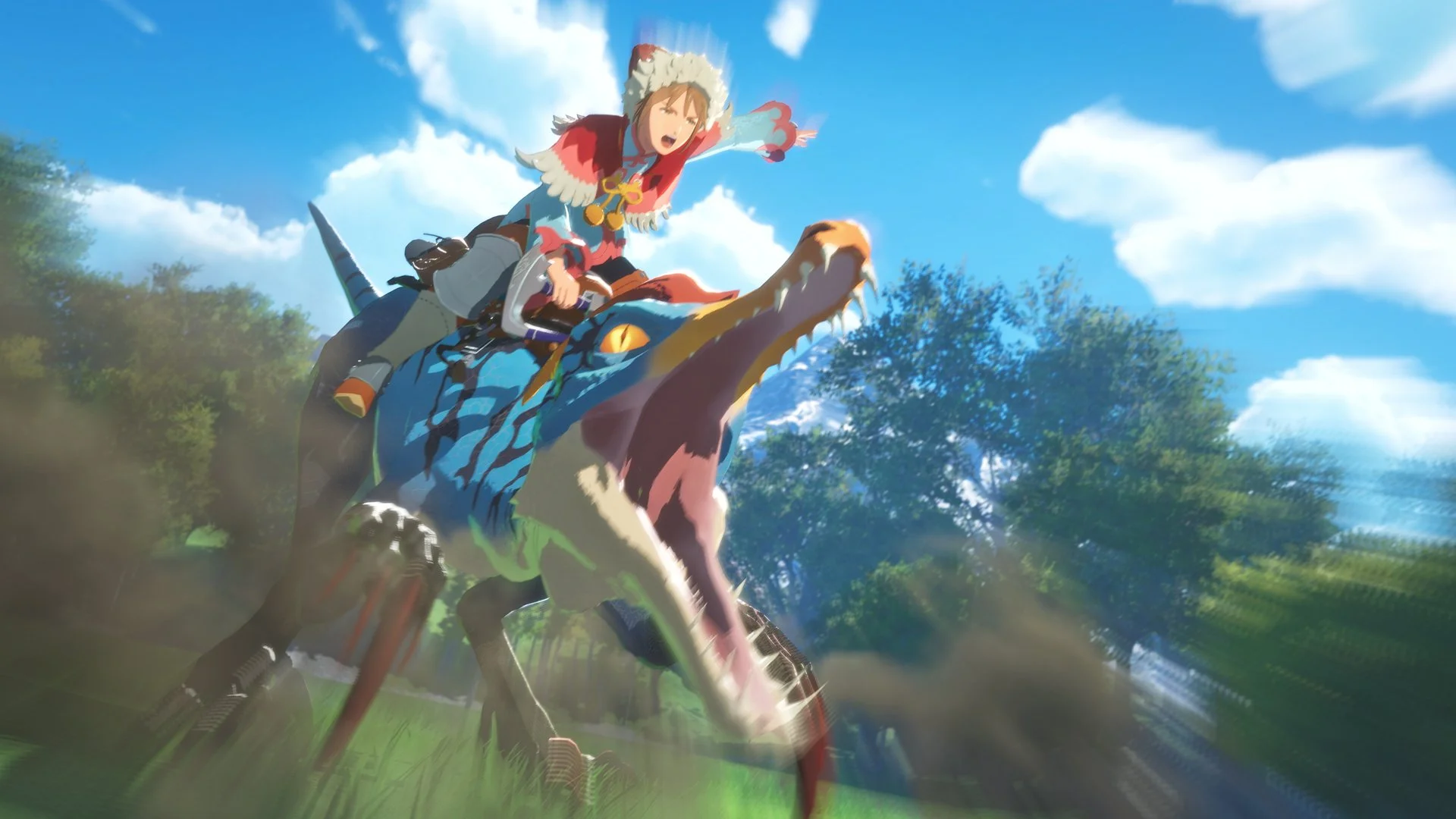
And an impact they certainly have. Given their importance to the kingdom and the fact that they are the rider to Rathalos, they have a responsibility to protect their kingdom. However, that comes with the fact that, as they are the Rathalos rider, their father, the King, illustrates the importance of Rathalos being a weapon they need to combat their enemies. However, they are conflicted with that responsibility as they see Rathalos as more than just a tool for war.
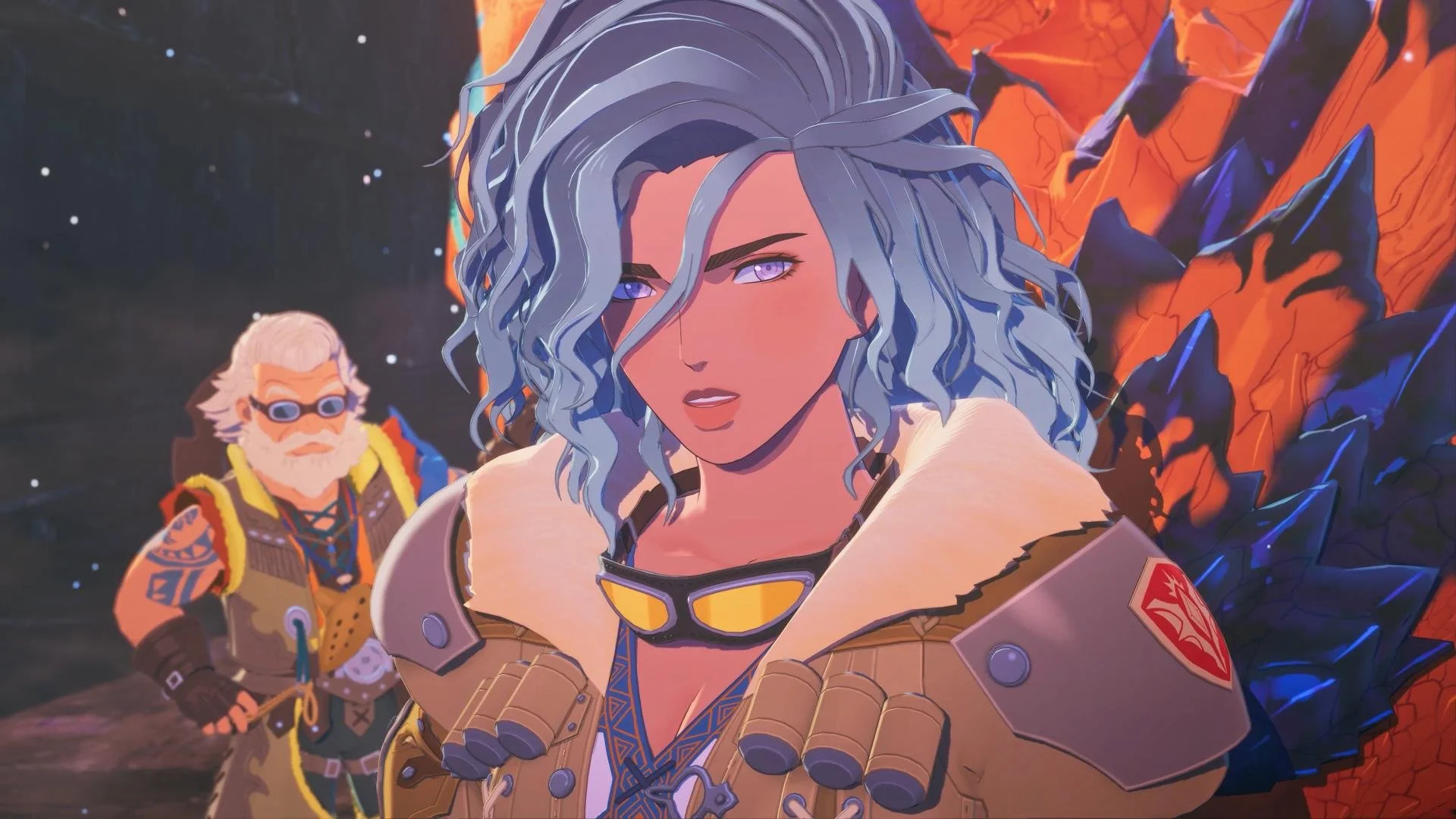
Fighting alongside their highness are the Rangers, a group of characters from various walks of life, each having something to prove. This group consists of Simon, Gaul, Ogden, Kora, and the newcomer, Thea. This group has a lot of history with each other, especially through Kora’s late husband, who was Ogden’s son. These relationships are wonderfully woven into a series of quests you'll undertake to get to know them. Frankly, many of these outshine several of the various side quests you'll find as you traverse a series of environments as you move towards your goal.
Now, this story kicks off the moment a nearby Kingdom visits to request aid for a cause they feel will save their land. However, discussions don't go their way, and to prevent war between these two nations, Eleanor, the neighbouring princess, volunteers to stay behind, joining the main character and the Rangers as she is their guest.
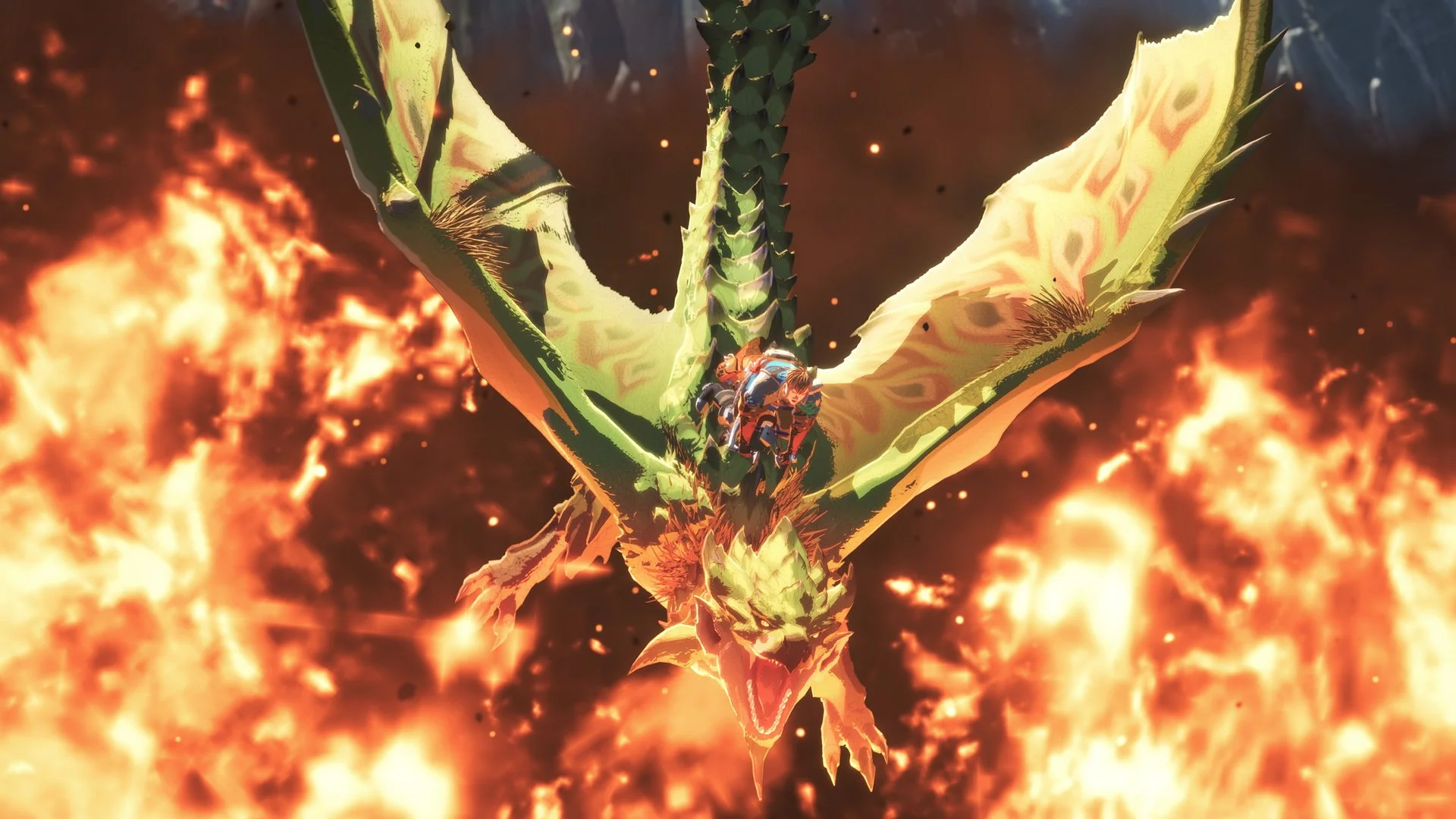
Now, while that itself is its own story, it's what follows that truly catapults the narrative into a quest for truth, as much of what has been told to each kingdom doesn't exactly hold true. We learn much about the encroachment, and how the lands outside the kingdom, that have been said to be uninhabited, not only have life, but their own ecosystems, flush with new monsters, and tribes simply looking to survive.
However, before this story begins, you are introduced to the game's mechanics as you take Thea, the newest ranger, out for a training mission, taking the recruit under your wing to teach her the ways of the Rangers. I thought this was nicely written and a great way to learn new controls and returning systems from the previous titles. The battle menus are easy to navigate and informative. You start off by seeing that it is composed of 3 different attack types: speed, technical, and power, each have their weaknesses and strengths. There is also a menu to select special attacks, which will consume stamina points, and a menu you access with the left shoulder button that is to either give your monsties orders or switch to a different one if the situation calls for it. All of this together completes a well crafted turn based rpg combat system that allows you to fluidly adapt to whatever happens and strategically come out victorious.
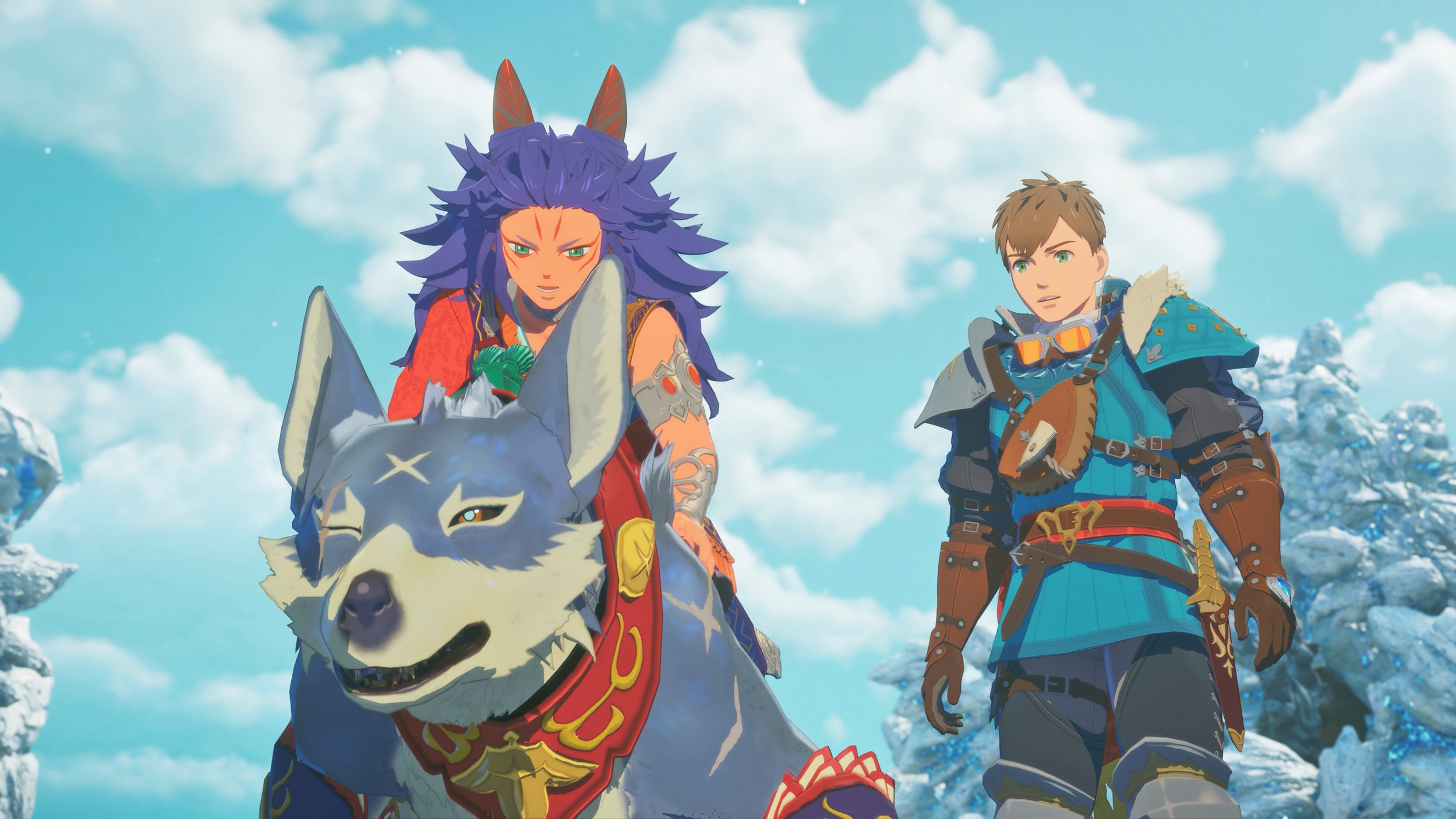
Throughout your adventure, you will be shown expanded battle options and functions, which are nicely spaced through your first few hours so as not to bombard or overload you with too much info at once. In fact, the opening area, which serves as one large tutorial zone, is lengthy enough to get you mastering the controls, combat systems, and menus, to carry you throughout the rest of the adventure.
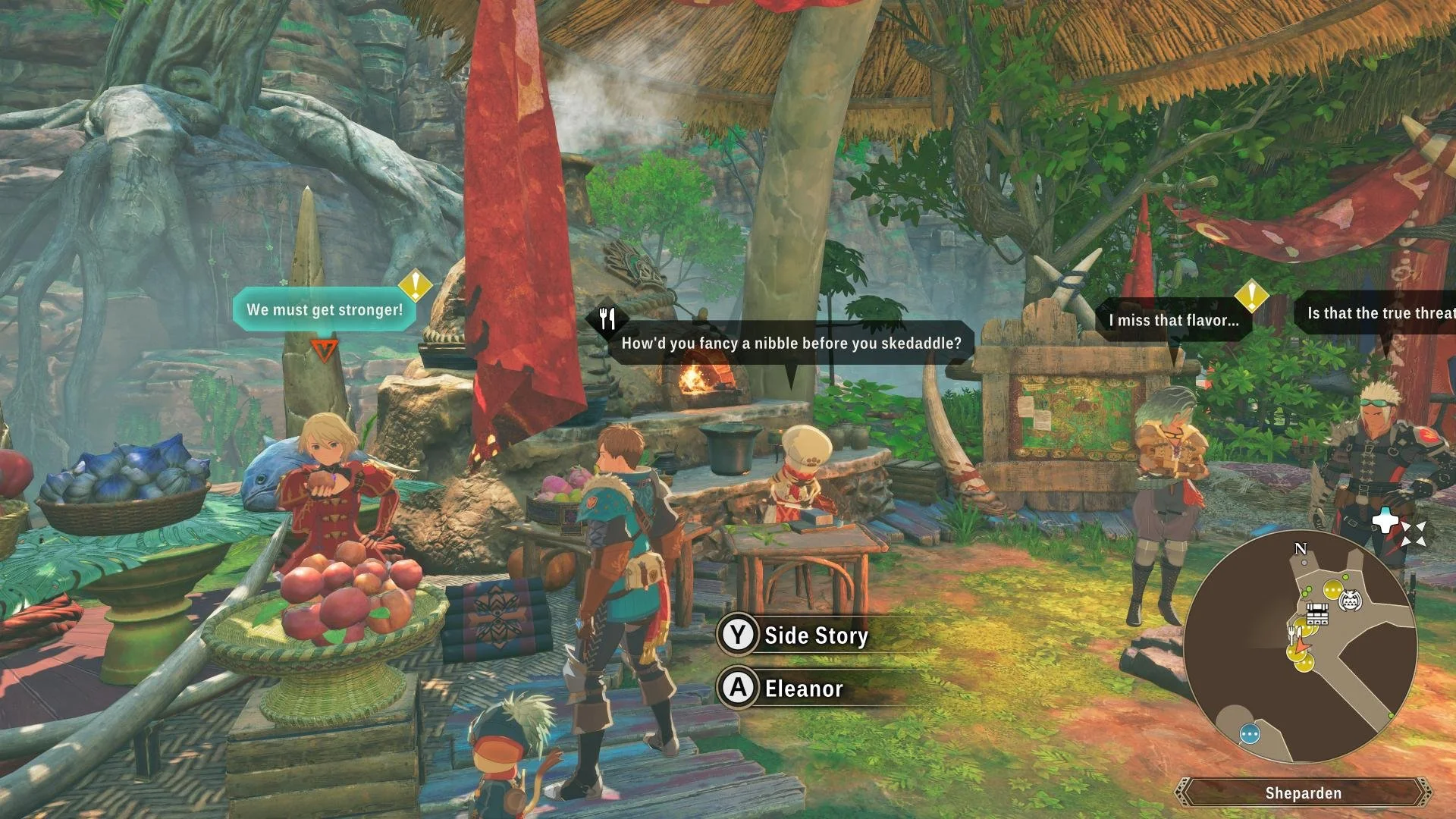
The challenge of the game comes from being able to balance and apply everything you've learned. You'll need to be mindful of the type of environments you explore, the elements wielded by your monster adversaries, what equipment and weapon types you choose to suit up with, and which monstie partners to bring with you. This can all be done from the basic pause menu functions and the new-to-the-series Ranger camp that you can set up in multiple areas of each map. While this may seem overwhelming, the game always does its best to inform you with new incoming information that you can access using your journal menus, helpful comments or suggestions from your companions, and my personal favorite, your Palico companion, will even let you know when a quest is ready to be handed in.
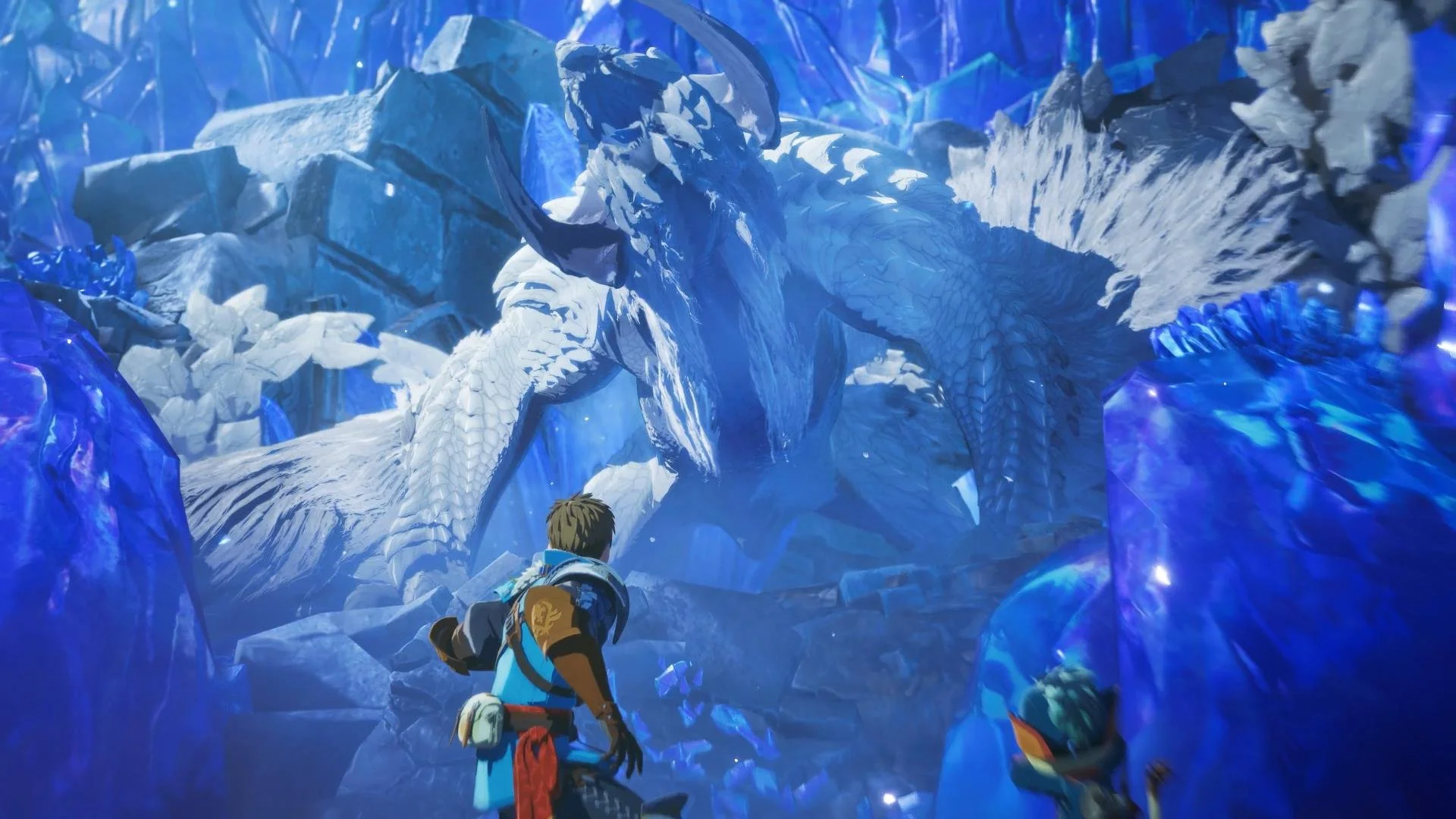
While Stories 3 does refine much of what has come before, there are some additions and omissions to certainly talk about. First, while mutations did exist in the second game, they are far more prominent here due to a new system called Habitat Restoration. As you collect more Monsties by finding dens and snatching eggs, you can release those monsters back into the wild. This allows mutations to then appear around the map as early as the game’s opening few hours. It also makes gathering eggs feel drastically more important than ever before.
While it isn't always abundantly clear how to rescue an extinct species or raise it to a flourishing status that produces powerful mutations, you are always able to pore over your Ranger journals for pieces of information that will point you in the right direction. If all else fails, you can pay attention to your group of Rangers friends when they remark on new areas, and of course, your closest companion, Rudy the Felyne, who will mention a tidbit or two of knowledge to you. All in all, it is a welcome and fun addition to the series that I hope they continue with in the future.
Ranger camps are a welcome addition to the game and appear once you have cleared out threatening feral monsters in each zone of the map. Here, you manage your habitat restoration, hatch your eggs, switch up your party members, and send them on excursions to upgrade certain stats. This addition prevents you from having to constantly return to the main town hub of each map and prevents that break in pacing as you constantly fast-travel from one zone to the next. And, when you fast travel, you are no longer dumped on your butt from the Catavan.
Now, let's talk about what they took out. Zenny. Yup, the main currency used in the Stories series and Monster Hunter games across the board is gone. This is replaced with a simplified structure of special gold, silver, and bronze points earned throughout your adventure for various task completions, and even gliding through the air and catching hard-to-reach floating insects. These points can then be traded for various healing items, weapon abilities, recipes, and even the odd outfit for Rudy the felyne. The Melynx Inc. agent sets up pop-up shops in towns and near the camps you set up. Anything you trade the points for is limited amongst those item types, with everything else needing to be foraged, found, or crafted. When you craft and upgrade armor, you merely have to have the pieces needed in your inventory and leave your wallet at home.
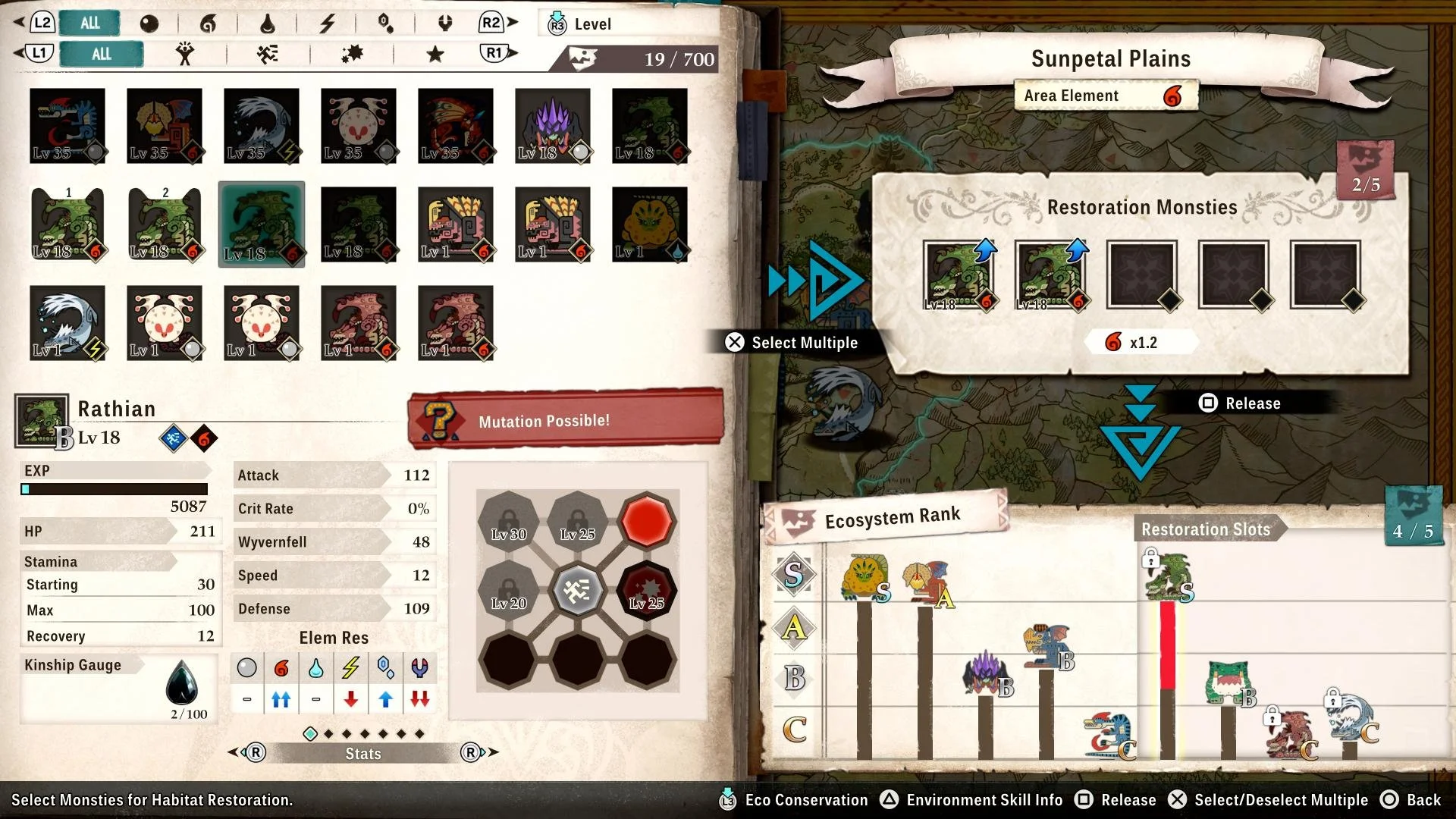
Along with Zenny, traditional shops have been removed; they've also removed the quest boards and any online functionality, which did, to be honest, carve into my score. Monster Hunter Stories 3 is built as a pure single-player RPG adventure, with many players who have grown up with the series feeling like a massive chunk of what made it special to them has been removed. While the online play was not my favorite part of the series, personally, I did find it odd that it wasn't there at all. Many people have stated that it wasn't even that they wanted to battle other players, so much as share in the fun of harder expeditions with friends and take on the plethora of post-game challenges the Stories games had been applauded before. Perhaps with enough feedback or social discourse, the developers may choose to add some online features as new updates in the future.
Combat has always been a strong point of the Monster Hunter series; it's been a compelling reason to hunt and harvest the needed materials to equip your hunter in a collection of incredible outfits, and Stories 3 is no different. However, unlike the main series, the Stories trilogy is a turn-based affair that follows the holy triangle of damage attacks. As mentioned before, Speed beats Power, and Power beats Technical, and Technical then completes the triangle as it conquers Speed.
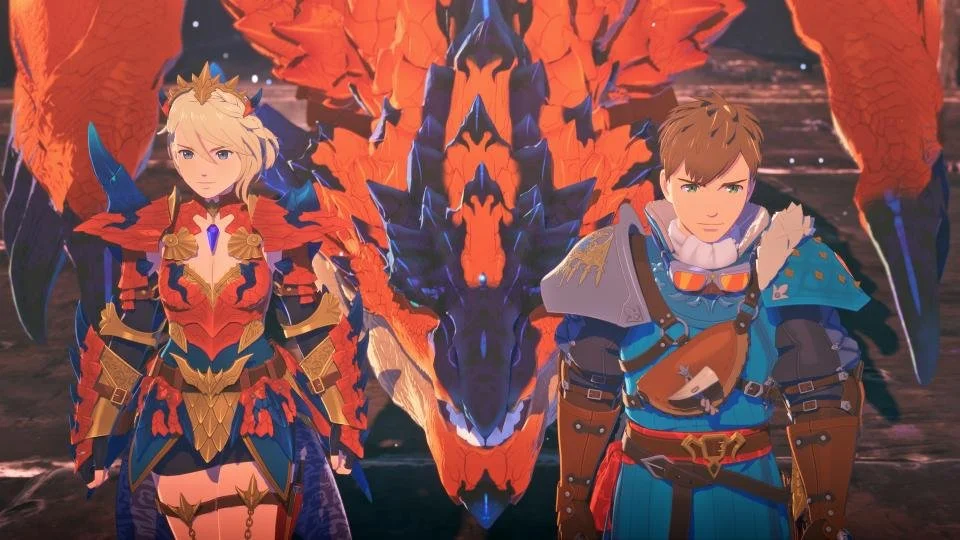
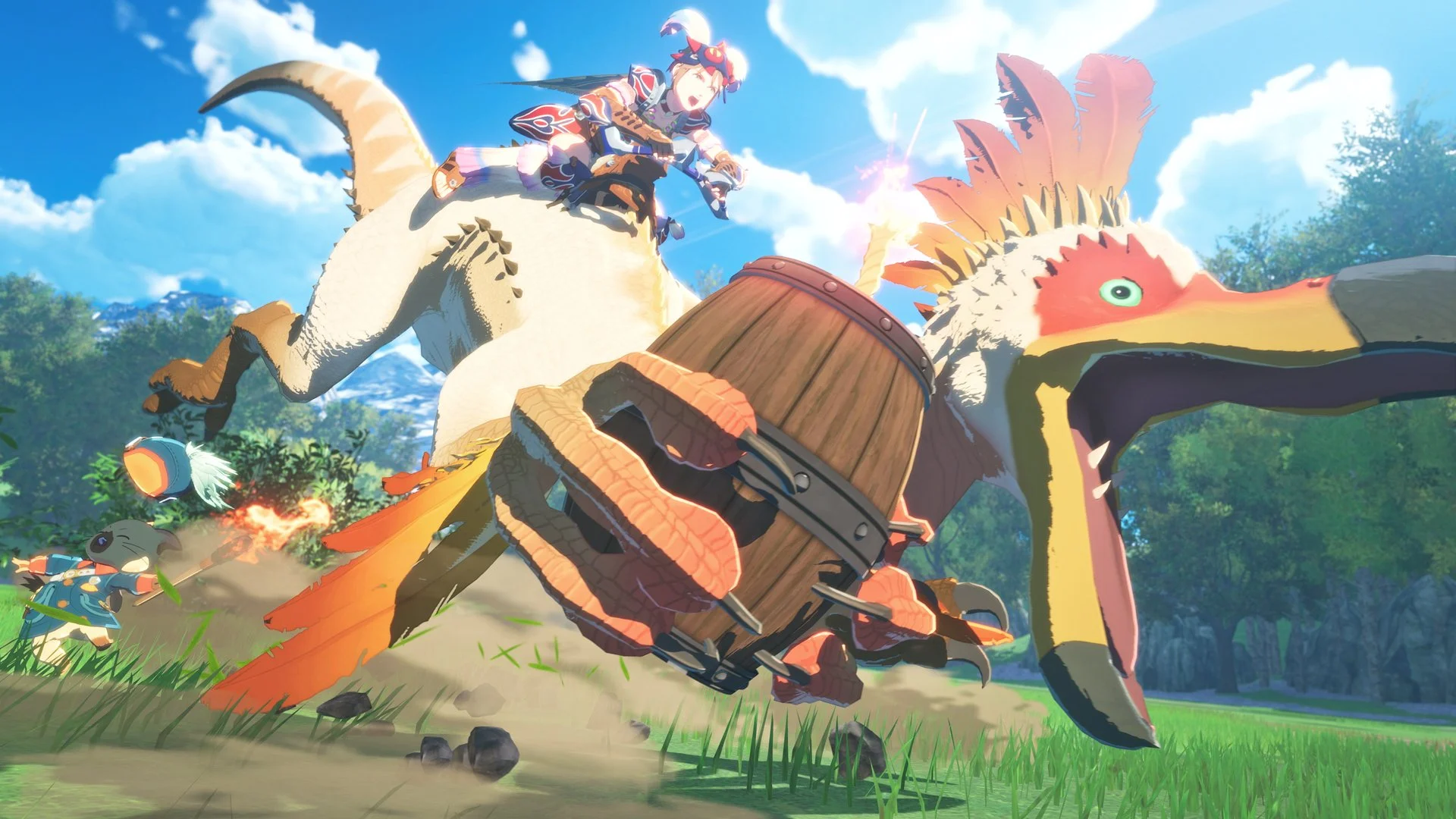
However, that is only one part of combat, as you'll use those attacks to strike at different parts of the monster, using different weapons to apply damage in greater force. You'll equip three weapons, and while the game initially chooses for you, with a great sword, bow, and hammer, you are free to swap these in and out. However, to really take advantage of the weapon systems, you'll want to ensure you have those particular categories covered due to the properties of those weapons being factors in how you deal damage.
Each Monstie will also have its own special attack, and a host of skills that can either be natural to them or applied to them via the Rite of Channeling, which returns from the previous games. And, one difference between the previous entries and this newest installment is that the monster you pull abilities from during the Rite is no longer consumed and can be released into the wild to aid in the habitat restoration project.
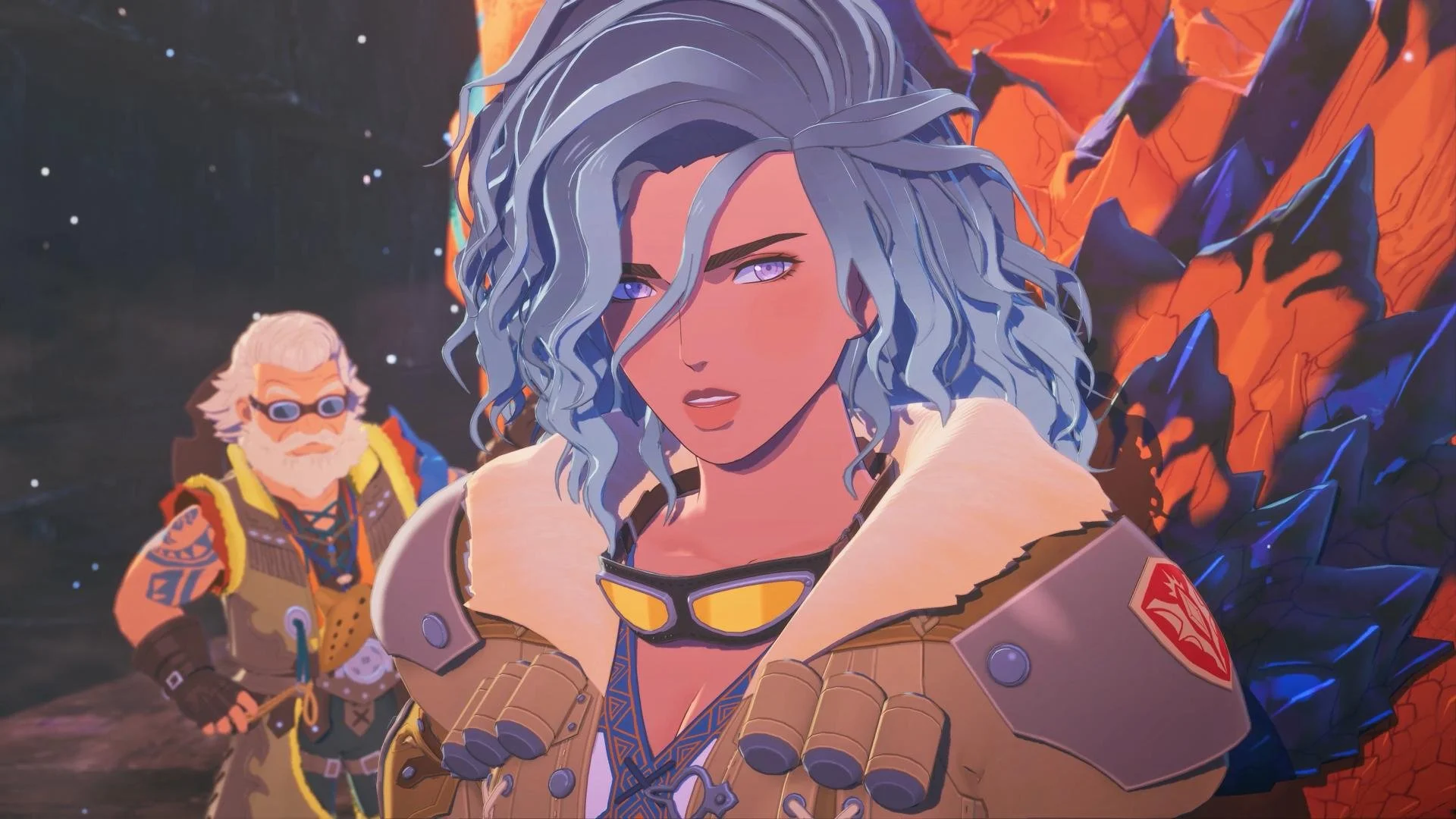
Now, that said, Monsties are crucial in combat. From double attacks to special attacks, to mounted combat, your choice of Monstie is furthered by each Monstie having the trait of Speed, Power, or Technical, meaning your choice of ally in certain fights can make or break each encounter.
While the core combat has remained largely unchanged, one significant quality of life improvement is that your hearts are replenished after each battle, which wasn't the case in the previous games. This allows the progression and pacing to really flourish and not be held back by having to rest or using a vital essence to replenish those hearts. It's a small change in the grand scheme of things, but a crucial one to maintain the pacing of the adventure and keep you moving.
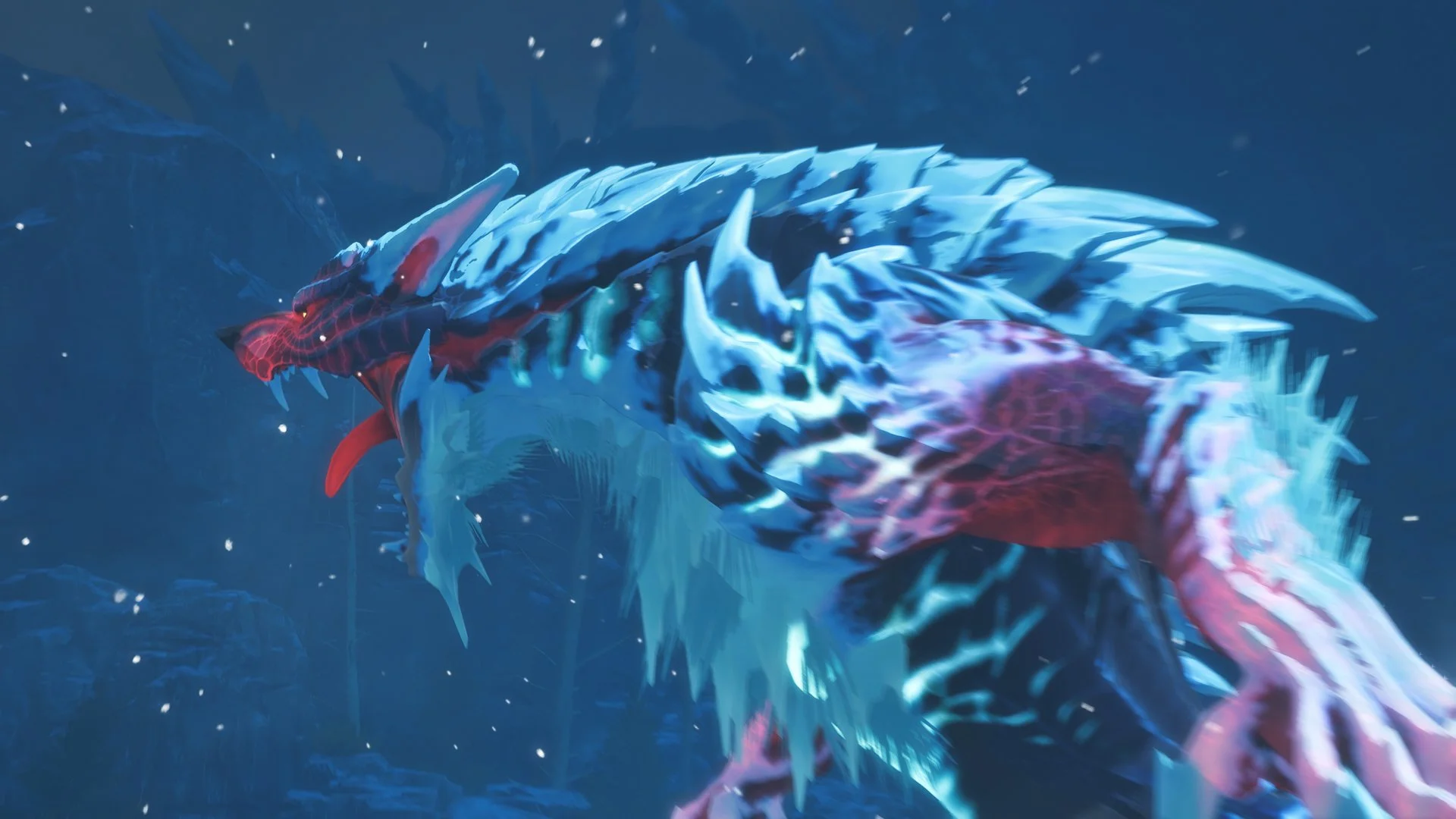
My favorite monsters in any of the Monster Hunter games are the formidable and terrifying Nergigante and Deviljho, which many refer to as the spicy pickle (including Canon mentions of this comparison by Navirou in MHS2 and Thea in MHS3). You can imagine how overjoyed I was when MHS2 added them and the number of screenshots and pictures I took. While Deviljho has made its return for this latest title, sadly, Nergigante has not. While I was personally a little disappointed, there are seemingly more monsters added to MHS3 than both of the previous titles together. There are so many more ways to acquire eggs, their mutations, restore habitats, and collect all of their armor and weapons sets, that I am never without new monsties to make friends with. I've even found a few new favorites to add to my list and am having a great time finding different ways to augment my team.
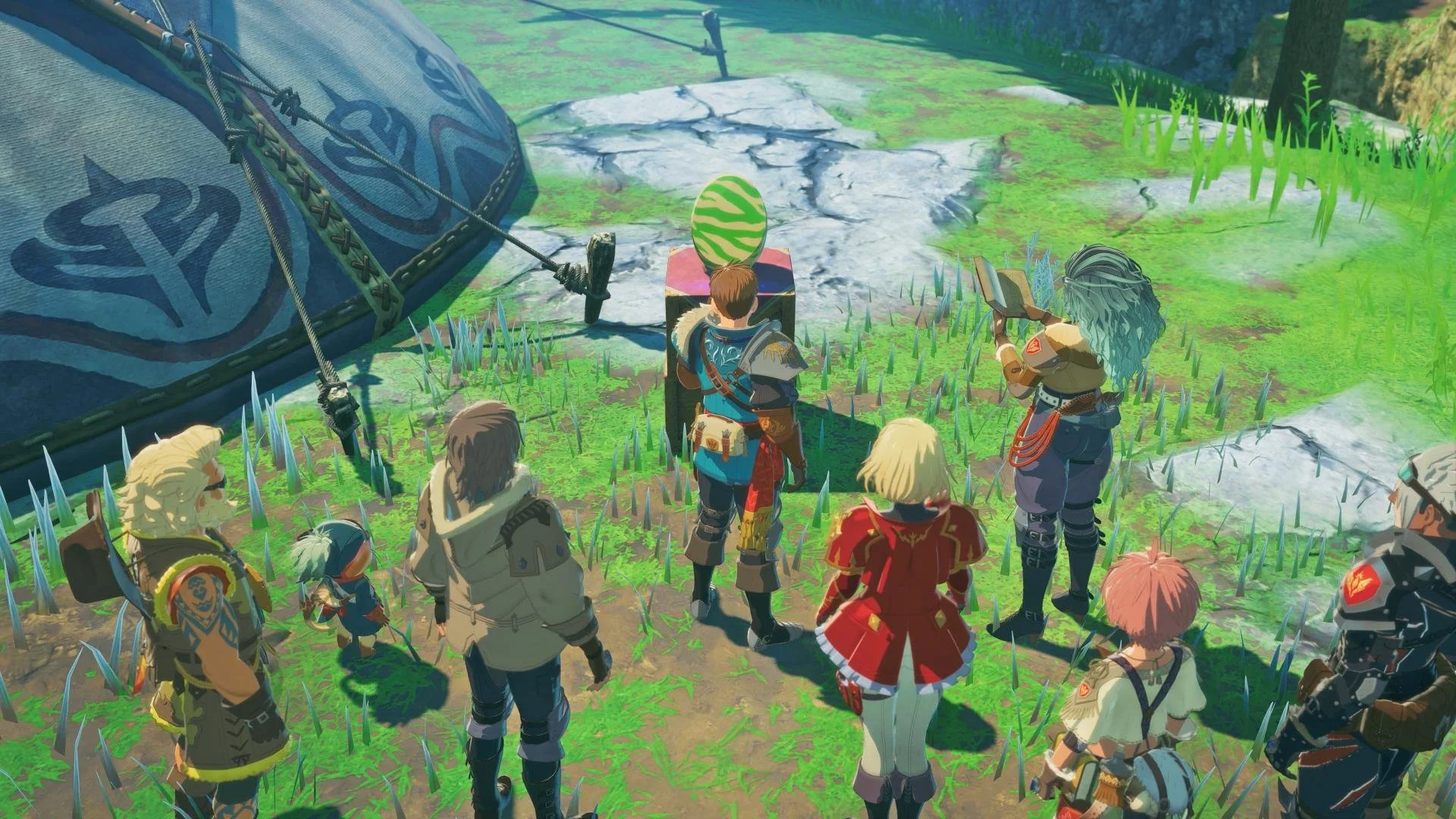
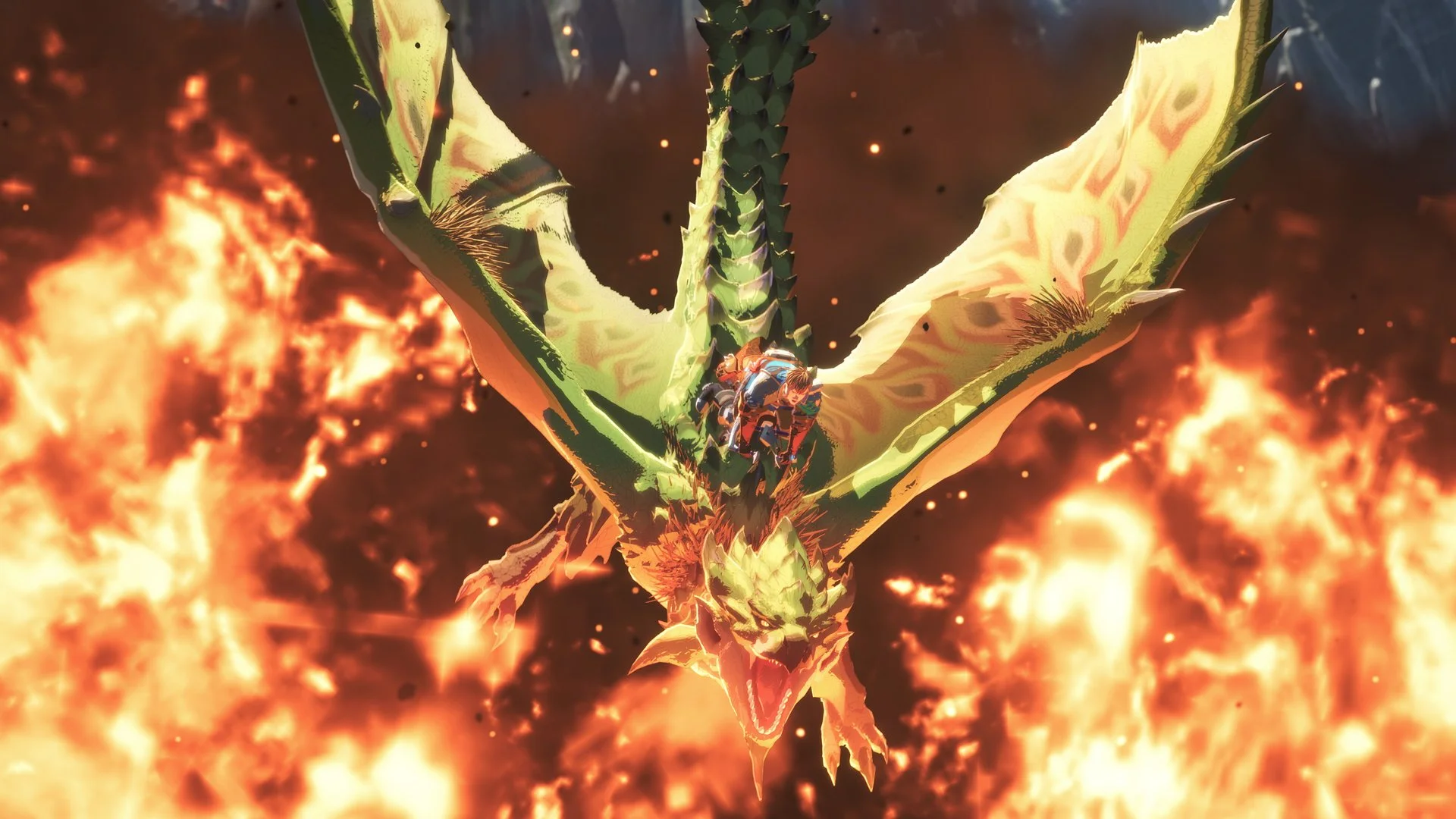
Monster Hunter Stories 3 is absolutely beautiful. Every biome you and your friends tread is an absolute feast for the eyes. Oftentimes, I found myself just gliding from high peaks just to witness the way that life teemed below. I would even follow the flight path of a wandering Rathalos, utterly smitten with how everything functioned and how well-crafted it all was. The colors and art style the developers utilize to bring the monsters, characters, and scenery to life are treats to witness and never overwhelming or hard to look at, even in the flashiest of moments or action-heavy battles. The audio was a perfect partner to the artistry. The voice acting was top-notch and emotional, and the music was goosebump-inducing with sweeping tones that guided you through each scene or traversal across the lands.
While on the subject of how the game looks, you can't help but marvel at how it functions beneath it all. Mechanically, the game functions quite smoothly during sweeping cinematics, highly populated cities, and fights where there are special abilities setting the screen ablaze. I was lucky enough to be able to experience MHS3 on both the Xbox Series X console and the Switch 2, and was excited to see the difference between both platforms. On the Xbox, it ran at a near-perfect 60 fps, and I never saw any chugging or stutters, no matter what my character and her friends got up to. Switch 2, in comparison, obviously struggled to maintain a consistent 40 FPS during motion and action-heavy moments. However, honestly, what the hybrid system did accomplish with how the game ran was quite impressive in both docked and handheld modes and was a great showcase of the system's power. When it comes down to experiencing this brand-new adventure, any platform you can find it on is going to impress, nonetheless.
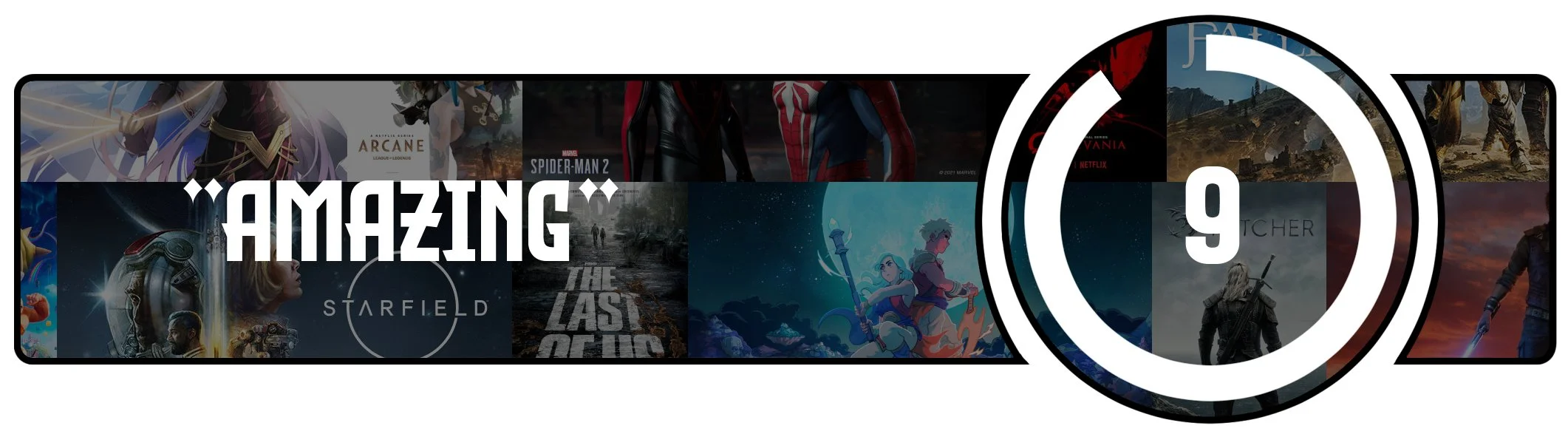
Monster Hunter Stories 3: Twisted Reflection was an incredible experience from start to finish. Its technical highs soar well above its predecessor, with few issues or gripes to address. However, what holds it back from a near-perfect score is the omission of its online modes and any sort of post-game content. Given that online play has been a staple across the previous two games, it does feel quite a strange choice to remove it entirely. Regardless, this is a must-play adventure, with stunning cinematic story beats, the engaging habitat system, and a collection of monsties so massive that you’ll never run out of moments to gush over.
Developer - Capcom. Publisher - Capcom. Released - March 13th, 2026. Available On - Xbox Series X/S, PS5, Nintendo Switch 2, PC Rated - (T) Fantasy Violence and Mild Suggestive Themes.
Platform Reviewed - Nintendo Switch 2. Review Access - A review code for Monster Hunter Stories 3: Twisted Reflection was provided by the publisher for the purpose of this review.
Rebecca is a huge fan of JRPG’s, RPG’s, and Survival Horror. From Silent Hill to Resident evil. Xenogears and Final Fantasy. When she isn’t tinkering with skill trees or equipping the right rifle to take down numerous monsters, you can find her farming away on Stardew Valley.