
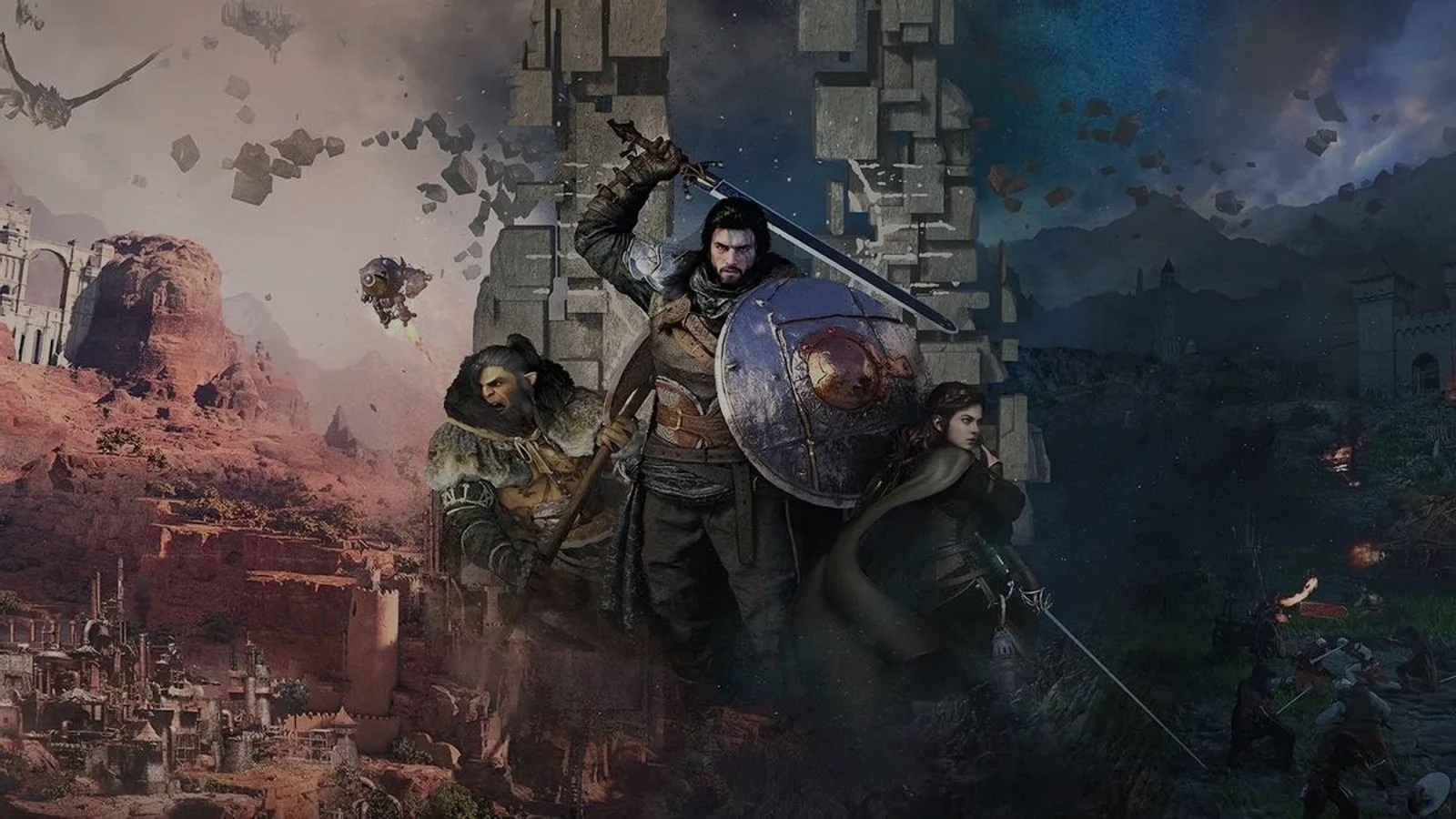
Jack of all trades, master of plenty.
If you were to ask children to describe their ultimate game, you would likely be bombarded with a sea of ideas, all of which work extremely well on their own, but their mixture is something that would be largely unpredictable if the concoction were even playable. You would see combat, exploration, and crafting systems working alongside mining, harvesting lumber, base-management, riding dragons, and of course, landing an RKO on the top of a watch-tower, seeing it all crumble down upon you as your foe has felt the three most dangerous letters in all of Sports Entertainment.
Crimson Desert feels like such a game, where hundreds of ideas that make up the DNA of countless others are all mixed in, controller inputs be-damned. There is a lot that works for Crimson Desert’s buffet of content, but not only does it feel overwhelming, at least in a good way, it feels over-designed, at times, in the not-so-good way. Is Crimson Desert good? Hell yes, it’s truly fantastic, but it often fights with not just what it wants to be, but how you, the player, go about it. It is freeing and massive, yet lacks the polish to clean up some of its jankier elements. While patches are coming hot and heavy, some of that jank that is part of the game’s foundation is harder to address.
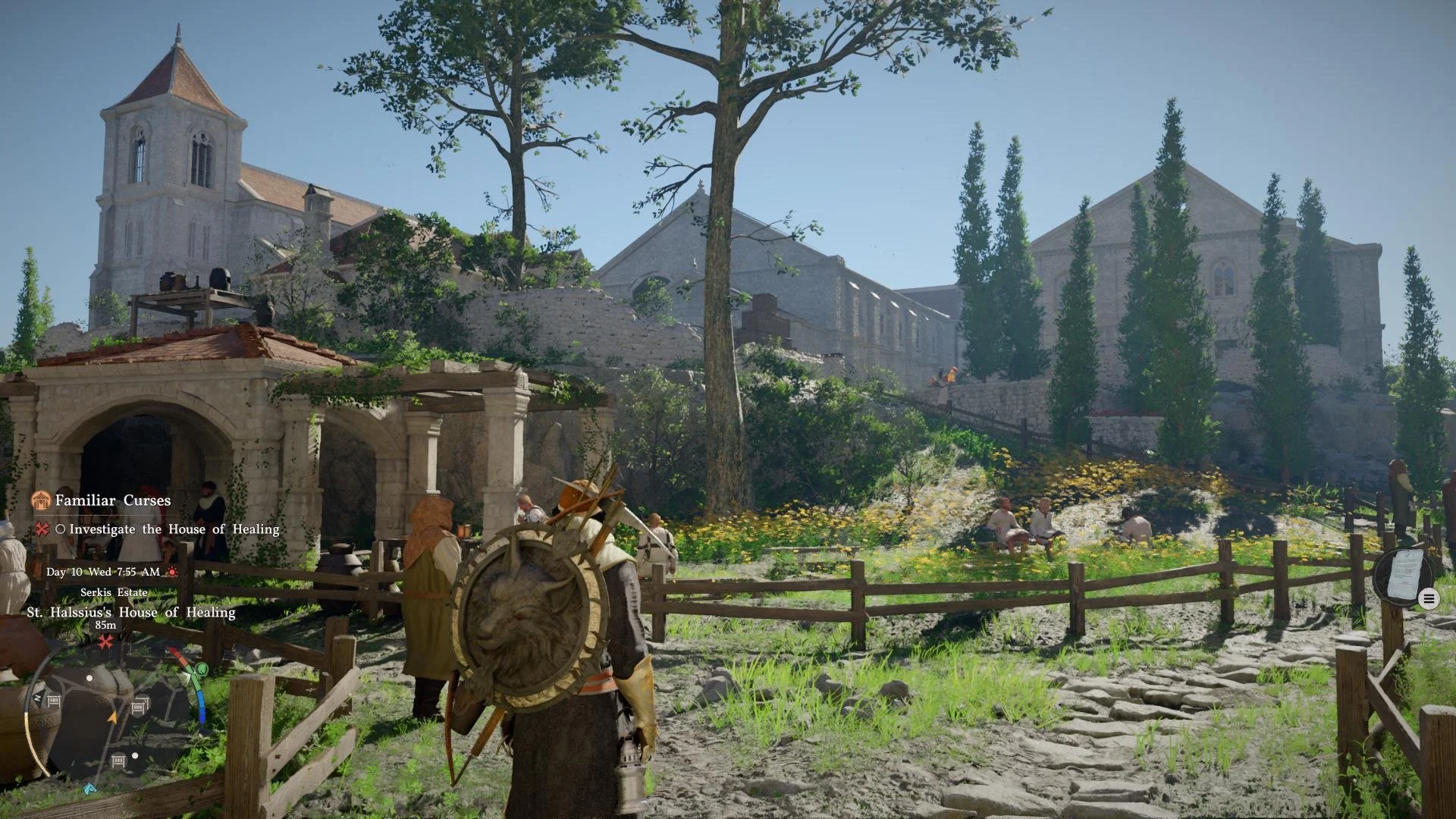
Crimson Desert is a single-player action game from developer Pearl Abyss. This is the studio behind Black Desert Online, and they have taken their MMO history and wrapped it in a game that feels equal parts Red Dead Redemption 2, The Witcher III, and Tears of the Kingdom/Breath of the Wild. It’s a mixture that works due to the open-world nature of it, but struggles at times to balance so much of that workload into something that feels like it flows and mixes naturally. While you can certainly see the MMO origins of this game, its transition to being just a single-player experience is still quite impressive.
Part of why I’ve soured on Red Dead Redemption 2 over the years, and was one of my main criticisms when that game released, was the over-framed animations that made everything slow to react. From turning to walking speed, even skinning animals or opening containers, felt lethargic and time-consuming for nothing that benefited gameplay. If I had to fault Crimson Desert in any category as its biggest sin, it would be the overuse of long animations to turn, walk, jump, climb, and, well, even just to move. Hell, Kliff’s entire combat arsenal can feel like each move has this extra-long wind-up to its animations that can initially mess with your timing. You’ll constantly over-correct your stance to open chests or grab items, jumping on uneven surfaces can cause your character to often walk a step forward, climbing is wildly inconsistent and can result in you plummeting down the mountain, and your jump is so lethargically delayed that it feels like you are jumping through molasses.
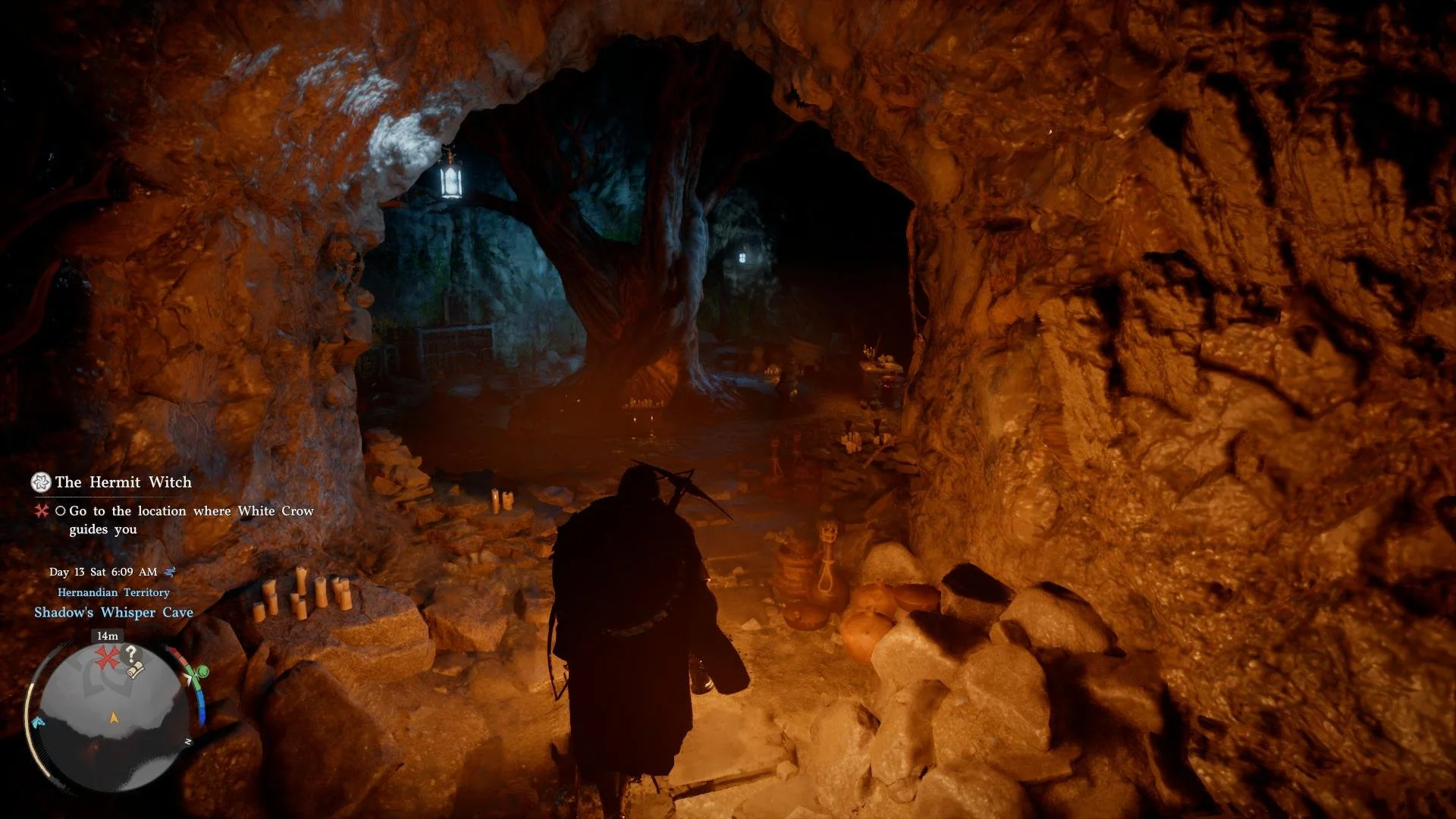
Does this all make for a bad game? No, but it does get in the way of itself far too often. Can you get used to it? Sure, but you shouldn’t have to; a game should be fun to move around in from the very start. Now, this review is being finalized just after the latest 1.02 patch on Xbox Series X. While it does fix a ton of initial complaints, the major ones are still there, mostly. Will the game see patches to improve jump times or climbing inconsistencies? I don’t know, but there is certainly a chance. Given this rapid cadence of their patches to improve a wealth of issues in the game’s first few weeks, and their patch history with Black Desert Online, I would assume these issues will see some addressing rather quickly when compared to other games.
It also doesn’t help that with so many options, from controlling a weird supernatural grappling hook to pulling off a series of wrestling moves, to spirit gliding and spirit punching, that the controller would feel over-stuffed, and that’s an understatement. Some moves and abilities almost feel designed by a random key-input generator, such as using said grappling hook to web-swing; it’s wildly unintuitive to the point where I reloaded my game and spent those skill points elsewhere. Some games have made us feel like we were performing controller gymnastics to even pull off basic things. This isn’t just gymnastics; this is the whole F’ing Olympics here.
Now, what Pearl Abyss has done here, given the estimated 130 million dollar budget, is staggering, given that a game like Red Dead Redemption 2 had a budget somewhere around 350 to 500 million, with inflation not taken into today’s value. Each game has massive scale and plenty to do, but to do what they’ve done here on a fraction of what Rockstar reportedly spent is insane. It also helps that Pearl Abyss didn’t spend a million dollars programming shrinking horse testicles and instead put their budget to what actually contributes to raw gameplay instead. While it is unclear how many developers at Pearl Abyss worked on this project, it was nonetheless a seven-year journey that has finally seen the light of day.
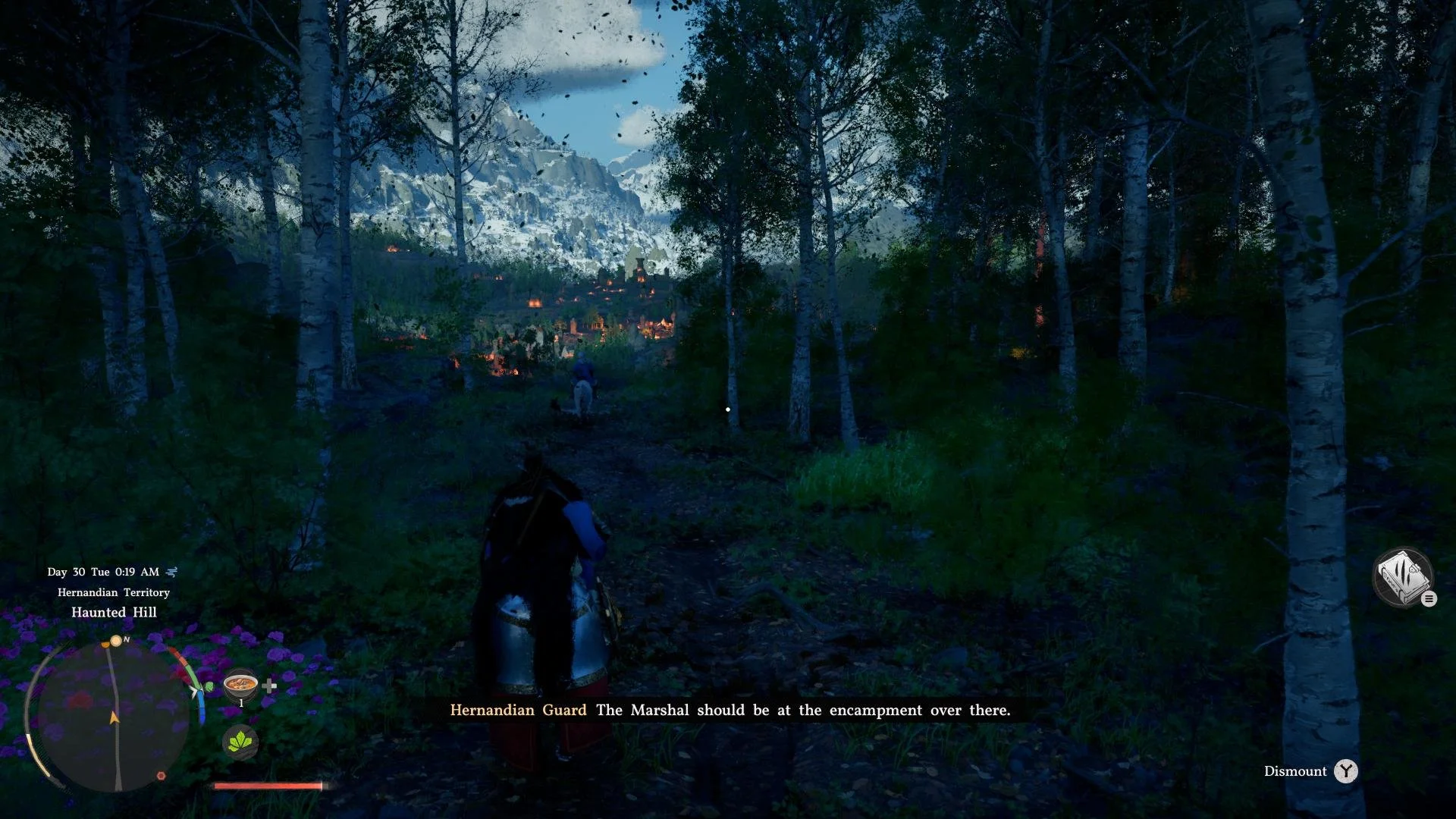
Leading up to release, many thought Crimson Desert didn’t look real, that its scope and scale and feature list felt impossible, that this game was too big to offer what it was showing. Whether for good or for awesome, this game is not only that big, but bigger; much bigger. You’ll craft and cook, both with materials and ingredients you’ll purchase and those you harvest out in the wild, as well as improve your armor and weapons at the local smithy. You’ll break in horses, tame them, gain the trust of dogs and cats to follow you into battle, complete with their own armor sets, as well as whole systems built for making dyes or potions.
You have bounties to collect all over the map, from arm wrestling, gambling, horse races, and archery competitions. There is also a full settlement that you’ll build from the ground up, complete with a house that you get to decorate and make your own. As for the settlement, well, there are dozens of quests alone to get that up and running, complete with a whole questline of a few dozen additional quests designed for you to even customize Kliff. Yeah, it can take almost 30 to 40 hours to just unlock that feature to change his hair, only to then hide it behind a helmet, since there was no option to disable it until version 1.02, which dropped at the time of publishing this review.
You’ll collect mounts to make traveling easier, despite being able to glide across massive swaths of the map. From horses to bears, deer, raptors, dragons, and even a mech, you’ll need them given the massive scale of the world around you. If you remember the floating islands from Tears of the Kingdom, well, Kliff has his own set of those, with the ability to glance out to the world around you, taking in the whole map at once, showing an impressive scale that few games can offer. There are several towns, cities, and dozens of settlements to find new quests, shops, or distractions to take on, all without loading screens. To add, most buildings can be entered, one way or another, including sewers, caves, and other aspects of the map that make the most out of its space. This is the next-gen game we were promised by the big AAA publishers over a decade and some ago. And yet, a team with a fraction of those budgets was the one to do it.
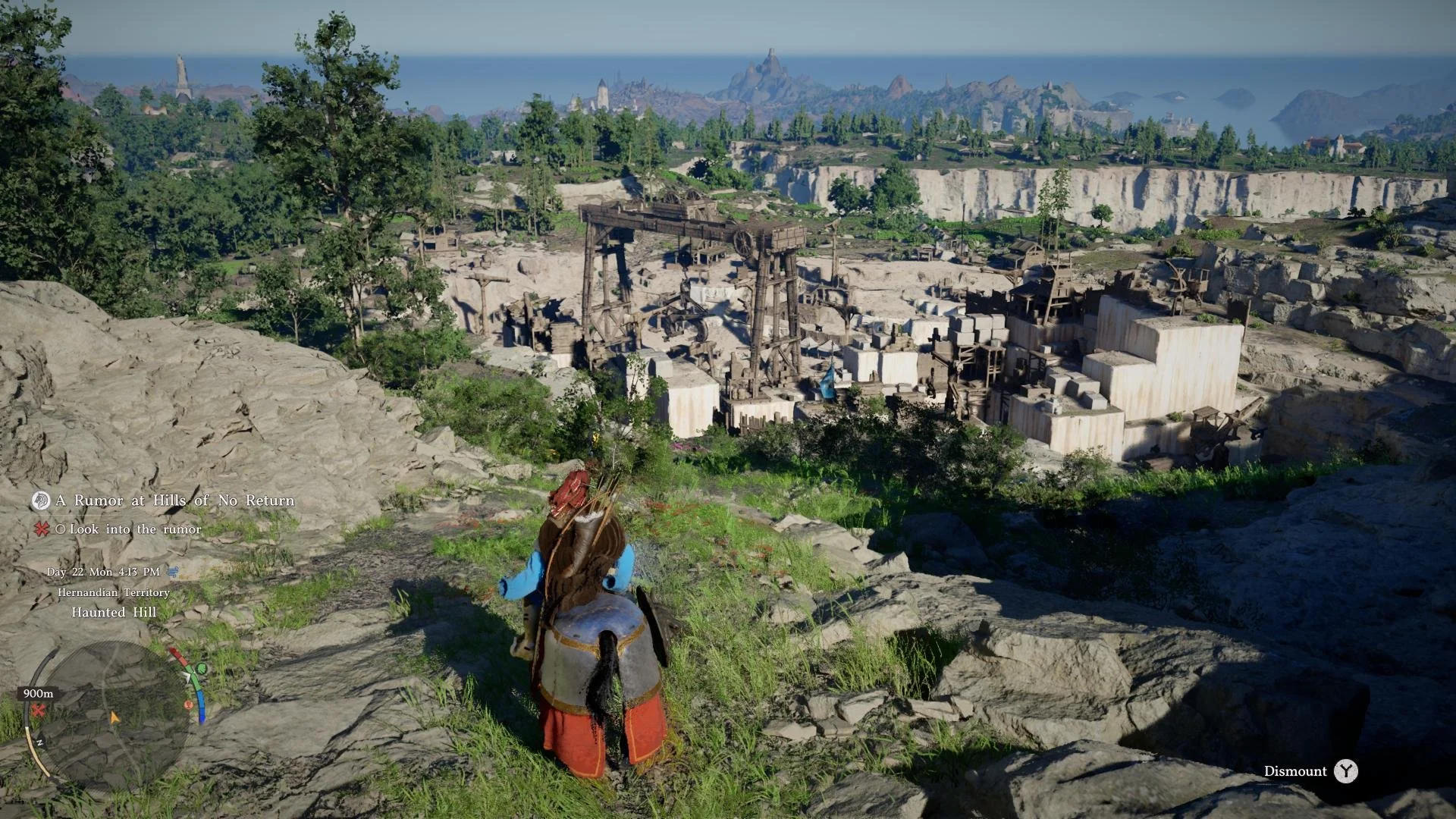
The map in Crimson Desert is massive, and while you can throw around figures such as it being bigger than the map found in Red Dead Redemption 2 or that it is twice the size of Skyrim, map size only matters due to the sheer density of things to do in it, which is why people rarely speak of the locations found in some of the more recent Assassin Creed’s titles such as Valhalla, which had aces of absolutely nothing. Still, scattered around its six main biomes: Hernand, Pailune, Demeniss, Delesyia, the Abysss, and the aforementioned Crimson Desert, there is a vastness here, a dense collection of locations, secrets, puzzles, and more, all to explore. Few maps this size have truly felt this big without succumbing to a vastness of dead space. It also helps that while you can certainly look at the map and see a sea of icons flooding it, it never feels like icon fatigue in the same way that Ubisoft games can often present.
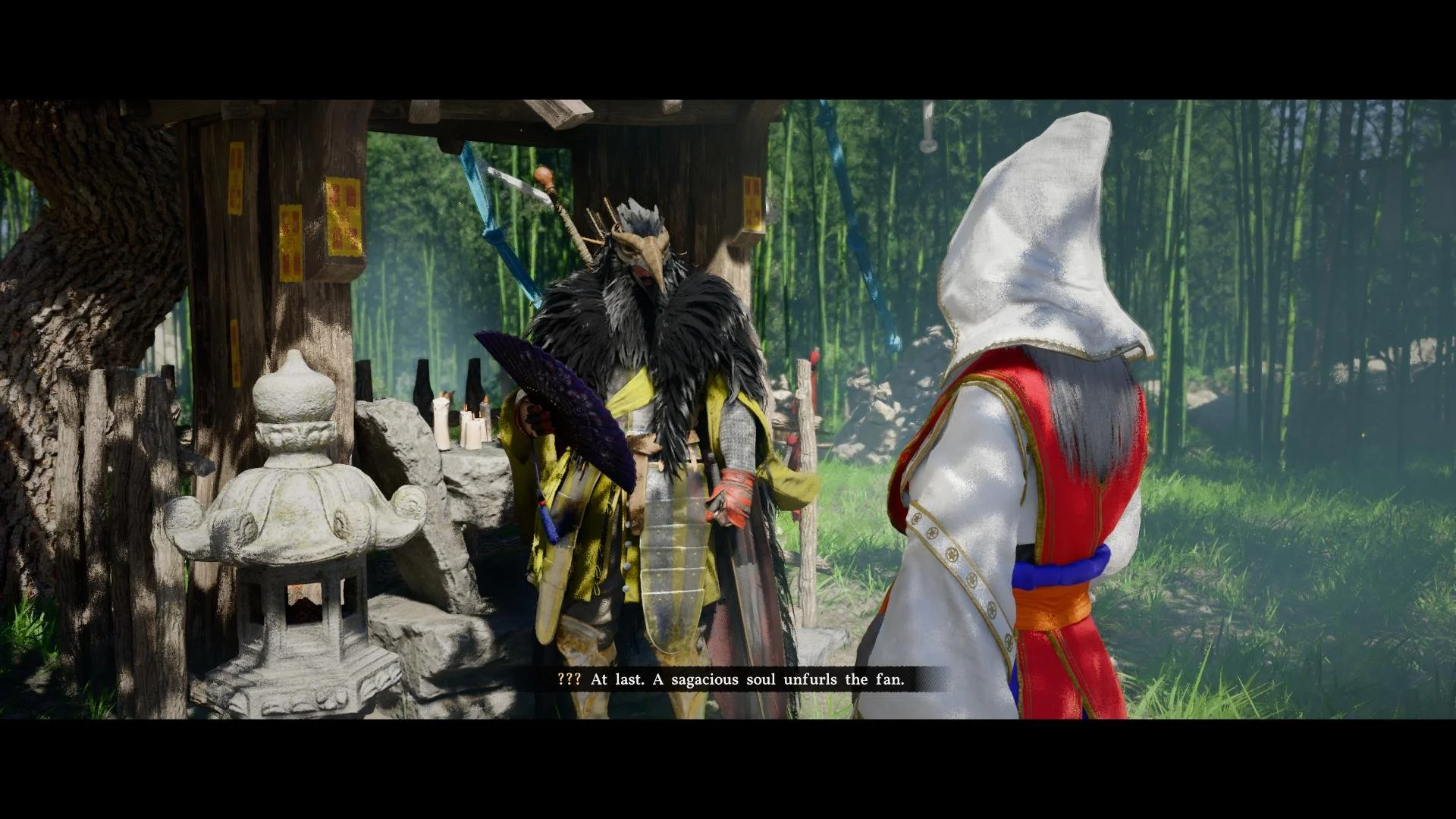
Crimson Desert is an action-adventure RPG set in the continent of Pywel. You are Kilff, the leader of a band of mercenaries from Pailune called the Greymanes. After their camp is attacked by a rival mercenary group called the Black Bears, this attack scatters the Greymanes, as many are presumed dead, including Kliff.
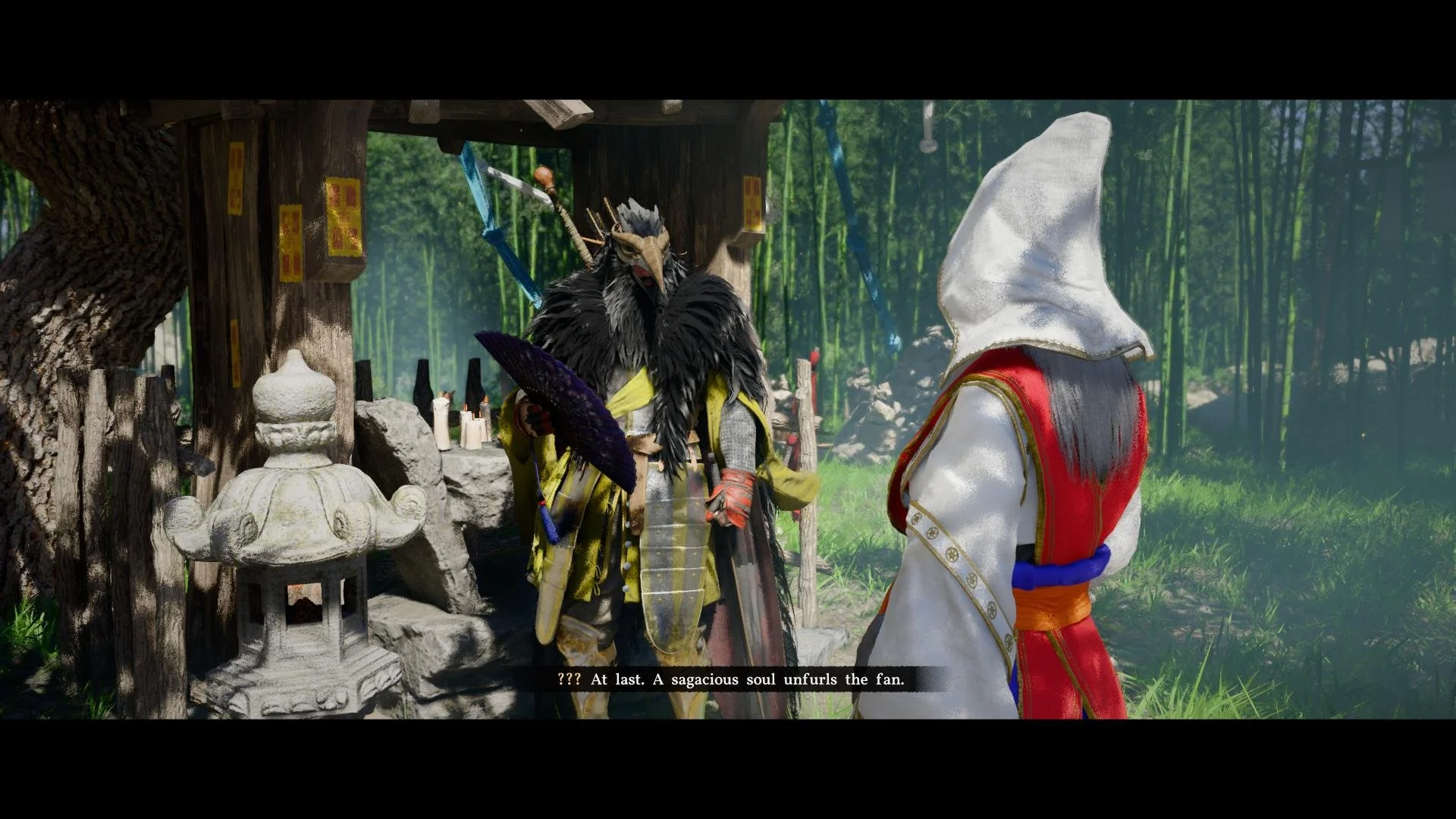
While the Greymane arc is the more satisfying part of the narrative, the aspects surrounding the more magical and mysterious elements don't quite land, especially as Kilff is so indifferent and non-reactive to any of it. Figures tied to this mystical Abyss element disappear before him, he is cast into the sky to a floating island, and granted powers beyond his comprehension, and yet, he doesn't react to any of it. I get that he may be used to some of these elements, given the world around him, but Kilff is meant to be our eyes into this, and yet, he brushes it off as a normal occurrence. It doesn't work; it leaves the player behind in the story, as if we have to play catch-up through most of it. Hell, during a recent interview with the Friends per Second podcast, Kliff’s voice actor admitted to not understanding the story whatsoever.
As much of the story revolves around the Abyss, as Kliff aids his new allies in understanding it, especially due to the threat of others who shouldn't be able to access the Abyss at all, the best parts of this whole journey are through the rebuilding of the Greymanes and your interactions with them. A lot of this actually reminded me of not just Red Dead Redemption 2, but building your team in Kingdom Come Deliverance 2. In fact, many of the missions you undertake with your fellow Greymanes feel very similar to those titles, as you ride to your objective on your horse, sharing in conversation as the story plays out with your companion alongside you.
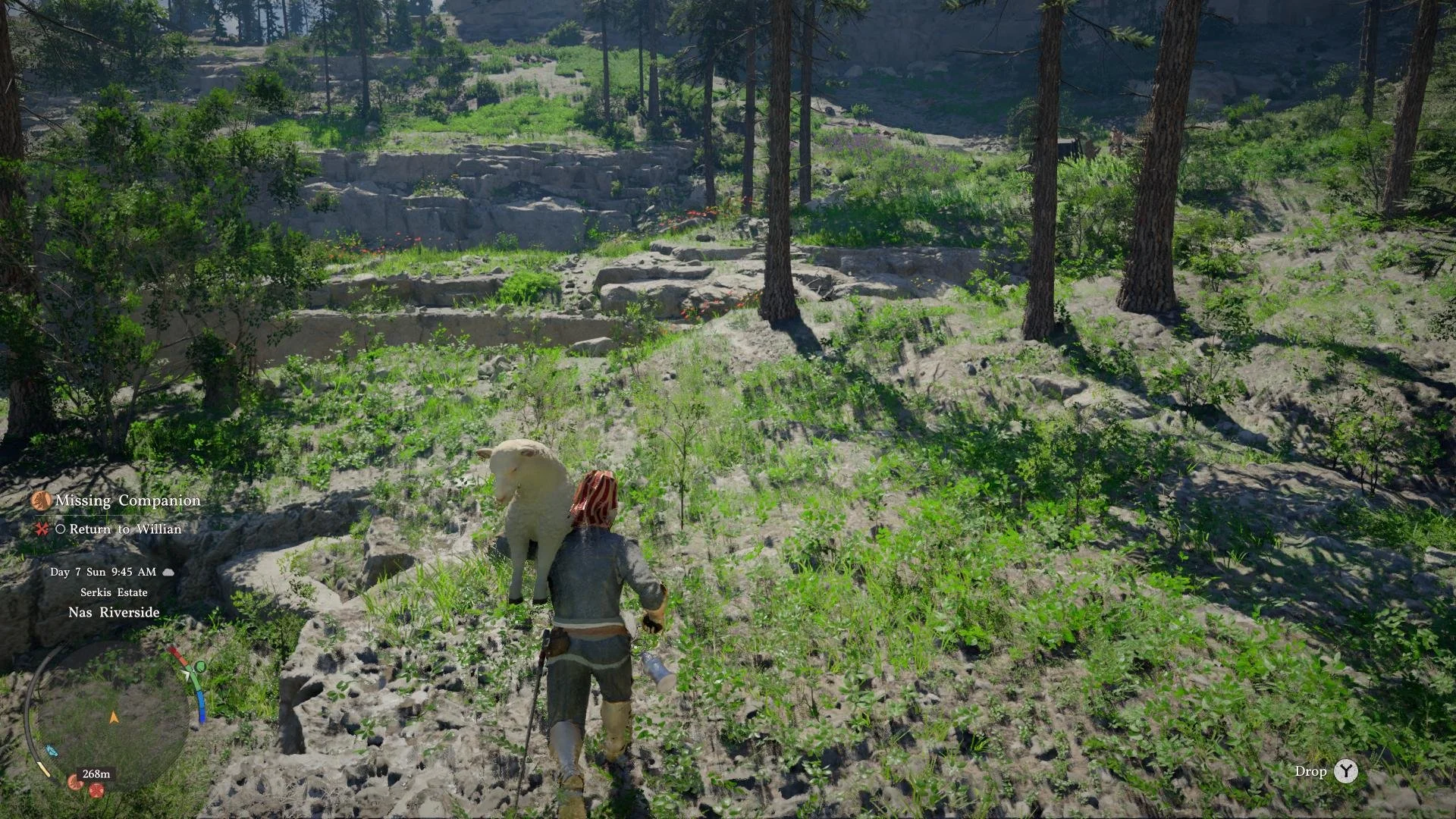
While the main story rarely succeeded in keeping me engaged or even understanding what was going on, the side quests, however, felt better designed, especially those that are interconnected, despite how they are their own unique scenarios. Early on, in the game's first few hours, you are instructed to grab a few quests off a notice board. At first, they seem like a series of random quests. A missing sheep, a mysterious cave, and a guy's house that was destroyed by a rock that fell from the sky. However, they are all connected due to an event that one of those quests is built around. I loved this. It really showed the land outside of the Kingdom was a tight-knit community and how one event would shake the foundation of that very community. It's rare to see this level of care given to side quests, apart from the likes of the Witcher 3 and a few quests in Red Dead Redemption 2. Funny how those games keep coming up.
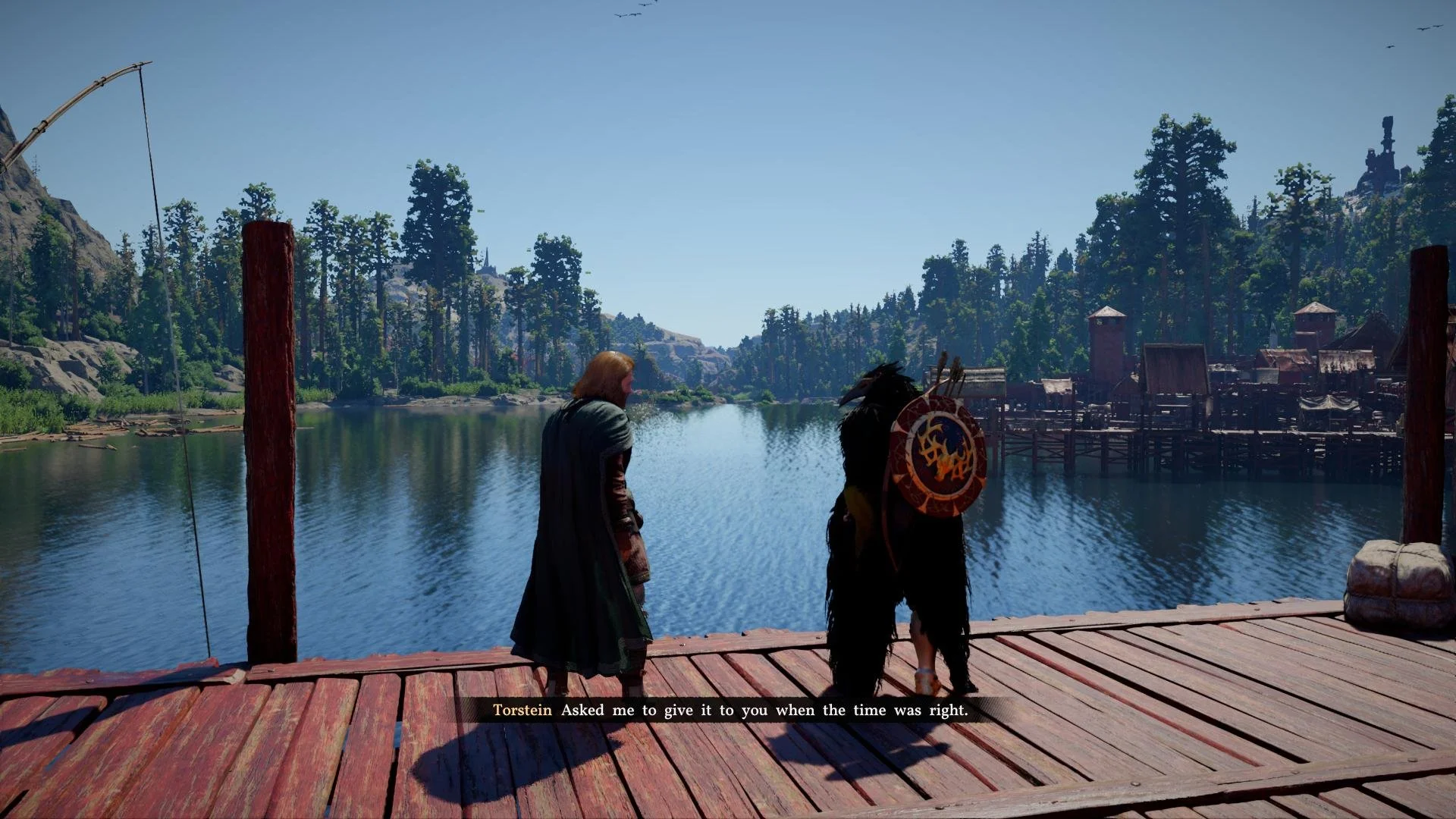
As you are introduced to more characters, including those of your fellow Greymanes, you'll undertake a wealth of additional quests. Some are as easy as killing bandits, taking back a mining expedition, a conquered fort, or tracking down a wagon. However, many side quests turn into deeper events as you get to the bottom of each mystery. Now, that said, there is one particular quest that contradicts another, and it is the one with the wagon. There is a side quest where you are to procure a wagon. However, one of Yann’s quests is built around selling a random wagon he finds. While these quests are not set to a strict timeline, it is bizarre to see how one quest cannot solve the other.
Some quests require that you infiltrate a location where you'll need to disguise yourself and pass inspection. Some, however, require that you stealth around and attempt to get in and out unnoticed. That said, many of these can be solved how you see fit, but as the game has a reputation system, you'll want to ensure you stay on their good side, or you may make an enemy out of them, or find yourself with a bounty on your head.
Crimson Desert has a ton of side activities that you can take on to earn some extra money and build that reputation. You can harvest lumber and minerals to sell or use to upgrade your gear, track down bounties and bring them in dead or alive, fish, or pluck plants to craft revive potions or conditions that boost your defense for a spell. Hell, you can steal gold bars from the rich and then sell them to the bank to make a huge profit, just make sure you don’t get caught. Not due to the gold bar being taken from you, since it isn’t for some reason, but the reputation you lose because of it.
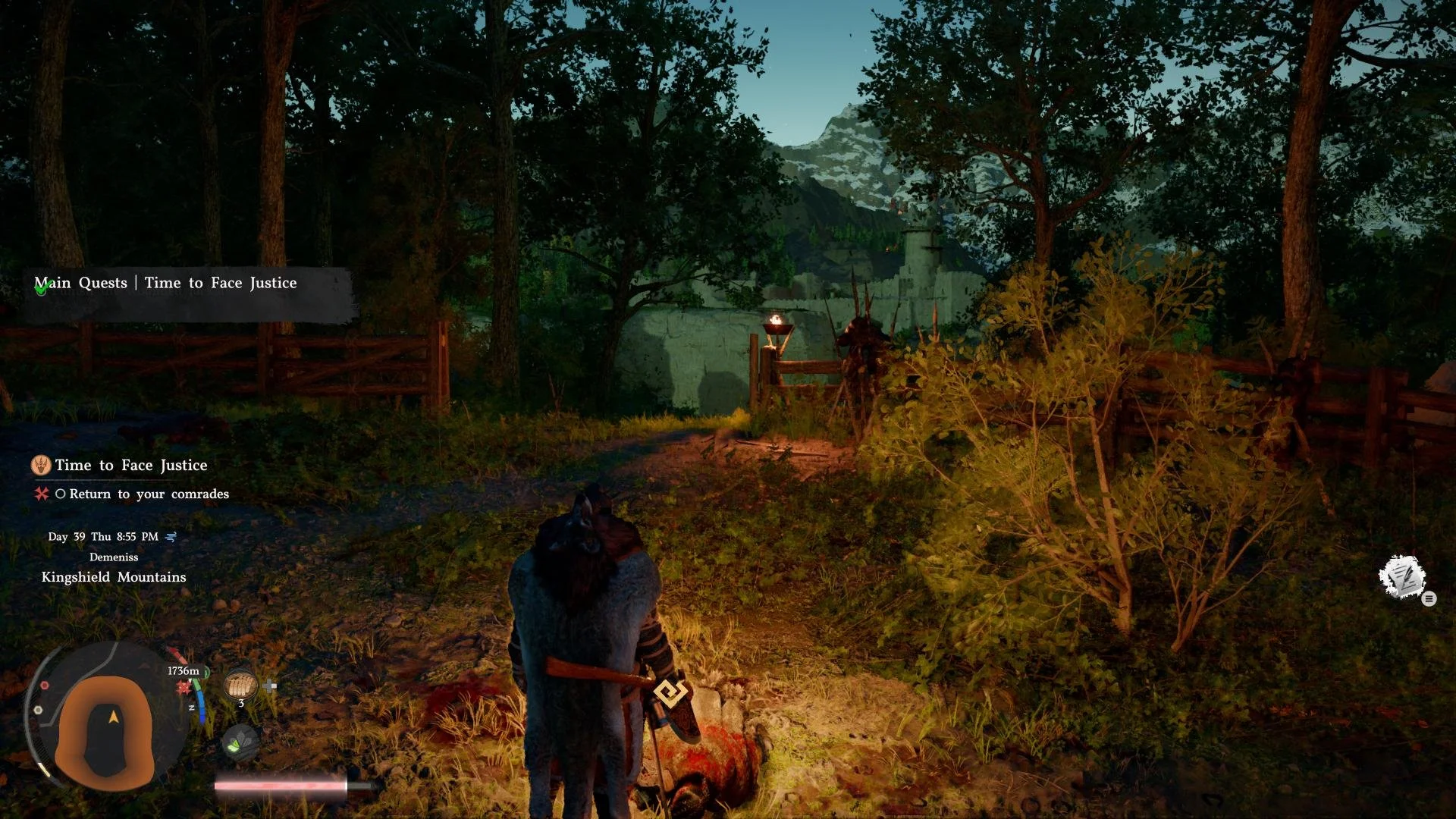
No matter which direction you take, you'll find some new activity, a fort that the Bleed Bandits or the Black Bears have claimed, or animals to hunt and harvest their hide and meat. You'll find ingredients to add to your meals, which is essentially how you heal, and while you'll burn through those meals during most boss battles, you can make an endless amount of dishes should you invest the time to gather ingredients or find a buyer to procure them. While each game handles itself differently, this is the closest we’ve seen a game offer this level of freedom since Skyrim, offering so much to the player that few will handle its moments in the same order. Hell, some players have spent up to 50 or 60 hours just in the first area and first chapter.
Shops are massively interesting due to one particular trait. When you find a shop, of which there are hundreds, they will usually have around 8-10 items. However, in most cases, you can just go to the tables around them and purchase the items that are on those very tables. These items are not in the shop menu, but can be purchased nonetheless. A meat vendor, for example, had about 7 types of meat I could buy, but I ended up buying everything around them in their shop. I had so much meat that I made around 14 dishes that healed me for large portions of my health bar. It was insane. And, shops don’t end there. You can gift shopkeepers items to boost their standing with you, and this unlocks more items to buy from them.
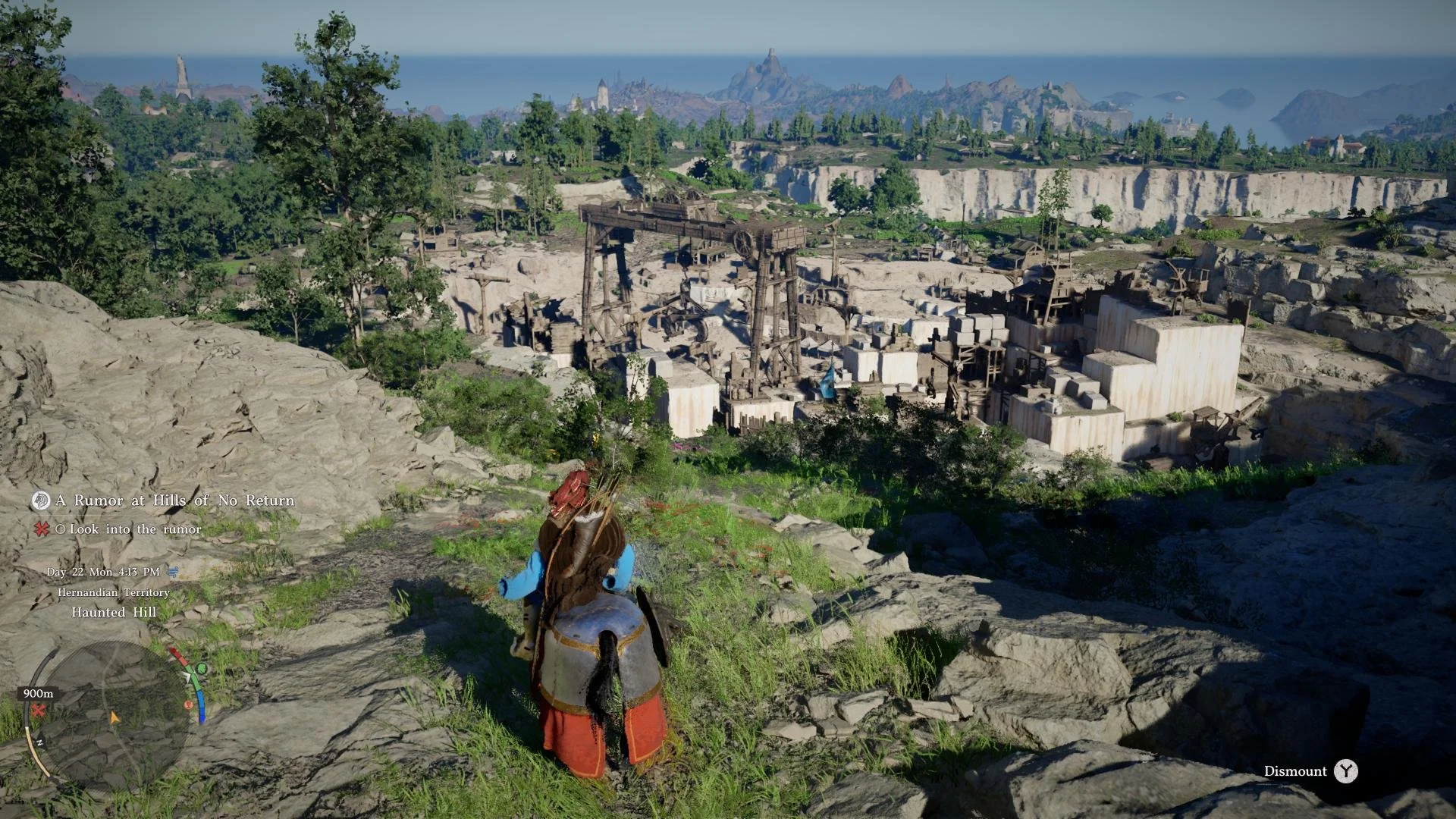
Once you start building the Greymanes base back up, you can send your allies on resource missions. These not only help contribute towards making the base bigger, but also help increase your standing with nearby factions and groups. While accessing these missions via the map is not terribly intuitive, there is an NPC back at camp that makes it easy to perform these tasks. And, while you are sending your allies out on missions, you are not off the hook, as you’ll need to donate food, weapons, and a ton of silver to expand your base, making it bigger with more facilities to accommodate your and your allies’ needs.
I also loved the animal companion system, where once you've reached a certain trust with the animal, it will follow you. This is done roughly over the course of three days, as you pet them and give them food, provided the damn people around you don't walk over and pick up the meat instead. Don't think I didn't see you. Regardless, once you gain access to a certain village, you can purchase dog or cat armor, and to say it is adorable doesn't do it justice. They can loot for you, and disappear when you are on your horse, which you can also armor up. Nothing says you are a force to be reckoned with than a chubby cat in silver-clad armor.
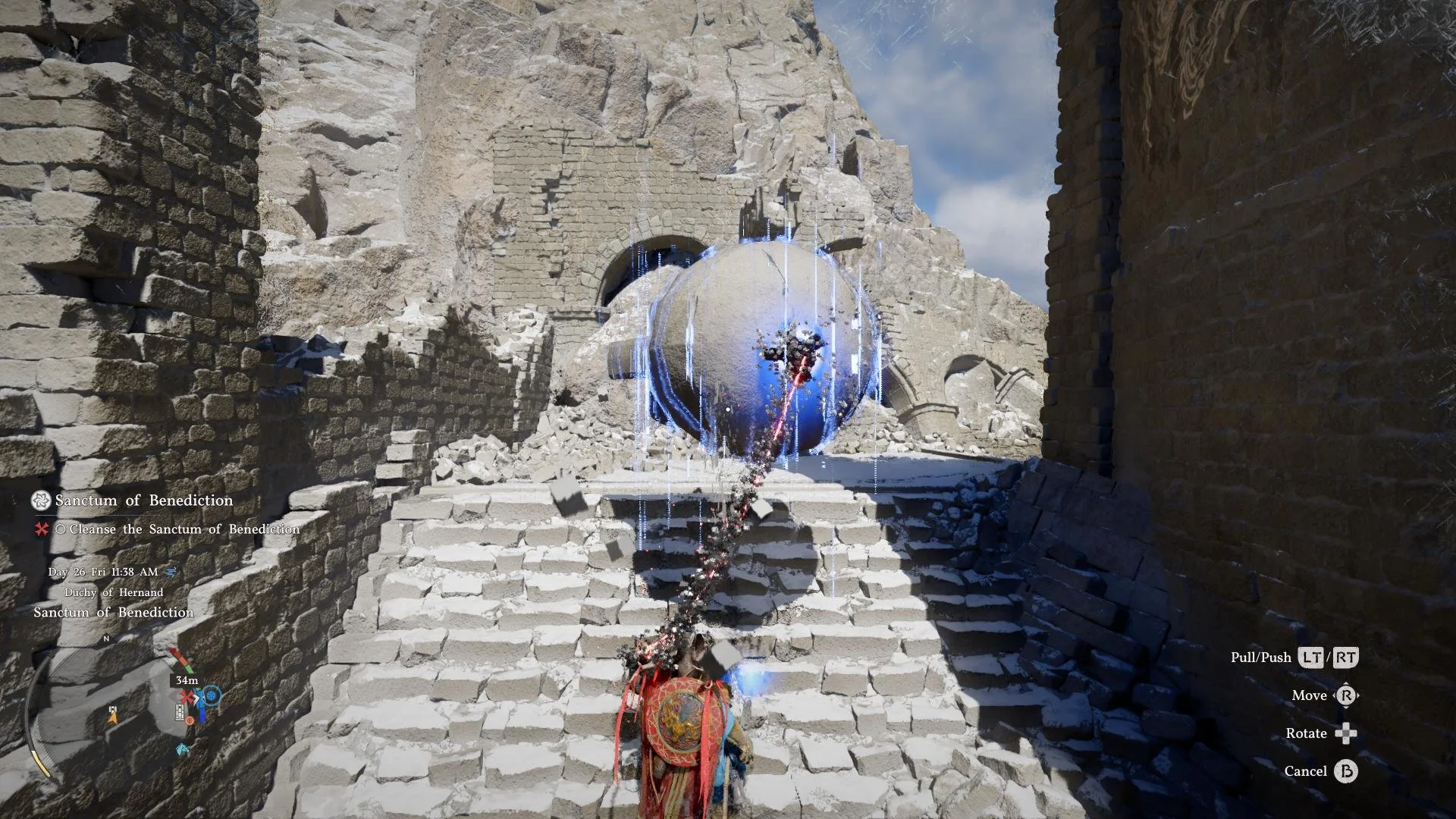
Now, the grappling hook is something that feels underbaked and a tool that feels like they wanted to make their puzzles feel very Zelda-coded. The Axiom Force is this item, and while it is fantastic for the varied puzzles you’ll encounter, the inclusion of it via the L3 button, which is pushing in the Left Analog Stick, feels unintuitive, and I hated using it in combat or to traverse. It’s the one part of the game where I felt like I didn’t want to use it. Again, it is great for puzzles as you lift up objects to set them in place, and then use the Spirit Punch, which is called the Focused Force Palm, to then shove what you are manipulating in place. While the Axiom Force can be used as a traditional grappling hook, the button combinations feel awkward to use, as mentioned previously. You can upgrade it to serve you during combat better, but as it was mapped largely to the L3 button, I couldn’t find the rhythm I wanted to make me enjoy it.
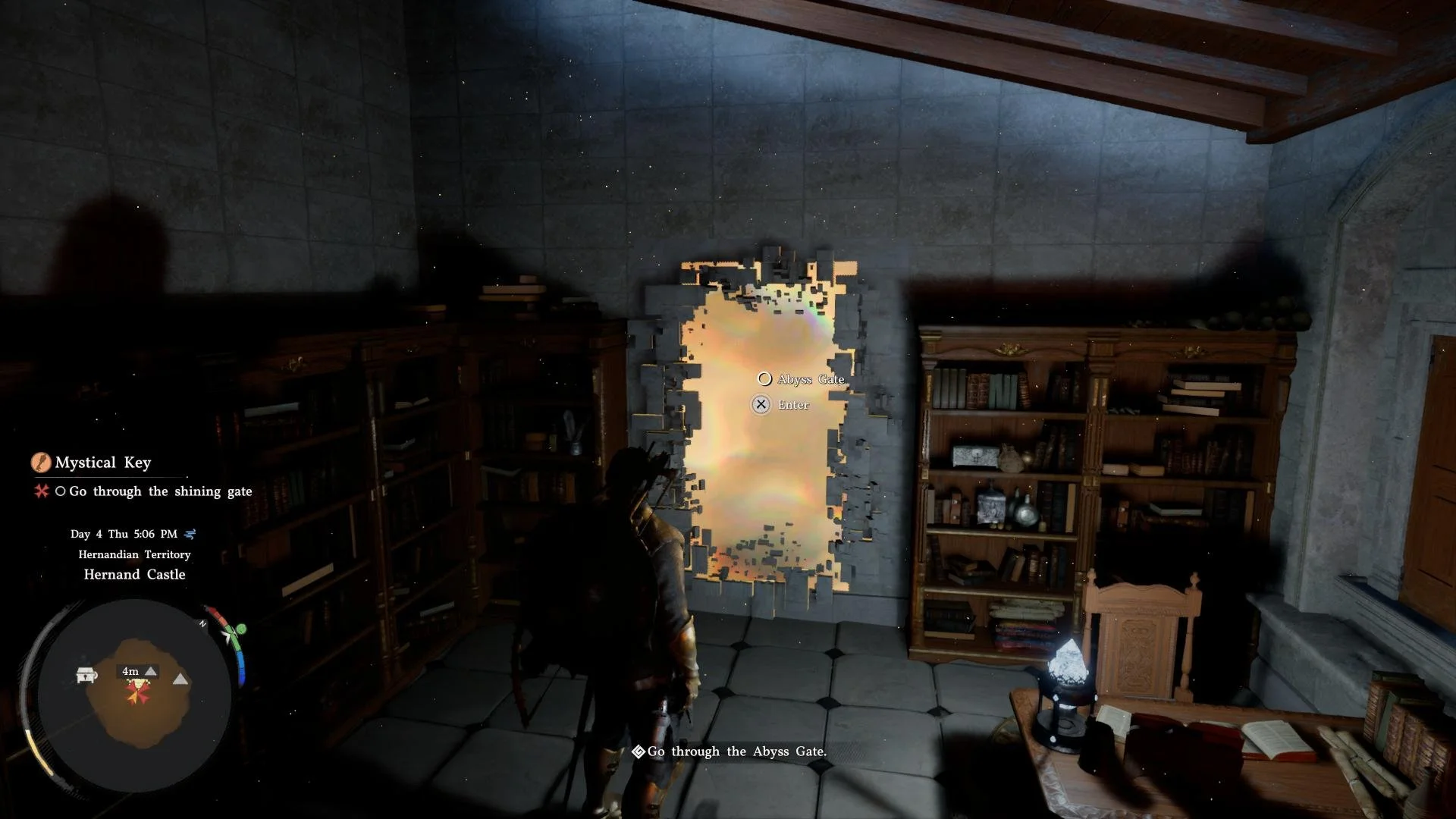
One interesting system that I'm not sure if I have seen elsewhere is the knowledge learning mechanic. While most of it is used when reading or identifying items, books, and ingredients, the more interesting angle is during combat. During some encounters, you'll see enemies perform new mechanics, from raining down arrows, enhanced dodging, to even a drop kick. Kliff can learn these moves through watching them performed and then add them to his combat arsenal, all without spending a skill point.
Combat is wildly interesting, despite the few issues I have with some of its wind-up animations and pacing. While this does feel like a marriage between The Witcher 3 and the Akham Trilogy, it ends up taking some of those design philosophies and making it more of a fighting game. You have blocks, parries, dodge rolls, and a host of wrestling moves alongside a wide range of weapons. However, it is the offensive and defensive maneuvers that really make it feel like they were influenced by traditional fighting games. Hell, there is a full unarmed fighting system that you can level up in the game’s extensive skill tree.
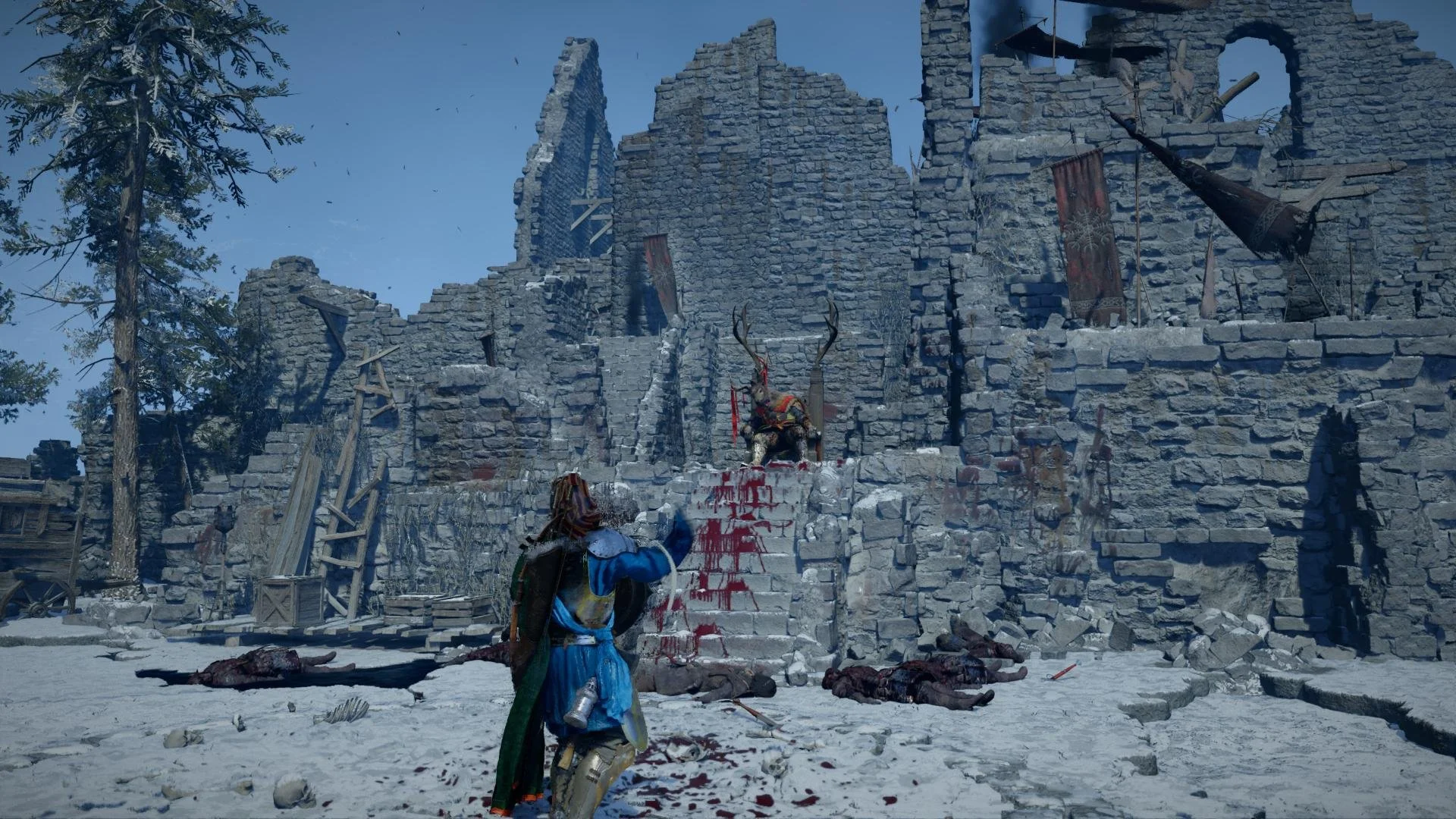
How combat works, especially for bosses, is you want to exhaust them and fill up a meter that leaves them vulnerable to other moves in your arsenal, such as picking them up and spinning them around, or performing the RKO. You do this via your spirit punch to fill up the meter, as standard attacks do it much slower. You'll dodge out of the way, move in close to spirit punch them, stunning them for a brief second, to get in a few hits, and repeat the process. This works well for your human opponents, such as a disgraced Greymane archer or the threat at the Flame Castle.
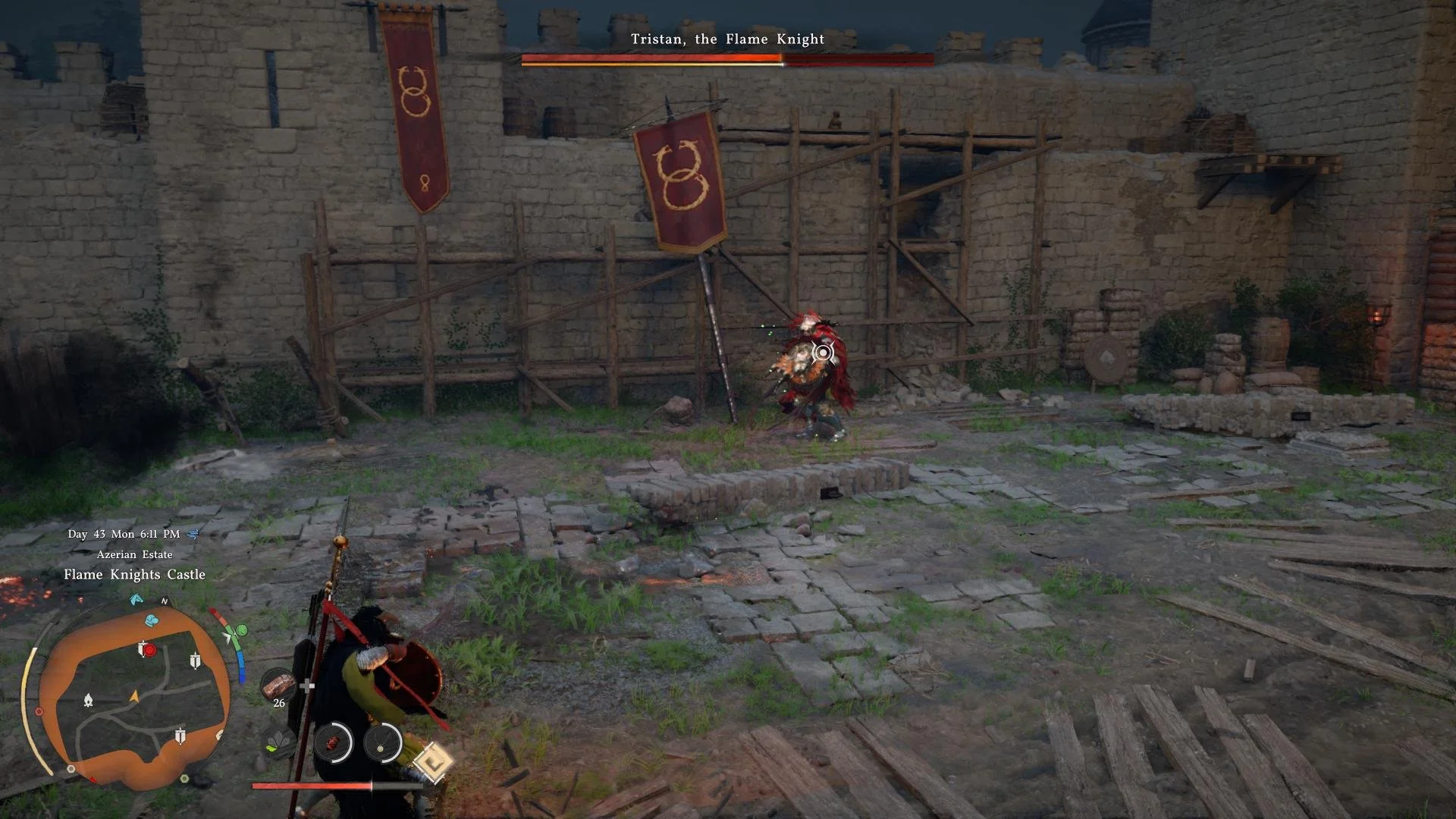
I would study their patterns, roll out, or double step dodge out of the way, a skill I learned from said archer, and then pull off a barrage of spirit punch, heavy attacks, light attacks, and then repeat. I would, in the case of the knight at the aforementioned castle, stun lock him for the bulk of his health bar, often building up that stun meter and then using a full stamina bar to spam heavy attacks. However, some bosses are more frustrating than enjoyable, and this largely comes down to those that teleport around you. As Kliff has a wind-up to many of his attacks, you often will whiff those attacks due to how frantic they are with their teleporting. These fights, in my opinion, felt as if the developer had no idea what mechanics to provide them and added teleporting as a crutch. Add in attacks that can kill you in a single attack, and it makes most of these encounters lopsided, from being far too easy to frustratingly difficult.
Now, combat changes when you are dealing with 30+ enemies on screen, as you want to use wide-ranging attacks to deal with the bulk of them. In some ways, combat against infantry almost feels like a Musou game, where you are slashing away at dozens of enemies on screen at once. The RKO, for example, would explode around me, dealing damage to several foes or picking up someone and spinning them around. I would handle combat like Batman and bounce from foe to foe, countering and blocking, and then using a spirit punch in combination with several light attacks to keep my stamina charged for a sea of heavy strikes. However, as there is less of a pattern due to sheer numbers, you want to ensure you take out the heavies or ranged opponents as soon as possible to prevent off-screen barrages, as some of the bigger foes have combo attacks that will drain your health considerably.
Combat also finds new ways of staying fresh when new mechanics are added via missions. One sees you firing off special arrows that call down napalm-strike-like barrages, tilting your sword to reflect light, and then burning your foes alive. This mechanic is also great to use when you suddenly need fire during a puzzle.
Health is handled through food, and it also refills your spirit meter faster or boosts your stamina, depending on the dish. You can make food or potions to boost effects, and some bosses will have you drain your stock faster. Thankfully, food has a tiny cooldown, so spamming a ton of cooked meat will keep you alive. You can also make pills to return to the fight when downed, with some that even heal you back to full health. I would always buy ingredients or hunt animals to keep my food supply stocked, as I knew that by the time Kilff was victorious, I’d have eaten a full buffet of soups, cooked meat, and countless fruit dishes.
Combat can certainly feel chaotic, but the biggest issue I have with such encounters is the camera. Often, the camera will zoom out and show the battle from another angle, and this throws me off each time. I have to dodge incoming attacks as I try to recenter the camera and lock on again, as some moves, attacks, or distance can unlock it. Remember when I said some bosses like to teleport? Yeah, that too. To make matters worse, this is even more of a hindrance indoors, where many battles take place, as the camera never knows how far or how close to relax. You are often shoved in a corner, unable to see anything, and if a table or desk, or a fire cage is next to you, you can get trapped and not see what is going on. And, since some attacks are flashy and full of effects, you are often blinded by said strikes and unable to really even decipher what is going on. This may not be an issue in the first few hours, but once you get to the fight in the castle against a gorilla-like monstrosity, you’ll know exactly what I mean.
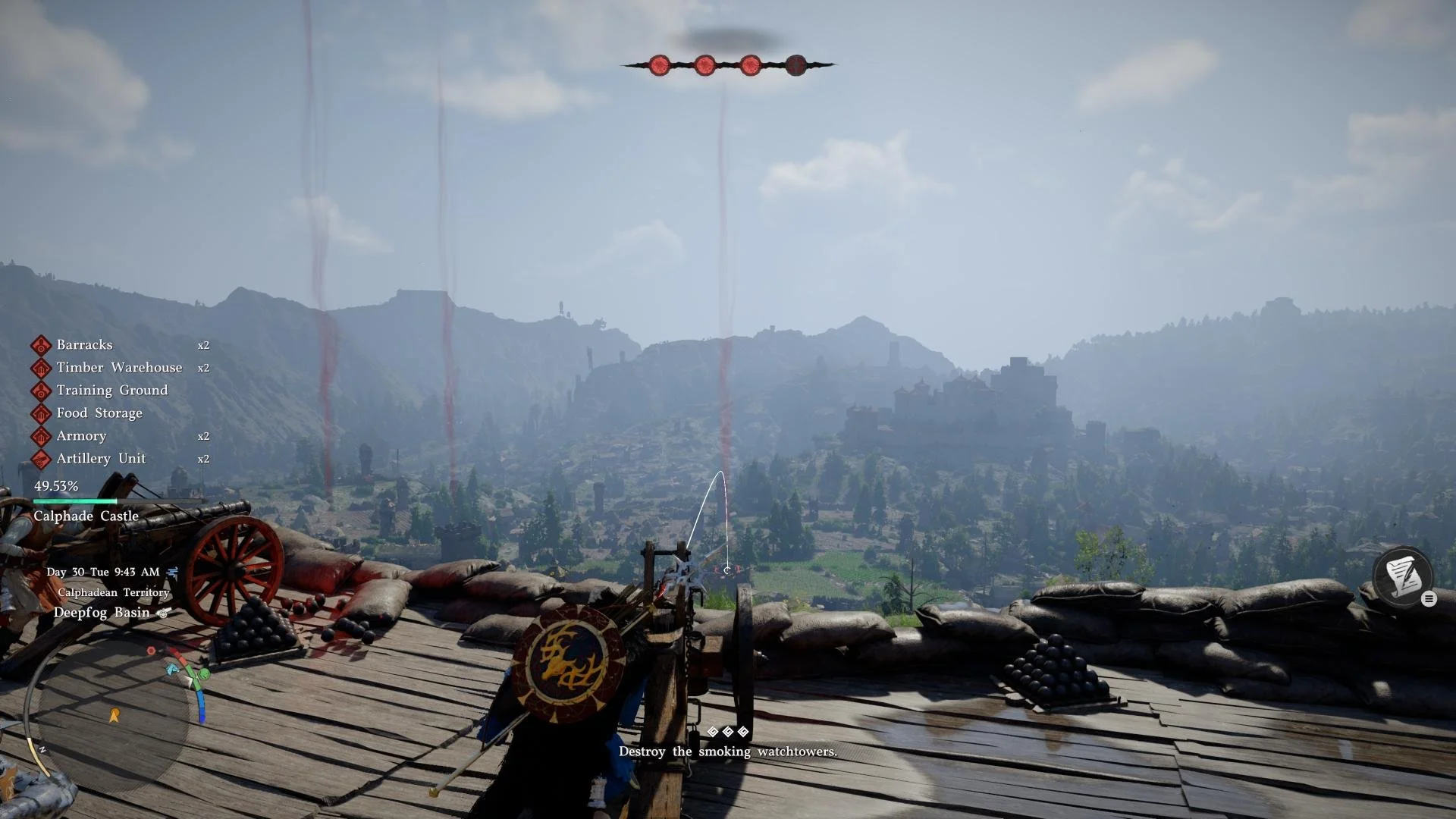
The timing of attacks is also built on how you engage with blocks and parries, and while I made peace with such timing, it is unlikely to change, given the fact that it is hard-coded into the game. Any change would require a complete rework of animations and balance, and also throw off all the players who thoroughly enjoy it already. It's not bad to any major degree, but it does take a while to come to grips with not just the timing, but the fact that you can have 40+ maneuvers all mapped to a controller with only a dozen or so active buttons, making some moves a complex mess of oddly placed configurations.
While Kliff is the central character and one pivotal to the story, you also play as two additional characters, Damiane and Oongka. The game does a good job at making them solid additions as characters, but I never found my footing with them, apart from Damiane’s lightning attacks, which helped a lot in her main boss encounter. While Oongka was fun to try out, their close-range feel was not fun during their initial boss battle. I also found it odd that while they cannot perform many of the Abyss-focused magical elements that Kliff can, they can still fast travel, which doesn’t freak them out.
With so much to add to Kliff himself via his skills, and that each of the others consumes the much-needed Abyss resource for upgrading and learning said skills, it’s hard to recommend leveling them up initially until you get Kliff in a place where you feel you’ve hit a ceiling. While it is nice to see additional characters, I almost wish they were playable as part of their own new game+ campaigns with their own storylines that are present across this massive world.
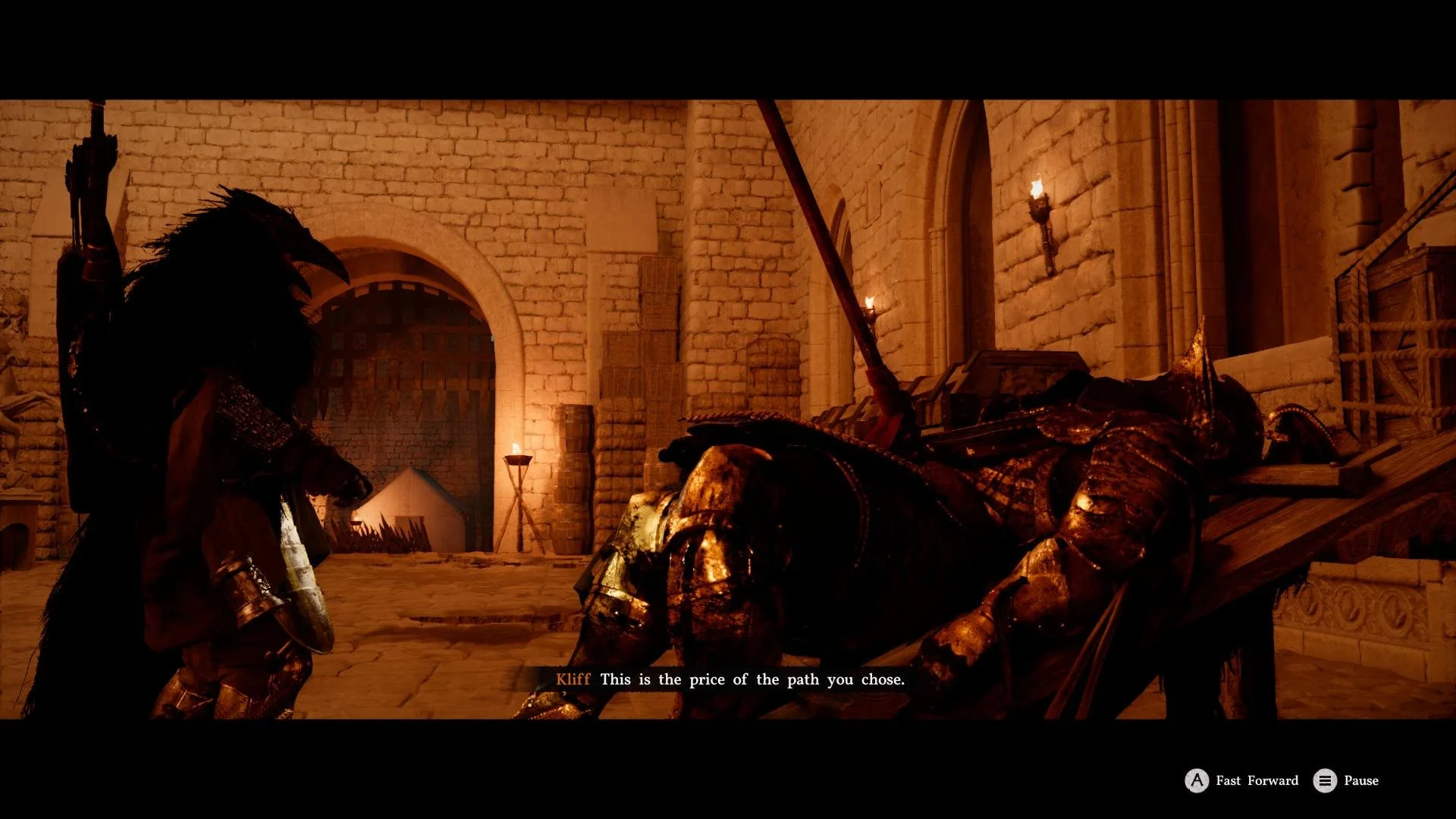
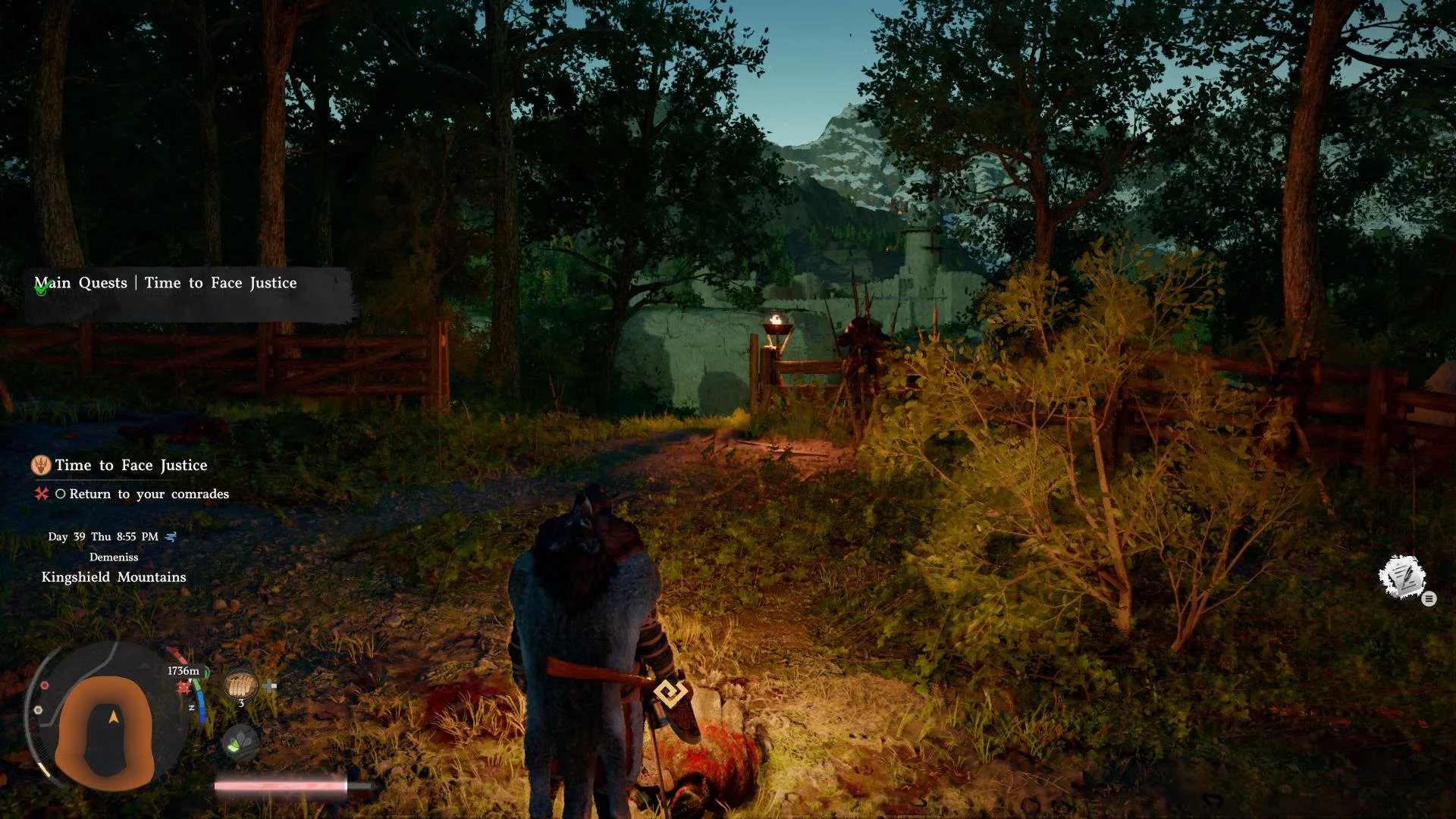
While a high-end PC is obviously going to be the most stunning out of the bunch, with the PS5 Pro being a clear second place, the Xbox Series X version of this game is nonetheless stunning. Sure, some NPCs don’t look great, and some locations do suffer from some pop-in, but the Black Space engine is nonetheless one of the most overlooked engines out there, easily rendering large open areas with a full arrangement of physics on display and a detail to its topography and foliage. It’s absolutely shocking how good this game can look, and while the framerate takes a hit, I certainly would have recommended playing this in quality mode if it wasn’t for the 1.02 patch that added 4K upscaling to performance mode, which is a welcome update.
Crimson Desert is the next-gen game we were promised a decade ago by AAA publishers. The scale here is beyond massive, with hundreds of hours offered here if you can get past the game’s criminal control setup and sluggish opening few hours. Patches have certainly helped in not only performance, but also in addressing several technical issues, such as the constant hard crashes many players have had to put up with for weeks. With some bizarre design choices, Crimson Desert is a game that I can see both sides of the argument on, given the current state of the game. Still, Pearl Abyss has created what is effectively the next Skyrim, a game that offers an unparalleled amount of freedom, that rewards you the more you put into it.
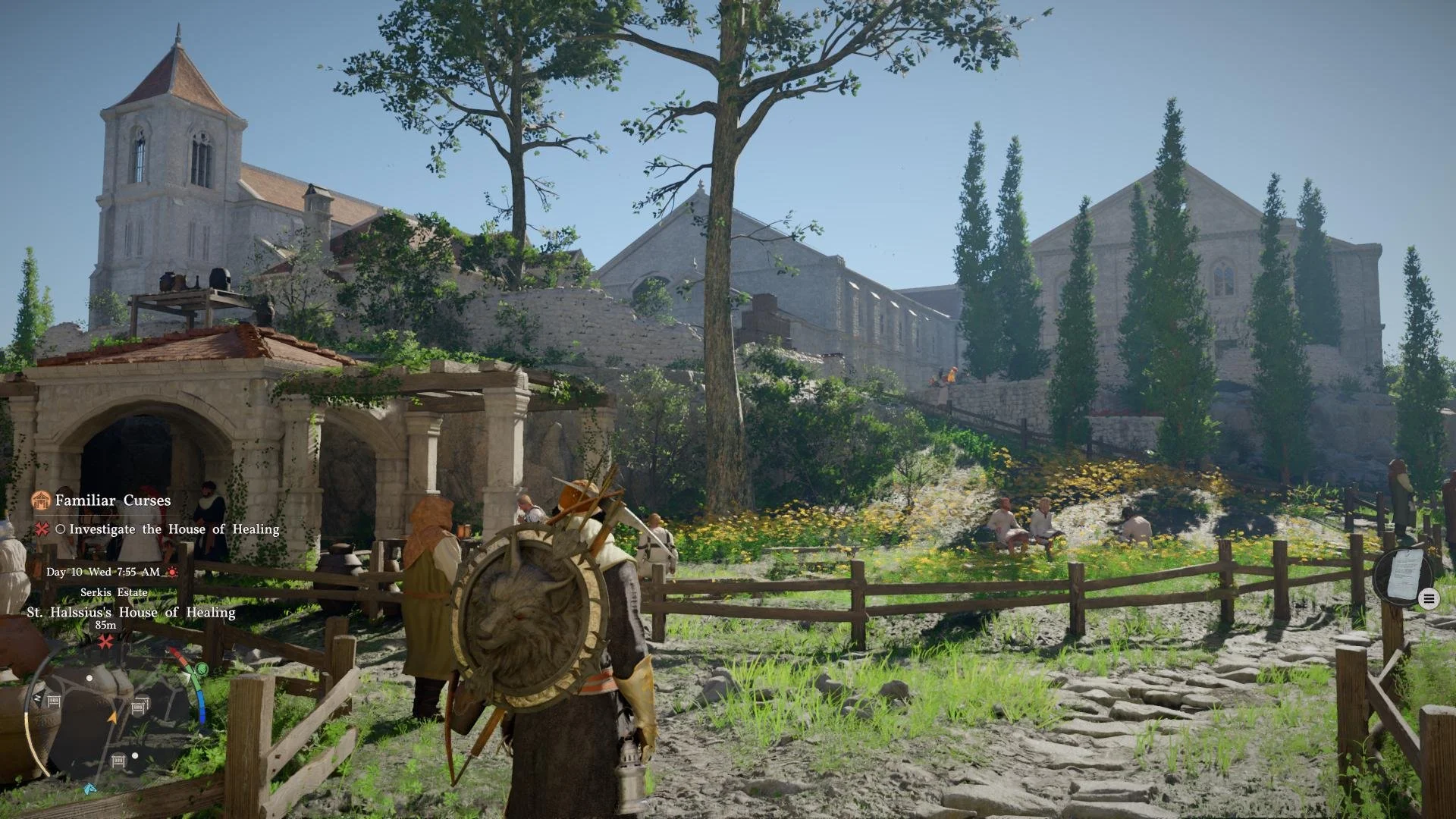
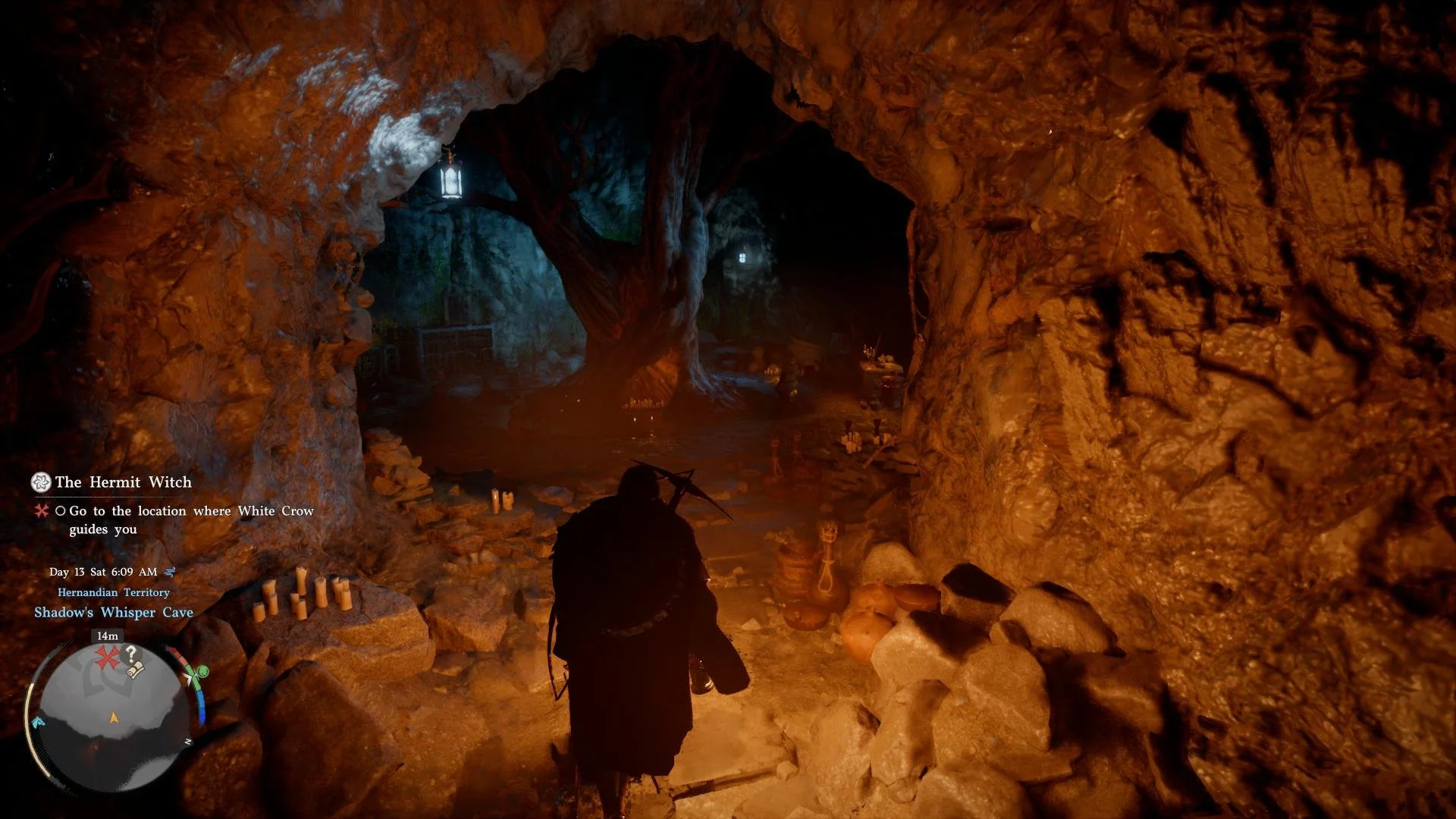
Developer - Pearl Abyss. Publisher - Pearl Abyss. Released - March 19th, 2026. Available On - Xbox Series X/S, PS5, PC. Rated - (M) Blood, Drug Reference, Intense Violence, Strong Language.
Platform Reviewed - Xbox Series X. Review Access - A review code for Crimson Desert was provided by the publisher for the purpose of this review.
Jeff is the original founder of Analog Stick Gaming. His favorite games include The Witcher III, the Mass Effect Trilogy, Hi-Fi Rush, Stellar Blade, Hellbade: Senua’s Sacrifice, and the Legend of Heroes series, especially Trails of Cold Steel III & IV.