
Let me play among the stars.
Pragmata was such a mystery for several years after its initial announcement in 2020. The reveal trailer did little to really convey the actual gameplay and lacked any sort of personality. Frankly, I didn't know what to expect. As the game would see several delays, and then disappear from Capcom’s release calendar altogether, it wasn't looking too good for what would be Capcom's first new IP since Kunitsu-Gami: Path of the Goddess in 2024 and Exo-Primal in 2023, two titles that didn't exactly land with fans.
When we first got a look at actual gameplay some years later, Pragmata was shaping up to be something special. The combination of shooting and hacking, with a little android girl clinging to your back as you handle the gunplay as she hacks through their defenses, looked incredibly engaging. In fact, it gave me The Darkness vibes, albeit in a sci-fi setting that reminded me of Vanquish meets Dead Space.
Interviews with the game's director, Yonghee Cho, would state this gameplay mixture as the main cause for the delays. However, it seems that extra time had paid off, as Pragmata is incredibly fun, and full of heart. It does carry with it a formulaic and predictable path through its environments, but as a whole package, it's vastly satisfying.
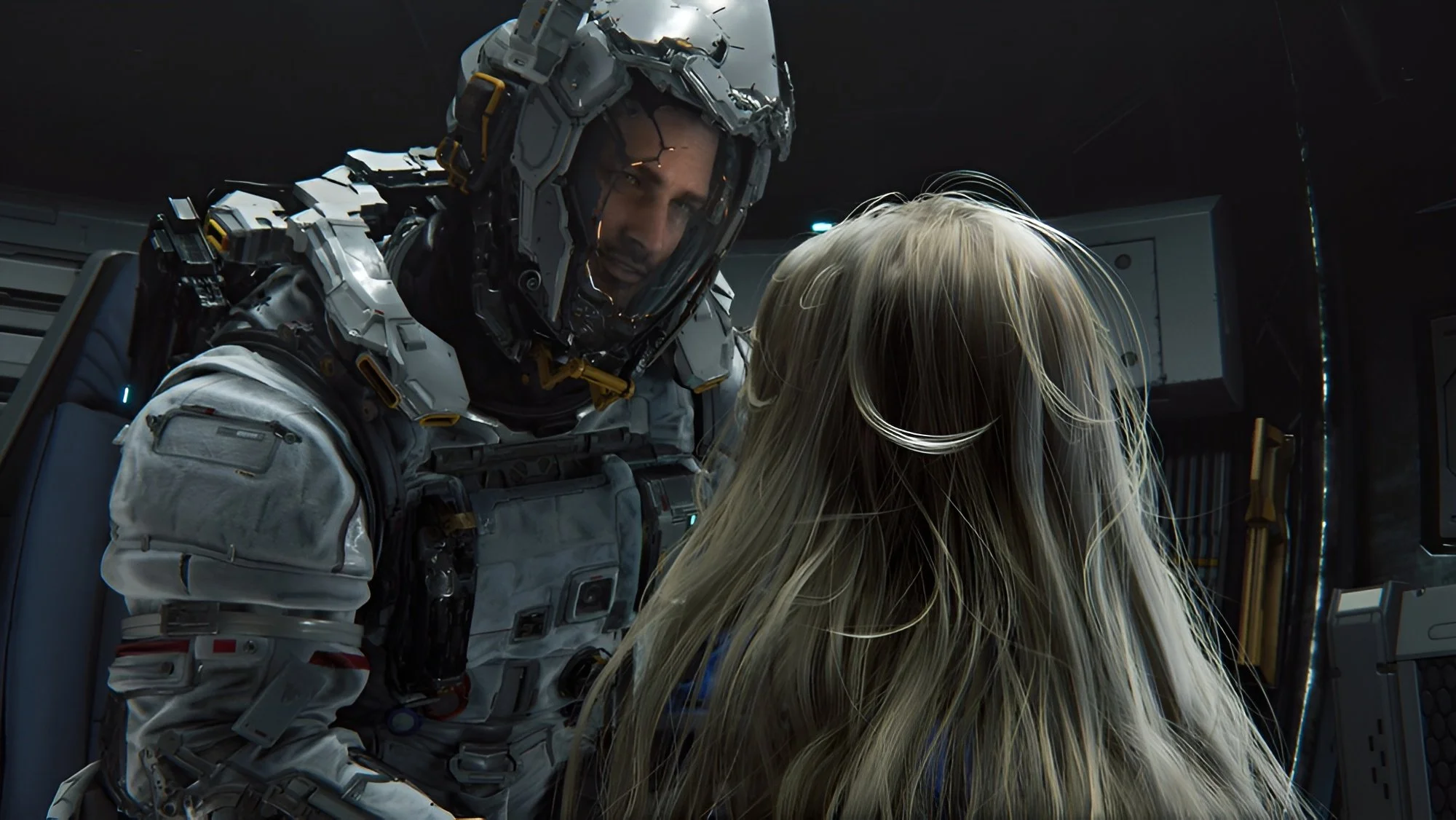
Despite the gunplay, hacking, and the weird abominations that are set to kill you on sight, as Hugh and Diana explore this massive lunar base, held captive by a rogue AI called IDUS, the heart of this game comes from Hugh and Diana themselves. This relationship is something that separates the type of game this is from the general comparisons to games like Dead Space or Vanquish, as I mentioned previously. Pragmata is certainly a product of several inspirations, but so much of what I loved here was just the genuine moments the two would share. It allowed Pragmata to feel unique, and it helped keep my interest throughout the entire adventure, often on the edge of my seat.
Hugh is part of a team that arrives to find the lunar station seemingly abandoned, with no sign of life. The base, as well as the threats that you'll encounter, were built via a 3D printer technology called Lunafilament. This resource is a breakthrough for humanity, as its applications are endless. In fact, Diana is even made from the stuff, an android girl who is freed from the vault when a lunar quake destroys much of the station. This same quake causes Hugh to be separated from his team, likely being the sole survivor of this event. While this opener does get Hugh and Diana together very quickly, I do wish Hugh took a moment to acknowledge what happened to his team as the whole event is sort of glossed over. Hell, I would have been fine even finding their bodies later on and allowing Hugh to have some closure. Sadly, this loss of his teammates is pushed aside to get the story going. It's really my only big criticism of the game.
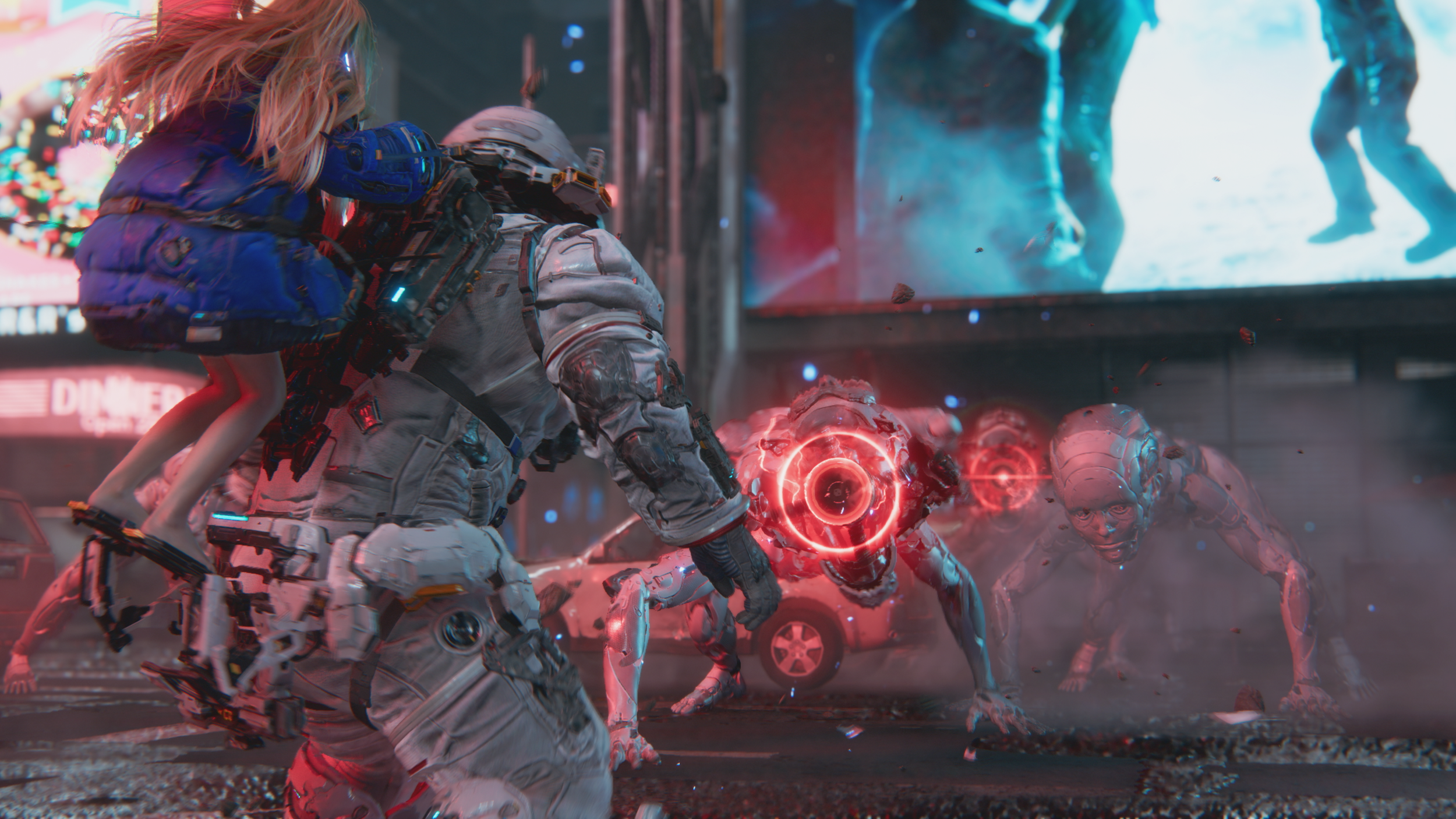
As Hugh attempts to gun down incoming attackers, his bullets can't penetrate their armor, that is, until Diana jumps on his back and uses her hacking skills to break through allowing Hugh to deal some massive damage. As Diana and Hugh are both looking for answers and are collectively hunted down by IDUS, the two join forces to stop the rogue AI and, to their surprise, save Earth in the process.
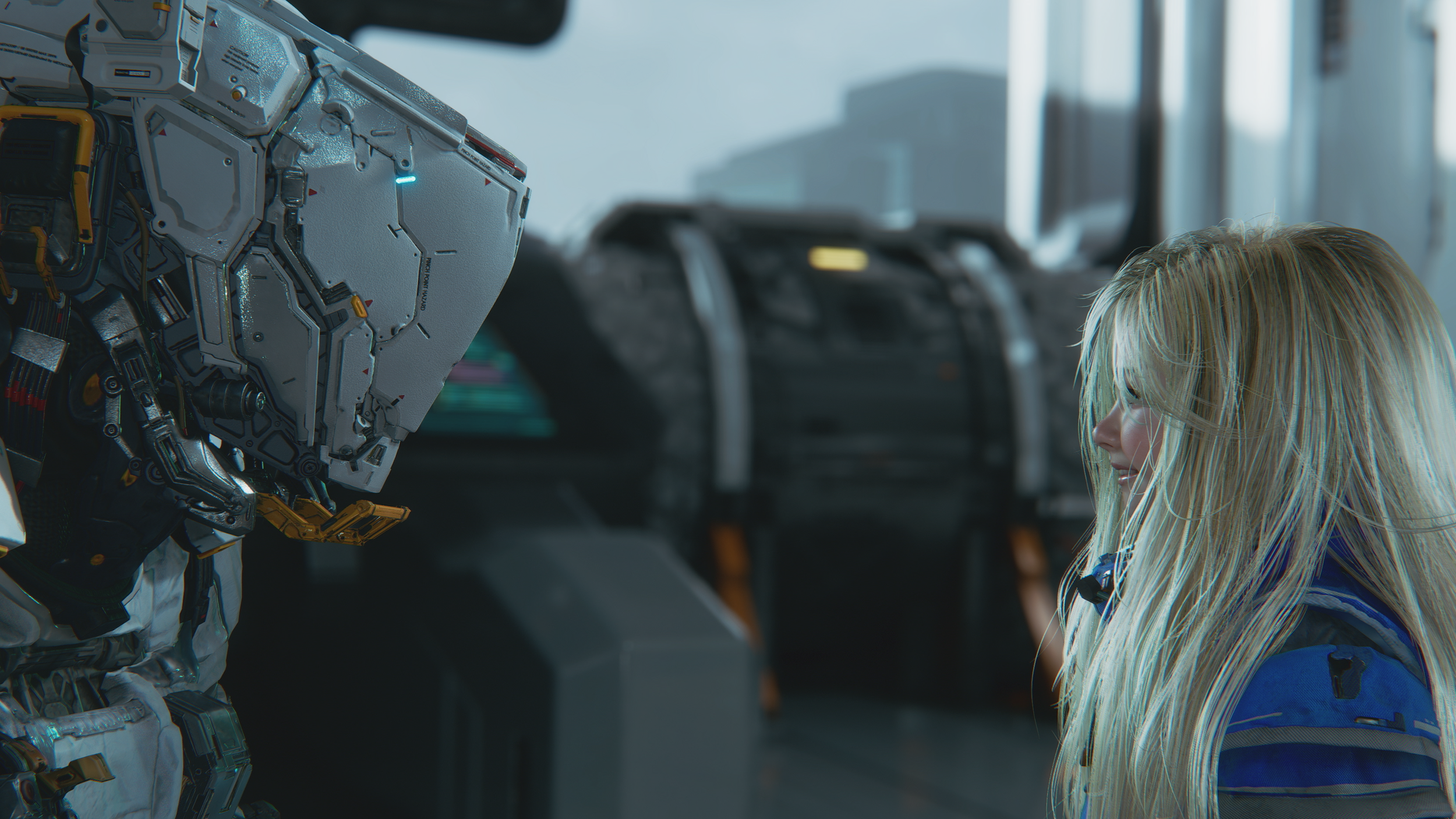
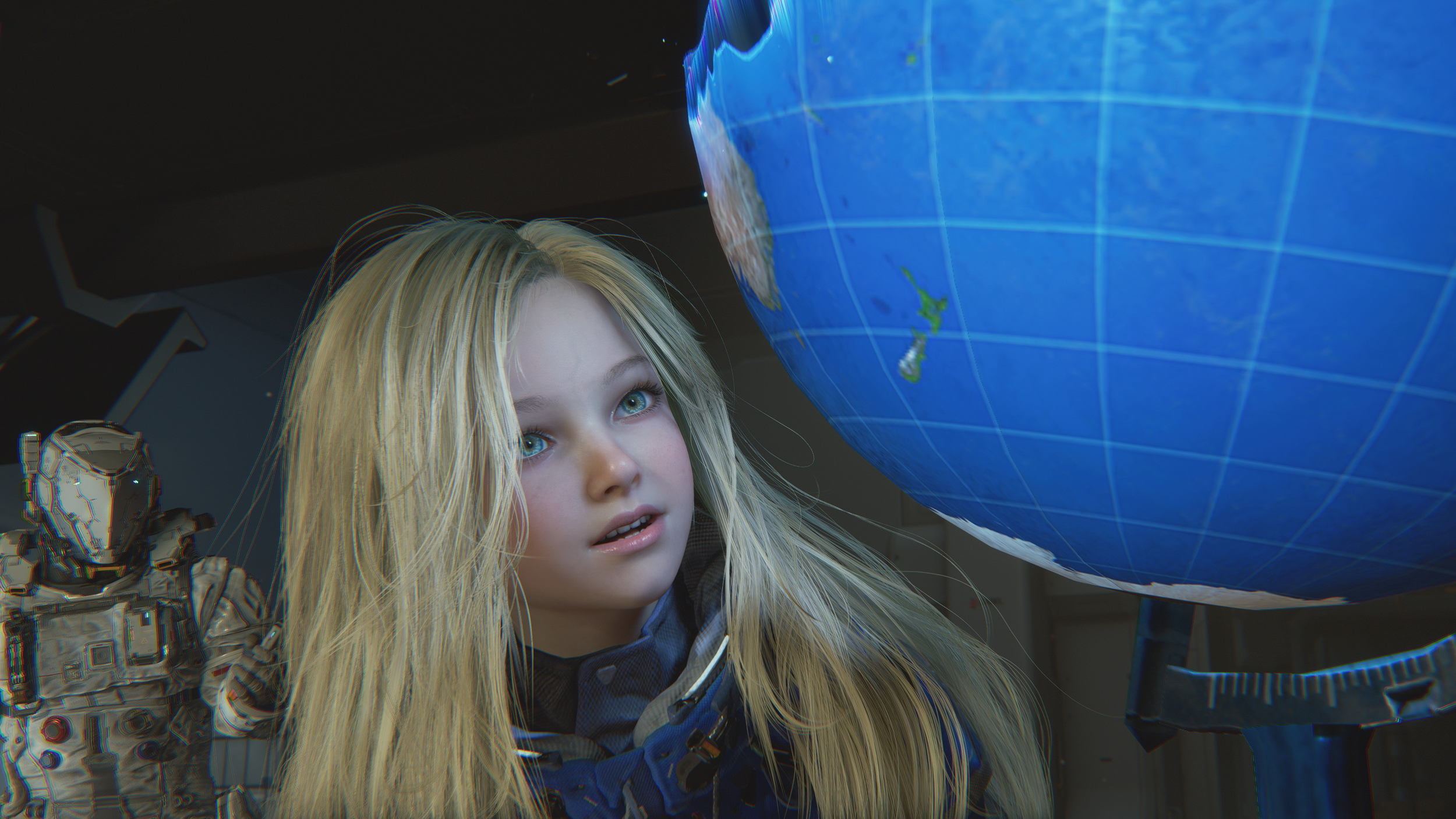
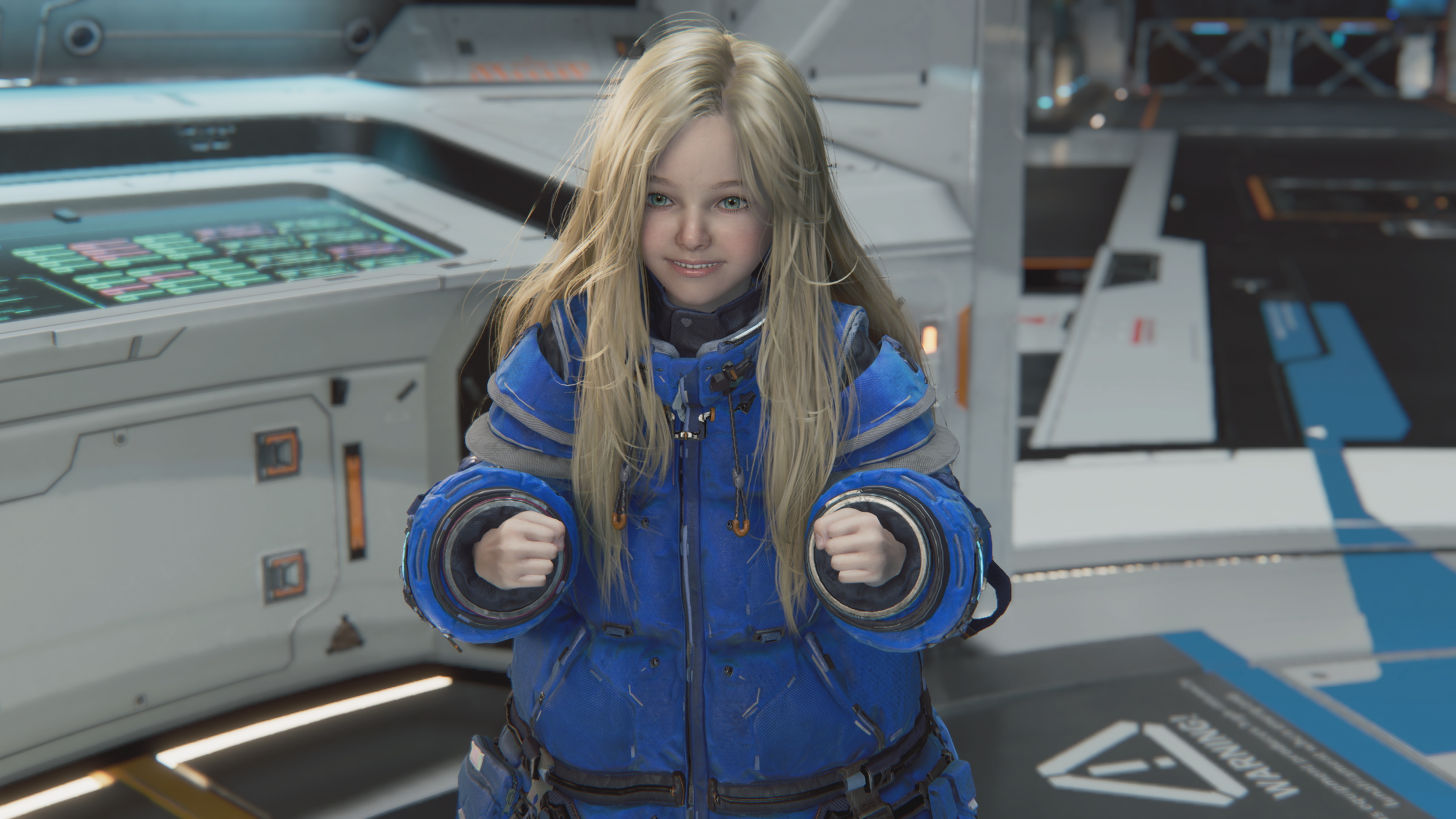
Now, I'll be tight lipped on much of the story past that premise, as while I could see it coming a mile away, it nonetheless was vastly enjoyable, with strong performances from both Hugh and Diana, as while children have often been annoying or poorly written in hundreds of games, Diana is without question, the best child in a game by far. Her innocence and heart, and desire to help Hugh is the true highlight of this story, and causes the pair to be instantly memorable. And, as you start to introduce her to Earthly concepts and objects, you start to see the child in her come to life.
Much of the pair's interactions is via the shelter, a hub location where you'll upgrade the pair, take on challenge missions, and access files about your adversaries. It also houses a few dioramas you'll build that range from an outdoor playsets with a slide and swing, to a tent, skateboard, or water gun, all of which Diana will interact with. These moments are wonderful, as she gets to express herself in ways her programming likely wasn't designed for.
To add, you can have a ton of conversations with her, play hide and seek, or see the latest picture she's drawn of the two of you in crayon. I loved watching her kick the skateboard away to flinch as it crashes, to then be totally focused on what you're needing from her. I would often return to the shelter even when I didn't need to just to see these reactions and conversations.
The shelter itself will upgrade as you conquer each location's main boss, expanding various utilities and also raising the ceiling on various upgrades you can purchase for the pair. You'll unlock a vendor right away, who provides bingo cards to fill out for rewards, as well as a series of challenge rooms that will test your skills. However, some of the game's best challenge rooms come post game as a whole new area awaits.
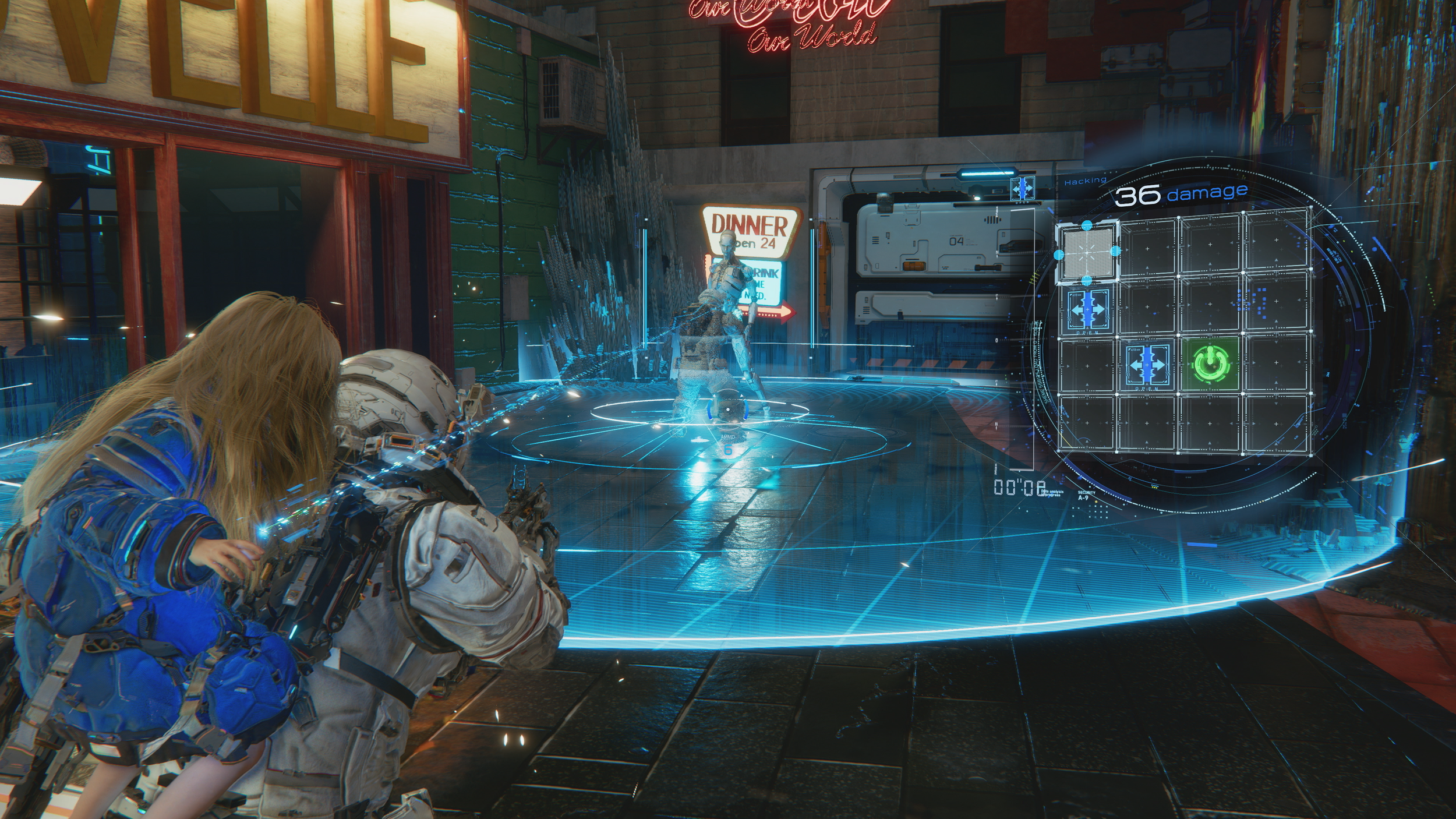
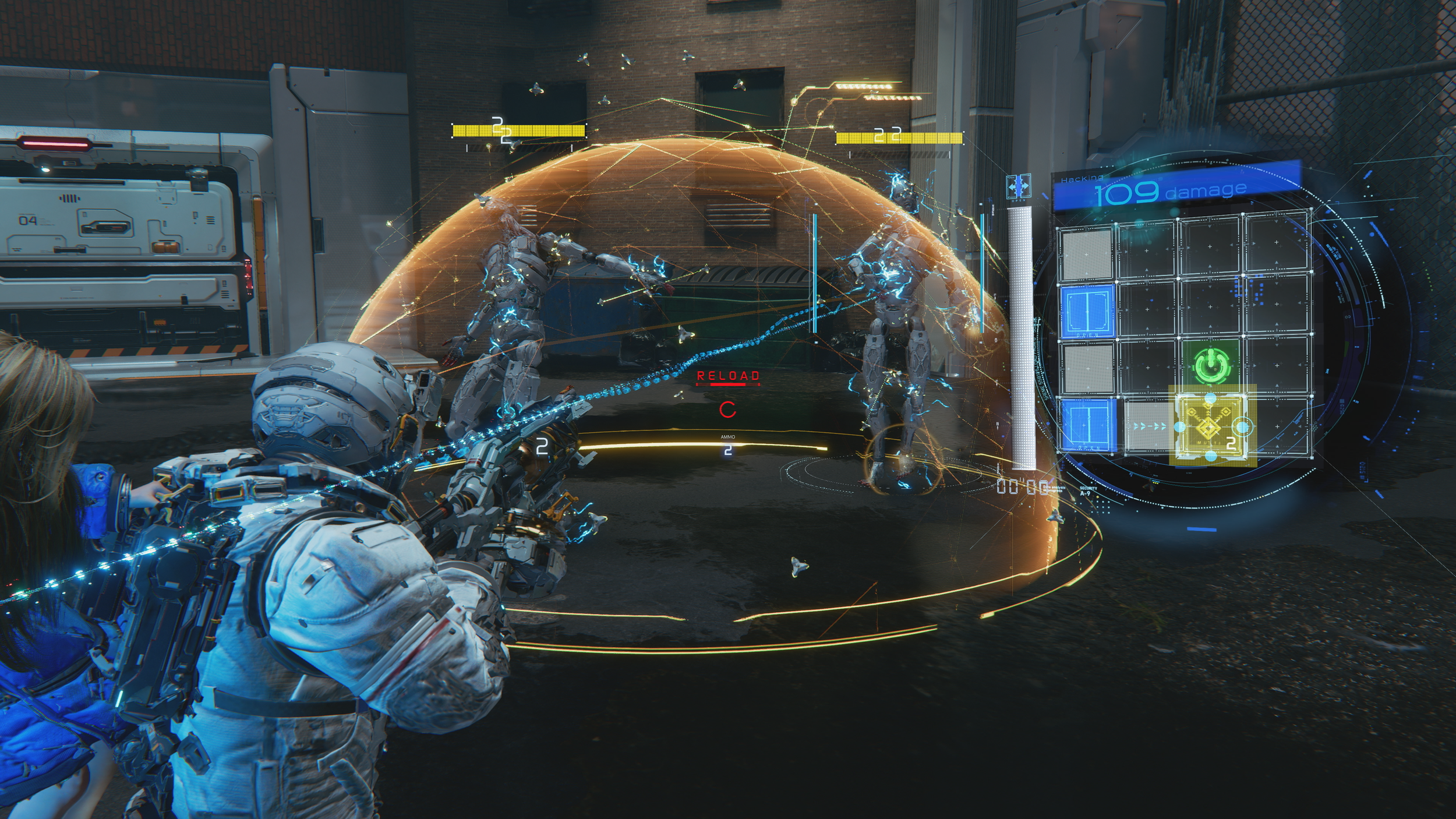
The gunplay and hacking work hand in hand to provide a type of experience that hasn't really been done to this extent. Hugh will gain access to a ton of weaponry to attack key weak points, but this arsenal is only viable once you've broken through their defenses with Diana. This makes the gameplay a mixture of playing each character simultaneously throughout combat. Diana’s hacking menu will be on the side, as you use the face buttons to navigate a grid. As you hit key sections of the grid that advance as the game goes on, you'll then use the various icons on the grid to stun, freeze, or confuse your opponent.
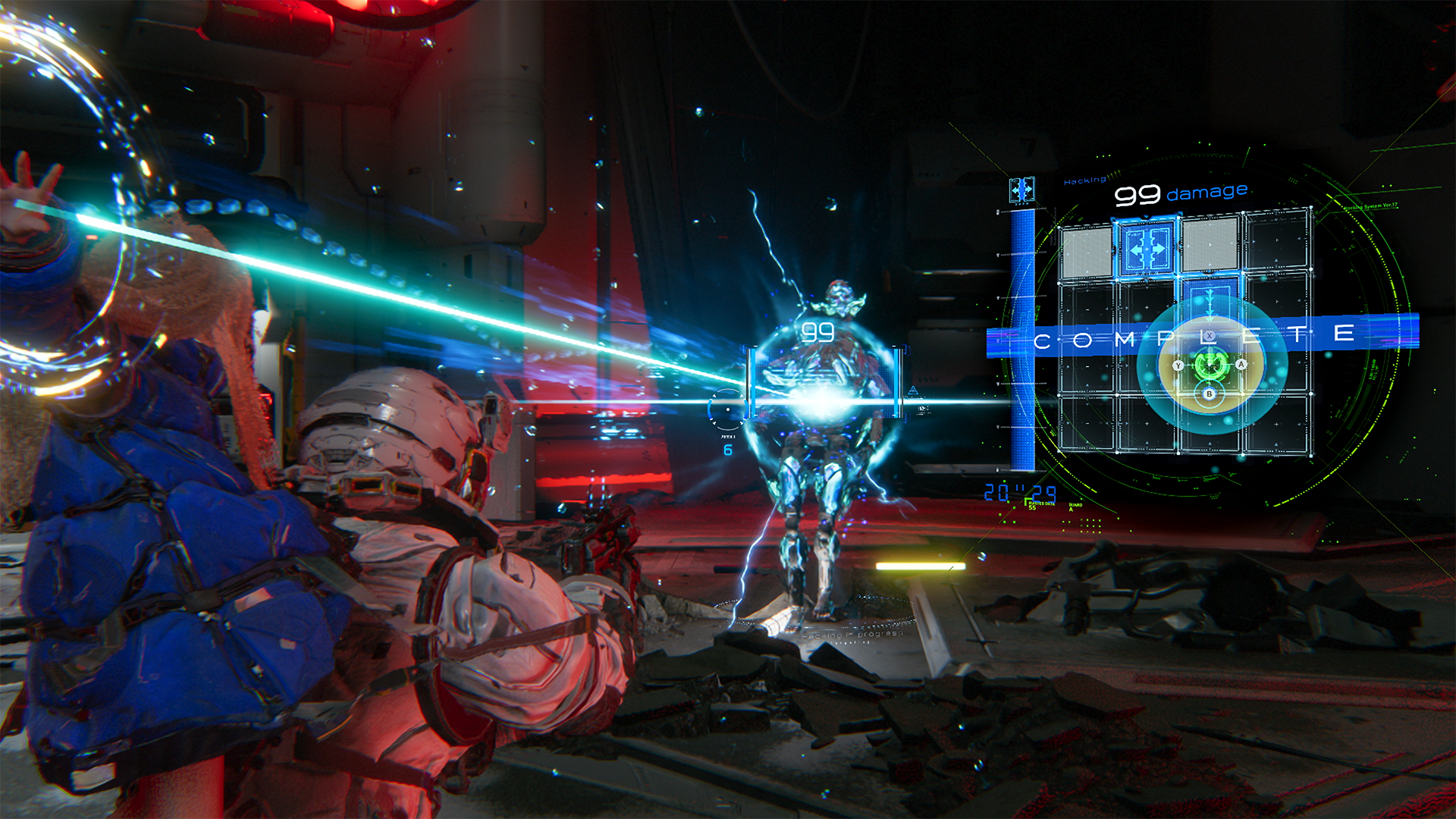
The hacking continues to develop and become more detailed as you are introduced to new enemies and status effects. Some items can shrink the hacking window, while certain enemies will put up antennas and block you out. Others will cloak or dig into ground, cancelling out the hack. Eventually, you'll have whole chunks of the grid inaccessible, and this causes your navigation to be far more difficult to manage. While a fairly simple mechanic, Capcom does a lot to keep you on your toes and freshen it up each hour or so that you dig deeper into its roughly 11-12 hour story, and that's before the post game content adds even more hours to that.
Hacking opens up a grid that is as large as the enemy is powerful, so it varies from foe to foe. You'll navigate to certain nodes on the grid that then increase the amount of damage you do once you reach the final green node. It's a simple yet effective way to then attack them, allowing Hugh to then target specific weak points. From large power banks on their back, or exposed power cells, you'll chip away at their health faster if you pin-point those areas.
Adding to hacking, you'll have a variety of mods that can be injected to cause chaos on the battlefield, should you navigate the grid to access them. You can outfit yourself before each mission, and pick up additional options in chests or as loot drops when you defeat an enemy. You'll purchase and unlock additional perks and mods to make yourself a bigger threat, so it's always worthwhile to return to the shelter, suit up, and head back out there.
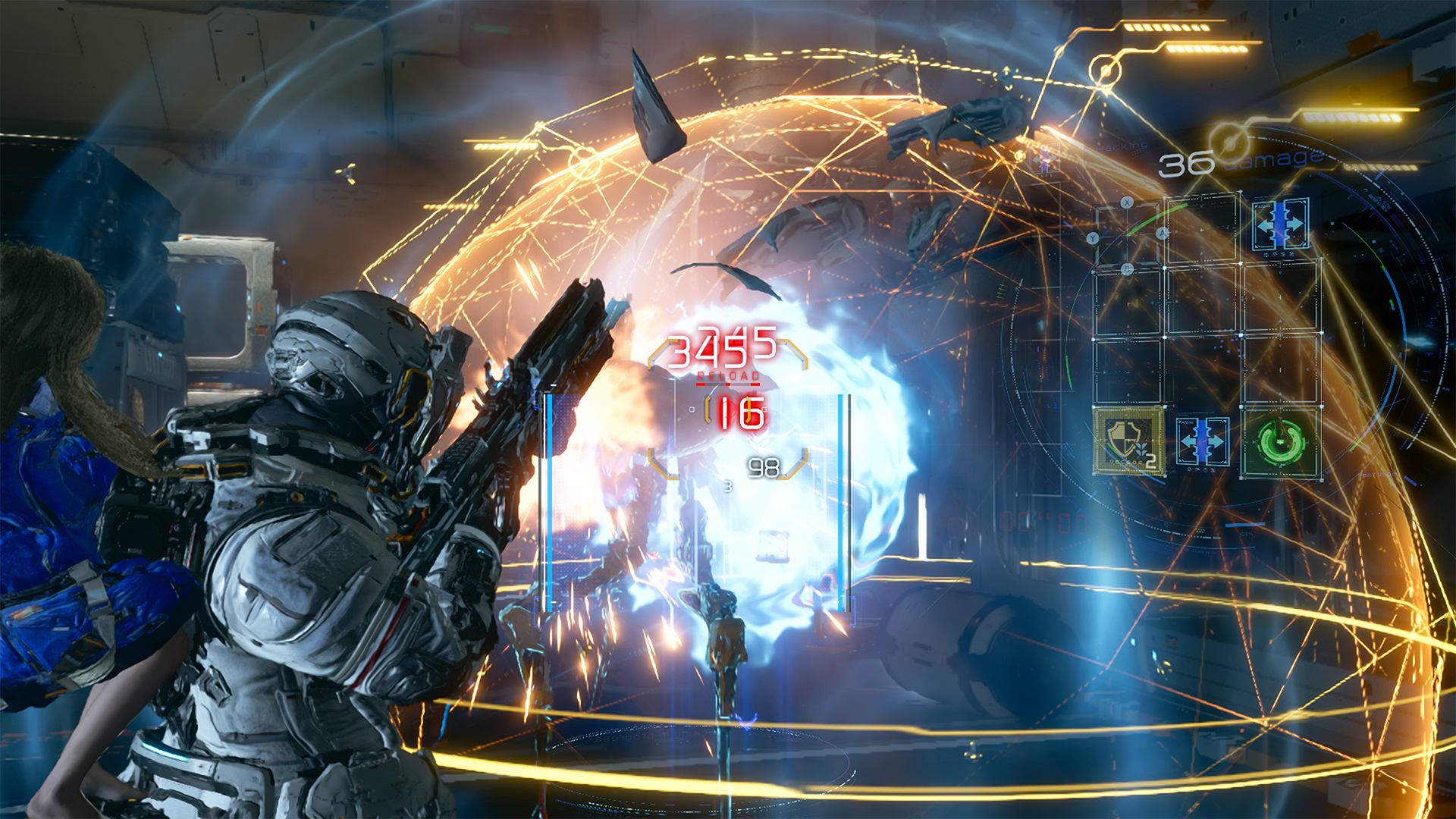
The gunplay itself is extremely good, with a solid mix of weapons that fit the general archetypes you'd expect, with a few that even surprised me. You'll also have gadgets that provide decoys to keep enemies focused elsewhere, to a dome that causes any enemy in its radius to freeze up, exposing their weak points for a few precious seconds. There are also several gadgets that help in distracting or immobilizing the threats around you. And, as some encounters can feel like waves or non-stop enemies in a battle arena, having the right weapon or gadget can make or break your fight.
If I had to fault the combat system in any regard, it would be the speed of reloading your main gun. While you can swap to another gun in the meanwhile, some encounters left me drained, devoid of any other means to attack, and having to rely solely on the main gun, which does see a mid-game upgrade. While you can hack away at enemies in the meanwhile, I really wish there was some sort of melee option, even something that wasn't really designed around dealing damage, and maybe just to stun them to give you some breathing room.
When you've eventually built up your enemy's stun gauge, they will be vulnerable to an execution attack. This can also be done by weakening them to the point where the purple execution icon appears on the hacking grid. You'll then approach them as they are stunned and fire off a shot. While bosses have their own personalized attack, the standard fare sadly does not, as Hugh is lined up to them in the same animation. This is pretty disappointing given the flexibility of Capcom to offer similar things across their tentpole titles. While the animation and effect is nonetheless good, having unique finishers for each type of enemy would have just been icing on the Lunafilament cake.
Even as the campaign's length was starting to come to an end, more enemy types would continue to show up. That said, you will see a lot of the same enemies frequently, and while the arenas you'll be locked in generally just dump in different combinations, especially in the harder zones blocked by a red door, you'll still find ways to make that work to your advantage. And, if things get too intense, you can fire off Diana's major attack, a screen-wide hack that immobilizes everyone for a decent period of time; it's very useful, even during boss fights.
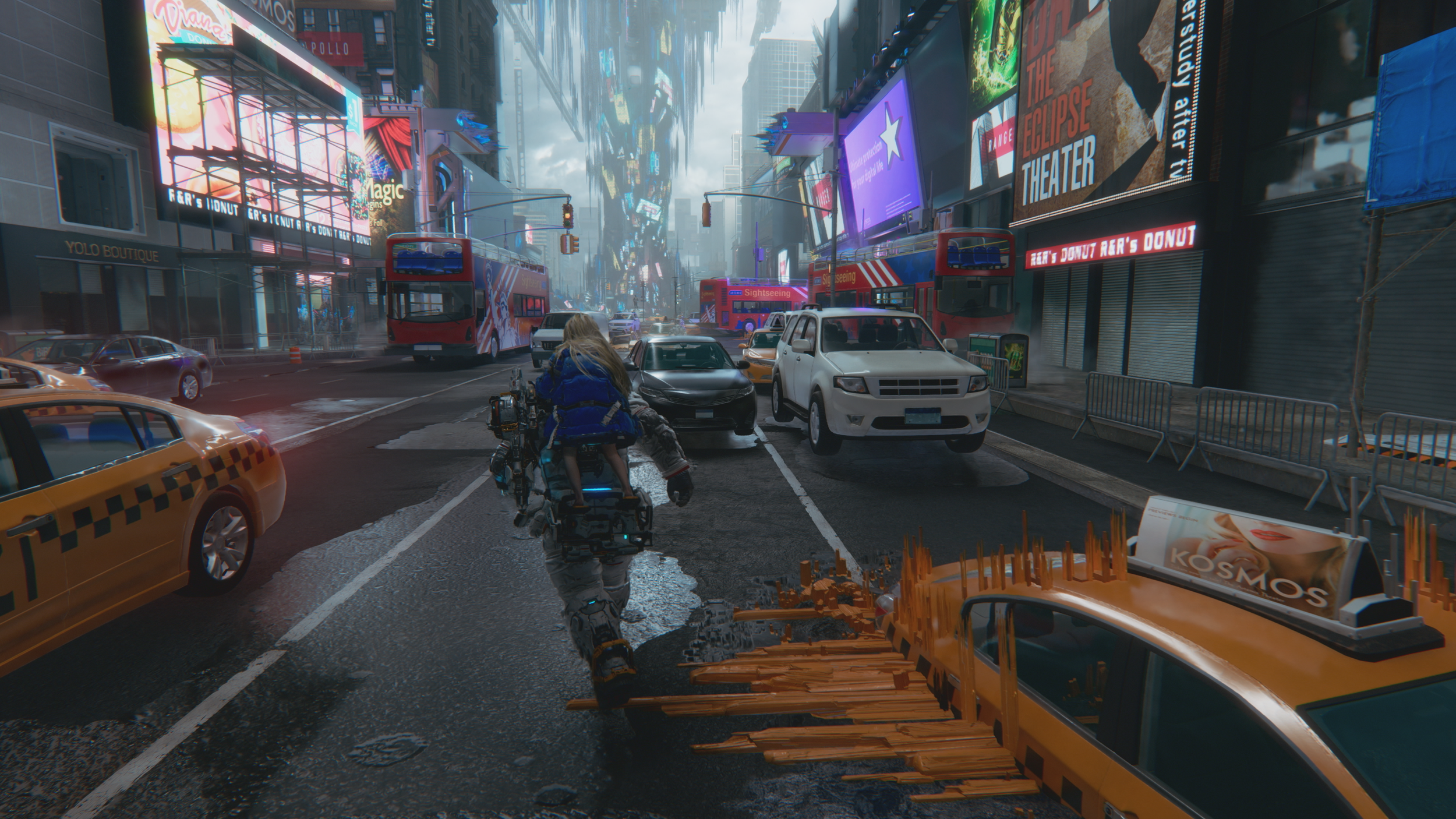
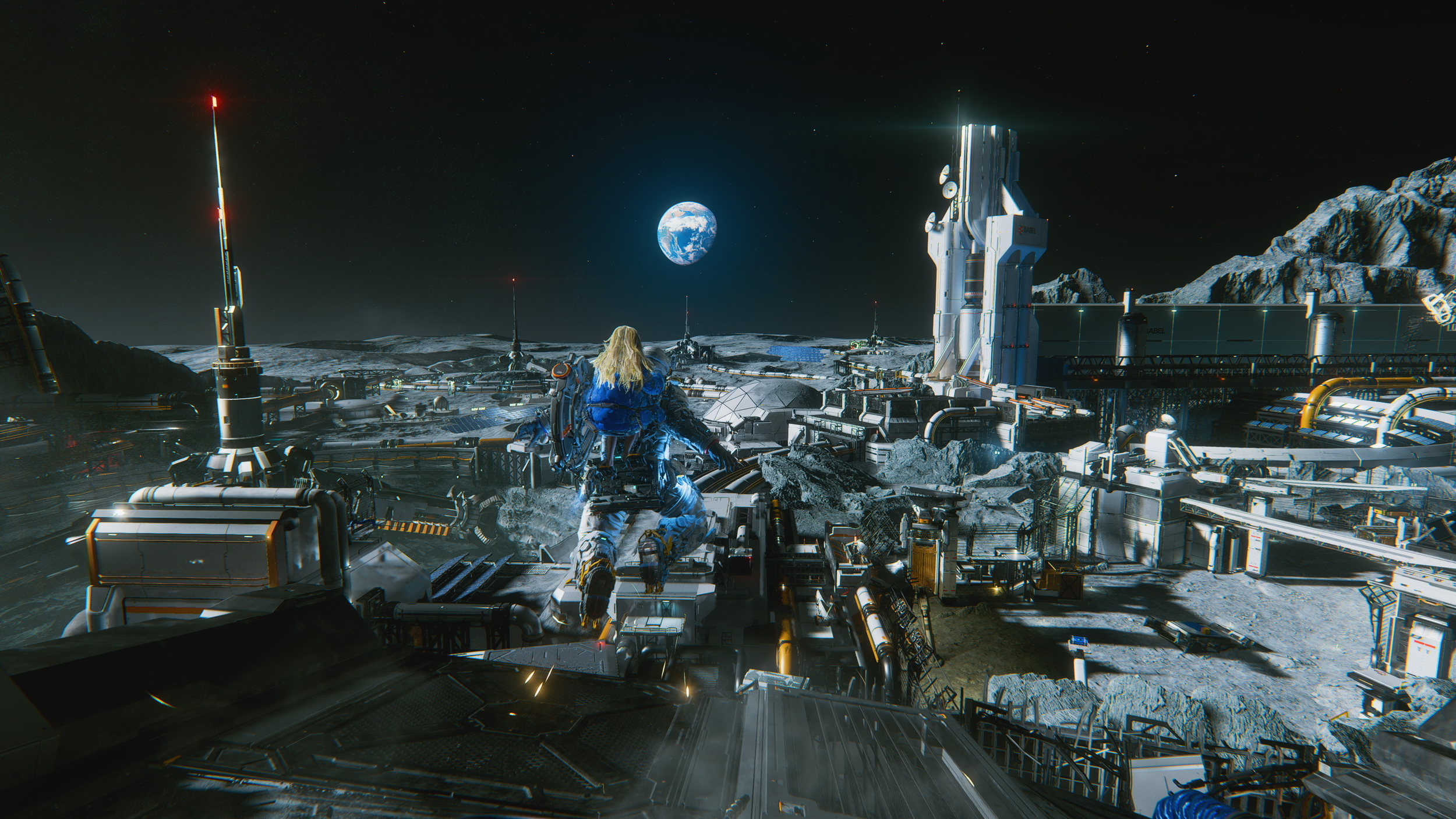
Now, while the entire game takes place on the lunar station, you rarely feel like you are just seeing the same things over and over again. Sure, there is a visual language to the base given it is all composed of the Lunafilament resource. Still, each sector of the station has its own identity. One provides a visual recreation of New York, where another is overgrown in vegetation. Some moments even have you outside the station as you have to deal with a change in gravity, affecting your jet pack, which is useful to not only get around, but access areas that hide a variety of secrets.
You'll also gain additional abilities to access previously blocked sections, akin to a Metroidvania, as Diana can eventually remove colored crystals that are blocking much of the early game. These areas are largely locking away mods, or components of the dioramas that you'll construct in the shelter. Still, accessing these items and collectibles plays a huge role once you've wrapped credits, so make sure to exhaust your search and find new pathways, hidden walls, and more, all benefiting from Diana’s pulse search, which makes finding these things a breeze.
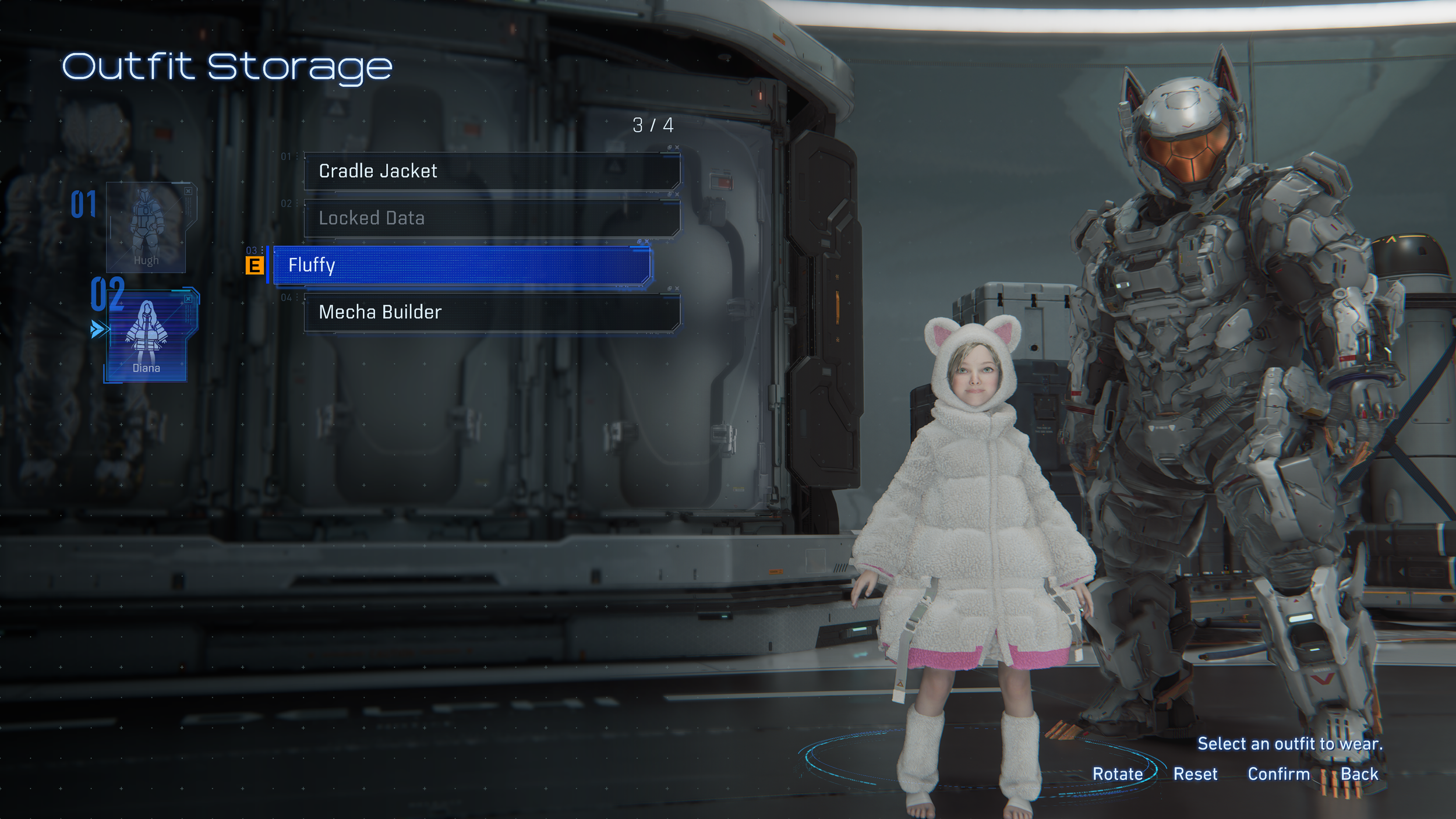
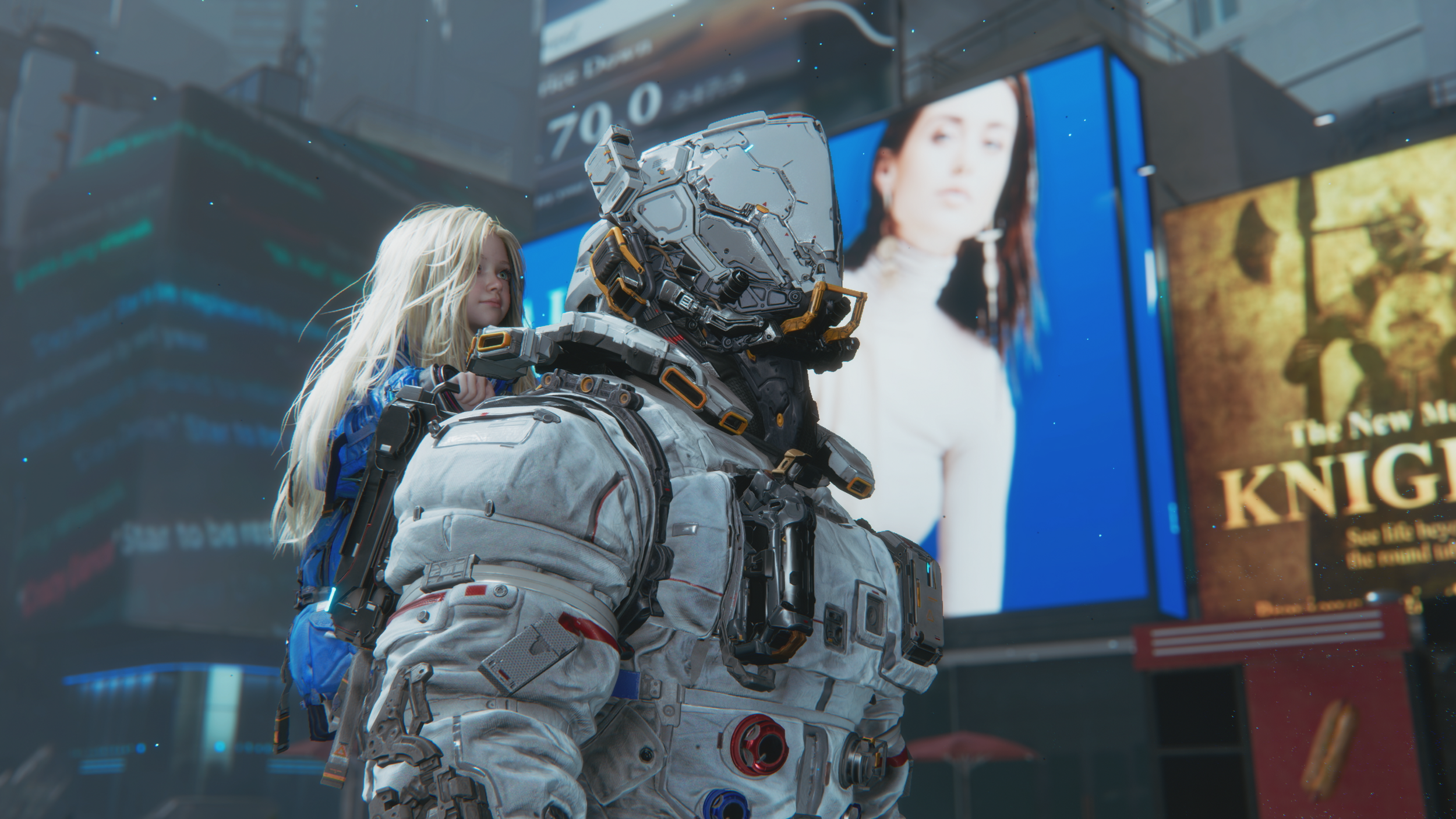
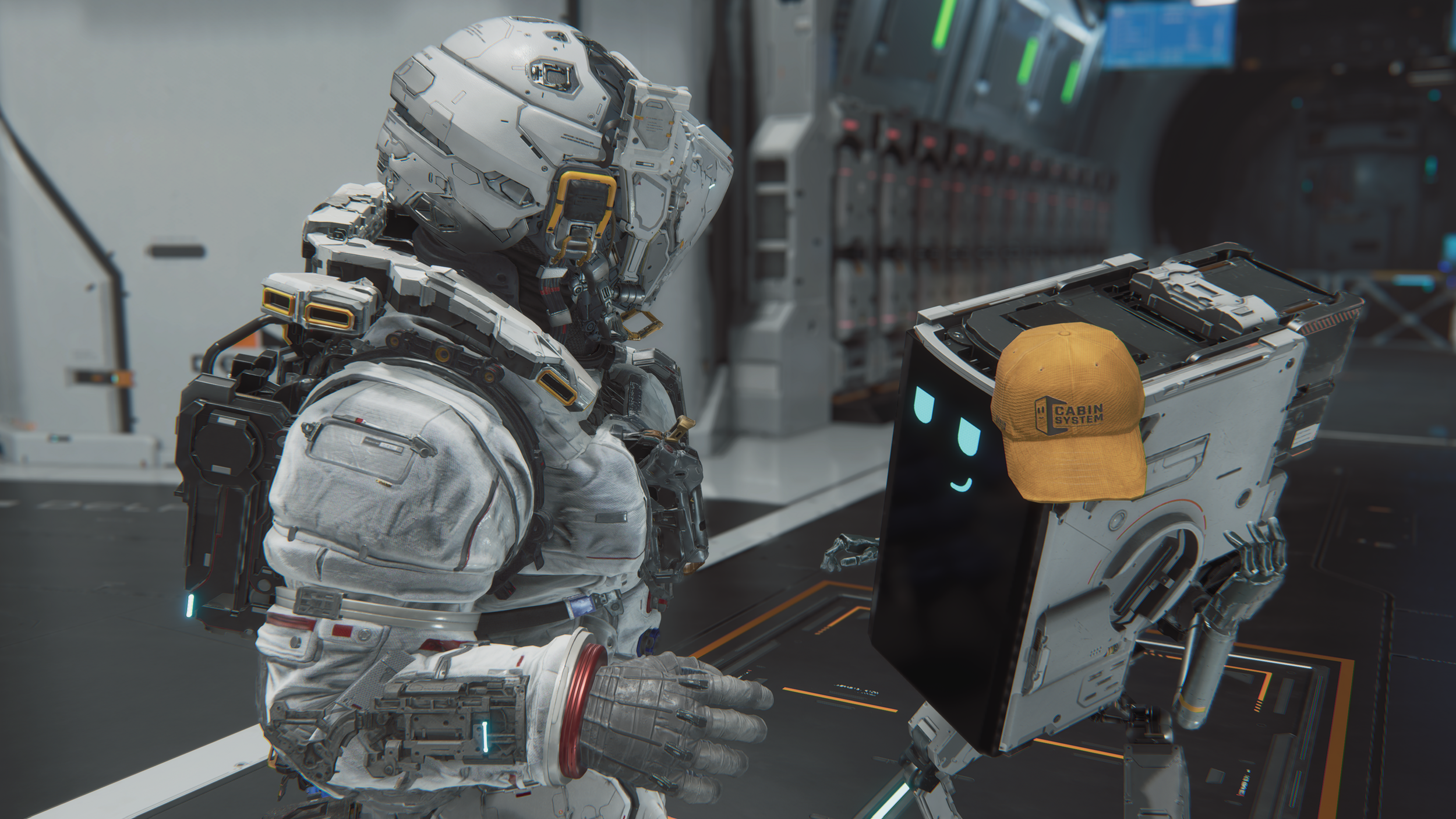
Despite the lengthy development time, Pragmata utilizes the RE Engine quite well, with wonderful facial capture for Diana. As Hugh is largely masked, his few moments of the visor being up, genuinely shows a caring almost parental figure for Diana. I'll also add that while you'll get various outfits for the pair, the suits that Hugh wears almost have this ‘what if the Dead Space designers reworked Master Chief's armor’ and it works. Diana has a few interesting costumes from what I've unlocked, but the more Earth-based outfits didn't work for me. My favorite was a black coat with green highlights and visor, it looked great and stayed on her for hours.
Still, Pragmata is a visually striking experience that shows off the RE Engine quite well. The abominations built through the Lunafilament are grotesque and yet beautiful in most cases, with some wonderful bosses that are both intense and nicely designed, especially the final encounter, which is such a joy to experience, and will have you grinning from ear to ear.
Pragmata pleasantly surprised me, and if Capcom does intend to return to this in a few years, I’d love to see the hacking systems become even deeper and more personalized. Hugh and Diana are a wonderful pair, and each nearly steals the show from one another. Their journey to stop IDUS may play it a bit too safe, but the journey nonetheless had me over the moon.

Developer - Capcom.
Publisher - Capcom.
Released - April 17th, 2026
Available On - Xbox Series X/S, PS5, Nintendo Switch 2, PC.
Rated - (T) - Language, Violence.
Platform Reviewed - Xbox Series X.
Review Access - A review code for Pragmata was provided by the publisher for the purpose of this review.
Jeff is the original founder of Analog Stick Gaming. His favorite games include The Witcher III, the Mass Effect Trilogy, Hi-Fi Rush, Stellar Blade, Hellbade: Senua’s Sacrifice, and the Legend of Heroes series, especially Trails of Cold Steel III & IV.