
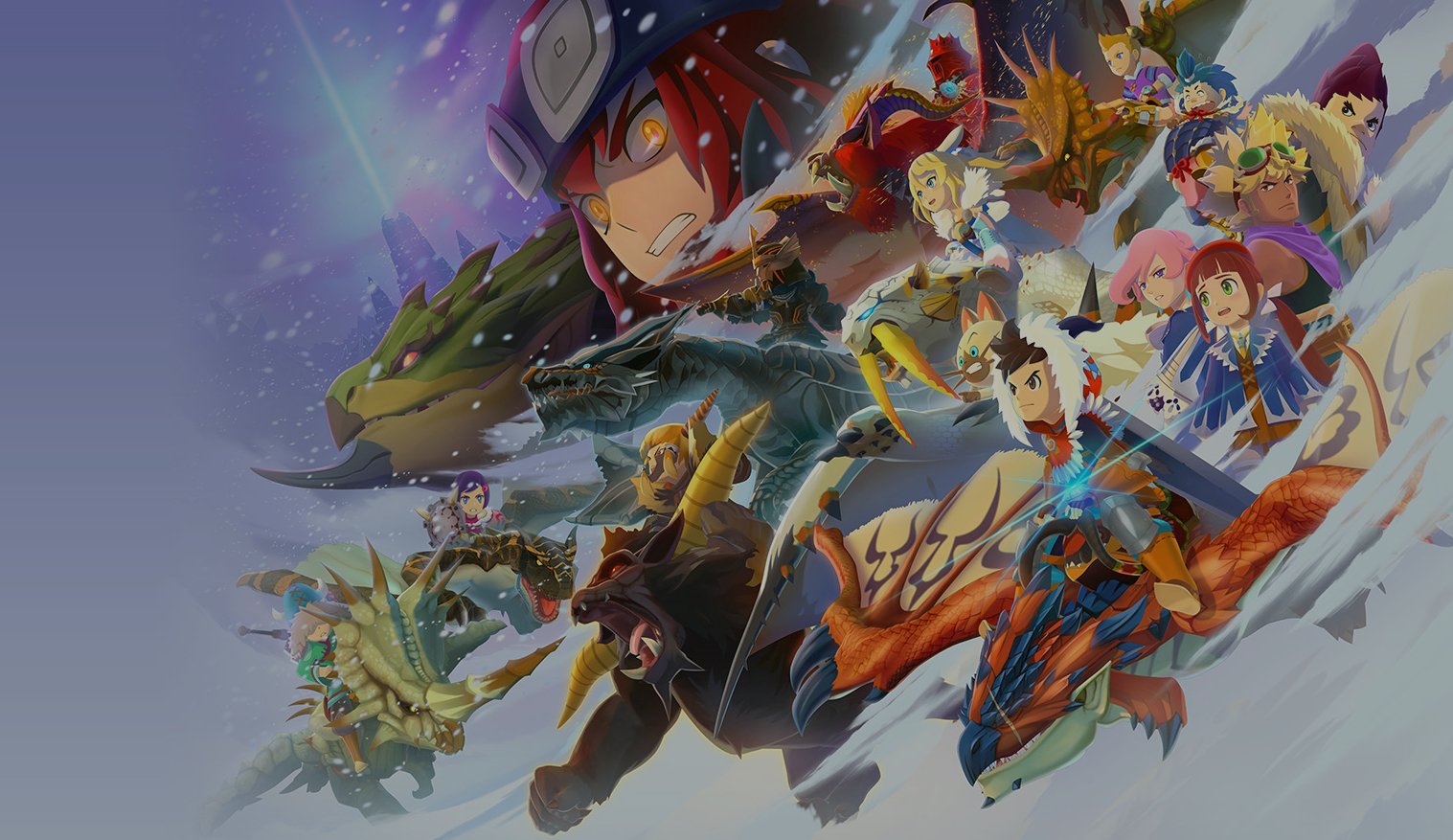
Egg-napping.
Monster Hunter Stories was a delight back when it released on the Nintendo 3DS nearly a decade ago. Now, that experience has been refined and remastered for home consoles. While the PC, Switch, and PS4 versions released some time ago, the cute adventure has finally come to Xbox. While it lacks the quality of life changes its superior sequel offers, this first adventure is nonetheless a delight.
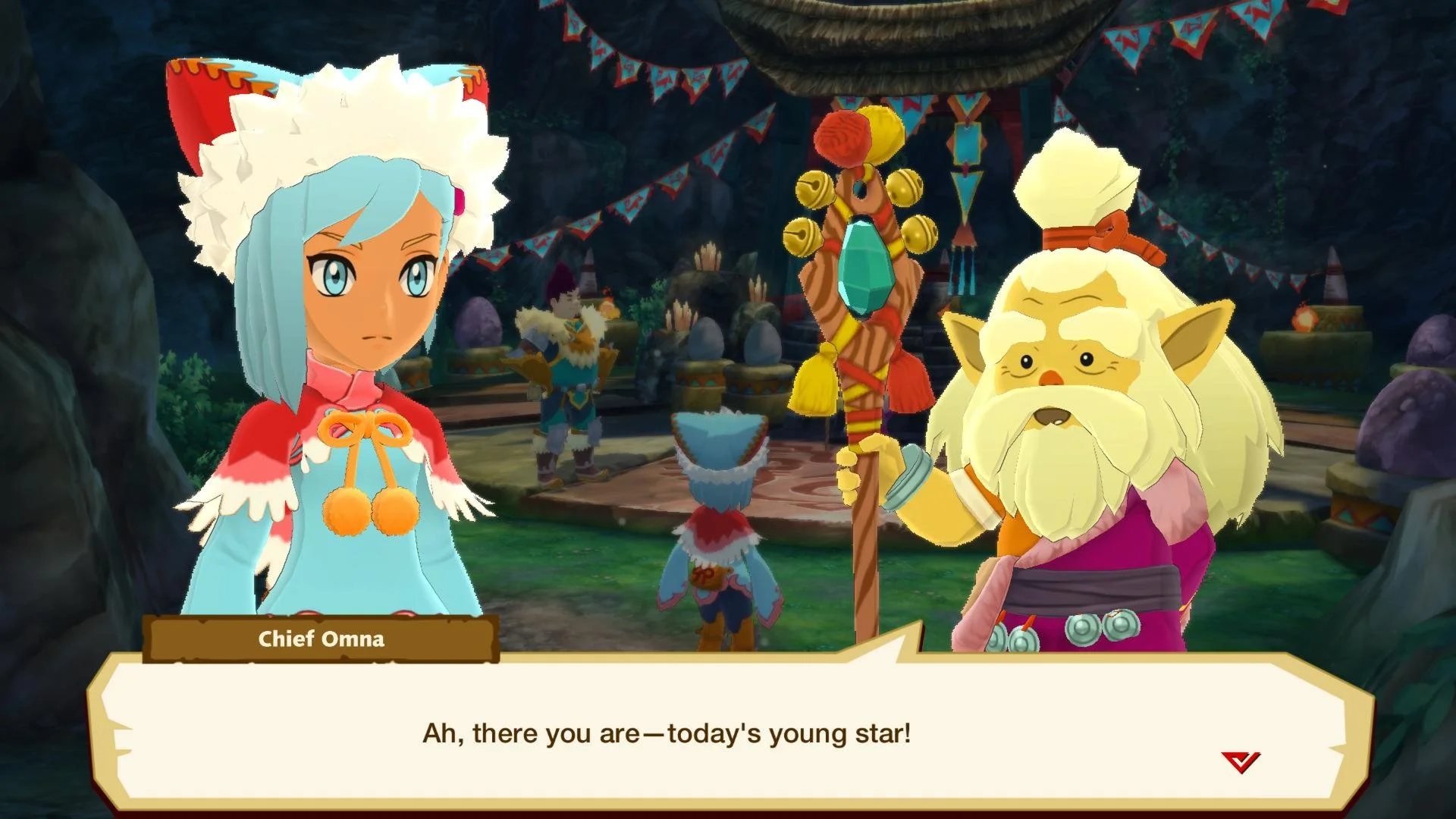
While this remaster doesn't fully overhaul the game, as you can see and feel the 3DS’s technical limitations here, the fact that the game has fully voiced dialogue goes a long way to making this experience feel largely complete. While I would have loved rebuilt models and updates to the very polygonal environments, there is something still charming about the dated, yet wildly colorful visuals that certainly do a lot of heavy lifting of the whole package.
Prior to Monster Hunter Stories 2, I played a few hours of the 3DS version in preparation, and while that was some 4 years ago, I really thought the second entry was a bit more engaging, due to a story that hooks you early, mechanics that felt a bit more polished, and a much improved graphical facelift to accommodate better hardware. It's hard not to want some of that for this remaster, but what is here is nonetheless pretty good.
Monster Hunter Stories features two types of characters throughout the story. You have Hunters, whom we are all familiar with, but also Riders, who tame beasts and have them join them in battle. Riders form bonds with their Monsties via a Kinship Stone that has a spark of mystery behind it. Players can ride their chosen Monstie, and bring a team of six into battle, all built with stats, abilities, and resistances that will help in battle and moving around, given that some Monsties are slow or move in a way where one particular one made me feel sick, which is something that normally doesn't happen.
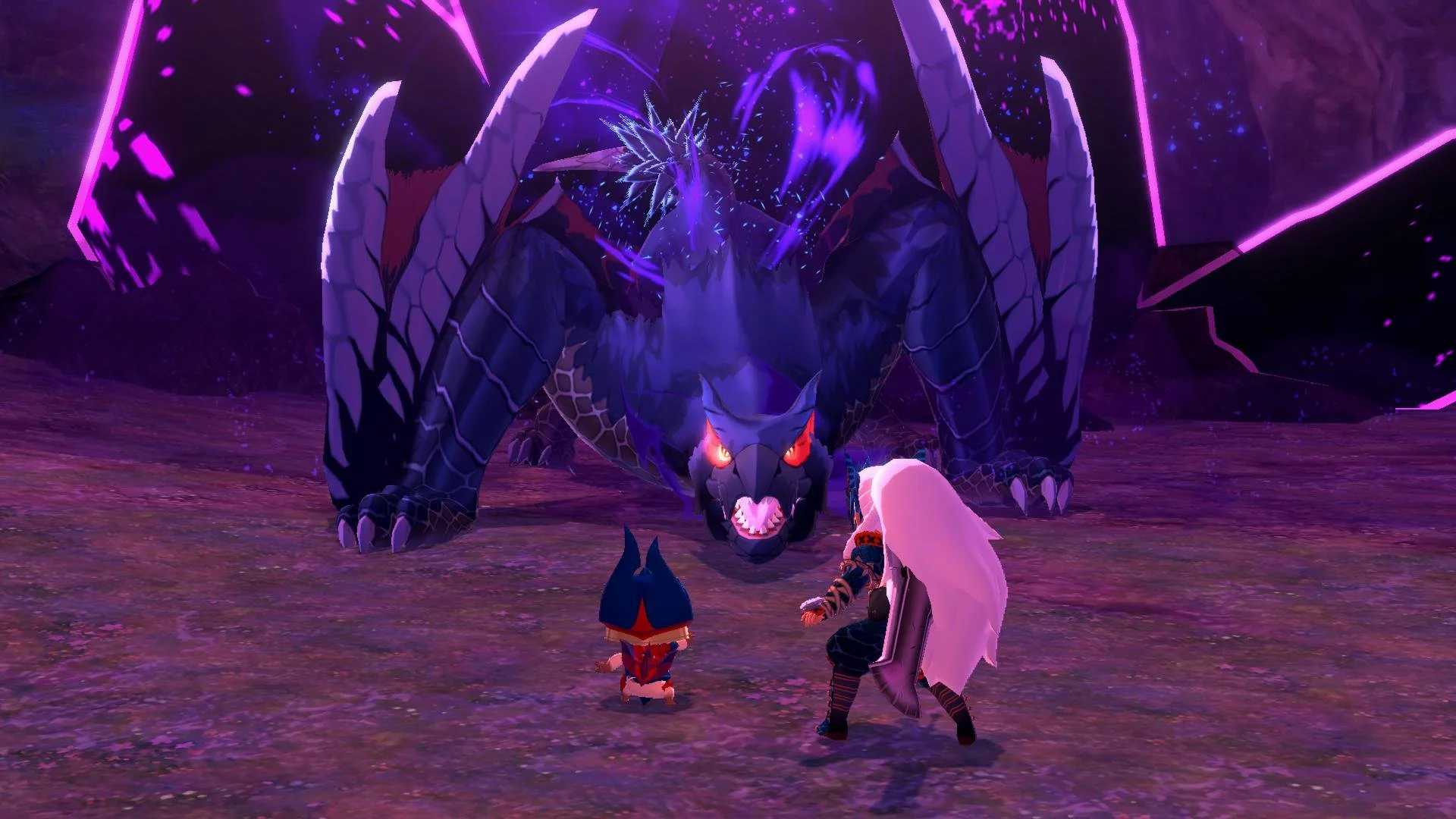
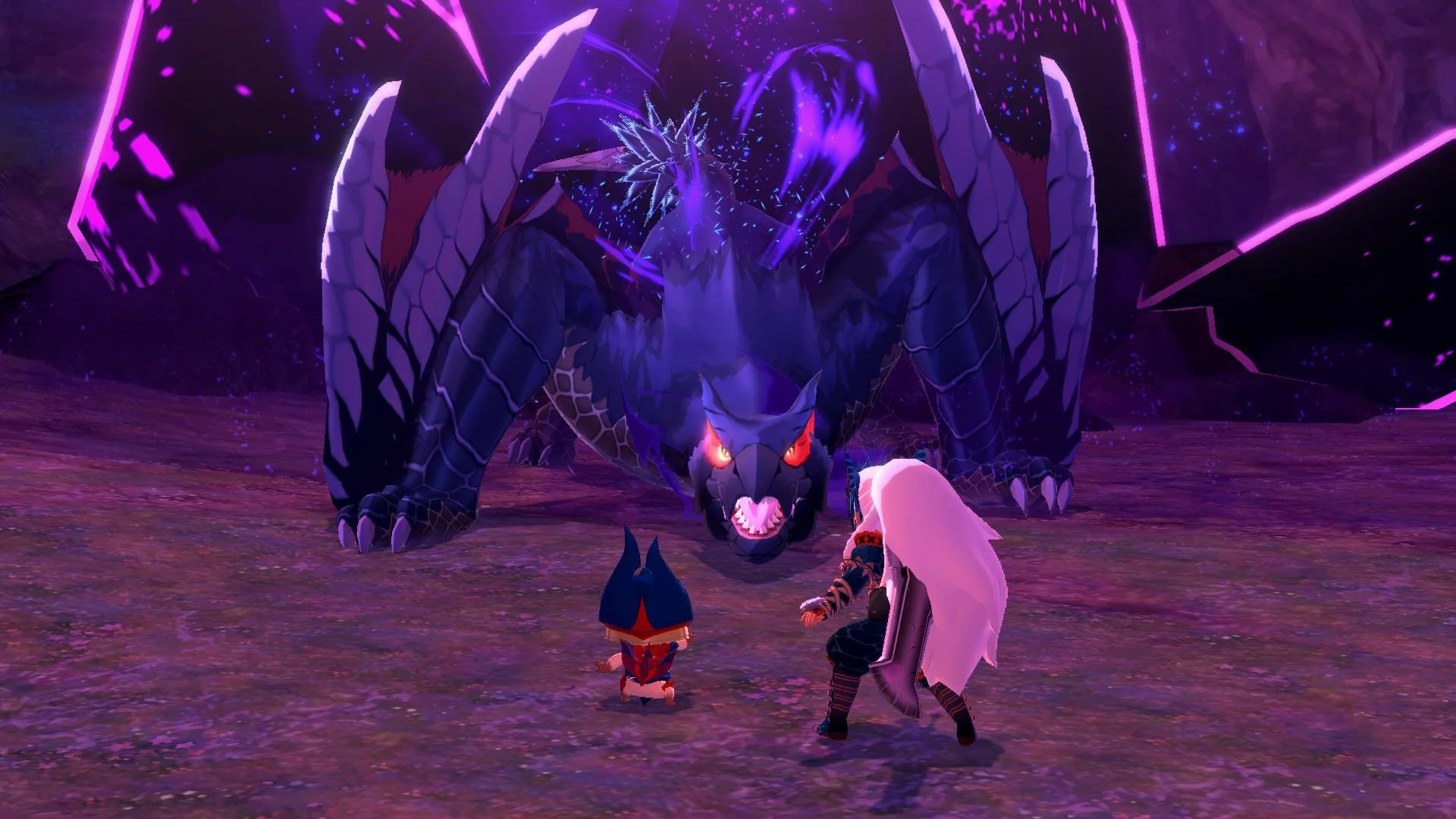
The start of the game has you and your friends, Cheval and Lilia, exploring a nest, and pretending to be Riders, using a regular old rock as your Kinship Stone. That said, the egg in the nest does hatch, and you suddenly are the proud parent of a baby Rathalos. However, upon your return to the village, a beast, infected by a mysterious darkness, attacks the village, and during the scuffle, you are parted from your Rathalos.
The game truly begins one year later as you have succeeded in becoming a Rider and attempt to make your mark. While it is forbidden to leave the local area, a rule given to all Riders, the mysterious darkness that infected the beast that attacked the village suddenly becomes a huge concern, and as a Hunter group enters your land to investigate the same sickness, you're granted permission to leave the village and see the world.
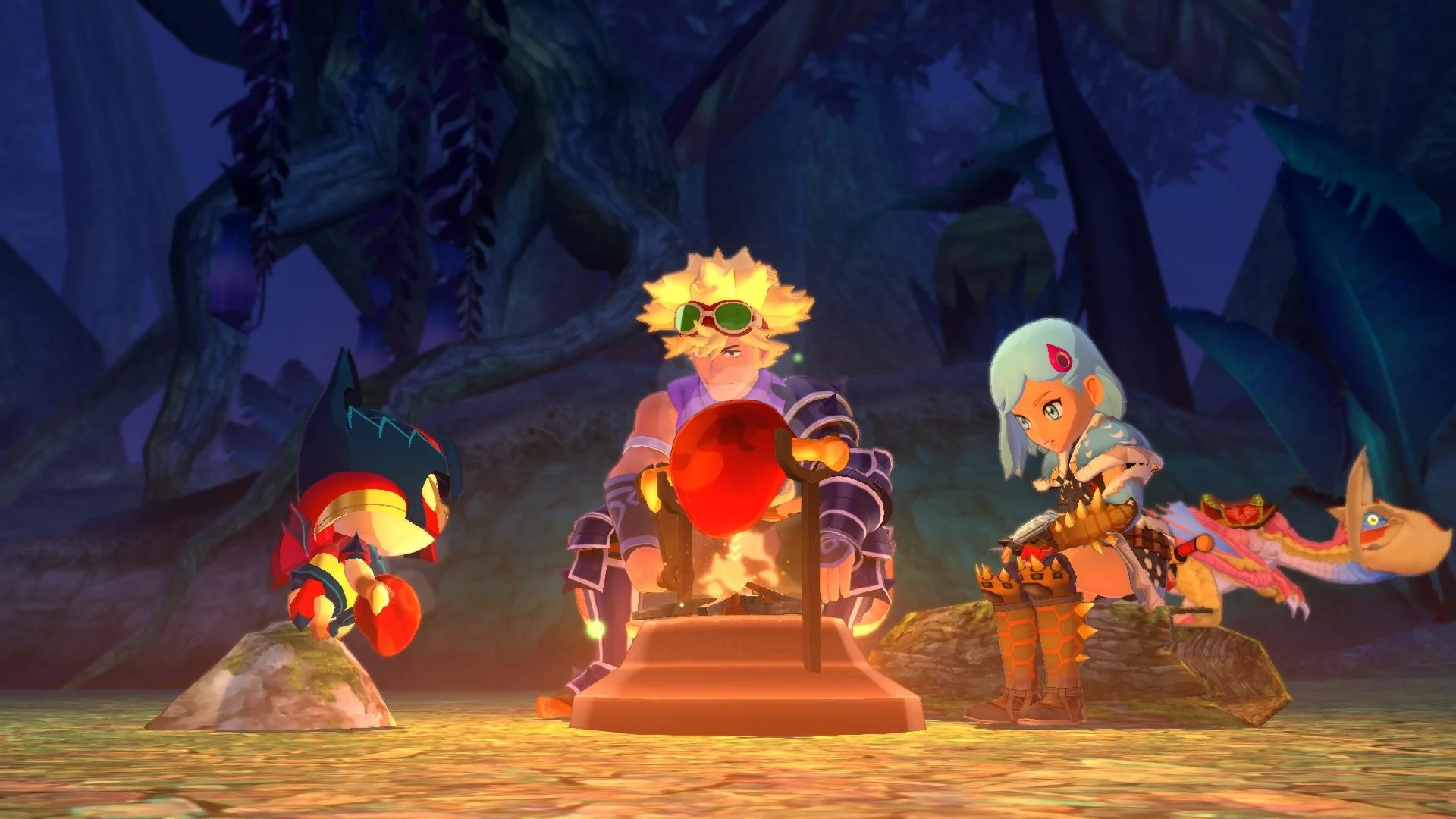
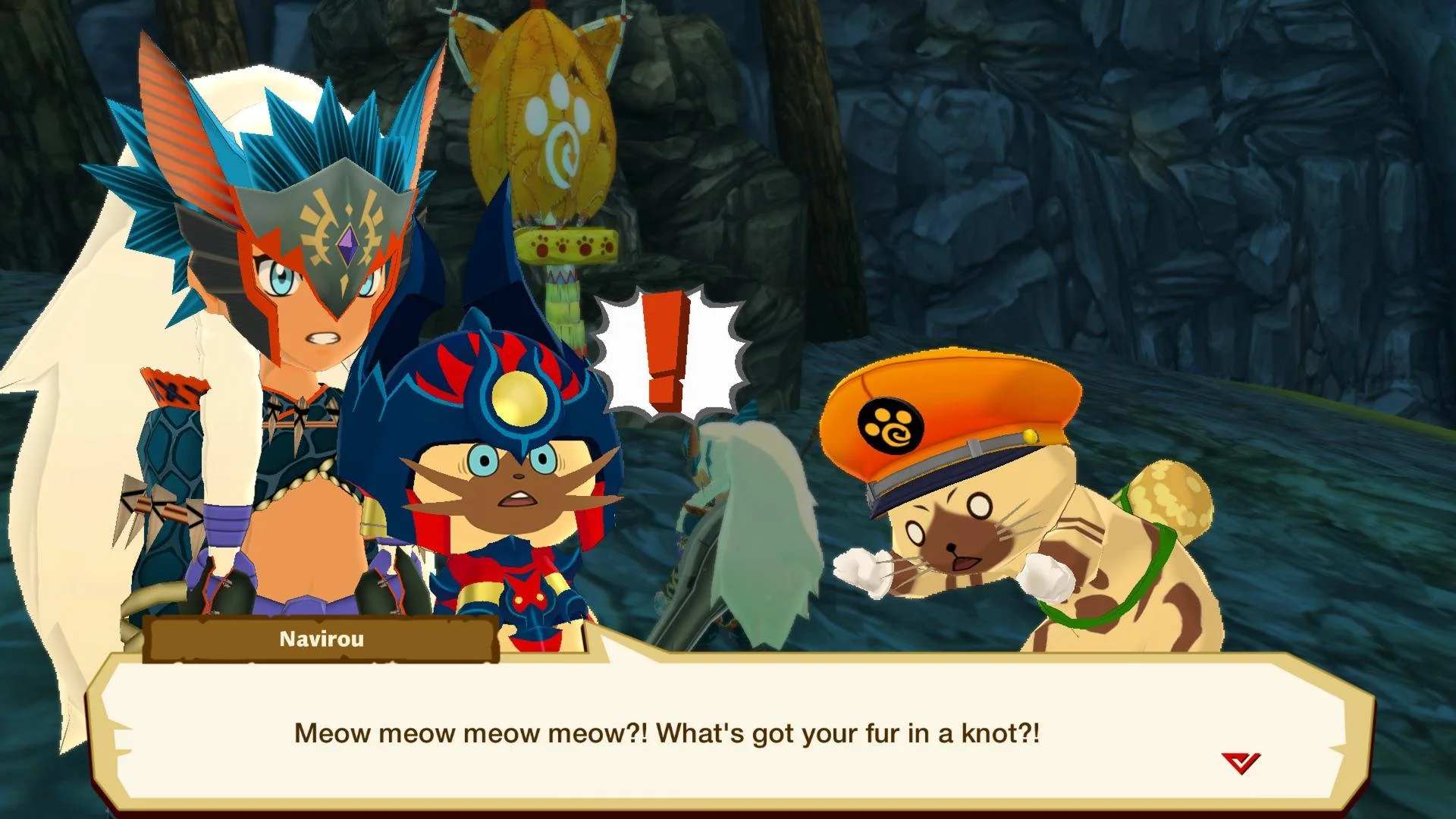
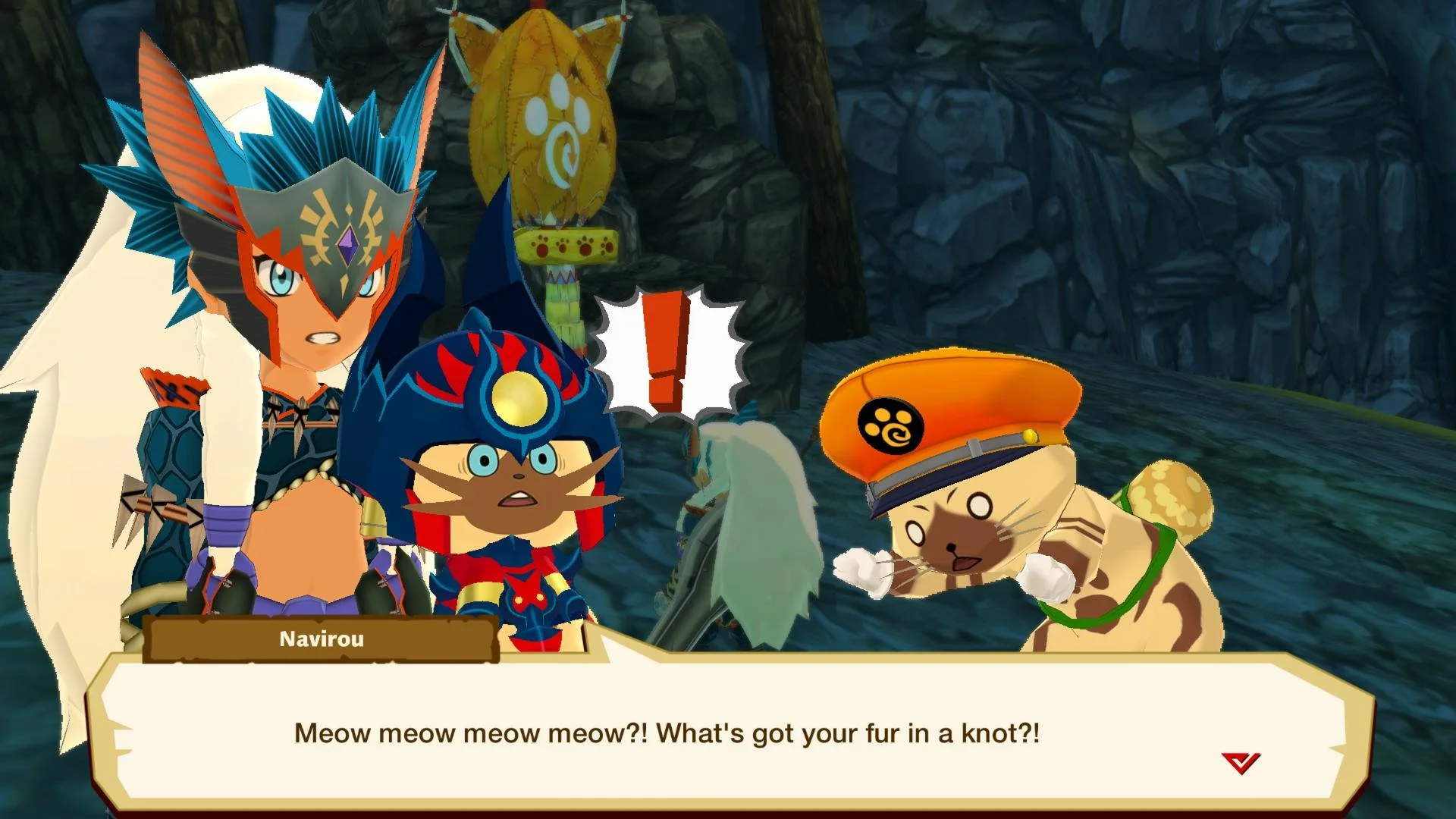
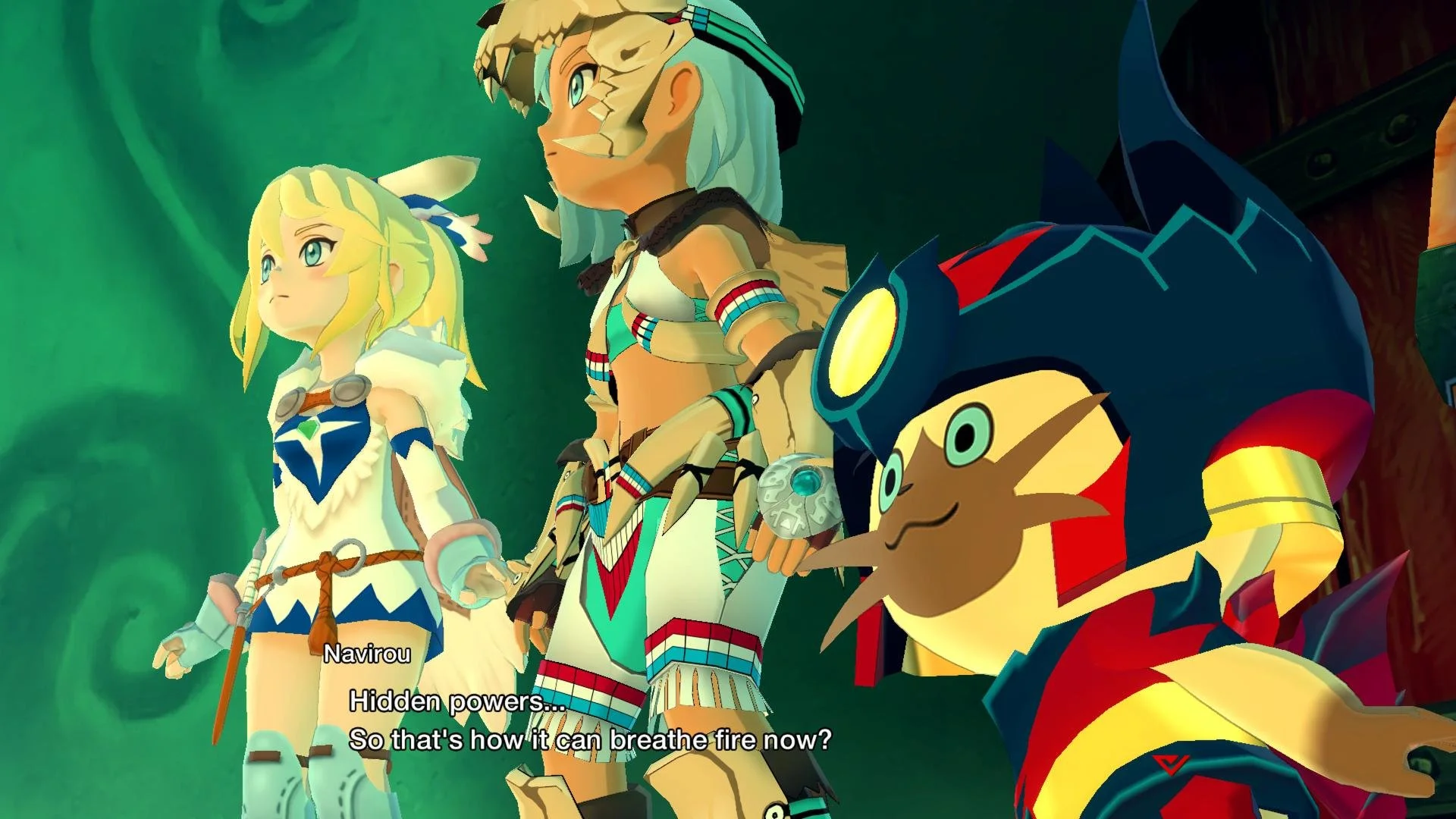
However, earlier on, as you are set to hatch your first egg as a Rider, you meet Navirou, an amnesiac Felyne who is also present in the sequel. As I pointed out in my review for Monster Hunter Stories 2, they were my biggest gripe in that game, often talking for the mute protagonist, and driving too much of the narrative forward without the player's consent. Sadly, that is the case here as well. I get why Navirou exists, but I still believe this series would be better without them. And, to my luck, Monster Hunter Stories 3 will not feature Navirou due to the protagonist finally being voiced. That, and it takes place some 200 years later.
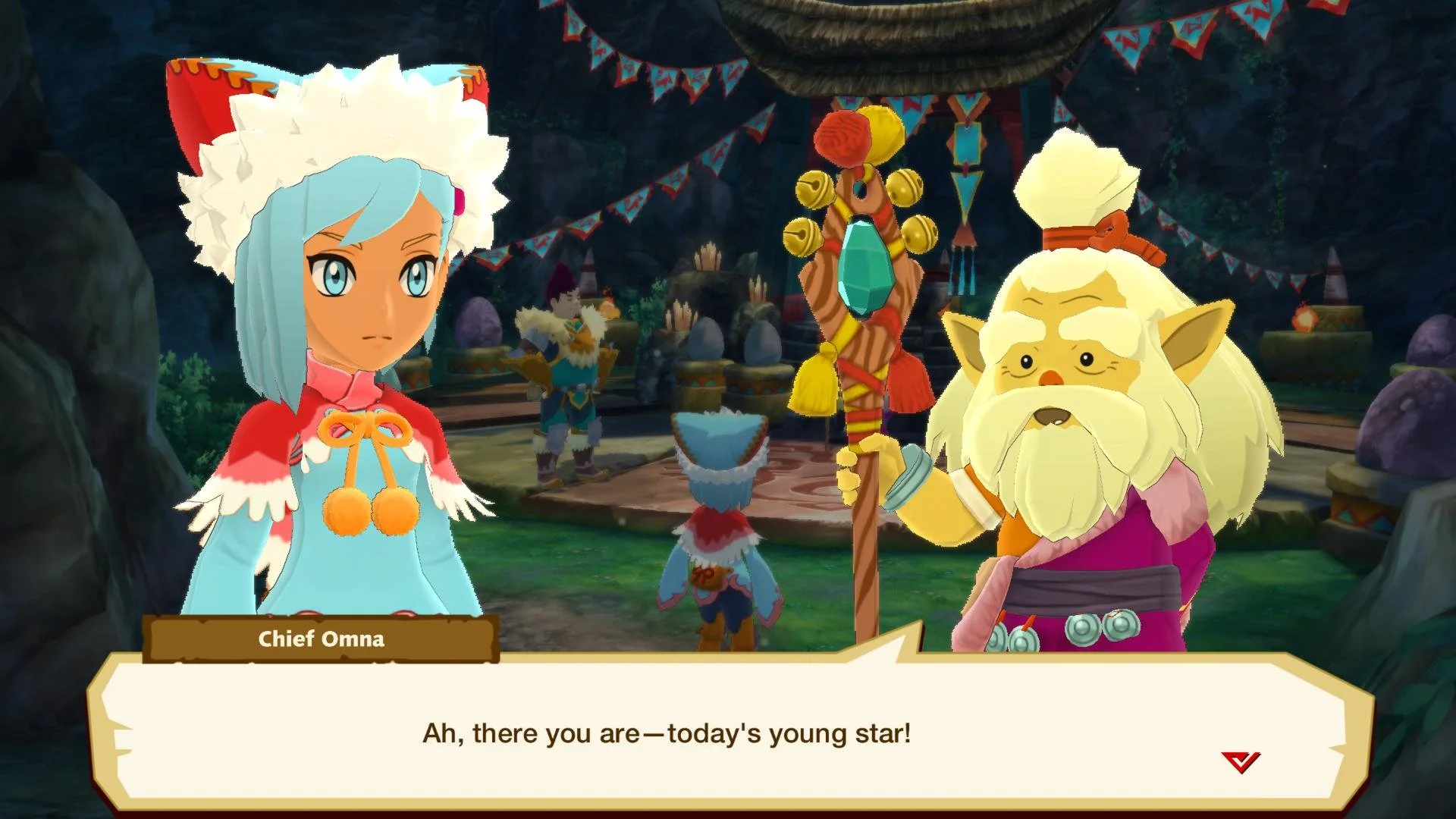
The story itself dives into the Black Blight, the darkness that is infecting certain monsters, disrupting the environment around them. It's also about the bonds between not only you and your Monsties, which to be fair is never really more than a surface level act of them being at your side, but the bonds between you and your childhood friends. You'll make friends along the way, some that return in the sequel, however under different circumstances since Wings of Ruin is not a direct sequel.
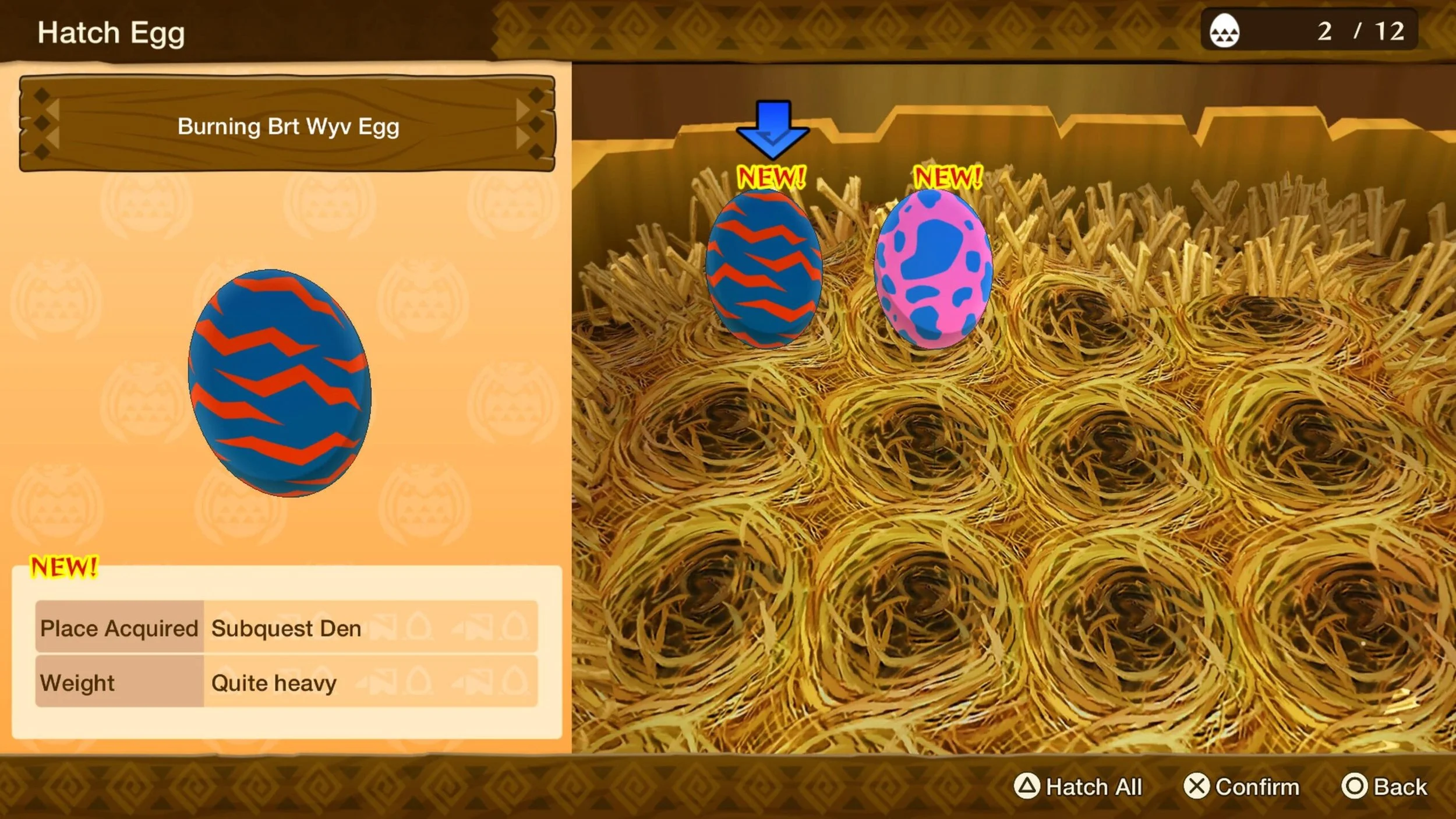
The biggest component of Monster Hunter Stories is your Monsties. From hatching to leveling them up, to even fusing them together, there is a deep system here that while refined in the sequel, works well, and is more about min-maxing to hatching to find or groom those perfect stats. Each egg will vary in quality, with monster dens ranging in quality as well.
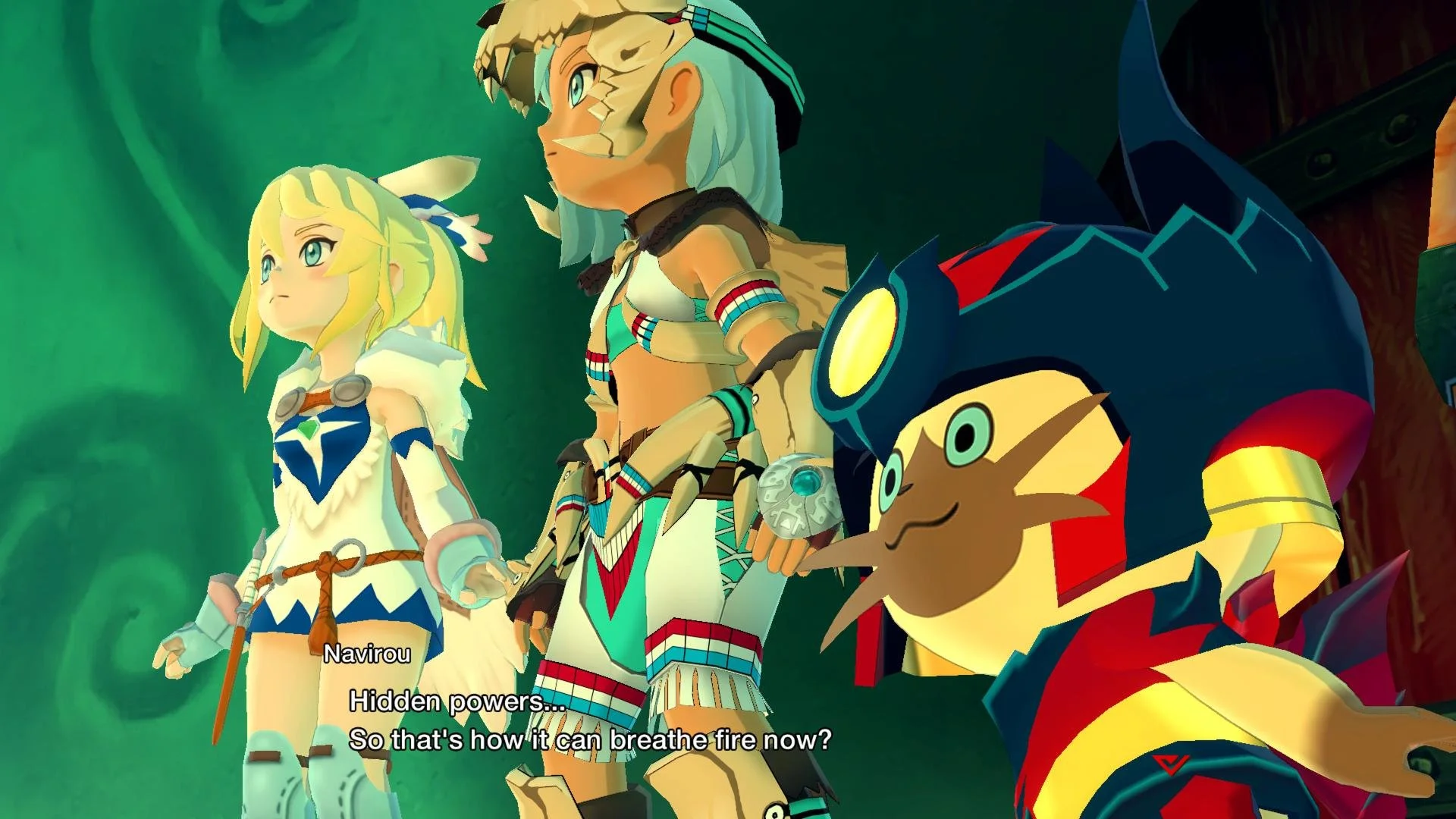
The backbone of how good your Monstie is through the fusing system. Each Monstie has a 3x3 grid that has abilities, perks, or bonus stats that gauge their overall quality. The more open slots, the more you can upgrade them. Other Monsties need to have compatible slots, and having three in a row grants a bonus. Early on, you'll only really find Monsties with limited slots that can be filled, and fusing a Monstie into another removes the fodder from the group. This fusing allows you to, for example, give a fireball move to a Monstie that doesn't normally wield fire. While the narrative reason is it is a dormant power that is awoken, it nonetheless allows you to supercharge a tough Monstie into a dominating force.
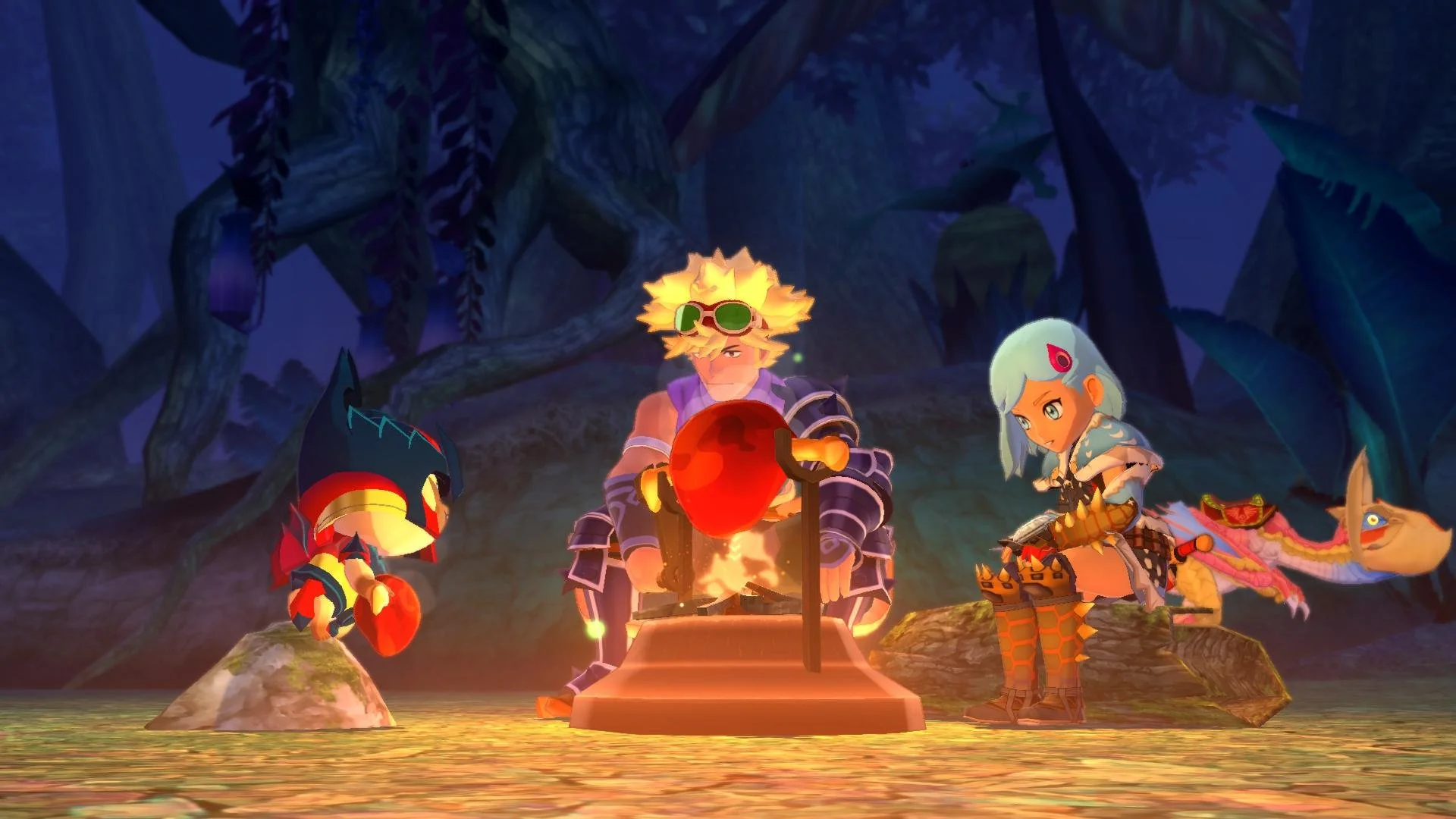
While Wings of Ruin had around 100 Monsties, this first entry has just under 70, which is still an impressive number. You'll explore the wilds, track down dens, and then snatch an egg. Navirou will comment on the size and weight, so you'll have a few attempts at snatching the perfect egg before the nest is empty, despite the visual evidence to the contrary.
Battles are turn-based as you control your protagonist and the actions of your Monstie. Your Rider will have skills and abilities that are fueled by the bond between you and your team, including team-up attacks between you and your Monstie.
Your basic attacks are where the strategy comes into play as you can attack either with Speed, Power, or a Technical strike. Then, on top of that is a rock-paper-scissors system where Speed beats Power, Power beats Technical, and Technical tops Speed. While some Monsties will only use one type, some can alternate and produce a pattern to catch them in the act. At first, you won't know what they will do, but certain monsters have a tell that makes it fairly easy to wager a guess.
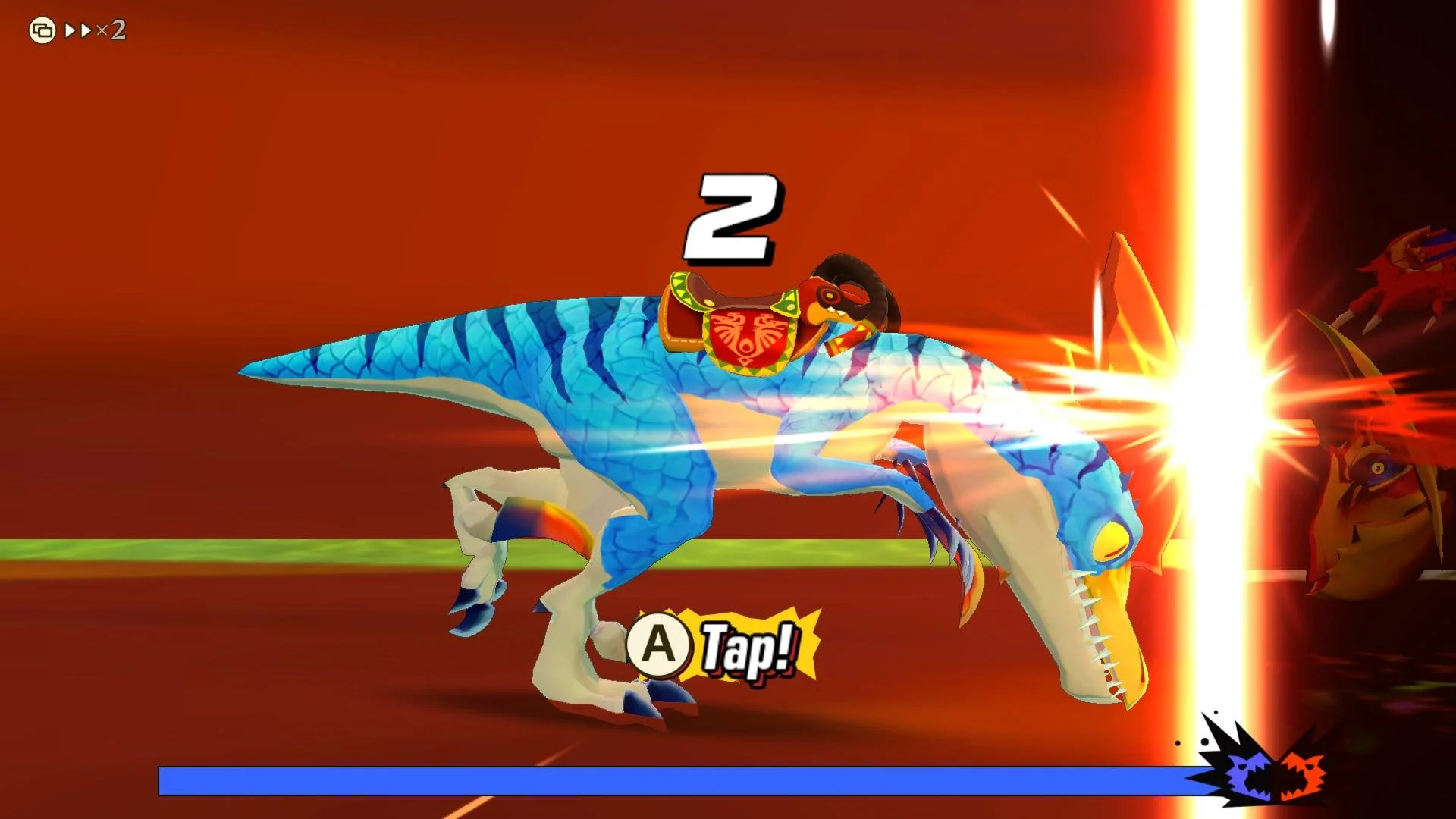
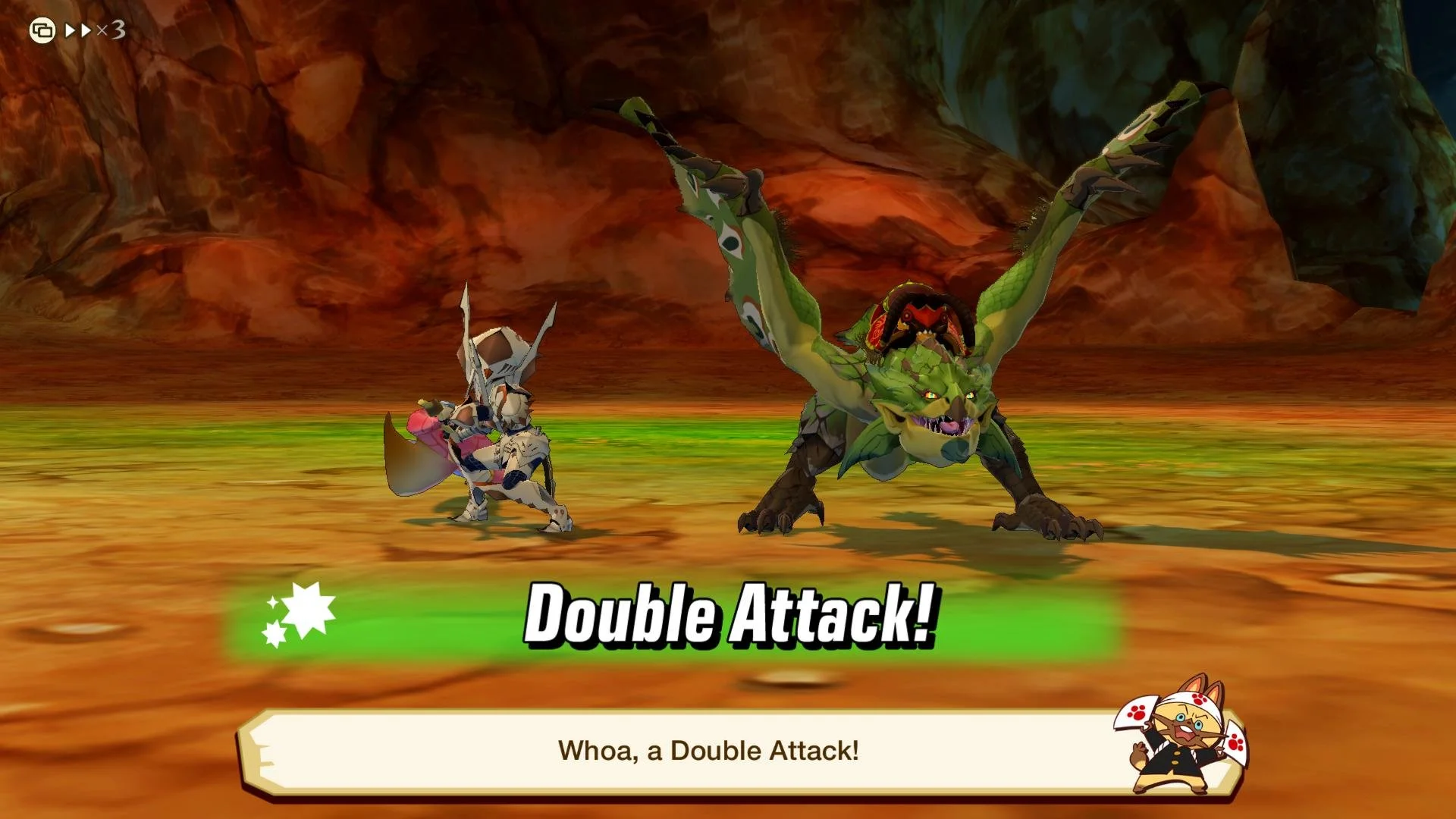
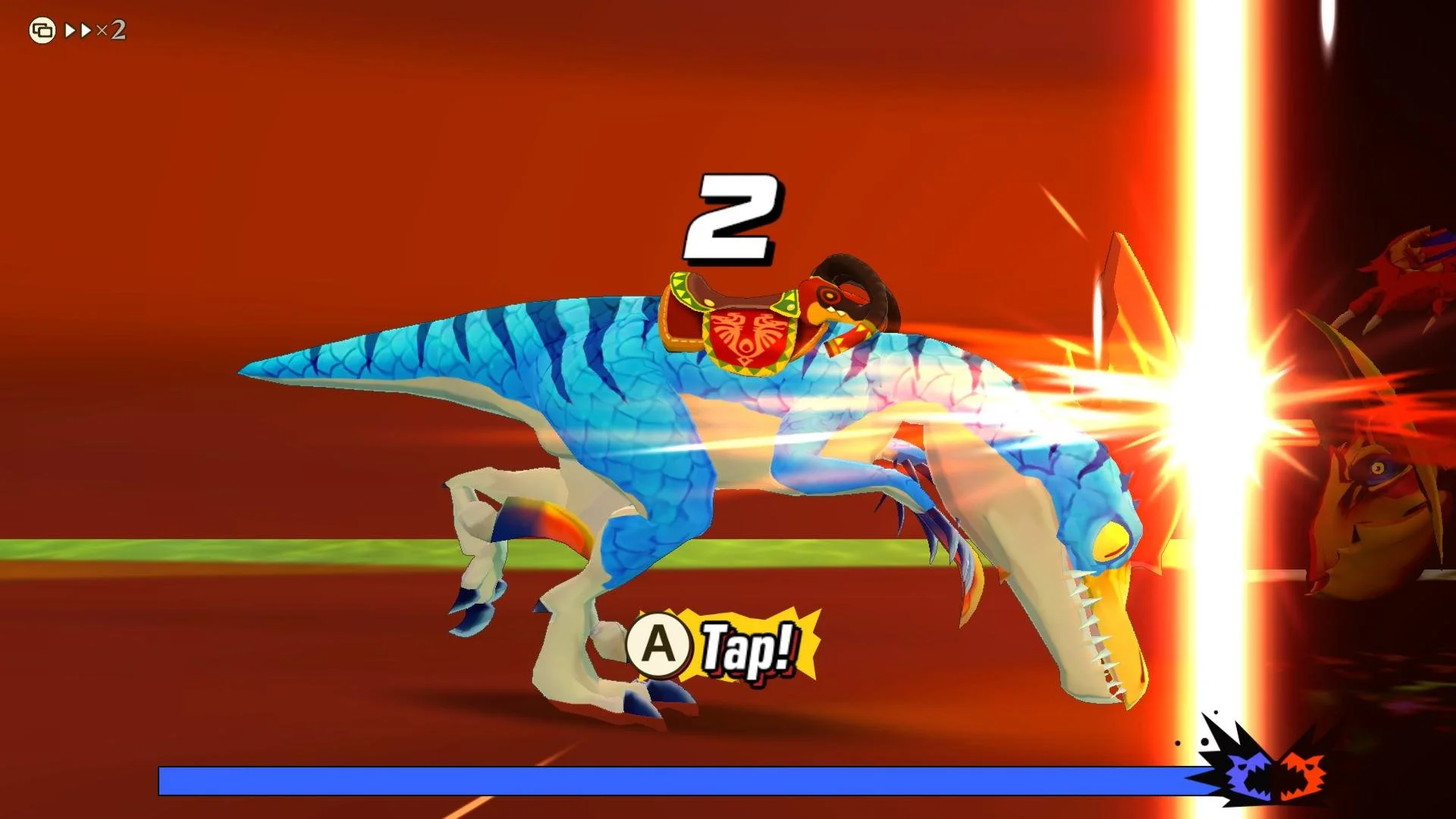
As you choose your attack type, and are targeted by a monster, you'll then enter a duel. This is where the rock-paper-scissors system comes into play. And, if you have the same attack type as your fellow Monstie, you'll pull off a double attack, hitting with much higher damage. Eventually, some bosses will have body parts you can target. While this is expanded upon in its sequel, it's nice to see some aspect of it be presented here.
Some duels require that you spin the analog stick to win the fight, or tap down the button as fast as you can. Another has you flying in the air and alternating between the LB and RB buttons to slam them into the ground. These attacks are great, as some types of Monsties have their own types of duels.
Once you've built up enough energy in your Kinship Stone, you can then ride atop your Monstie. This refills their health, and makes your rider invincible for the duration of this attack. You can continue to attack or use a special attack that deals out some good damage. Each Monstie has their own attack with you, making it worthwhile to check them all out to see what works better against what monster.
Apart from combat, you'll be exploring a series of large environments, which is why riding a Monstie is ideal, especially if they are fast. Specific Monsties will also have exploration abilities, such as climbing ivy, jumping, moving across water, breaking rocks, and even flying. Mixing your team with Monsties that have these traits will ensure exploration is never an obstacle.
You'll find monster dens to explore, resources to gather, and monsters to slay, all in an effort to harvest pieces to craft your gear, both weapons and armor. Crafting is linked to some pieces that will be rewarded upon their defeat or targeting a boss's head to chip away at more. While some of these pieces you'll find just taking on the variety of monsters that roam around, much of the higher-quality gear comes from quests that offer up a prized beast to defeat.
There are hundreds of sub-quests that range from hunting particular monsters to just gathering or killing a set number of beasties and items. These quests are taken from the bounty board in towns and settlements, always ensuring you have something to do while you aimlessly, or intently, explore around each zone. While the main story will take you around 20 hours, you could easily ramp that up to 35 or 40 should you really look to complete everything. And, to speed you around the map, Felyne Catavans are frequently placed around the colorful locales to get you to your destination in a few seconds.
While this remaster could have rebuilt some environments to feel less dated, there is still a charming approach to preserving the 3DS visuals, even if it usually conflicts with what I prefer for a remaster of an older game. Still, Monster Hunter Stories is a vivid and colorful world to explore, and the addition of voice acting really provides the game with an added boost of personality, even if that damn Navirou won't shut up.
Developer - Capcom / Marvelous. Publisher - Capcom. Released - June 14th, 2024, Nov 14th, 2025 (Xbox) Available On - Xbox One/Series X/S, PS4, PS5, Nintendo Switch, PC. Rated - (E 10+) Crude Humor, Fantasy Violence, Mild Language. Platform Reviewed - Xbox Series X. Review Access - A review code was provided by the publisher for the purpose of this review.
Jeff is the original founder of Analog Stick Gaming. His favorite games include The Witcher III, the Mass Effect Trilogy, Hi-Fi Rush, Stellar Blade, Hellbade: Senua’s Sacrifice, and the Legend of Heroes series, especially Trails of Cold Steel III & IV.