
Ghosts in the Shell.
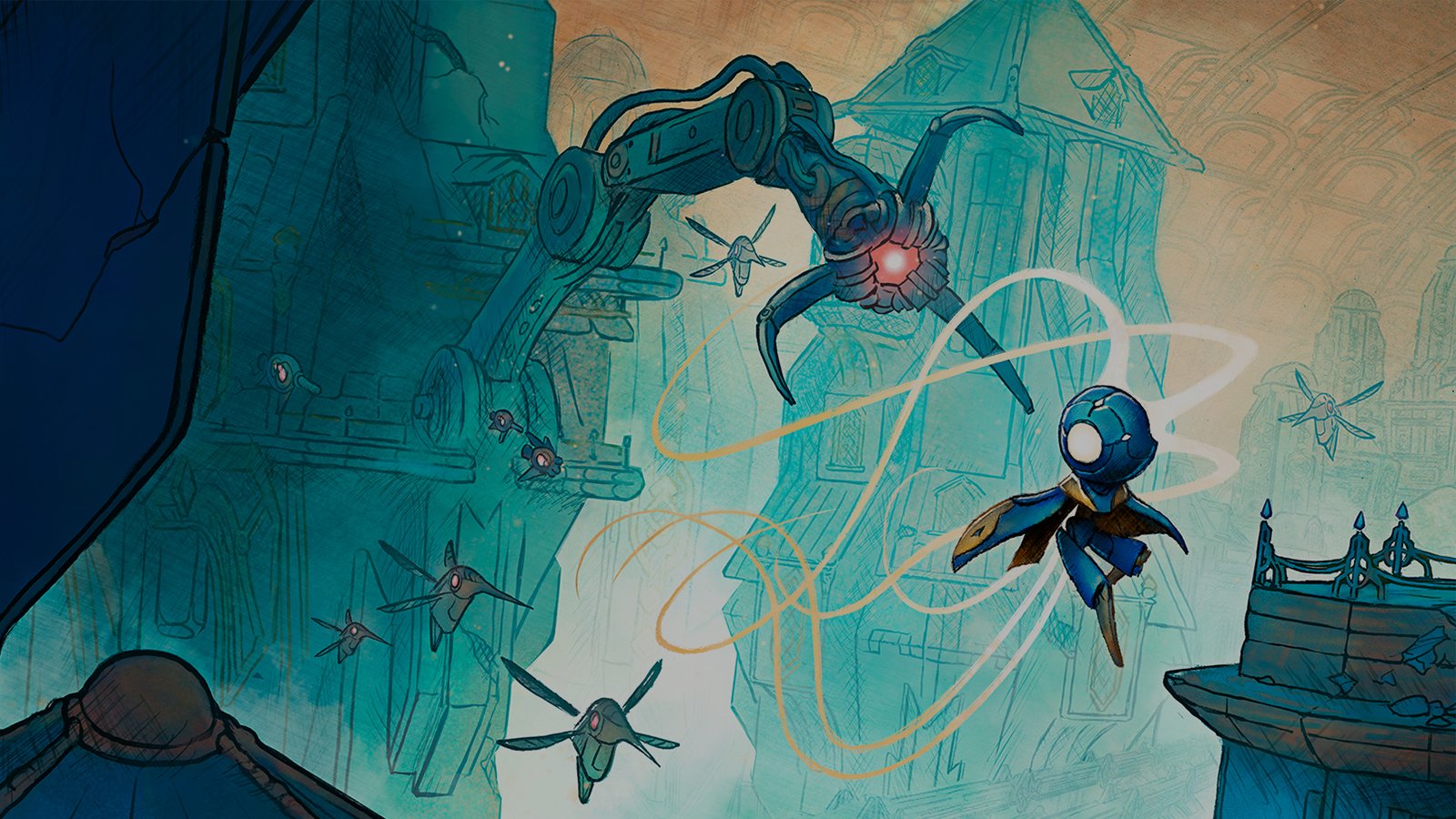
From the very second I saw MIO: Memories in Orbit during Summer Game Fest, I was obsessed; I had to play this. As someone who is admittedly worn out on the Metroidvania genre, given that most often fail to provide anything meaningful to allow them to stand out, Memories in Orbit looked to welcome me back with a warm hug, given the gorgeous visuals, adorable character designs, and the almost cozy atmosphere. What I wasn't expecting was the Celeste-like platform challenges, which would be absolutely ideal, if not for an inconsistent mechanic that fuels almost all of the game's traversal. Regardless, MIO: Memories in Orbit is a stunning Metroidvania that is begging to be explored, but will test you considerably.
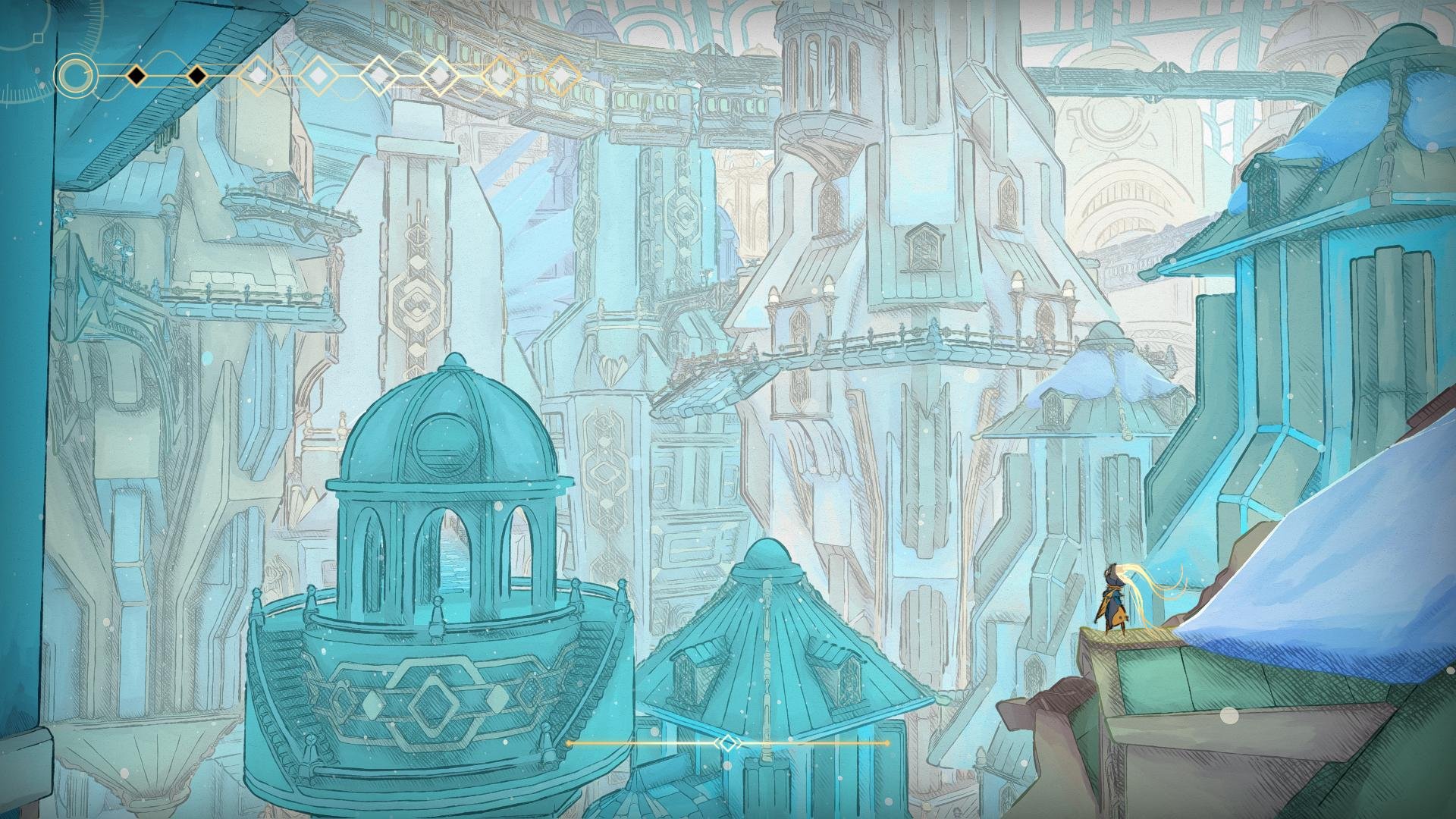
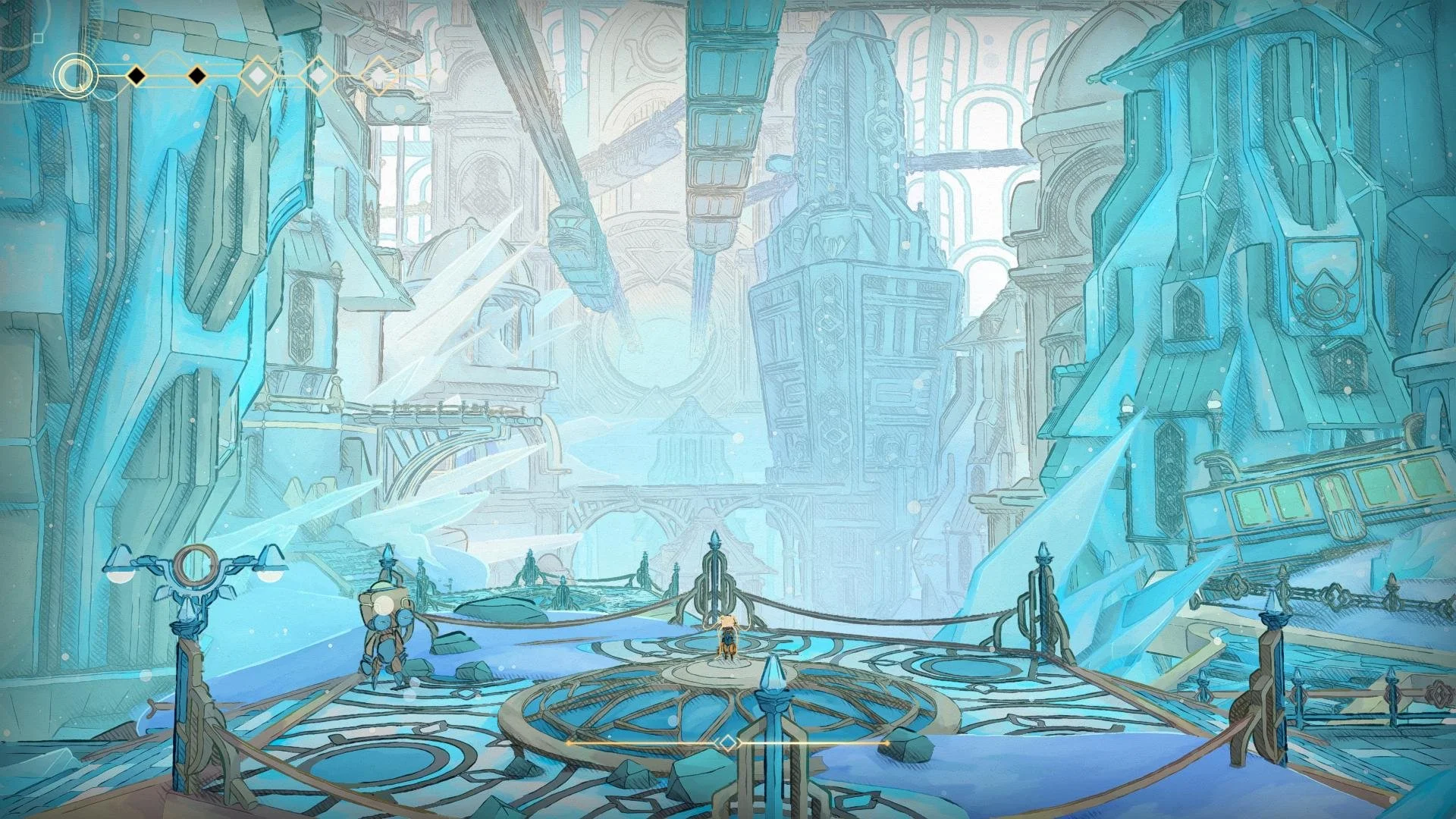
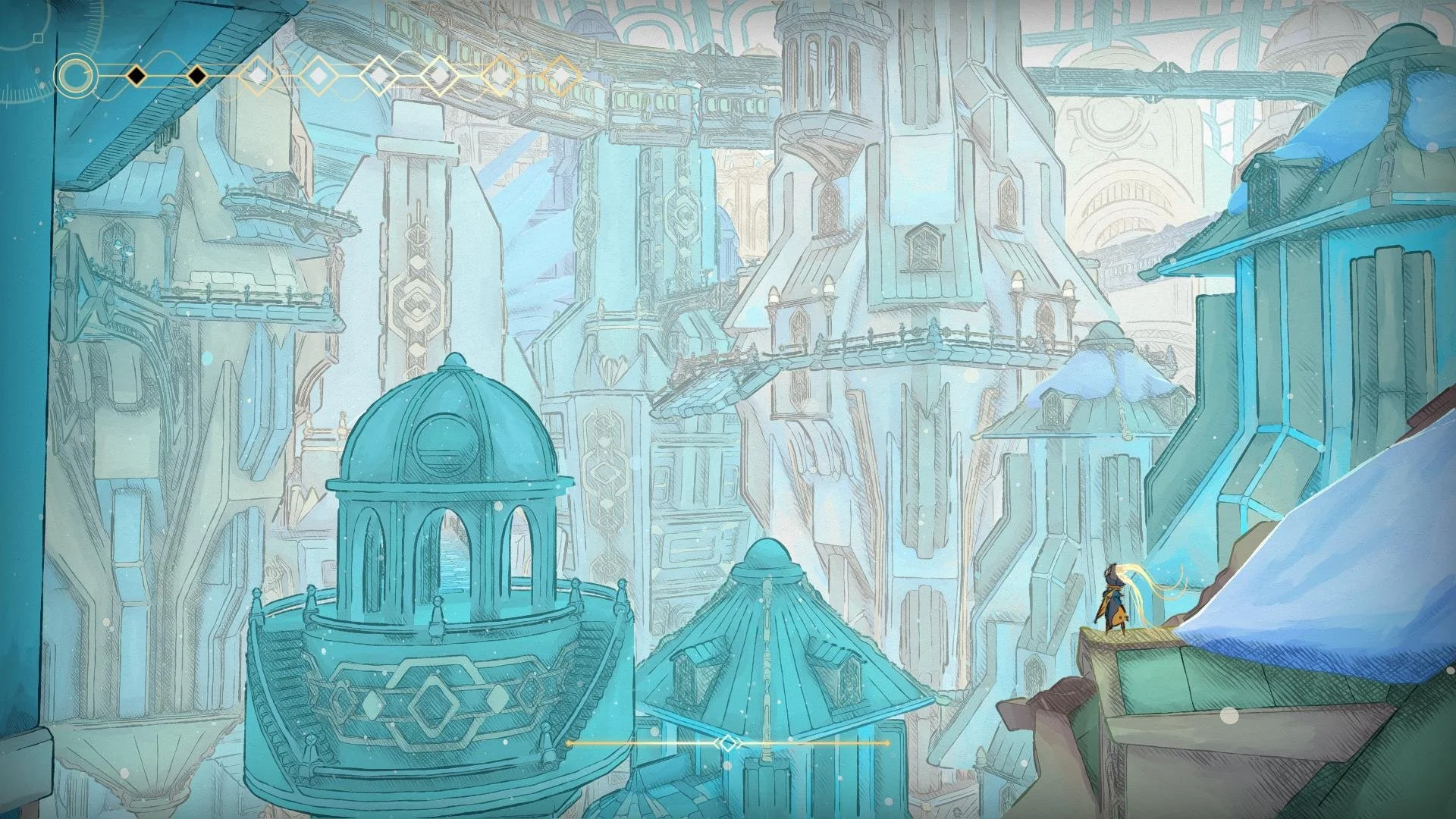
Throughout the 25+ hours I've spent with MIO: Memories in Orbit, I adored venturing through its haunting hallways, claustrophobic and spacious environments where vegetation and decay have clearly taken over, to exploring a vast frozen city that once was a thriving metropolis. These environments are the many parts of a robotic vessel that once was alive and engaged with its inhabitants, providing them with warmth and a place to call home. However, As its caretakers have mysteriously vanished, its many pieces have fallen into disarray, forgotten and abandoned, left to time. Its people; forgotten. In fact, it reminded me a lot of Nowhere, the head from Guardians of the Galaxy, where it was once this powerful being and is now home to millions of its inhabitants.
MIO: Memories in Orbit also brings with it important themes and philosophical questions as to how we perceive life. It also begs the question: what is a soul, and what qualifies as one, and how do we choose to accept ourselves as we are despite not knowing those answers. While Nine Sols followed a similar thread, they arrived at their answers, or what they propose to us anyway, at different ends of the same questions. While some players may skip over what the story presents to us, or Mio’s journey in of itself, and focus solely on the gameplay, the beating heart of this game is its ability to convey such deep messaging in a near flawless manner, making this journey one of hope and the drive we find in ourselves to understand who we are, and what we are capable of.
A great deal of the story is handled through countless moments of environmental storytelling, the little remarks of the cute robots that fill the empty halls, the supporting cast in Shii, Mel, and a few others, that color the story in their own perspective. You'll also find journals to discover what happened years ago, to small side activities that aid in helping those around you, such as reuniting a pair of robots as one has gone missing on an expedition. One particular quest helps flesh out your shopkeeper while also contributing to more items being for sale. It creates this relationship with the character that is truly felt in one particular moment that really amped up the storytelling on display.
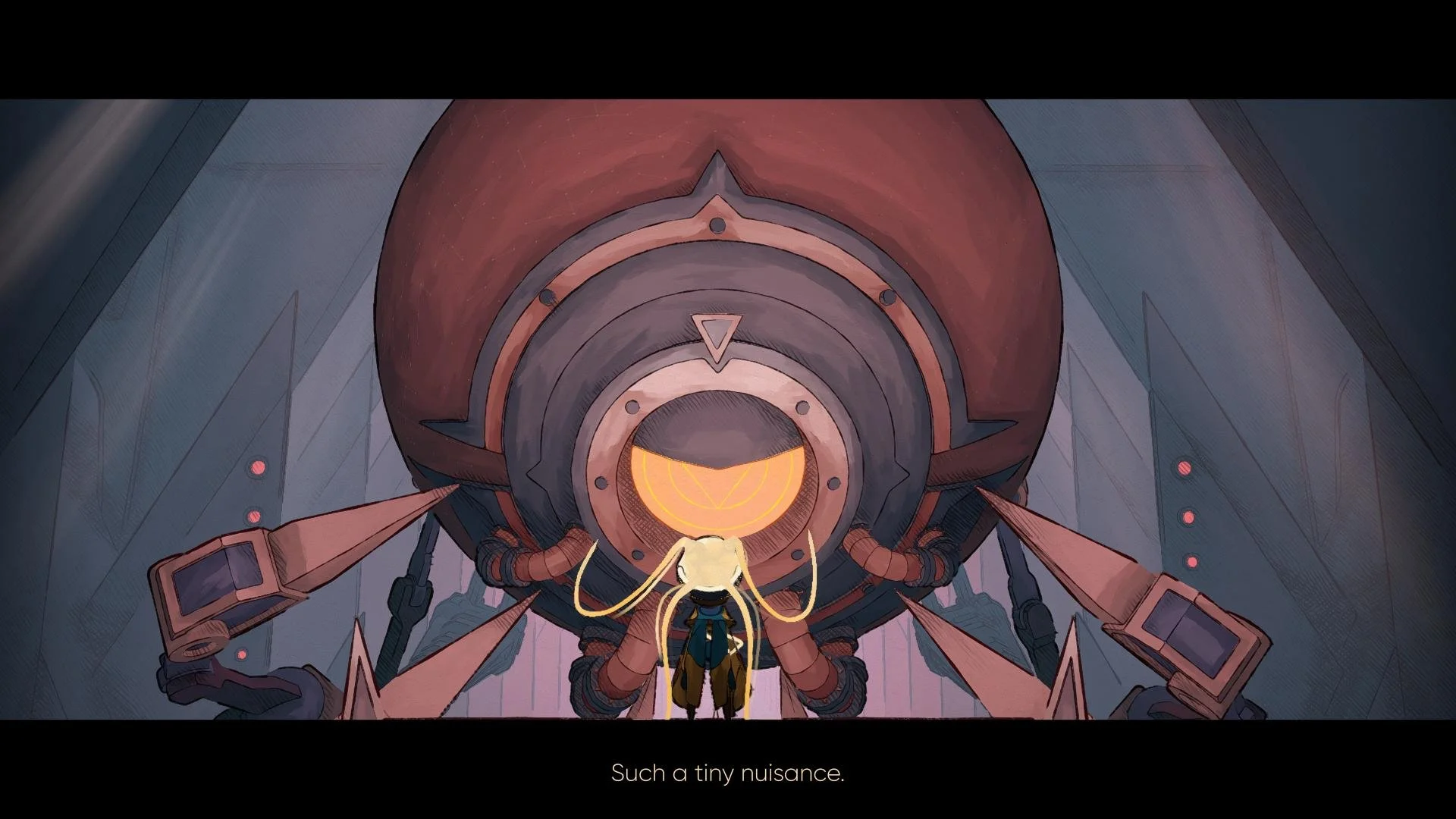
As you attempt to discover the fates of these caretakers, or ‘Pearls’, as the game refers to them as, you'll explore different biomes that suit who they are. As Mio, a small and agile robot barely as tall as to reach the knees of many of the robotic friends you'll make along the way, you'll explore this vessel to revive its fading memories and prevent it from shutting down, which would cause everything it is to cease to exist. And, as certain Pearls have their own agenda and objectives, Mio will need to return them to the central core, allowing the Vessel to once again thrive with life. This core also acts as your hub, a safe space to interact with those you've rescued along the way.
Like any good Metroidvania, you'll progress in a fairly linear order as you continue to unlock additional zones, gain new abilities that allow traversal to areas once out of reach, to activating decaying elevators, break through obstacles, and create new shortcuts and pathways that make travel faster. While there is fast travel, you have to find each checkpoint’s overseer host, an almost phantom-like being that wraps around you and the checkpoint in a warm embrace.
Each area somewhat represents the qualities of each Pearl. The heart, which pumps blood around the body, is an environment that is filled with powerful windgusts, propelling you around as you find comfort in the exchange. The Hand, which is a vastly more complicated zone than the rest, is meticulous in its detail, with machinery present across each stunning location. And, when you first visit this area, you understand why it suits the hand so perfectly.
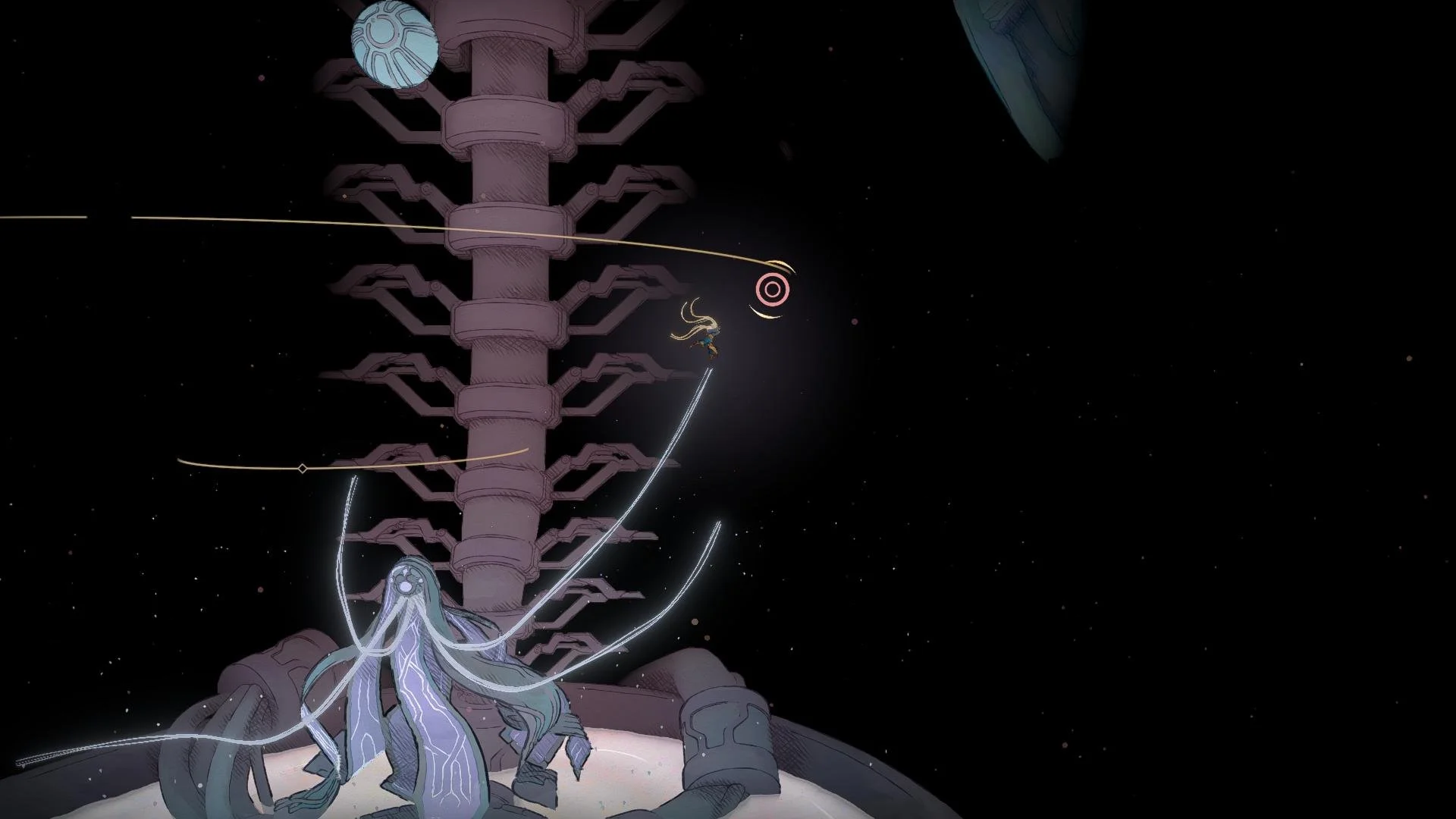
Mio, while small and unimposing, has spirit and the drive to address the failings of this vessel and is something they are tasked with rectifying. They will gain abilities and perks to assist with their journey as they encounter help from those around them, such as how you inherit new skills. You'll gain specific abilities in each location, from being able to scale walls, using the hairpin grappling hook, the glide, and a powerful blast to break those impenetrable barriers. Each skill is required to master as you use those abilities to traverse to new areas and navigate their dangers. Each skill uses a single energy bar, only refreshed when Mio is on solid ground or comes into contact with objects and enemies whose destruction recharges your energy. So, balancing between gliding and scaling walls and the ceiling becomes a constant management of that resource.
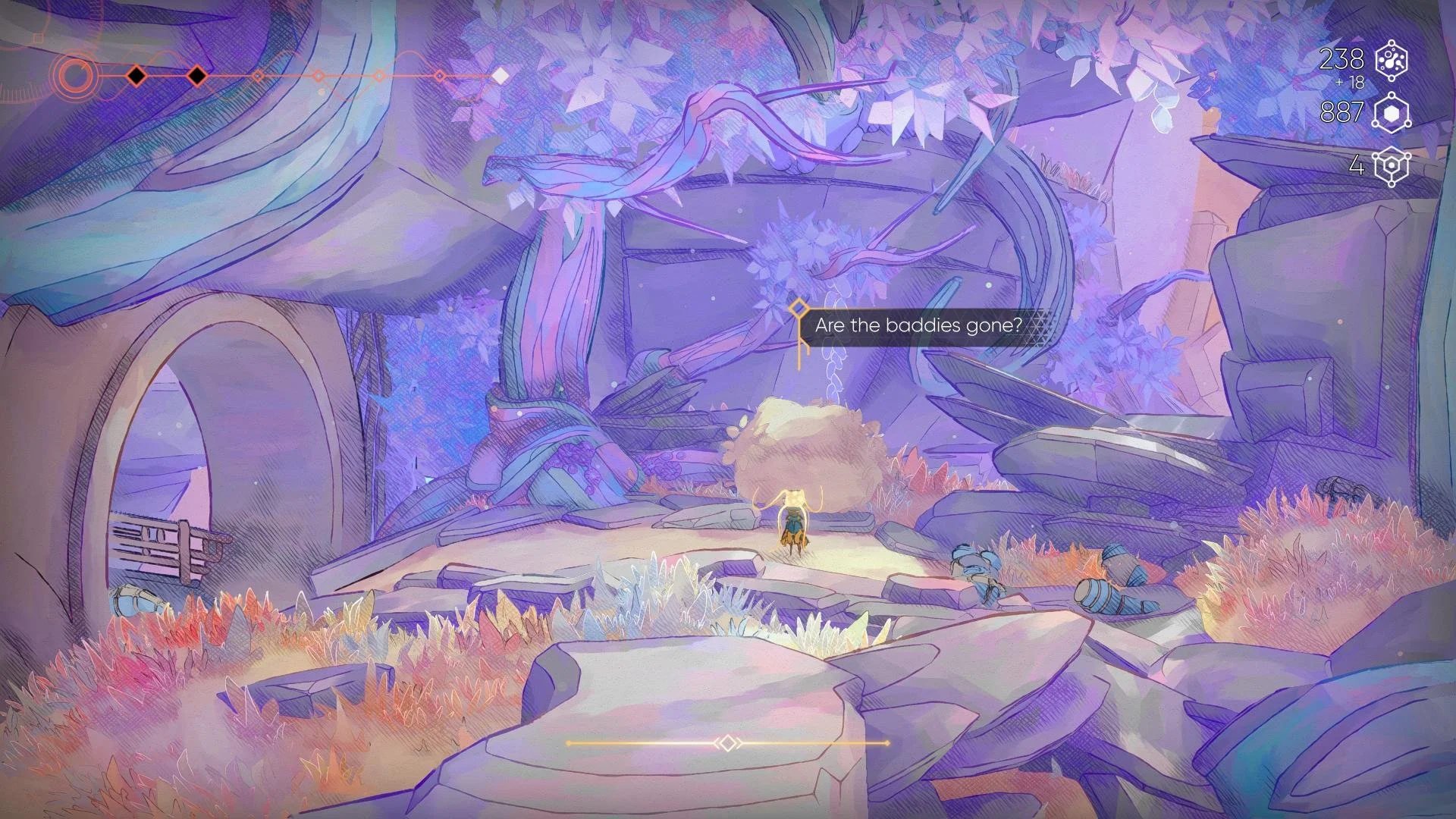
Combat is about the only system that falls short of the depth added to many of the game’s other systems. You generally just have the basic attack, which is directional, based on how you attack. There is no heavy attack, and while the hairpin can be used in combat, it isn't as effective a tool as you'd want it to be. I do wish Mio had access to possibly new weapon types, even if it was as simple as one heavy slash, a basic slash, and a ranged option. While there are skills that aid in making the end of your combo do more damage, it isn't enough to make combat feel fresh from encounter to encounter.
Apart from your earned abilities, you'll be able to equip a multitude of perks to Mio, such as additional health, more powerful attacks the closer you are to death, to even such things as providing enemies with a health bar. These perks utilize space within Mio's skill set, costing anywhere from 5 units to 40, with Mio unlocking more space as you engage with Mel, the shopkeeper. This system keeps their skills in check and allows you to make partial builds, even if the system is thin on making entirely unique combat options.
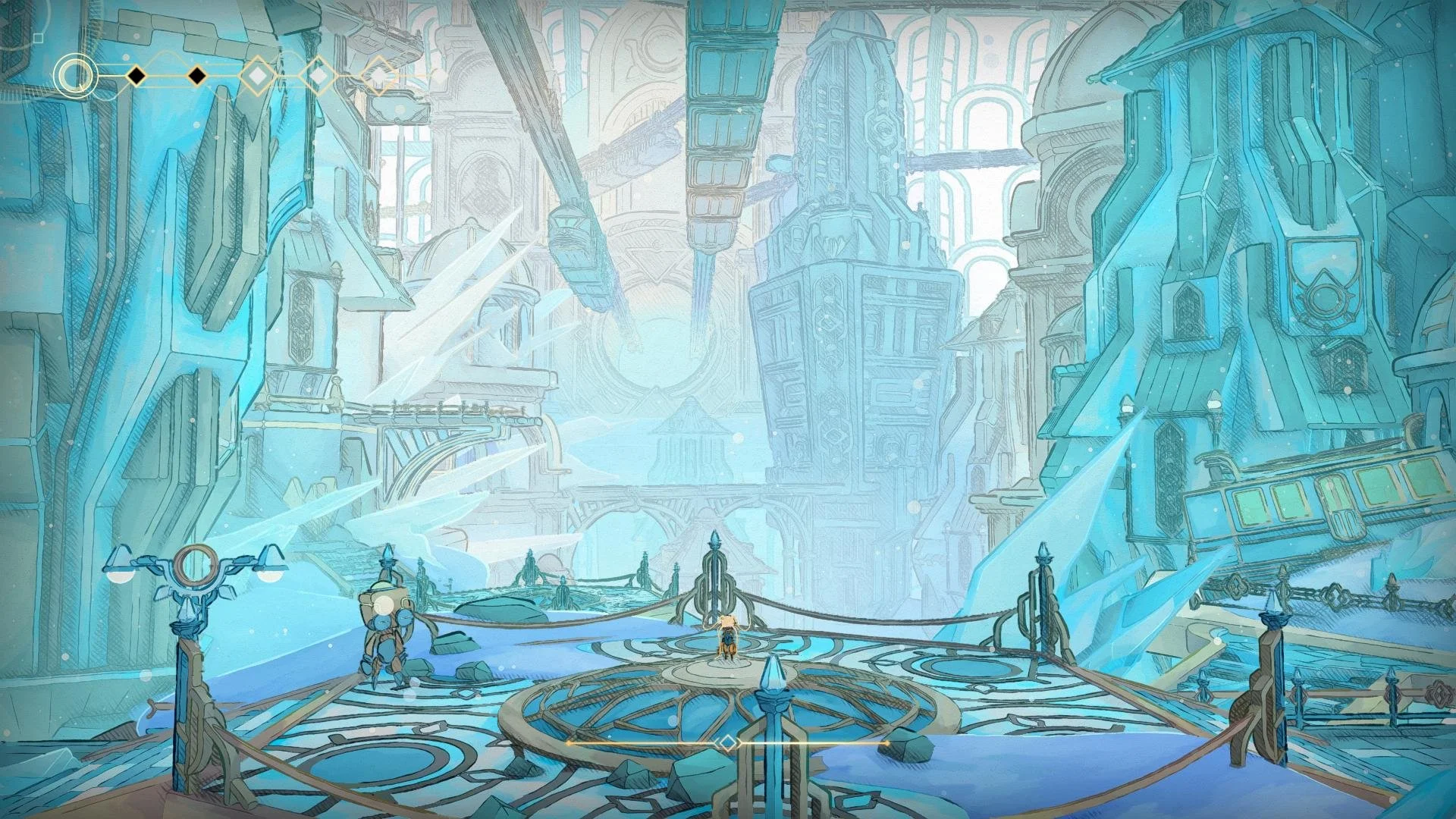
The aforementioned abilities work well to aid Mio in traversing this long-abandoned vessel, at least most of them. You'll have a double jump to start off, as well as a glide to cross large gaps. Late in the game, you'll unlock a punch that uses the grappling points to propel a phantom-like punch to then make the wall brittle. While an interesting attack, it felt barely used in the grand scheme of things. The ability to scale walls will certainly affect those with arachnophobia, as Mio's hair tendrils will crawl up walls and ceilings in a way that is very spider-like.
However, the most used ability in the game is the hairpin. This is a grappling hook that is used constantly, making it as essential as jumping. Nearly every platforming challenge requires it, and while much of its use is crafted to absolute perfection, the mechanic is wildly inconsistent, resulting in hundreds of failed attempts and nearly as many deaths. There are times where you'll miss the grappling point despite clearly aiming it correctly, to the times where it just won't connect, yet being well within range. If the hairpin was patched to be more reliable, then one of my biggest faults with the game would be addressed, and you could tack on a full extra point on the score. However, as it is, it's a mechanic I simply couldn't trust to be there when I needed it.
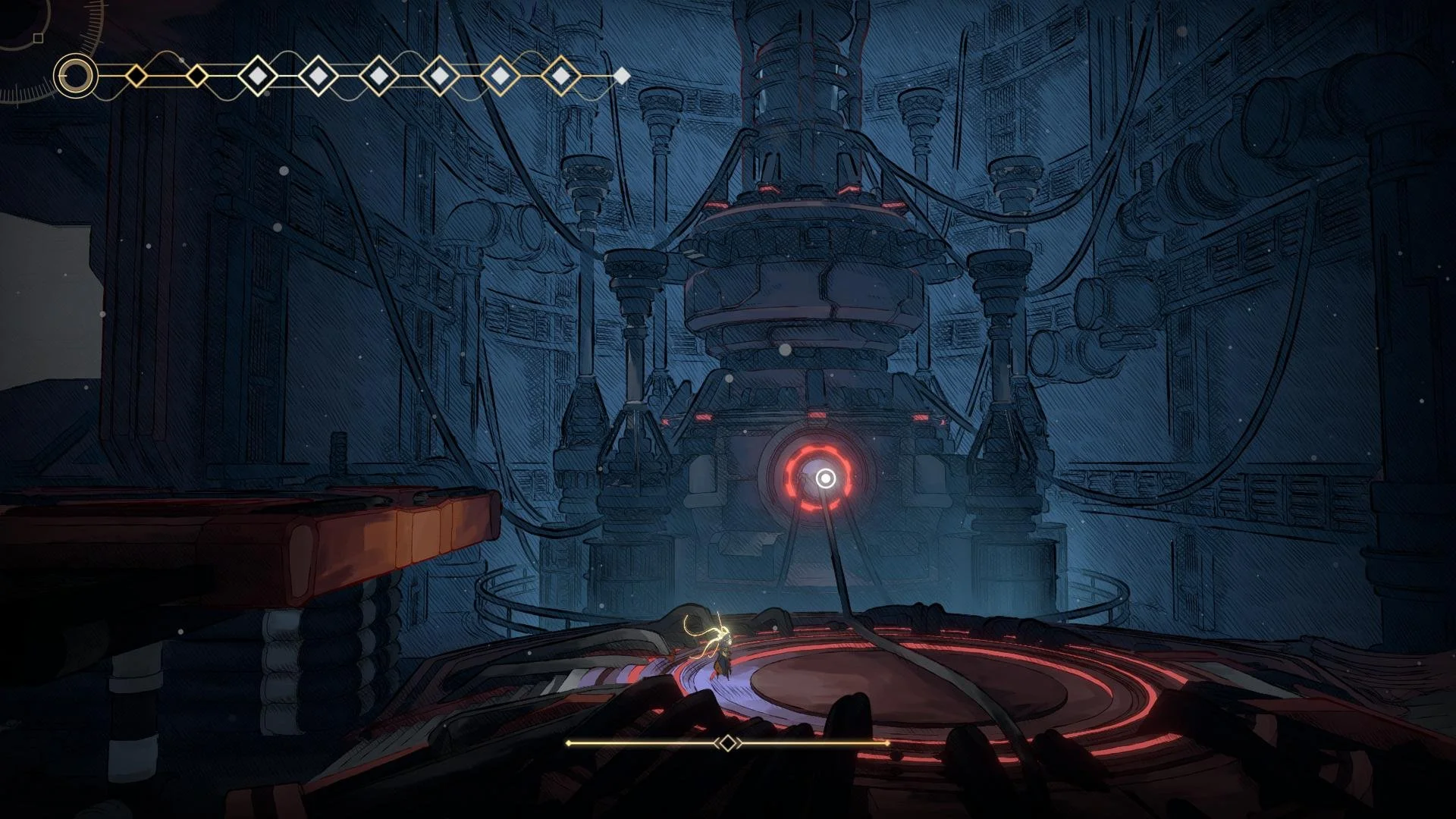
The hairpin needs to be attached at a certain angle to get what you want out of it. If you need to slingshot up, you hook from the bottom and propel yourself upward. Sometimes you'll need to use the same point at different angles to get where you need to go. I don't mind the reliance the game has on this mechanic, but as mentioned, these moments are not tense due to their difficulty or challenge; they will have your anxiety flaring up because you likely will see the hairpin fail and know it is not your fault.
Everything else, in regards to moving around the world, feels good. Jumping, double jumping, and crawling around with the wall climb ability is completely sound. Combat, while extremely basic, works, and while Mio’s range isn't terribly far, you do have a fading dodge that gives Mio a brief second of invulnerability, which has a great timing to it and works extremely well here. Some Metroidvania titles favor one or the other, and here, Mio simply feels great to play.
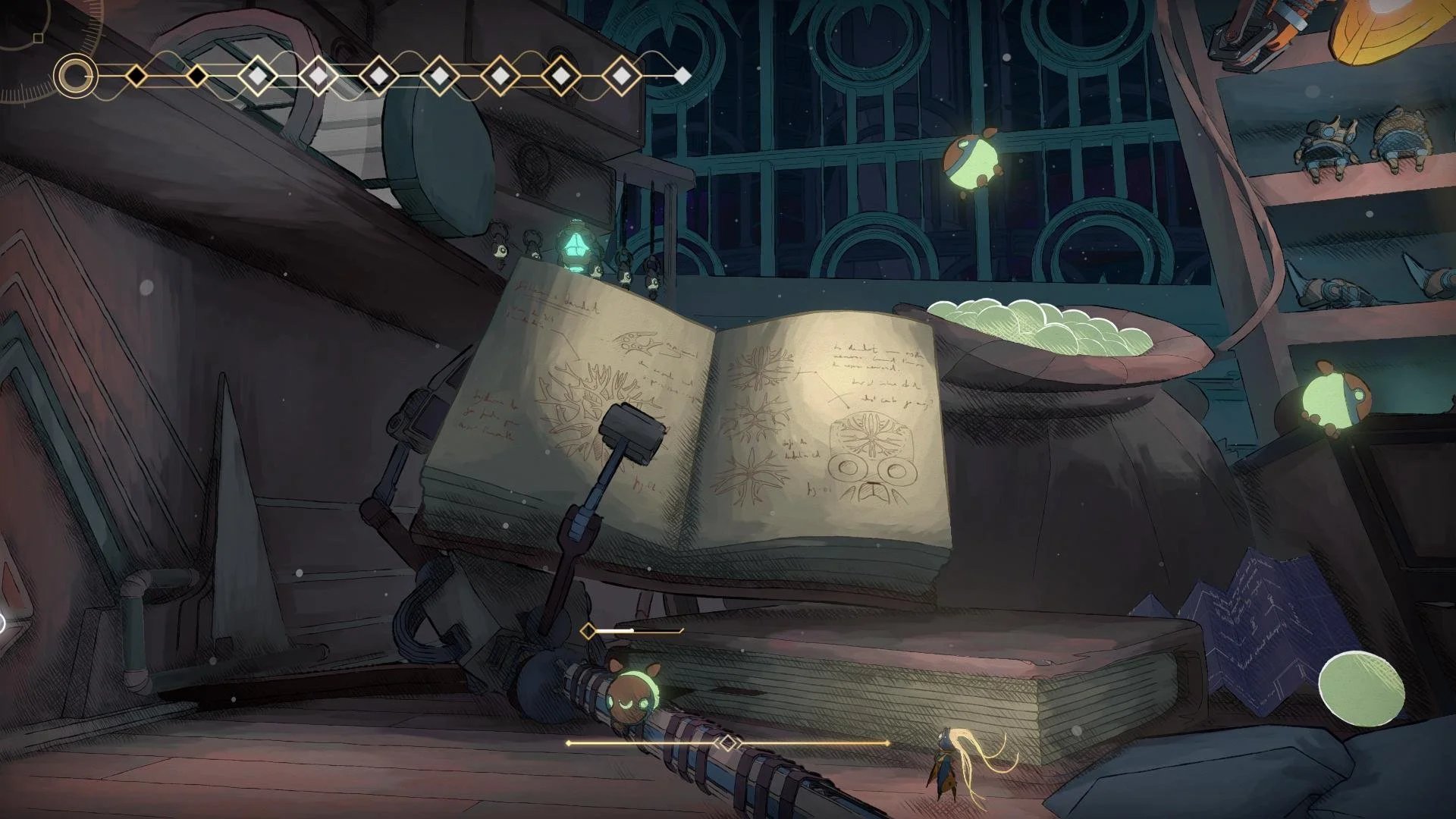
Bosses are also a big highlight of the genre. Thankfully, Mio does have a few standouts, but several that are only decent at best, if not extremely run-of-the-mill. There is a chase sequence boss that is well crafted, but the main issue with bosses is that several of them are far too easy, often relying on patterns that repeat far too often. The tunneling slug, for example, has only a few basic moves, and once you figure them out, likely on your first or second attempt, they are a cake walk after. While this isn't true of all bosses, most are well done and offer up just the right amount of challenge.
While bosses and enemies can be dealt with by various means, there is one aspect of harm that comes to Mio that I simply can’t fathom why this occurs whatsoever. Occasionally, later in the game, Mio will suffer what seems to be some sort of mental attack. These are referred to as Tremors and cannot be avoided. The screen will go white, Mio will struggle to get up, and one of your health points will shatter, never to return. This is the one choice in the game that I cannot fathom why it happens, especially considering the effort it takes to collect the items to increase your health, let alone traversing the map to find those items in the first place. Imagine every time the blood moon appears in Breath of the Wild, Link would lose a heart container. It simply wouldn't serve to be anything other than a massive nuisance and likely would have led to intense discourse amongst fans, even more so than the game’s controversial weapon durability.
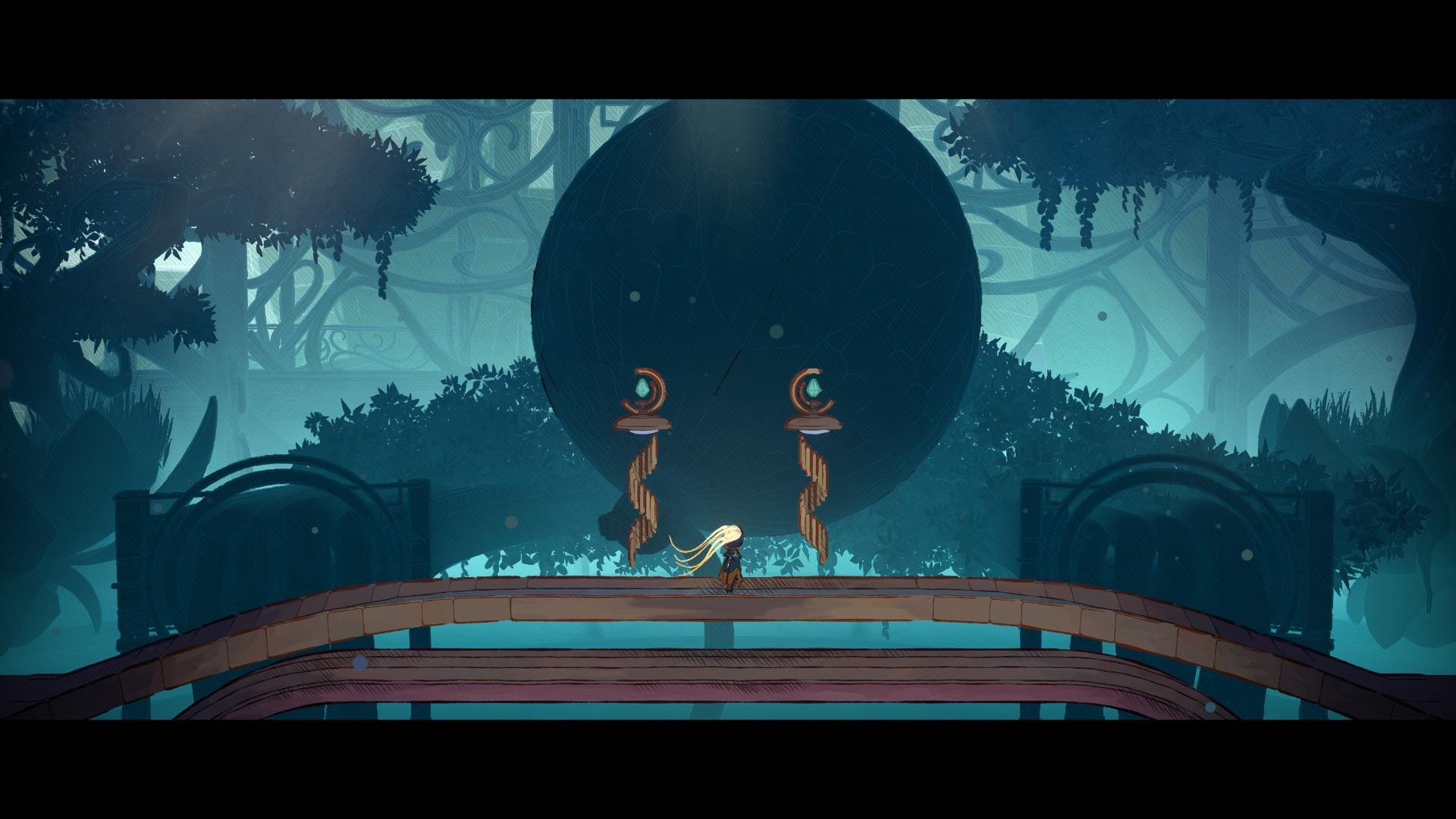
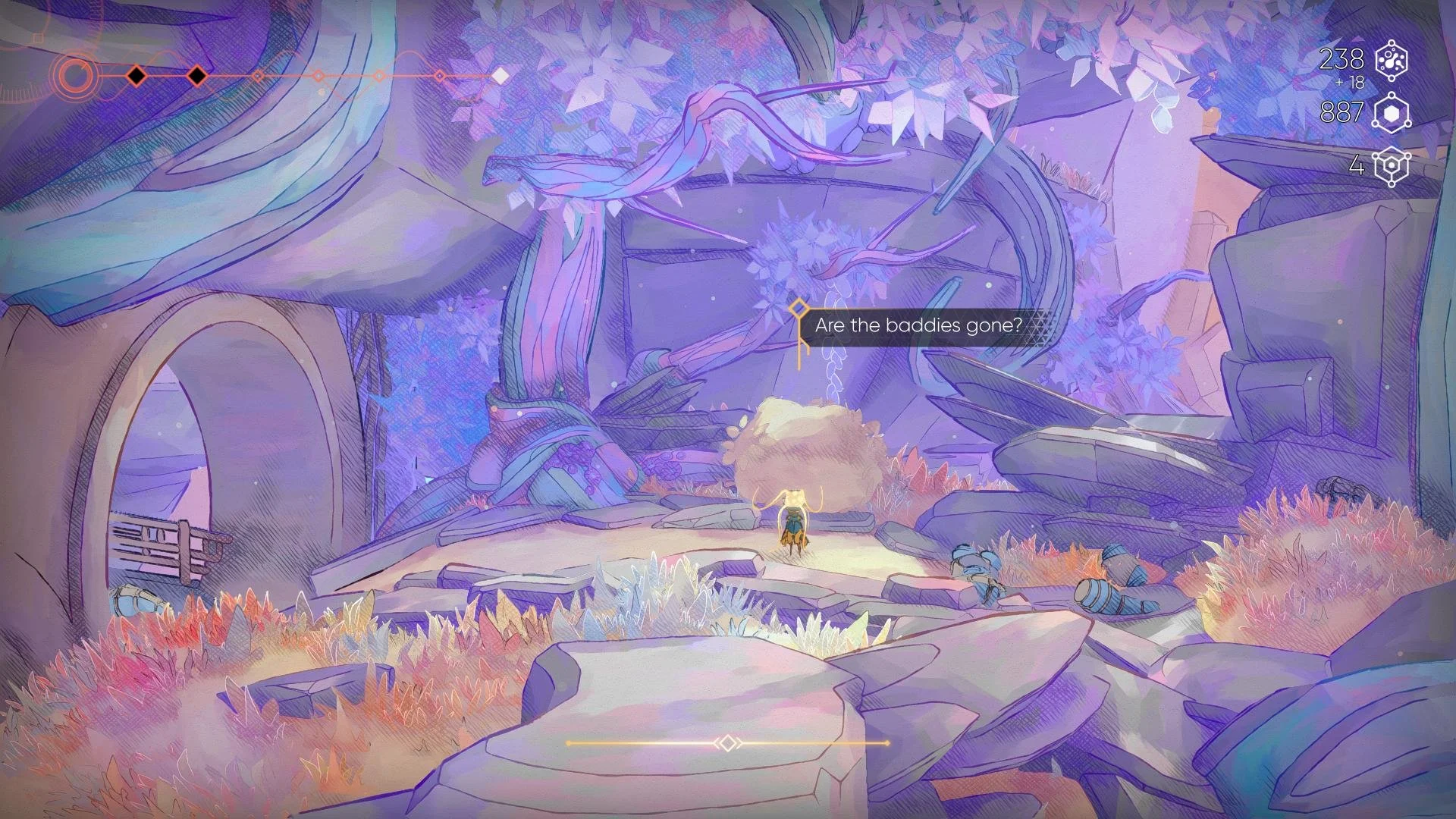
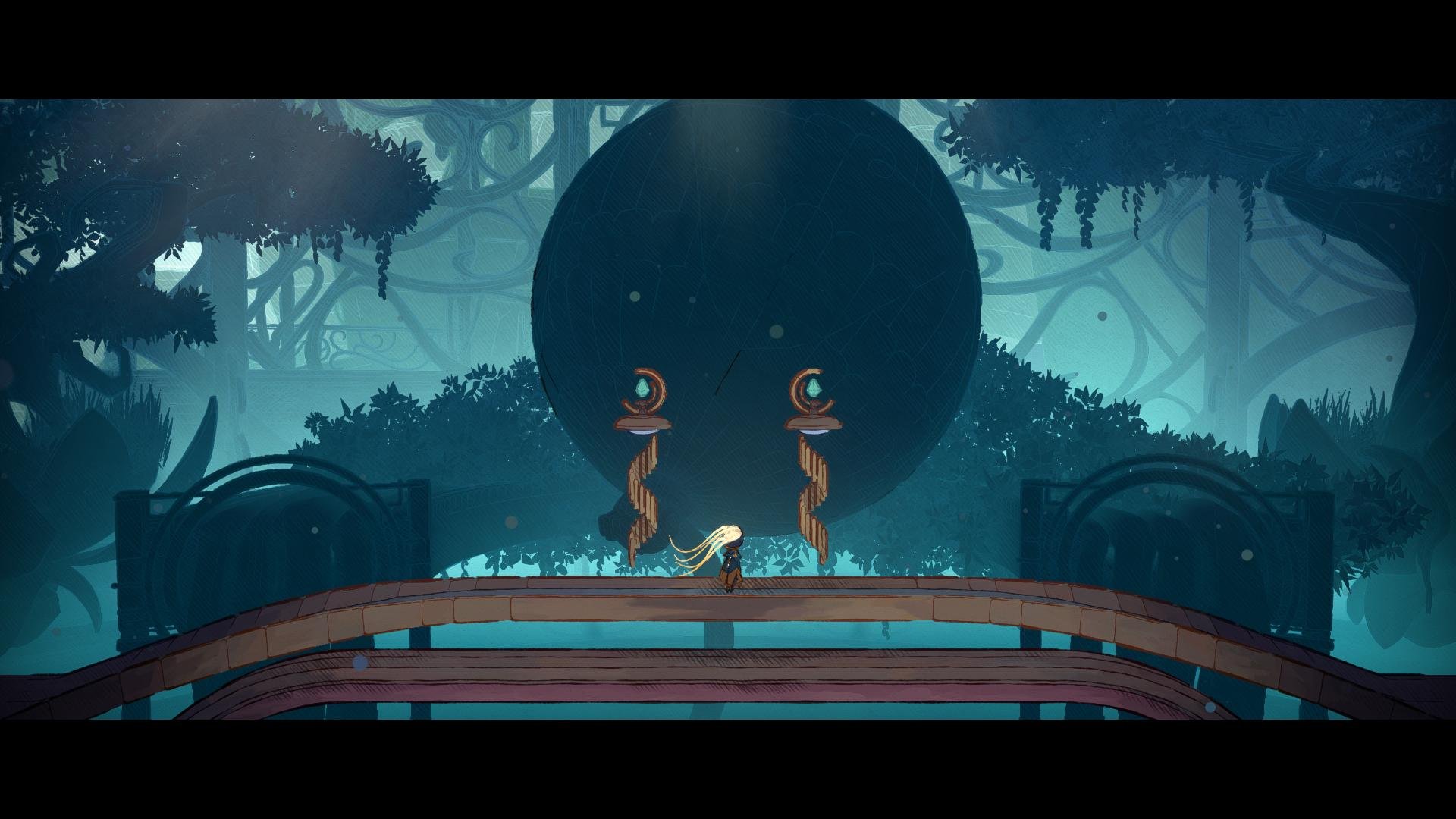
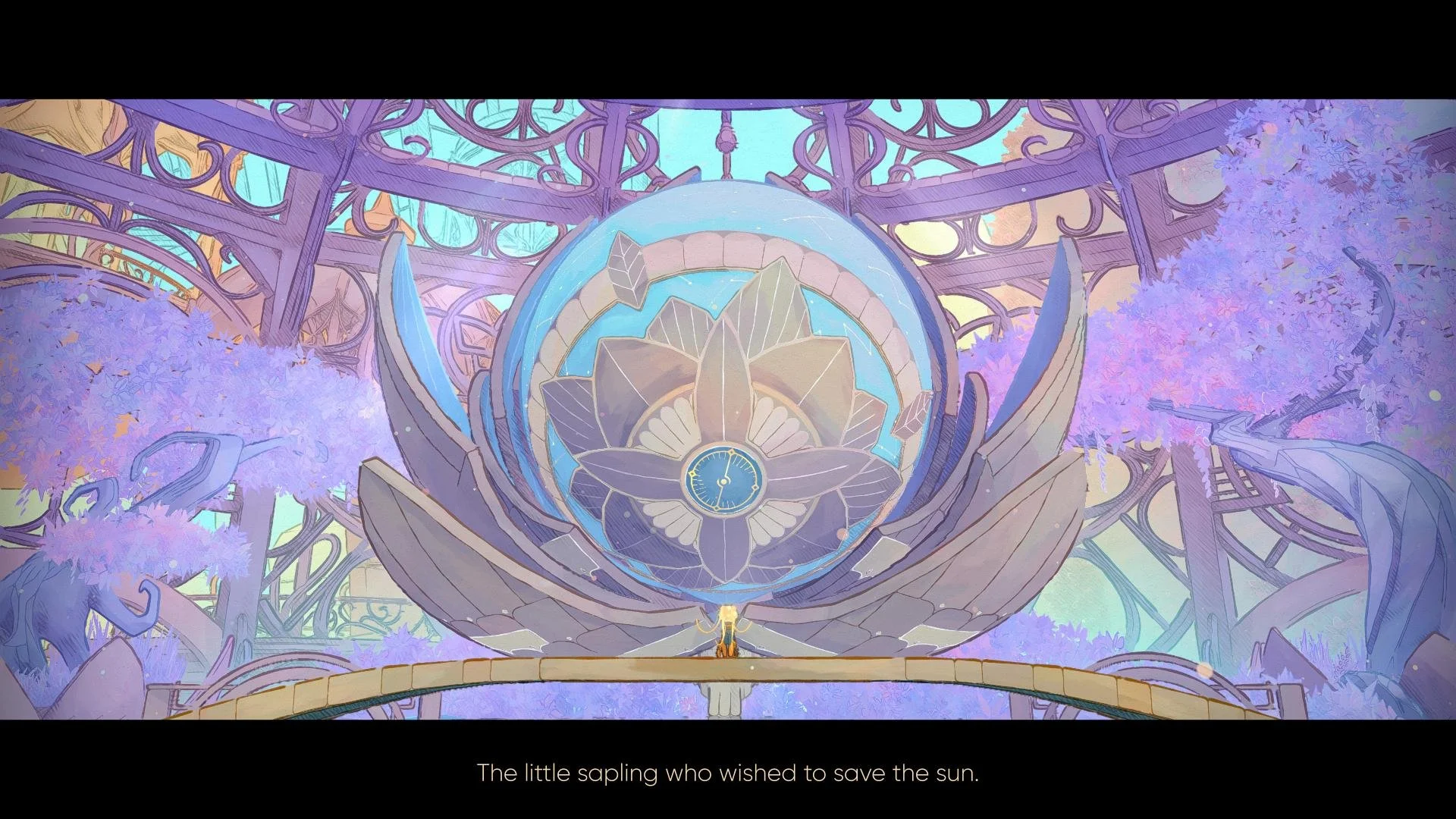
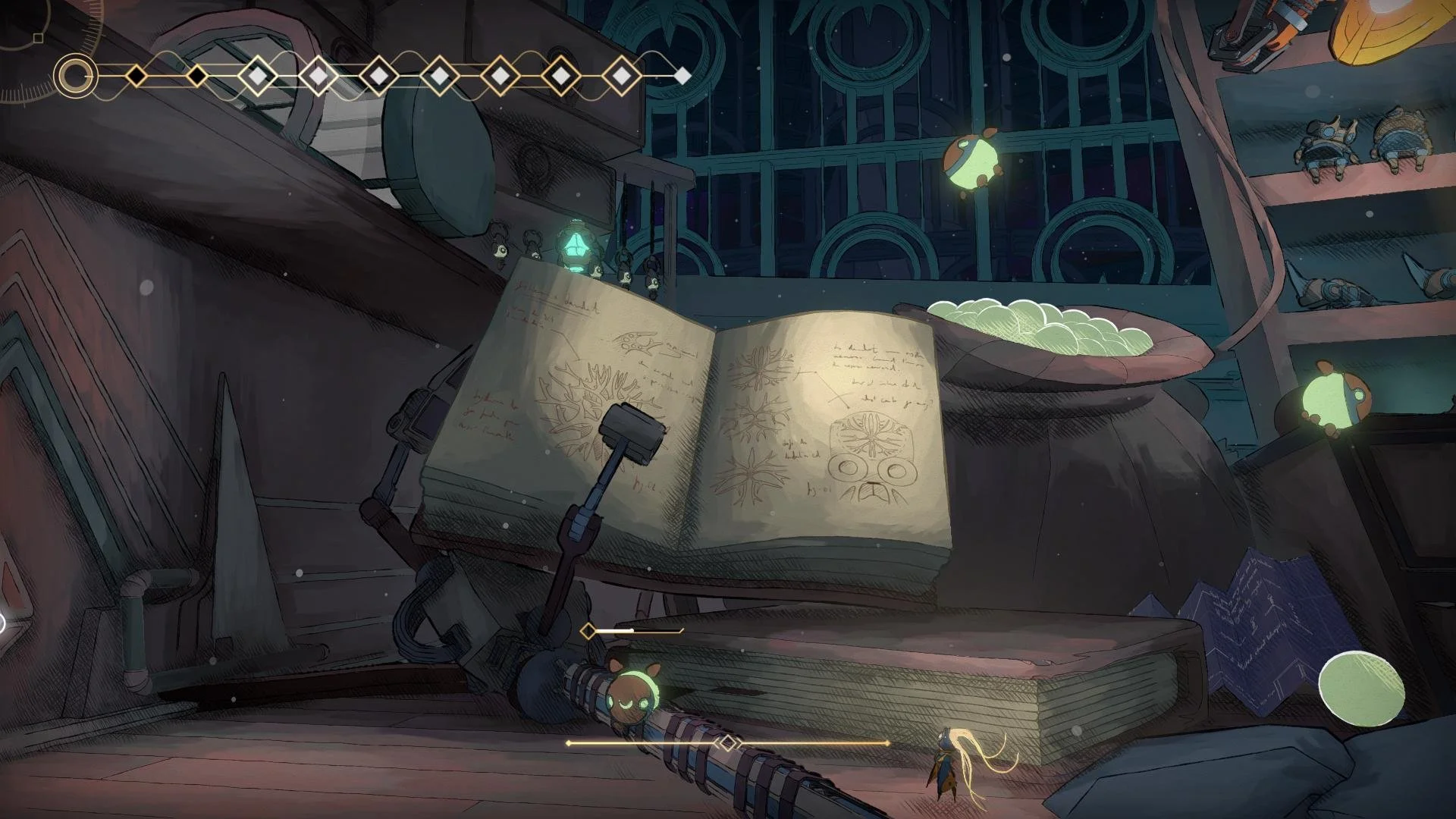
Memories in Orbit is visually one of the most interesting Metroidvania titles to ever grace the genre. Simply put, nothing looks like this. The game has an almost sketchbook quality to it, with scratch lines and fading elements contributing to what is one of the most visually interesting games out there, brought to life with muted colors that allow the background to be just that. Mio is also wonderfully animated, and so many of the game's various elements fit extremely well here and everything coalesces in stunning fashion. Environments all vary from one to the next, yet hold true to the game’s aesthetics. The soft colors of the backgrounds ensure nothing is lost in combat encounters, as Mio and company all stand out, never feeling like you are lost in the chaos.
This praise is also true of the game's audio. This is already a contender for best music and sound of the year, and I wouldn't be surprised for it to be in our 2026 nominations at the year's end. The game has occasional bouts of voice acting, and it is more than serviceable. The sound also stands out, especially when playing with headphones on. The “tick tick” of Mio’s tendrils when crawling is pitch-perfect, as are the accompanying sound effects for combat and traversal.
Despite some poor choices and an unreliable mechanic, not to mention the annoyance that are the tremors, I still had a great time with Memories from Orbit, basking in its gorgeous visuals and memorable characters, and consider it as one of the better Metroidvania titles in years. That said, its issues are wildly apparent, and while they could be patched in the future, the title at launch is what it is, a fantastic game held back by some severe accessibility roadblocks.
Speaking of Accessibility…

MIO: Memories in Orbit has a few accessibility options, but suffers dramatically in making them really feel impactful. You have a setting that reduces the boss’s health upon each failed attempt, a pacifist mode that prevents enemies from attacking first, and a setting to cause a health pip to be added to your health if you stand still for a short period of time. However, none of these settings really feel like they contribute to making the game accessible.
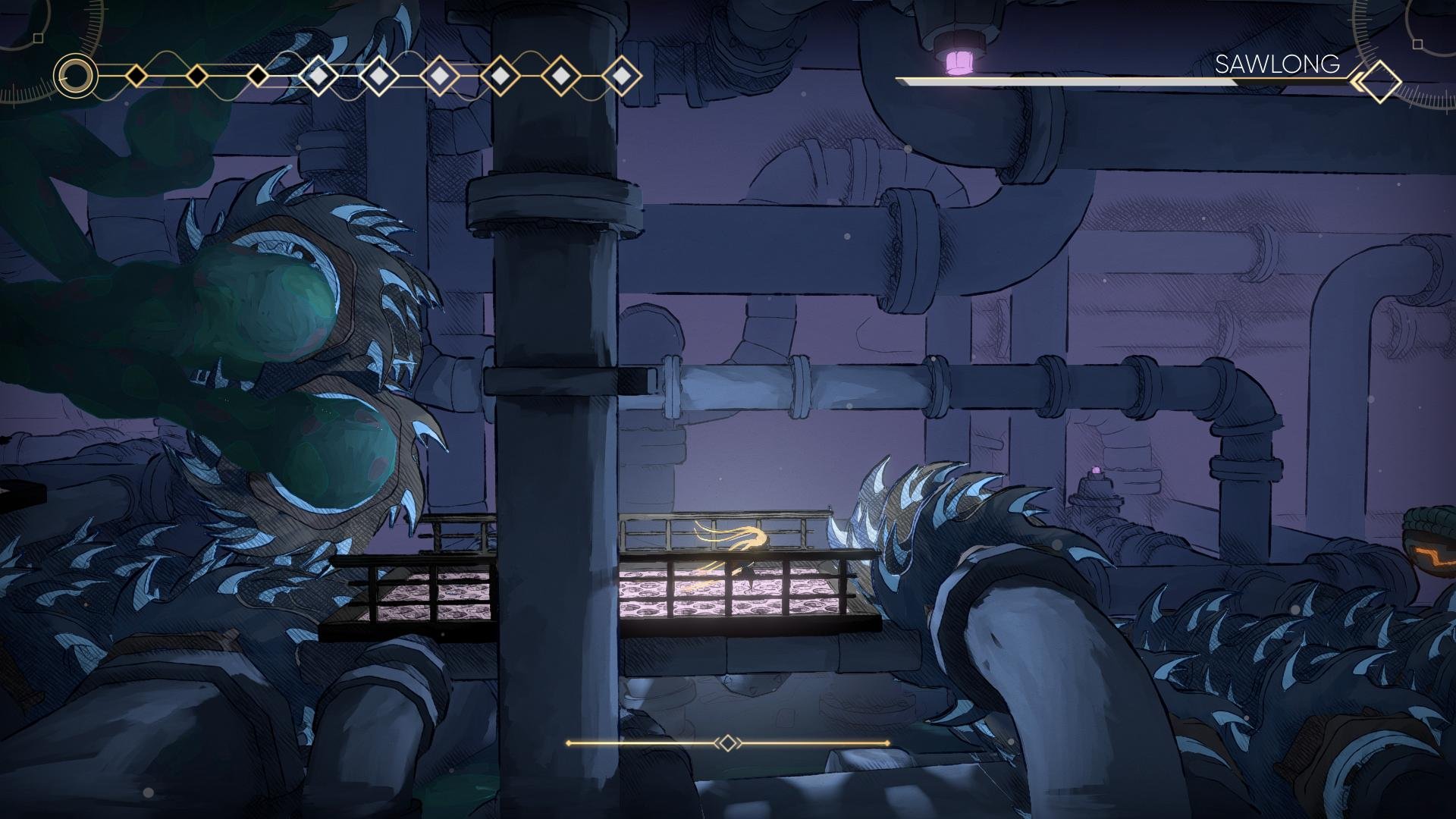
I’ve had discussions with another reviewer on the title about the game’s failure to really make this game functional with anyone with any sort of dexterity issues or those without split-second reaction time. Encounters like Sawlong, a late-game boss, are fundamentally impossible for anyone with mobility issues in their hands due to a disability. The game lacks any sort of way to reduce the game’s speed, any sort of invulnerability options, or even a way to skip particular platforming sequences altogether. The aforementioned Sawlong encounter is a moment I could see some players opting out of continuing the game, despite being at the five-yard line.
As it stands, MIO: Memories in Orbit does not get a recommendation for those who have a mobility-based disability, especially those where it impacts their reaction and dexterity.
Developer - Douze Dixièmes. Publisher - Focus Home Entertainment. Released - January 20th, 2026. Available On - Xbox Series X/S, PS5, Nintendo Switch, Nintendo Switch 2, PC. Rated - (E 10+) Fantasy Violence and Mild Language. Platform Reviewed - Xbox Series X. Review Access - A review code for the game was provided by the publisher for the purpose of this review.
Jeff is the original founder of Analog Stick Gaming. His favorite games include The Witcher III, the Mass Effect Trilogy, Hi-Fi Rush, Stellar Blade, Hellbade: Senua’s Sacrifice, and the Legend of Heroes series, especially Trails of Cold Steel III & IV.