

Copy and Paste
Yerba Buena, which is Spanish for "good herb", is a trailing, aromatic herb (Clinopodium douglasii) from the mint family, native to the Pacific coast of North America. And, it's also the name of a small island in the San Francisco Bay, where the game, Yerba Buena, takes place. While I'm not convinced this is a good title for the game, as it doesn't really reflect the overall experience, it is that overall experience, on the other hand, that I'm not fully convinced about.
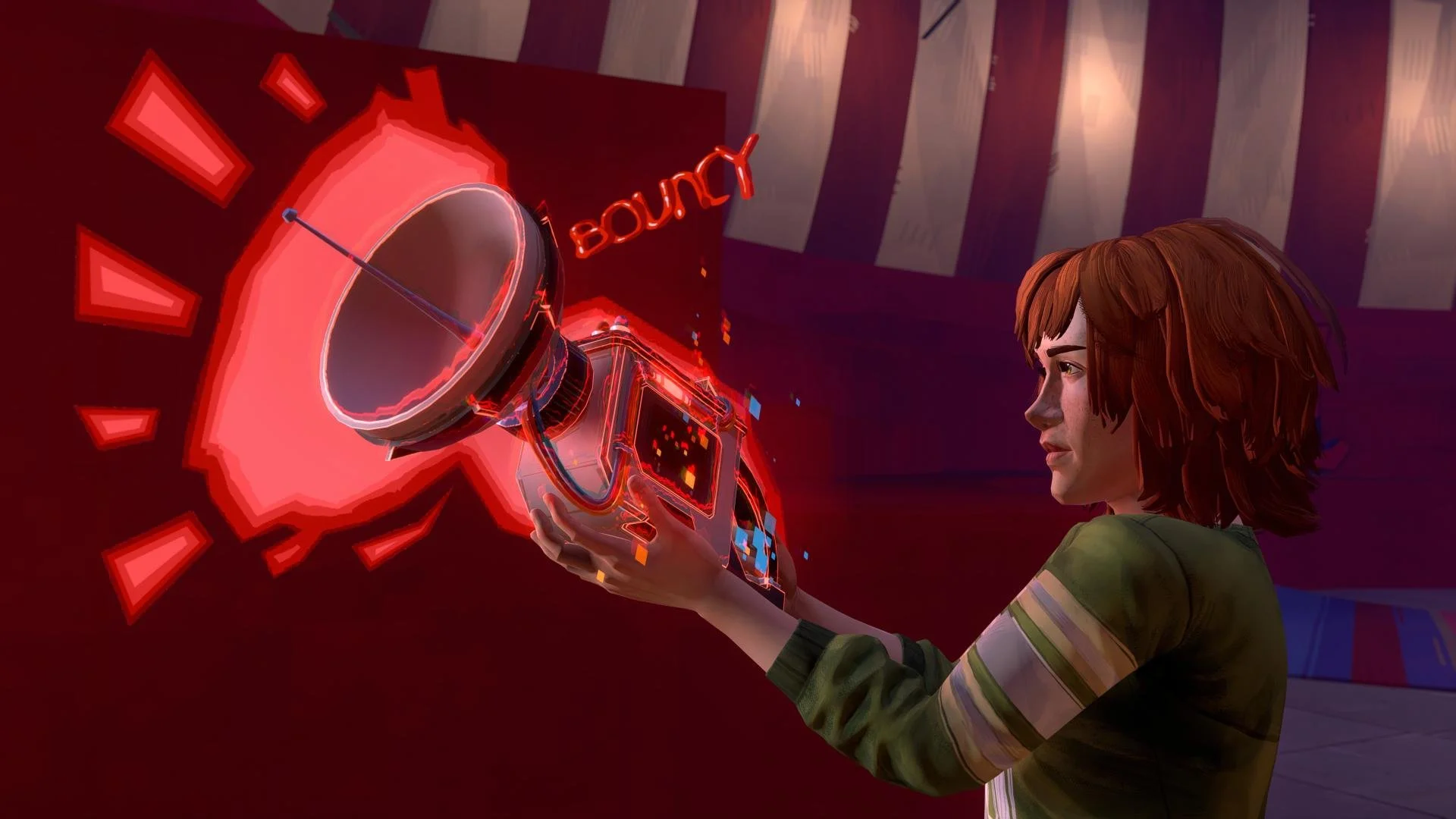
Yerba Buena, stars Barb, a seemingly normal woman who is between jobs, and feels largely aimless in life. She lives in Yerba Buena, and is friends with a few people, Russell, a taxi driver, Wanda and Jorge, who run a local convenience store, and Tee, who is a delivery guy who has been stuck in a T-pose all week. No lie, I thought my game was glitching when I met him.
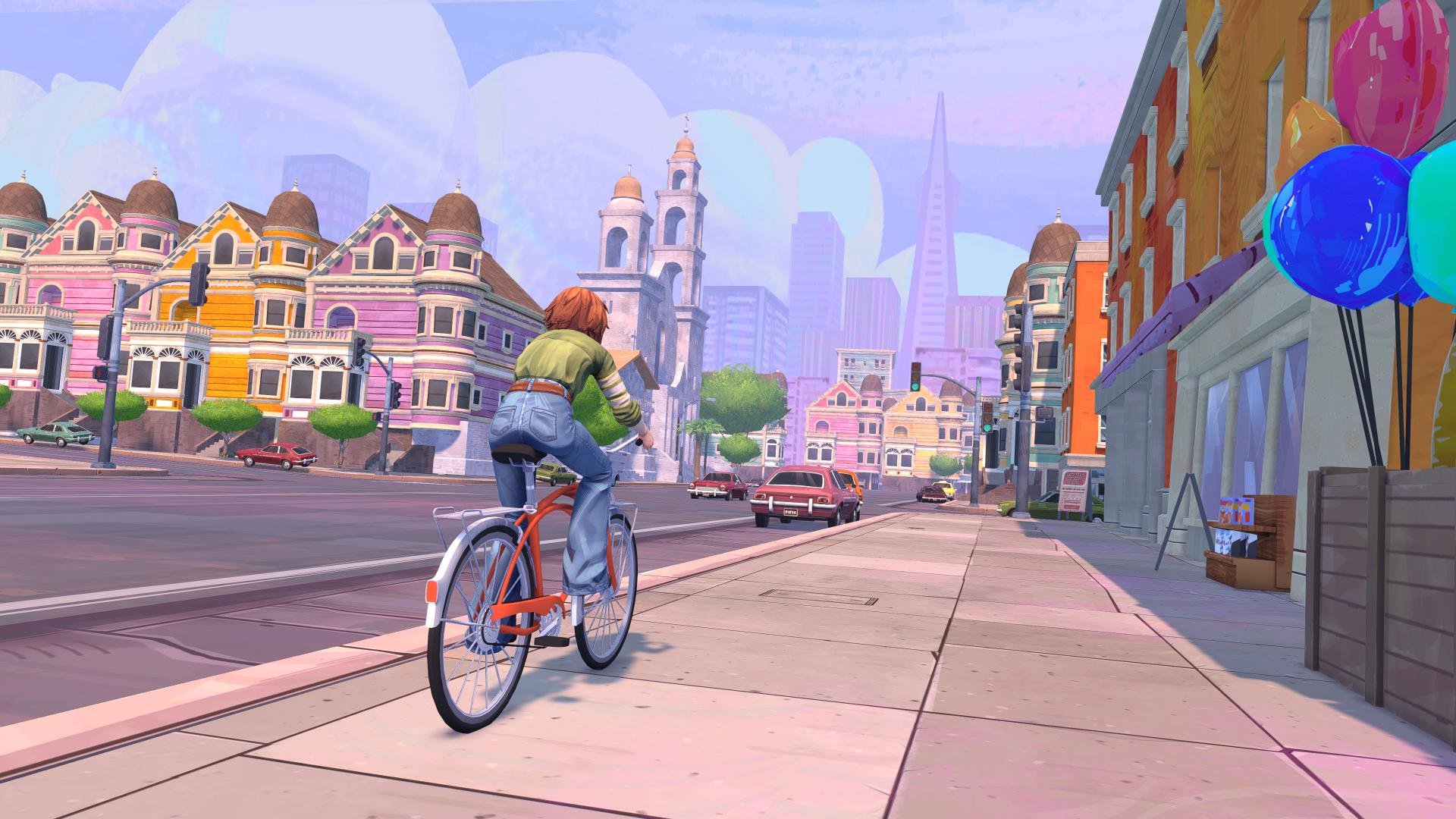
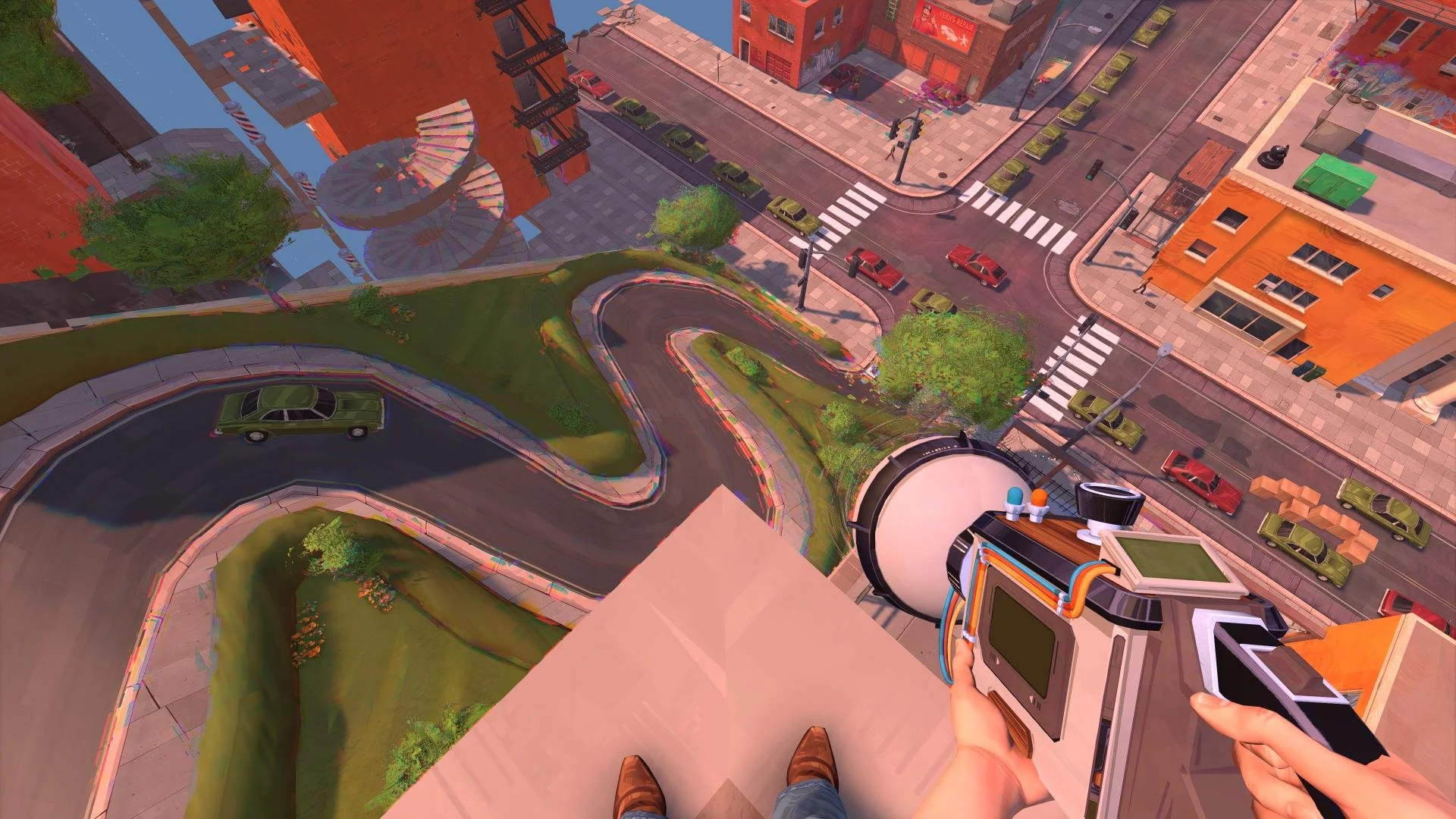
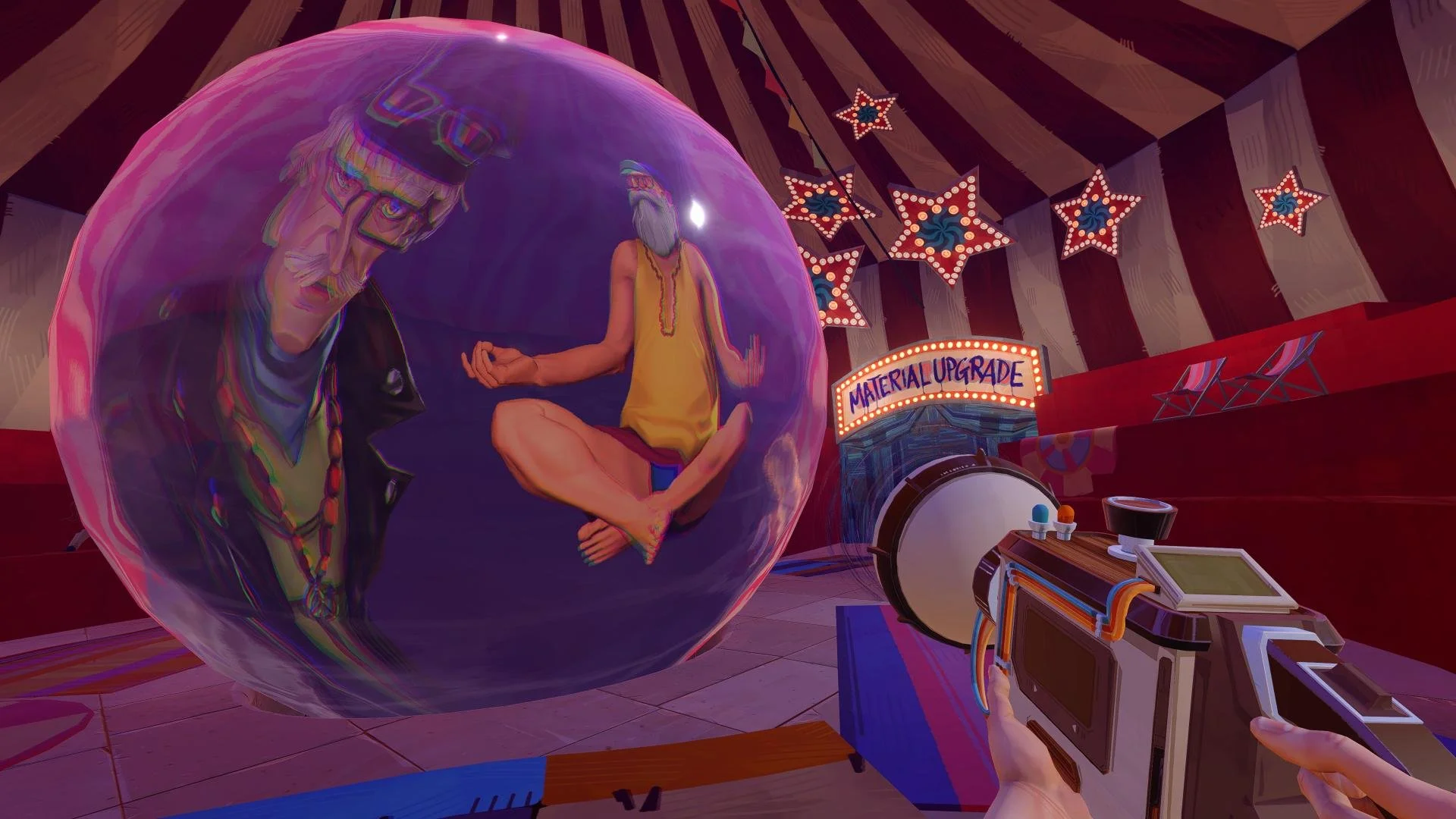
Off the bat, Yerba Buena has a strong colorful art style and characters that feel pulled from the era. Set in the 1970s, in San Francisco, there is a fairly decent attempt to convey the decade, but you rarely spend much time in the city for the era to really feel present. Most of the time is spent indoors or at an amusement park set in some sort of pocket dimension. In fact, in the case of the latter, if almost felt like half the game took place there.
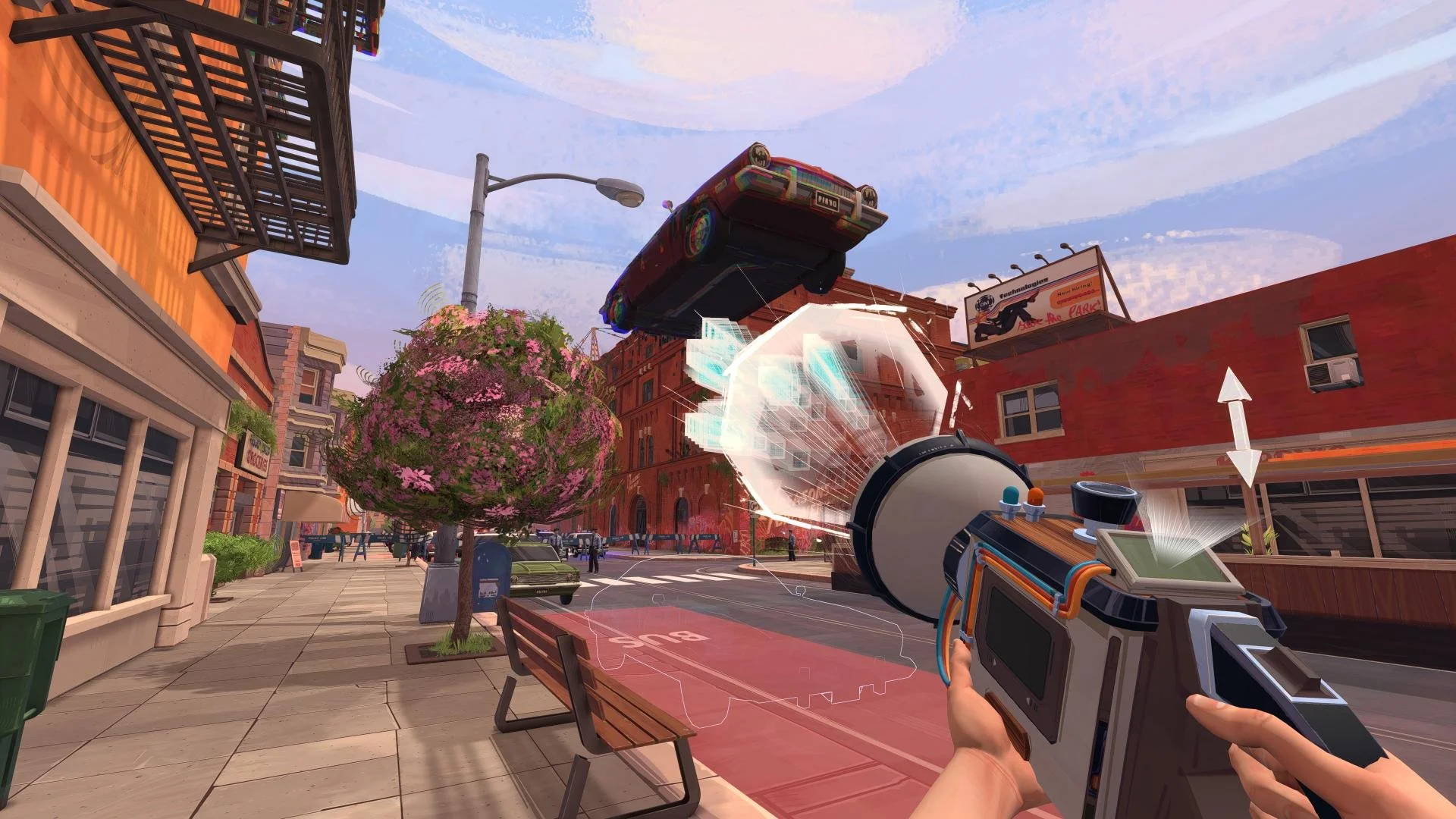
Early on, Barb is caught up in a heist, with Russell being kidnapped by a biker, and she stumbles upon a locked briefcase that the biker had dropped during the pursuit. This briefcase contained the Osciliator, a reality warping gun that can copy objects, and paste them elsewhere, all while maintaining their movement and orientation. While you’ll gain new abilities here and there, such as applying rubber or a sticky honey to an object’s surface, the bulk of the puzzles still operate under the general movement and orientation of the borrowed object.
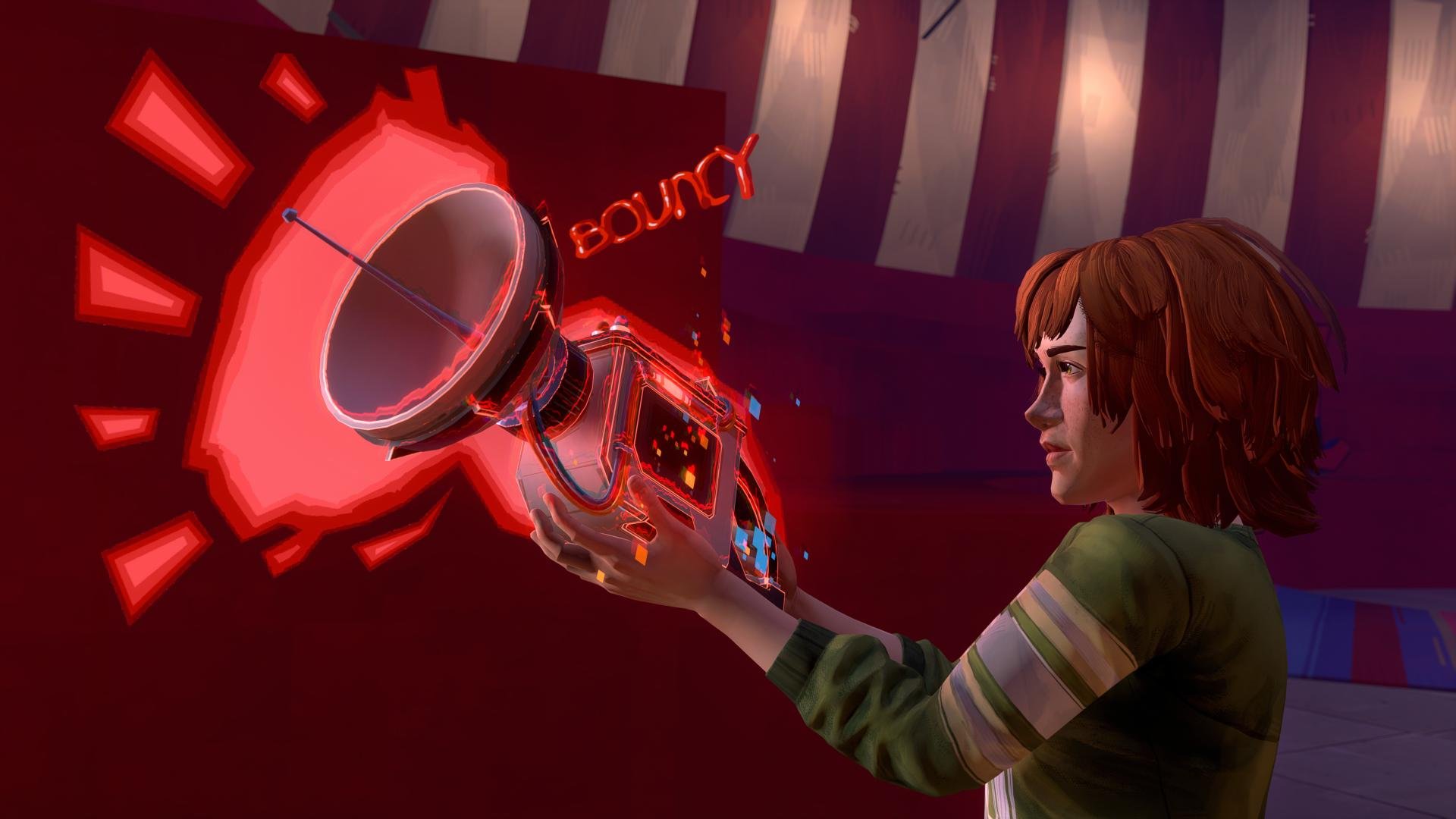
How the gun works is that it will copy the mobilty or orientation of an item and then pass those traits to another object. These are set objects, so there isn’t really a lot of trial and error in finding the “wrong” objects. If you need something to move right or up, then navigating the playing space to find such an object is most of the problem-solving. That said, most environments rarely have the need to fully explore them as you'll be presented with few options to really cause that need to explore.
Some items need to move to entirely different areas or move through others, and certain powers you gain will aid in how you use the gun, how you manipulate objects, and how you navigate the playing space to progress. While the overall concept can sound complex, it's actually far easier than you would think, but not really in a good way.
Yerba Buena is a story-based puzzle platformer. You may be wielding a gun-like device, but there is no combat here. This is something more similar to Portal where the story and puzzle mechanics go hand in hand. It doesn't always impress with its puzzles, as some can drag on for far too long, but it does a fairly ok job at keeping you progressing the story, greally picking up when the characters learn just what exactly is going on. It's very neat, very meta, and a concept not really explored much in gaming.
Spread out across nearly a dozen chapters, you’ll attempt to find Russell, and save him from his captors. However, the story evolves much past that as you’ll soon be tasked with stopping a man named Noel from building a TV tower at the center of a park. Now, that may not sound exciting, but once you start to understand the importance of that mission, things become a lot more clear on Barb’s situation, what Noel’s true plan is, and why Yerba Buena isn’t so lively, not to mention, why characters seem to always find themselves in a routine. I won't spoil it here, but it is a neat idea.
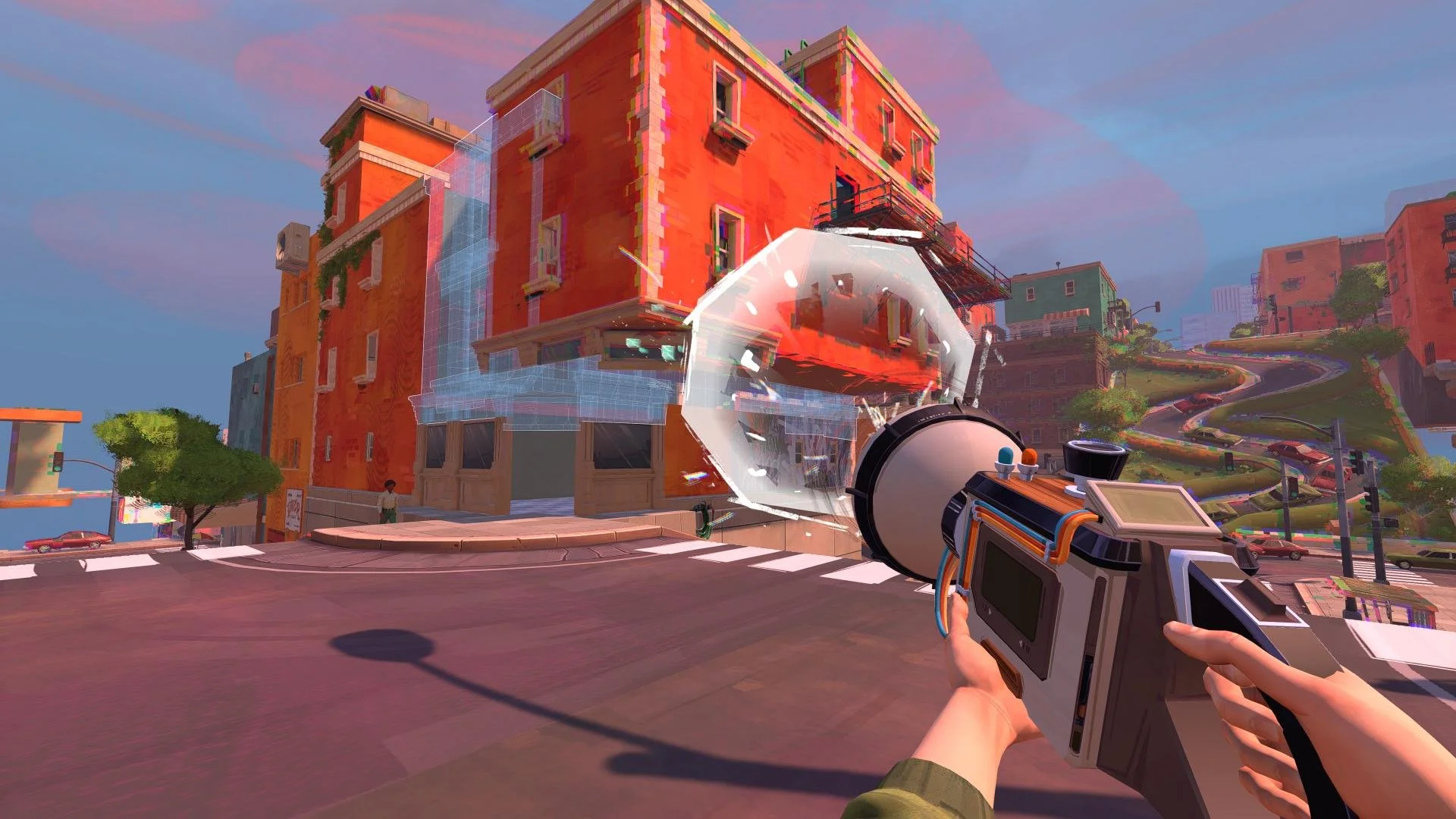
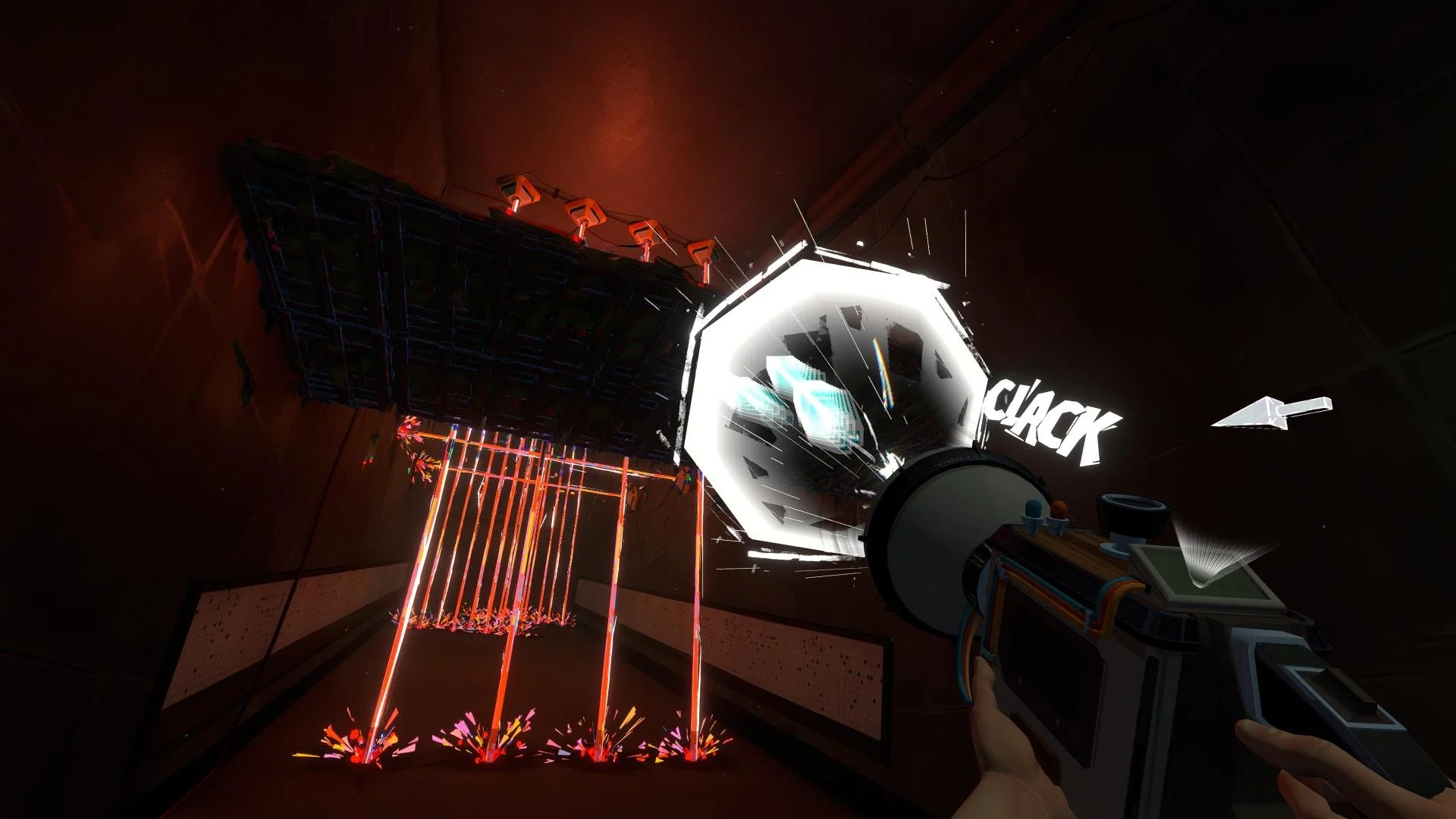
Now, story aside, Yerba Buena is largely a puzzle game, as you use the Osciliator to navigate puzzles and get to the next door to move on. You press the trigger to copy the mobility of one item and transfer it to the next. This copy and paste can only be performed on certain items. Using your special vision, yellow objects carry the mobility and blue objects can absorb it. Items can move left, right, up, down, and spin around, at least initially. Eventually, you can copy gas to make items fade away, applying a bounce layer to surfaces or a sticky honey to allow you or other items to stick to other surfaces. While it can be a lot to manage, this is all done solely with the gun’s trigger.
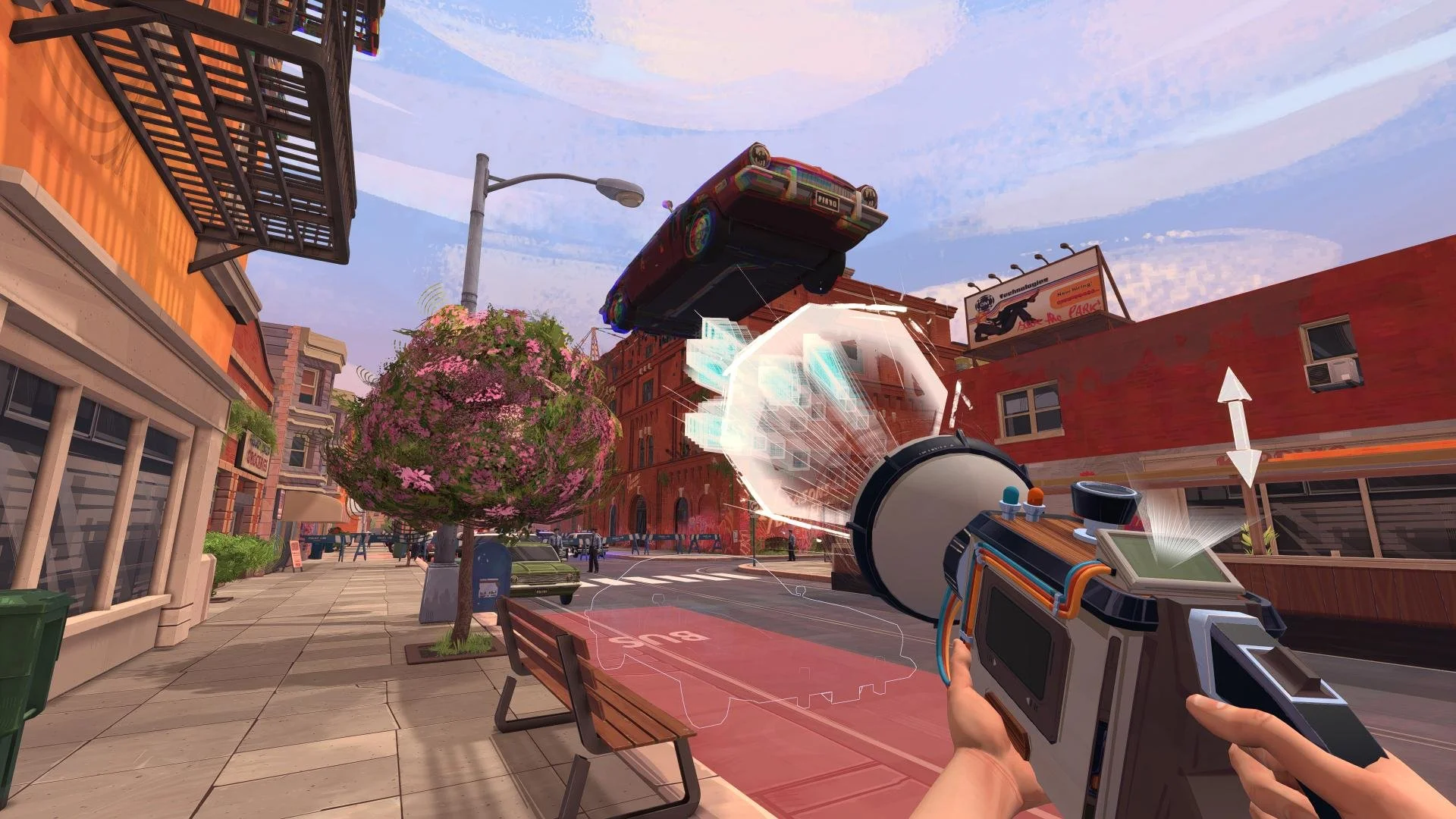
Most of the time, the puzzles are straightforward and rarely difficult. However, while puzzles can get far more in depth as you start combining certain traits, like spinning and said honey, some don’t always convey the solution right away, or really at all. I found myself stuck a few times and often discovering the solution by accident.
For example, there is a puzzle where you need to pass through a door, and while getting the object that runs an electrical circuit to the power the door was easy to figure out, the pit behind the door becomes an issue. I would use every ability on the block at the bottom of the pit and nothing worked. What you needed to do was go back to the area where you used the laser to combust the drums to get smoke and then turn the center pillar invisible to have the laser hit the coil and then use the heated coil, which can now apply bounciness to an object to then apply said bounciness to the block in the pit, allowing you to clear the jump. However, that coil, I didn’t even notice it for quite a while as it doesn’t stand out due to the overall lighting in the area muting most of the color.
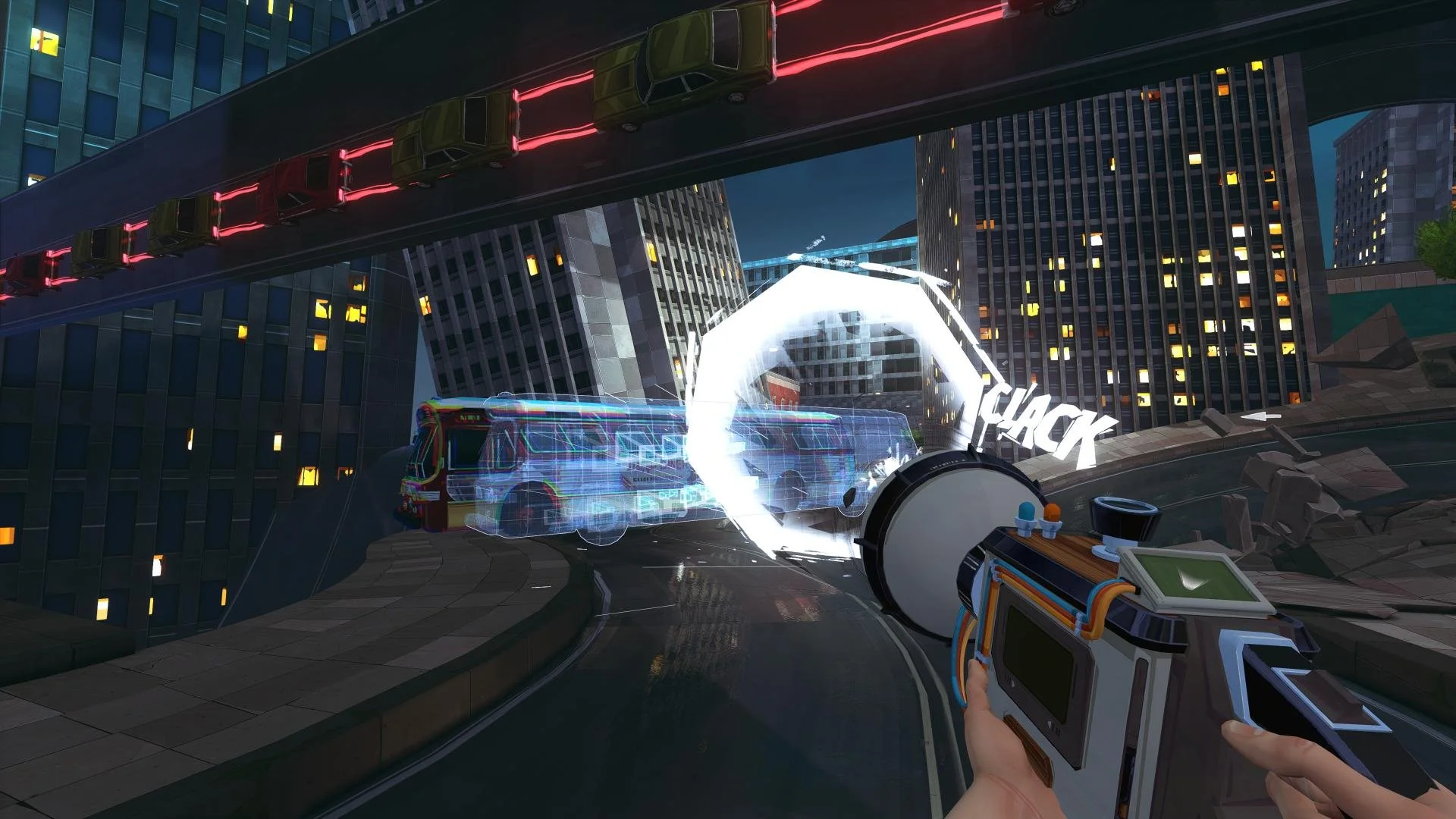
However, for every puzzle you get stuck or frustrated on, there are at least a few to counter those that really do stand out. While I wouldn’t say I was enthusiastically wowed by them, a few are rather clever and really take you to task to use everything you have learned. That said, I wished that most of the game’s puzzles took place in Yerba Buena rather than the amusement park you visit to learn the new skills. I felt the tutorial zones were far too long and tedious, when I was trying to get back to the real objective. It felt like filler in the worst way possible.
Puzzles need a good hook, and their solutions should make you feel smart once you have figured them out. The copy and pasting effect is a solid hook, but most areas almost scream their solution at you since there are rarely any red hearings in the area to through you off or have you solve something on your terms. Linear puzzle-solving isn’t a bad thing, it’s how 95% of most puzzle games are, but when the only usable traits are the only things in front of you, I found it too easy to put two and two together, making the solution apparent before I could really be creative in my thinking. This then causes the puzzles to be more about the order of the mobility than much else.

What does lead to Yerba Buena’s failings is the Osciliator itself. The aiming, to be more precise. Some objects are very easy to pull their mobility from, where others have certain parts that need to be targeted. While I understand that distance should impact how close I can be to something to snatch its movement, the precision of the targeting, and the object itself, should be the easiest thing in the world to pull off, especially as you rarely get objects next to each other. Given there are times where you need to immediately swap from one ability to the next, the lack of easily targeting the next object should be quick, reliable, and easy to pull off, and that isn’t always the case.
Yerba Buena has a solid idea on how to advance the puzzle genre, but lacks the execution to really pull it off. What is here is certainly enhanced by a fairly ok story, which has a very cool reveal behind it, but a lack of compelling characters, especially its lead, leaves Yerba Buena in a space where nothing really stands out.


Developer - Mad About Pandas.
Publisher - Focus Entertainment.
Released - May 26th, 2026.
Available On - Xbox Series X/S, PS5, PC.
Rated - (T) - Language, Violence.
Platform Reviewed - PlayStation 5.
Review Access - A review code for Yerba Buena was provided by the publisher for the purpose of this review.
Jeff is the original founder of Analog Stick Gaming. His favorite games include The Witcher III, the Mass Effect Trilogy, Hi-Fi Rush, Stellar Blade, Hellbade: Senua’s Sacrifice, and the Legend of Heroes series, especially Trails of Cold Steel III & IV.