
On your left…
Sonic has had a deep history of notable entries, both main series and spinoffs alike. While Sonic and Sega All-Stars Racing may have a longer title than needed, it was nonetheless a damn impressive kart racer to feature the blue blur, a character known for his speed. While its follow-up in Sonic and All-Stars Racing Transformed would evolve the series in numerous ways, its latest entry would leave developer Sumo Digital in the rear-view and look to a new team to take the lead.
While there was some initial concern about a new developer taking over the series, the fact that it was Sonic Team itself put a lot of that concern to rest. Crossworlds highlights the Sonic series more so than just being a catch-all mascot racer for the whole publishing line, and highlights the creativity of the world around its notable platformer, with a solid racer that, while its gimmick isn’t terribly impressive, the customization and gameplay around its racing is nonetheless engaging.
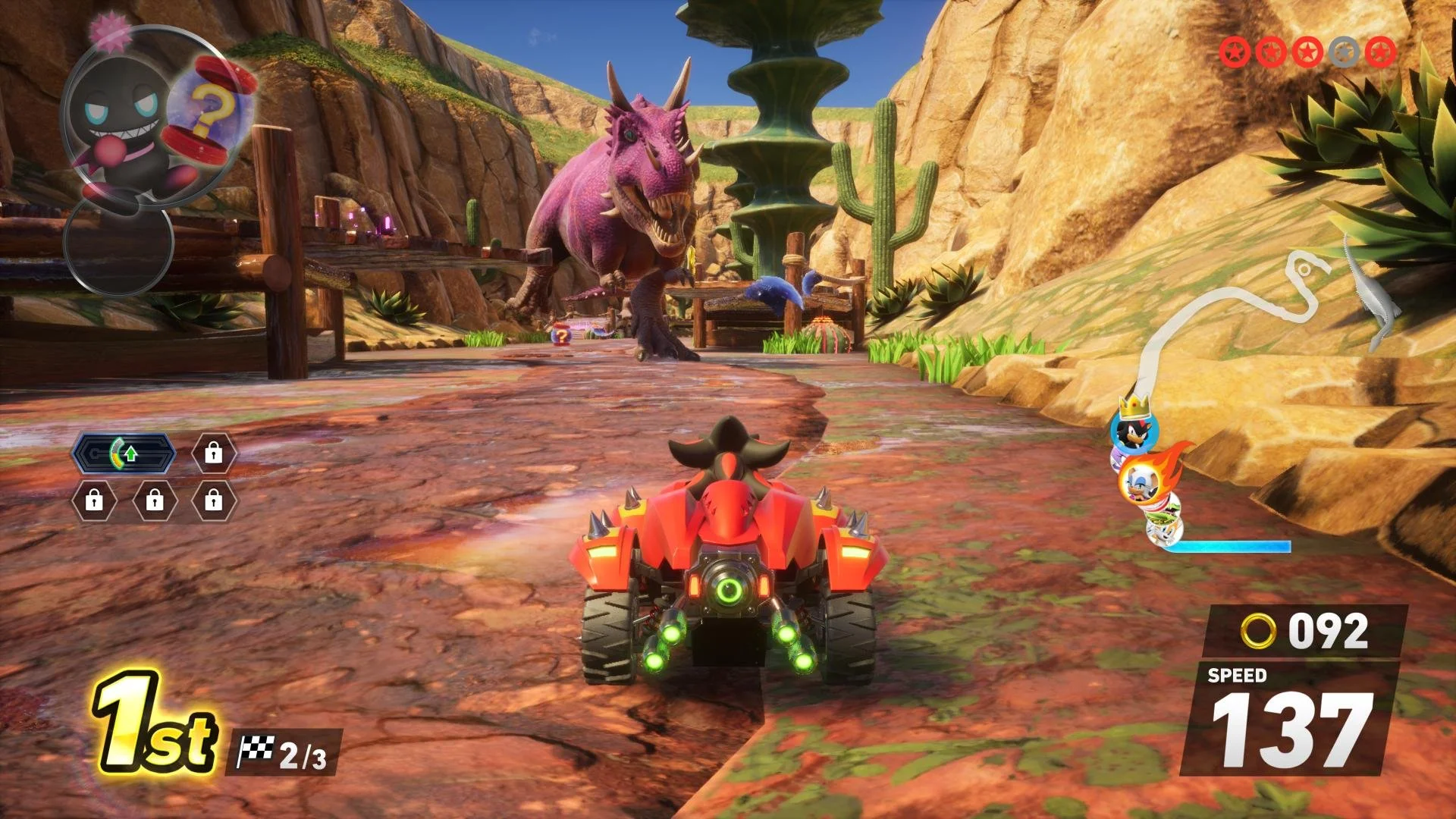
Sonic Racing: Crossworlds is, on the surface, a typical kart racing game. It doesn’t present an open world like Mario Kart World or attempt to bring in dynamic mechanics to really shake up what a kart racing game is, at least in a way that redefines the genre. It simply provides a fairly polished experience with a lot of customization, as well as a portal mechanic that sounds good on paper, but ultimately doesn’t factor into the gameplay as much as I would have hoped for. It’s interesting, sure, but its appeal wears out after only a few races.
Crossworlds offers up a series of eight championship cups to race for in its Grand Prix mode, with two additional modes in Race Park and Time Trial, with the latter being self-explanatory. Race Park has you taking on a team to win their vehicles. This mode is split up across six objective-based modes, such as Ring Grab, Shoot-Out, to a 12-player race to the finish, and even an extreme-rules race with heavy-hitter items only. This mode is recommended for multiplayer, given the team dynamic, but can still be played solo.
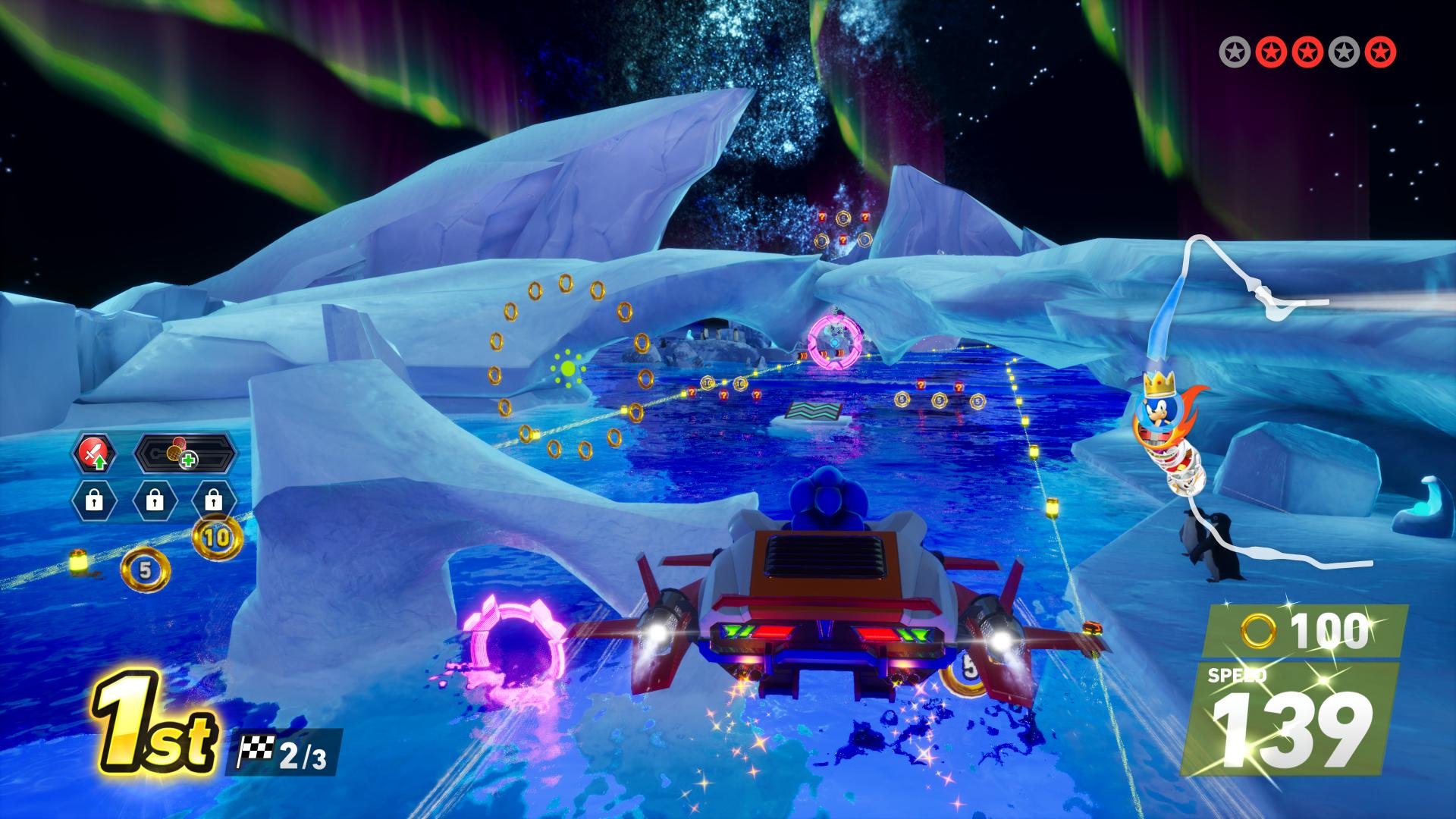
That said, the real meat of Crossworlds is through the Grand Prix. Each cup in the Grand Prix has four races, but the last race is just a mixture of the three previous courses, which is sort of a letdown. The second lap of each race, apart from the final trip down memory lane, has you picking between a known location or a random track, should you be in first place at the time of choosing. After that diversion, you return back for one more lap and close out the race. The portal idea is interesting; however, Ratchet and Clank: Rift Apart just did it better. Hell, even Titanfall 2 shoots a little higher in its execution.
It’s a shame the portal jumping wasn’t just an alternative take on the same track, causing rifts in dimensions to alter the same track with new roads, shortcuts, and more. Having that sort of mechanic happen at random, or fueled by some manual mechanic, especially if you have numerous themed alternatives, would have really shaken up each course and made you really strategize. Here, you get teleported to a short lap in a random location that doesn’t really have much going on. Sure, some of them are visually gorgeous, but their designs are paper-thin and are rarely engaging.
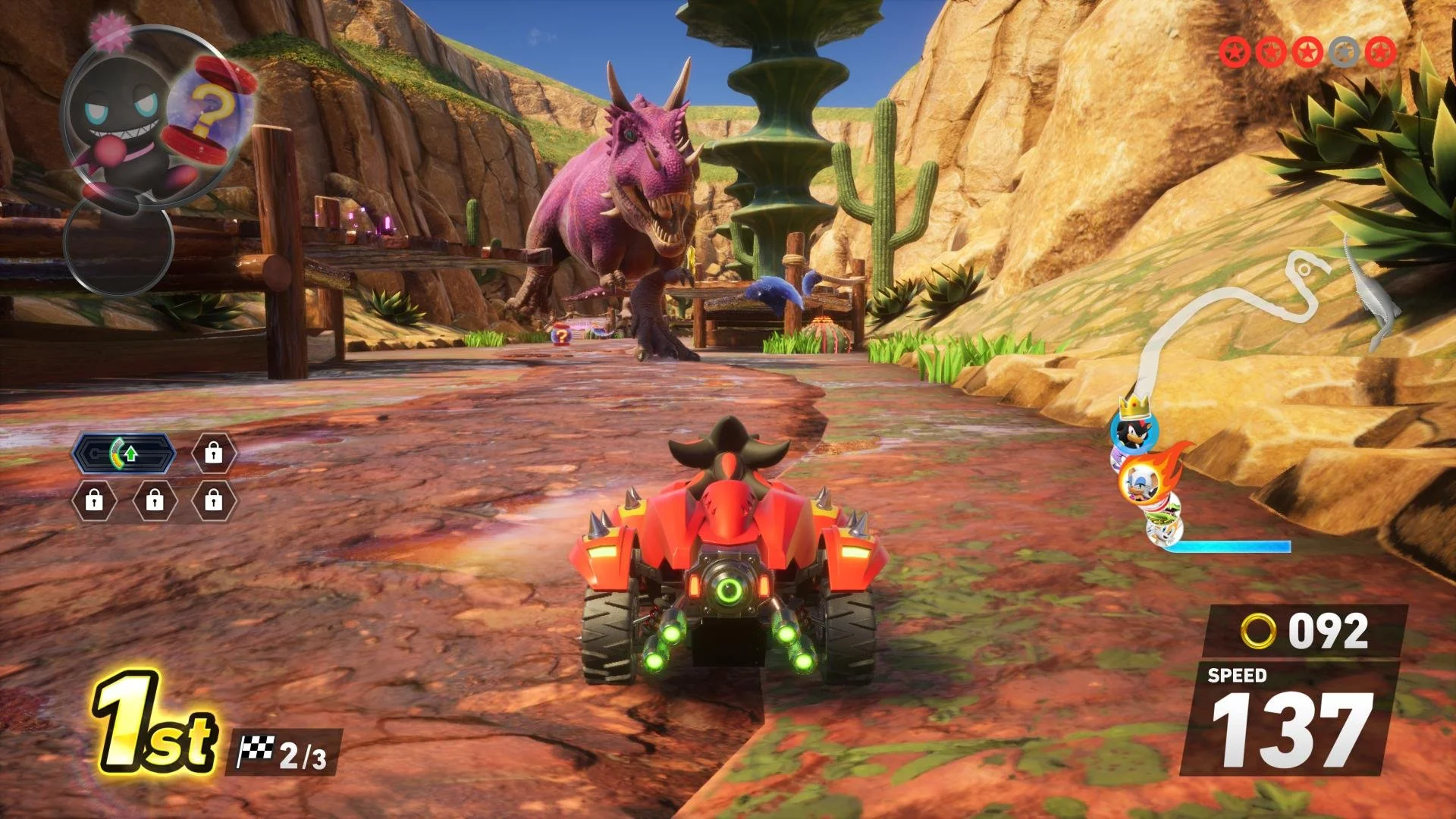
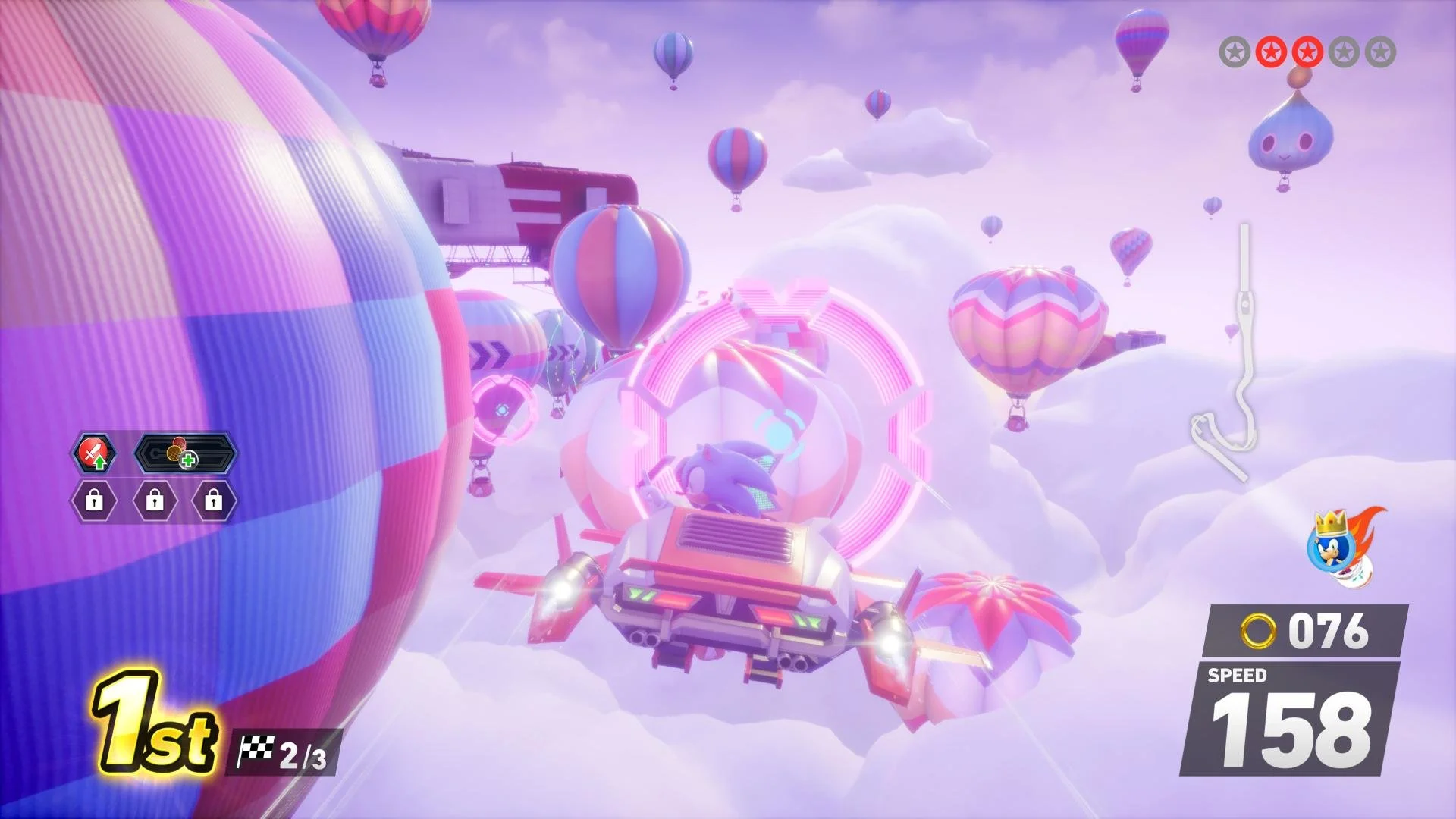
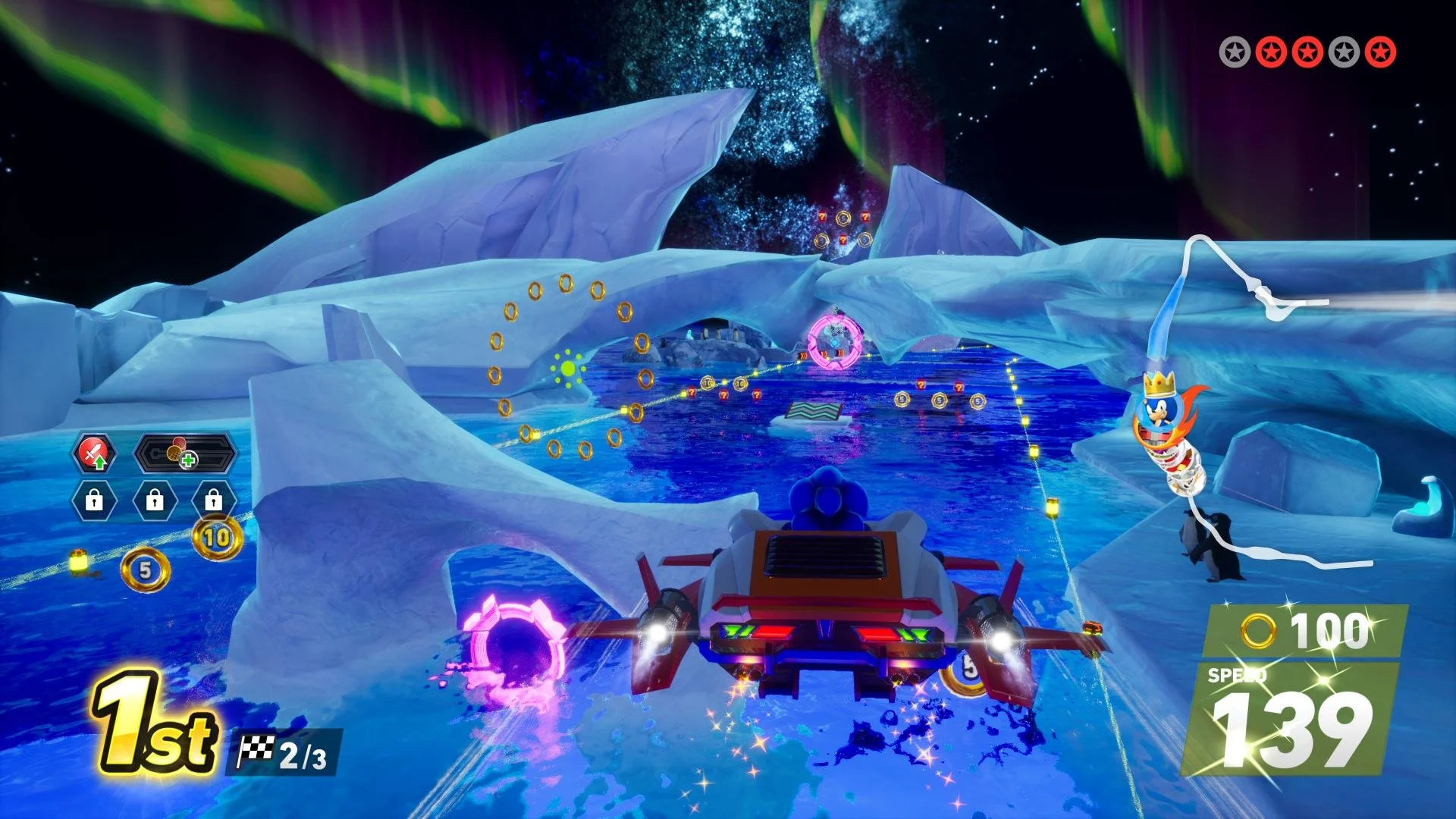
Portals take you to a variety of worlds, inspired by several environments from Sonic’s past. From Roulette Road, Sky Road, Dino Jungle, and Kraken Bay, there are a total of 15 of these Crossworld portal courses that can be swapped to during the game’s 24 main courses. Given how these are just one lap, I’m shocked there are not considerably more. However, during my race to complete all the cups, I only ran into 12 of these courses in total; some I had seen nearly a dozen times. Courses have a series of shortcuts and different paths to take, but the diversion to another level does cheapen these a bit.
Despite the portal jumping, Crossworlds is very busy with its customization, which will either excite you or overwhelm you, or even both. Each character will have different stats, as well as the kart you choose to put them in. These stats are Speed, Acceleration, Handling, Power, and Boost. These are mostly self-explanatory, with speed detailing your overall top speed, acceleration being how fast you obtain that speed, handling showcases how easy it is to wield your kart, power factoring in your ability to push characters around, and boost indicating how effective boosting will be.
Each character tends to be great in one regard, mostly. And while power, handling, and acceleration are good stats to have, I really only found those who rate high in speed and boosting to really provide me with more reason to always choose them. However, despite how good boosting can be, speed is ultimately the best trait, which makes the choice of other characters to be about your personal attachment to them rather than anything stat-driven.
By karts having their own stats, this allows you to fill the gap in areas your chosen character may fail in. To add, you’ll eventually be able to customize your karts themselves by adding different front and back parts to specific tires as well. These can truly affect your kart and can offer you the best of both worlds in most cases, even despite the colors and decals you can add, adding to nothing more than just aesthetics.
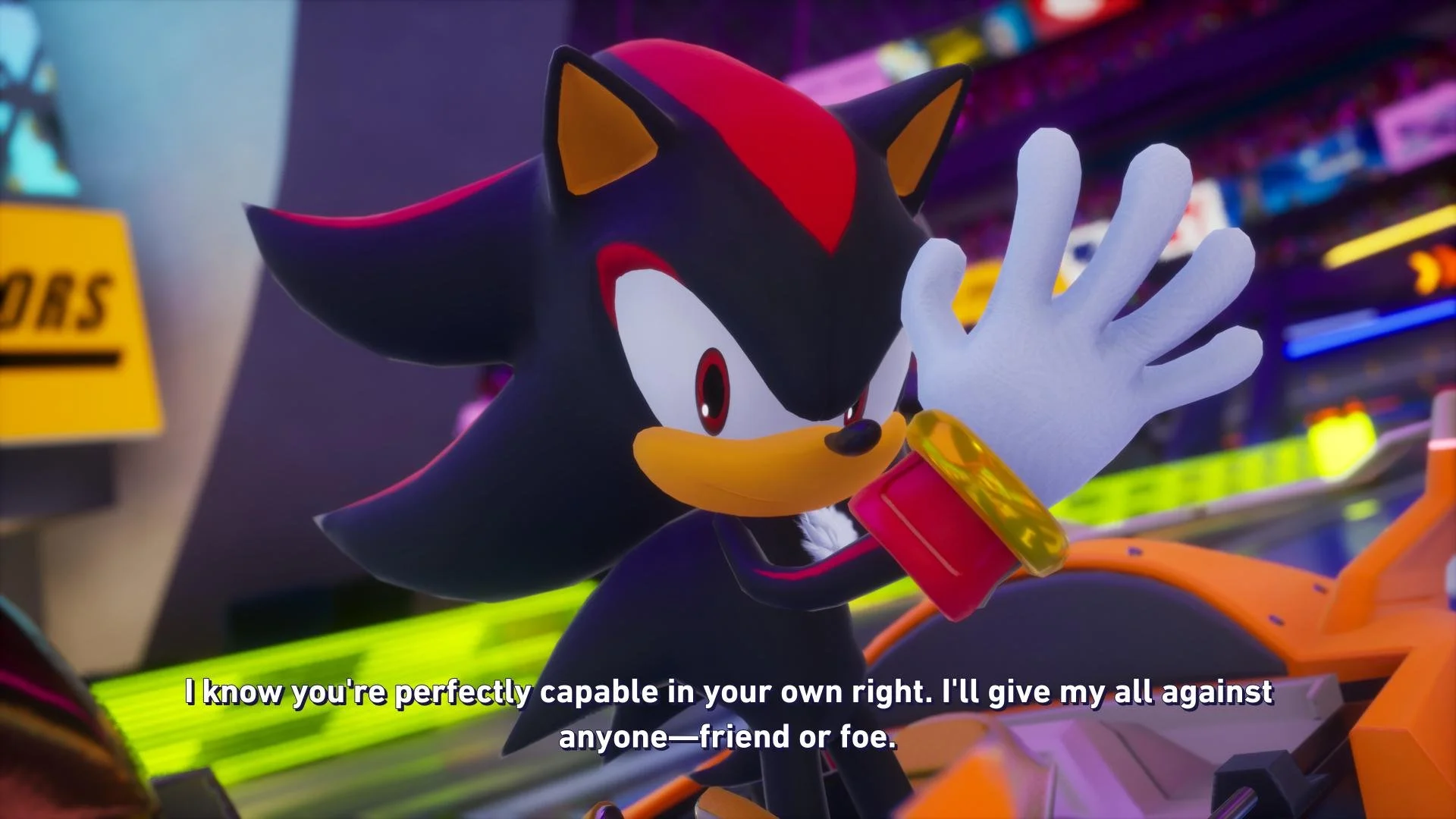
However, kart customization can also boost the best stats for the better characters, making the rich richer. Sure, you could make Rouge the Bat faster, but if you just made Sonic even faster, then what’s the point? Still, this system does have its perks and can level the playing field to a point, especially when playing with friends, even once you start to benefit from some of the more deeper systems at play.
To further customization, and in some cases, make the game a tad unbalanced, you also can equip gadgets that further alter your stats or grant additional perks. Now, firstly, you have a gadget board that you’ll use to equip those gadgets. You’ll start off with three slots ending with a total of six. As you continue to race up and level up, these slots unlock, allowing for more customization. Gadgets vary all over the spectrum, from increasing the way you earn rings, which work in the same ways as Mario Kart, to how your kart functions, both in how it drifts, how the stats work from lap to lap, to how effective items are, or even how frequent certain ones show up. By using certain combinations of these gadgets, you can become nearly unstoppable, which some players feel can break the game online.
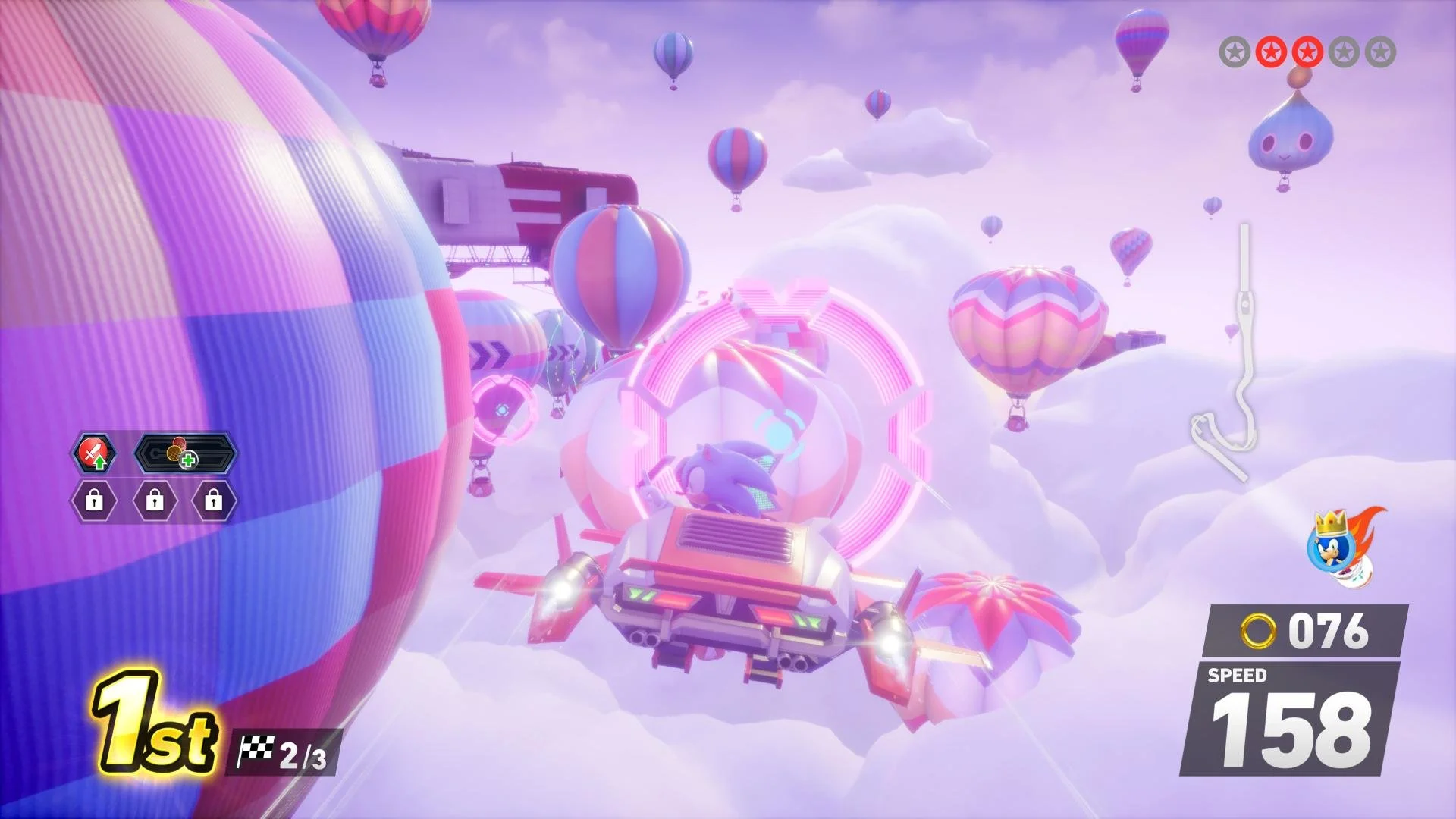
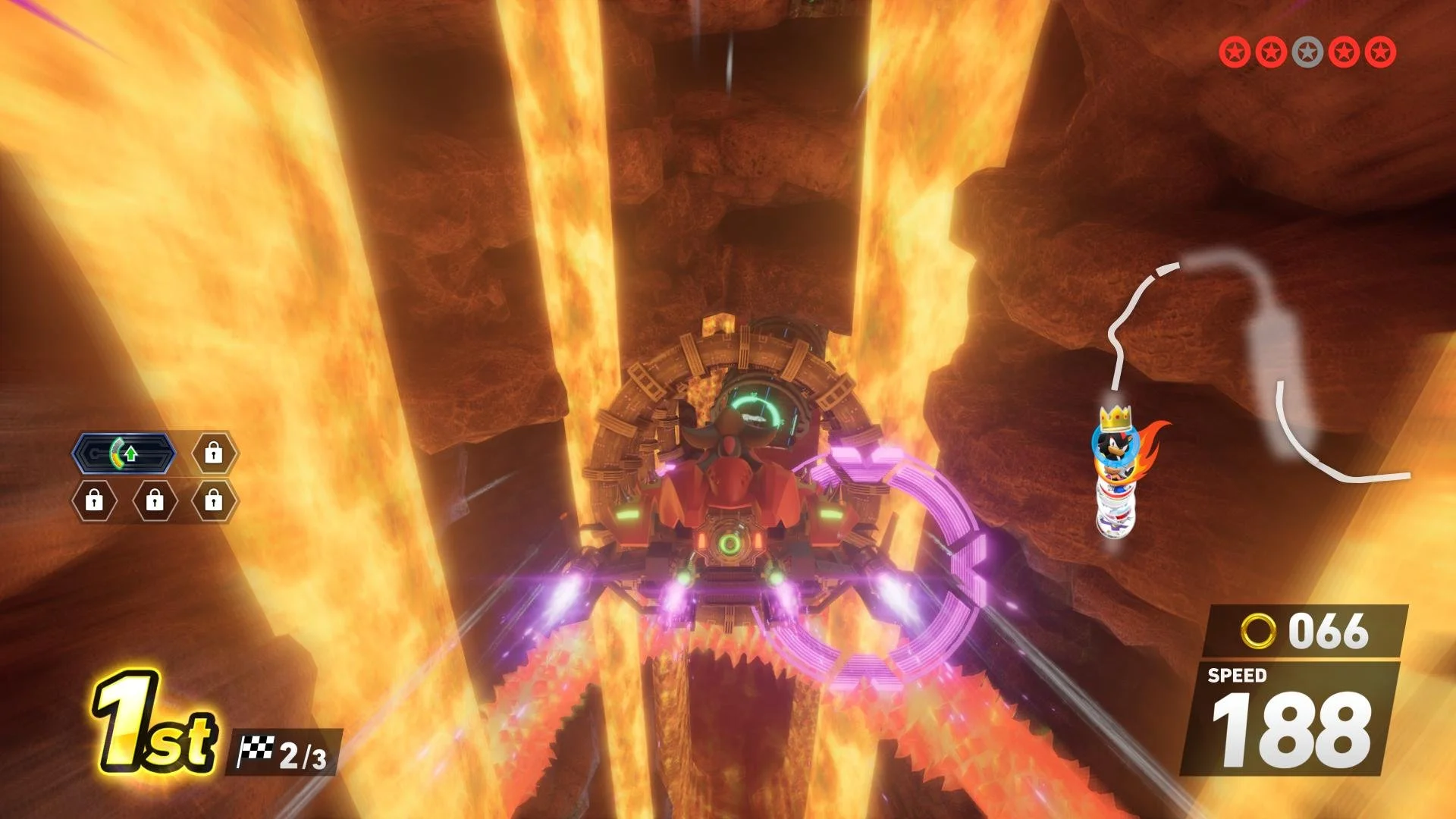
The general kart racing; thankfully, is quite good, with a solid mix of boosting, drifting, and performing tricks in the air to gain a boost upon landing. Your vehicle will transform into a plane, boat, or kart, depending on the zone, with some shortcuts that offer you the choice between modes. While some kart racers have a certain degree of difficulty tied to their speeds, Sonic: Crossworlds is pretty challenging, even on its easiest setting. This isn’t a kart racer that you can put in front of everyone and expect a clear lap around the course without some tension.
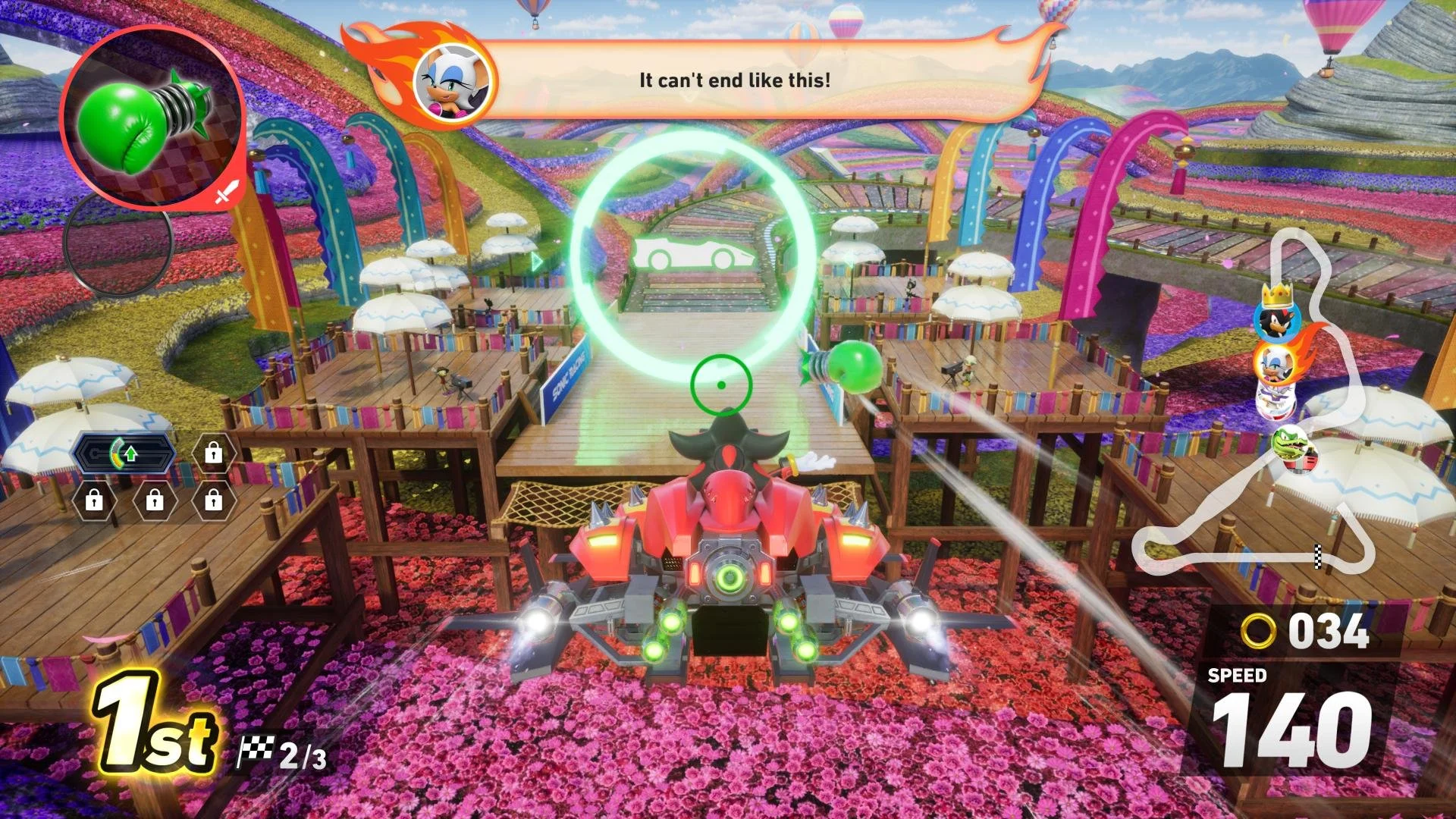
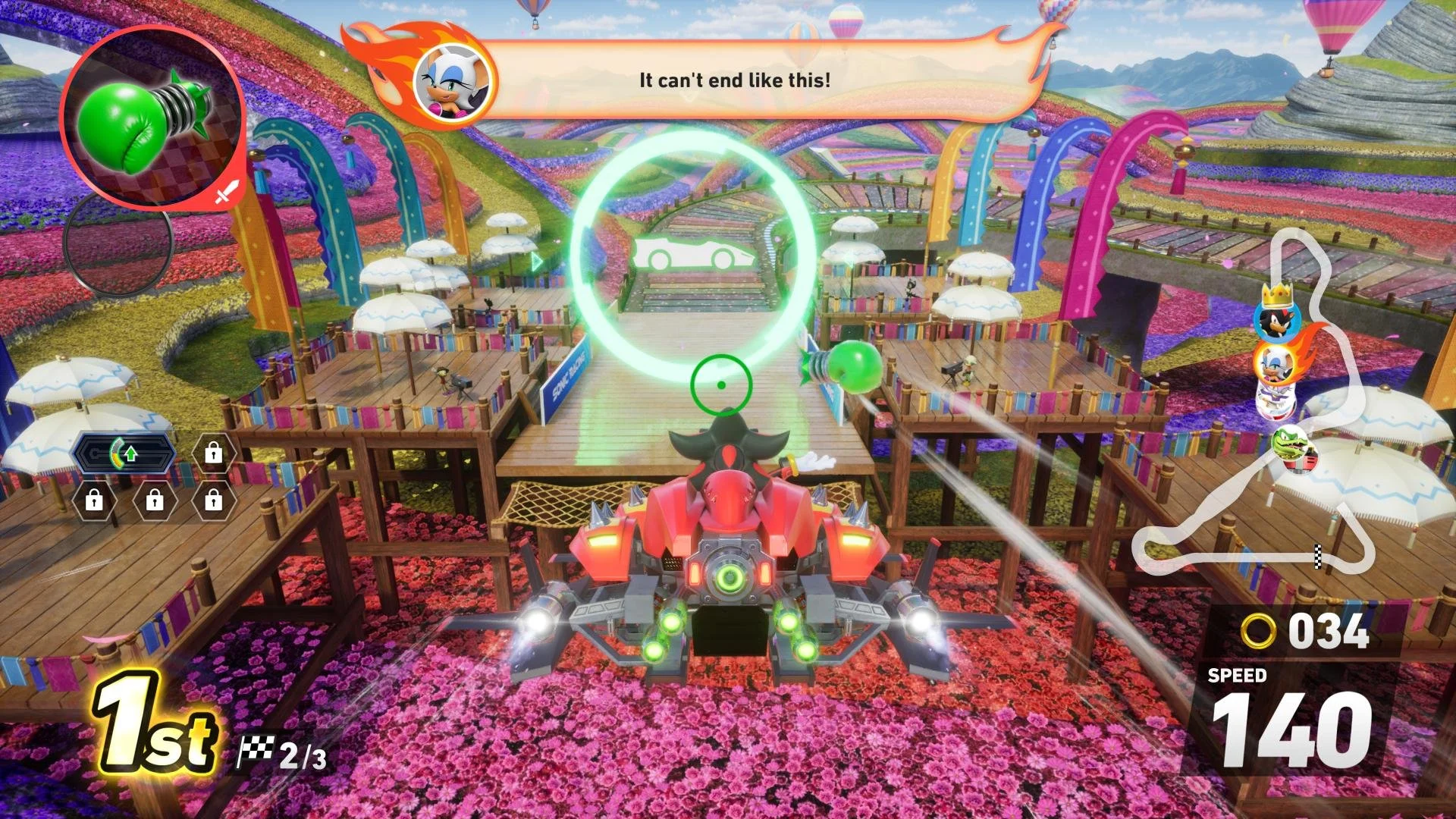
If there is any real fault in the racing, it is with the weapons, or rather, the items you can use defensively or offensively. For every good weapon, there is one that you’ll be pretty meh on getting. I really liked the homing punching glove, which can be fired forward or backward, giving a nice, clear indication if it has succeeded in hitting its target. The weight seems like a pretty bland weapon, but it certainly is effective. Then you have spike traps, magnets that hold players in place, to a slime that is more annoying due to how you have to remove it. While there are no objectively bad weapons or shields, or defensive items, most of them just feel uninspired and pretty bland in their design.
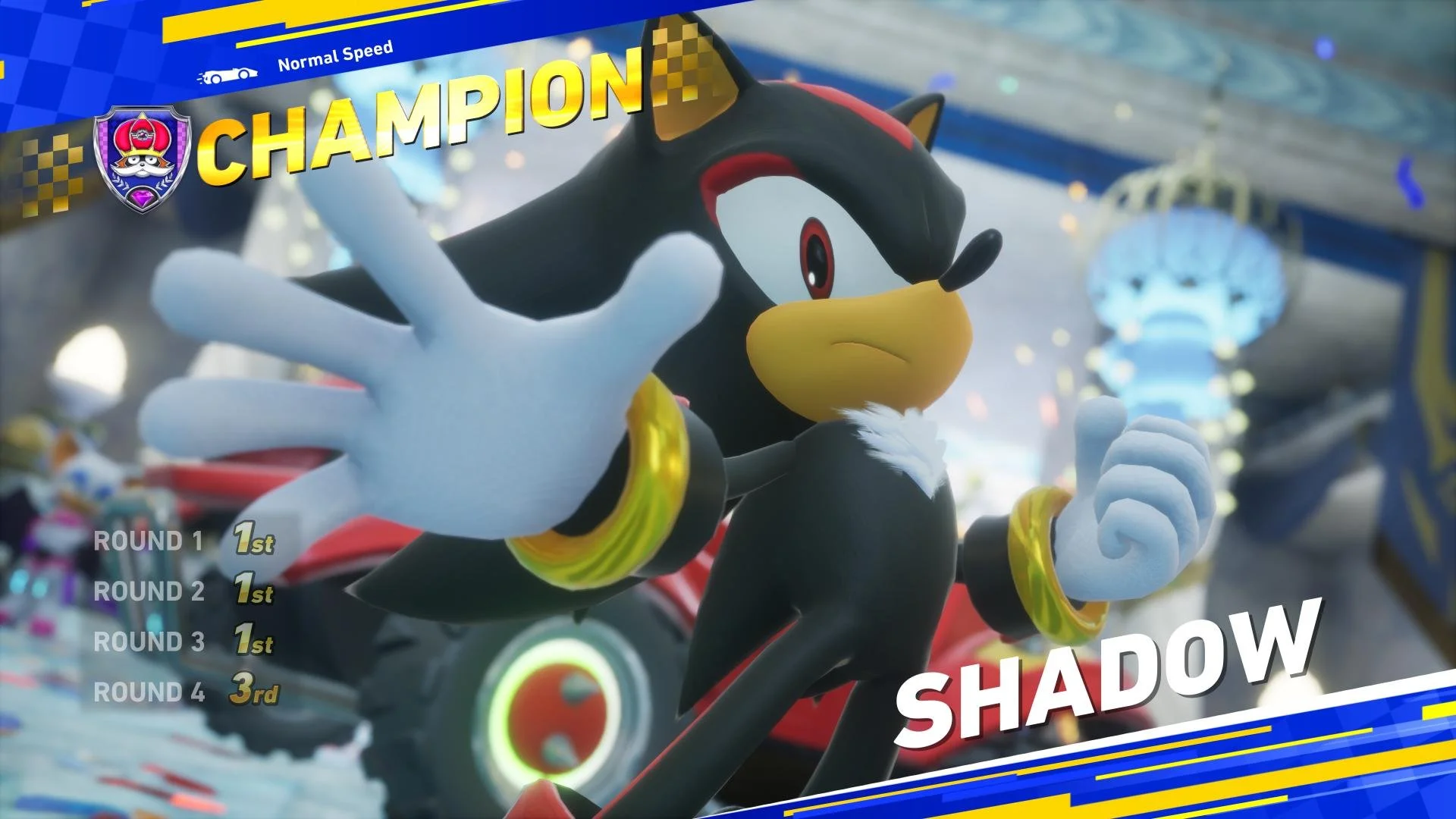
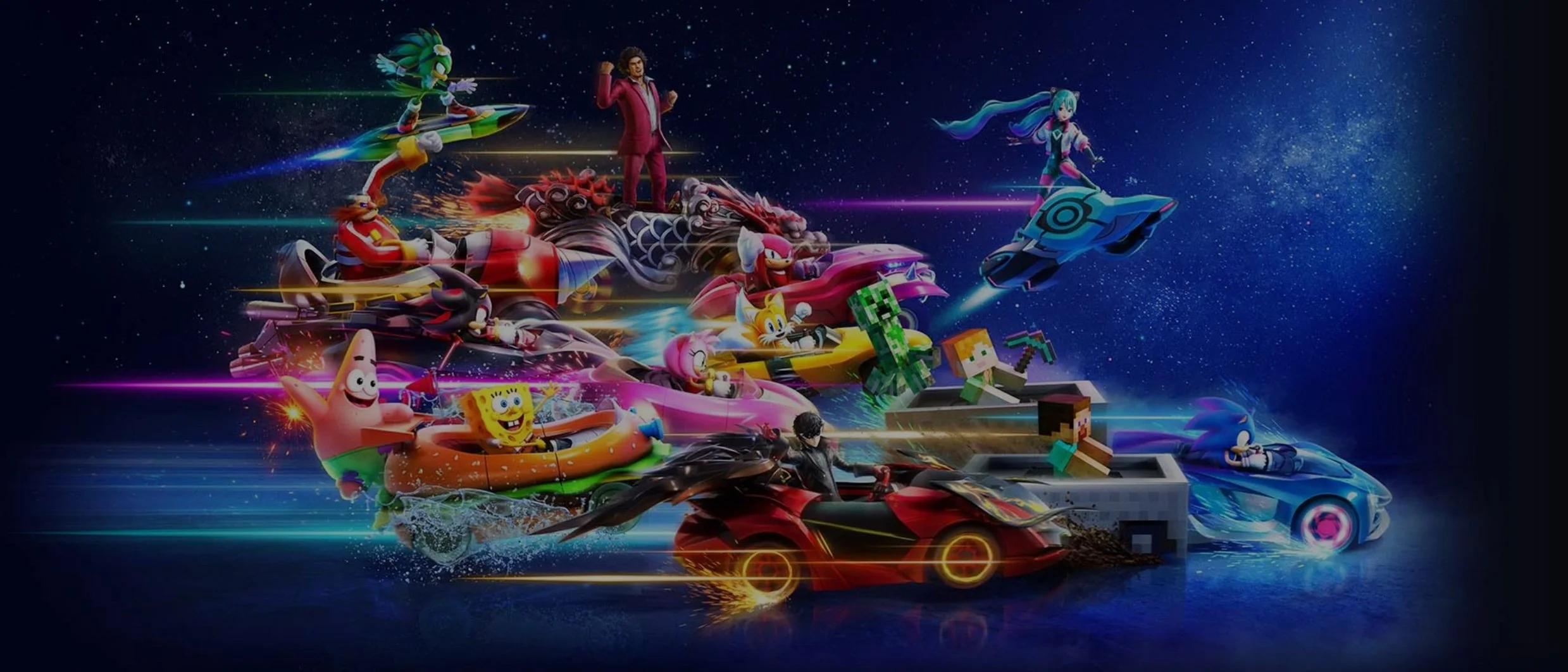
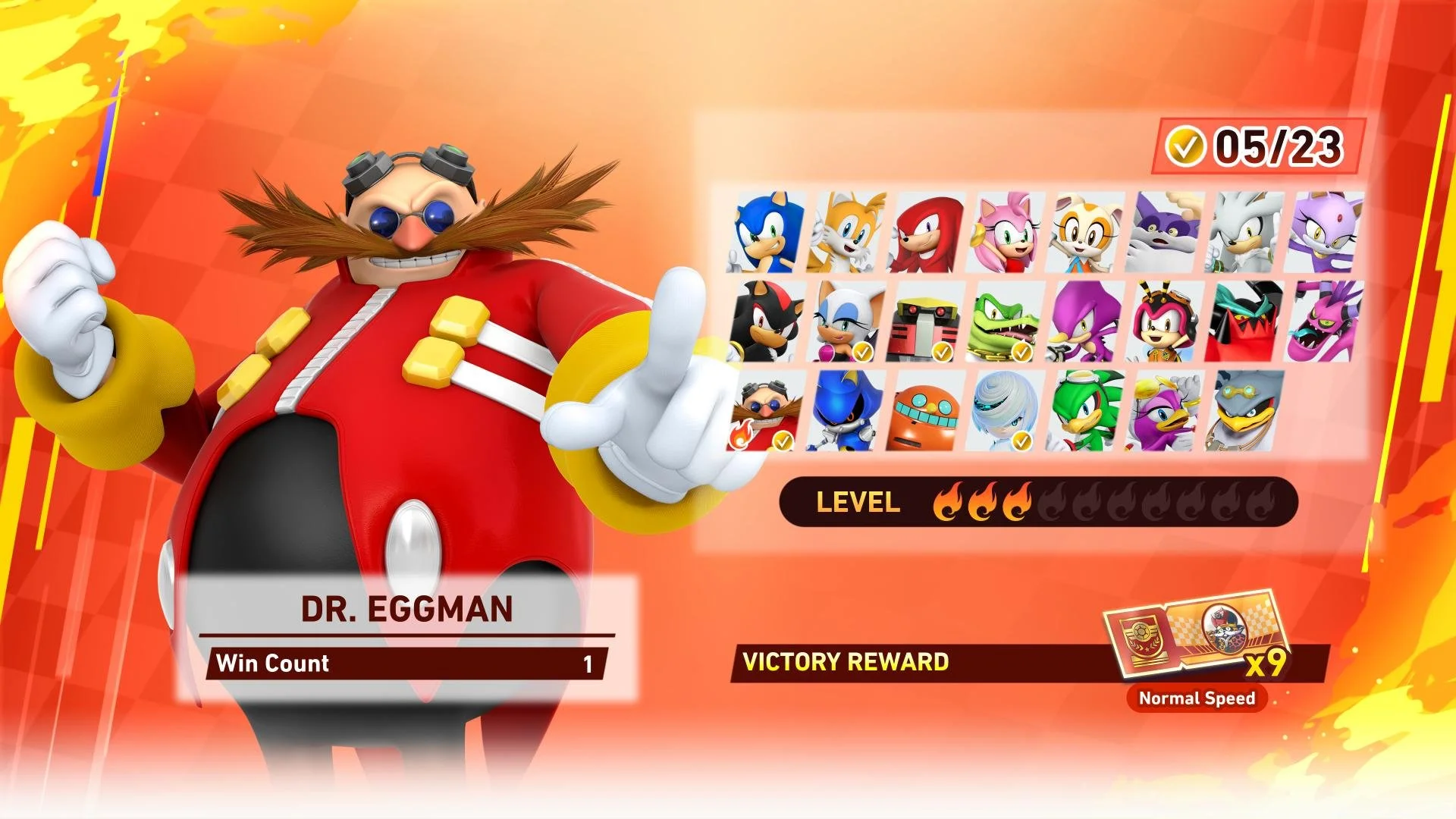
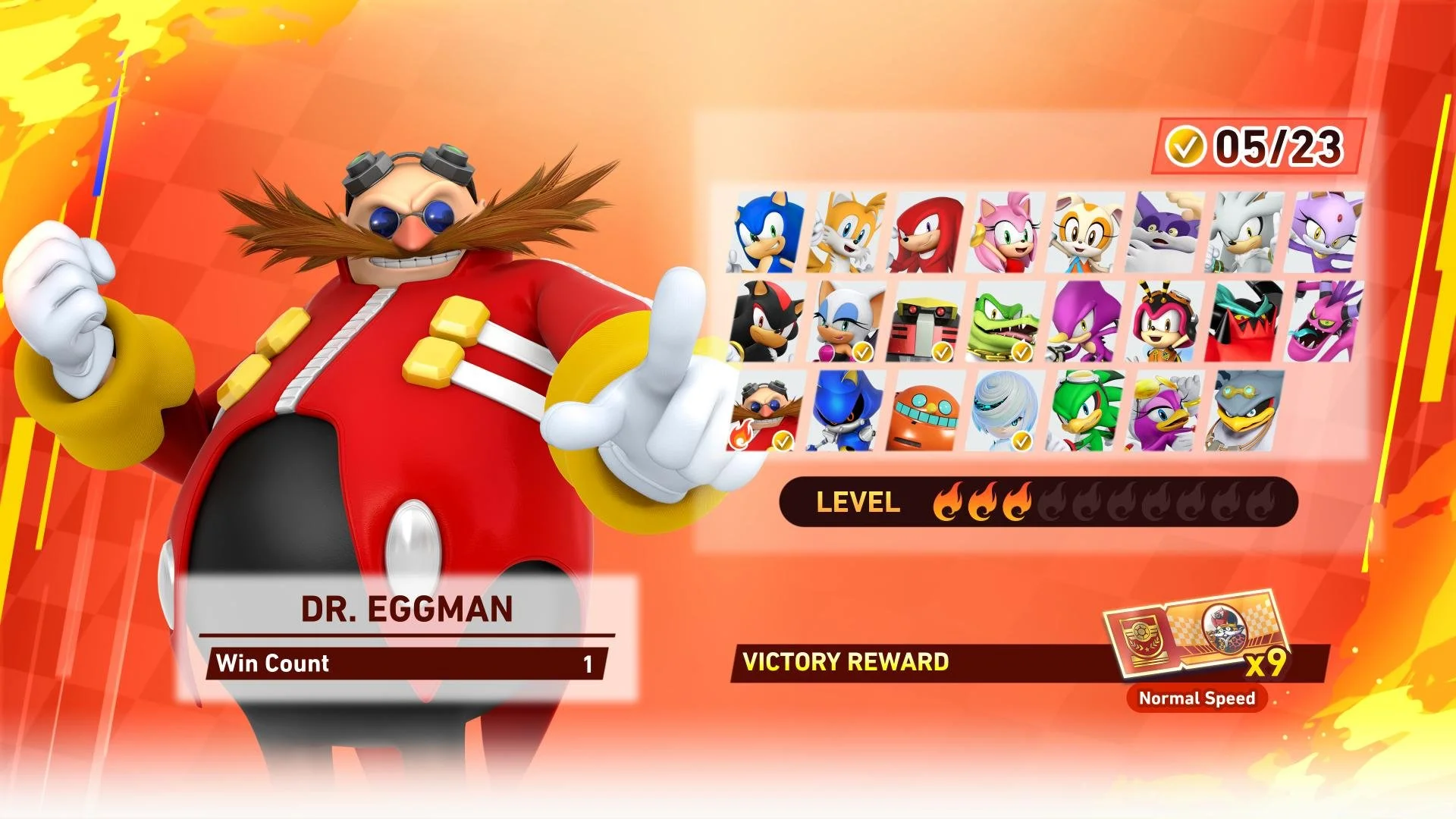
The roster may have its guest characters in the likes of Persona 5’s Joker, Ichiban Kasuga, and SpongeBob SquarePants, among others, but the core roster is very much Sonic-flavored. While much of this cast has featured in the main series in some capacity, such as Tails, Knuckles, Rouge the Bat, and Cream and Cheese, then you have some like Blaze the Cat from Sonic Rush, Vector the Crocodile and Charmy the Bee from Knuckles Chaotix, Jet the Hawk from Sonic Riders, to lesser known characters like Zavok, who first appeared in the WiiU version of Sonic: Lost World. It’s certainly an interesting cast, given that many of them have only had a single appearance throughout the series.
What is interesting about the roster, and the connection characters have to Sonic himself, is the rival system. This system places a rival against you during the entire cup. Rivals have a stricter difficulty to them, making them that much harder to defeat. However, what this really means is how intense their rubber-banding is, as they always seem to catch you, despite how often you smack them off the course. The rival system is a fun idea, but rubber-banding isn’t the way to go.
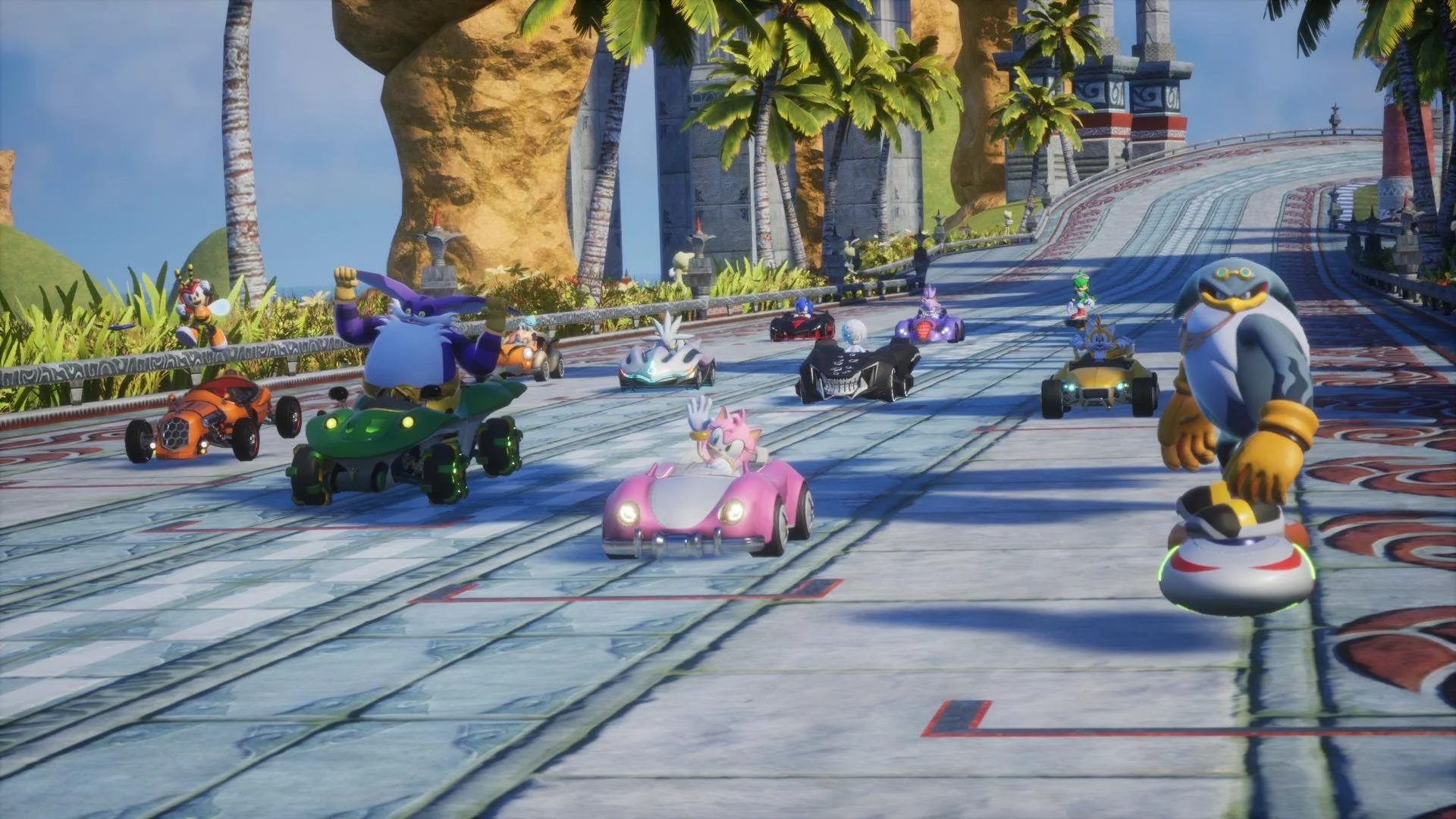
Sonic Racing: Crossworlds has a lot going for it despite its pretty shallow portal mechanic. There is a huge roster of characters, a nice variety of tracks, to a robust customization system that can work in your favor. It isn't revolutionary by any means, but it certainly is a great alternative to the likes of Mario Kart, or even Nickelodeon’s own kart racer.
Developer - Sonic Team. Publisher - SEGA. Released - September 25th, 2025. Available On - Xbox One/Series X/S, PS4, PS5, Switch, Switch 2, PC. Rated - (E) Mild Fantasy Violence. Platform Reviewed - Xbox Series X. Review Access - A review code was provided by the publisher for the purpose of this review.
Jeff is the original founder of Analog Stick Gaming. His favorite games include The Witcher III, the Mass Effect Trilogy, Hi-Fi Rush, Stellar Blade, Hellbade: Senua’s Sacrifice, and the Legend of Heroes series, especially Trails of Cold Steel III & IV.