
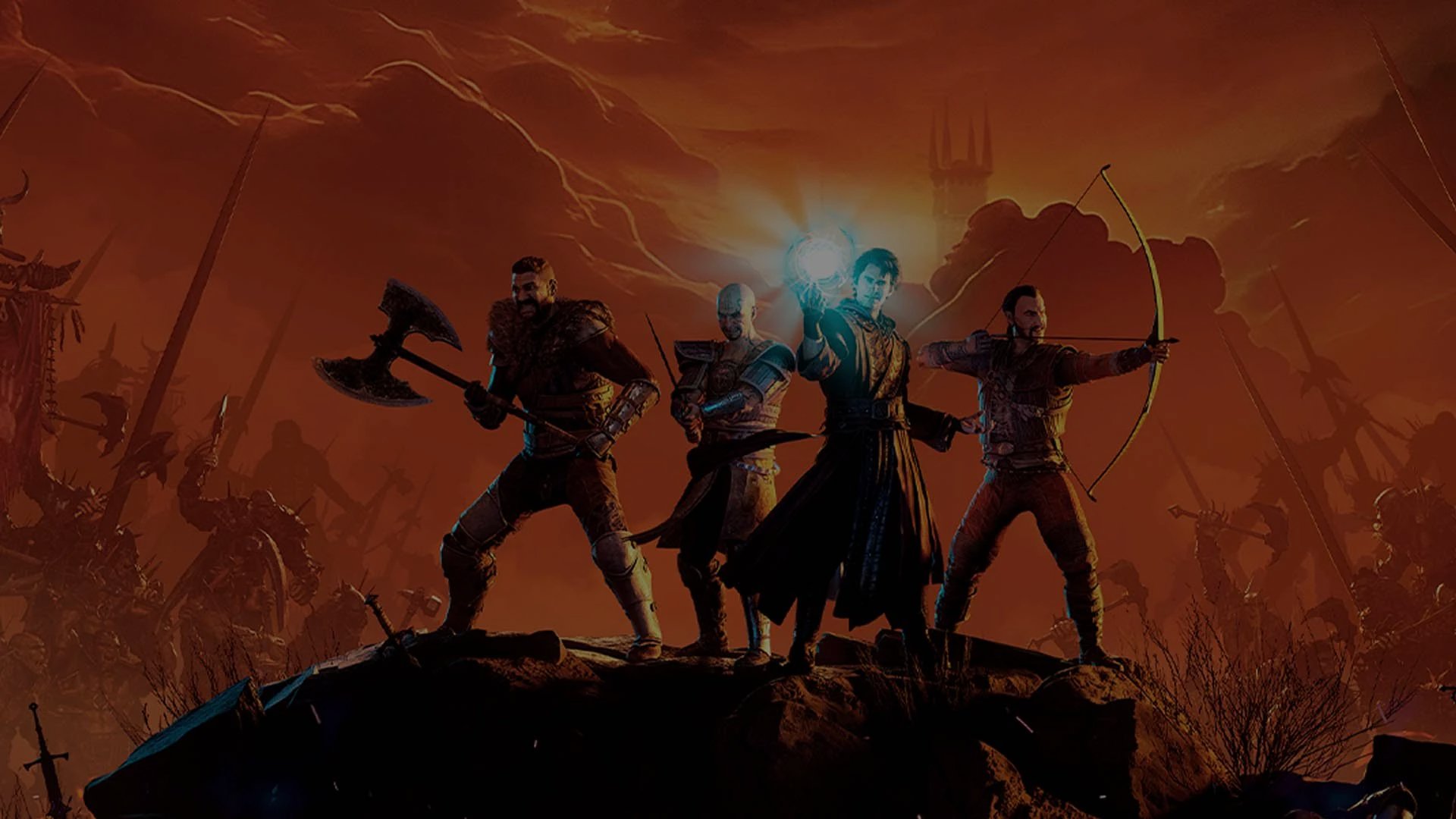
All the Euro, all the Jank.
Gothic Remake is the type of RPG we rarely see anymore. In fact, this is the exact type of game that many have been clamoring for; no hand-holding, no yellow paint, and the challenge of exploring a location with little to no direction. Alkimia Interactive has retooled the original game to offer some modern assistance, but remains true to its roots and delivers a game that you'll approach on its terms, or see yourself put into the dirt.
Back in 2001, Piranha Bytes released Gothic. It was revolutionary at the time, boasting a massive world to explore, fully voiced NPCs, and a challenge that few games of the genre truly offered. It was a world that constantly tried to kill you, and force you to find your own way. While you'll earn Ore to purchase better gear or upgrade what you have, information is the game's most precious commodity.
While Piranha Bytes is sadly gone, as they were shuttered in 2024, Alkimia Interactive, and a few key members from the original team, have now released an Unreal Engine 5 remake of the beloved 2001 title, allowing players to experience it either for the first time, or returning to a world they once adored. Regardless, Gothic Remake is wildly impressive, if a bit broken, but more on that later.
This Remake really goes the extra mile to really showcase what an amazing game Gothic was at the time. They also expanded the game significantly with a map that is roughly 20% larger with more detail given to areas that were denied previously due to the technical limitations at the time. The script has been entirely re-translated, instead of the broken English of the original. Orcs have been made a more credible faction, and any of the women in the game now have names and are not just background elements.
Gothic Remake is a very faithful adaptation as it brings with it all the brutal challenge, and vagueness of the original. The early game is punishing as simple creatures and bandits will kill you in a single hit, until you start earning the ore needed to kit up and adapt to the challenge in front of you. Quests will indicate a vague direction, but without a mini-map, or a marker-filled map, you'll have to explore and dig deep into this world to find where you're going, or who you'll even need to talk to.
Gothic expects you to figure out its systems, and mechanics like lockpicking have no tutorial, so you'll need to figure out how it works on your own. While I initially hated the lockpicking, as I would level up my skill, it became my favorite lockpicking mechanic ever introduced in a game. Quests will often border on confusing methods to see them done, with a wild assortment of solutions that often only make sense once you've stumbled upon them. Even then, there are many quests that make zero sense in how a player would come to that conclusion with the information they have on hand.
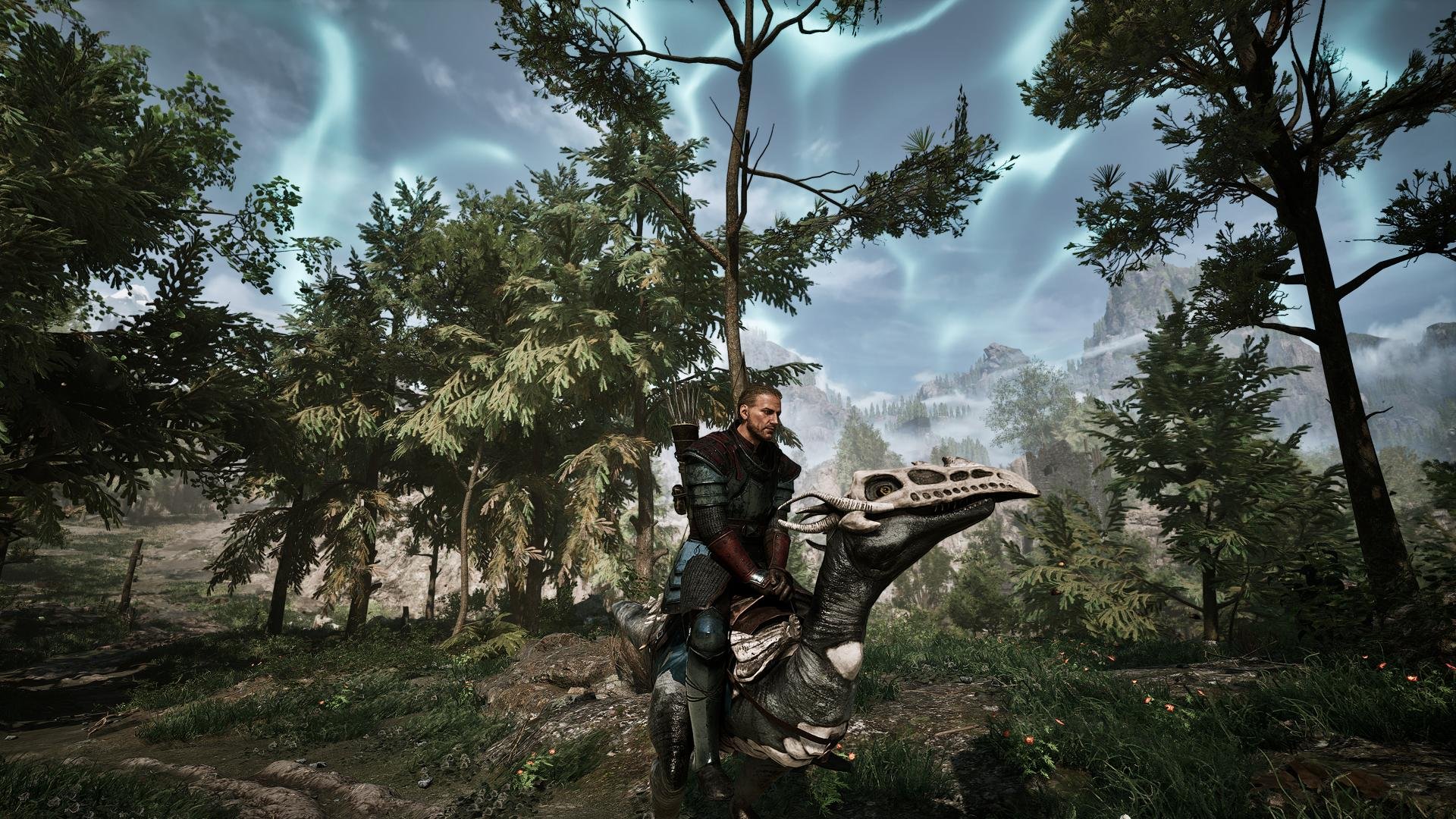
If I had to really critique one major element to Gothic, it is the excessive amount of backtracking you'll do. You'll venture between camp to camp countless times before you'll earn some sort of fast travel. Hell, it took me nearly ten hours to obtain my first, and fifteen before I would discover the next. Still, as I eventually could tame an adorable lizard to ride, I wasn't too frustrated about the constant trekking back and forth. Though, to be honest, the swamp village is a mess of maze-like bridges and cabins that I constantly got lost in. I hated it there.
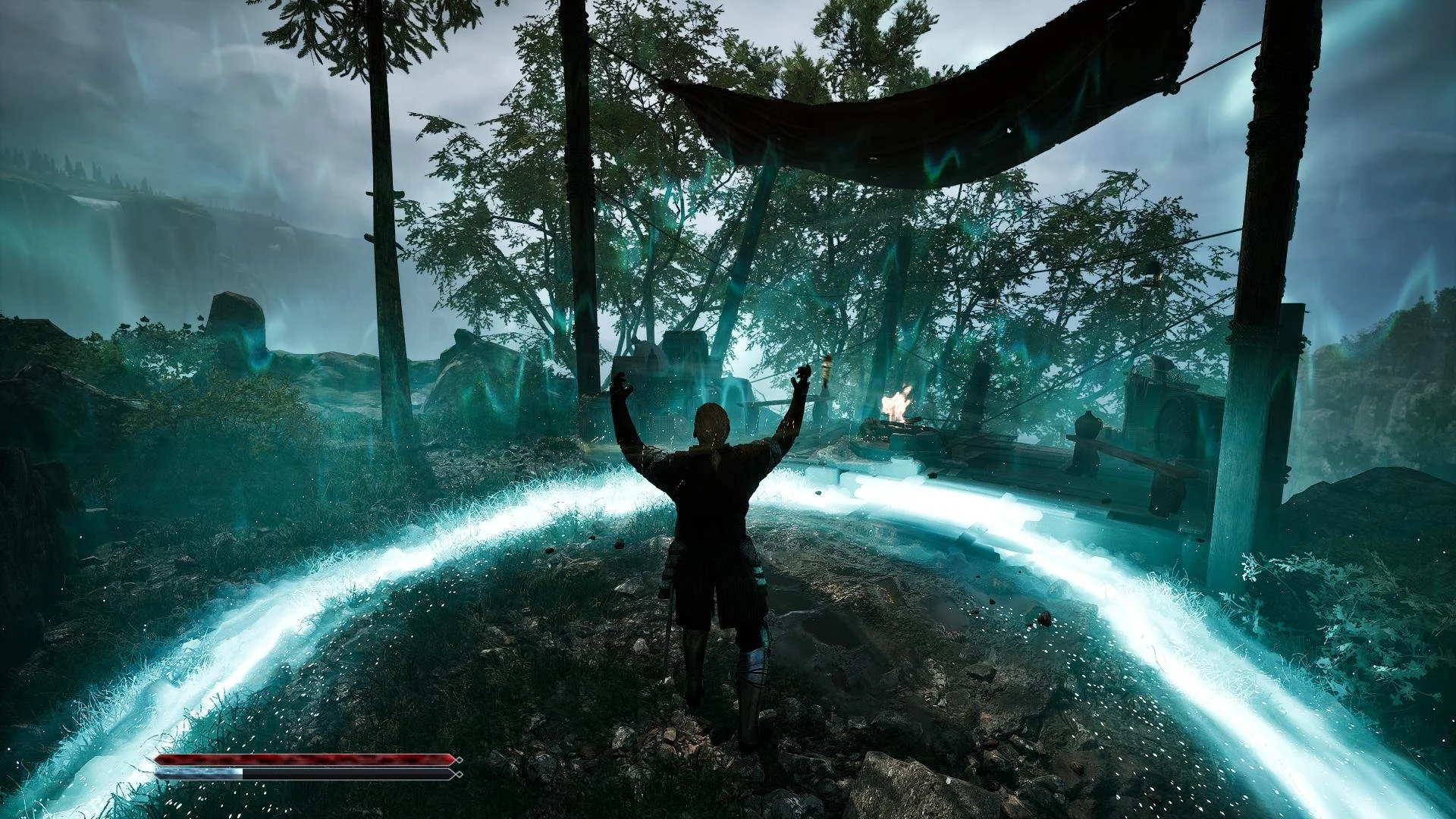
The story is set up as this; a King wanted to protect a mine that he sent prisoners to in order to obtain his precious ore as he needed the resource as a means to counter the Orc threat. However, a containment spell to keep the prisoners from escaping backfired, and a large dome shield then covered the land, and while it prevented anyone from leaving, it placed the prisoners in a state of power over the kingdom. If the King wanted the ore, he would have to bend the knee. And he did.
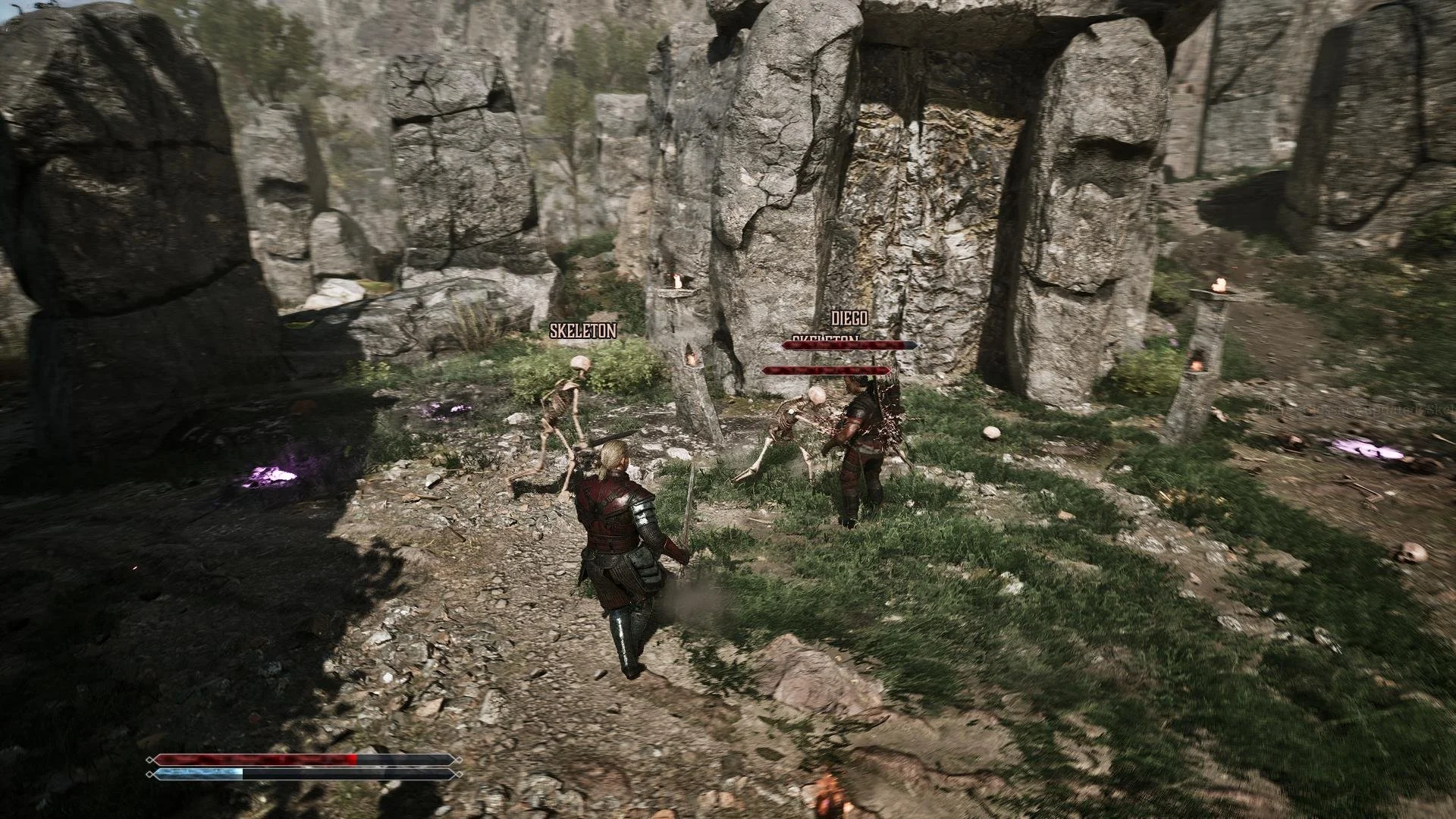
Gothic places you in the role of an unnamed prisoner who is cast into this walled garden to deliver a message to the High Mages. However, you are attacked immediately and rescued by a man named Diego, who escorts you to the town and sets you up with a home, a mission to prove yourself, and the ability to improve your skills.
As you are a nobody, you'll have limited access to where you can go, and the armor and weapons you'll wield. While your mission is to seek out the mages in the castle, not just anyone can enter and you'll need to earn reputation, and find ways to convince others that you are somebody to look out for.
Now, how you go about this is somewhat up to you as you'll have three different factions to join. There is the Old Colony, to which Diego is part of, to the New Colony, which is a group of deserters who left to pursue their own goals, to a religious sect of Cultists who worship a being called the Sleeper. Who you join will change some aspects of the story, but ultimately end up in the same place and attack many of the same story beats. Still, it is a nice way to change up the flow of the game upon additional playthroughs.
In the end, I chose the Old Colony, as they are built around melee combat and given they are directly linked to the Kingdom, it felt like a natural choice. That said, you'll be sent to each of the faction’s camps to infiltrate them, learn more about them, and report your findings back to your superiors.
To give you an idea on the amount of freedom.you have, I eventually found the Old Colony to go against my role as the hero, and wanted the armor that their leader, Gomez, was wearing. So, once I became an enemy of his, I stormed the Old Colony and murdered every last named character and about twenty guards. Did I obtain one of the best swords in the game and his armor? Yup. Will they mess with me again? Likely, but I'll be kitted out to the nines and be ready for them.
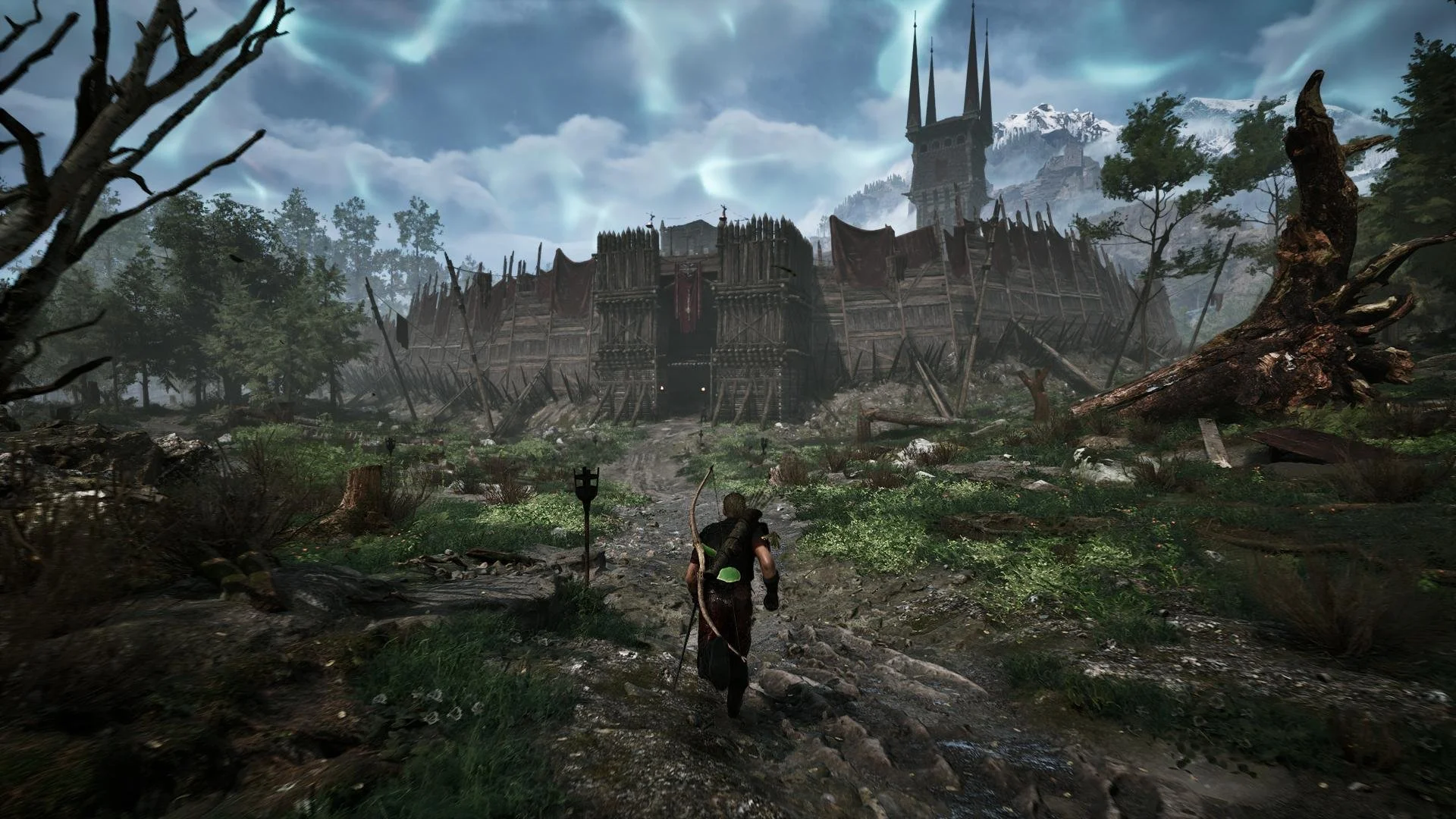
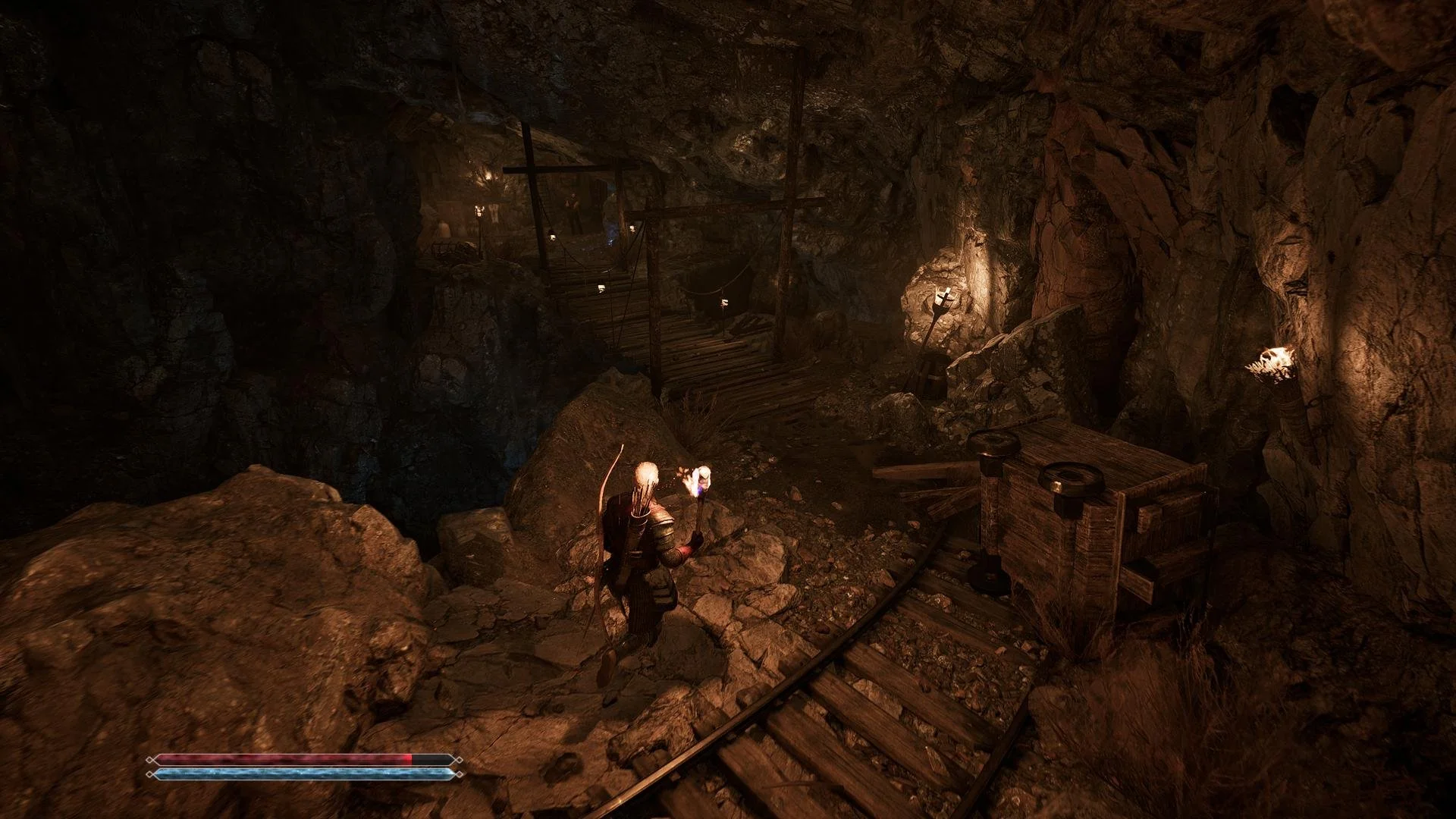
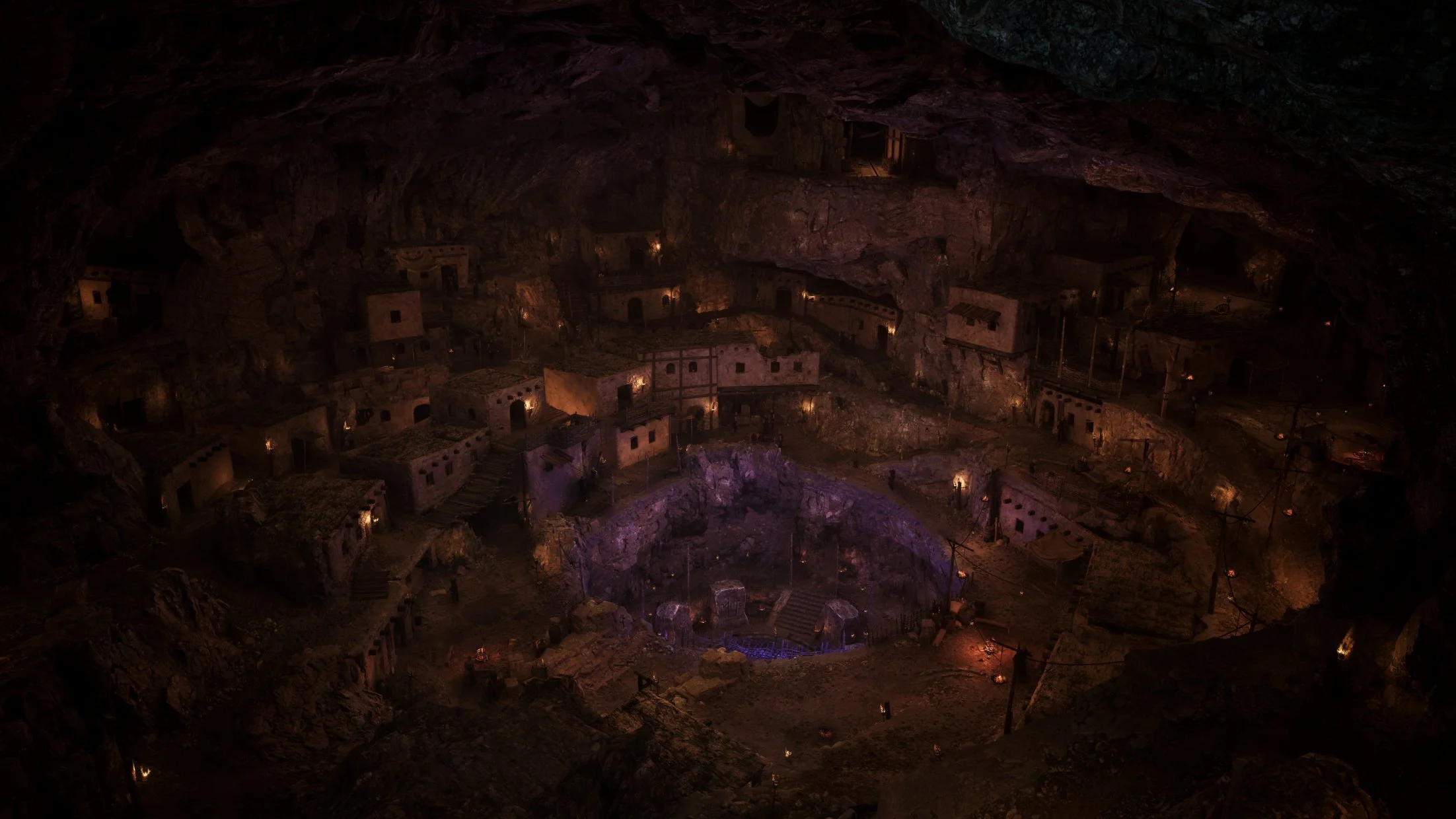
One thing that Gothic really does well is the depth and scale of these factions. The Old Colony is this massive barricaded fortress around an old castle, while the New Camp is this cavernous city deep inside a mountain. It felt like something out of Indiana Jones. The Swaplands provide home to the Cultists of the Sleeper, with an almost maze-like design that I constantly got lost in. Still, the backstory to each faction, the amount of conversations you can have to learn more about them, is significant. Every NPC has a voice, and many of them have stories to tell.
Each faction will have two types of NPC’s, those who can provide something to you, and those that are simply there to fill out the space. For the most part, named NPC’s are those that will provide you information, have quests that you'll need to tackle, or act as a shopkeeper or trainer for your skills. It is very important to listen to them, as while your journal will take vague notes of what you need to do, it won't always indicate where you need to go. These characters will also provide no indication or marker that you even need to talk to them. There isn't any sort of marker above their head and there is no mini-map or compass that indicates they are a person of note. You'll explore these dense locations on the game's terms, and will need to interact with everyone to determine if they are important or just part of the background.
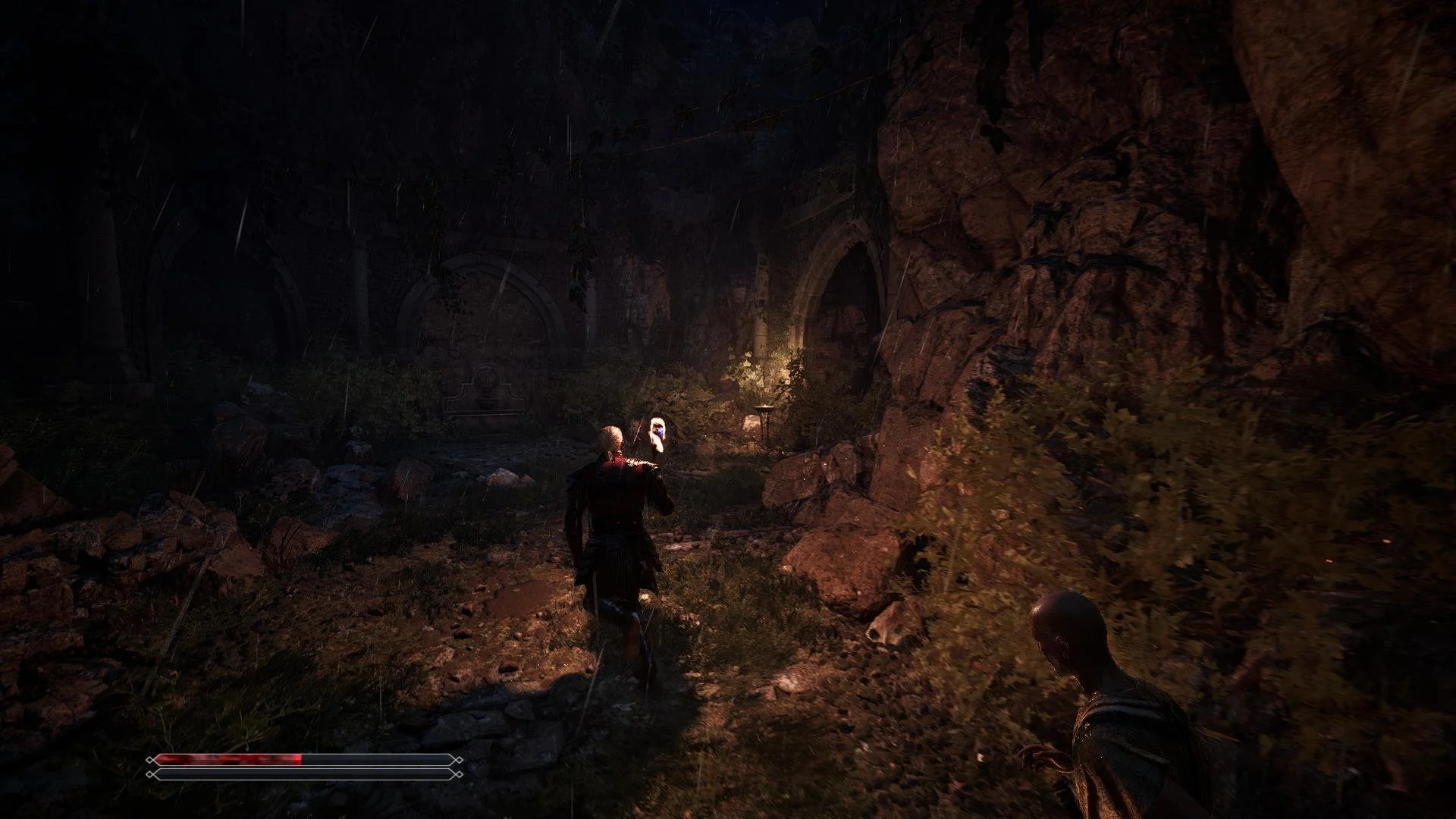
While the story starts with you needing to deliver an important message to the High Mage, it largely becomes one about breaking down the dome and freeing the people within. However, it is also about the struggle of power, and just what exactly the Sleeper is and whether or not it is the salvation they need. There is a lot to the story beyond its premise, but it's also refreshing to have it not built around some sort of chosen one, or preventing the end of the world. It is simply about your survival, and the game frankly doesn't give a damn if you do or not. It's brutal, unforgiving, and wants you to explore every corner of its modest space to find the answers you need.
Quests will depend on your chosen faction, so for me, I was sent to each camp to get to know them, reporting key information back to my superiors. Early on, I was sent to spy on the Cultists, and this had me getting involved in their obsession with the Sleeper. I did find them to be oddly trusting, but hey, that made my job easier. This led to some revelations that would counter their beliefs, and seeing this faction struggle with certain truths, or seeing them see it as a test, was captivating. While I did see one part of the story coming, regarding the Old Colony, it nonetheless was a brutal and impactful scene that I still think about. That said, as I mentioned before, I did get my revenge and then some.
I would later interact with the New Colony, as well as a fourth faction of bandits, who may possibly prove to be a bigger threat to the Old Colony. For as much as the game is built around the removal of the dome, and the Sleeper, it does a lot to build up the hostility toward each faction and how they view each other, as well as the power they wield against the King. And, being a third party, you get caught up in their spats, and put to work as a messenger, a hired sword, and any other objective they want. Is Gothic simply a game about fetch quests? Sure, but given the era of its origins, I don't blame it for having that design. Could it have been fixed? Sure, but then it causes some of the game's original identity and story to waver as a result.
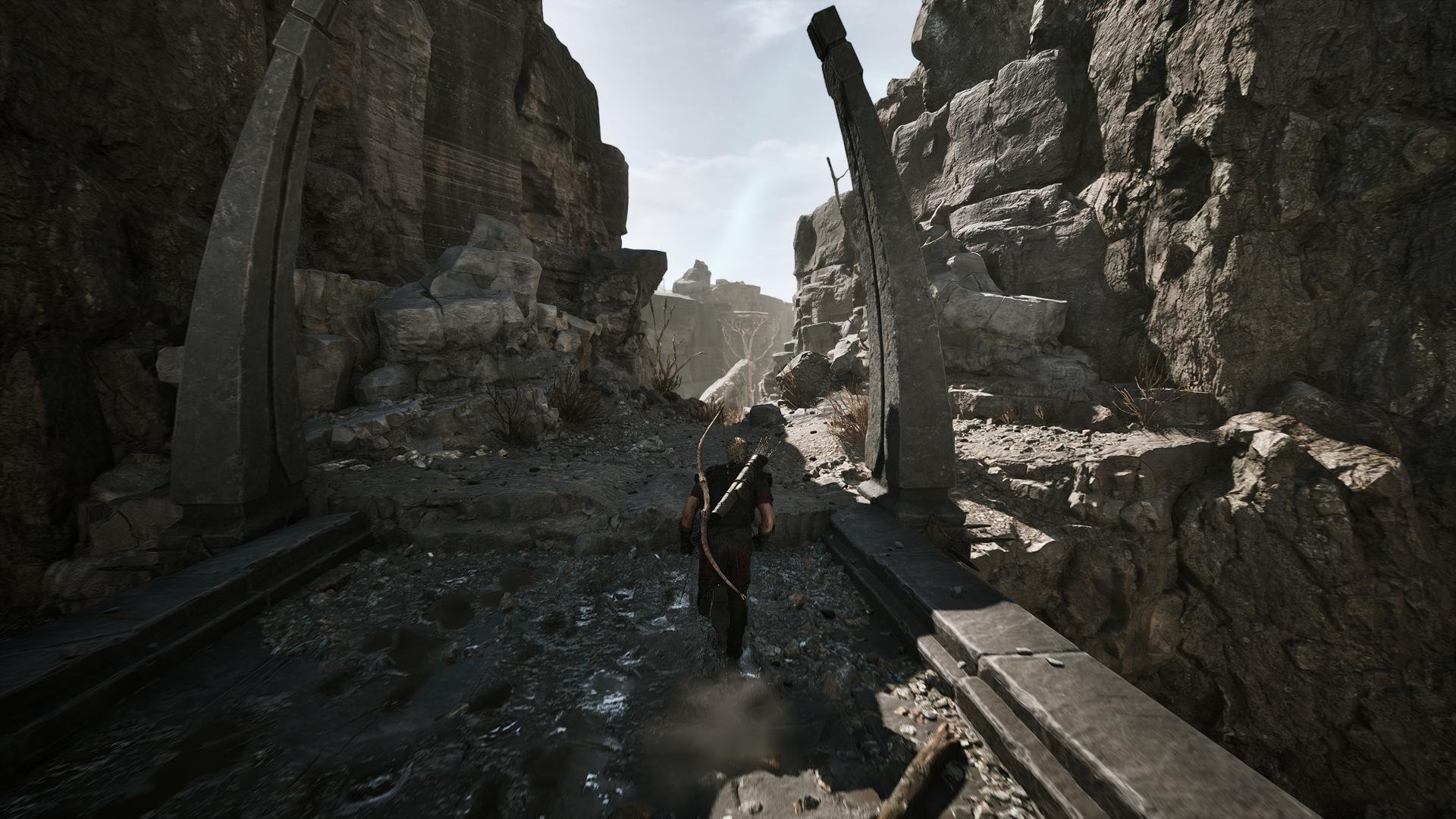
Early to midway through, you start to find yourself aligned with a few key individuals who have a plan to destroy the dome. Luckily, you will be in the possession of a relic that proves to be the way to possibly remove this magic ward around you. And as you would expect, your services are required as you put a plan into action to remove the magical forcefield and hopefully, escape this walled off prison.
However, the world around you has other plans. Wolves, Orcs, Lizards, and other various creatures and bandits have it in for you. To combat this, you'll need to improve your arsenal of attacks and abilities. Going with the Old Colony, I was pure melee, with few magic spells to be effective. I'd perform a few shots of my bow from range, but ultimately swing my sword or axe when enemies got close. At first, you'll be pitiful with damage and technique. Diego, who you'll interact with quite often will be able to train you in either strength or dexterity, whereas the fighting arena trainer nearby can boost your damage with one handed weapons. While my first promotion was to Shadow, I eventually became a Warder, which opened me up to two handed weapons, and a trainer to help me with that skill.
As you level up, you'll earn ten learning points per advancement, and most trainers will have a single point incriminate, a five point, to ten, twenty, thirty, forty point talents, and so on, with an equal measure of Ore needed for payment. These skills range from melee, magic, lockpicking, pickpocketing, to more, boosting your kit and making you far more formidable.
That said, you'll need armor and weapons to really take on the threats around you, as even on easy, you can die in a single hit if you are not careful. Armor has different layers, with chest, waist/gloves, and pants/boots, which each have upgrades and specific stats to them. Weapons can be crafted, or bought, and follow the general sword, axe, bow, and relative weapon family traits of variants between them.
With using your learning points, you'll gain access to better gear as some weapons and magic require a certain stat requirement. Luckily, I put as much as I could into strength, and eventually was two-shotting orcs and one-shotting those pesky wolves. What once was a threat was now easily dispatched. And given my armor rating, I was brushing off attacks that would have originally cleaved me in two.
What I like about the learning points is that instead of a spreadsheet of skills to acquire and spend in a skill tree, you were seeking out teachers and listening to their guidance, showcasing just exactly how you would improve. It's a neat system, but one that requires a lot of exploration to even find these trainers. Hell, I was lost in the forest and stumbled upon a trainer for fighting with my fists. Even as I was approaching the end, I was still finding new trainers, and finding more avenues to spend those points. And no, you cannot respec, at least to what I have seen, so spend them wisely.
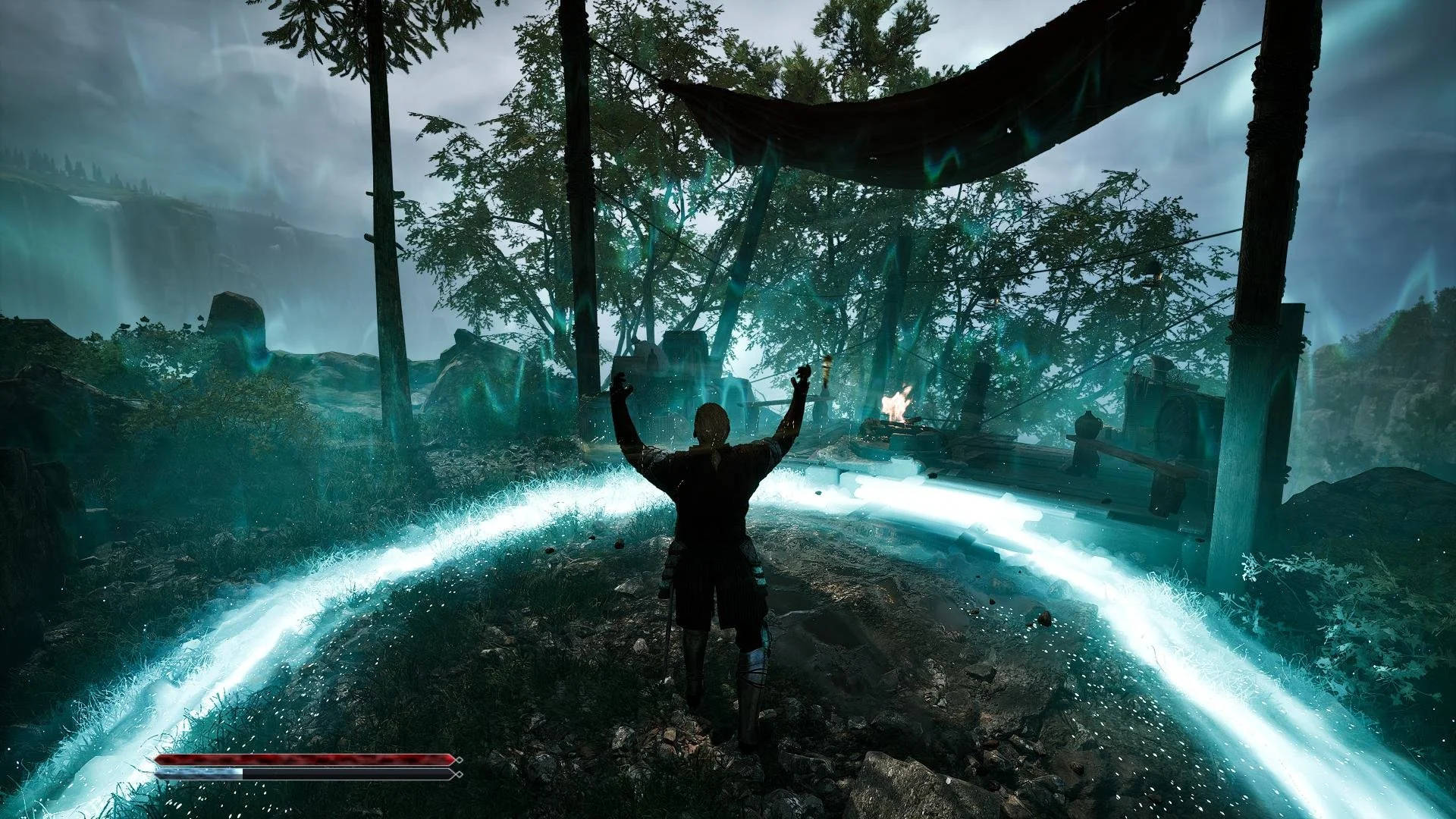
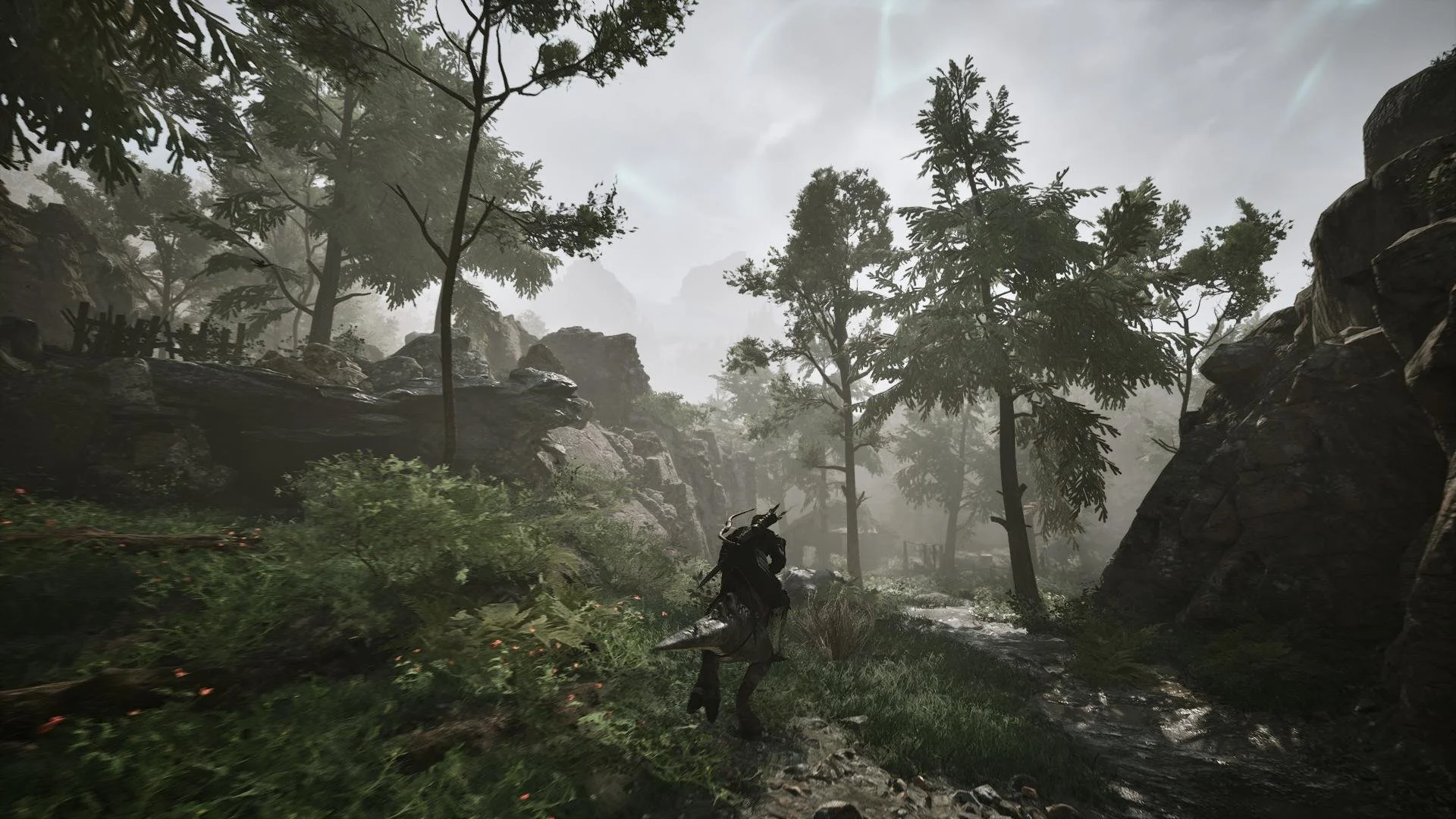
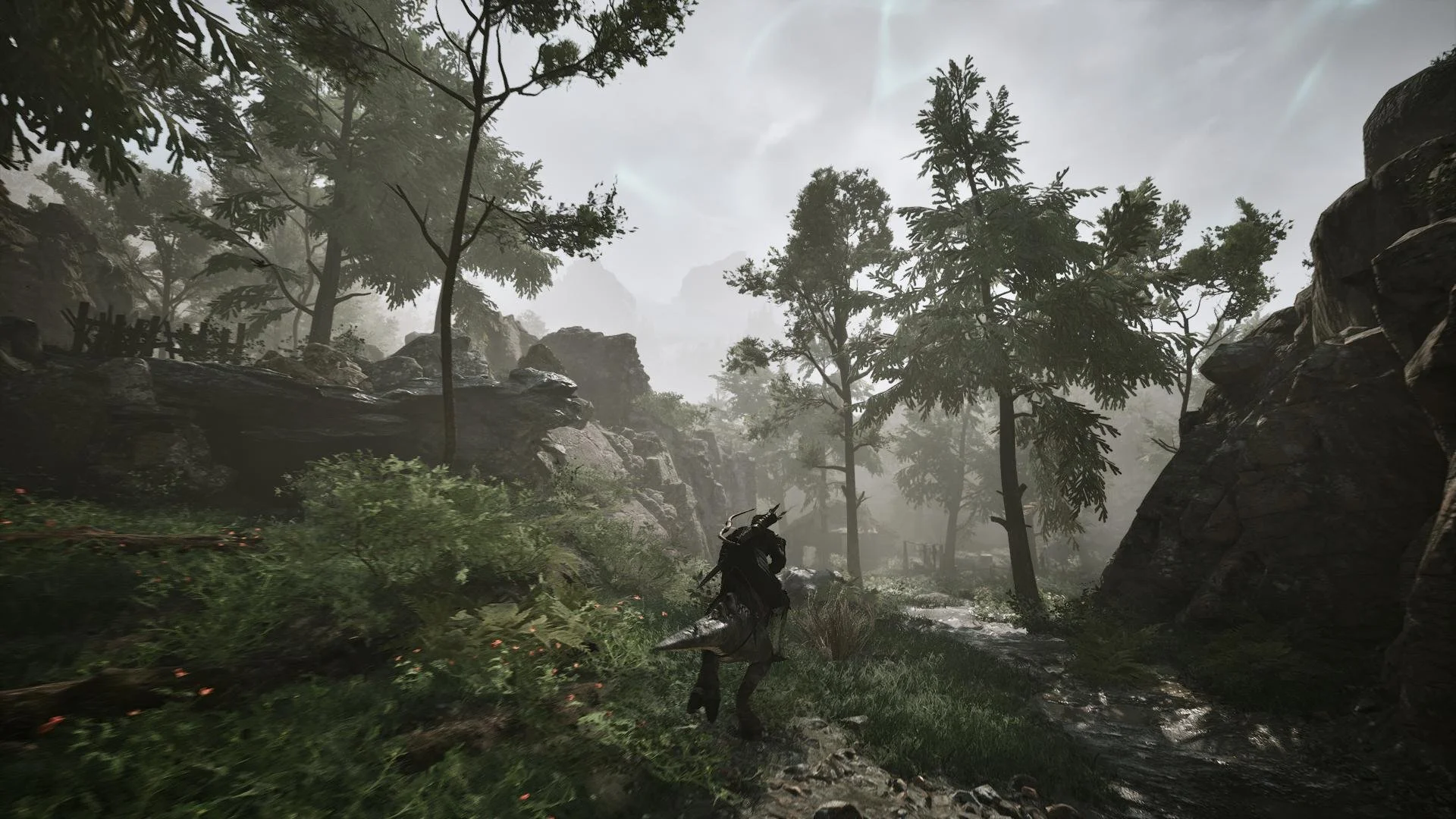
This also keeps you out of menus and allows you to interact with the world and characters around you. It also places a larger importance around your supporting cast. Once you unlock each area's fast travel, it makes a trip to them trivial as you can then zip around the map. That said, once I unlocked the lizard mount, which you can do very early on, I rarely used the fast travel, or even going anywhere on foot, it was just that fun. That, and you can pet him. He's such a good boy.
Combat is as simple as swinging your weapon, whether it be a blade or a blunt instrument. Enemies will take damage differently based on each of those, and each face button has a different directional attack. You can block incoming damage, but I felt the block was slow to react, and didn't have the speed needed to really be effective. You can have four active weapons or spells or food items readily available, meaning you can have both edge and blunt weapons equipped and at the ready.
While you do have a dodge, I didn't find it really that effective, especially against creatures with both speed and range. I also found that the bow takes too long to pull back for a harder shot, especially given some enemies can run. Still, combat feels good, with the proper crunch needed to make your attacks feel impactful. I do wish there was a bit more depth and flare, but it does serve its purpose and rarely gets boring.
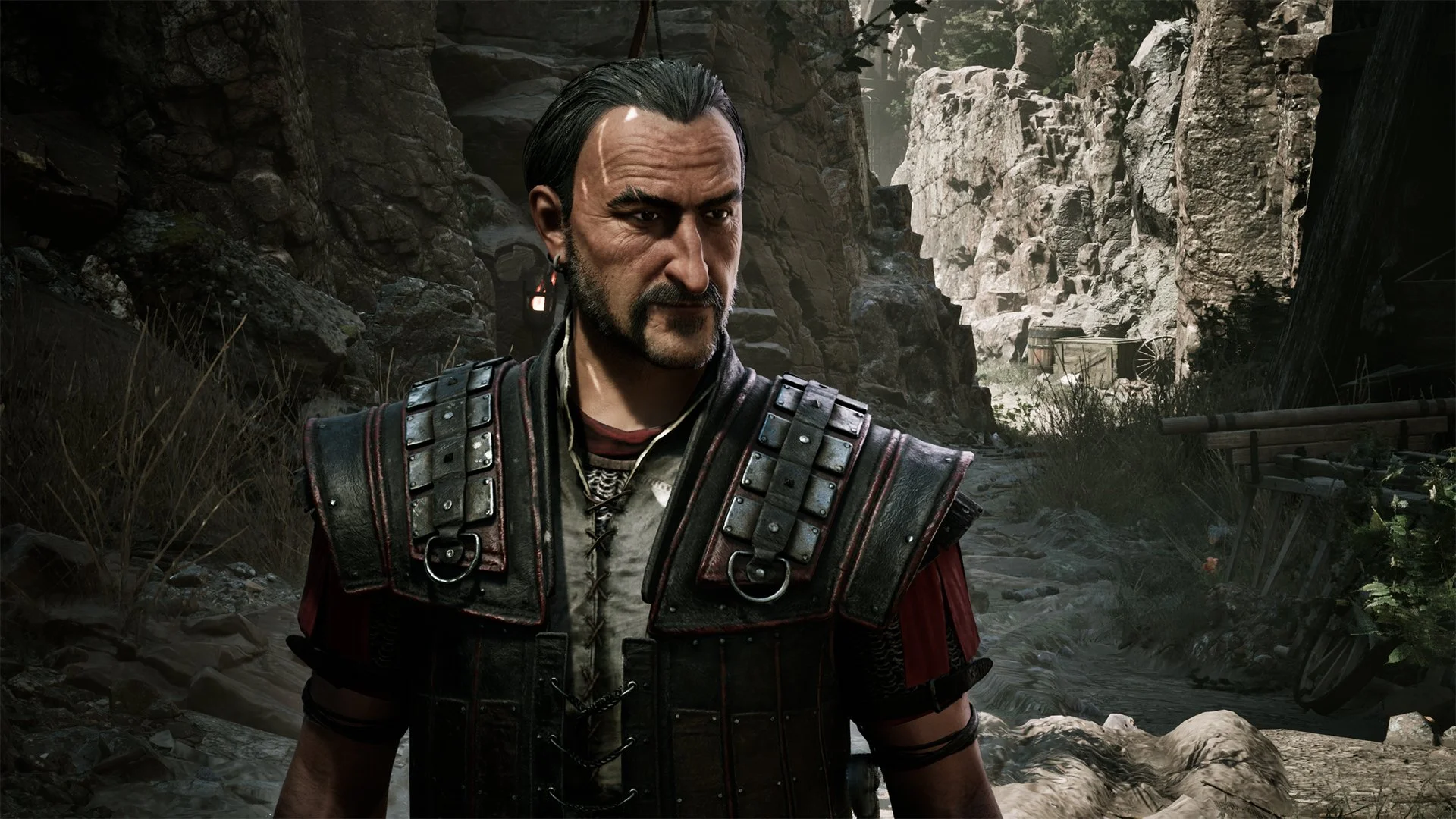
As you can run around anywhere with an equipped weapon or torch, I do wish that interacting with NPCs would cancel out items such as the torch. I can't recall how many times I accidentally hit them with the torch and had to reload as they would think I was there to kill them. Hell, even fighting next to my allies was strangely difficult as I could accidentally hit them and not mean to, sparking their retaliation. Thankfully, you can beat them senseless and they will totally forget what happened. I also found it odd that even stepping into someone's living space would see them quickly attack me, even if I was just looking around or trying to wake up a pivotal character, especially when I am well liked in that area. They should just walk up and tell me to leave, not instantly draw their sword or cast fire spells.
For as much fun as I found the Gothic Remake, it has some major issues and one bug that rode with me for nearly 25 hours. After around 12-15 hours, any time I needed to check the map, which was pretty damn constant, the map wouldn't go away. I was essentially soft-locked and had to restart my game from the dashboard. This required me to save my game before checking my map since it would reliably freeze up. I likely had to restart my game well over 200 times. I'm legit not kidding, and that estimate is on the low end.
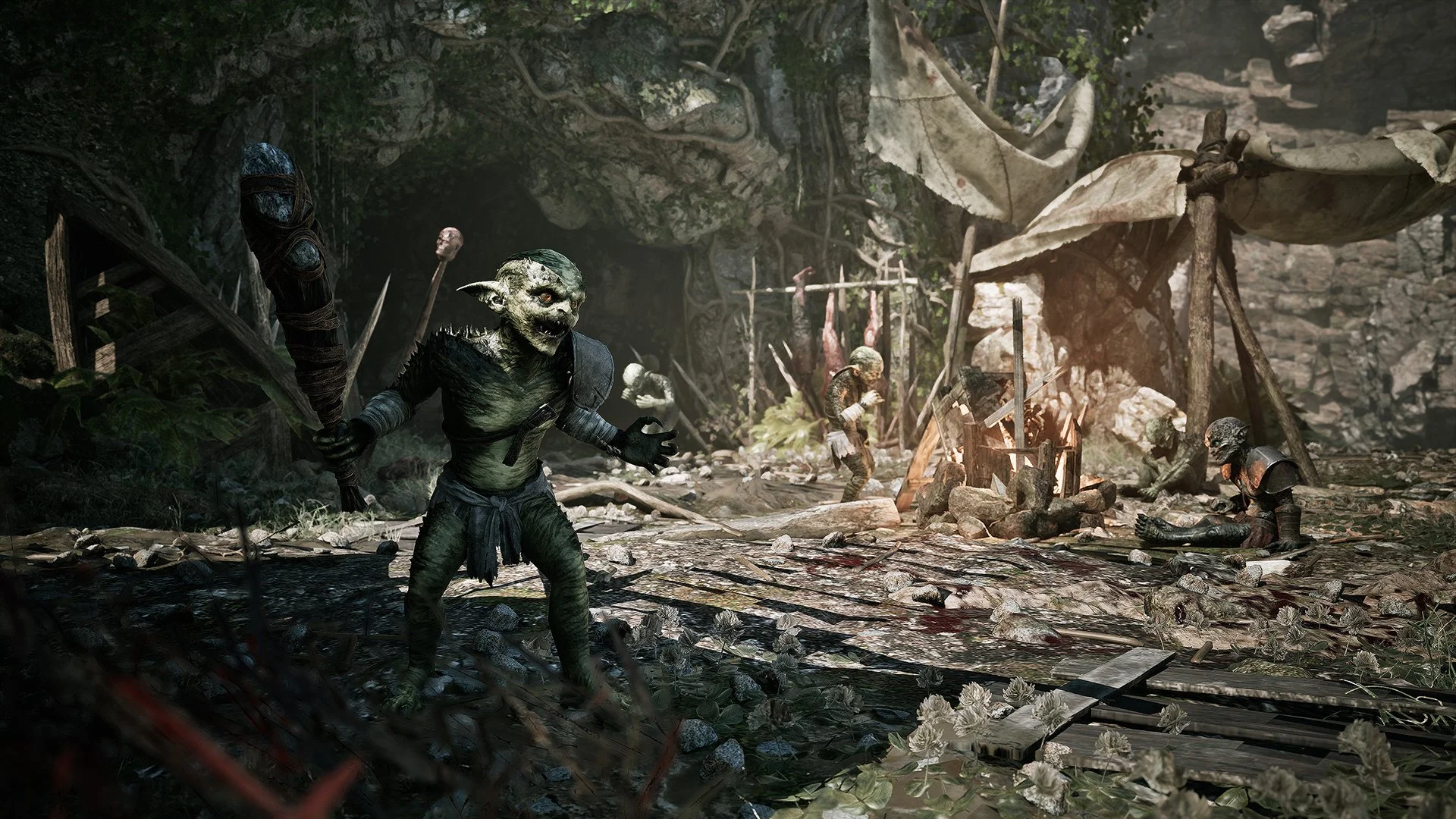
Otherwise, I had a few crashes, some moments where I had to press the interact button several times to even have it register, to enemies getting stuck in the environment. However, as one of them was a large troll that likely would have killed me, his passive nature of being stuck allowed me to kill him with no effort.
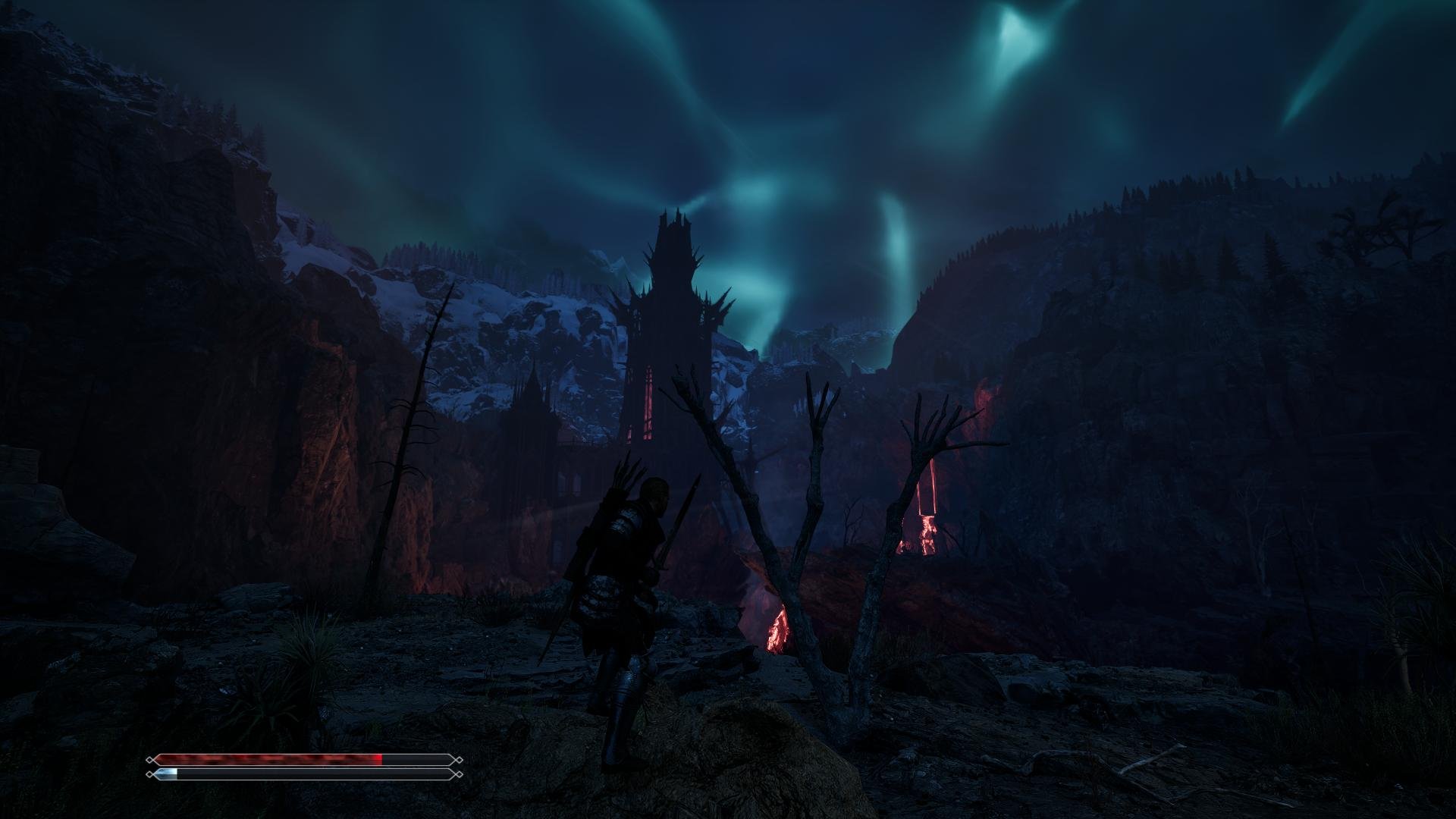
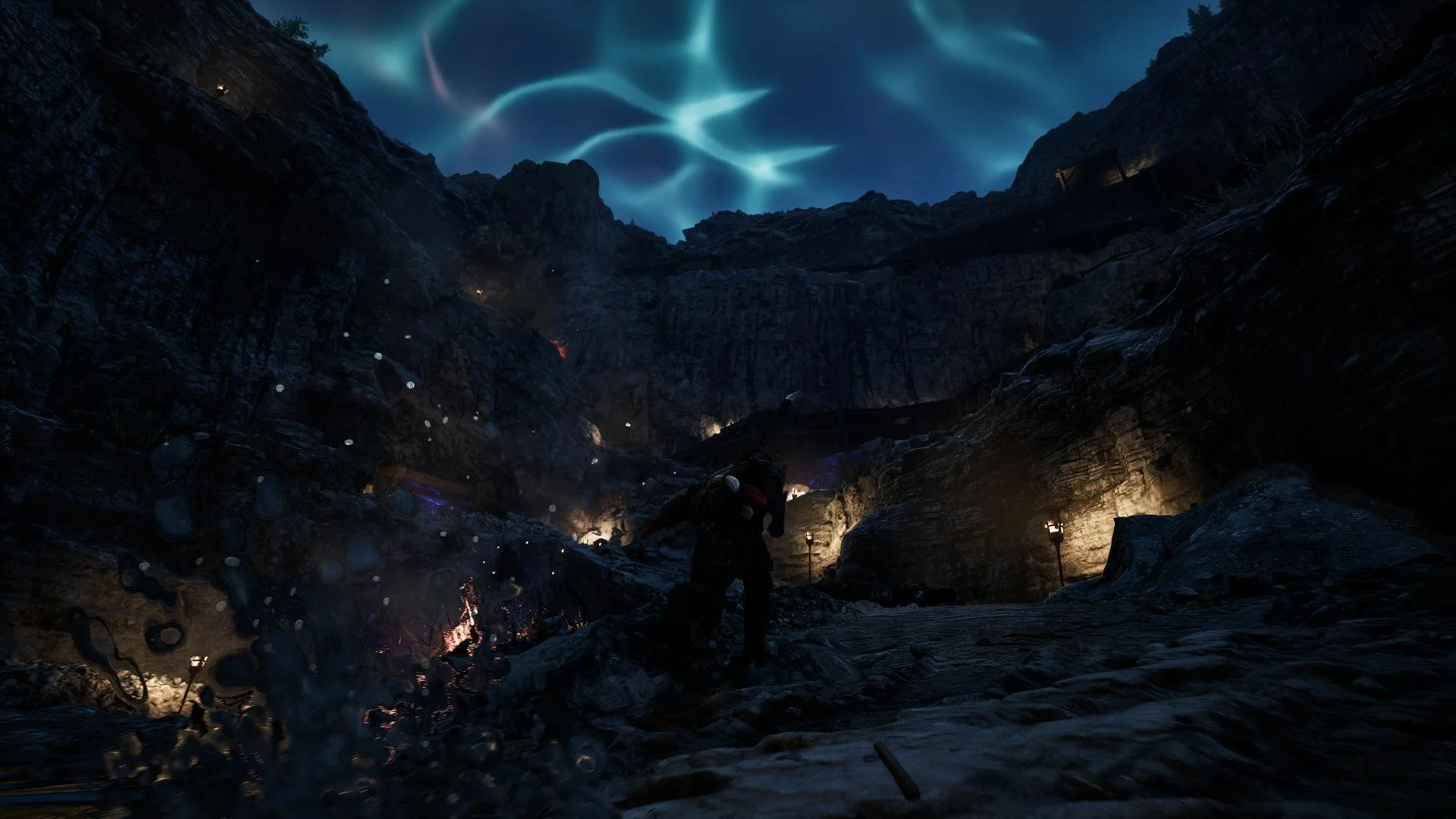
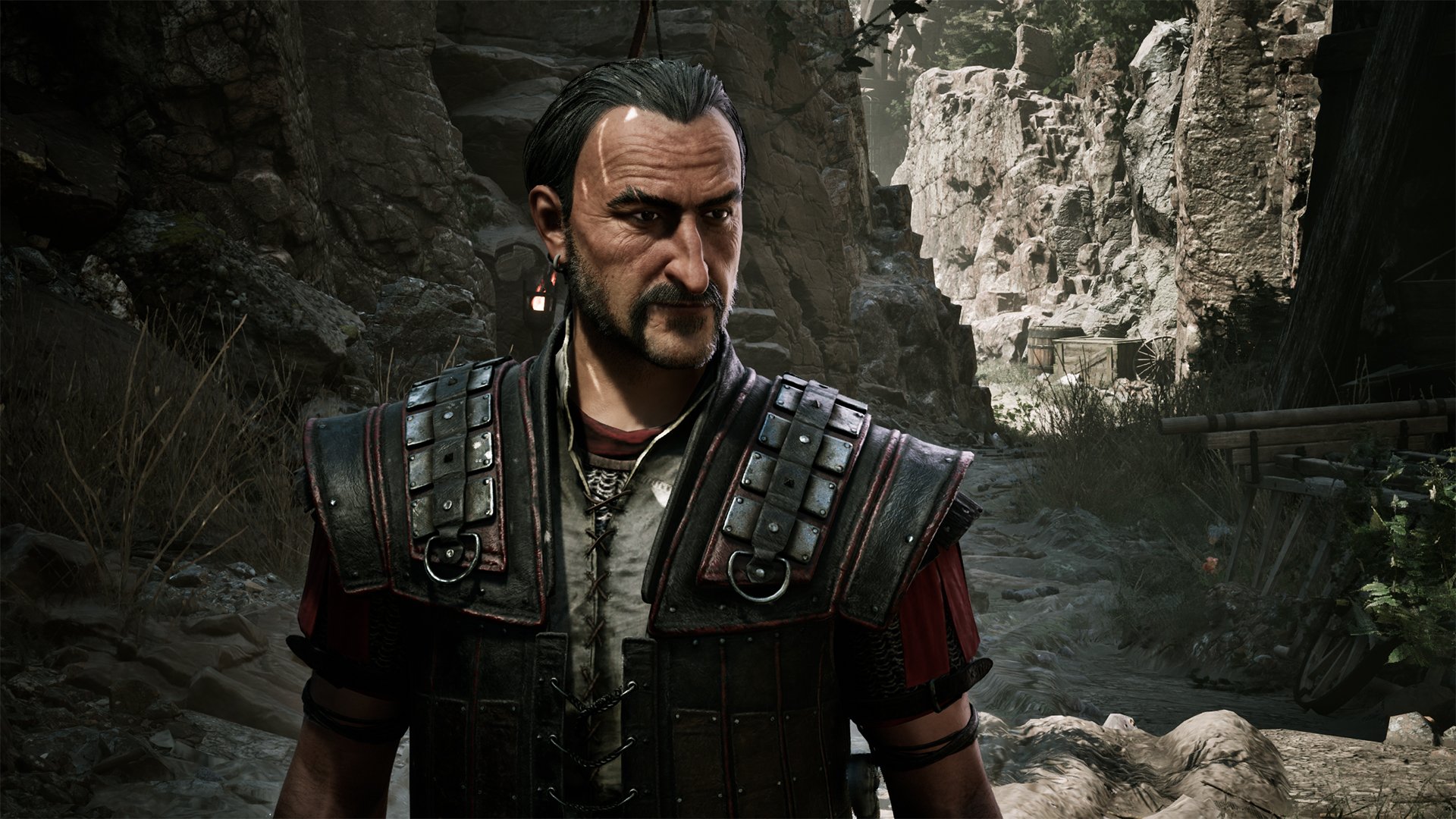
Alkimia Interactive has a gorgeous game here with mild technical aspects to sour the presentation. Some NPCs are absolutely stunning, with a large majority clearly not having the same love given to them. Still, for as good as many look, their facial capture and animations are just not executed to where they should be. Still, the land of Khorinis is stunning, and the team has done a great job utilizing Unreal Engine 5, to varying success.
As I can only comment on the performance of the game on Xbox Series X, I was disappointed that the game has no performance mode, as there is only a single setting that runs the game at around 30fps at around 1440p. I am hoping this will be addressed in a patch, as the PC version is able to reach a somewhat comfortable 60fps, based on what I’ve been able to track down.
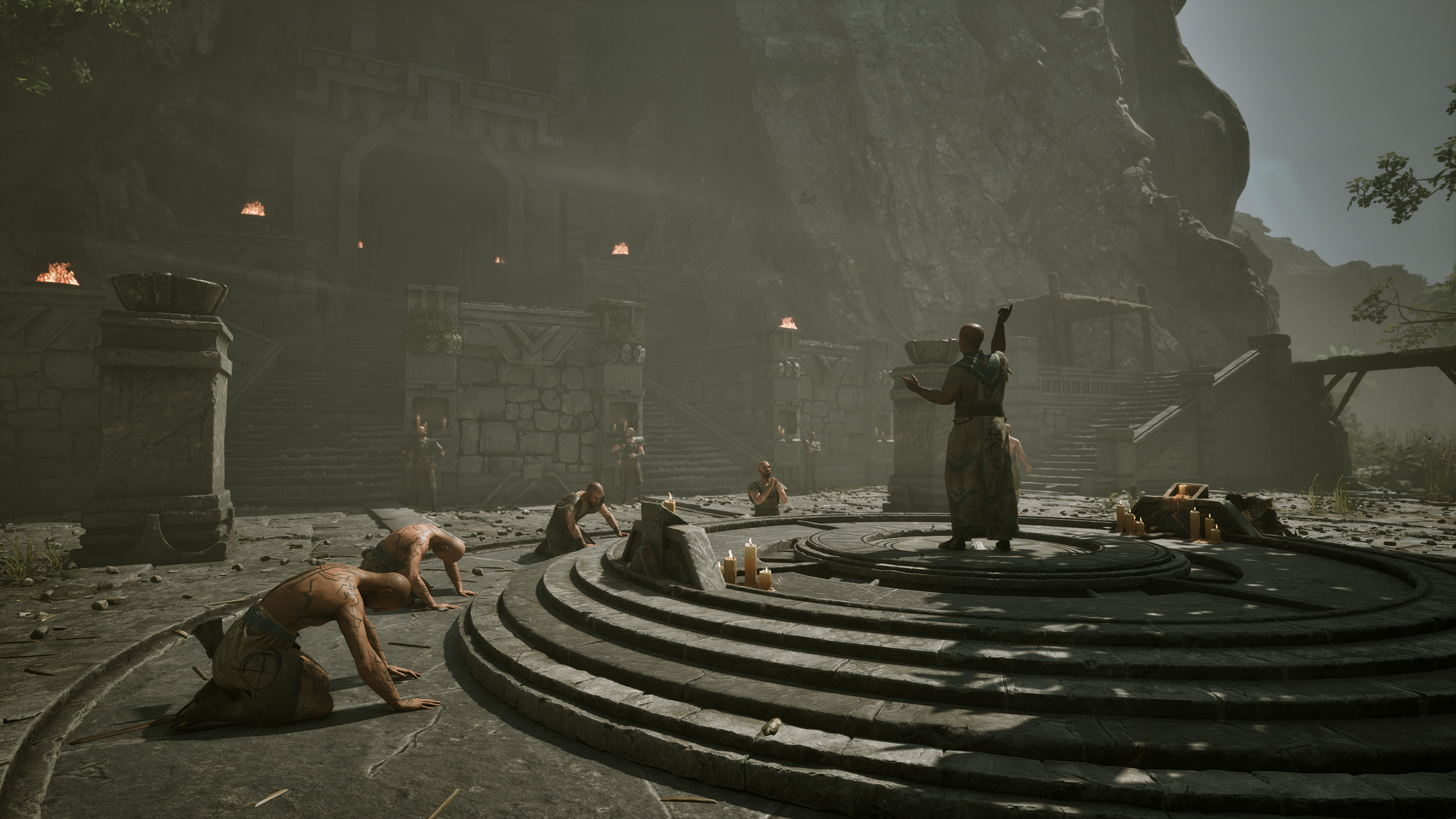
Still, the game ran decent apart from my aforementioned issues. I rarely experienced stuttering or low dips in framerate. While I've heard of excessive stuttering and massive dips on PC, PS5 and even the PS5 Pro, I didn't experience these myself on Xbox apart from maybe four or five moments of stuttering when approaching the game’s larger bosses.
Voice acting was a big part of the original, as it was one of the few RPG’s to be fully voiced at the time. While the acting here is fine, it is the reworked dialogue and conversations that really bring these characters to life. I also love that Kai Rosenkranz came back to re-score the game’s fantastic music that he was responsible for in the original. Apart from the music, the sound design is solid, with caves coming across as creepy and forests really feeling alive when a storm is raging on.
The Gothic Remake is so much more than a remake. It enhances the original without compromising its identity, and allows its core pillars to shine in contrast to its contemporaries. It certainly is still the Eurojank adventure it was before, but with breathtaking visuals, and reworked combat, Gothic is wildly impressive for any studio's debut, if not for a few horrendous bugs and some unfortunate poor performance woes.

Developer - Alkimia Interactive.
Publisher - THQ Nordic.
Released - June 5th, 2026.
Available On - PS5, Xbox Series X/S, PC.
Rated - (M) - Blood and Gore, Strong Language, Suggestive Themes, Use of Drugs and Alcohol, Violence.
Platform Reviewed - Xbox Series X/S.
Review Access - A review code for Gothic Remake was provided by the publisher for the purpose of this review.
Jeff is the original founder of Analog Stick Gaming. His favorite games include The Witcher III, the Mass Effect Trilogy, Hi-Fi Rush, Stellar Blade, Hellbade: Senua’s Sacrifice, and the Legend of Heroes series, especially Trails of Cold Steel III & IV.