
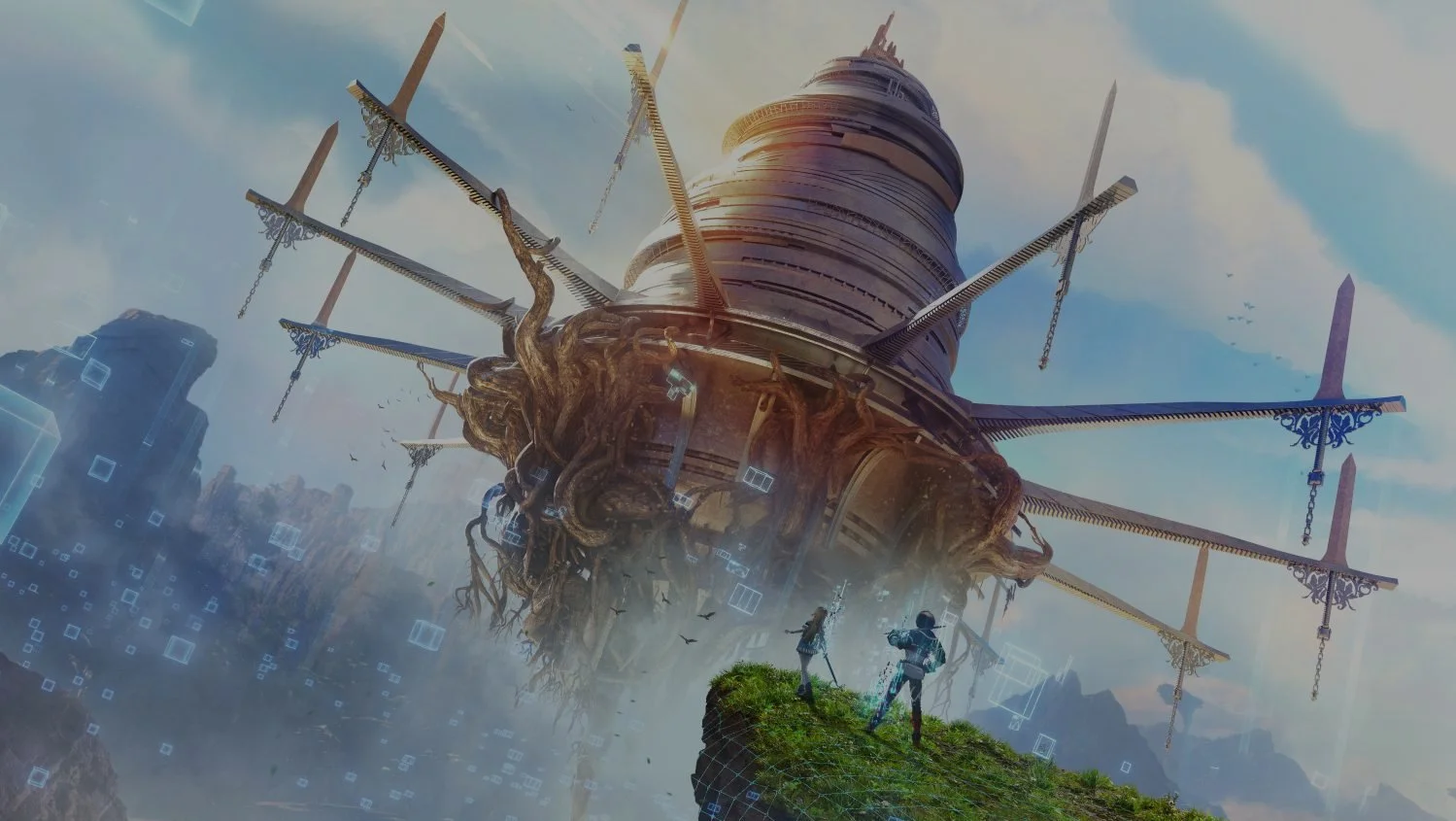
Sword Art Offline
I've been a fan of Sword Art Online ever since the anime originally aired. I was a fan of its characters, its world, and the “if you die in the game, you die in real life” narrative hook. I purchased the novels and dived into the Manga to consume as much as I could.
However, I wouldn't really “love” the series until the Phantom Bullet arc, largely due to Sinon. She would become my favorite character of the series, and cement a place in my top five anime characters of all time. I have wall scrolls, figures, and statues of her almost anywhere you look.
However, the games were always something I just never enjoyed. From poor pacing, bland visuals, performance issues, and a host of bad combat design choices, these digital adventures through Aincrad and beyond never truly satisfied me. Their failings left me wanting a true Sword Art Online experience, something that Echoes of Aincrad nails better than its predecessors, even if the execution is simply not there. It's a good first step, but falls short in almost every way.
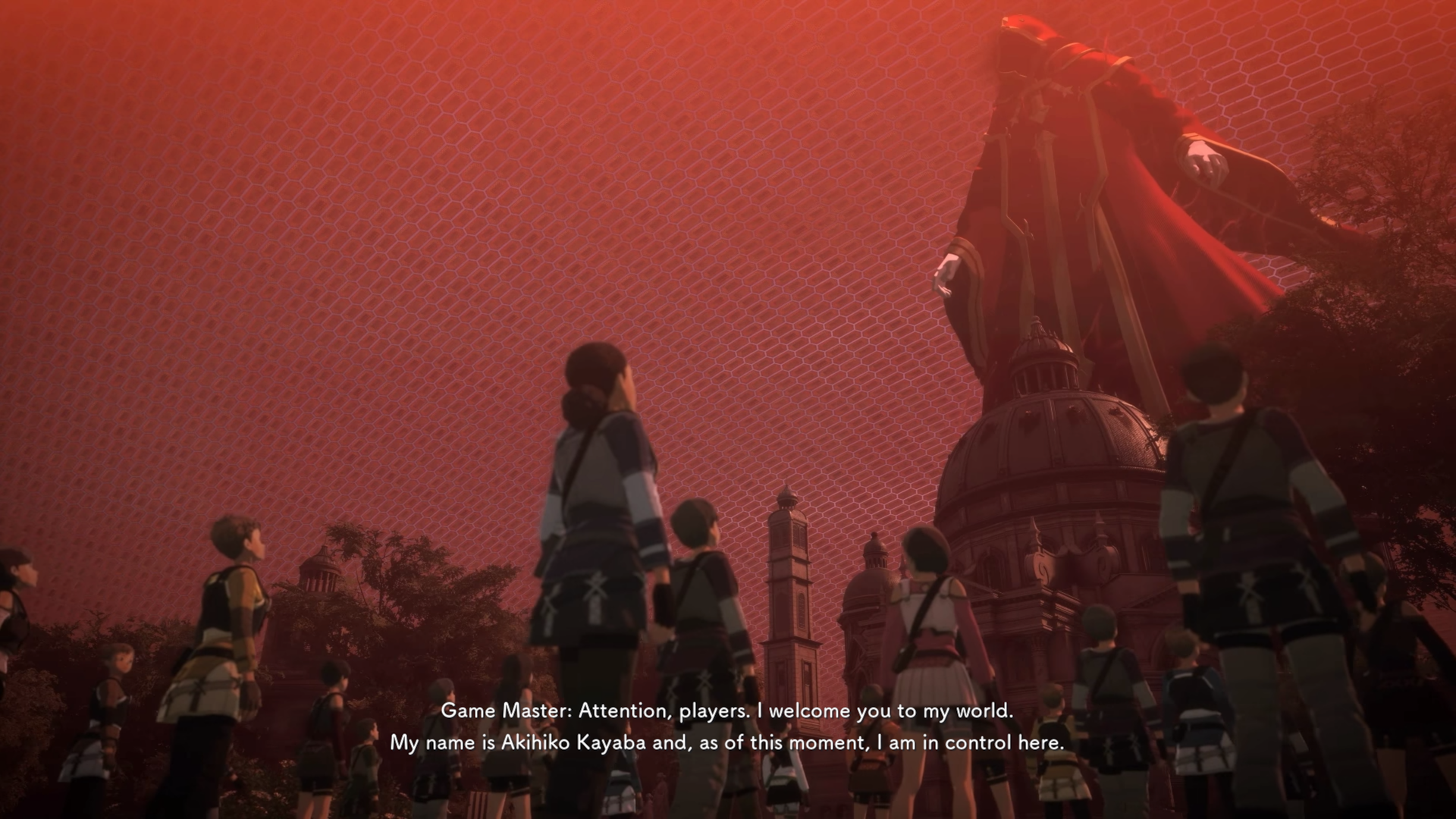
Echoes of Aincrad takes place parallel to the first season of the anime, but shifts its focus away from the central characters like Kirito and Asuna, and is guided by your own original character. It's a smart play that allows its story to be wholly unique and unpredictable, which the show and manga lacked, due to needing to keep the marketable characters alive. Here, anyone can die, and the game has a deeply emotional moment that illustrates the stress of losing a loved one, questioning their sanity, and if death in the game truly means death.
Given the connection to the early episodes of the anime, you'll finally be able to embark from the first floor, which is something the game's never really did. Hollow Fragment began on the 75th floor and acted as a “what if” type of scenario. SAO Integral Factor did allow you start on the first floor, but the game had a ton of time skips that deluded the approach to this gauntlet that the characters in this story had to deal with. It lacked the dread of what the story needed.
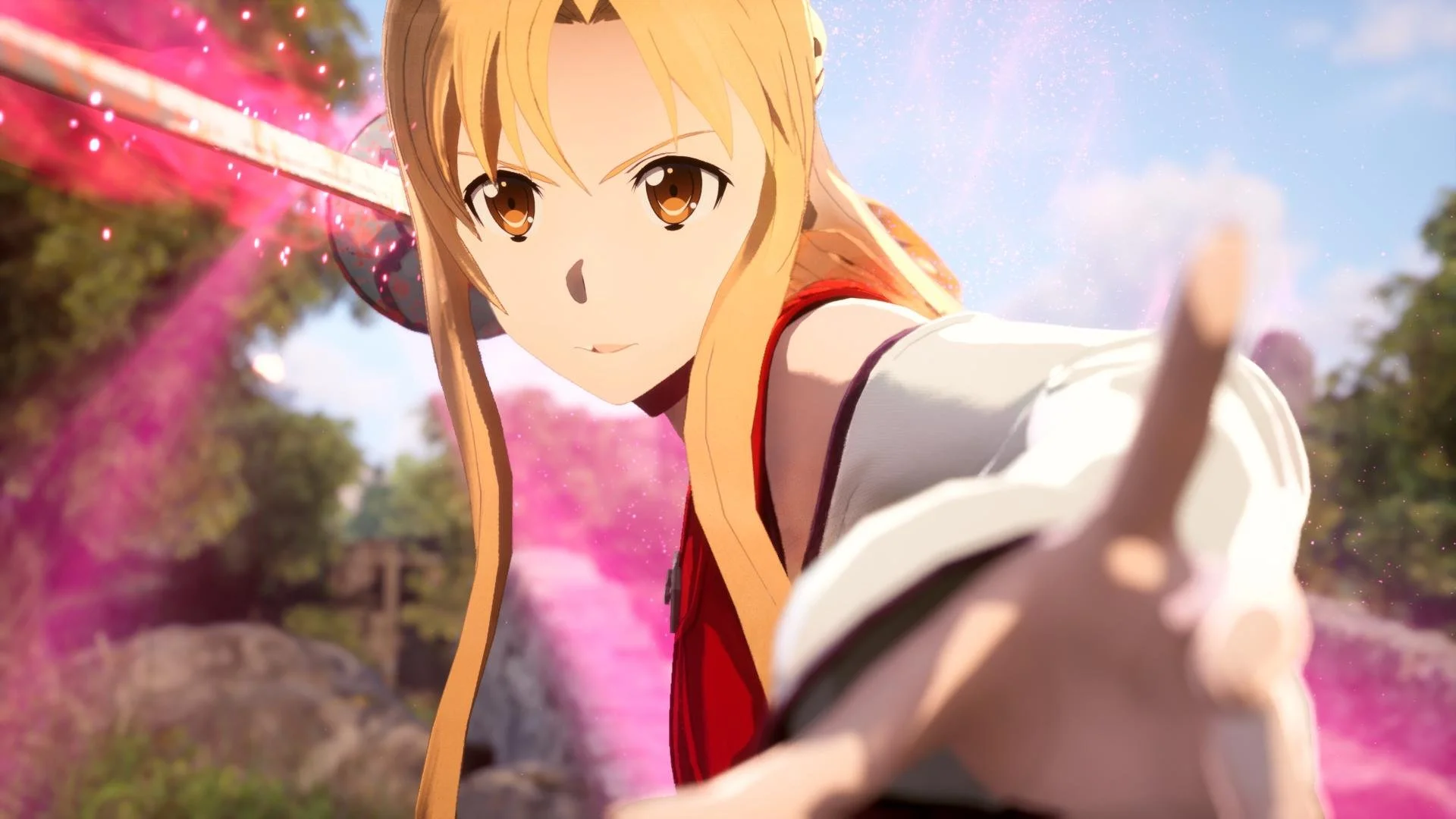
While the main story is centered around completely original characters, you'll still meet up with the likes of Kirito, Asuna, Argo, Klein, Agil, and more. While they are not constantly surrounding you throughout the main story, they serve as a way to provide some fan service without drowning you in nostalgia. Sure, you can link up with Asuna, Argo, Klein and others for quick side quests, but their involvement in the main story, especially Kirito, is one of guidance as he takes a massive backseat to your journey. You know of his legend, but it's never the focus. It's a smart way to use these series regulars without overdoing it.
The story begins as you arrive shortly before the Beta test ends, meeting a swordsman named Iori. You do join up with friends, but they are vastly far ahead of you, given they have been enjoying the Beta for sometime now. Iori comes out of nowhere and while mostly a solo player, finds value in joining you, and the two of you become fast friends. The Beta has its own purpose, and plants the seeds for moments that are peppered throughout the main adventure.
However, as the Beta comes to a close, the story shifts ahead a few weeks to the full release, as players then find themselves trapped in the game, unable to logout, and told that if they die in the game, or are removed from their VR nerve gear in real life, they will die. And, to make matters worse, the game scans the hosts of the thousands of characters and replaces their custom avatar with their true face, revealing Iori, a “male” character who saves your life in the Beta, to be female.
I will say that while I did see it coming, given the promotional material leading up to release, I found it odd that Iori didn't really feel the same after the switch. It felt like an entirely new personality and character. Sure, playing as the male character could have been a way for her to act differently, and escape reality, but they just felt like two entirely different characters.
To add, while you are the “main” character, this really felt like Iori's story, given she is front and center at almost every narrative shift, and the voice for the team you establish. As the “main” protagonist, you simply nod, shake your head, smile, or act confused, during every conversation. While a silent protagonist can command attention in other games, here you feel like you're simply following Iori's journey instead of mounting your own. You feel incredibly insignificant and you feel secondary at every turn.
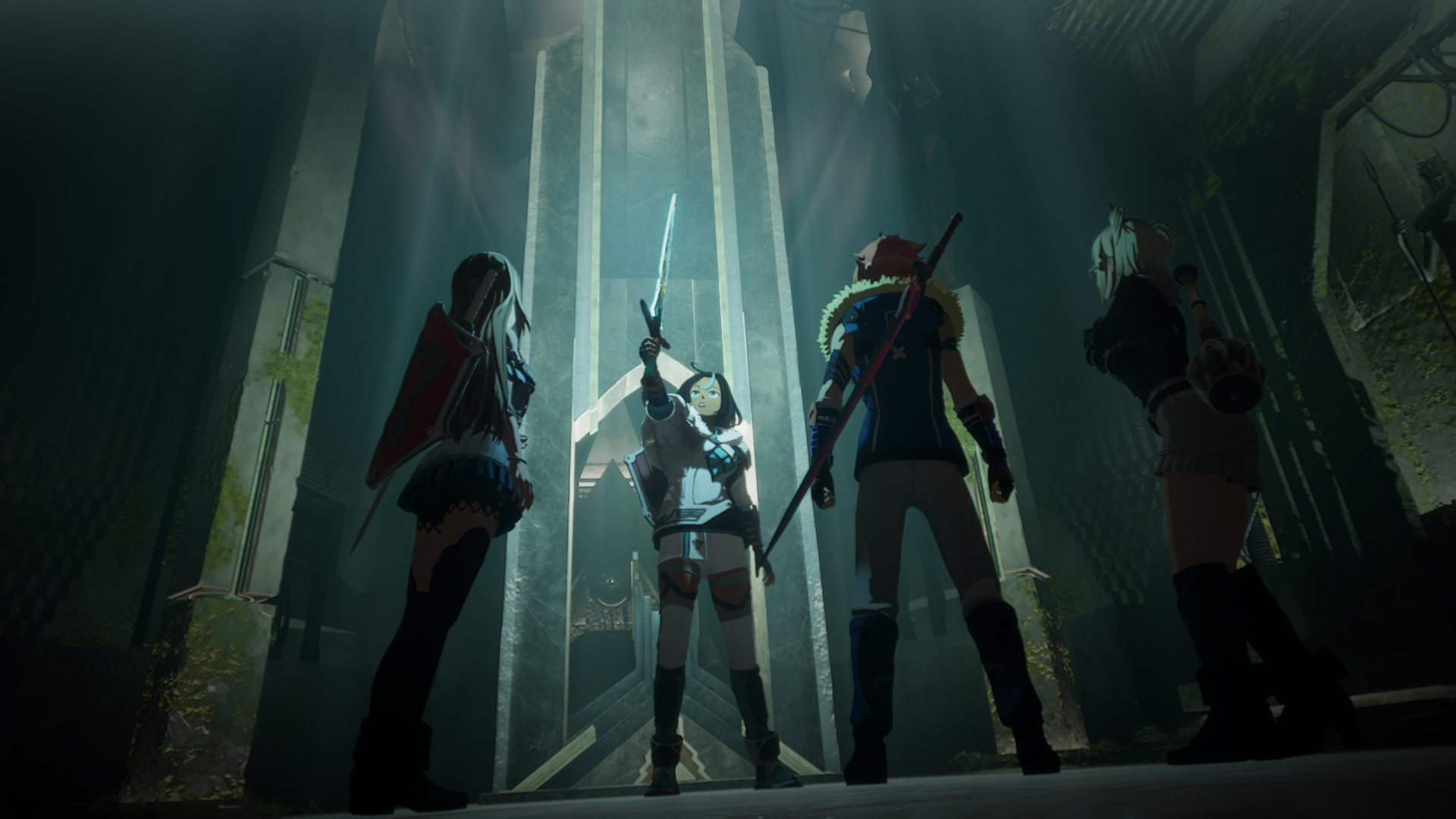
The rest of your team is made up of a few others that come into play once the main crux of the story is cast upon you. Zash, who is a player who joins up wih you, looking to help with the level one raid boss. He's pretty much your typical male character but has a lot of depth to him you often don't see. Stina, a foreign exchange student is also a nice addition as you often don't see Swedish characters in this type of game. She is a big lore nerd and helps with some of the exposition. Musoh, on the other hand, is a tricky one to figure out. Cocky, confident, and while he certainly acts the villain, he is likely the most interesting character due to his mystery.
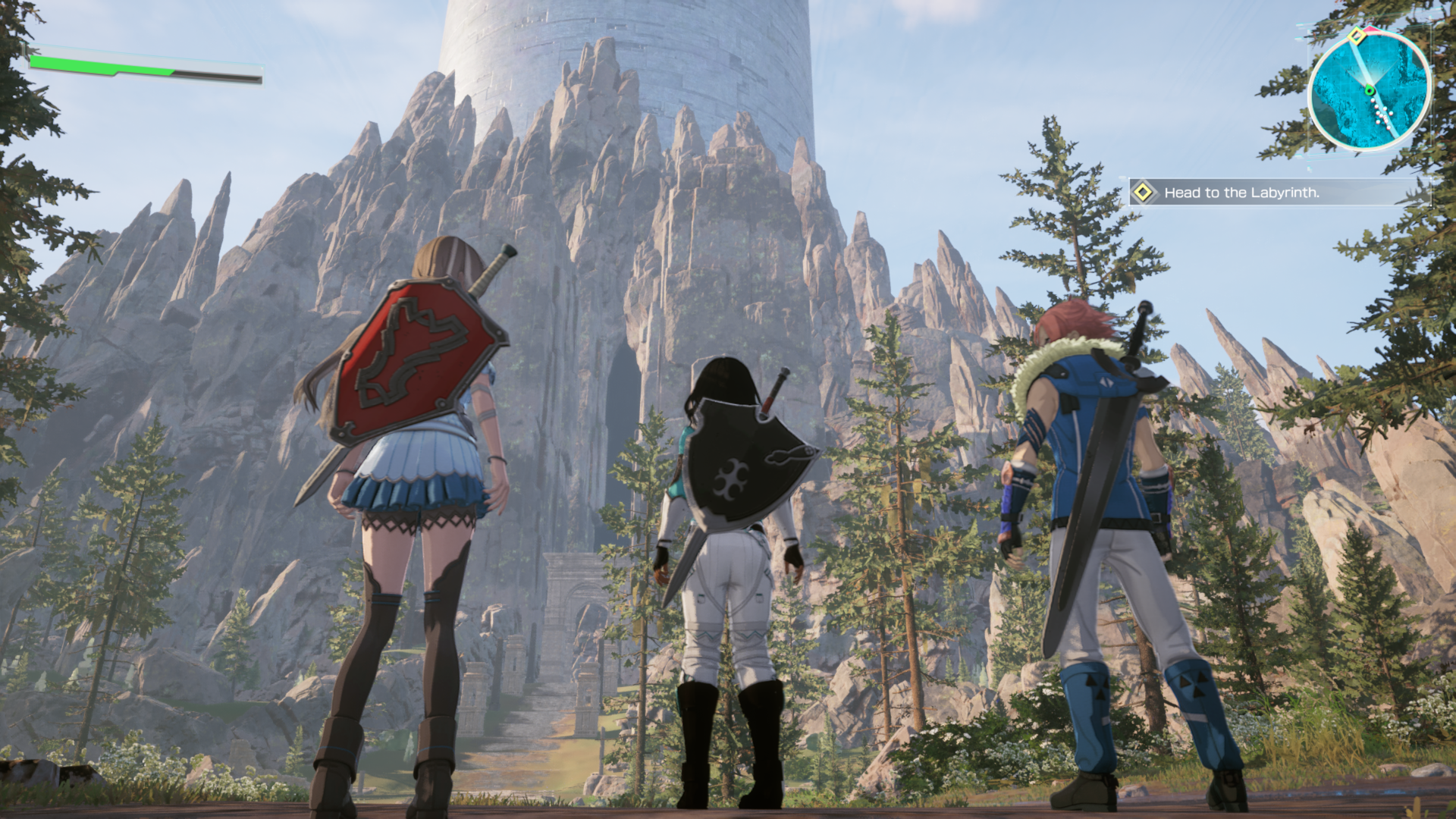
Other characters will join up, but don't flesh out the main roster of your regular companions. Characters like Argo, Saayu, or Wyzeman, among plenty of the series faithful, weave in and out of the story, as well as another who joins in the last stretch of the campaign. While all of these characters can join in various quests, you will always have at least one character with you. I do find it odd, and frankly nonsensical, that during so much of the story that characters will eagerly request to split up or join up later at the same destination when death is looming over them. Honestly, I was constantly flabbergasted at the times where characters would needlessly split up when working as a squad is significantly safer.
When it comes to the story, a lot gets set in motion based on your time with the Beta. As the full release is well underway, several of your team, as well as yourself, receive a mysterious item; a brooch. This then triggers a quest that holds the very survival of Aincrad in the balance. It's a great story, and frankly, is the best aspect of this game. Divorced from the Sword Art Online branding and story, it leaves Echoes of Aincrad as a bland but serviceable RPG.
The Beta access also provides a divide in players that builds to some solid tension between those who have history with the game as a Beta Tester and those who are fresh to the game. New players are frustrated that Beta players aren't as forthcoming with information that can keep them alive, even if the information from Beta to full release is outdated due to changes, buffs to enemies, or new locations altogether. Hell, it is even pointed out that a guide is available to all players, but many simply ignore that fact. And with tensions flaring already due to the nature of this “Death Game” it reaches a boiling point.
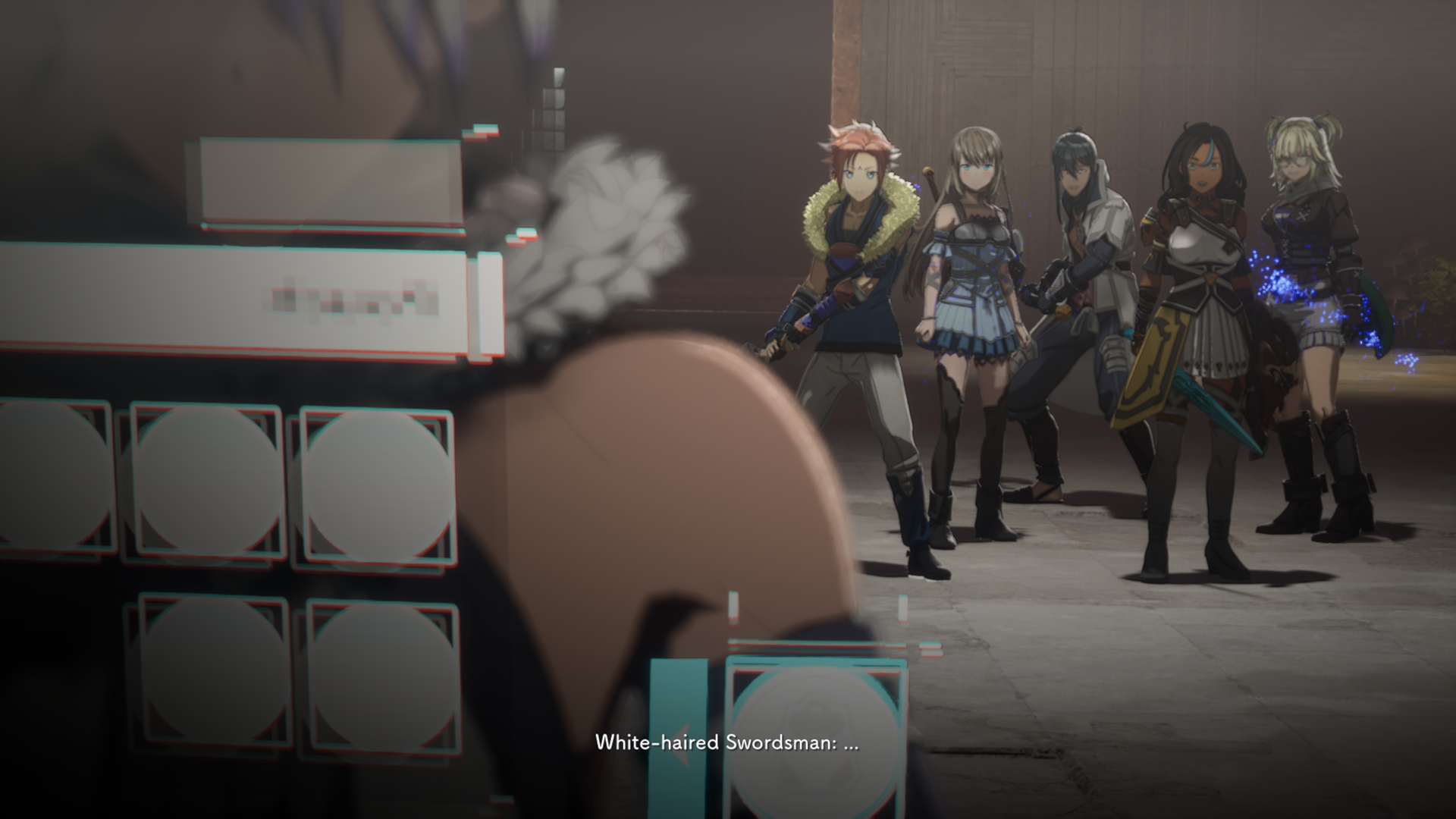
This causes many players to hide the fact they were Beta Testers in the first place, even so far as calling Kirito a Beta Cheater, a “Beater”, a derogatory term conveyed in the anime. In fact, in the anime, new players felt such a degree of resentment that they would hunt down Beaters and player kill them, or block them from leaving high-level zones to have them die at the hands of a monster. While the game doesn't go that in-depth, there are shades of it here, causing some palpable tension, but only in key moments. It's a shame that you weren't hunted at one point, but that's just my preference. I would love to see the sequel dig more into this.
Developed by Game Studio Inc, this newest entry moves away from developer Aquaria and the overall experience is better for it. One of the previous entries, Sword Art Online: Alicization Lycoris, ran extremely poorly with massive technical blemishes. Here, Game Studio Inc, who previously worked on such titles as Synduality: Echo of Ada, and a few Dragon Quest spinoffs, has really cleaned the slate when it comes to Sword Art Online. The title runs extremely well with little to no graphical issues and I never really noticed much in the way of performance woes. While I did have some overheating to my Series X, I chalk it up to the heatwave we have currently going on. That said, I did have to complete the rest of the game on my Series S, which did run fairly good, but does suffer from bad texture work.
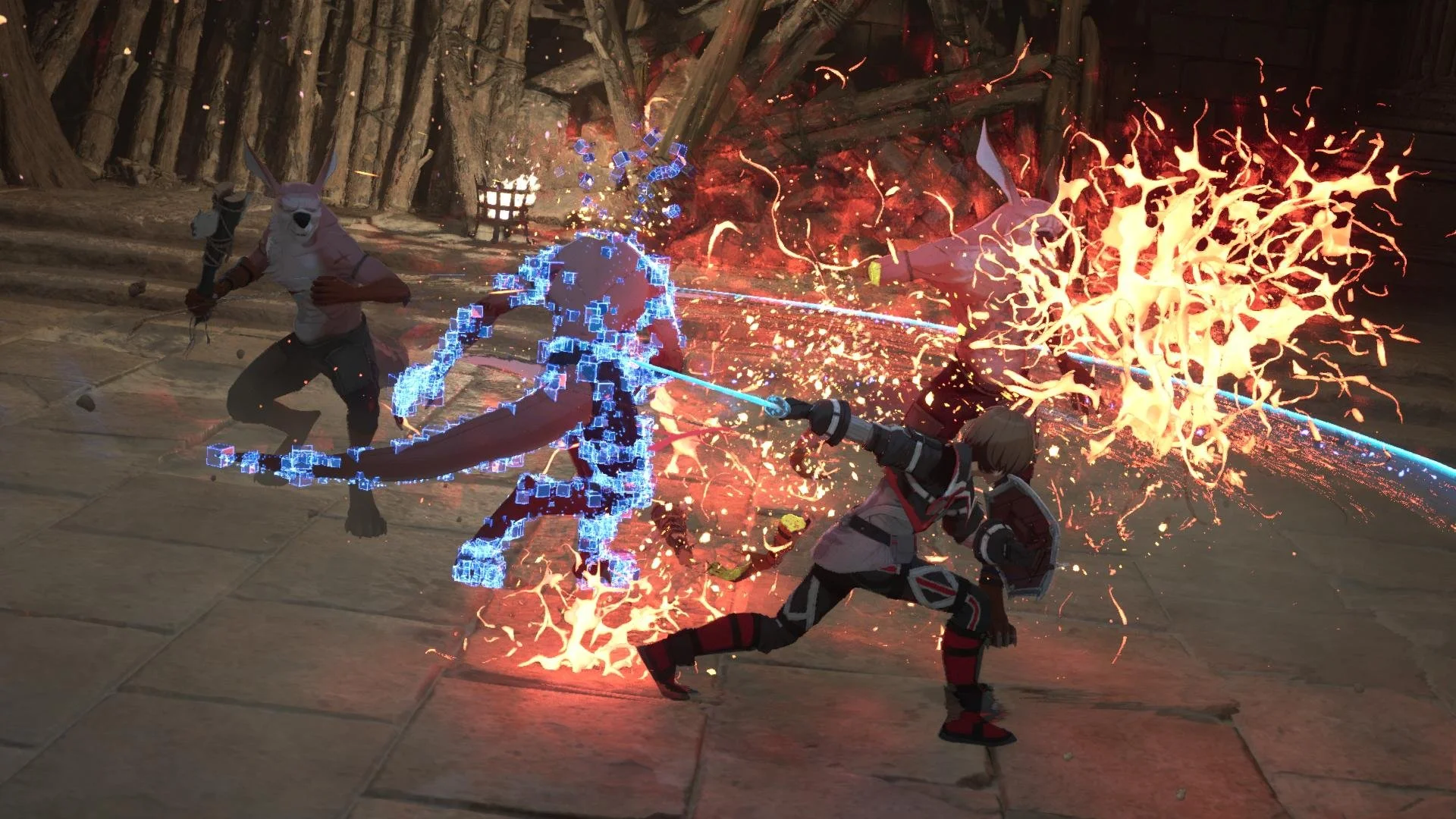
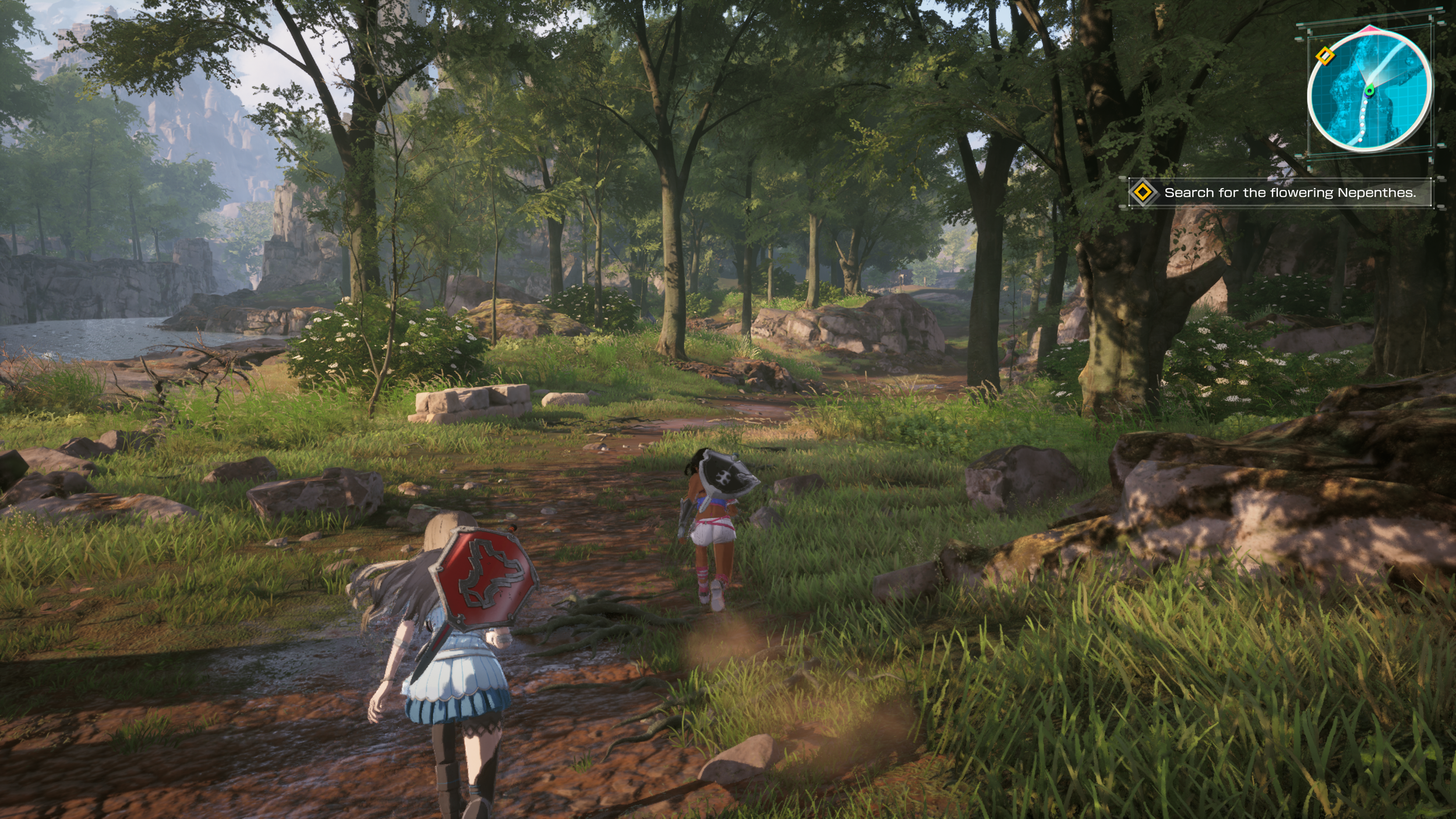
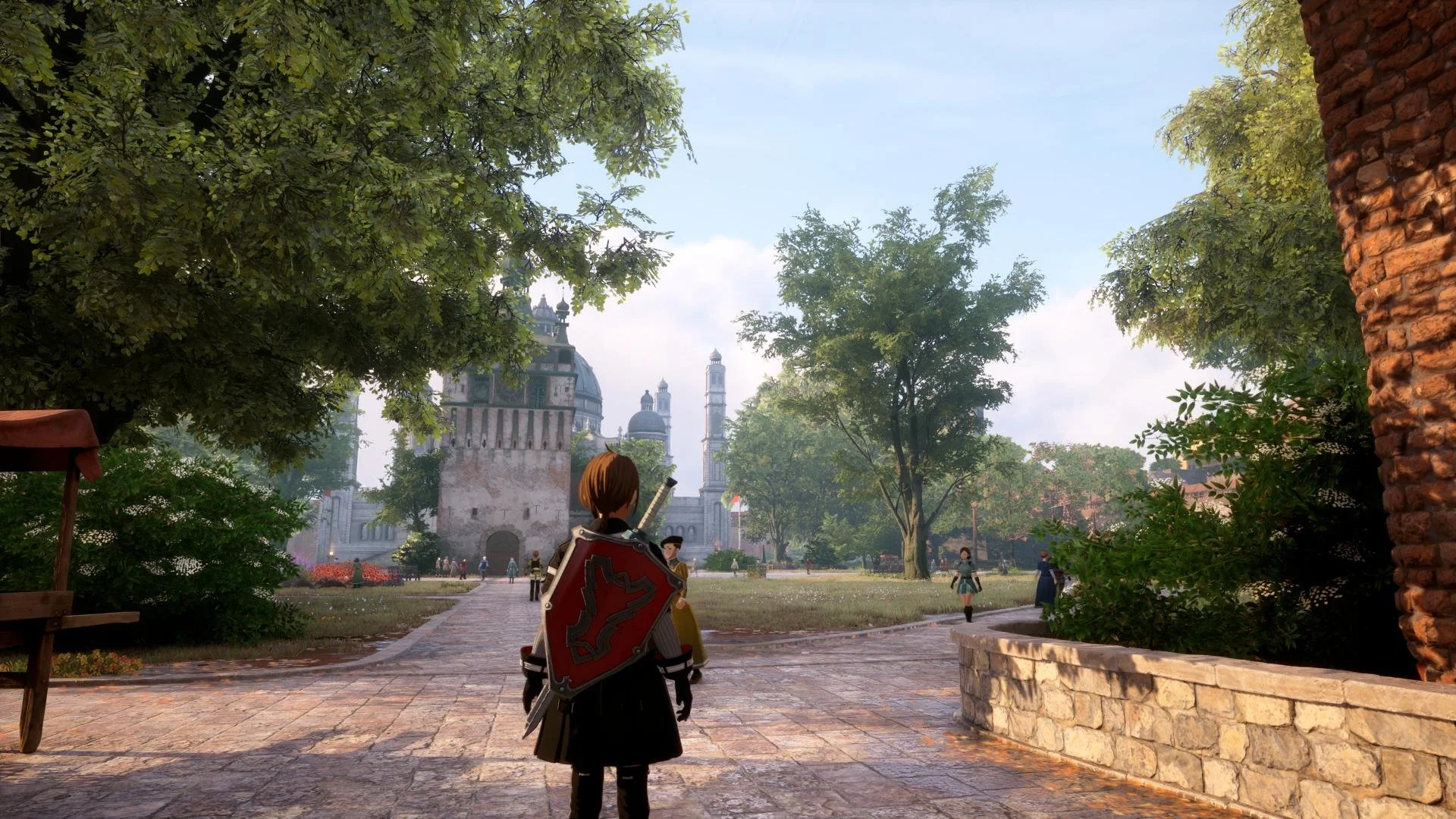
Having a new developer here also allows Sword Art Online to flourish in ways the previous games never seemed to achieve. Locations are massive, highly detailed, thanks to Unreal Engine 5, and character models, at least for your main characters, do look good, even if I wish they emoted far better. Still, this is easily the best looking Sword Art Online game by a mile.
Now, story, characters, and visuals aside, Echoes of Aincrad does start to disappoint from here on out, to varying degrees. As mentioned, environments are gorgeous, and highly detailed, but can feel empty, and devoid of interesting landmarks. However, what holds back exploration is the fact you need to find a rest area to fill out the map. Now, some early zones are straightforward, with little to no trouble finding your way. However, as the game goes on, finding your way to the next rest area can feel like a chore of long treks around the map, often finding dead ends or paths that avoid the rest area entirely. Out of the roughly 40 hours spent with the game, I would chalk up at least 5 hours of just getting lost, trying to navigate these maze-like zones.
Exploration can result in finding chests, rewarding you with potions, items, or if you're lucky, crafting blueprints for weapons or gear. Some chests are harder to find than others, and some require you to dispel a forcefield to obtain them. This is done by completing a combat challenge at a device known as an Ark. The issue I have with these chests is that so many of them that are out of the way or behind these forcefields generally have trivial garbage that you'll rarely use. I spent about 15 minutes trying to find a way to one particular chest, only to be rewarded with a poison mine. A singular poison mine. After that, I chose to simply ignore most of the off-the-beaten-path chests as they just were not worth it.
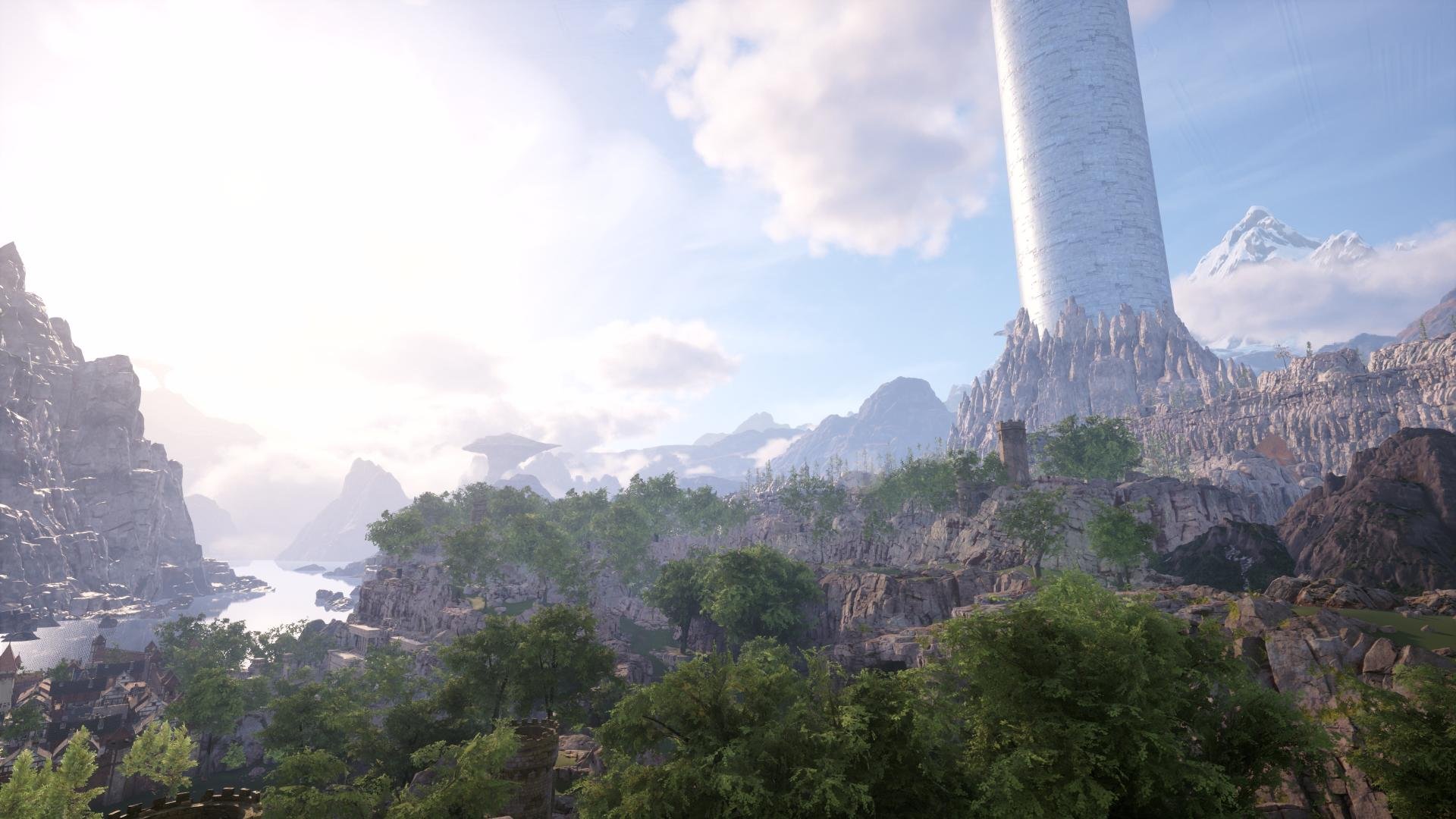
Now, these items can also be bought or crafted. As you travel to new towns, the options increase in what you're able to procure. While there is a crafting system, benefiting from the endless supply of materials and resources you track down, I never once used it. Not a single time, apart from maybe as part of a tutorial, but I cannot remember.
I can see the item crafting system being useful on much harder difficulties, such as the Death Mode where your save file is deleted upon your death, but for normal, and especially easy difficulty, this whole system is 100% optional. I was swimming in Col, the game's currency, and had hundreds of potions and items with little to no effort. Hell, I popped the million Col achievement halfway through the game.
Now, when I mean crafting, I don't mean at the blacksmith, I am meaning through the item shop. The blacksmith itself is extremely useful as you can craft new weapons, feed other weapons into others to upgrade them, or pull weapon perks from one blade to the next. It's a robust and extremely useful system to improve your weapons and keep you engaged.
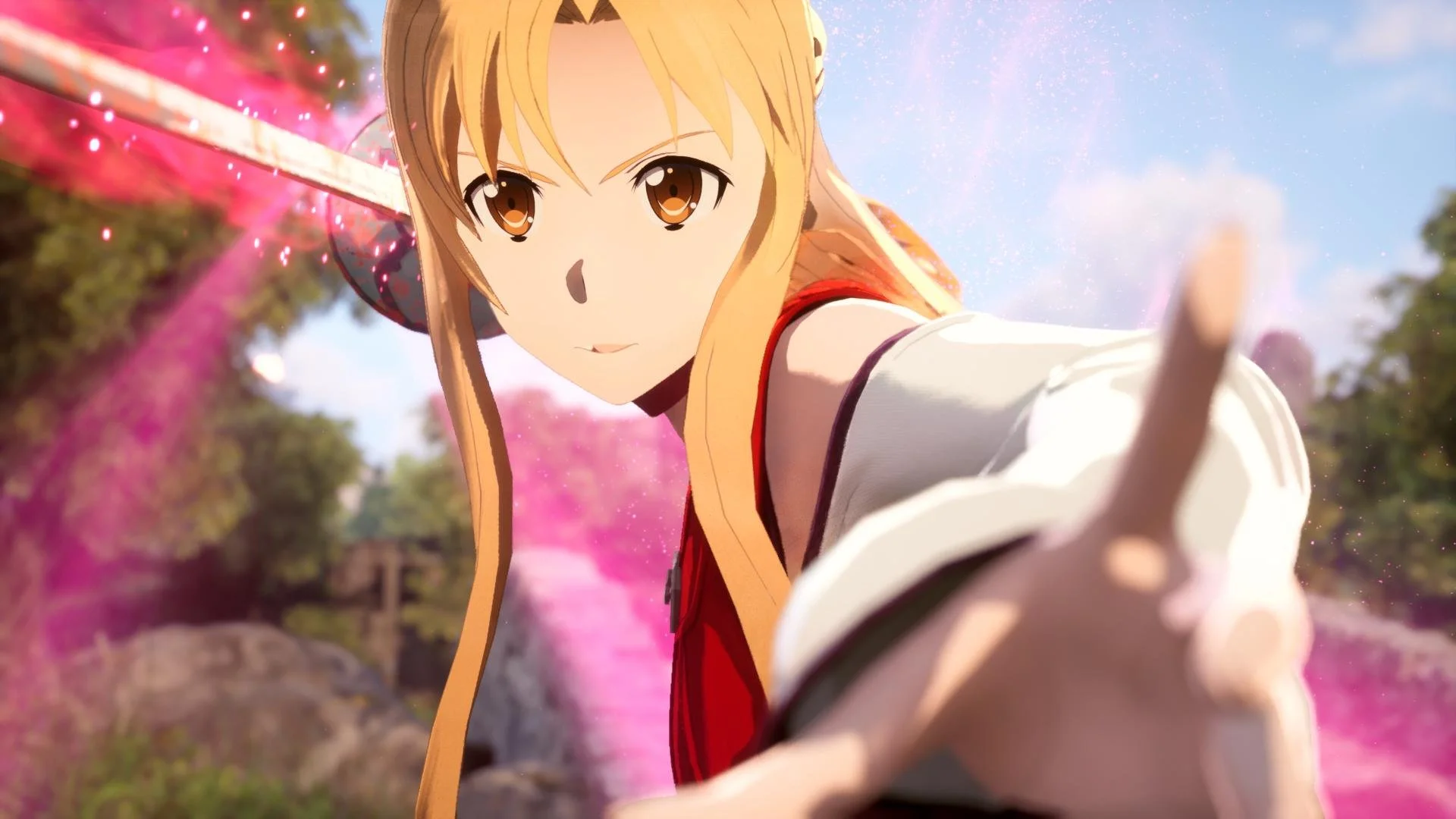
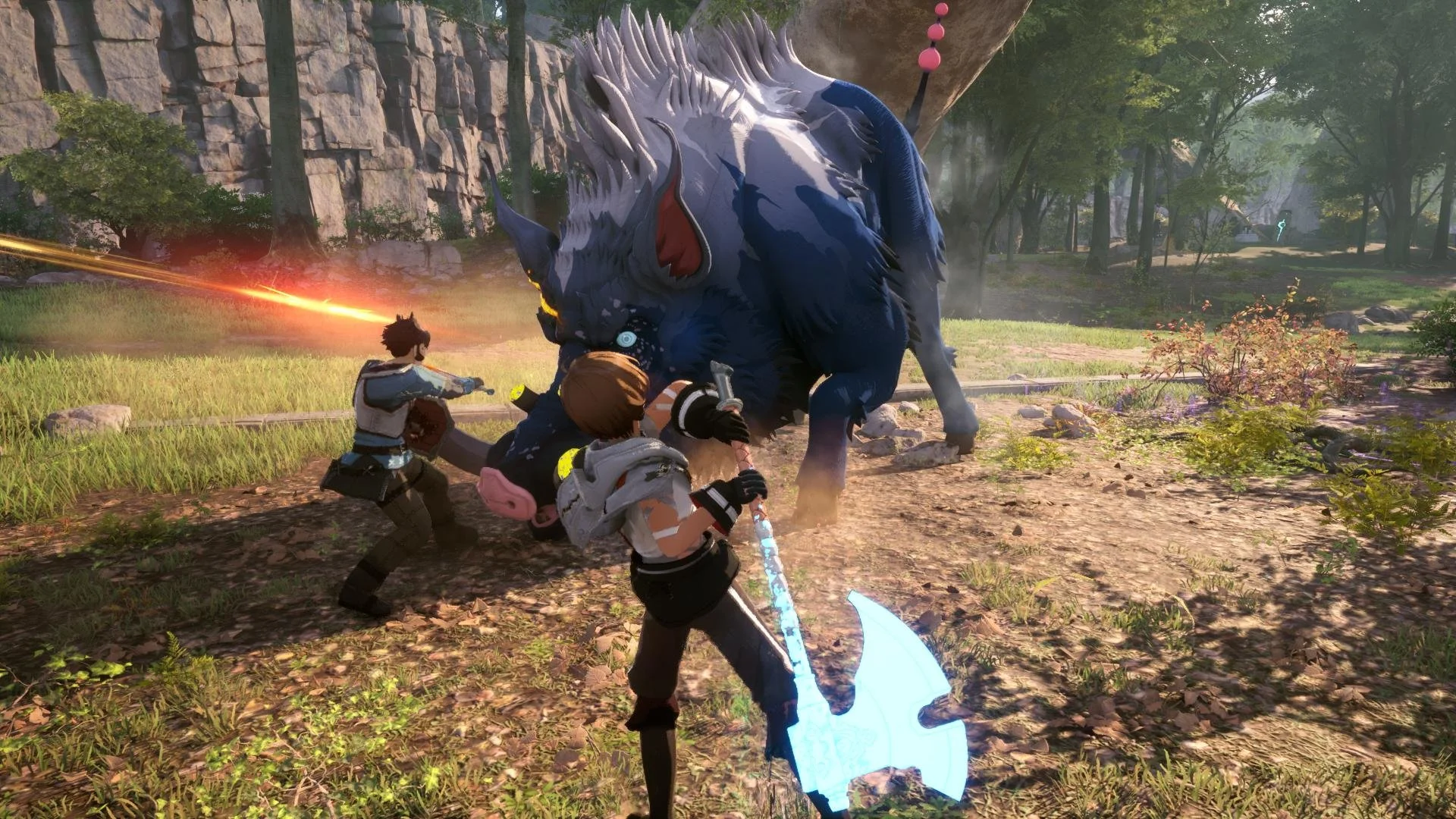
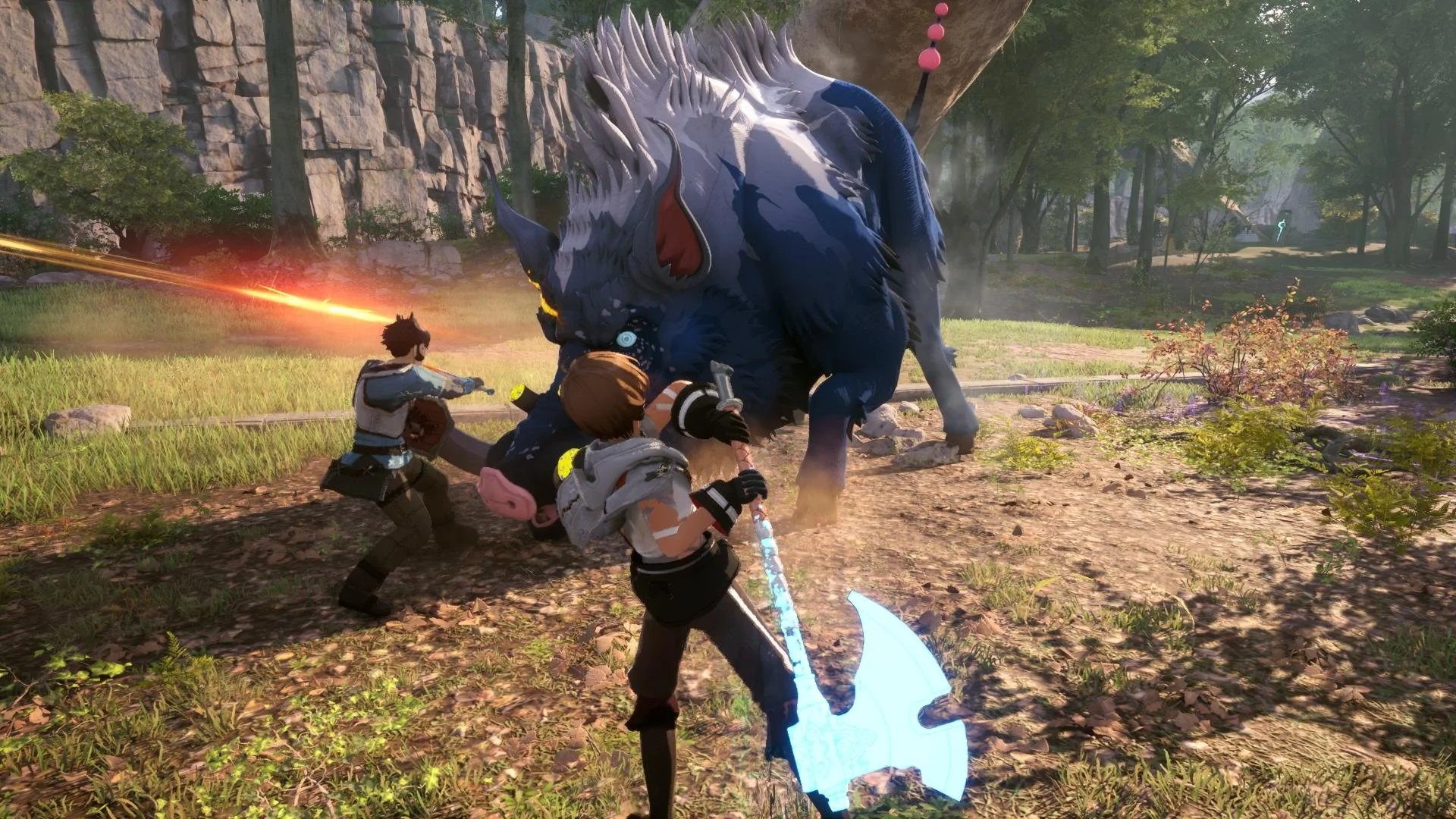
As you collect items scattered around Aincrad, and the two floors you’ll explore, you'll encounter a fairly wide range of enemies, who will drop various materials used for crafting items, weapons, and armor. However, while the bestiary is filled with a few dozen enemies, they’re all built around seven or eight types. From wolves, bears, boars, insects, kobolds, cows, trolls, and mech-like crystal guardians, most of the variety is through different types of these species, often with little to no real effort to distinguish one from the other. I felt like I was fighting the same types over and over again, especially as you'll see plenty of floor one monsters on floor two.
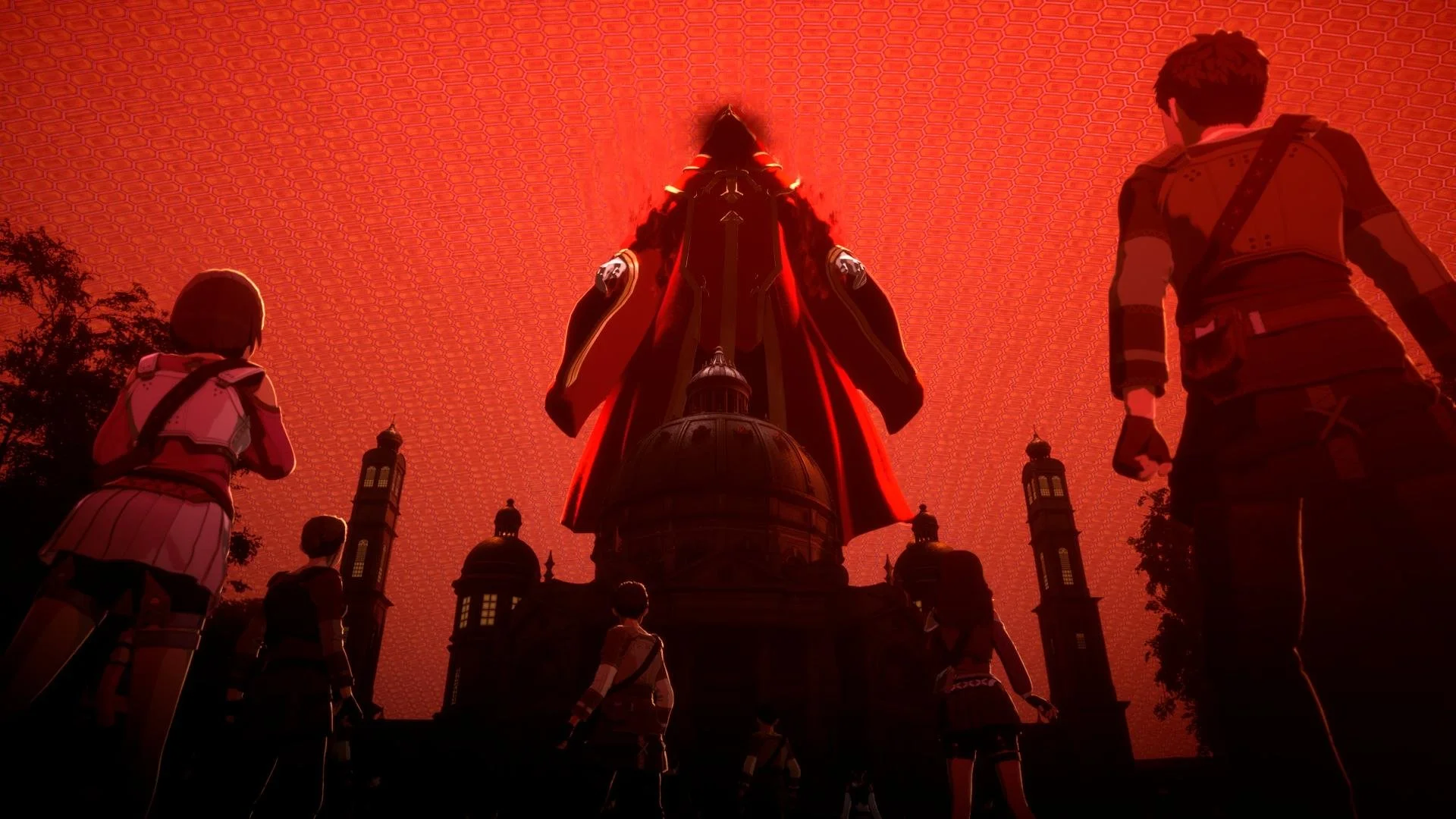
What frustrates even more for enemy design are the bosses. Across the entire campaign, these encounters are essentially just giant versions of all the existing enemies, aside from the game's final boss, which was absolutely excellent. The number of times I fought a giant boar or insect, or the plant-like Nepenthes was in the dozens. I must have killed at least twenty of the same boar. Bosses have multiple health bars and require that you do sprinting attacks when parts of them glow. I'll note that the game never told me this. Not once.
As I mentioned, you'll have at least one companion with you to battle these monsters and their respective bosses. While I could go on and on about how co-op would be great here, or that data mining has shown that online elements were found in the code, I'll refrain from having that pollute my opinion on the game. So yes, while there is no “online” to this Sword Art adventure, you'll instead rely on AI companions that can be somewhat controlled to fight with you or do their own thing.
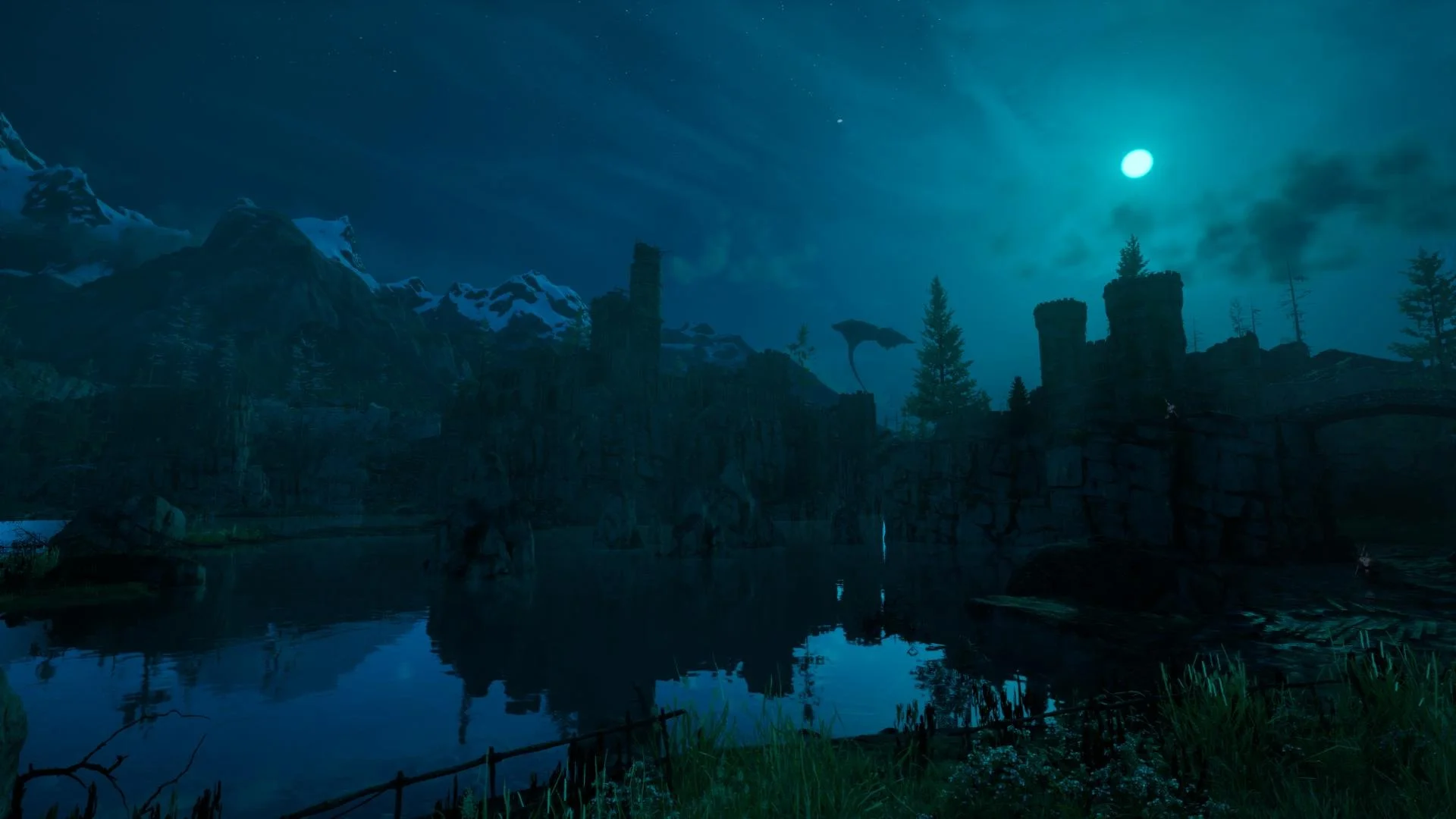
However, regardless of what instruction you've given them, they largely just posture and walk around. I left an insect for Iori to tackle and she just strafed around it, and never once attacked. Now, this wasn't consistent as they would track down and kill things some of the time, but the AI simply felt brain-dead and lacking across the board. You do have a flashy attack and support skills to trigger from them, which is why I always had Iori with me, due to her healing AOE that is far more useful than anyone else's skill.
Companions, as well as yourself will need to be equipped. You'll gain crafting access to numerous gear types for chest, arms, and legs, and you can benefit from costume looks to keep the look but take on the stats of better items. You can also dye part of your armor as well, getting the look you want. Mentioned previously was the blacksmith, and that is where you'll upgrade your weapons through consuming other weapons as you level them up, swap between different rarities, or use materials to fast track that progress.
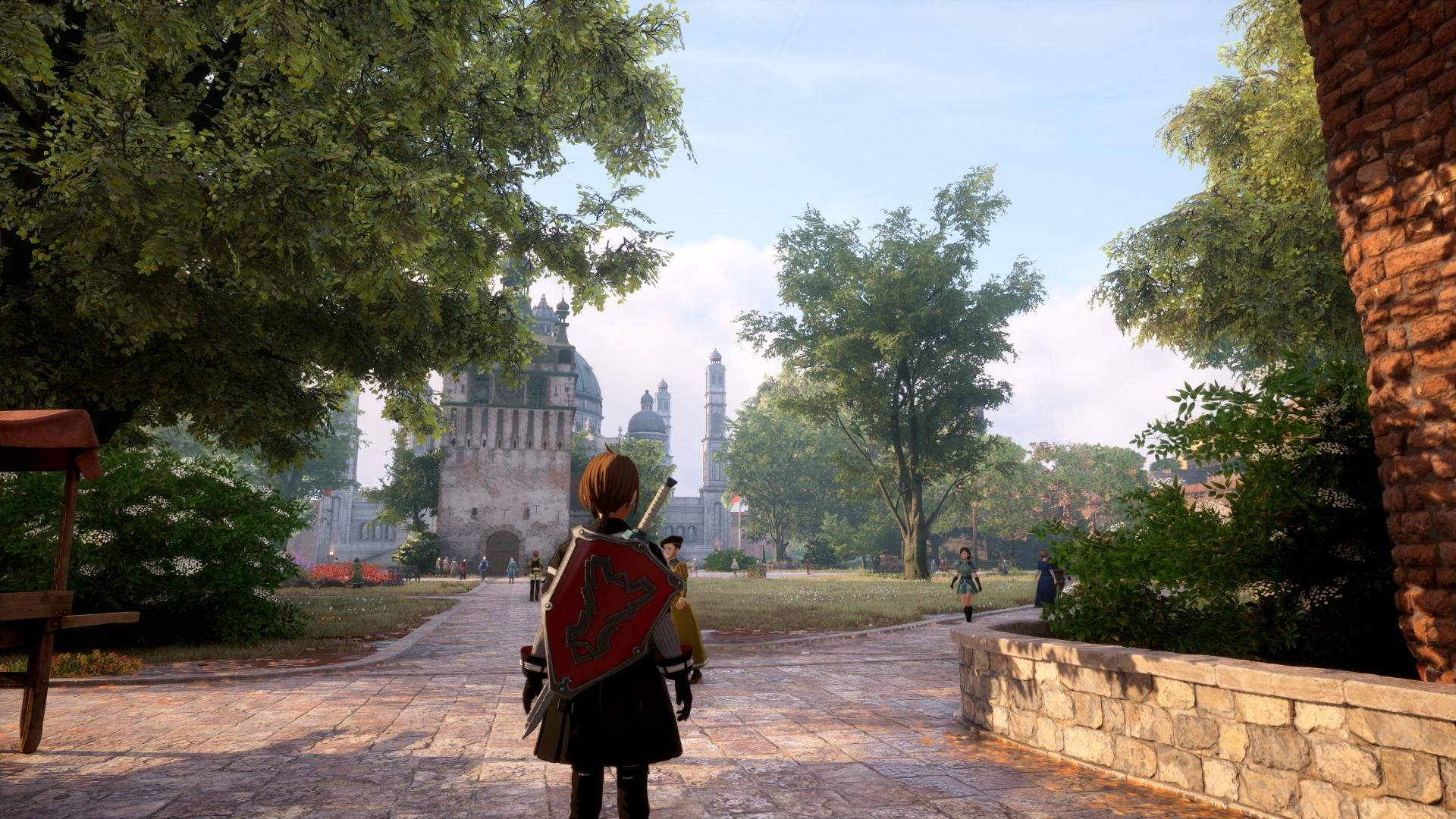
However, you will have to do this for your companions as well. This doesn't really feel suited to the game you're playing within the game. Why would I have to equip them? Are they not playing the game as well? Also, why don't they equip new armor? I get that this is the videogame portion of it for the player to keep you grinding away for gear and fine turning your group to your needs, but it goes against the game's own logic to handle their own kit. Still, I'd rather have this than them equipping their own less powerful stuff, so while I shake my head at the logic behind it, it was the better call.
Weapons can be equipped with perks, and as I hinted to earlier, you can swap perks from weapon to weapon. These range from increasing attack power, stamina boosts, to defense, or your skill gauges and bonus damage.
For weapons, you'll have access to swords, maces, rapiers, daggers, great swords, axes, and hammers, with variations like scythes thrown into the mix as well. So yah, there are no ranged options, apart from a skill that you'll unlock via the daggers. And to be honest, it makes sense. For a game called Sword Art Online, it stands to reason that melee is a huge focus here.
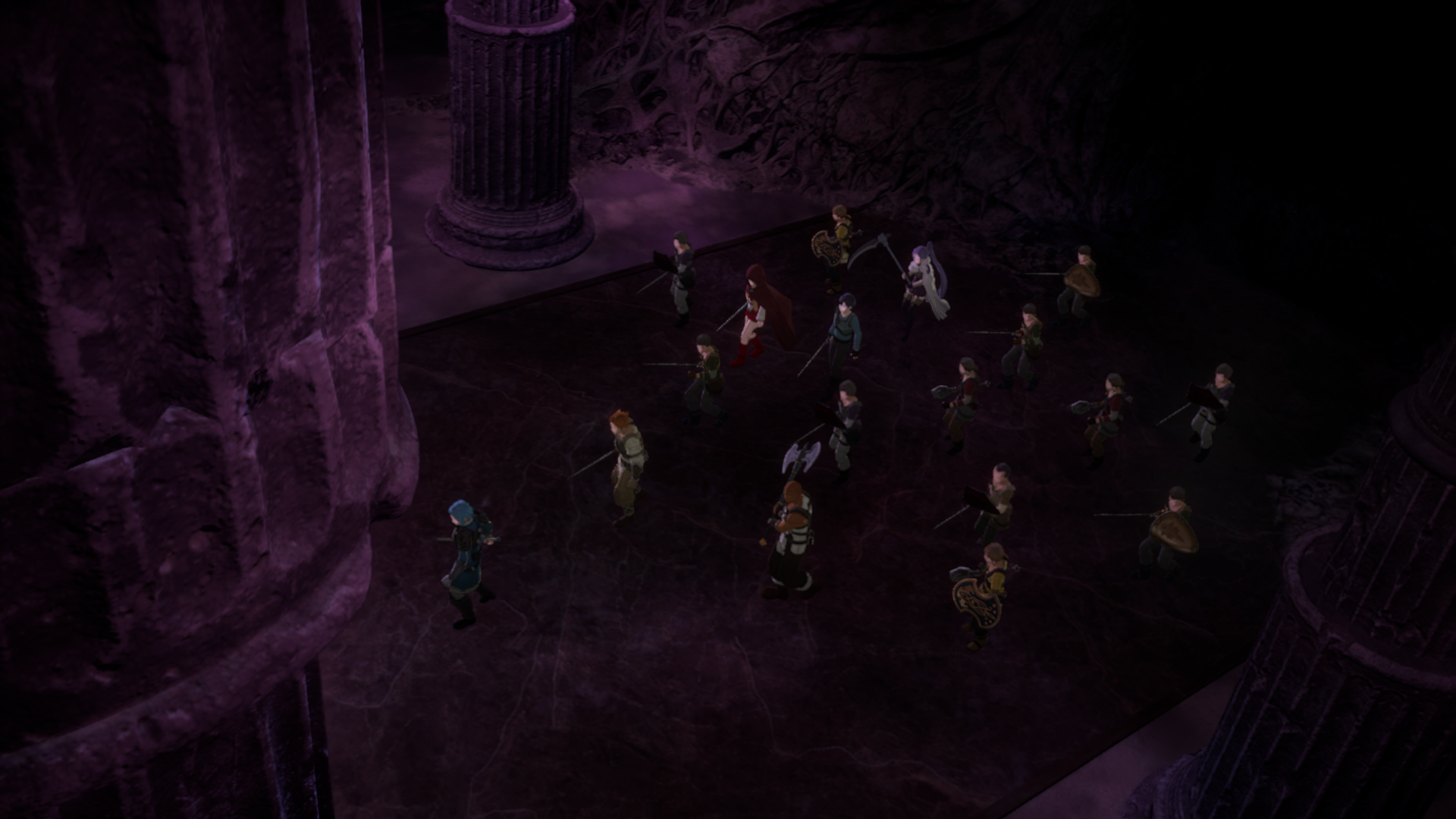
Weapons also see boosts from your own personal stats. Every level you earn grants you stat points to put into a variety of categories. From strength to dexterity, mind, or vitality, you'll want to lean towards the traits of your weapons as they scale to their own specific stat categories.
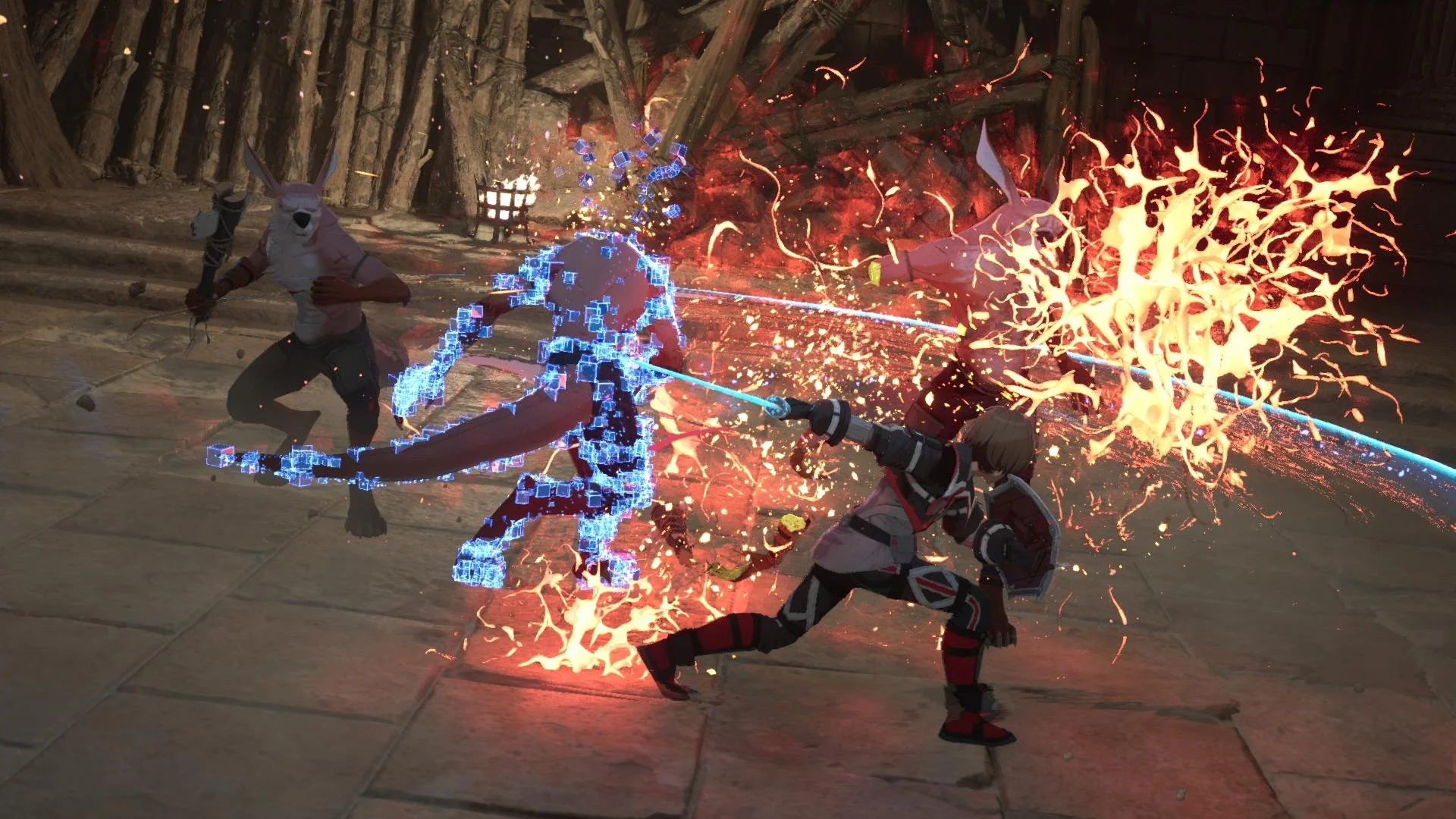
While I wouldn't classify Echoes of Aincrad as a Soulslike or even a Soulslite, there are some minor similarities. Resting at a rest area does refresh enemies, you do parry, block, and dodge, but I rarely felt the challenge that comes with that genre. It's more typical of standard RPGs where you have skills assigned to a shoulder button to then pull off with one of the face buttons, and so on. You can equip three attacks that work off a skill gauge that fills up as you attack. Each weapon has their own set of skills that unlock as you level up the weapon. And, once you max out their weapon, you get skill points to then power up those skills, making them much more powerful.
Combat does feel good, but the lack of true enemy variety can sort of suck the wind out of its sails. Attacking, regardless of what weapon you prefer, is fast, responsive, and each has their own sprinting attack. I opted for the sword and shield as it allowed me to block and parry quite easily, stunning my foe if I timed it right. I did like the axe; however, with a deadly spinning attack.
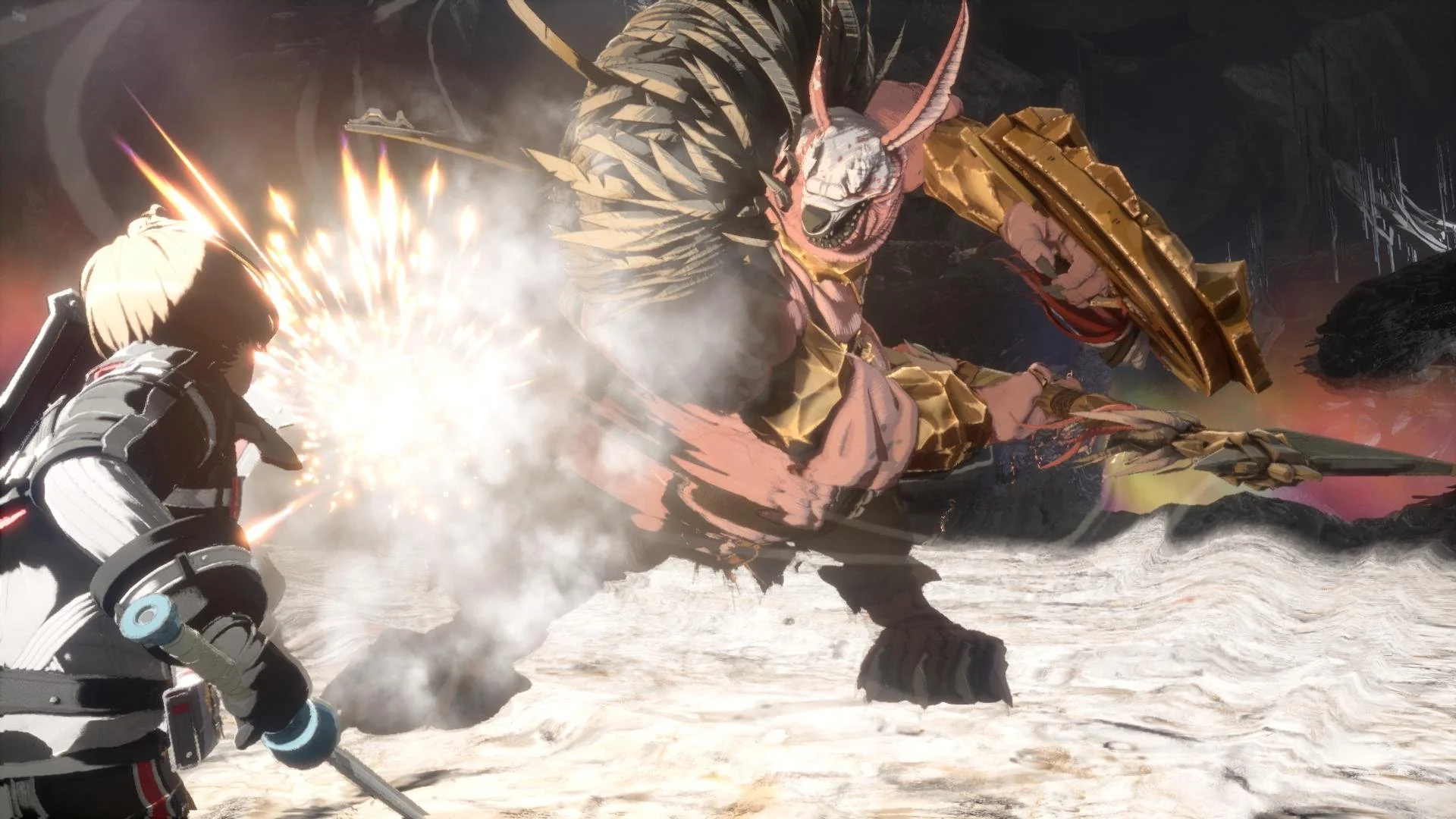
Each of your companions belong to a different weapon group, so it's easy to see what a weapon is like before you commit to one. However, experimentation isn't really convenient here as you need to commit to a kit before you head out on a quest. This means any items, weapons, or armor must be prepared before you head out. Sure, you can fast travel back and then readjust, but even if you find a weapon or item via a drop, you cannot just swap to it. Not that you would want to as you'll always get a weapon at its lowest stats anyway, making the blacksmith a go-to destination.
The biggest issue I have with Echoes of Aincrad is that it feels generic and very limiting in what it offers. There is no resource tracking, or the ability to tackle side quests while out and about. Each quest is its own instance and you never see other players about. The game tries to hint that each group has their own instance, but then you'll encounter a supporting character who is on the run or trapped by a boss, negating the idea that each squad is in their own instance. This causes the “online” aspect of playing a grand MMO to be nonsense and lacking in feeling alive. The towns are thriving, sure, but the main areas where the game takes place are barren.
It also doesn't help that for dungeons you only have two options; cave and ruins. While a case could be made that there is a third one in the crossover from floor one to two, you only visit that place sparingly. These are randomly generated tilesets that shift and create new pathways. However, you'll easily figure out the way to speed through them given how they operate. That said, you'll tire of these two locations extremely quickly.
I also found the quest design to suffer immensely due to each quest, no matter what it is, as it operates the same way every time. You'll have an objective, it can be monster killing, resource gathering, or trying to find someone. It always has you traversing an area you've yet to map out, and then finding your objective during a boss battle. This is the only way quests are structured.
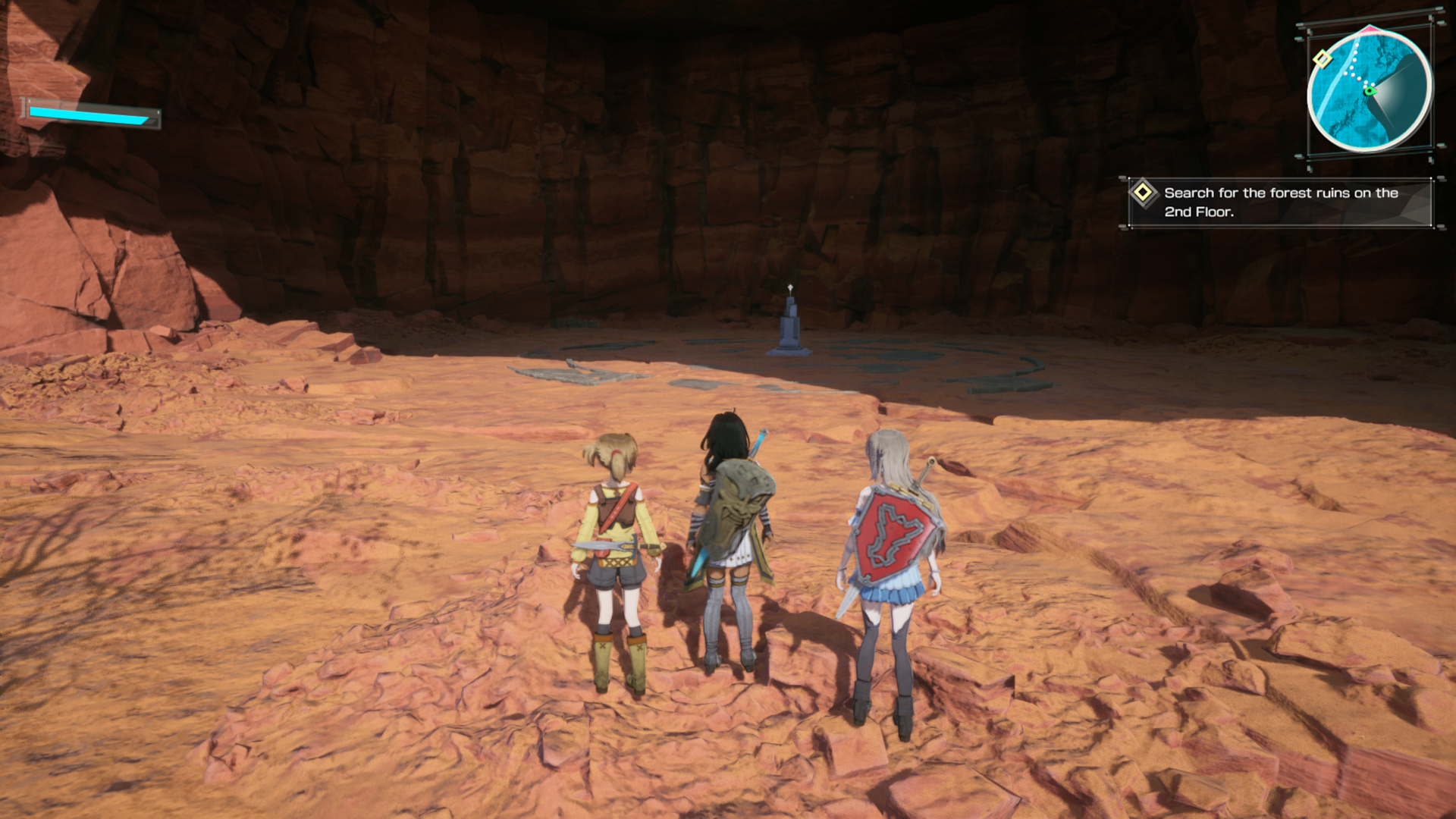
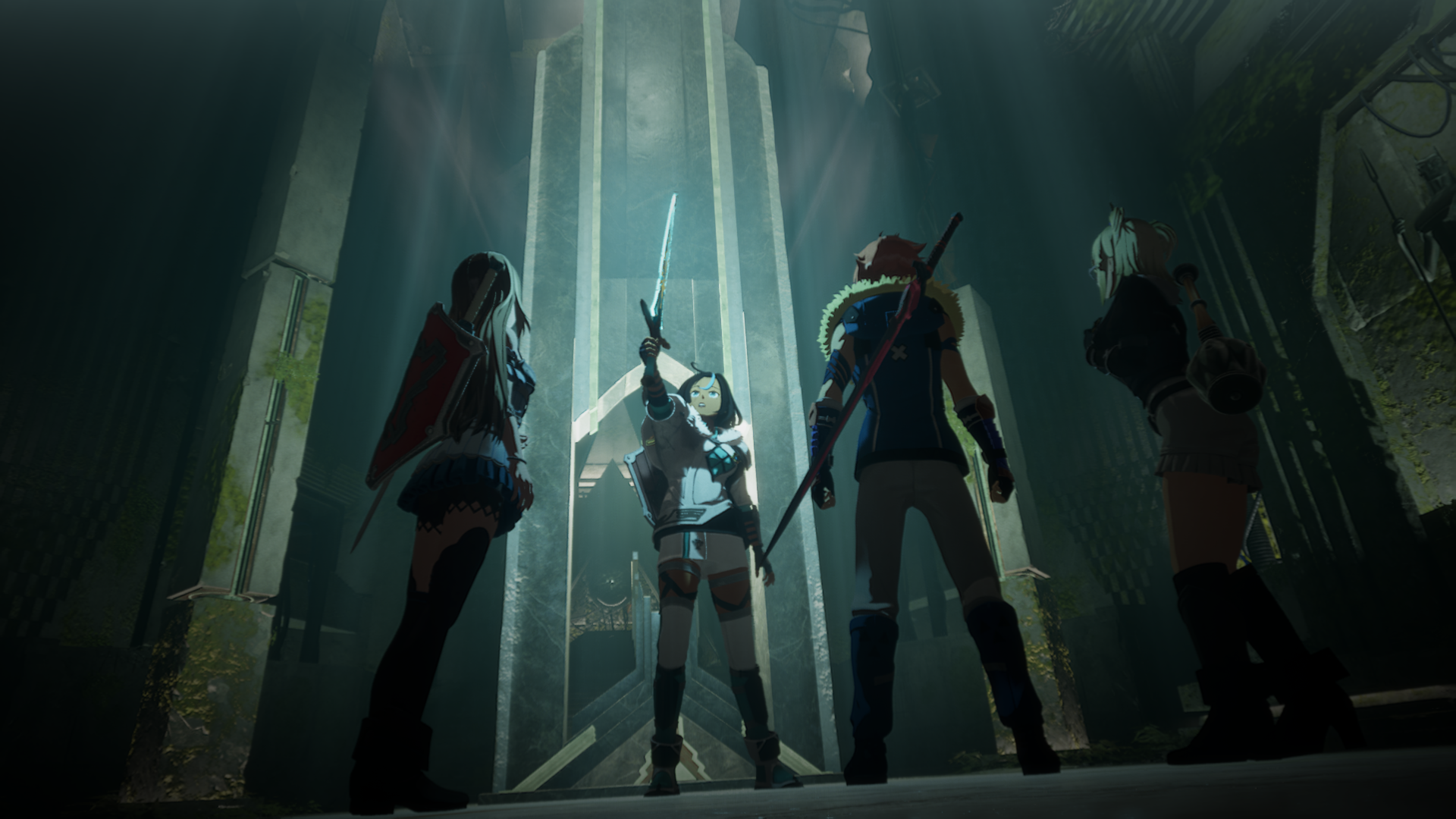
I also found it mind-boggling that despite a clear view of nearby roads, caves, or even Arks, that some portions of the map are cut off until you have a side quest or main quest that unlocks them. I found an Ark, as shown below, that was apparently out of bounds but was not even twenty feet from me. These invisible barriers were frustrating, given they are fully there and rendered. It's a shame there were no visual barriers in place since it would then be more convincing that these areas are temporarily off-limits. As of now, they further the limiting nature of this game.
Despite my wide array of criticisms, Echoes of Aincrad was still a pretty solid experience, but its gameplay and exploration are the weakest parts of the whole package. With a solid story and interesting characters, the recreation of the Death Game is as good as we've had it so far. Combat is fine enough, but exploration suffers due to invisible walls, and a stumbling in the dark approach to traversing it. Regardless, Echoes of Aincrad does make large strides in the right direction of being “that” Sword Art Online game we've always wanted, I just wish it felt more like the grand MMO it was needing to be.
Developer - Game Studio.
Publisher - Bandai Namco
Released - July 9th 2026.
Available On - Xbox Series X/S, PS5, PC.
Rated - (T) - Violence, Blood and Gore, Mild Suggestive Themes, and Language.
Platform Reviewed - Xbox Series X and Xbox Series S.
Review Access - A review code for Echoes of Aincrad: Sword Art Online was provided by the publisher for the purpose of this review.
Jeff is the original founder of Analog Stick Gaming. His favorite games include The Witcher III, the Mass Effect Trilogy, Hi-Fi Rush, Stellar Blade, Hellbade: Senua’s Sacrifice, and the Legend of Heroes series, especially Trails of Cold Steel III & IV.