
Rogue-Light
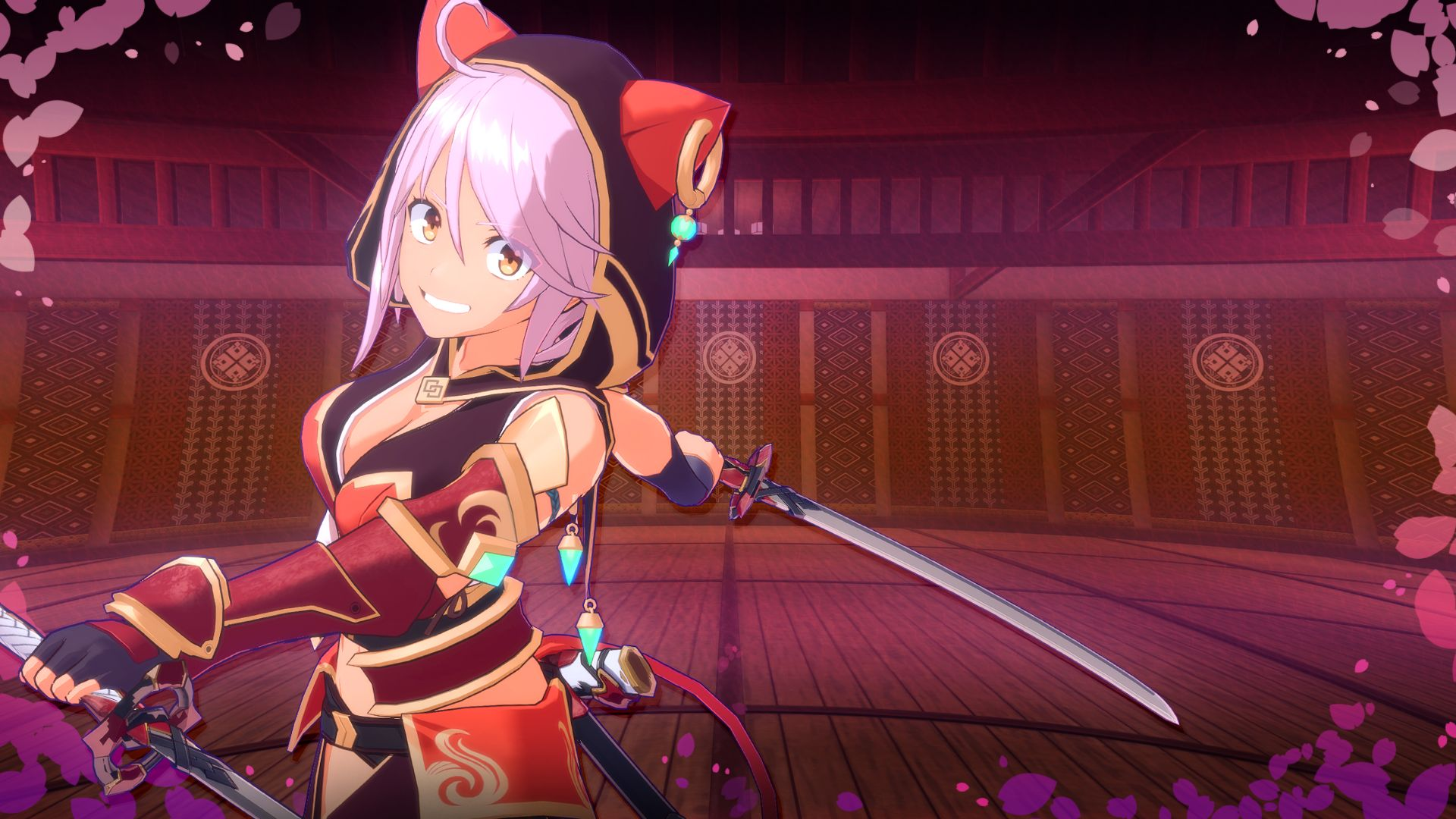
As it's been five years since the last major Senran Kagura title, I've been on the lookout for titles that share that same appeal. So, when I got eyes on Denneko Yuugi’s Eternal Palace Sakura, it initially looked to scratch that itch. However, within minutes, that comparison ran dry, as while its central lead is a wonderfully animated and visually pleasing character, the game built around her feels like the framework of a game still deep in development.
The game stars Retla Stlutin, a character who is part of the Machina of the Planet Tree series. This was a 2D turn-based JRPG that has begun to branch out with much of its cast in their own game; enter, Eternal Palace Sakura. While Retla seems like a cool character, and the brief footage of the aforementioned game does allow her personality to shine, the same cannot be said here, apart from her one-liners and combative jabs at her opponents. It's a shame, since the character looks primed for so much more.
Despite her origins, there is not really much of a story here, apart from the game's premise. Retla, a warrior cat girl, discovers a palace that holds a long-lost treasure. Curious, she enters and is immediately trapped, with only pushing forward as a means to get out. This has you pushing through floor after floor, defeating thousands of Yokai, and earning abilities to survive the increasingly more challenging encounters the game throws at you.
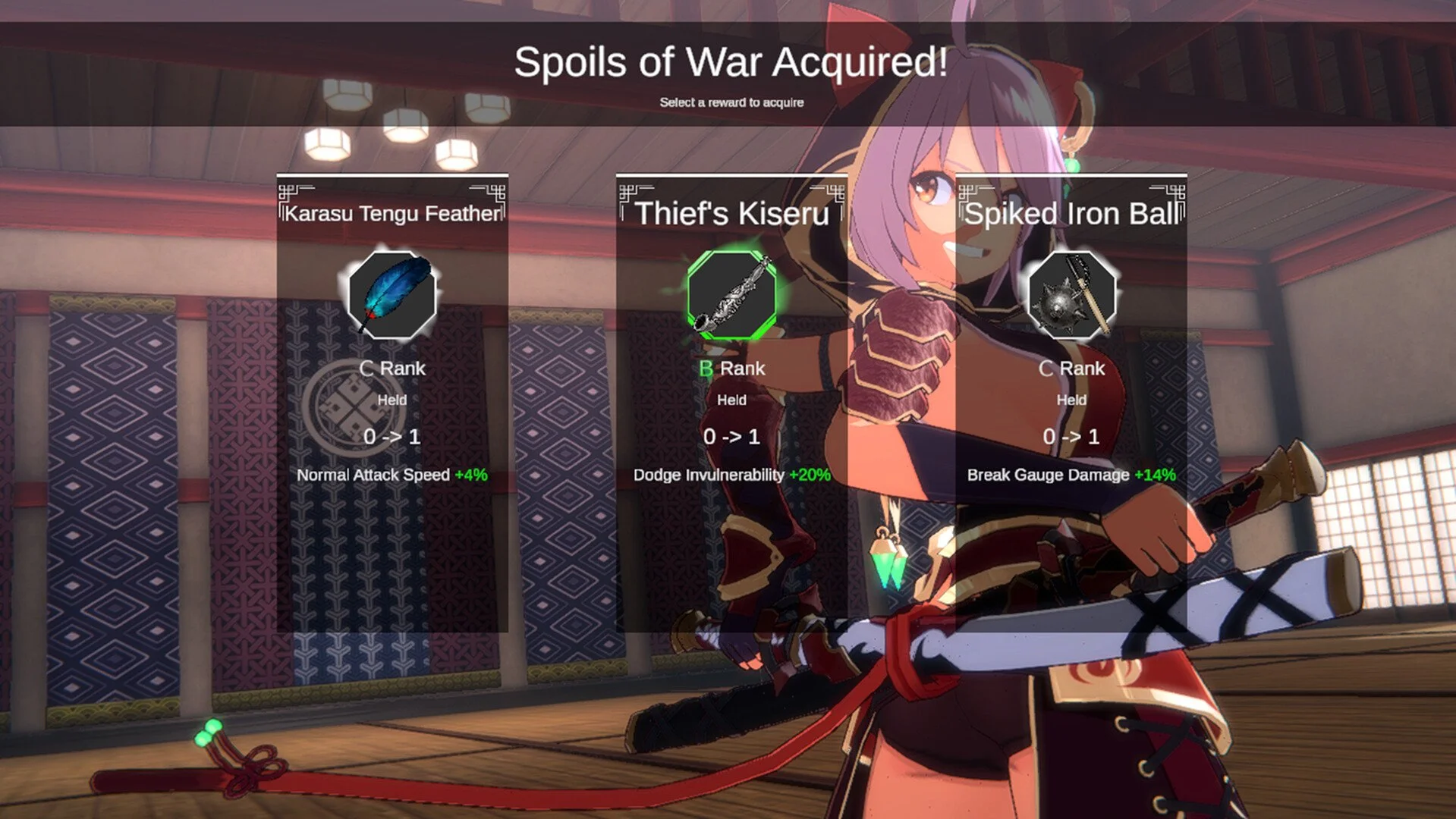
This is about as much context or story as you get, with only tiny little scenarios that pop up occasionally, forcing you to make shallow decisions that will reward you with perks, but usually at the cost of increasing the difficulty. To say these are bite-size mini narratives is stretching it. They are the equivalent of the game asking if you want to enter a room or keep moving on.
While I'm not against the rogue-lite aspect, it's a shame this didn't just go the adventure route, especially as the connection to the other games have nothing here to really convey that or latch onto. There are no cutscenes or story sequences to explain much of anything. Hell, the opening of the game basically just says she found this palace and is stuck inside. That's it. Anything else I found via the game's marketing.
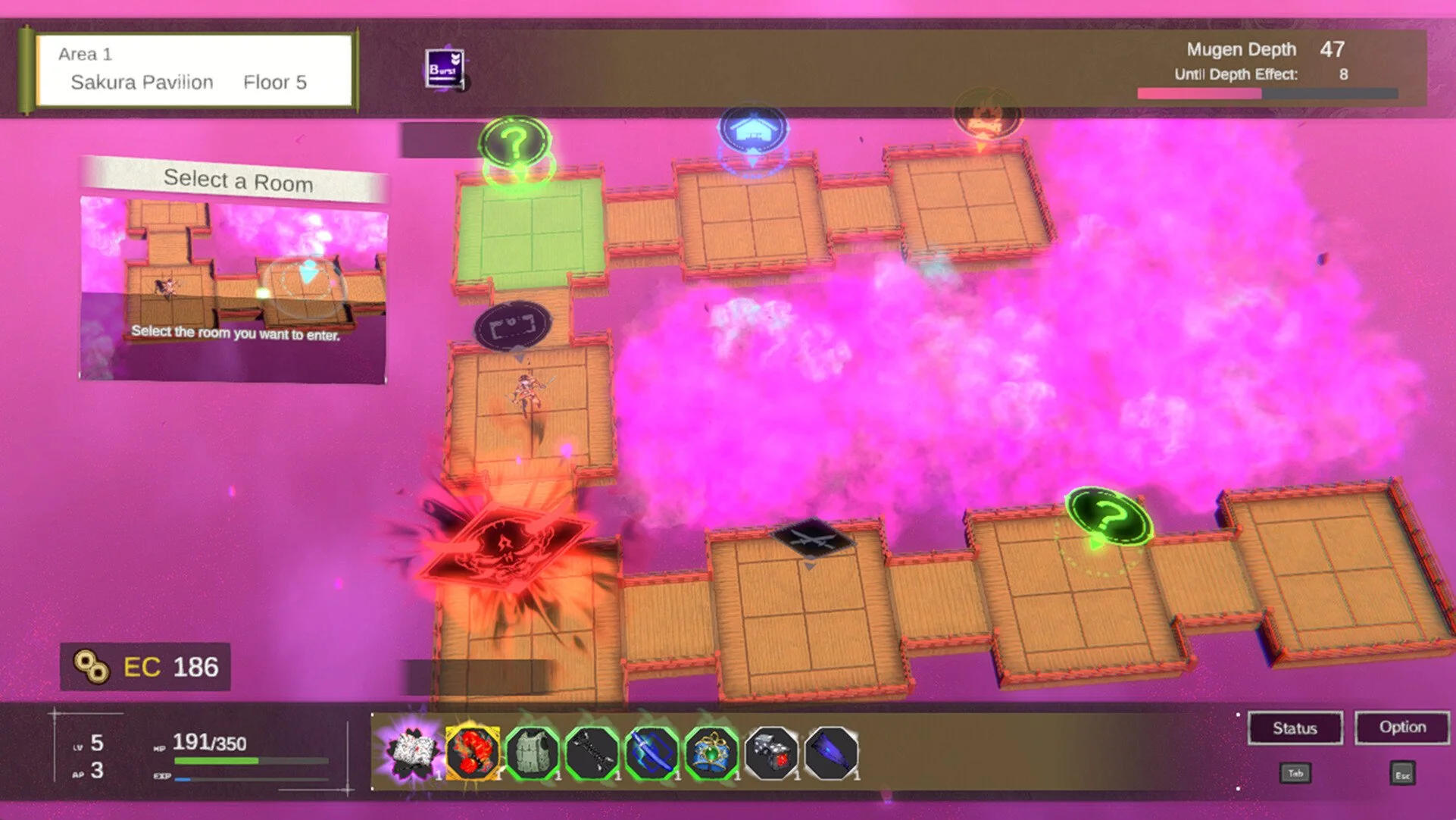
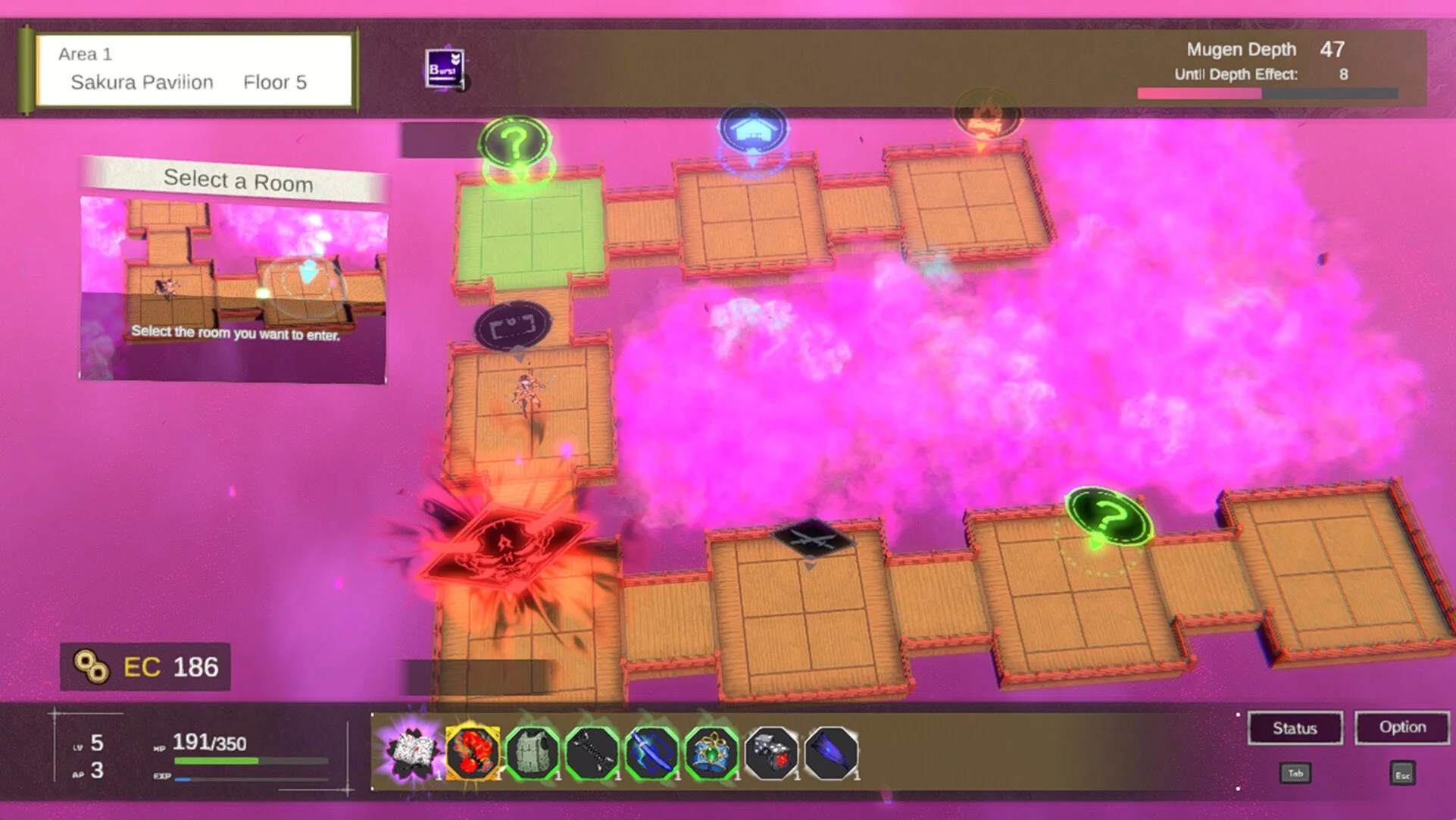
The structure of the game is very basic. You have a dungeon map you'll explore, with some of it kept hidden until you move toward the cherry blossom fog of war. This usually has you moving up or down, left or right, and then landing in a room that will usually have a purpose of being a shop, a place to heal, those aforementioned scenarios, or an enemy encounter, and eventually, a boss. Rinse and repeat.
Your goal is to beat up the bad guys, get stronger, and proceed up the stairs to climb the tower. Some floors are interiors, while others are oddly outside locations, despite this being in some sort of tower. Regardless, the format doesn't change, and the dungeons only really change color and leaves the change in scenery to the battle rooms instead.
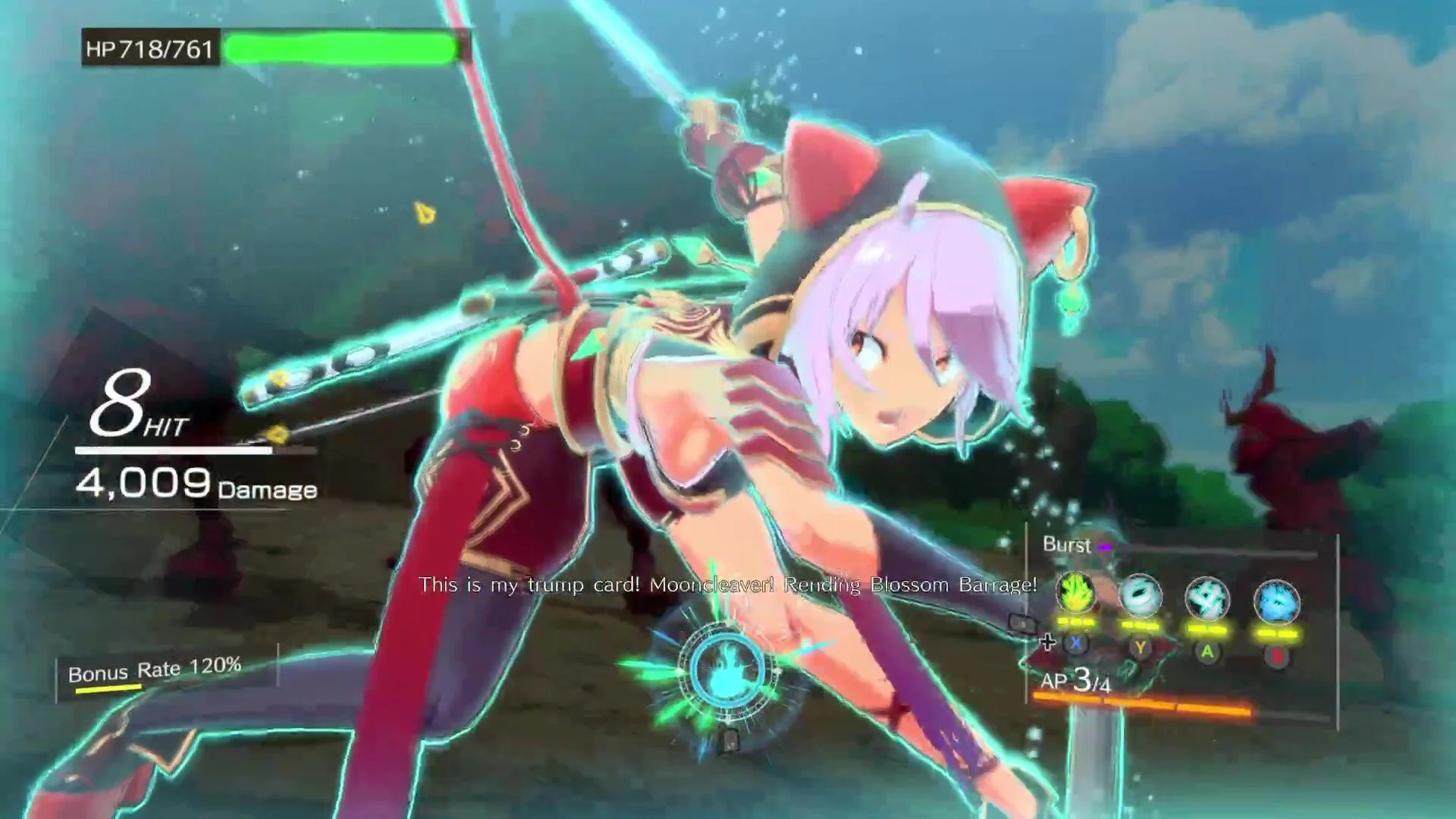
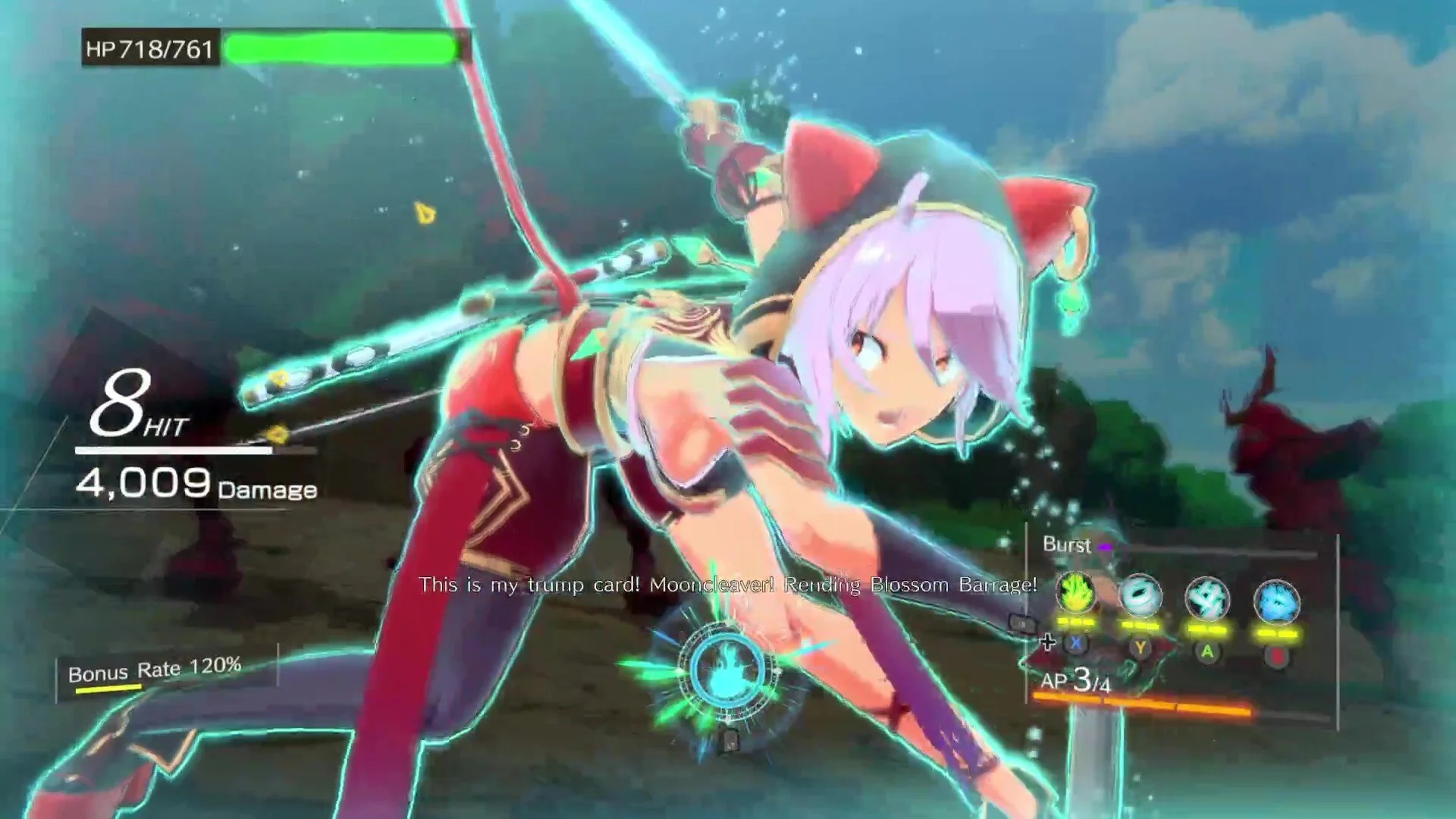
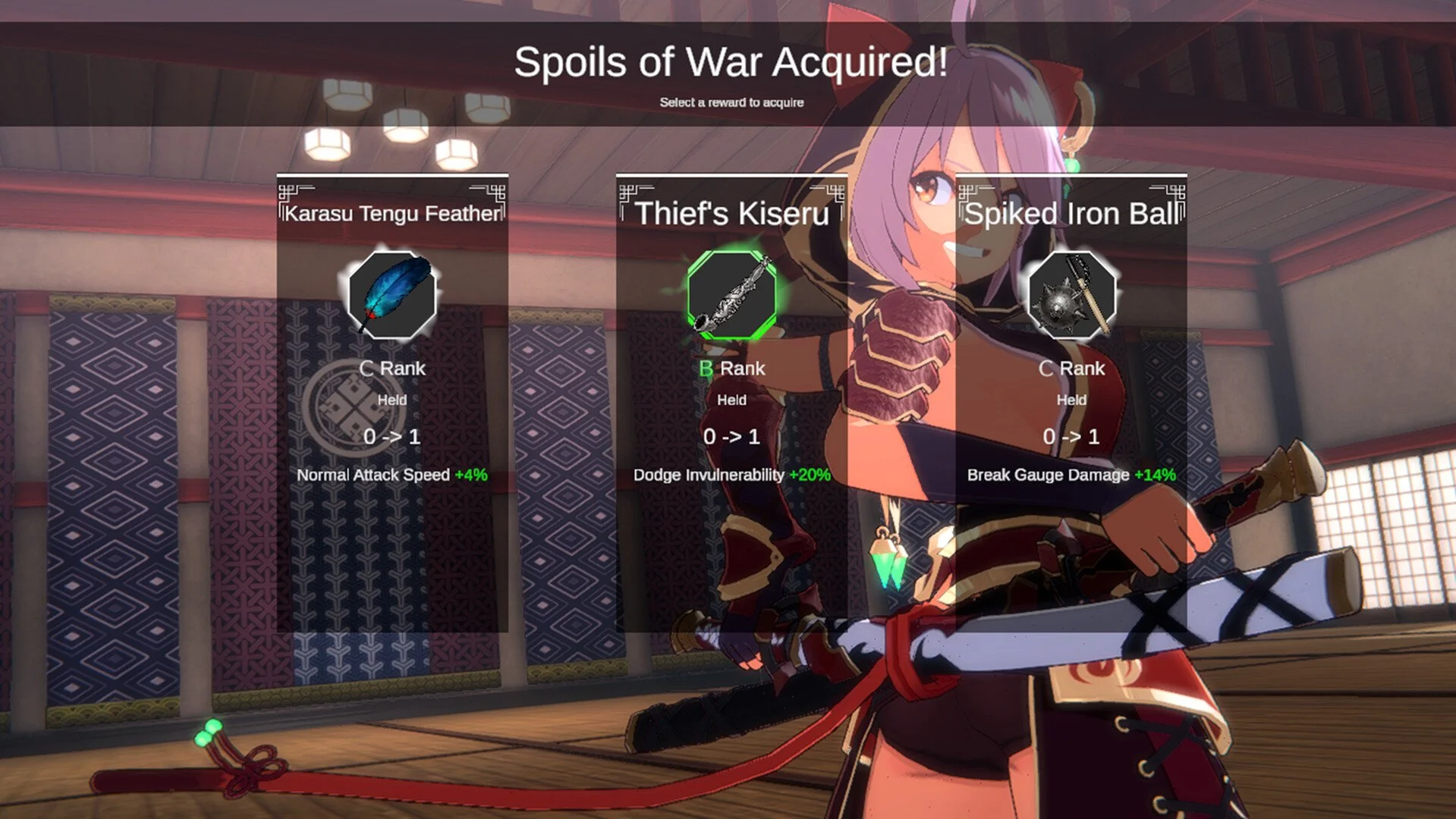
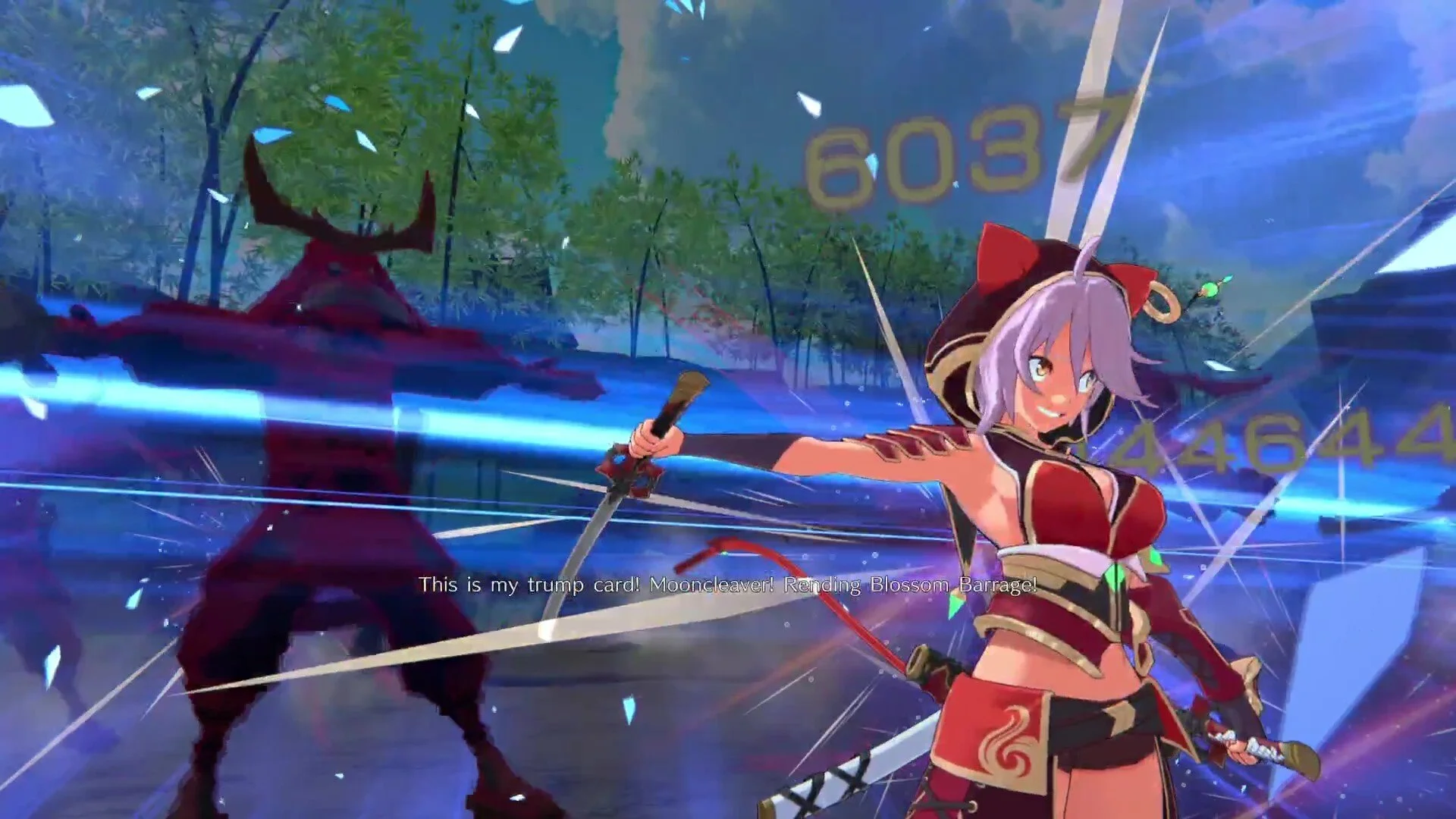
As you battle, you'll earn currency called EIC, as well as skills that operate as your special attacks. You'll also gather passives like boosted attack power or more health. The attacks are pretty flashy and there are quite a few of them. That said, battles are nearly identical from one to the other, so even despite the variety in your moves, you're still doing the same combat options over and over again. Does this change as you get further in? Absolutely not.
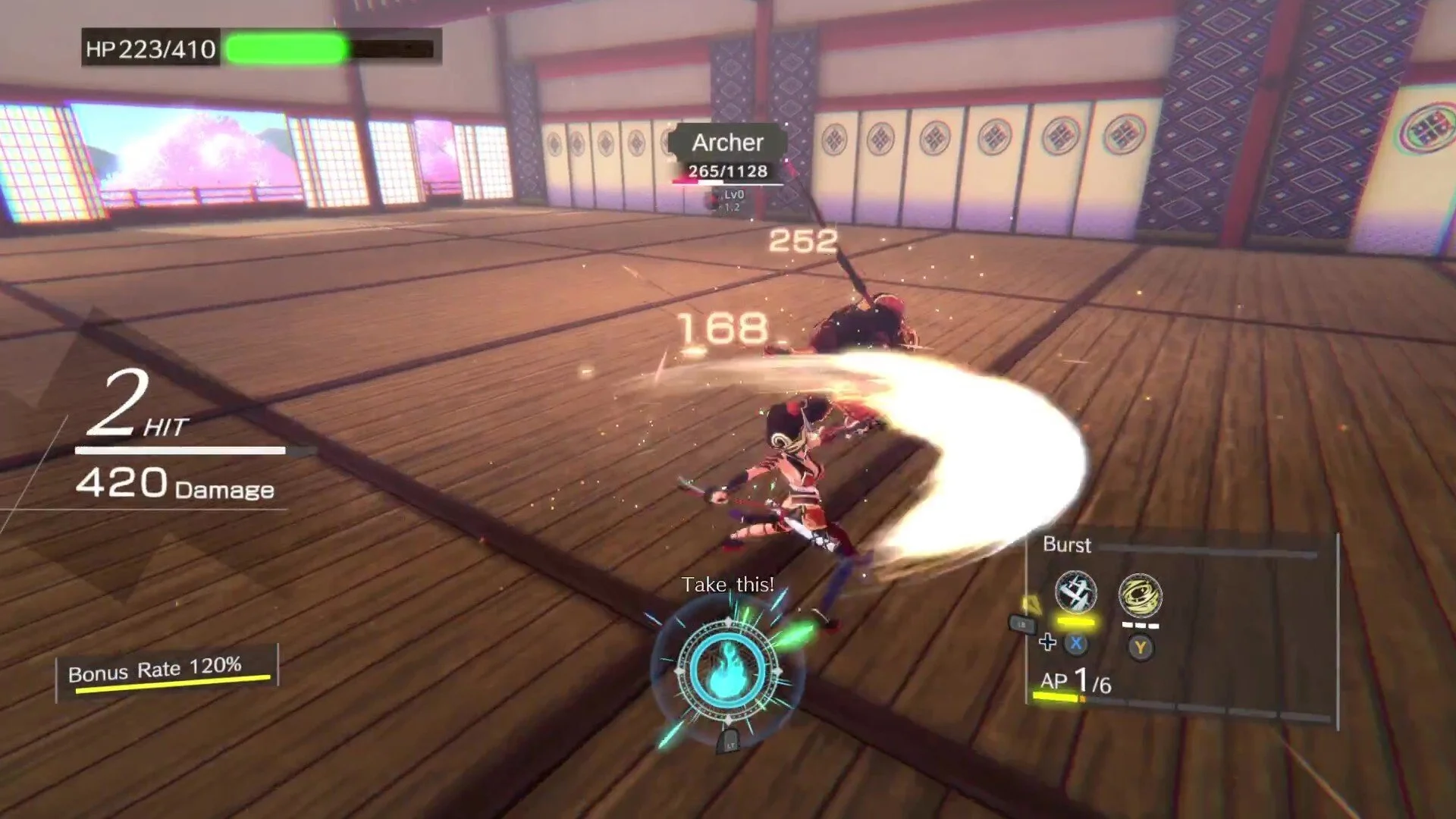
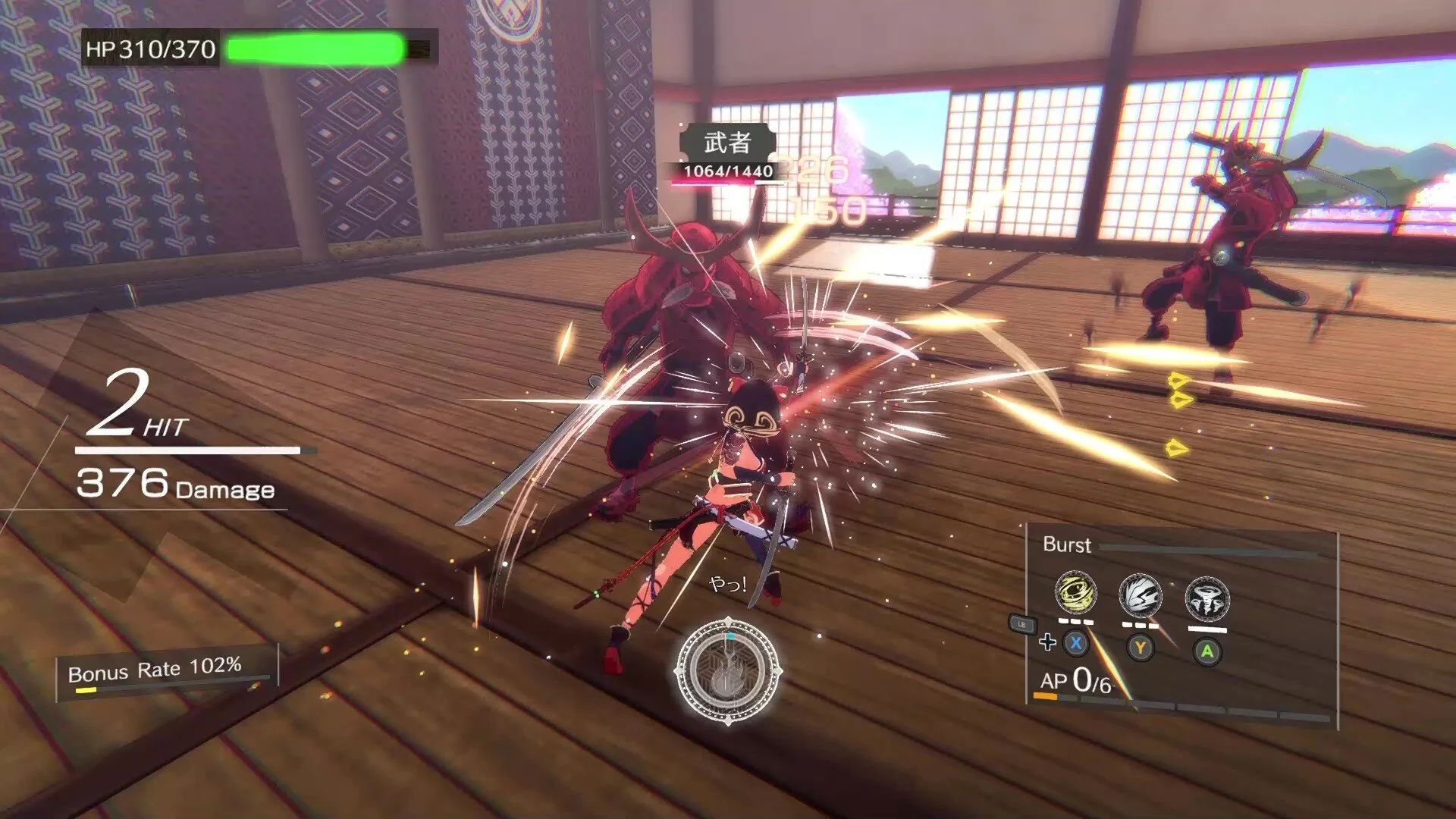
Retla can equip four skills at once, and she fights with dual blades. She has a dash, but she can only dash in the direction she is facing, which is a bit awkward at times. You do have a bubble shield, which is useful, as well as a charging attack that allows her to cut down everyone around her in a big slice and dice affair.
Combat is via your basic light attacks, heavy attacks, and your Arts, which are those aforementioned flashy attacks. These are activated by holding the shoulder button and then their corresponding face button. You'll need to attack enemies with your basic attacks to charge them up.
What is at least good about the combat is the ability for moves and attacks to cancel into one another, as opposed to canned animations that you can't retreat out of. You do have a combo meter that builds up providing you keep the combo going. This continued use of your combo grants you bonus damage and can apply status effects to your enemies.
What adds another degree of challenge to the whole experience is something called Mugen Depth. You'll earn this upon performing actions like just moving around the dungeons, or those aforementioned scenarios. Basically, anything from exploring, to making choices, or even healing, will result in earning more of this depth.
So, what is Mugen Depth? Well, it is basically a way of how the game increases its difficulty, while also applying a negative condition on you, such as lowering your health or reducing your experience gain in the next room. Thankfully, you can decrease this depth by trading some of your health as a means to lower it, as well as other means or items that become available. However, as enemies are already getting harder as you rise through the tower, the trade off isn't always worth it.
Each run begins as you pick two Arts. These range from an airborne strike, a series of slashes and strikes, to an ice attack that is forward facing. There are additional attacks that can upgrade the tier of your current attack or replace it entirely as you progress further and find each floor’s shop. However, most of these attacks generally do the same thing, they just vary in their presentation and how flashy they are.
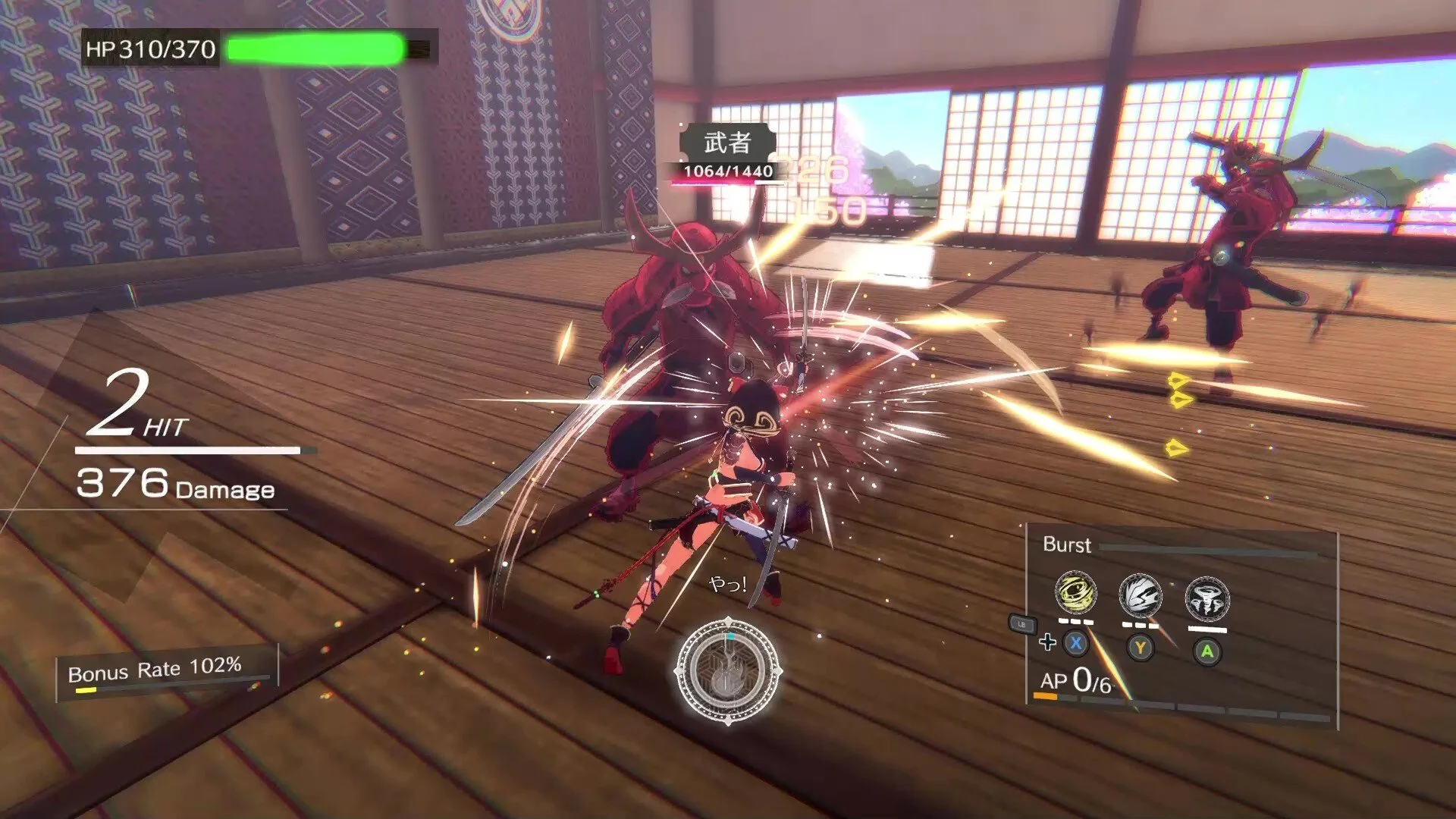
Attacking with any Art charges something called the Tension Gauge. When filled, Retla can pull off Overtension, which has you gaining AP much faster and you'll then have access to Overarts, which are more powerful variations of your skills. However, the gauge itself has levels to it, which can be spent right away or saved for a more intense battle. However, as the gauge resets each floor, you don't want to hold onto it for too long.
On the defensive side, you have a dodge and a dash, the latter of which is only directly in front of you. If you dodge at the right time, it slows the game around you and restores your AP. Your bubble shield can take a decent pounding, as well as filling a burst gauge, but the real trick is using it as a parry and gaining a counterattack.
Dying resets everything you accumulated during that run, but all your actions work toward unlocking milestones. Think of these like challenges where their reward will be a variety of stat bonuses or new arts. This gives you something to work towards if you're wanting a higher HP when you start, or more variety in your arts.
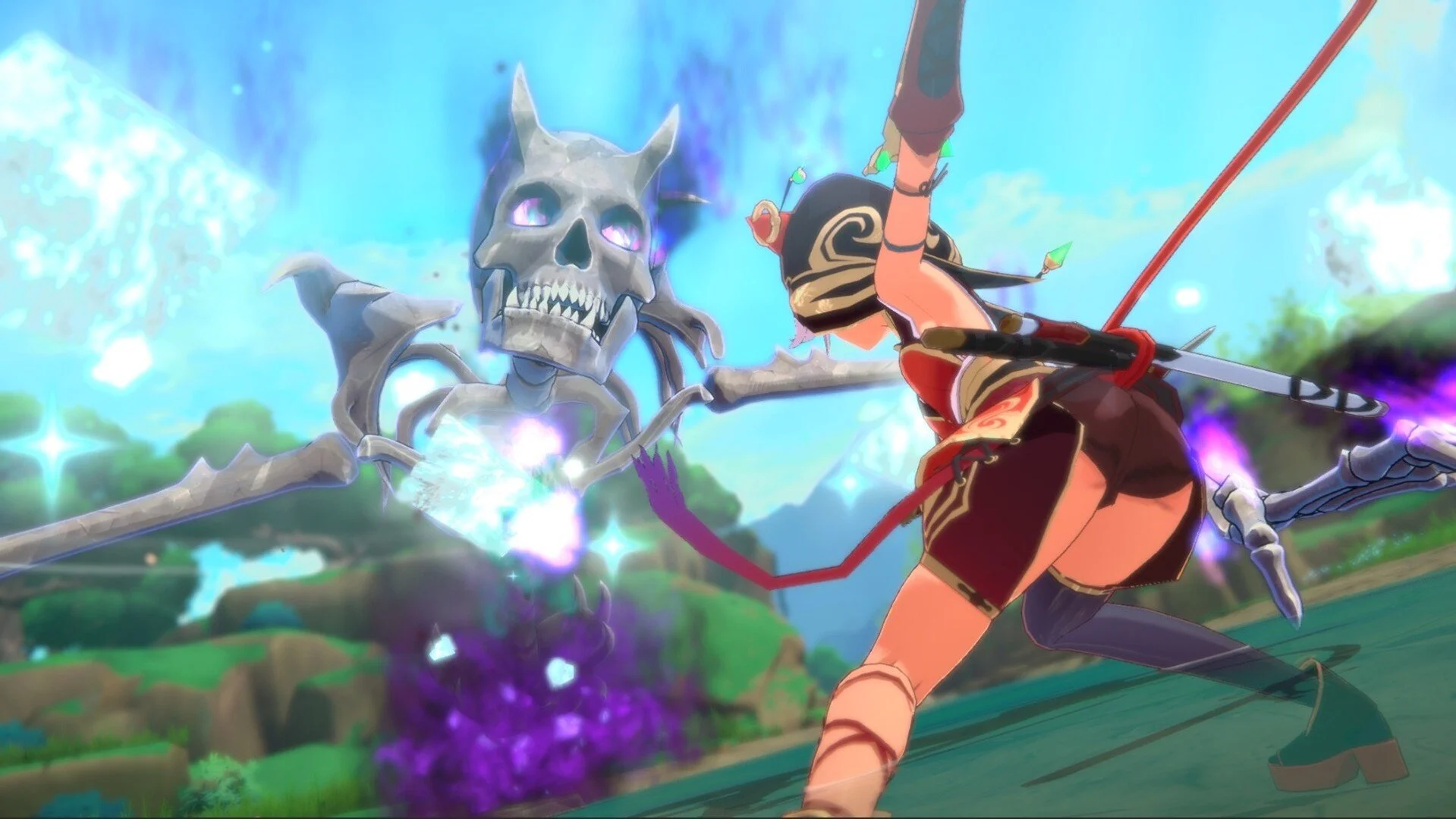
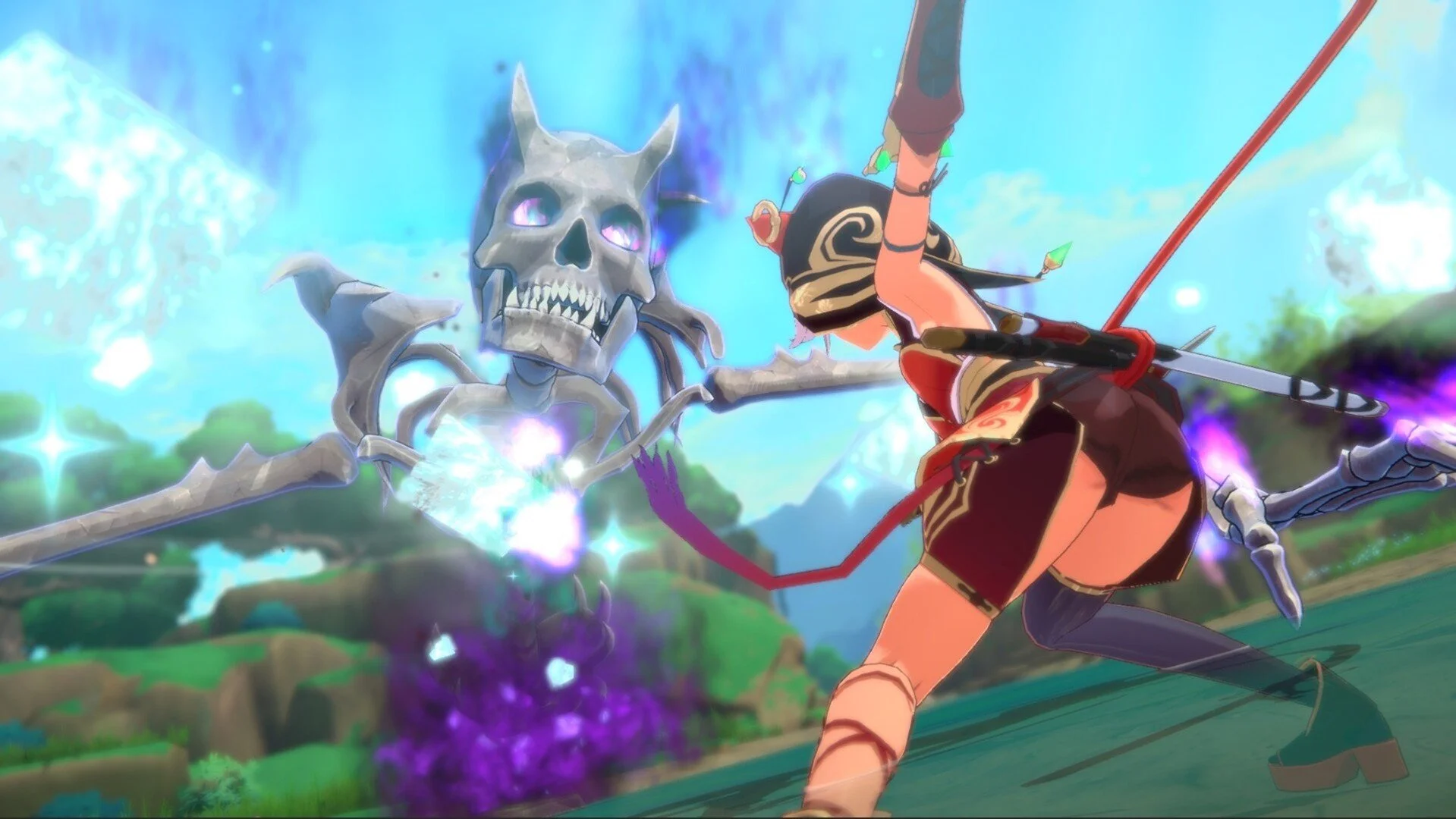
While I do love Retla’s character model, despite the lower quality feel to it being on the Switch, I still love the Senran Kagura bounce she has. Still, the rest of the game feels uninspired and bland and the fact this is not Switch 2, or that it has a Switch 2 version, does limit its visuals here. Some new arenas are fairly ok, but the combat and general feel of the game doesn't change, regardless of new enemies popping up and making their presence known.
Many of the Senran Kagura games have included smaller games alongside their campaigns, and Eternal Palace Sakura feels like one of them, almost like a training dojo to practise your moves. The core mechanics here are shallow, and the repetitive grind, despite being a rogue-lite, is suffocating for any creativity. It's a shame, since Retla seems like a cool character, but her game is just devoid of any personality.
Developer - Denneko Yuugi
Publisher - Shochiku / Shochiku Games, Denneko Yuugi.
Released - November 4th (PC, November 5th (Switch) 2026. Available On - Nintendo Switch, PC.
Rated - (T) - Blood, Suggestive Themes, Violence.
Platform Reviewed - Nintendo Switch.
Review Access - A review code for Eternal Palace Sakura was provided by the publisher for the purpose of this review.
Jeff is the original founder of Analog Stick Gaming. His favorite games include The Witcher III, the Mass Effect Trilogy, Hi-Fi Rush, Stellar Blade, Hellbade: Senua’s Sacrifice, and the Legend of Heroes series, especially Trails of Cold Steel III & IV.