

Lost in the Chaos.
From Brownies, the studio behind Doraemon Story of Seasons, comes Towa and the Guardians of the Sacred Tree, an action roguelike inspired by various stories and themes built around ancient Japan. Now, this isn’t to be confused with another cartoonish Japanese-inspired action roguelite that released just a few months ago in Yasha: Legends of the Demon Blade, a game that certainly shares a lot in common. Regardless of their similarities, Towa and the Guardians of the Sacred Tree does provide a more convincing argument between the two, yet I don’t feel that is exactly the compliment it may seem to be.
I’ll be honest here, it took me hours to really get into what Towa was offering, as I wasn’t really feeling Yasha: Legends of the Demon Blade had offered either. Since its aesthetic and game feel felt eerily similar, it wasn’t until I jumped into the game via co-op that it started to click, at least to the point where I continued to keep playing. That said, while I have a few issues with certain design choices, there is one that almost makes the game unplayable, a concept so obvious that I’m legitimately shocked it wasn’t something included by default. But, more on that later.

Towa is a game that has a gorgeous art style, with colorized sketches that make up the game’s character art, and a nice, colorful tapestry of environments that are certainly more detailed and better realized than that other game I just mentioned. Towa also brings with it a fairly robust story that has a surprising amount of backstory and heart to it. And, it also helps that much of the game’s dialogue is fully voiced, which helps the presentation and characterization significantly. If anything, it does the most heavy lifting out of anything present here. If there is anything you truly take away from Towa and the Guardians of the Sacred Tree, it will certainly be its characters.
The story centers around Towa, a young girl who has been chosen by the god Shinju to protect a village of his followers. This village was founded by the tree that houses this deity, so its protection is paramount. While this village has known peace for some time, an evil god named Magatsu attempts to corrupt the flow the mana and floods the land with a devastating miasma. What works here is that the story starts immediately as Towa and her Guardians, a group collectively known as the “Prayer Children”, are about to show down with Magatsu. However, this meeting goes sideways, and the Prayer Children are transported away from Towa and sent to another realm.
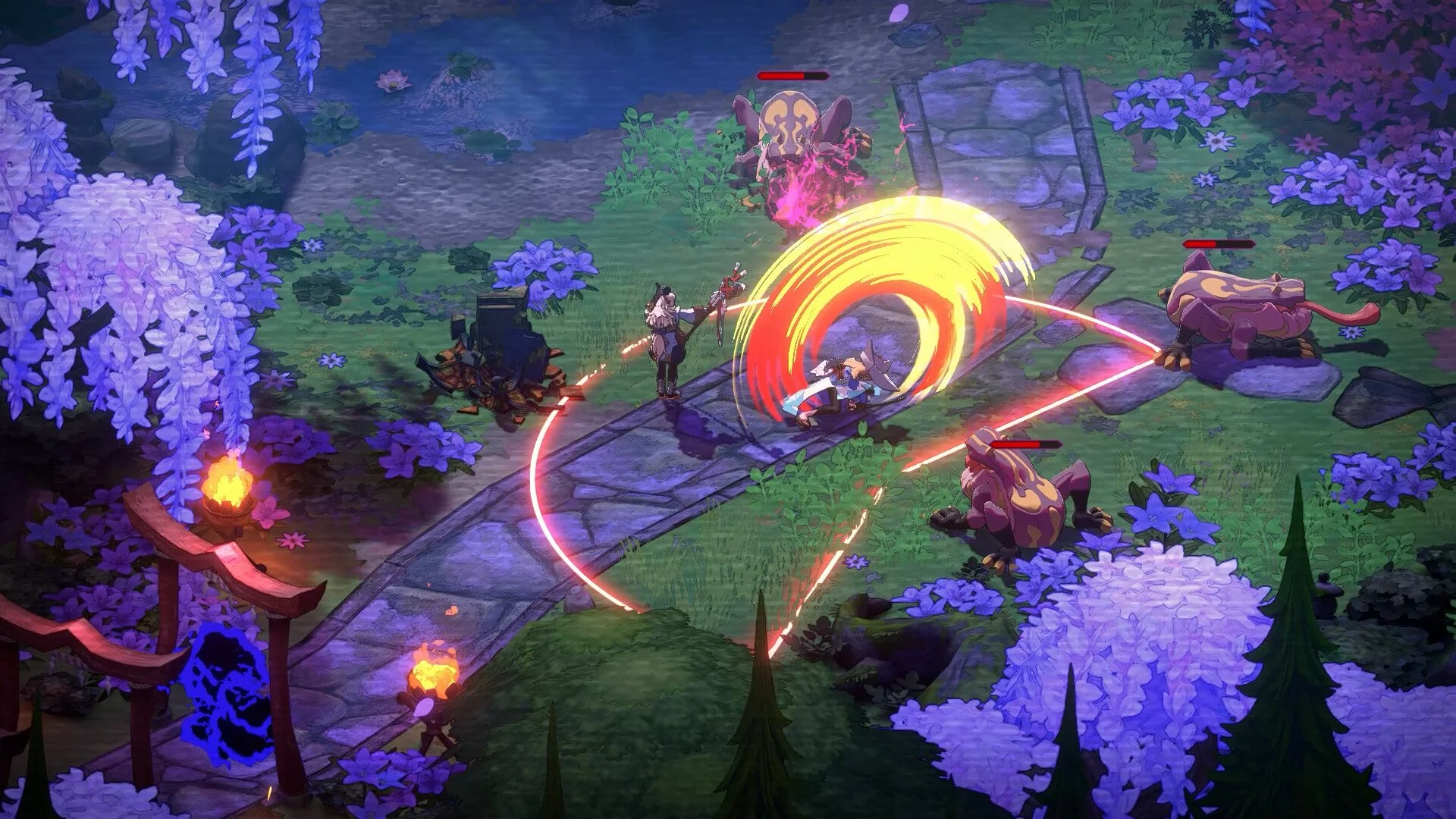
While this certainly distracts Towa, she is able to track down the Prayer Children, and while there are aspect of time travel involved, she cannot leave the village and therefore has to rely on them to continue the battle, oddly in groups of two. Sure, that doesn’t really make sense, but for the purpose of its gameplay, that is what it is. Towa and the Guardians of the Sacred Tree can be played either single player having you control both characters, or as a co-op experience, which is where it both excels and disappoints at the same time.
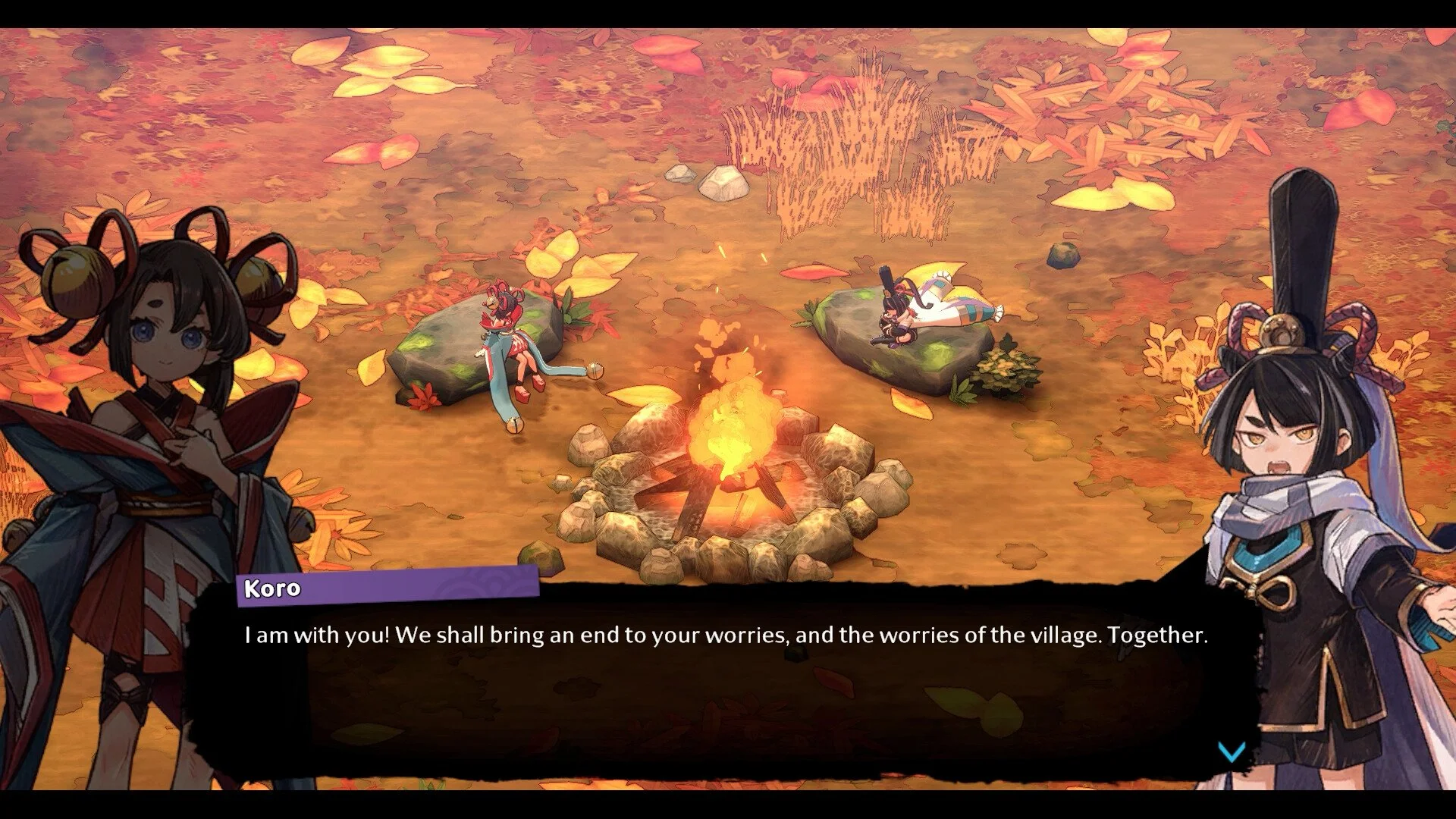
What works with Towa is that the characters have a deep history together. They have grown up together, and they know their weaknesses, strengths, fears, and triumphs. So, when you start engaging in conversations during the missions, sitting down at the campfire and engaging in stories, each pairing of characters has something meaningful to say. While you’ll certainly have your favorites, it’s almost dangerous to do so, given how some mechanics play out and how each mission ends.
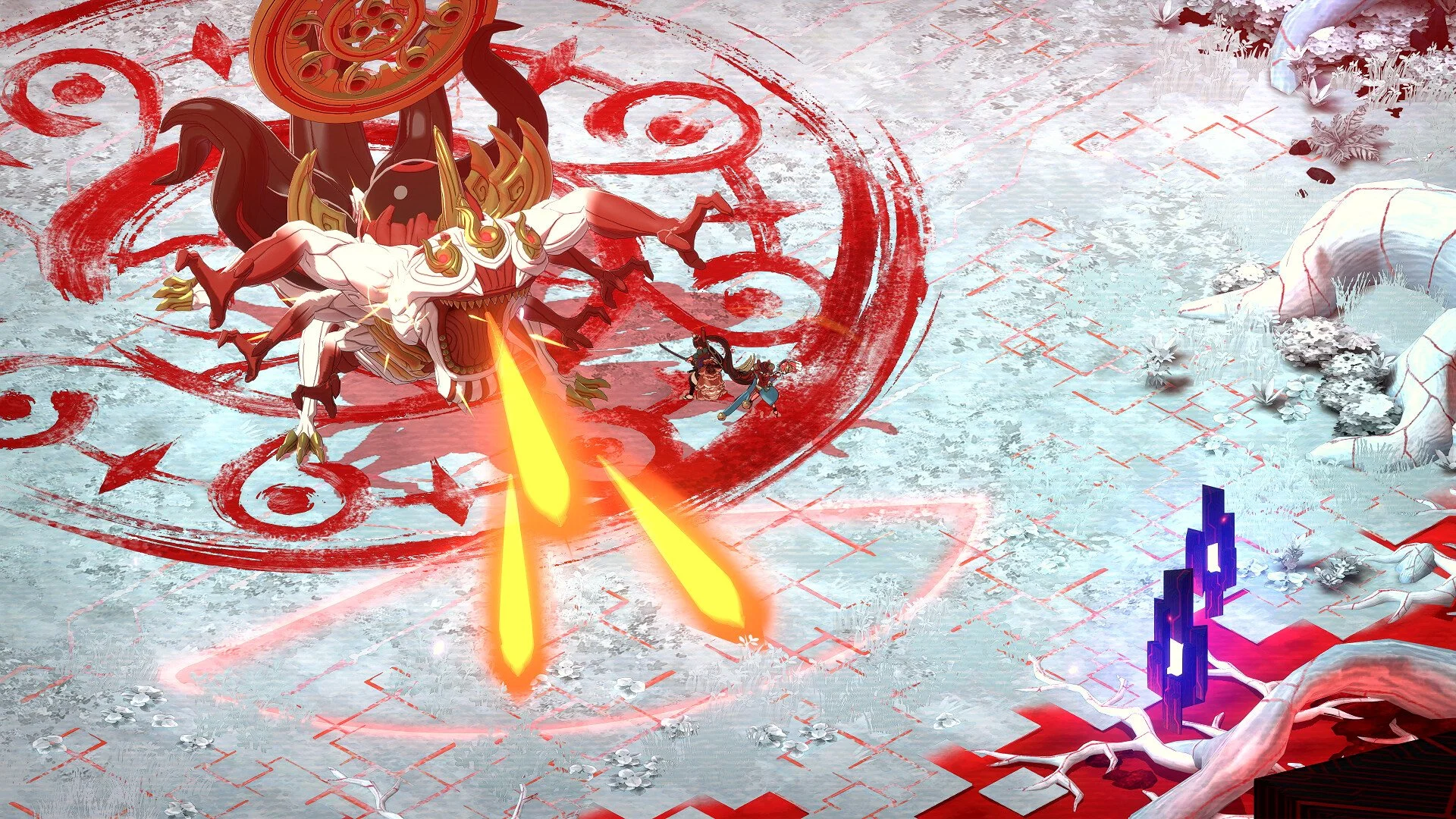
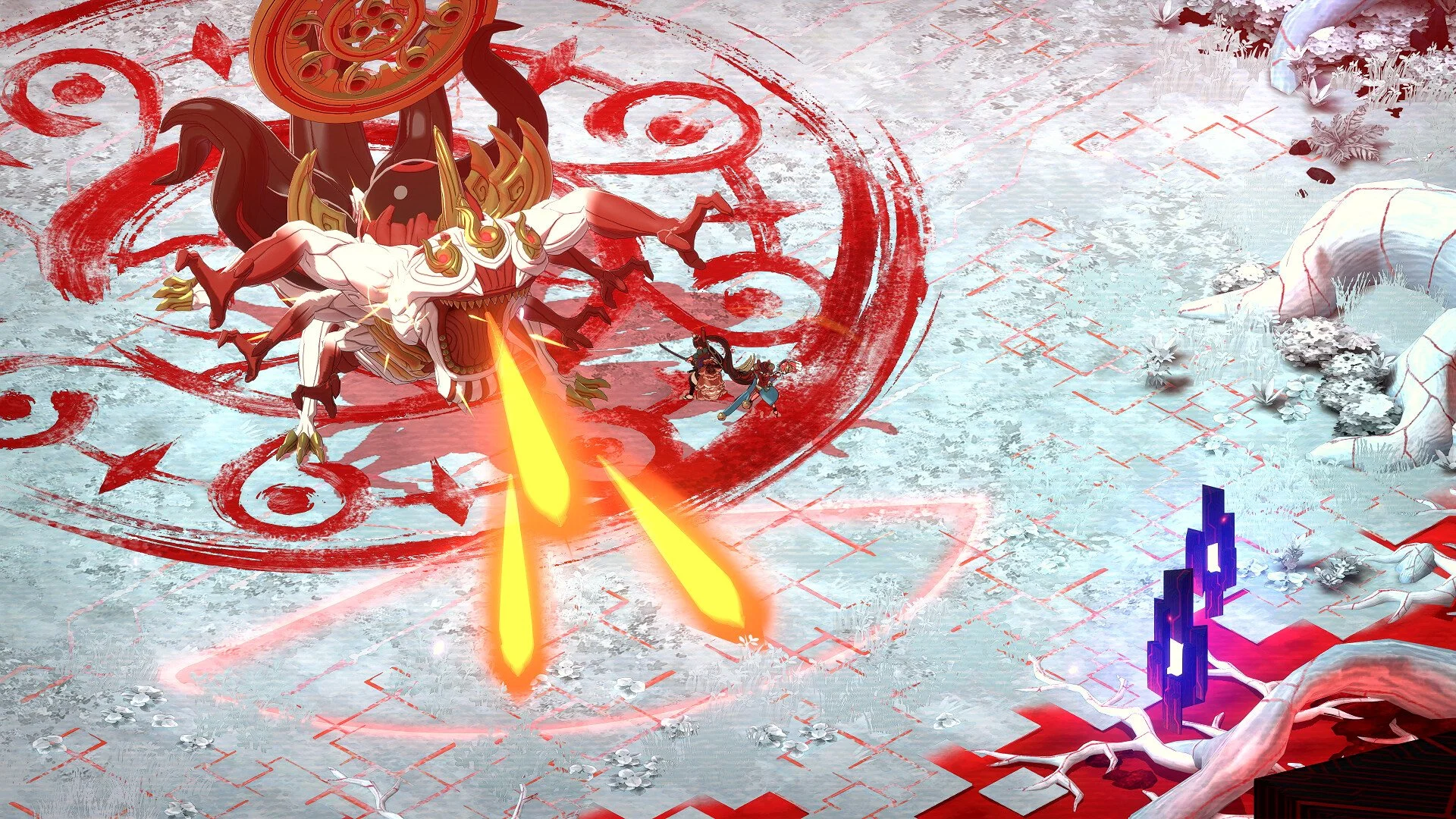
Each mission is designed around taking down a major boss that Magatsu has sent to destroy the Prayer Children. These are his offspring, and they all share a similar aesthetic. You’ll tackle these in order and while their challenge varies depending on their attack patterns and abilities, they don’t seem to get progressively harder as the game goes on. Still, defeating them may result in triumph, but also heartbreak. Upon defeating them, you then need to perform a ritual. This ritual requires the sacrifice of one of these two characters. While the roguelite has had permadeath DNA since its inception, this hits on a completely different level.
This is an interesting mechanic because it means that one character will die upon each run. This means you’ll have limited attempts to build them up, learn about them, and discover their connections to the rest of the team, before you complete the run and see them ritualistically sent off, likely to never be seen again. This has extremely interesting ramifications as you then see your available roster shrinking with each successful mission. While upgrades are shared, regardless of their station, there is an emotional impact that certainly shouldn’t be understated. You may have your favorites, but do you send them off first to rip the band-aid off quickly, or save them until the end and feel the impending death cloak around you for hours on end.
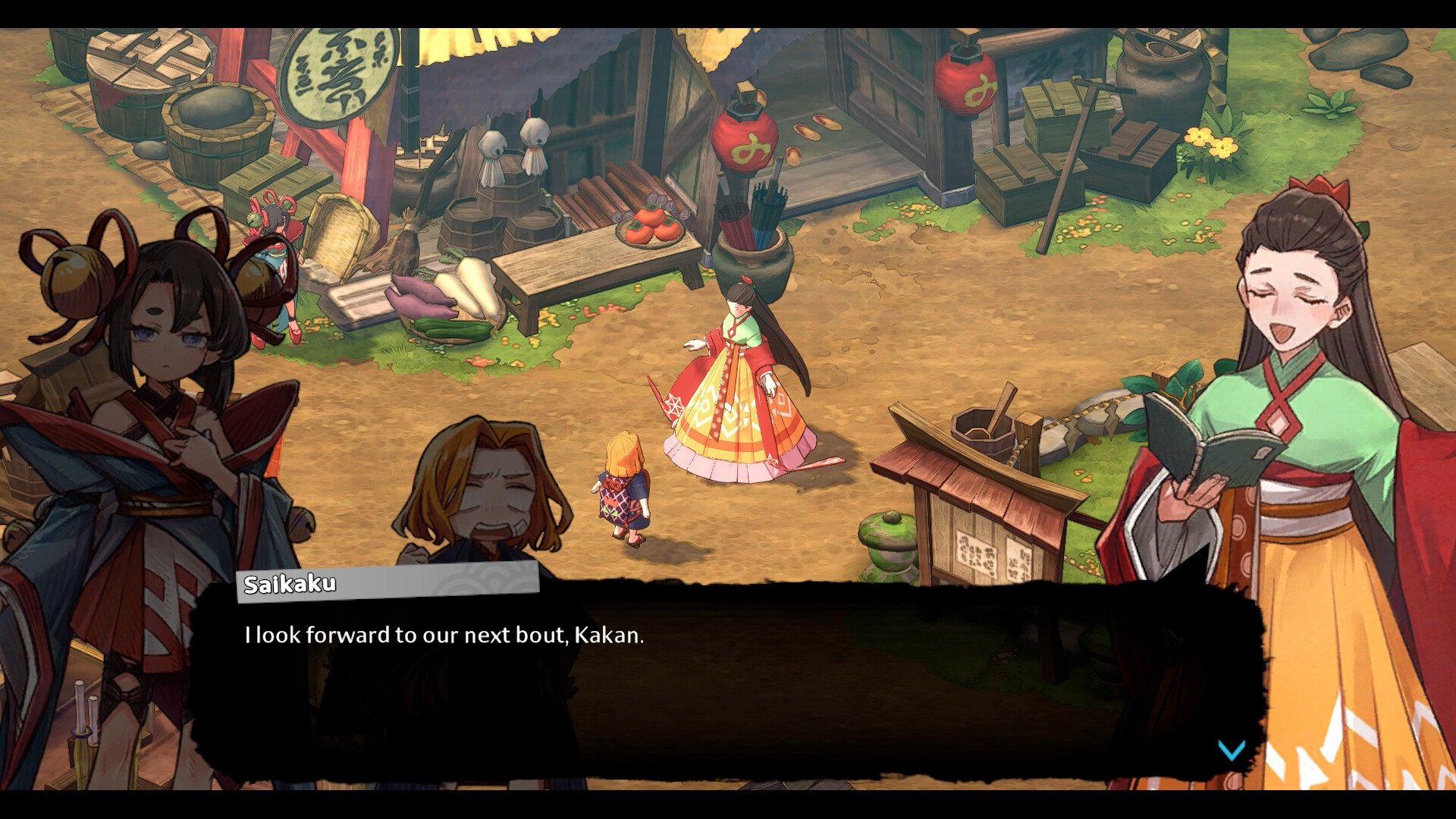
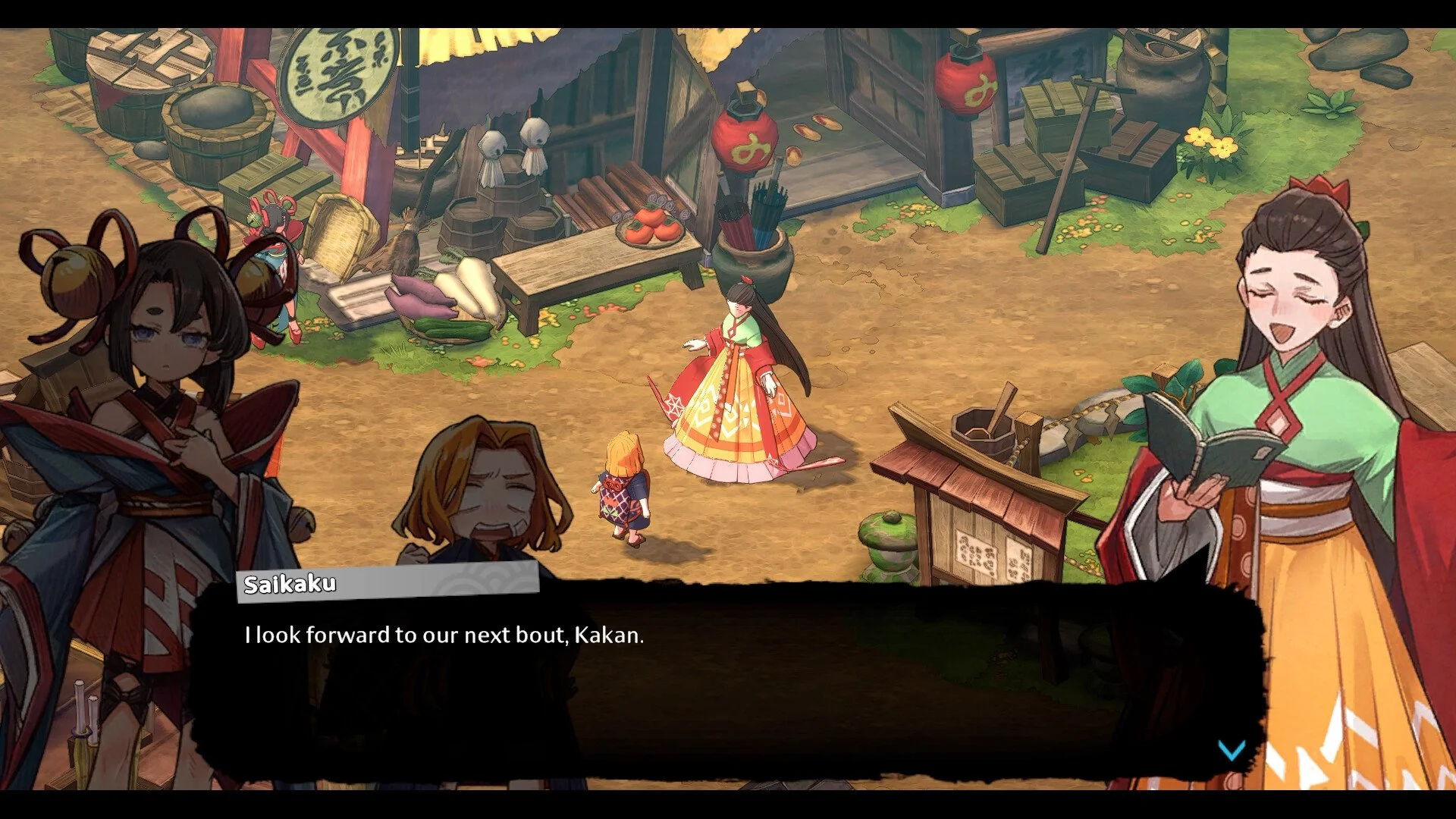
After you complete a run, Towa will harness the mana you have sent back. However, while Towa will not change, the village changes around her. Children are now adults, adults are now passed on or retired, and their apprentices have now taken over their various tasks. This really makes you want to take part in every conversation you can have as the appeal of these characters aging allows those past moments to really shine. It’s a wonderful choice here the team has made to make the village itself a charming character.
How Towa and the Guardians of the Sacred Tree functions is this: You have two positions within each pairing, you have the Tsurugi, which is your main fighter that uses a pair of swords to attack, and then the Kagura, which acts as your support by throwing out spells. When you play single-player, you control the Tsurugi directly, even if you can technically also control the other character, but it’s so frustrating to do so that you’ll likely just have them on follow mode and handle their choices alongside your main. However, when you play co-op, your friend can take on that other role, even if they have severe limitations on attacking only through cooldown abilities. Yup, they don’t have access to any non-cool-down strikes or anything that can be useful immediately. It can often feel like you are just there to throw dangerous confetti as you cheer on the main player.
All of the eight Prayer Children can be assigned to either role; however, some are far more suited for one or the other when you really start to break down their skills. The Tsurugi can utilize two swords, the Honzashi and the Wakizashi. Where this becomes the reason is that each sword will dull very quickly, and you must swap between the two. This can be an issue once you start crafting swords and find that your durability is too low, despite a strong damage output. I had a sword that did insane damage, but I had to swap it out after two hits. While you can easily refill their durability by swapping them using a system called Quick Draw, it is a mechanic that doesn’t really remain enjoyable throughout the whole journey; it begins to get old very quickly. In fact, you can just swap “twice” and get back to your favorite sword in seconds. It sort of makes the whole mechanic to feel underbaked.
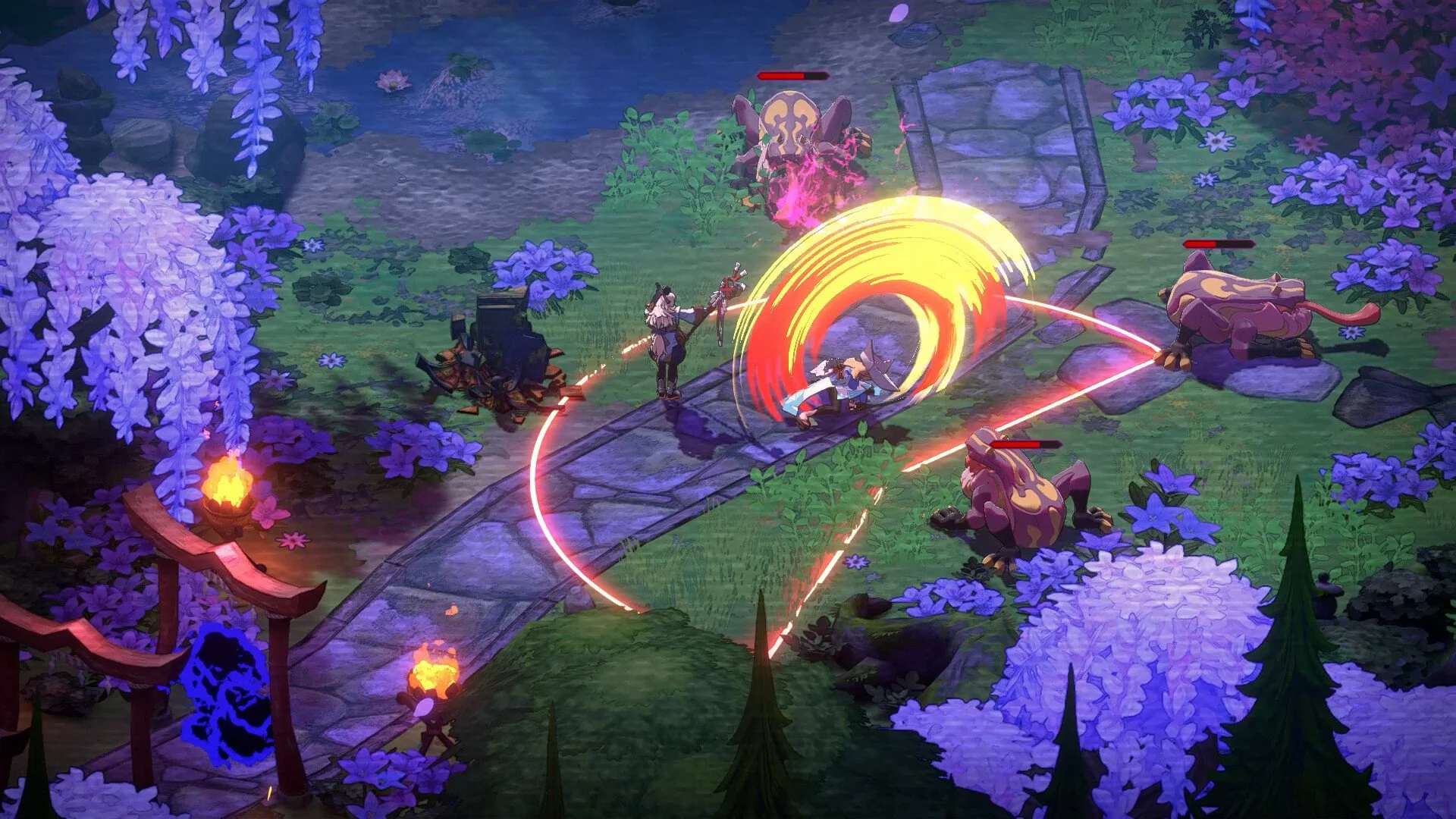
Each sword has different powers, so you are rarely swapping to one and engaging the enemy in the same way. Mutsumi, who was my main throughout the entire game, would pull off these big swings punctuated by orange-highlighted colors, and then, when swapped, would crash down to the ground with an AOE that would destroy groups of enemies. It certainly shakes up gameplay, but it’s the limited durability that really ruins it since the character will constantly mention it when the sword breaks, and you start to hear the same tired voice lines hundreds of times.
What shakes up each run are Graces. Each Grace has varying rarity levels and numerous effects, which change up how you engage in combat. These can affect both characters, their weapons, health, and more. Like Hades, each doorway presented will indicate which type of Grace you’ll have as a reward. There are 9 total categories that cover a wide spectrum of abilities, both passive, defensive, and offensive. It’s a tried and true system and it serves its purpose here.
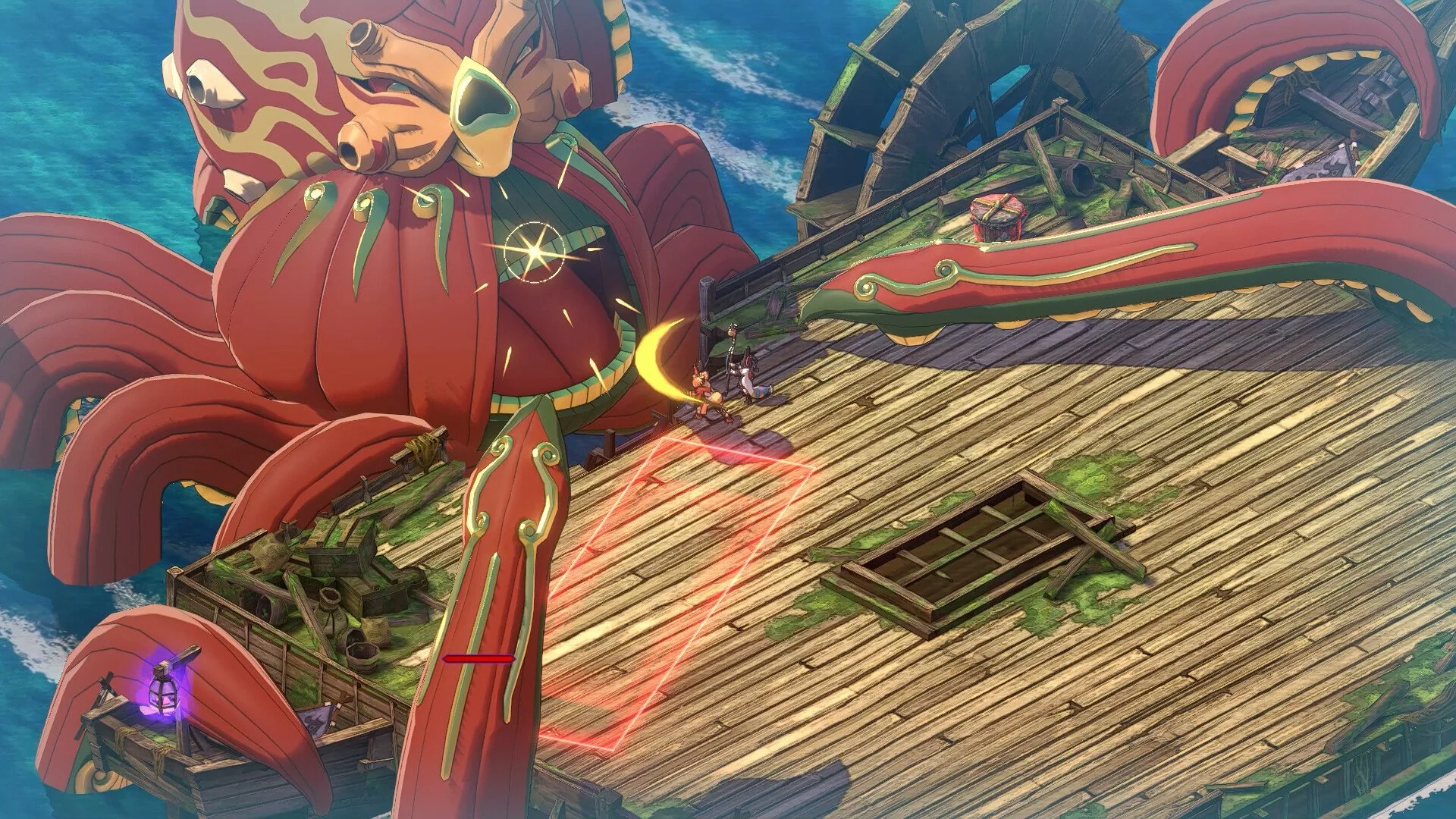
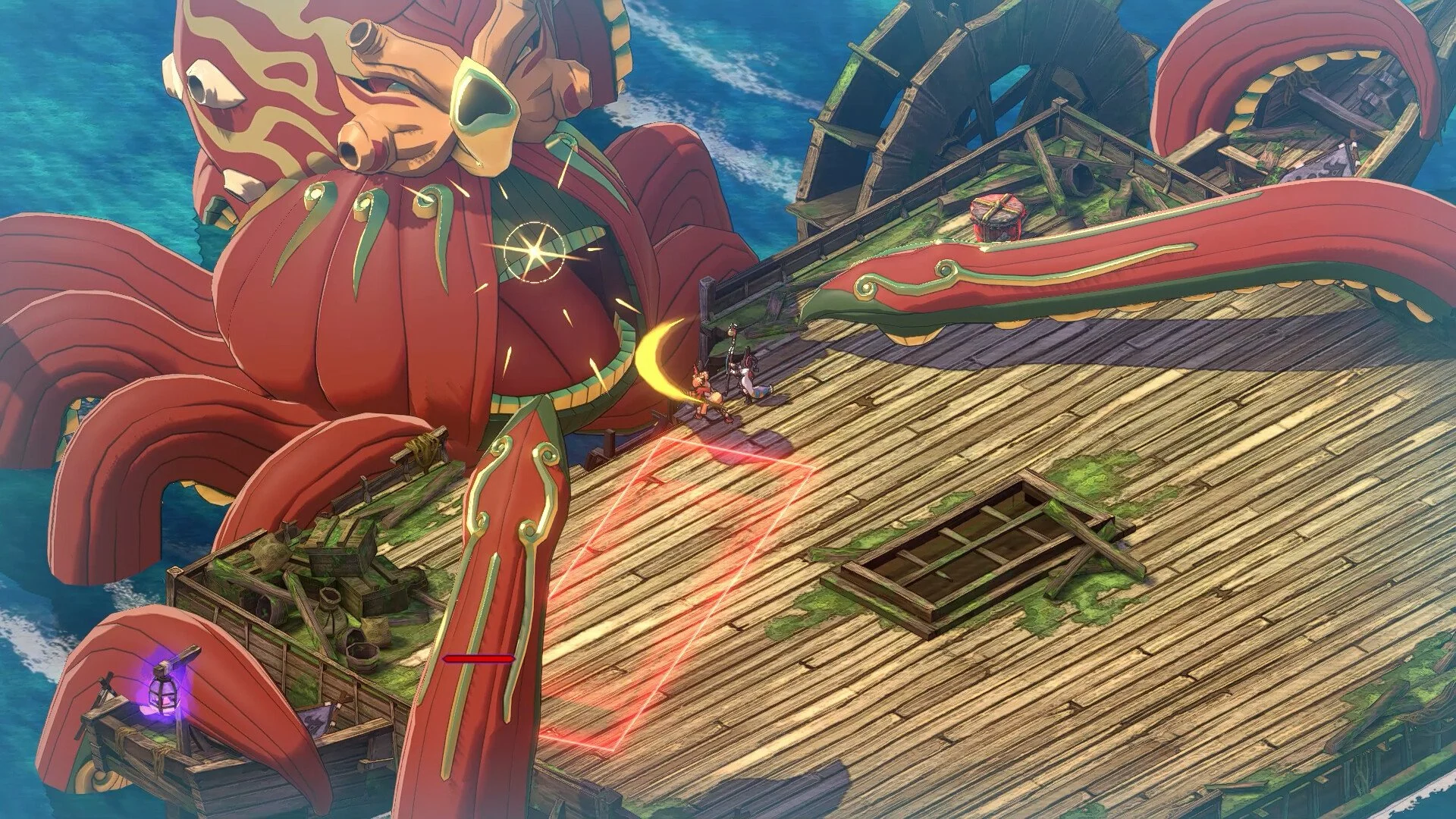
Where combat can fall apart, regardless if you are playing in single player or in co-op, is that you can easily lose track of your character amidst the chaos. Mutsumi was my favorite character by far, but she has a shared coloring with many of the game’s environments, making it easy to lose track of her. And since you have a second character with you, playing as those in later runs will easily have you slip up and follow the wrong character. I also despised the tether that keeps both players within a certain reach of each other. Why a character icon, circle, or marker around each player wasn’t present here is mind-boggling.
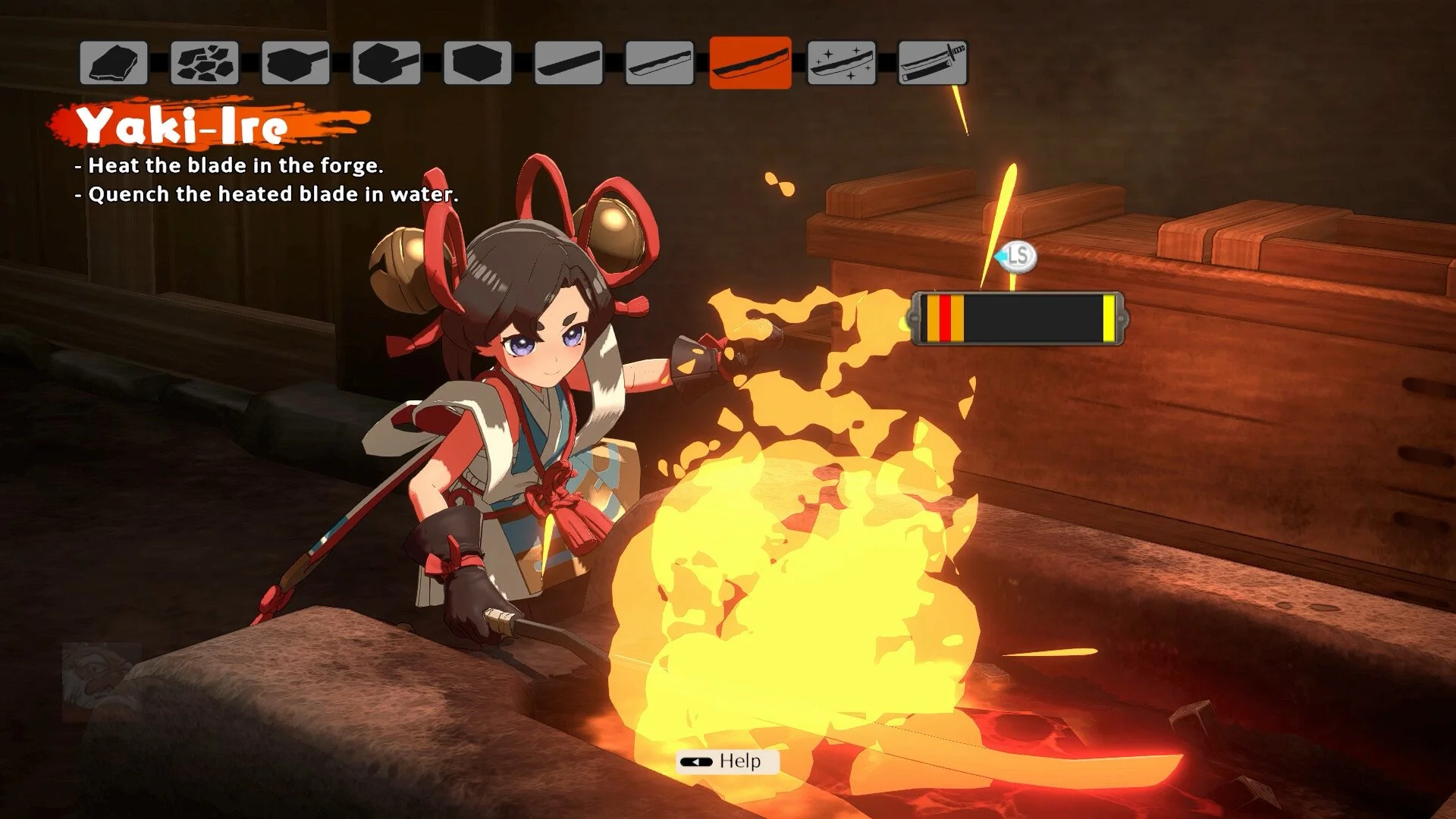
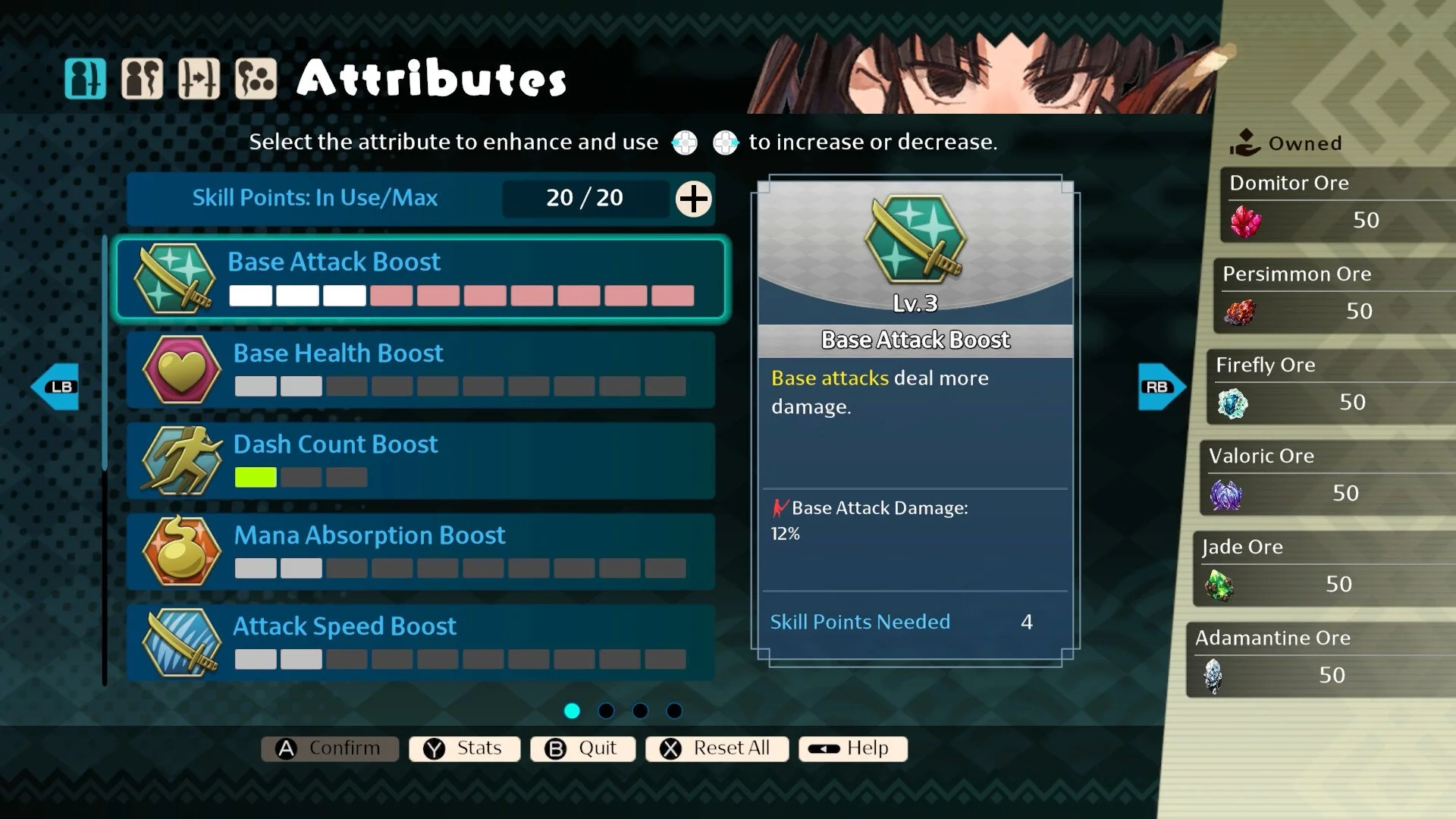
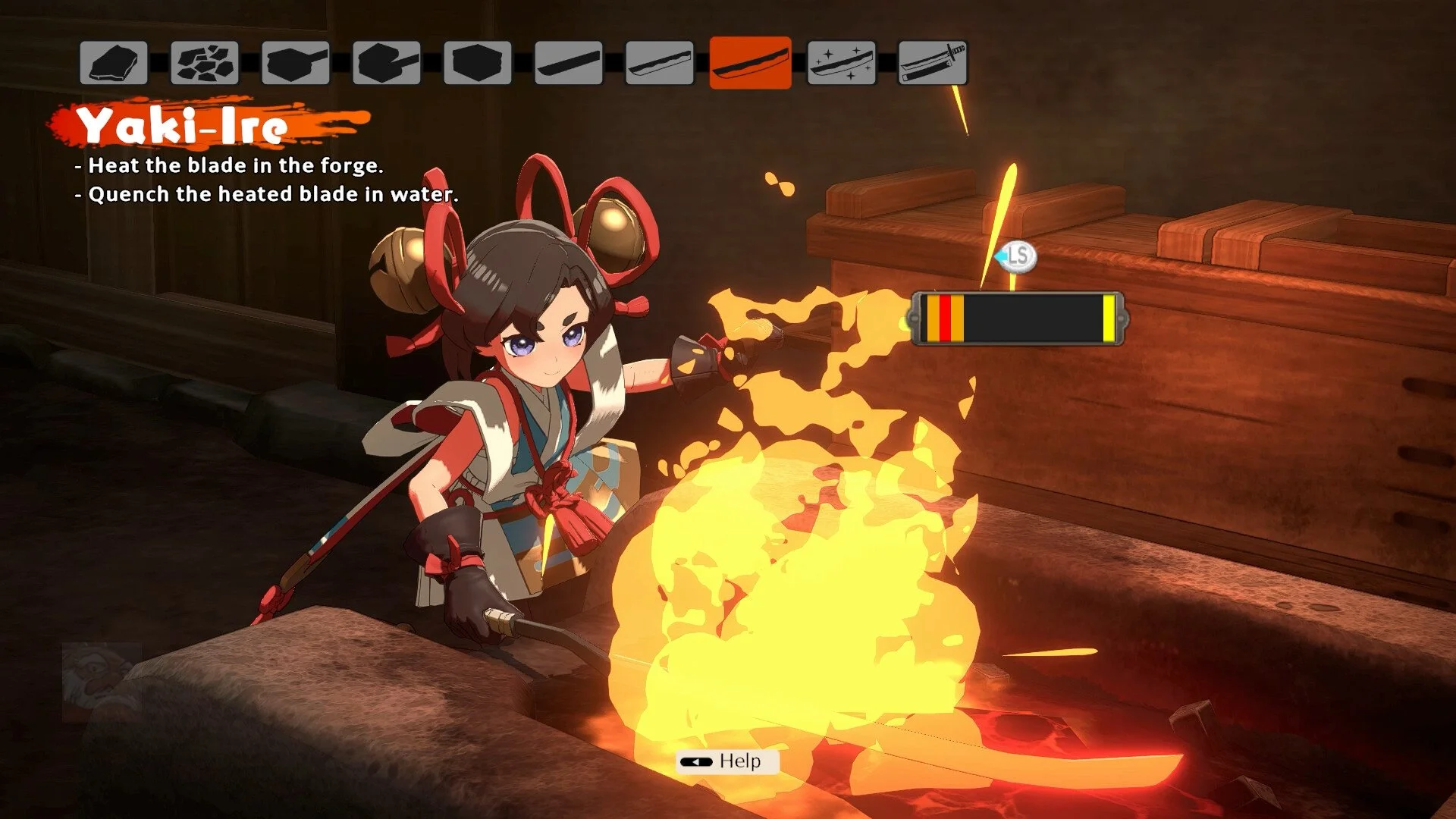
Towa and the Guardians of the Sacred Tree is similar to each roguelite in that you make incremental upgrades and boosts to your characters between runs to get a little bit stronger. You have numerous outlets here, some you have to build yourself, that enhance each part of the components to gameplay and combat. The Dojo will upgrade your personal power, whereas the Blacksmith allows you to craft new swords. This is done through a series of mini-games that simply go on far too long for what you are doing. That said, while you can visually customize your swords, you won’t ever see those reflected in gameplay since the camera is pulled all the way back. It feels like a nice touch, but the gameplay doesn’t serve it whatsoever.
Towa and the Guardians of the Sacred Tree does a lot of things right with its story, character moments, and the time hijinks of the village itself. While the roguelite systems are what we’ve come to expect, with the studio rarely coloring outside the lines, the combat can often feel underbaked and a chaotic mess of trying to find your character in the chaos, especially in co-op, where a tether can result in some unfortunate hits. I don’t think Towa is a bad experience, but it needs some refinement to be something I want to keep coming back to.
Developer - Brownies.
Publisher - Bandai Namco Entertainment. Released - September 18th, 2025. Available On - Nintendo Switch, PS5, Xbox Series X/S, PC. Rated - (E10+) - Alcohol Reference, Fantasy Violence, Language, Mild Blood, Mild Suggestive Themes. Platform Reviewed - Nintendo Switch. The game was played on a Nintendo Switch 2. Review Access - Review code was provided by the publisher for the purpose of this review.
Jeff is the original founder of Analog Stick Gaming. His favorite games include The Witcher III, the Mass Effect Trilogy, Hi-Fi Rush, Stellar Blade, Hellbade: Senua’s Sacrifice, and the Legend of Heroes series, especially Trails of Cold Steel III & IV.