

We have Doom at home.
Painkiller 2025 is a complete reimagining of the 2004 classic, devoid of Daniel Garner and his quest to kill four of Lucifer’s generals. While this reboot features some returning guns and the idea of being stuck in purgatory, there is very little here that actually connects to the original game. Now, while People Can Fly developed the original, with countless studios producing additional content for it over the years, 2025’s Painkiller is developed by Anshar Studios, the team behind the cyberpunk game Gamedec, as well as a support studio on countless games such as Balder’s Gate III, Outriders, and countless Bloober Team titles like Layers of Fear, Observer, and the remake of Silent Hill 2.
Now, those titles are some massive hits, and Anshar Studios certainly has the pedigree to build games of their own. Painkiller 2025, which I’ll just refer to as Painkiller, is a very solid shooter, one that certainly wears its inspirations on every bullet. Yes, Painkiller is a mixture of every boomer shooter you’ve played before, but one that certainly looked to Doom 2016 for inspiration, much as was the case with the original Painkiller, as it too had its own Doom and Quake to look for its own inspirations. Now, add some co-op to the mix, and that is what Painkiller is, an online co-op shooter, one that sadly ends far too quickly and denies us any true sense of endgame.
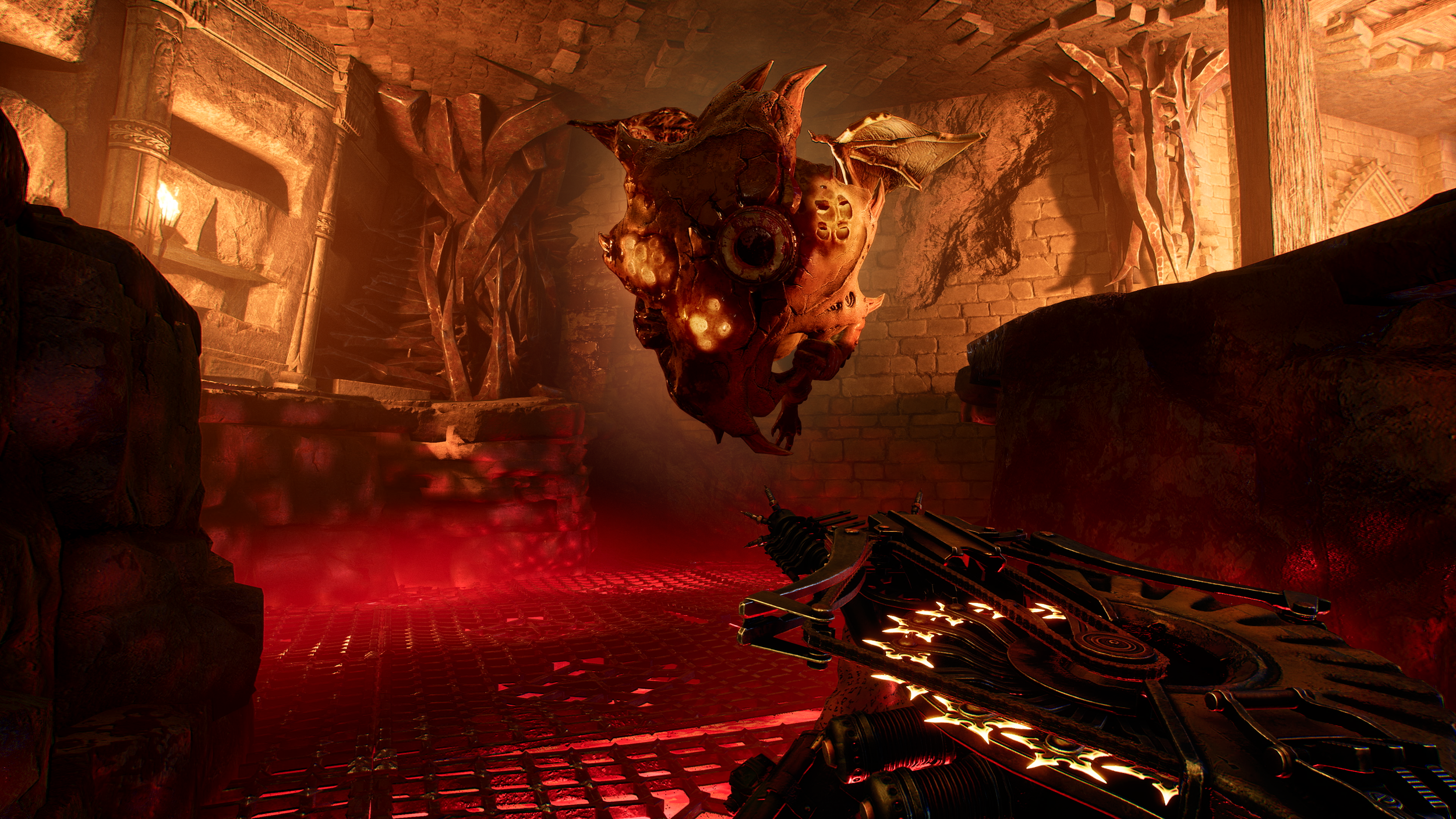
Painkiller features 9 levels split into 3 chapters. At the end of each chapter, you’ll face a boss. While there is a story to propel you through this action-packed gorefest, it basically comes down to you serving your sentence in Purgatory by staving off Azazel’s forces as you work for Metatron. While the characters have backstories that you’ll learn to understand, there isn’t really closure here for either your characters or the story itself. The game just simply ends. No credits, no cutscene, nothing but an awkward and cryptic talk with a particular character, and that is it. While the story is certainly absent across much of its gameplay, there are notes that dive deeper into the world and its characters.
If I split the game into pros and cons, then you’ll have already experienced most of my cons. The story isn’t engaging, the characters lack depth, and the ending is well, just not there. As for the rest of the experience? Well, it kicks ass, that’s what it does. From the first few minutes to the 10+ hours I’ve sunk into playing through the raids, some of them multiple times, Painkiller is an absolute riot. While it certainly pulls from Doom 2016 in its weapon designs, the feel of each weapon, to the pulse-pounding metal that feels like the composer is there in your room, matching the music to the action, Painkiller has its gameplay on lock, even if that gameplay constantly looks to invite comparison to the table.
You’ll choose from four characters that are each serving their sentence in Purgatory: Ink, Roch, Void, and Sol. They each have different backgrounds, as well as how they died, to additional skins to purchase with in-game currency. They also have one unique perk, such as additional weapon damage, increased energy restoration, or bonus ammo capacity. Other than that, they don’t have anything unique about them. Sure, they have their own personalities and voice work, in which the actor behind Void should be nominated for worst voice actor of the year, but it feels like a missed opportunity to make replaying the game more interesting with a new character, as the experience will be the same regardless of what hands you see holding the gun, which also negates my desire to unlock new costumes given the perspective you have in game.
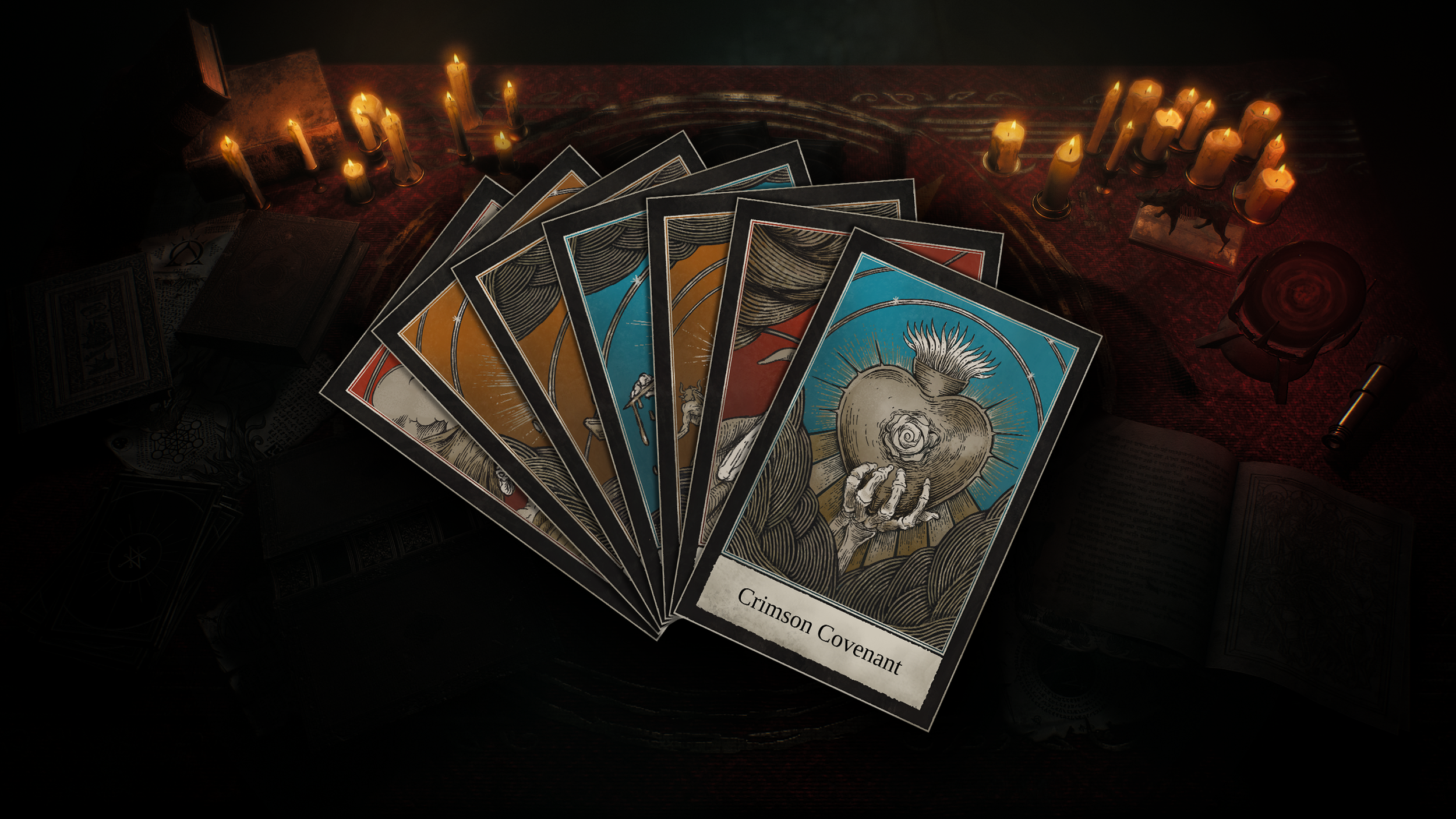
In the early game, you’ll clear out a building infested with demons and lay claim to it for your base of operations. You’ll have a character select section, a location to purchase and upgrade your guns, to the ability to purchase and draw tarot cards that grant perks, such as boosted damage, earning more cash per run, and countless more. You can hold a maximum of two per run, and they dissolve after the level is over. While you can simply RNG another set of three and hope to get the card you want, you can use the more rare currency to just reignite the card you want.
As you vanquish demons and explore each level thoroughly, you’ll harvest gold and that more rare currency I just mentioned. Gold can be used to unlock new guns, purchase new Tarot cards, or unlock costumes for your character. Given this is a first-person shooter, the costume is only seen at the start of the round, and that is about it. This was the same issue I had with Overwatch, as while it was great to unlock skins, only the people I am playing with are benefiting from my new fashionable duds.
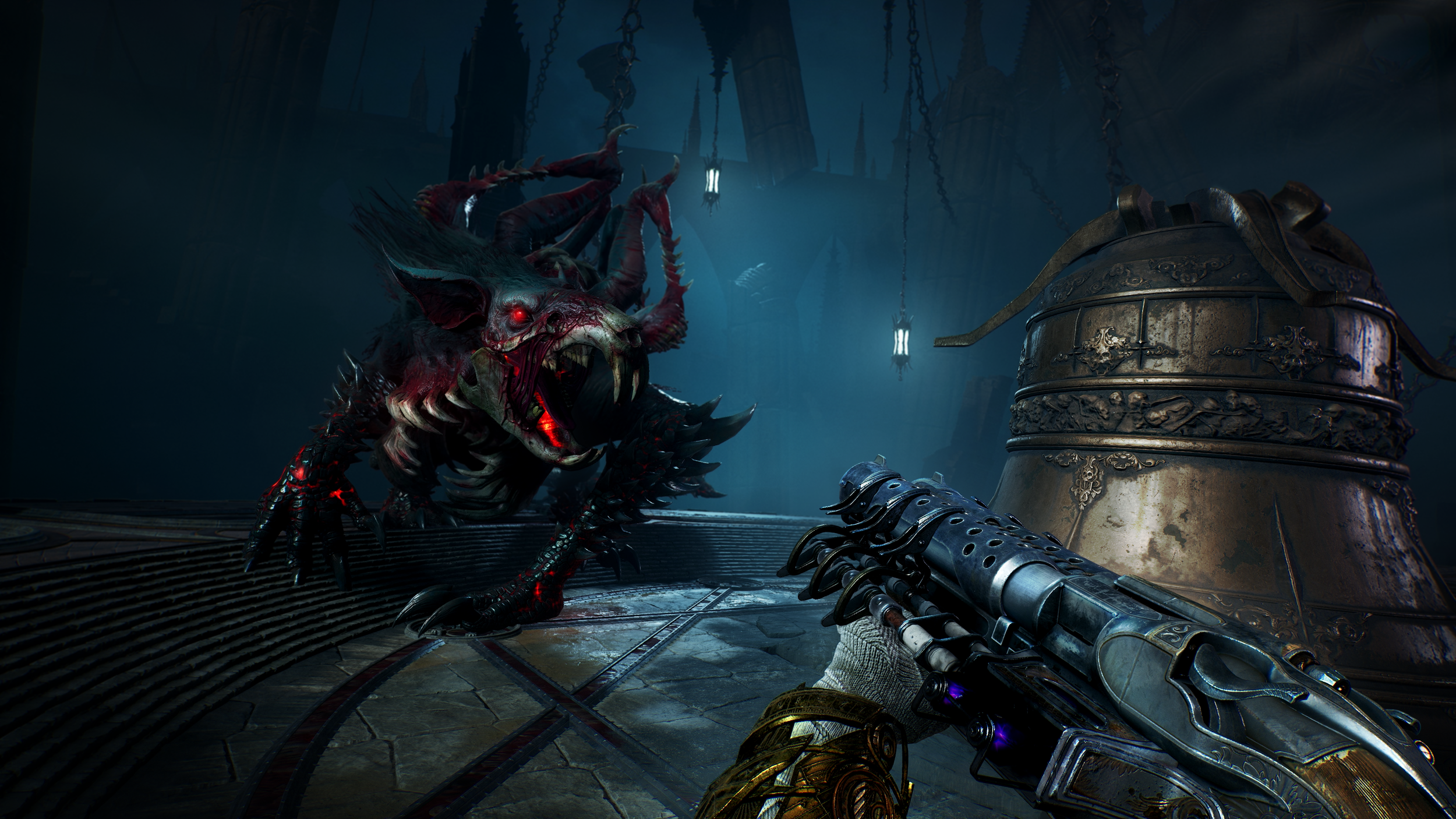
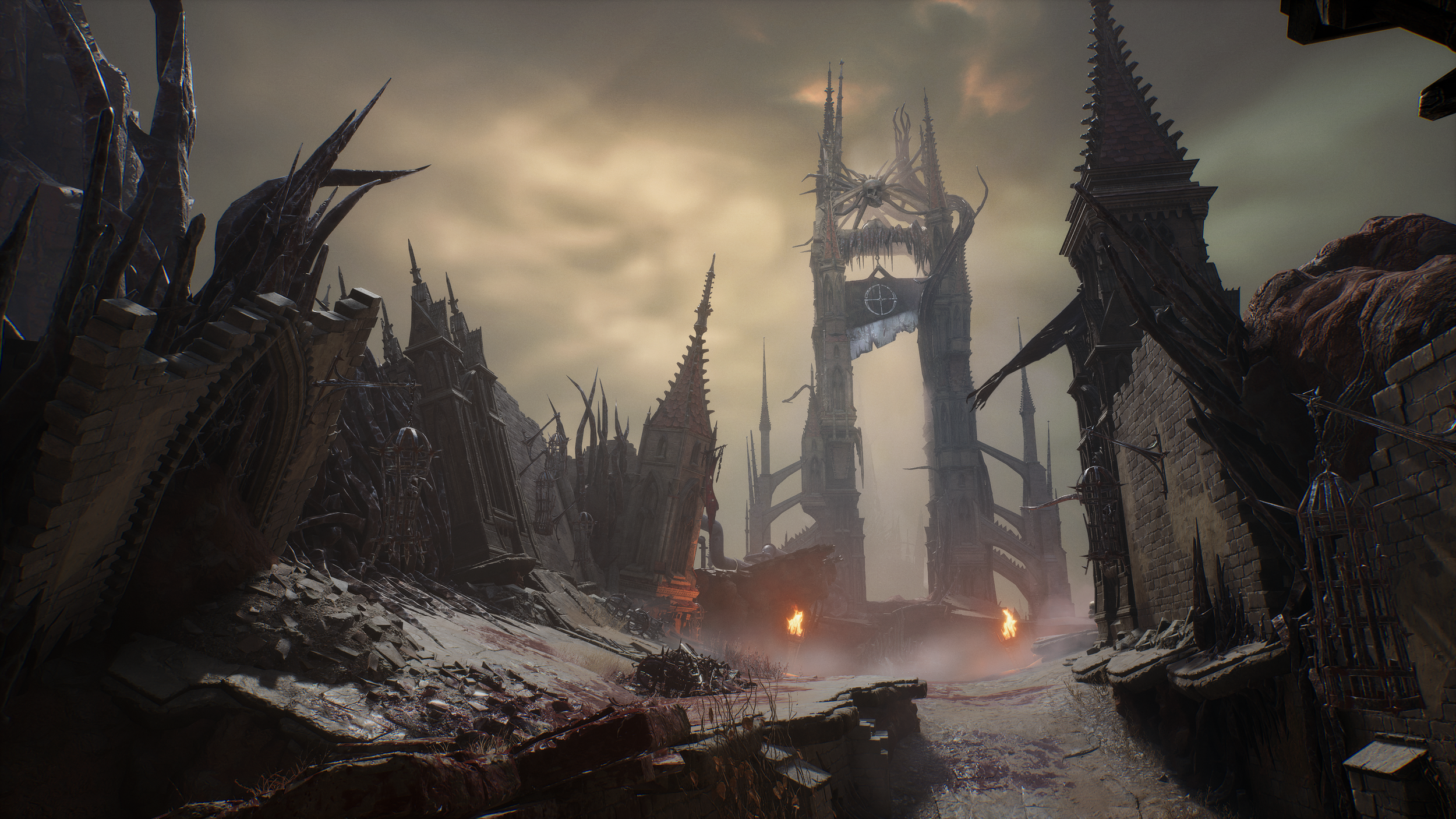
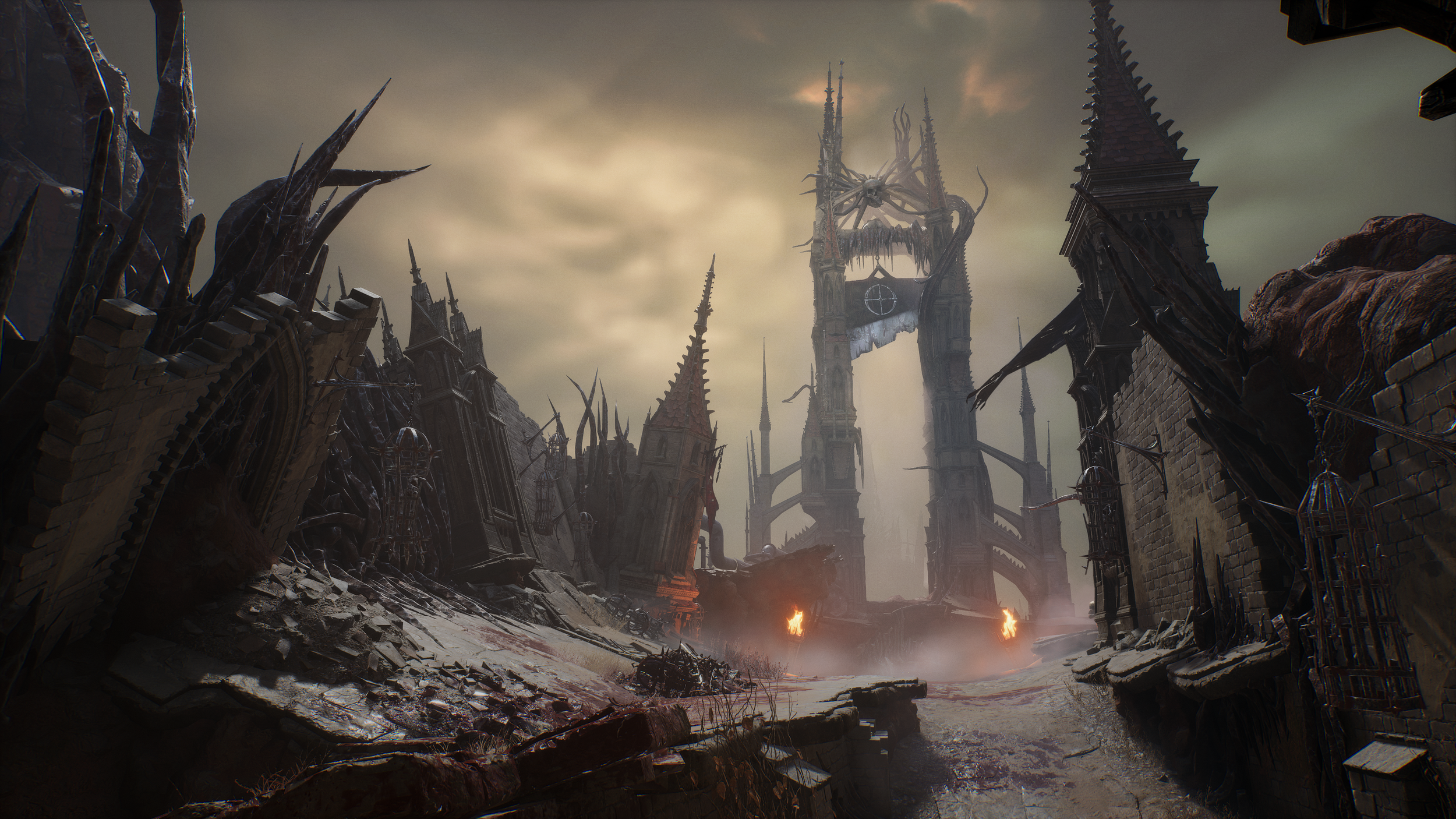
The three chapters across its brief campaign offer up a few options in their environments. Faith and Steel offers up Cathedral spires that pierce factory smoke, providing a very moody locale. Souls and Sands take part in ancient ruins across endless sand. Finally, Flesh and Water has lush green vegetation via ancient waters, providing a much-needed change of scenery, and is a standout here. The levels do follow in some familiar territory and offer up a lot of platforming. While you do have a dash, as well as a grappling hook, I found it odd that there was no double jump, which would have made some of the platforming easier. Some jumps feel like you can barely make it, even with the dash.
With three chapters, this means three boss encounters. These fights are damn impressive and will have patterns to them that are easily decipherable. I will point out that during the last fight, which is on a platform, getting knocked off it can result in being plunked down right at the end, ensuring you fall again. I had this happen a few times, and you do need to start the entire mission all over again. While missions are generally quick to go through, having to restart right at the end is an annoyance. Thankfully, this is the only occurrence I’ve had that has resulted in having to restart a mission.
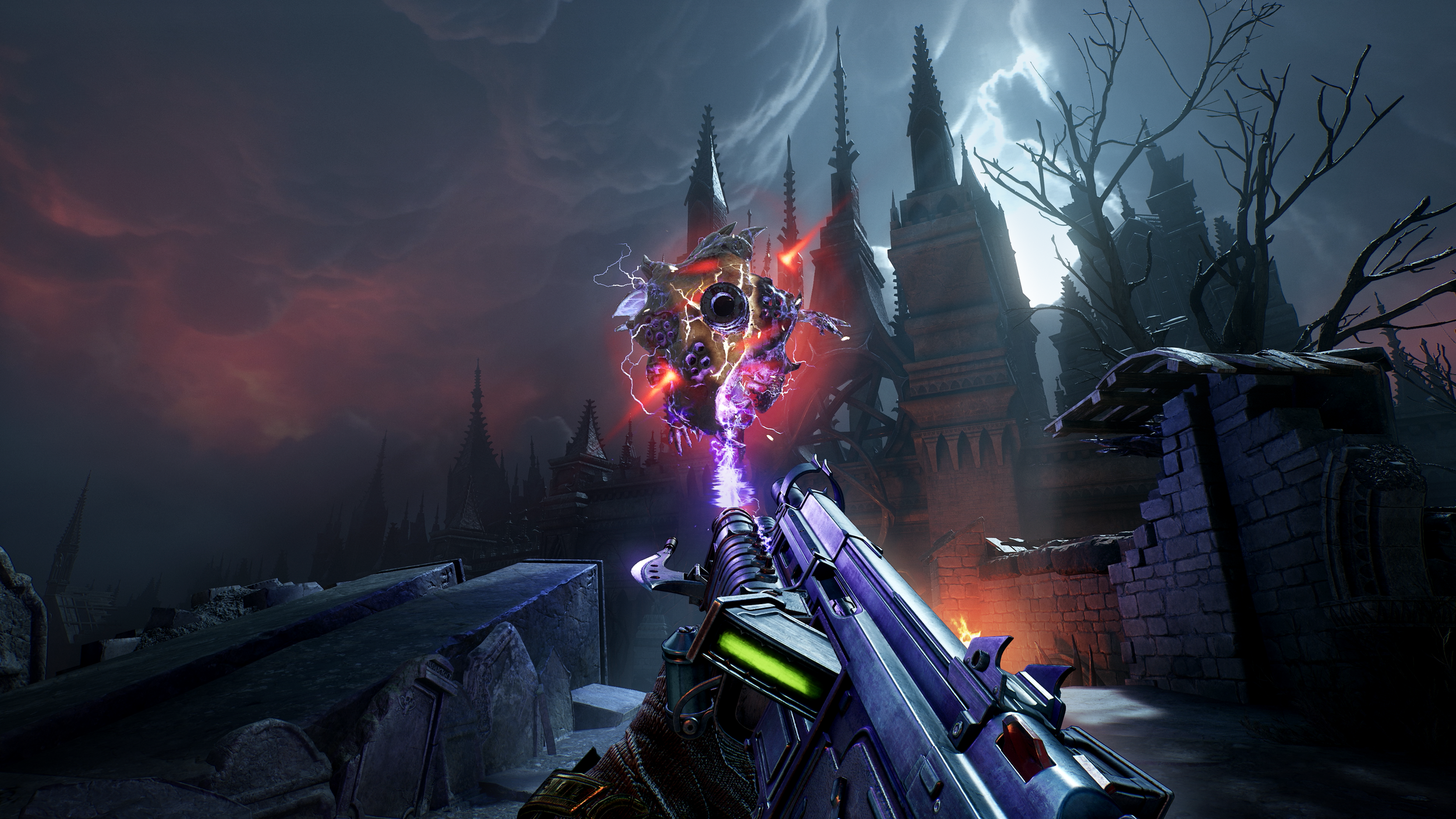
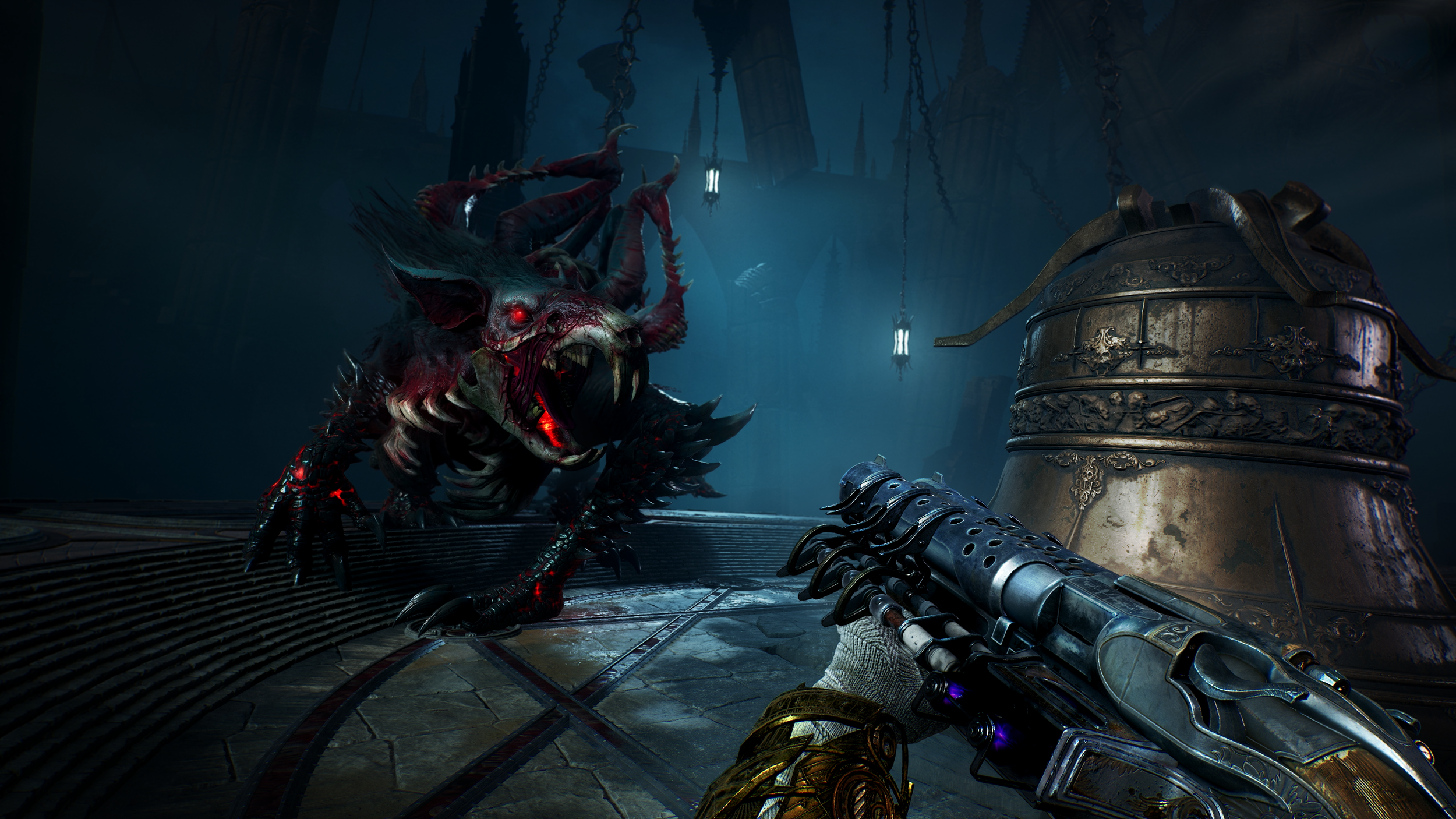
The weapons you’ll bring into battle, which you are able to carry two at once, starts with the Stakegun. Each gun has various ways you can upgrade it as you gain mastery during combat. The Stakegun can either fire in triplicate or fire off burrowing stakes, causing the stake to continue to do damage even when you are not focusing on them. Then, you can choose between two attachments: a grenade launcher or firing off a gravity well that pulls in and immobilizes whatever is in front of you. This design follows through with numerous abilities across the Electrodriver, which is my favorite gun to wield, the Shotgun, Rocket launcher, Hand cannon, and the SMG, with the latter not feeling as powerful as I’d have wanted. Circling back to the Electrodriver, It simply felt incredible to wield, especially when you apply Shooting Stars and Kabaiel’s Whisper to it as your shots will bounce from target to target, while the Whisper addon applies slashing damage as they bounce. This weapon stayed in my hand 95% of the time.
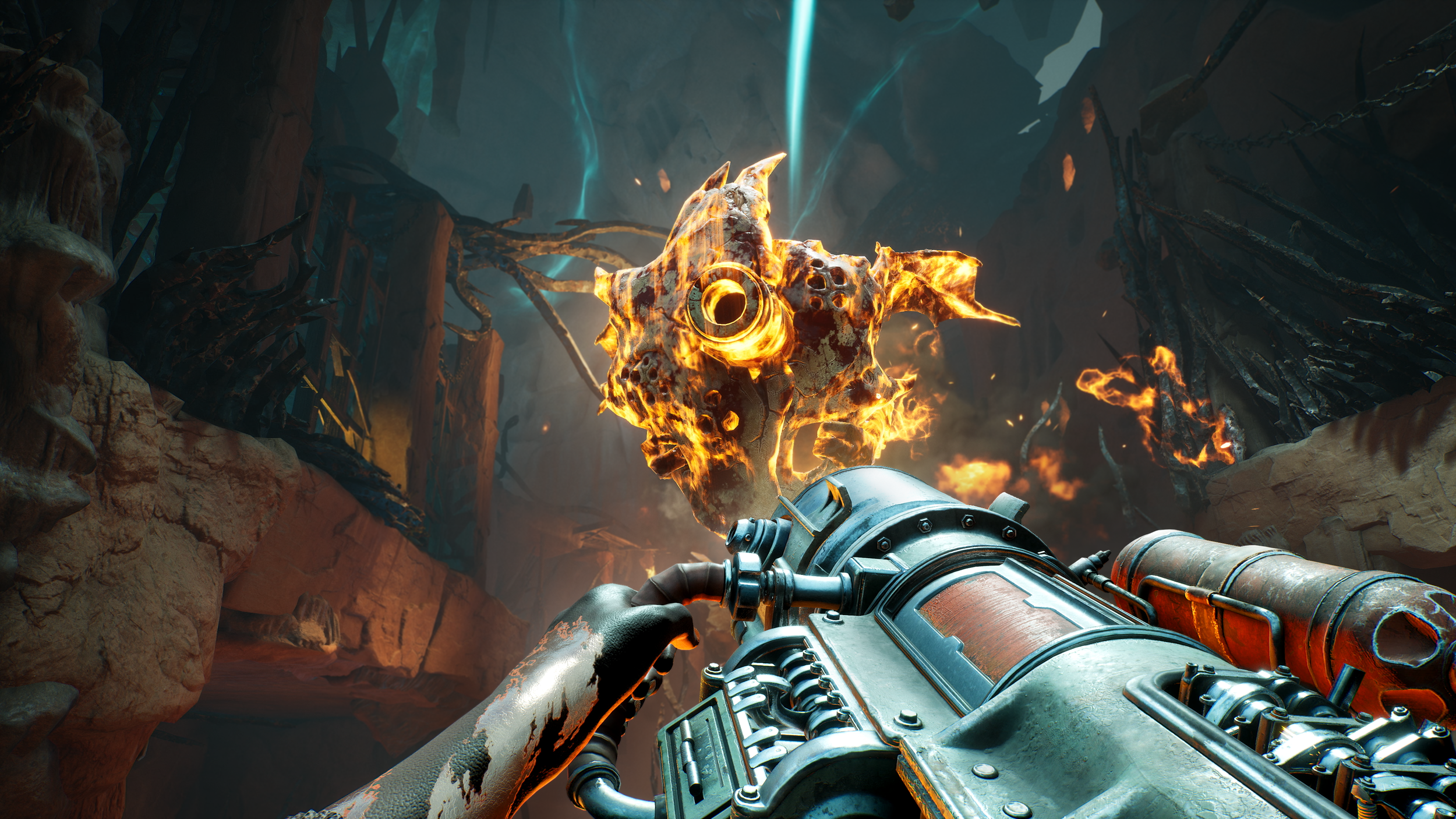
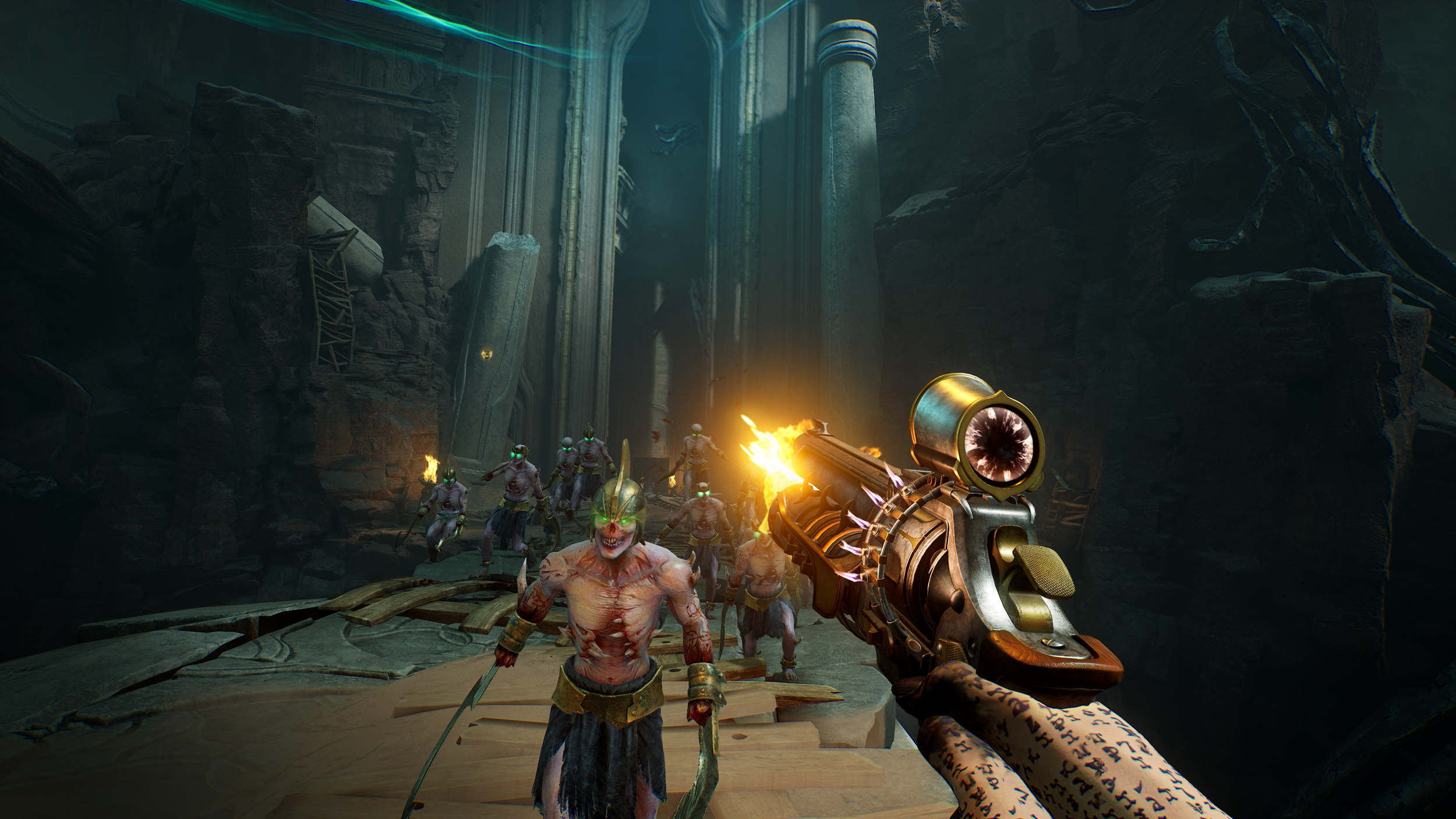
Shooting feels fantastic, and if you’ve played Doom 2016 or even The Dark Ages, you’ll know exactly what you are getting here. Now, that said, the combat in Doom 2016 was largely controlled with particular spawning points and a design to flow combat in a certain direction. Painkiller doesn’t quite have that grace and just sort of dumps enemies on you in various waves or through objectives like filling up blood barrels or transferring containers full of souls. This is where it sort of moves into Warhammer: Dark Tide or Vermintide territory, at least for me. Those games were built around a flood of enemies, especially with the likes of Warhammer 40K: Space Marine II, another co-op shooter that is largely linear.
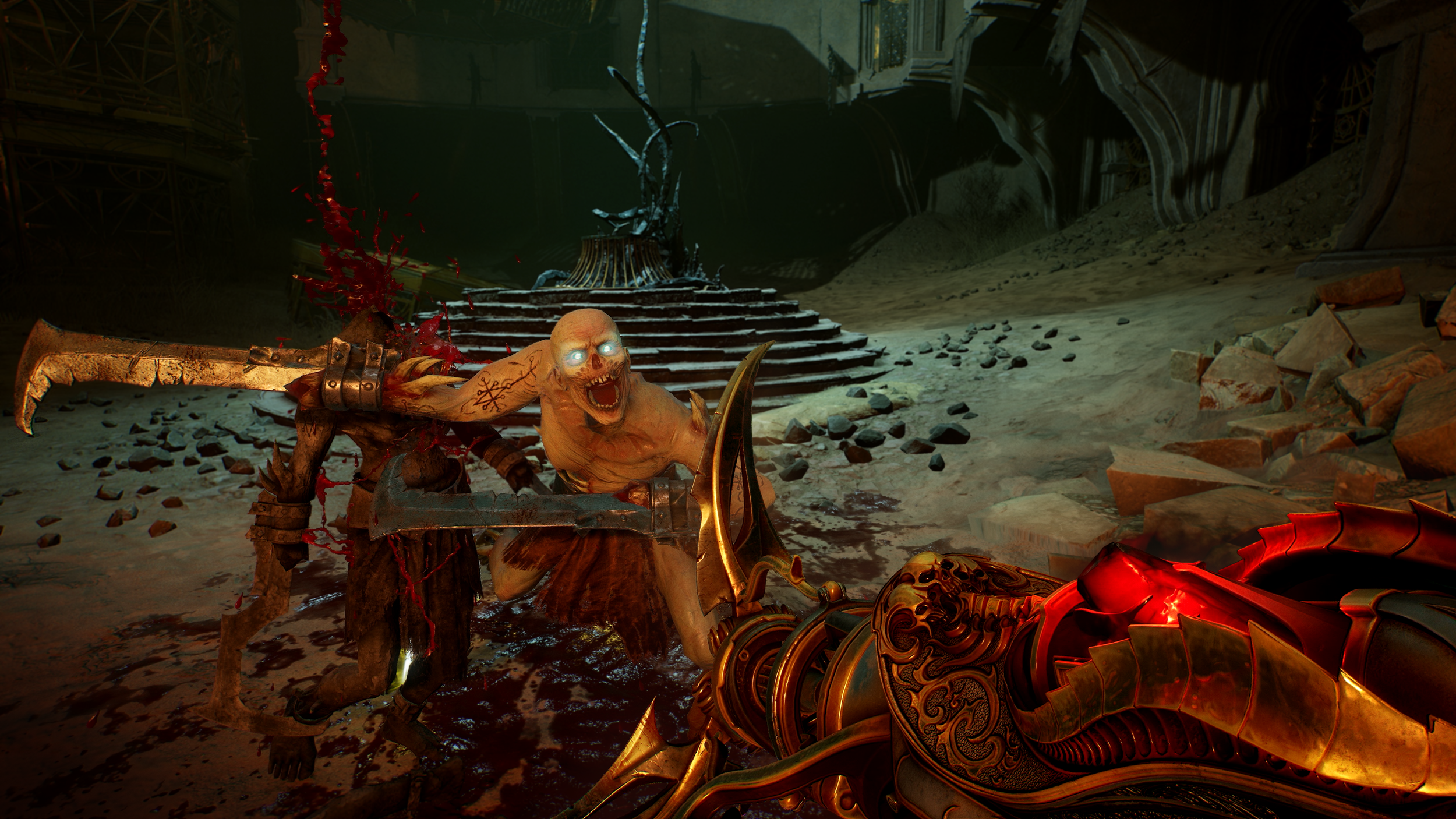
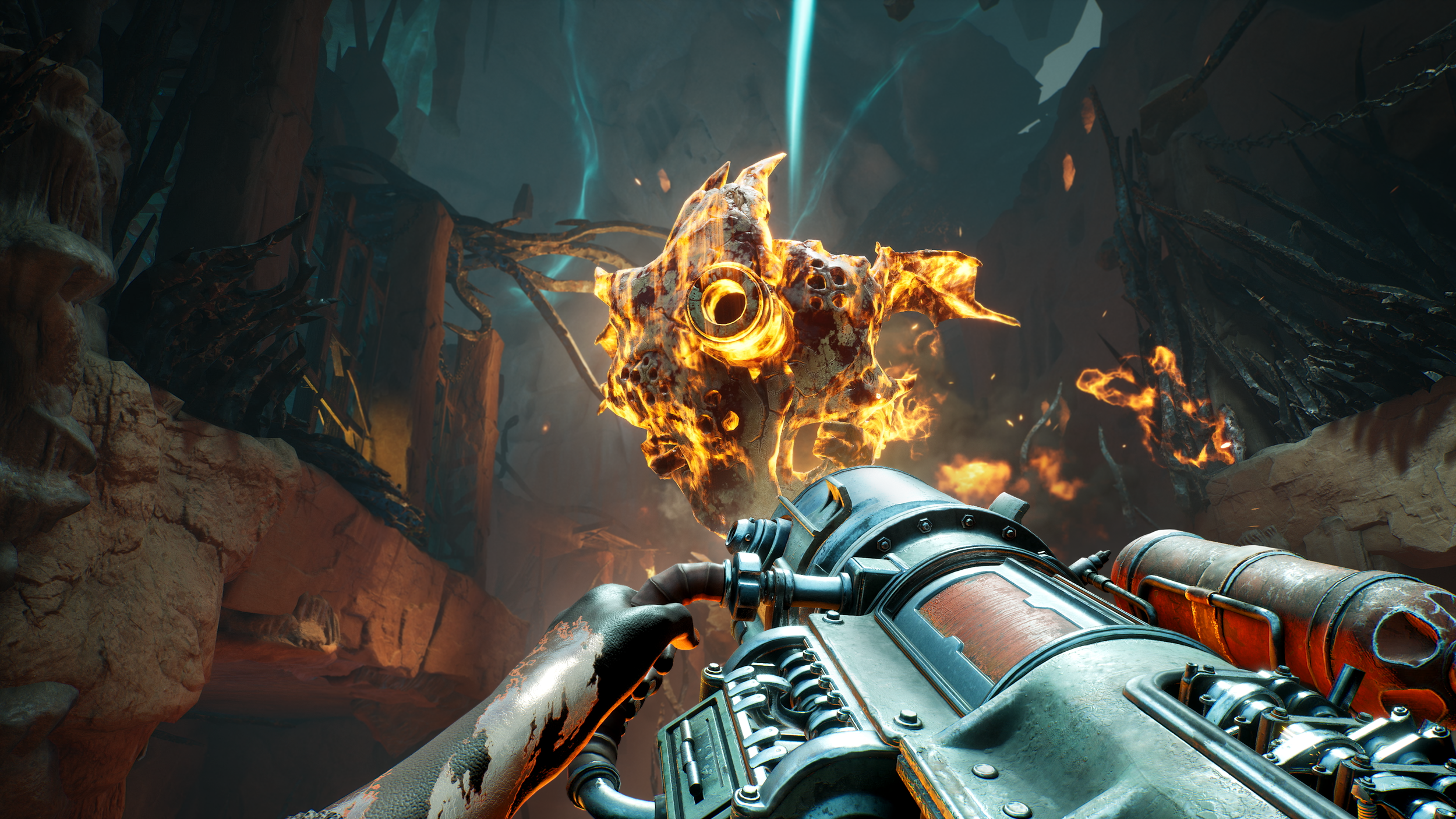
Combat is visceral, brutal, and bloody, and each of your weapons sees fit to aid in delivering those adjectives. You can grapple across chasms to avoid your foe or lunge toward them, guns blazing. When I say that it feels like Doom 2016, I don’t only mean it feels “like” Doom 2016, at least not in that way; I mean it literally feels like Doom 2016 in every possible way. The speed and nuance of Id Software’s juggernaut is present here, complete with glory kills included.
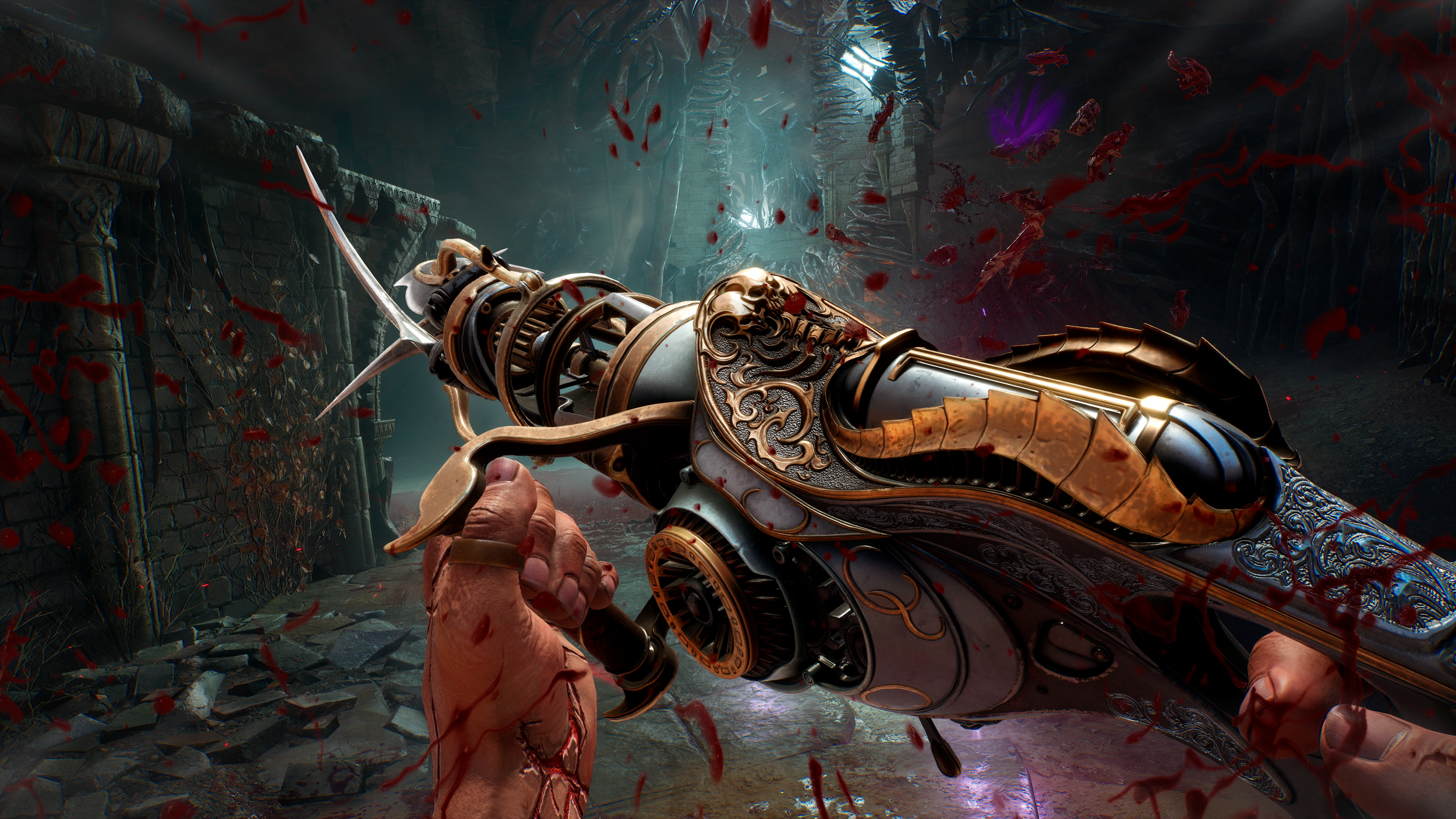
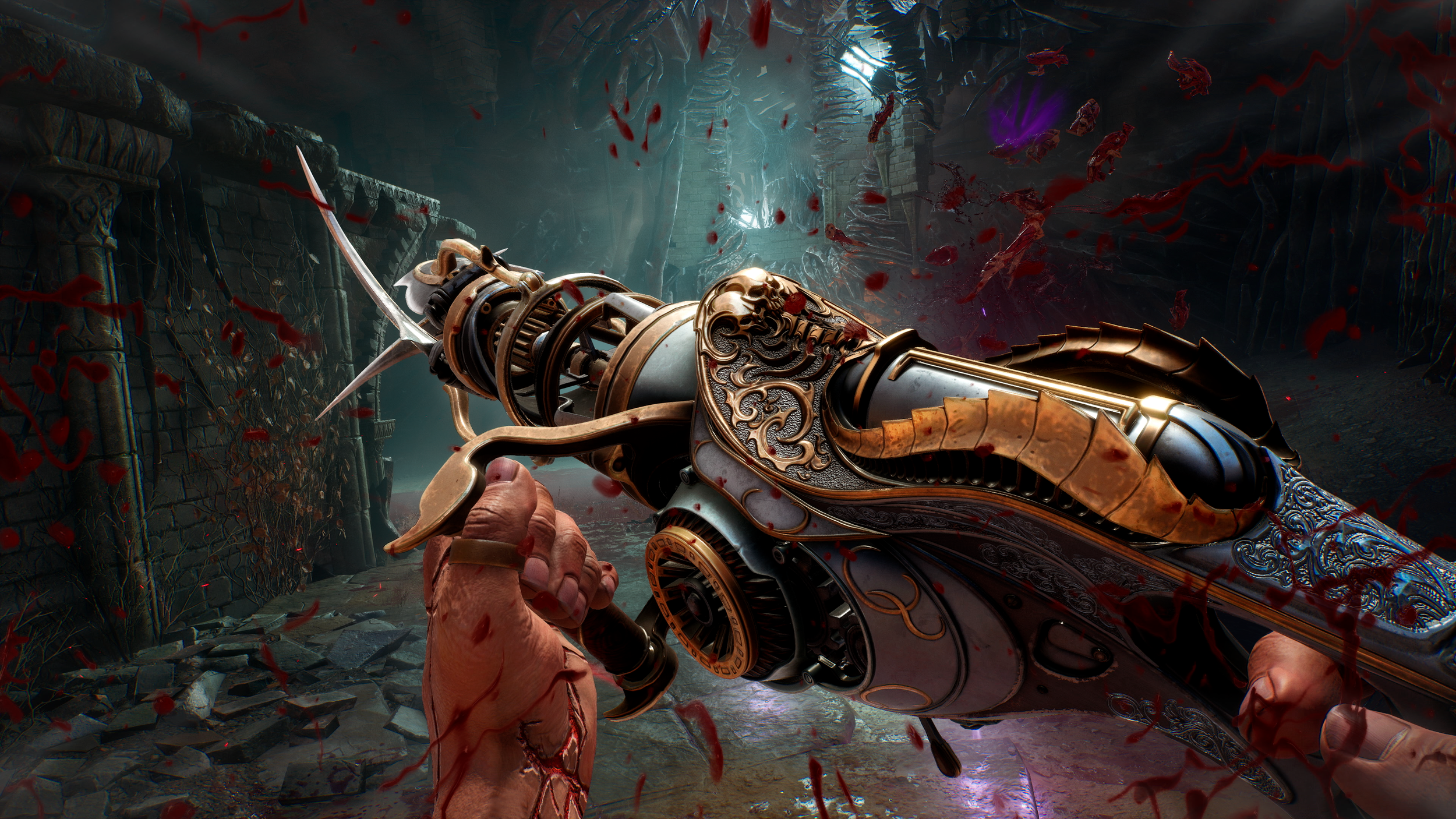
One “weapon” that I haven’t mentioned yet is the Painkiller, as seen above, as well as the upgrade to the Shredder. These are your last resort when you run out of ammo. Both have a series of claws on the front that spin and shred enemies into paste. Doing so will generate ammo drops to your weapons, and you’ll cycle back and forth with this contraption constantly. Despite being an ammo alternative, I adored using the Painkiller and Shredder as it just increases the amount of gore the game provides, and it gets extremely bloody.
After pushing through the campaign, which can be done in a single session, you have a mode called Rogue Angel. This sees players start with various weapons or perks, and you can upgrade them as you progress further. This mode is considerably harder than the main campaign; however, that does vary depending on what difficulty you are playing on. While this mode could be something incredible to sink your teeth into, weapon mastery is not recorded here, so it’s not a viable way to level up your campaign weapons. And due to a limited variety of arenas, this can get old considerably fast.
Painkiller is an odd example of reimaging a series, given it isn’t connected to the original game or featuring any of the characters or structure of the original. This is a co-op roguelite shooter that lacks true replayability and a desire to stick with it. Co-op is a blast, even with rando’s, but much of that satisfaction comes from our love of other games. Despite some incredible gunplay, level design, and a stunning soundtrack, Painkiller has a lot of work ahead to be part of the conversation down the road. It can certainly provide a great time, but it’s a brief spark that can’t keep the flame lit.
Developer - Anshar Studios.
Publisher - 3D Realms, Saber Interactive. Released - October 21st, 2025. Available On - Xbox Series X/S, PS5, PC. Rated - (M) - Blood and Gore, Violence, and Language. Platform Reviewed - Xbox Series X/S.
Review Access - Review code was provided by the publisher for the purpose of this review.
Jeff is the original founder of Analog Stick Gaming. His favorite games include The Witcher III, the Mass Effect Trilogy, Hi-Fi Rush, Stellar Blade, Hellbade: Senua’s Sacrifice, and the Legend of Heroes series, especially Trails of Cold Steel III & IV.