
Sun, Surf, and Sharks.
Matt Nava, who served as Art Director for thatgamecompany, started Giant Squid in 2013 as a way to continue his vision. He worked on previous titles in Flower and Journey, the latter of which became an incredibly beloved release for PlayStation. In 2016, Giant Squid embarked on their first title as a newly formed studio, Abzu, an explorative underwater adventure. Then, in 2020, they would release The Pathless, a title that would be a more action-focused approach for the studio. Now, in 2025, they've released Sword of the Sea, a title that exists in between the adventures they've taken us on so far, and in more ways than one.
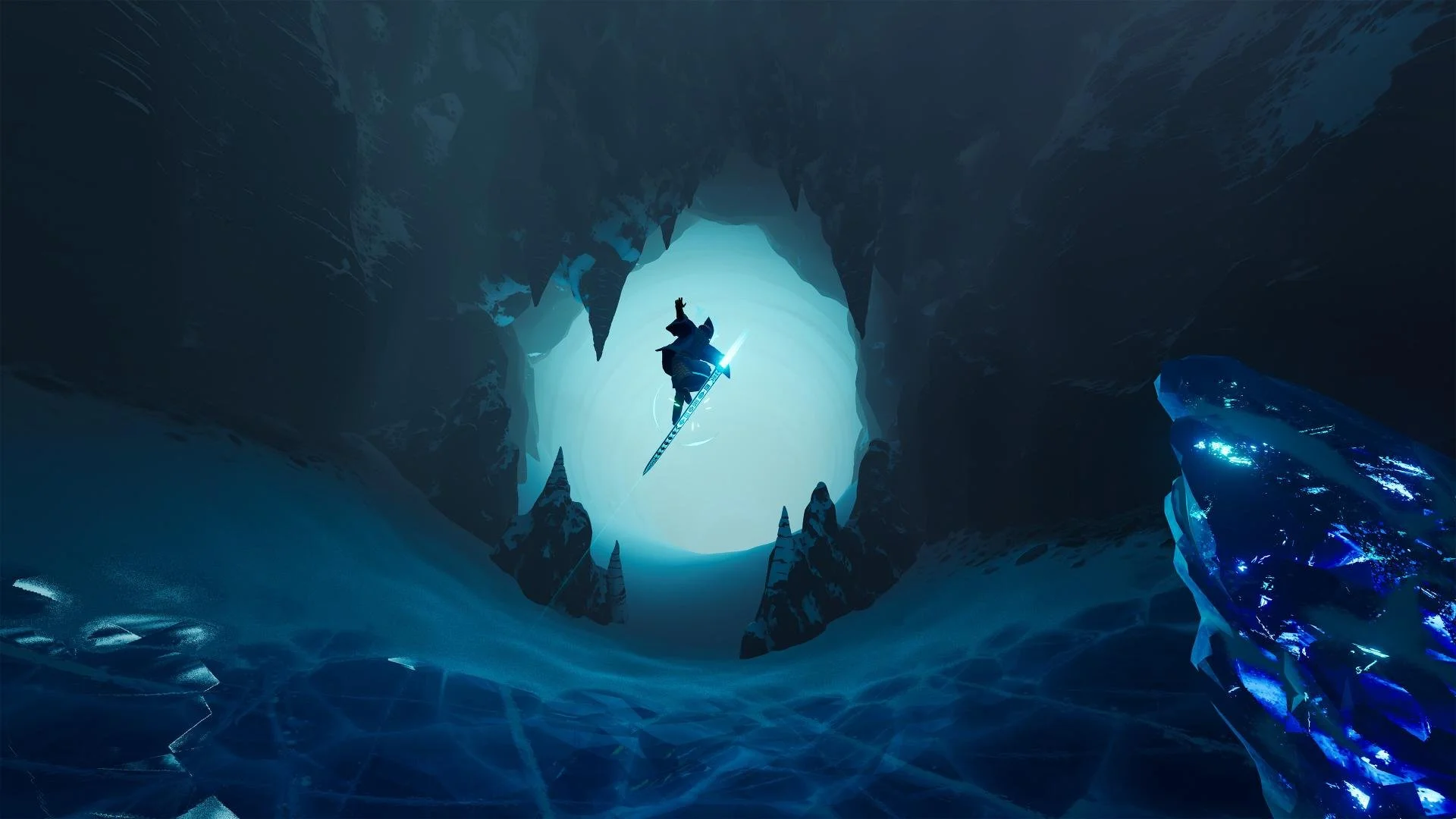
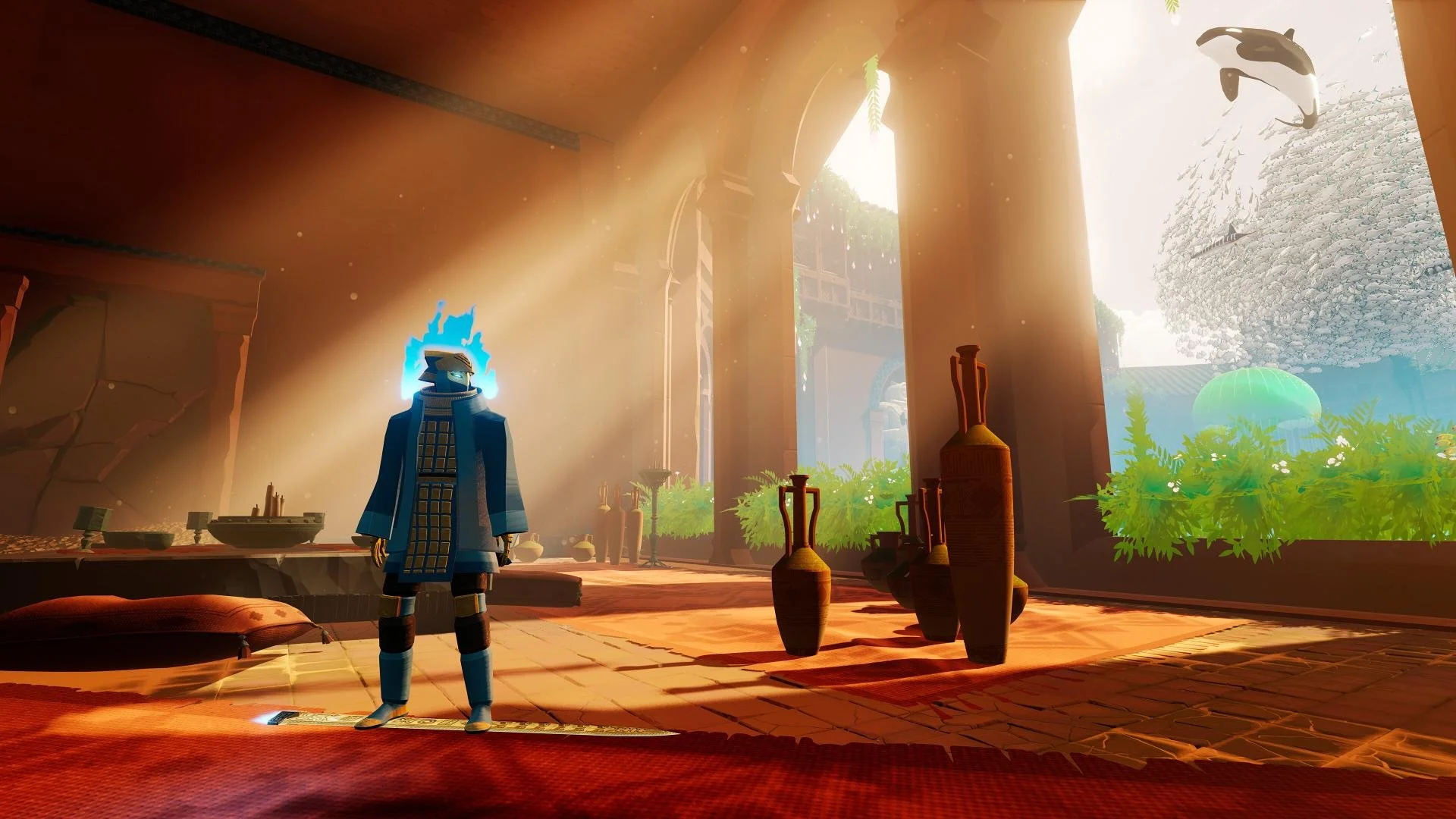
Sword of Sea sees you embody a living statue that is resurrected by a droplet of water that finds its purpose as it leaves the surface of the rock and touches this carved soldier. They are an ancient warrior who is tasked with restoring the world to its former glory. And, to do that, they will need a sword.
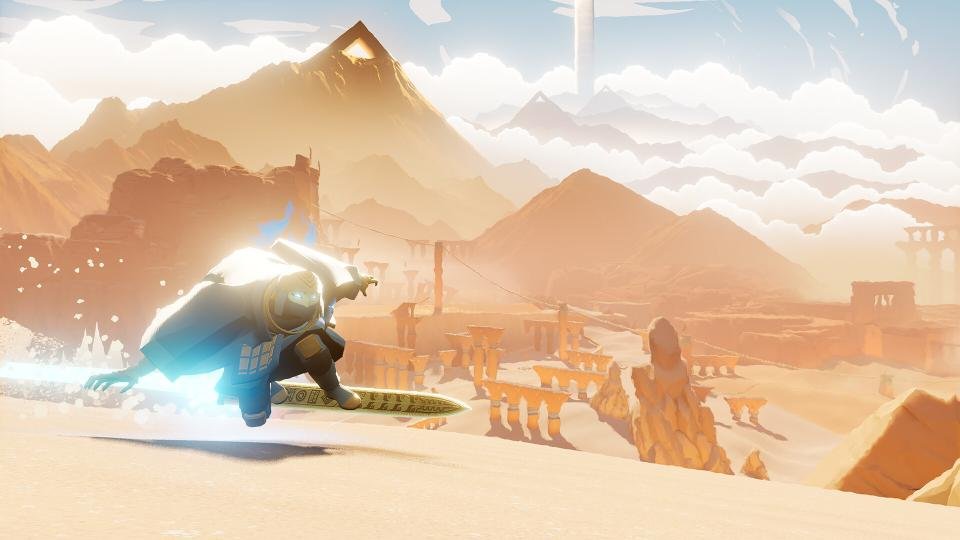
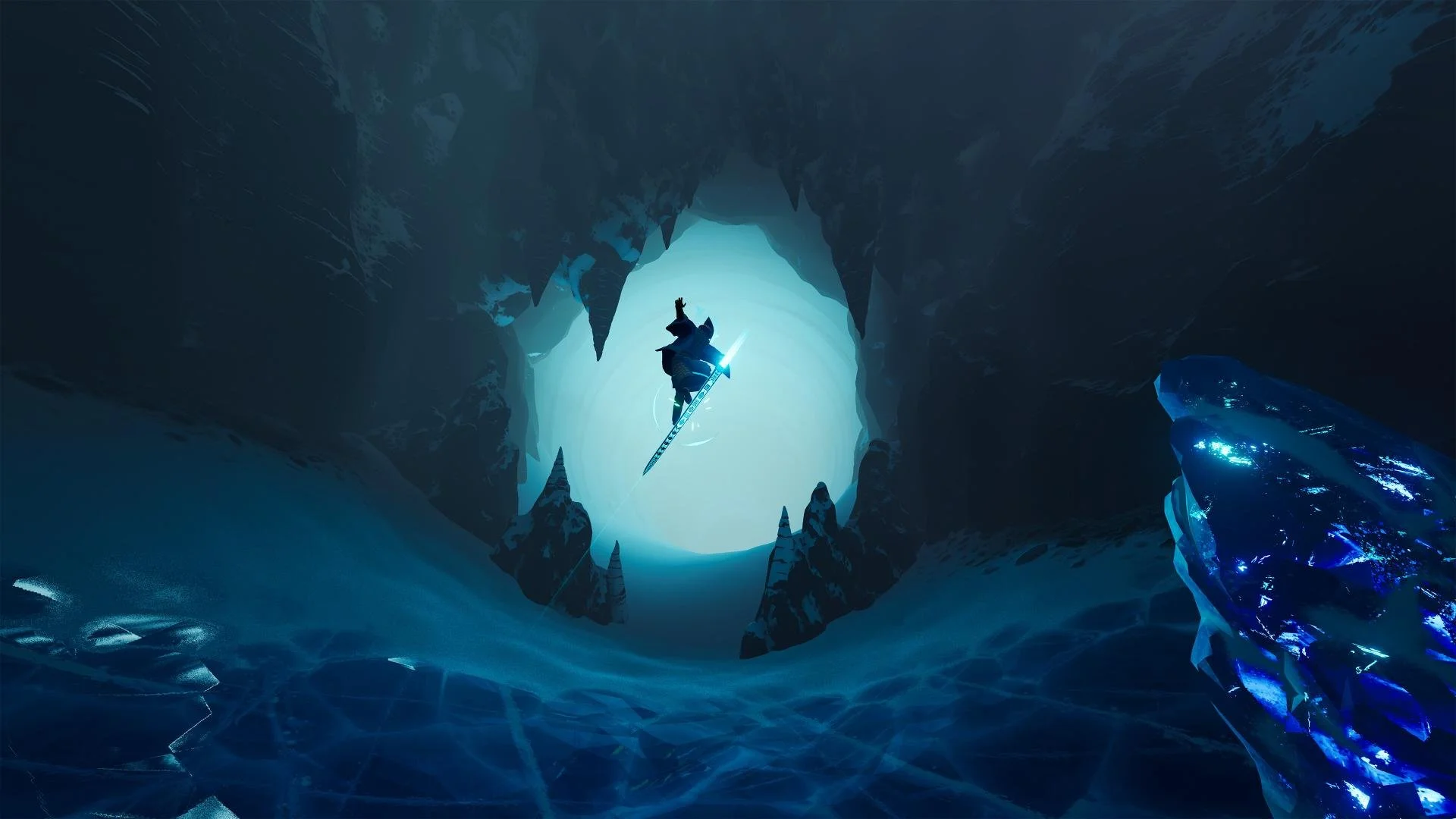
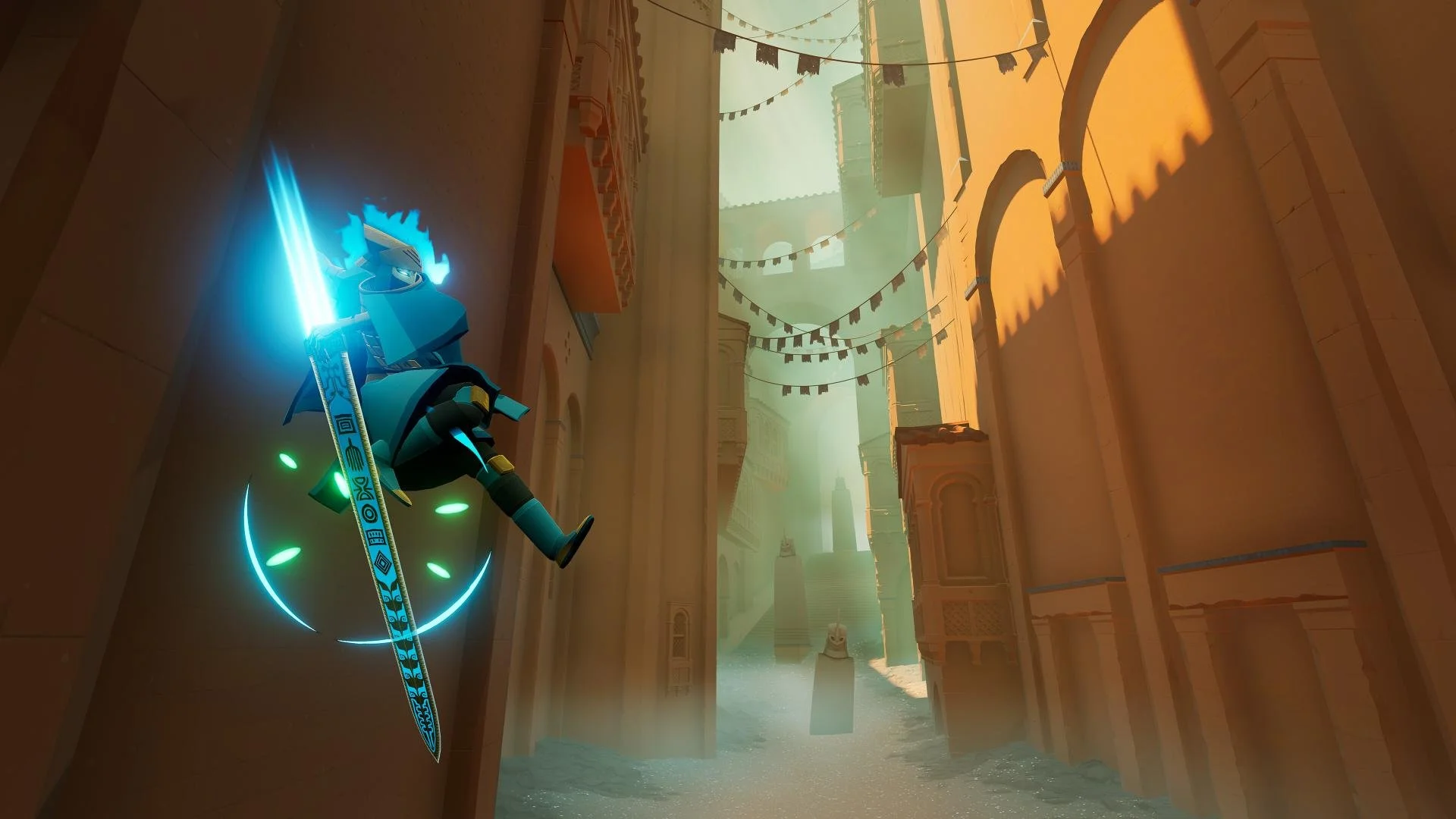
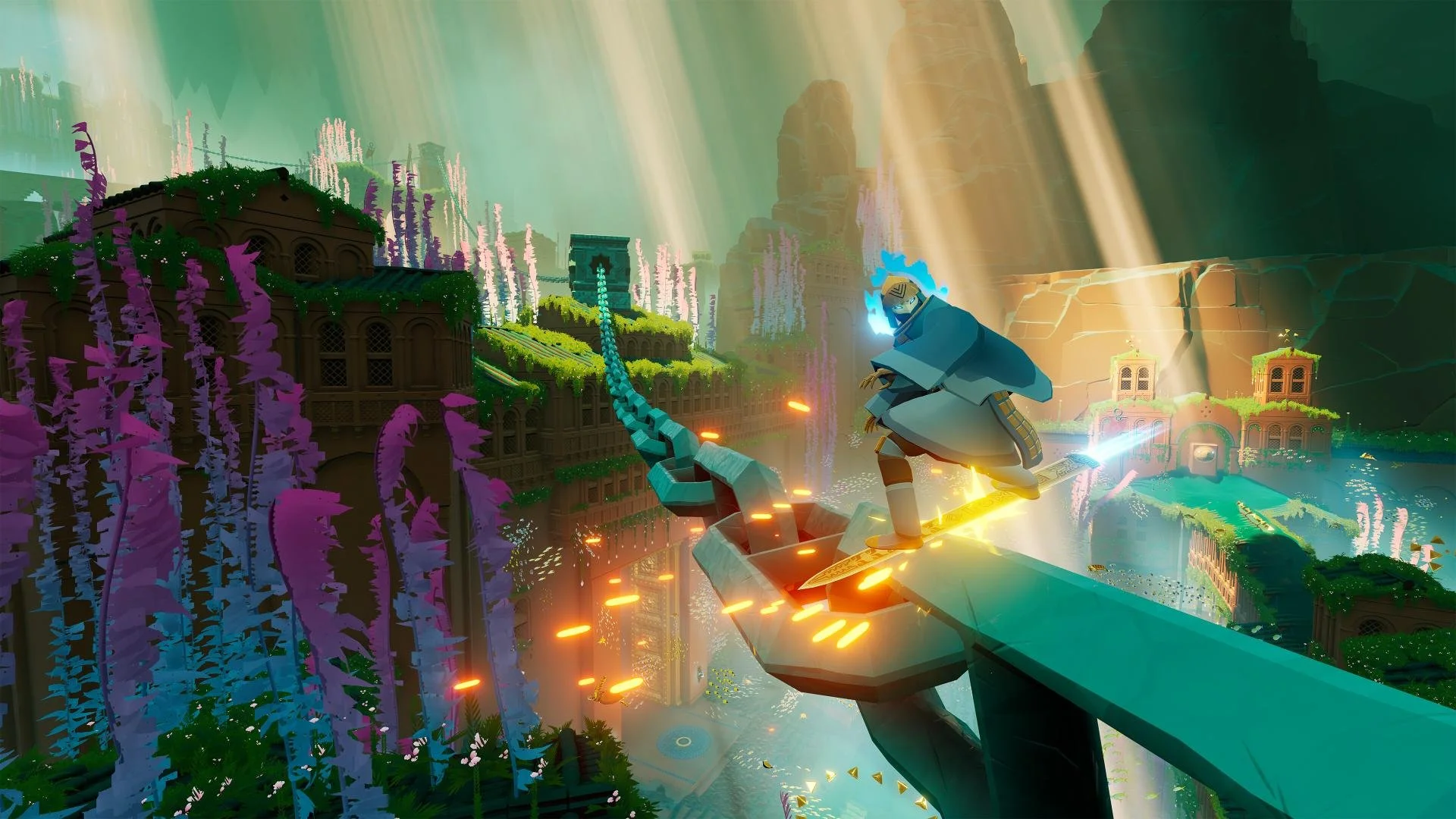
Now, I hadn't followed much of this title leading up to its release, so when they started slashing the sword around, before eventually using it to glide around, I had somewhat expected a similar adventure to The Pathless, offering up some sort of combat. While the final encounter does emit some of that wish, the adventure is largely built around surfing the sea of sand, snow, and lava aboard said sword.
The protagonist is wonderfully animated, and they will eventually be joined by an ally who shares a strong resemblance to the Hunter from The Pathless. In fact, there is a strong connection to not just The Pathless, but also to Abzu, as the games all take place in the same world, albeit at different points in their history. The theory crafting on Reddit is something else.
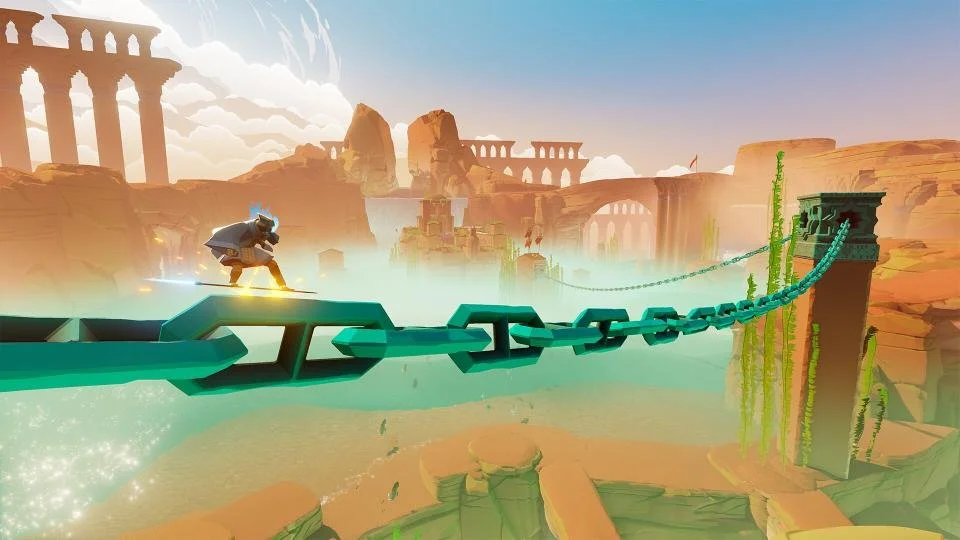
Sword of the Sea is a game built more around discovery, exploration, and the beauty that Giant Squid has built here. It's also for soaking in the score provided by BAFTA winner Austin Wintory, who has scored numerous games such as Aliens: Fireteam Elite, Stray Gods, Eternal Strands, and each of the games produced by Giant Squid. While fitting for where they started, each game is nonetheless about the Journey.
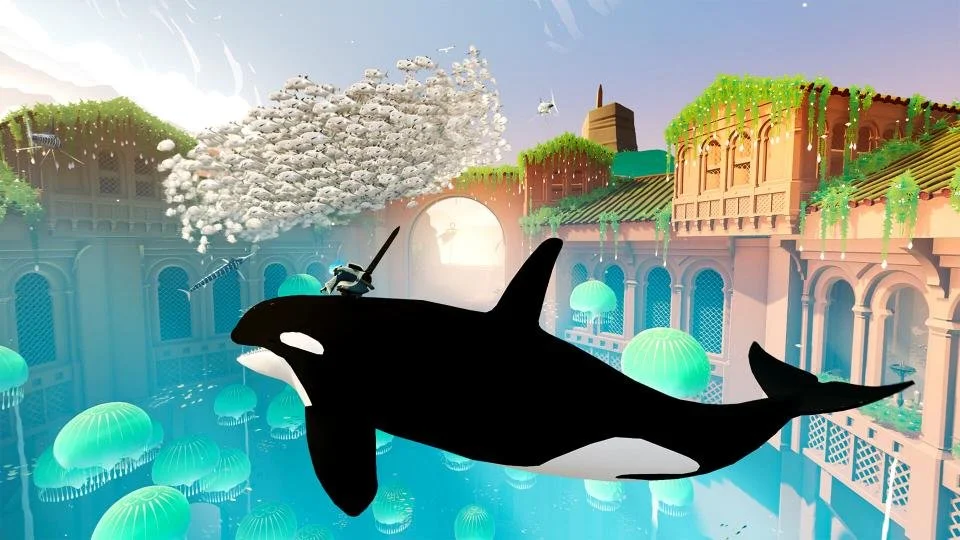
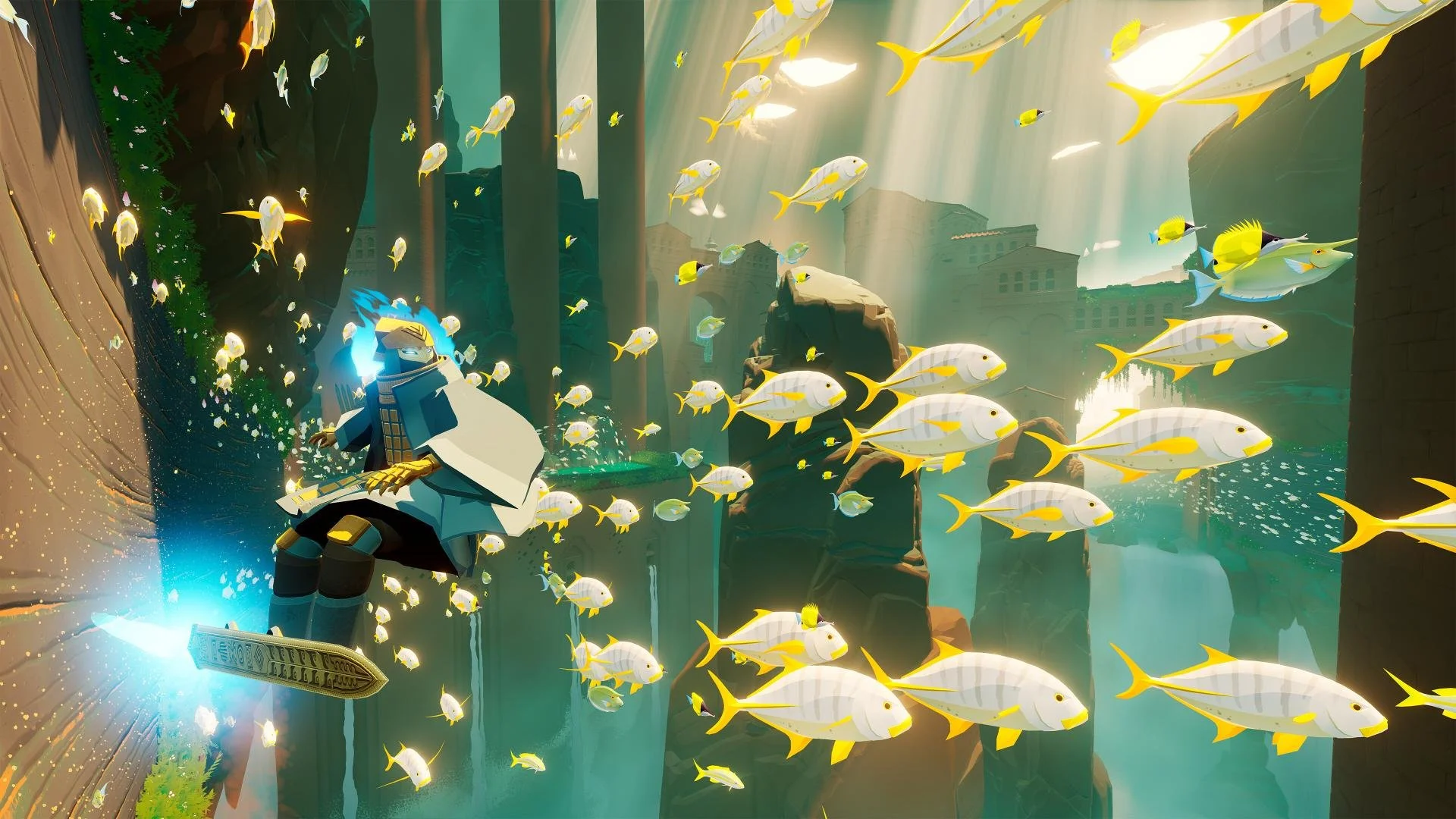
Sword of the Sea follows a loop of exploring an area and finding the trigger to progress to the next. This either comes in the form of an interactive blue crystal, transporting a sphere of water to a turtle-beaked door switch, to activating thousands of lanterns that adorn the sand, snow, and more. This loop rarely changes, but does offer many fast-paced surfing moments that are either on your sword, the back of a dolphin, or atop a great white shark. This game goes places, literally.
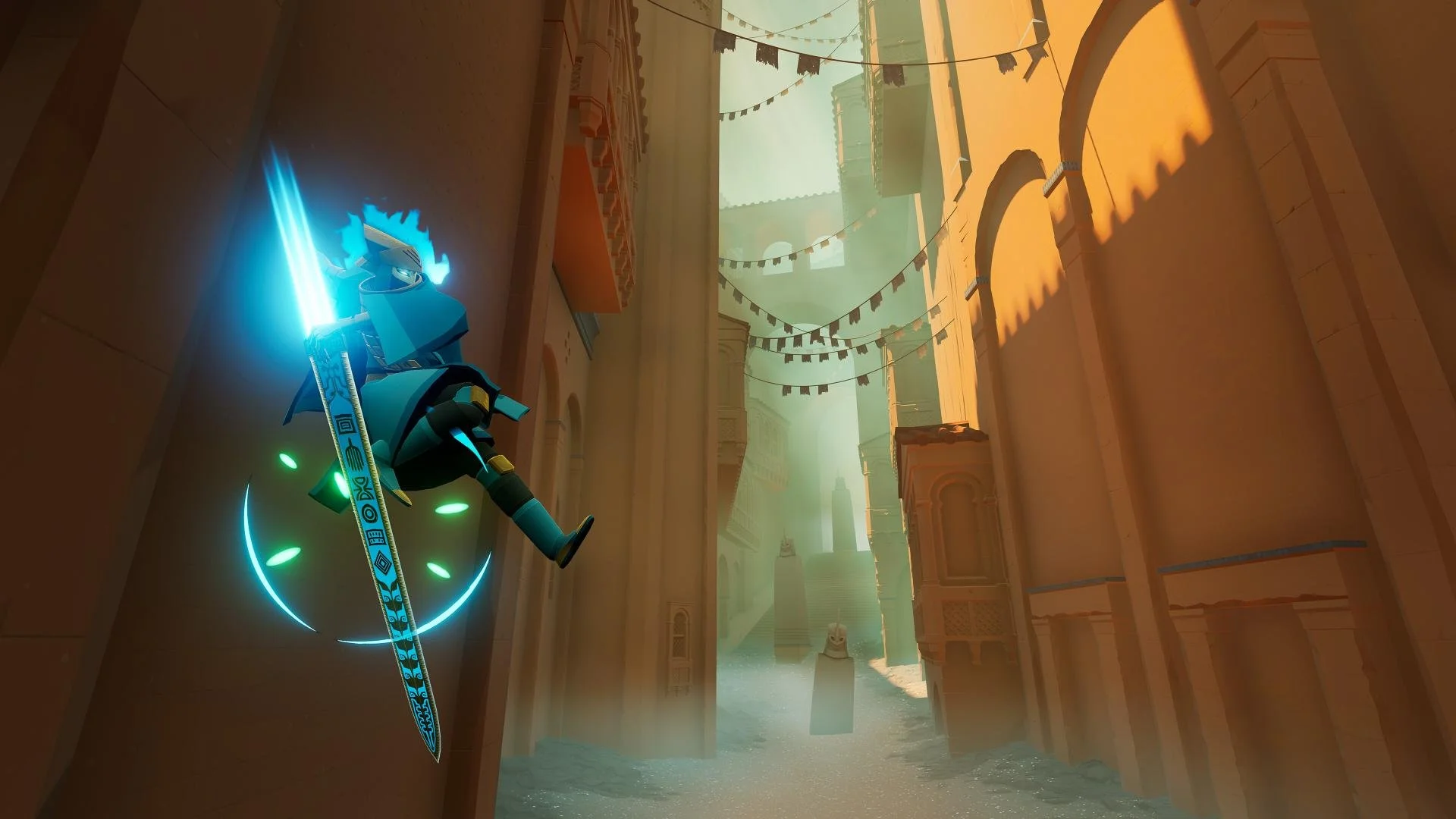
These triggers are what make Sword of the Sea such an artistic spectacle, as they each transform the world around you. Barren deserts suddenly become a tropical paradise as an oasis will suddenly appear out of nowhere. This allows other elements to guide you along. From kelp that allows you to glide upwards, to a later ability that allows you to fly through the air, mobility is a huge force driving this game forward.
As you continue to resonate with the world, it gives back to you as a visual spectacle as well as earning you some gold currency for your trouble. You'll find a merchant who will exchange that gold for more skills on your board, from tricks to spins, and more. While you don't need to engage with this whatsoever to see the game through, it does gamify some elements of the journey that some players may require in order to see past the “walking simulator” appeal of what this game could come off as.
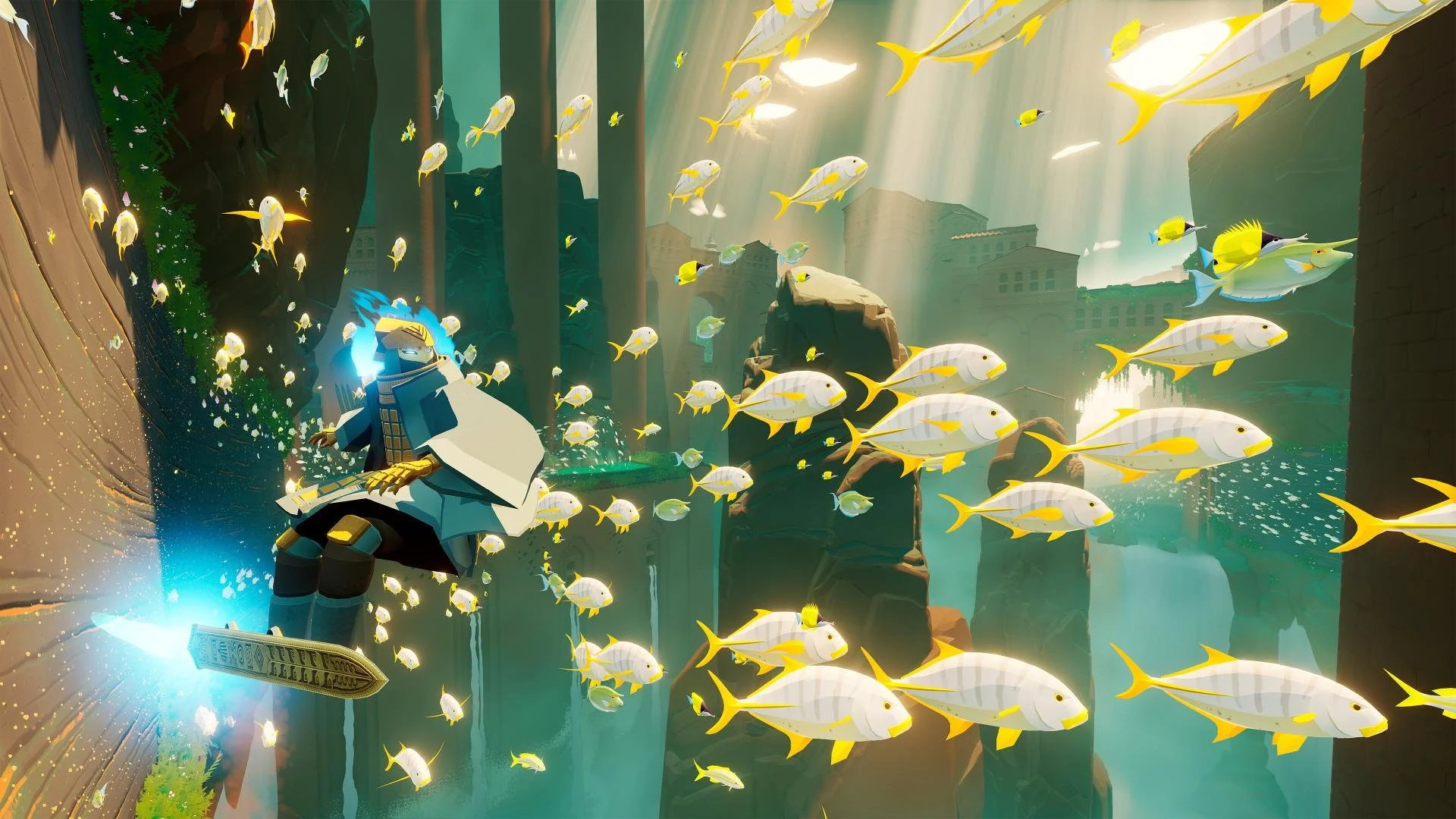
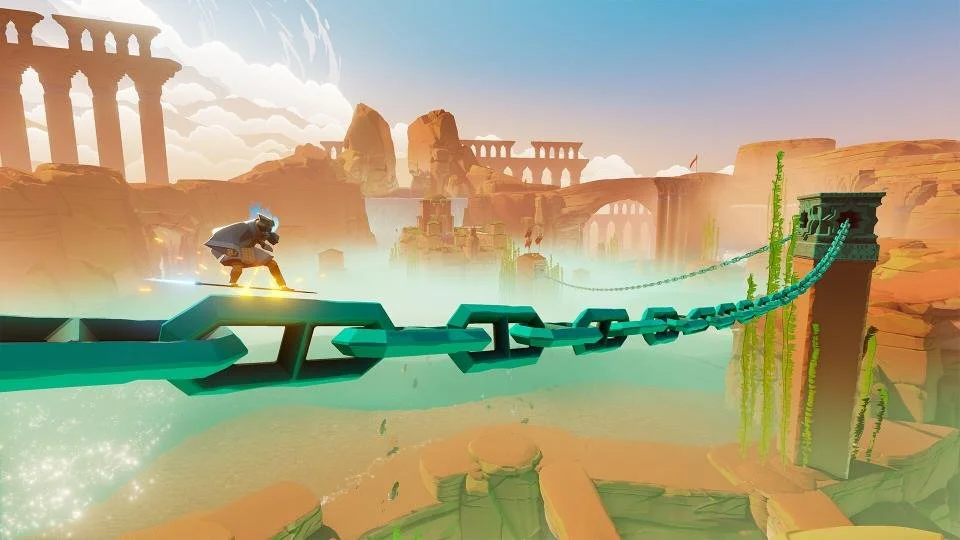
The surfing itself is very similar to what you find in a snowboarding or Tony Hawk game, with half pipes and courses hidden around each area to test your skills. These are optional, but you'll find the odd half pipe present to move you onwards and upwards. The feel of it is fine; it has that curve that prevents you from instantly turning on a dime. It takes a while to get used to when trying to maneuvering smaller ramps.
You'll hold down and release the jump button to gain some height, eventually earning the ability to fly, albeit with limitations. You can pull off tricks when you've purchased the ability to, but these are largely just cosmetic to your mobility, as they generally don't serve much purpose other than to pull off scores via the secret courses you'll discover. That, and they look cool.
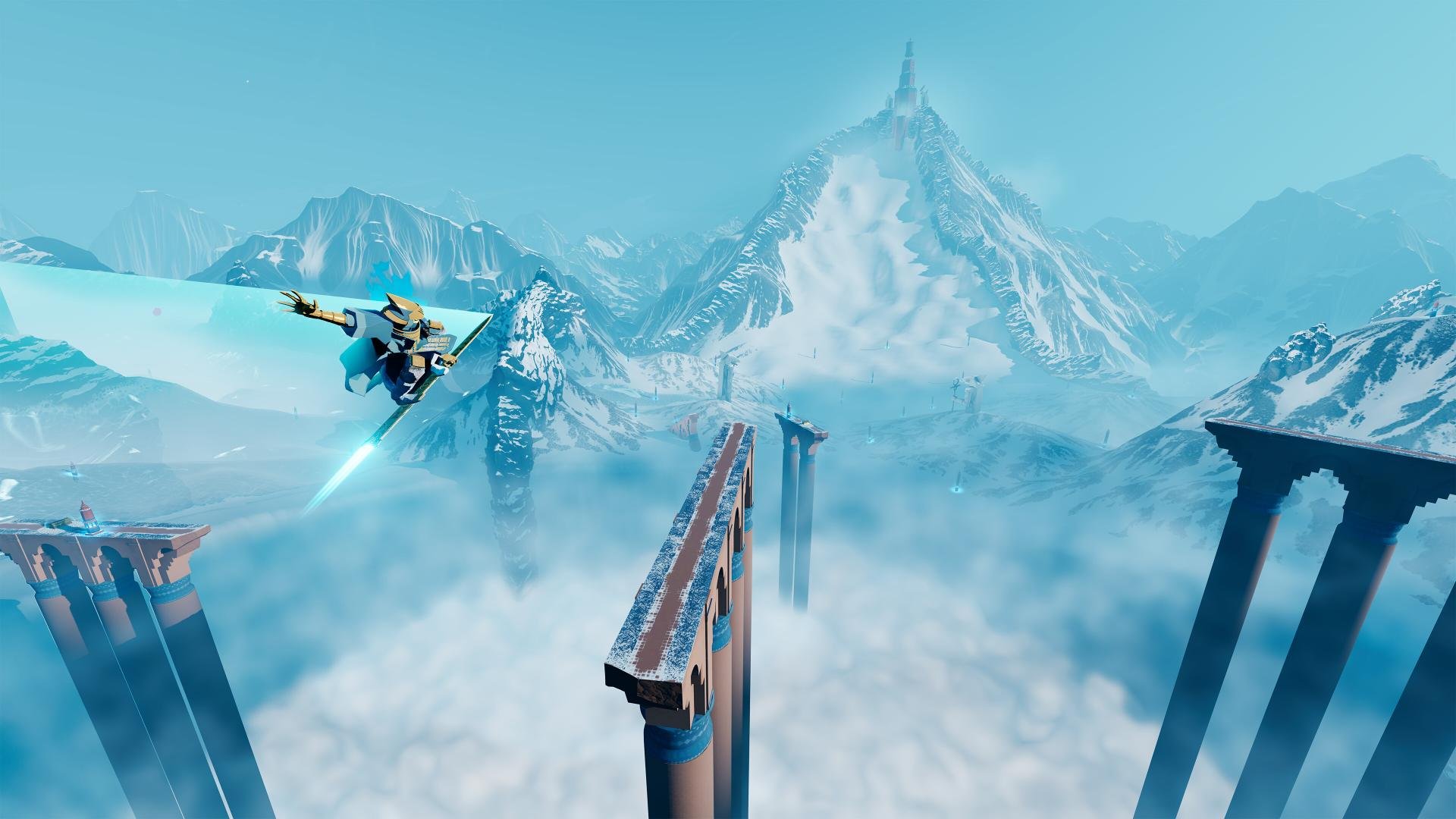
You'll have no objective markers, but some locations do emit a pillar of light or a strong visual focus that you should go there. There is some strong environmental storytelling and placement of locations that make it easy to navigate, especially the statues late into the game, where general visibility is next to nothing. All in all, it signposts where to go extremely well, even in wide open areas.
Each new location generally adds something new to your mobility. From bouncing atop bioluminescent jellyfish to the kelp that I mentioned previously. These new methods of traversal keep the game fresh, even despite the roughly two-hour playtime, more if you take on the challenge courses.
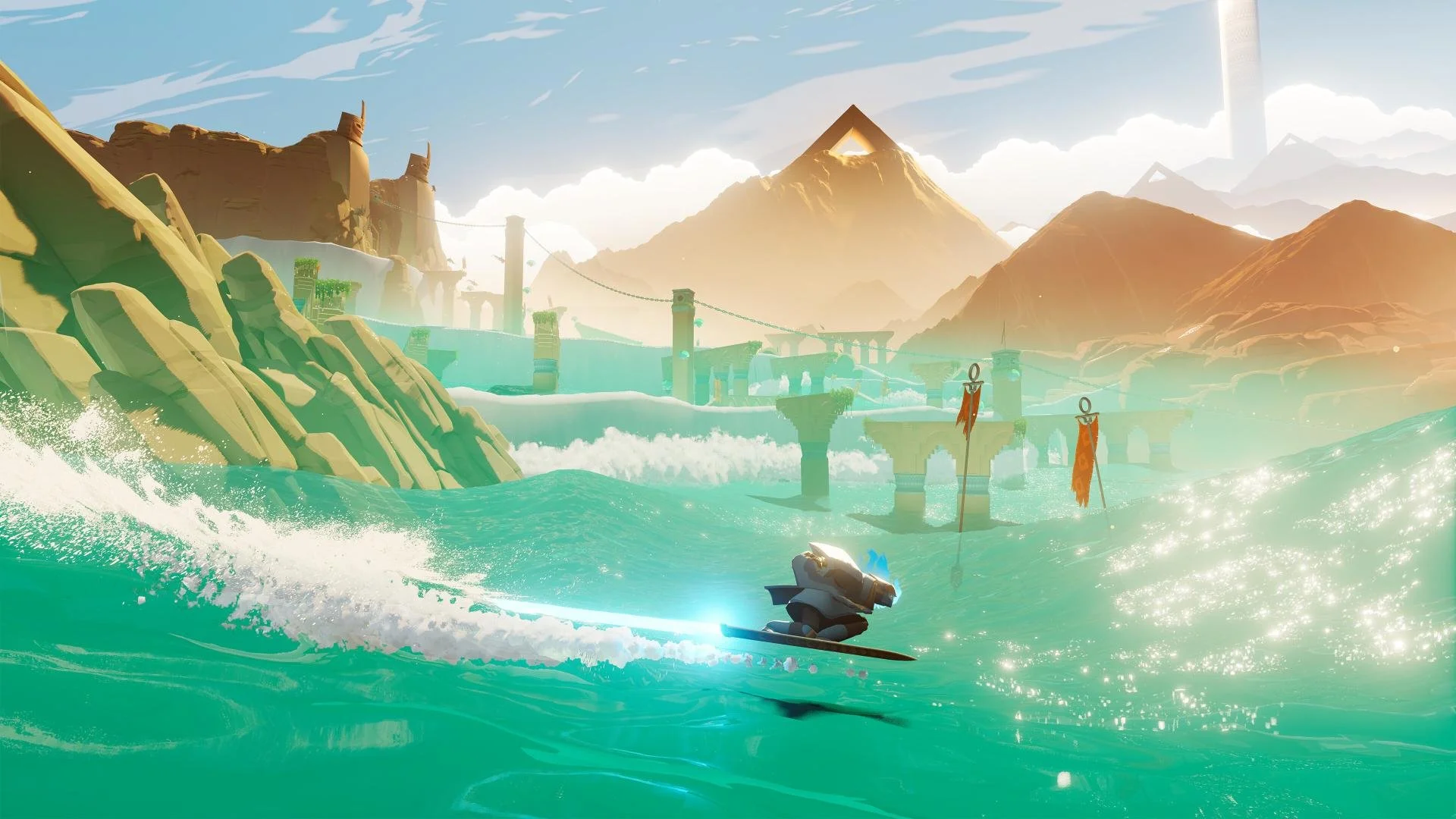
Despite the additions to traversal, each new environment continues to impress. Giant Squid uses a very minimalistic visual style here, but it really provides the game a wonderful and beautiful look when you start to heal the land. You'll rise forgotten kingdoms from the depths of a lake, shaping the very land to serve your purpose. If you've ever seen flowers bloom in videos where they greatly speed up the process, it's like seeing hundreds of those going off at once. Combine that with a strong use of color and vibrancy, and every moment you surf around provides endless screenshot opportunities.
Given Austin Wintory has been a long time collaborator to Giant Squid, and their prior work, Wintory continues to impress with a deeply emotional series of tracks here that allow the discovery and tone of the game to shine. You almost feel the essence of each location, themes that are tranquil and yet alive, owning the scene, and often wanting you to stop and just take in the music.
I will say that despite the wonderful nature of the game and its presentation, the ending feels very abrupt and didn't satisfy on the level I had hoped it would have. While the moments leading up to it were incredible, with a tightly curated final encounter, I was really taken aback by what transpired after. It doesn't sour my time here, but it does still linger in my head even now.
Now, I played the bulk of this game on my laptop, and it ran extremely well. I did try this out on my Steam Deck, to see if I could take this on the go, and while it is not verified, there would need to be some serious work to make it run better, as even on low, I was getting single frames and constant crashes. Again, Sword of the Sea is not verified and shouldn't be purchased if you only have a Steam Deck.
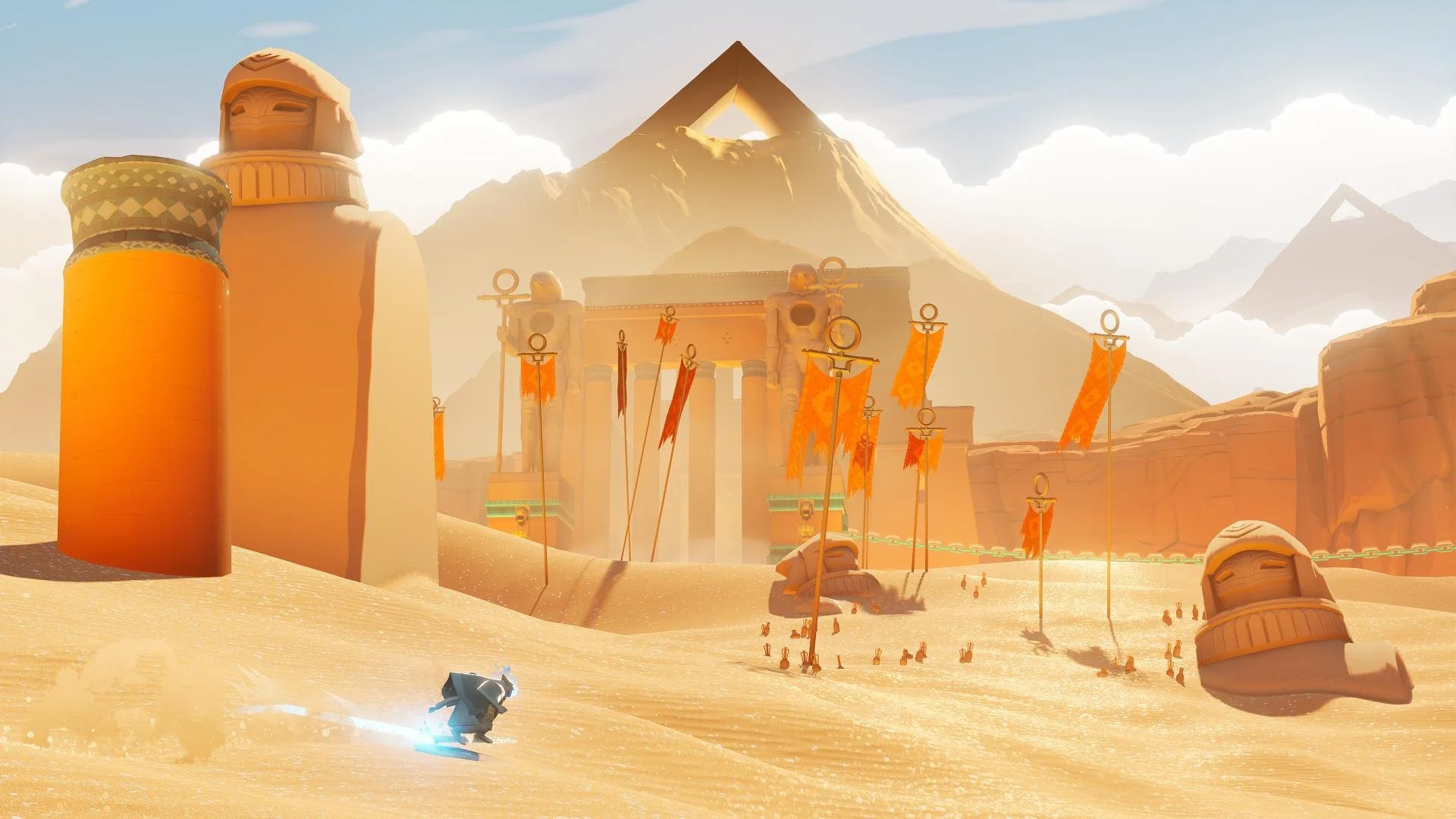
Sword of Sea, like previous Giant Squid releases, is more of an experience than a game, and for the reasons that allow the studio to flex its creative muscle. With some gorgeous spectacles that are punctuated by a flawless score by Austin Wintory, Sword of the Sea is a wild ride that, while brief, is a sight to behold.

Developer - Giant Squid.
Publisher - Giant Squid. Released - August 19th, 2025. Available On - PS5, PC. Rated - (E 10) - Fantasy Violence. Platform Reviewed - Steam - PC. Review Access - Review code was provided by the publisher for the purpose of this review.
Jeff is the original founder of Analog Stick Gaming. His favorite games include The Witcher III, the Mass Effect Trilogy, Hi-Fi Rush, Stellar Blade, Hellbade: Senua’s Sacrifice, and the Legend of Heroes series, especially Trails of Cold Steel III & IV.