

Two Ninjas, half the depth.
Ninja Gaiden started its life as a 2D hack and slash game built for the NES, taking place in the very year it was released, 1988. Since then, we’ve had numerous sequels, prequels, and spinoffs, bringing the once 2D series into full 3D with the release of 2004’s Ninja Gaiden. However, series lead, Ryu Hayabusa, would venture into another series over the years, Dead or Alive. He would become a main protagonist alongside many characters pivotal to his backstory. However, other games across the series would opt for a new protagonist as well, which was the case with Yaiba: Ninja Gaiden Z, where Yaiba Kamikaze would be the playable Ninja, with an appearance of Ryu Hayabusa, nonetheless.
Ahead of Ninja Gaiden 4, which will feature a ninja named Yakumo as the lead, Ragebound, a side-scrolling return to the series’ 2D roots, would release first, placing Kenji Mozu as the lead, paired alongside Kumori, a member of the Black Spider Clan, as his partner of necessity. While Ryu Hayabusa does make an appearance in the game’s opening moments, this adventure through Kenji is largely satisfying, even if Kumori’s role suffers the most.

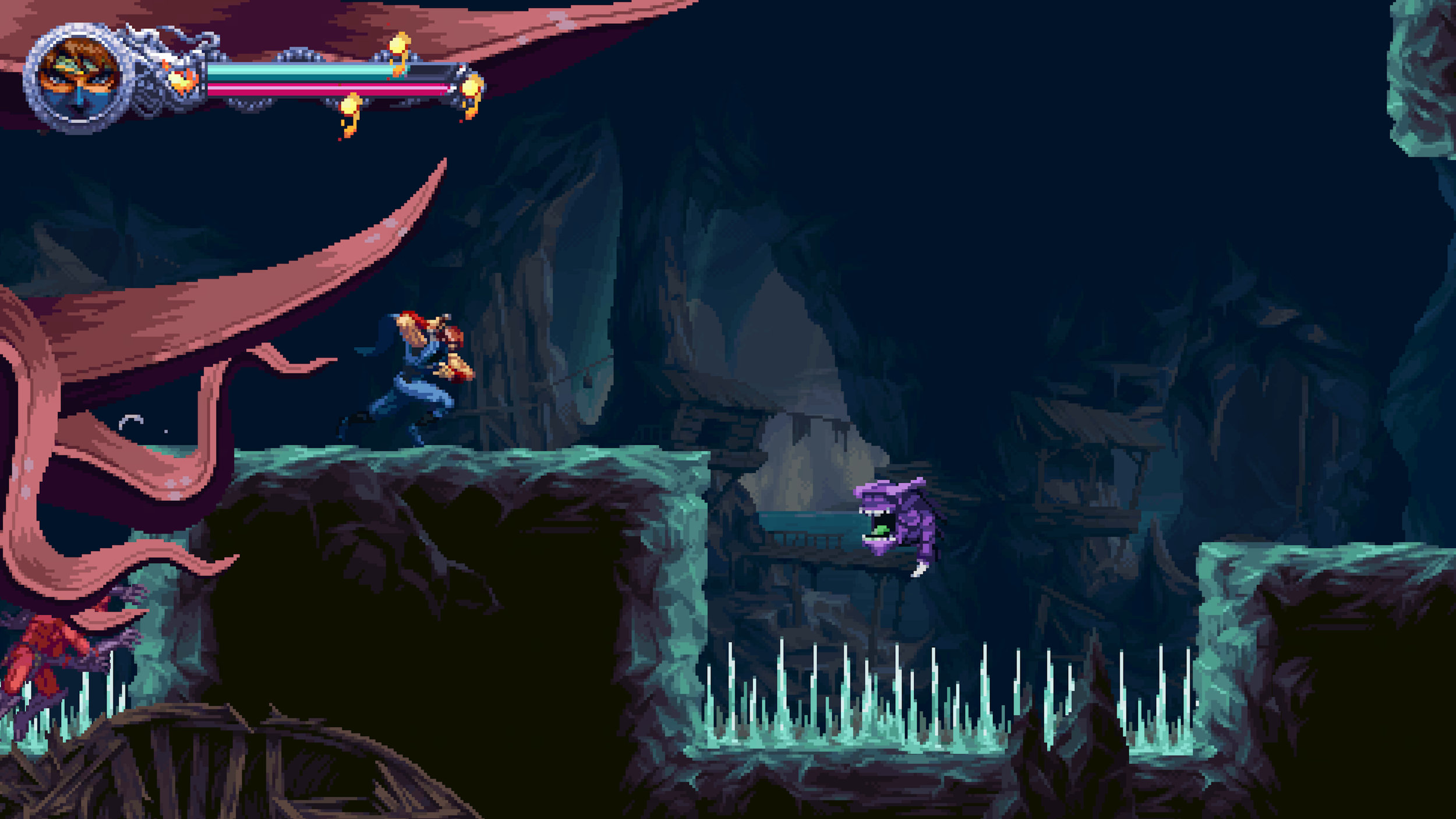
Developed by The Game Kitchen, the Spanish indie studio known for Blasphemous and its stellar sequel, made this a game I was very excited for, given their pedigree in the 2D space. While some of the essence of Blasphemous is present here, Ninja Gaiden: Ragebound lacks the mechanical depth and variety the studio is known for. Yes, the sprites look amazing and the backgrounds are colorful and detailed, but the fact that you cannot interact with them, ie, cutting and slicing various background objects like pillars, statues, lanterns, or boxes, causes the backgrounds to not feel alive or present. However, what hurts the title the most is the lack of any combat progression, meaning you’ll wield the same attacks without learning or advancing to anything new, even despite Kumori’s arsenal of varied abilities, which is as close as we get to variety.
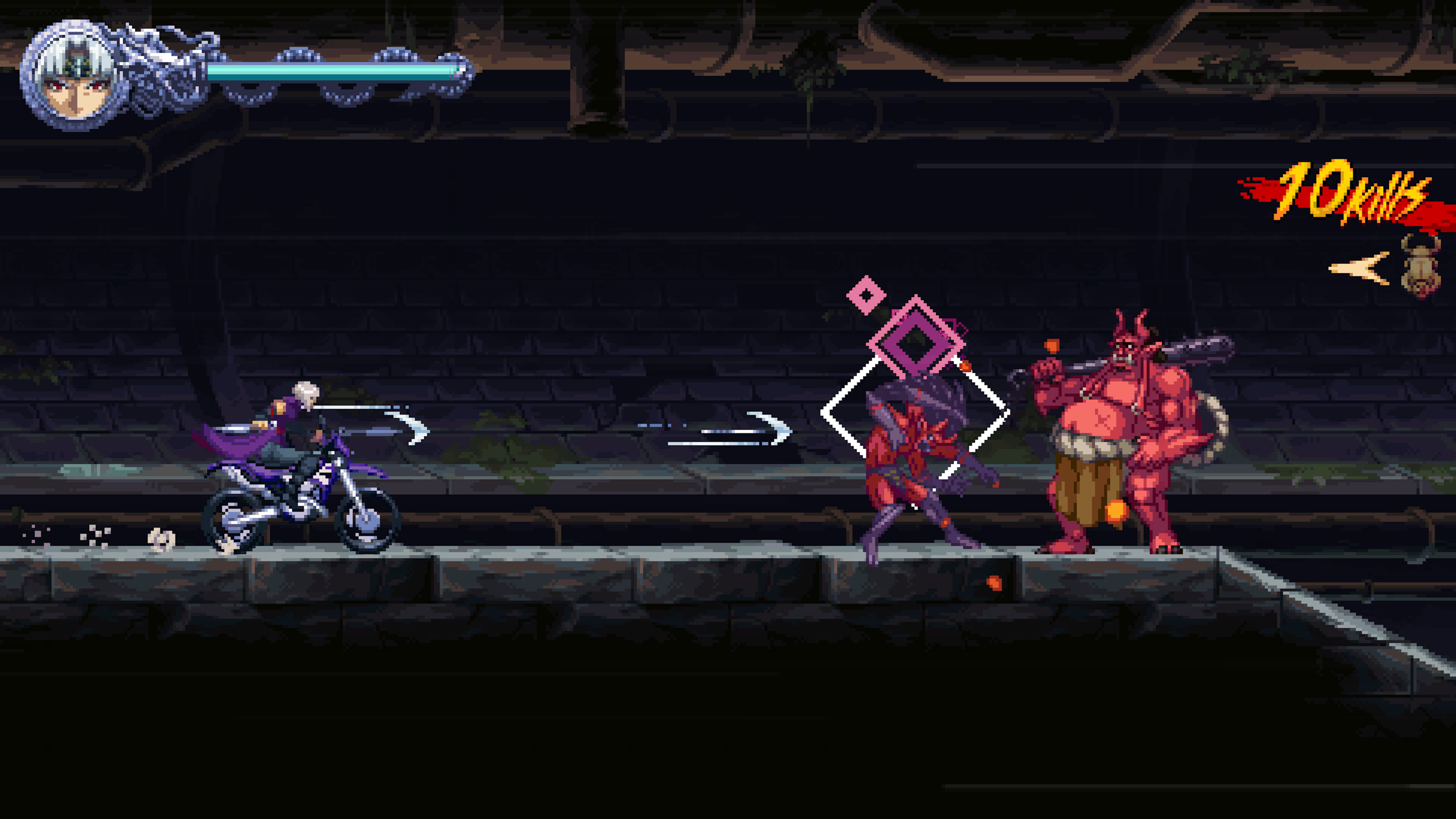
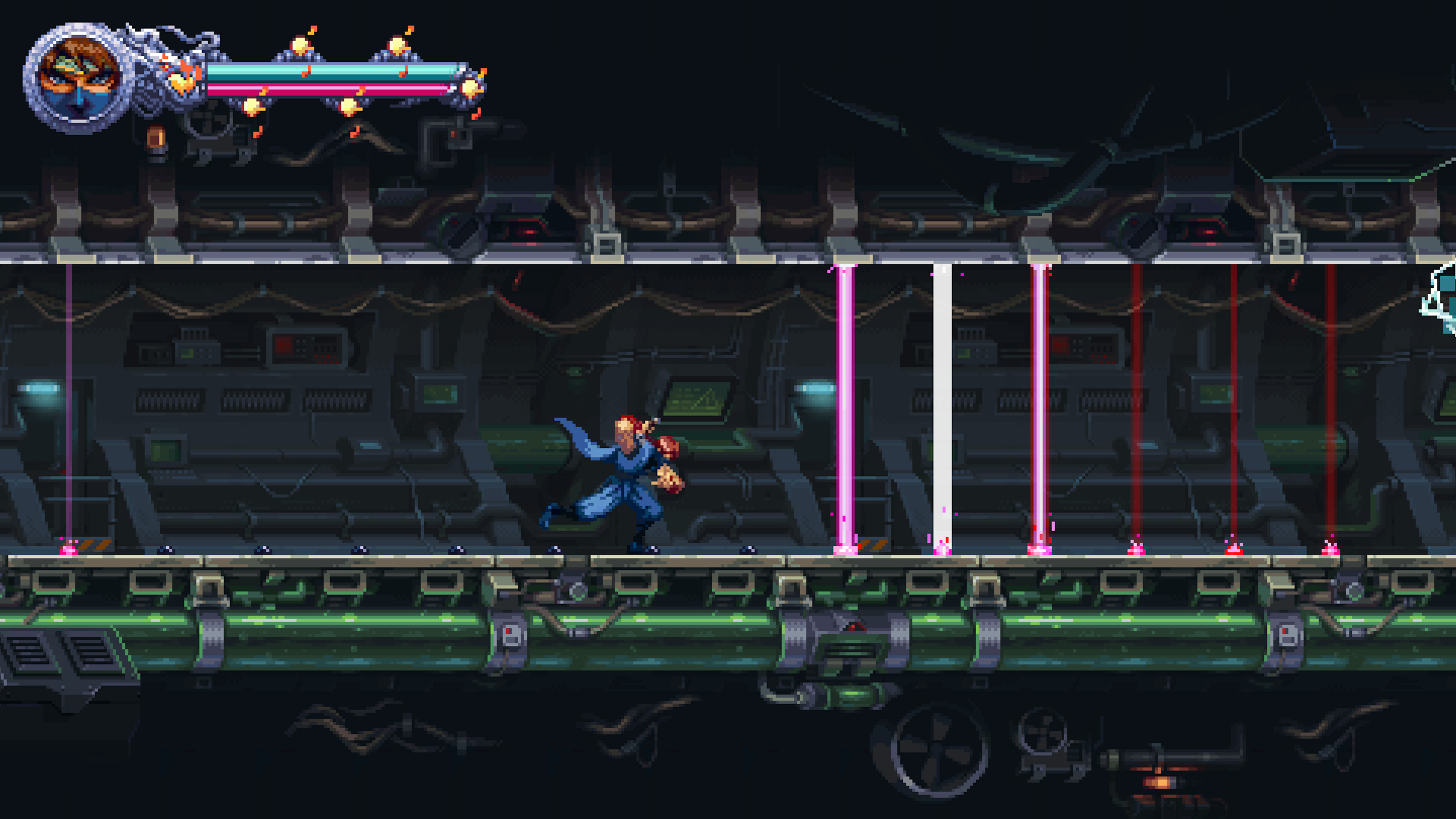
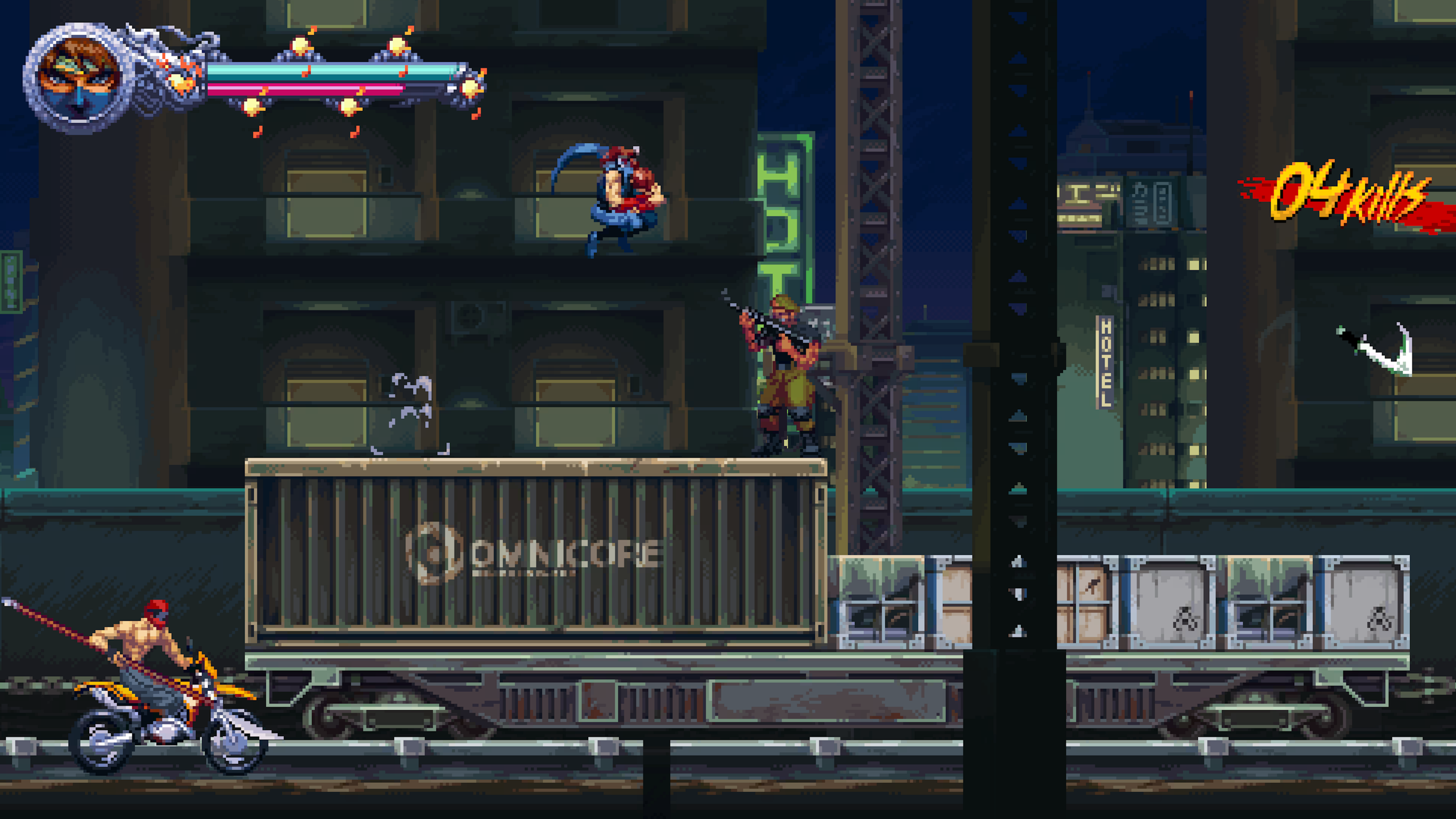
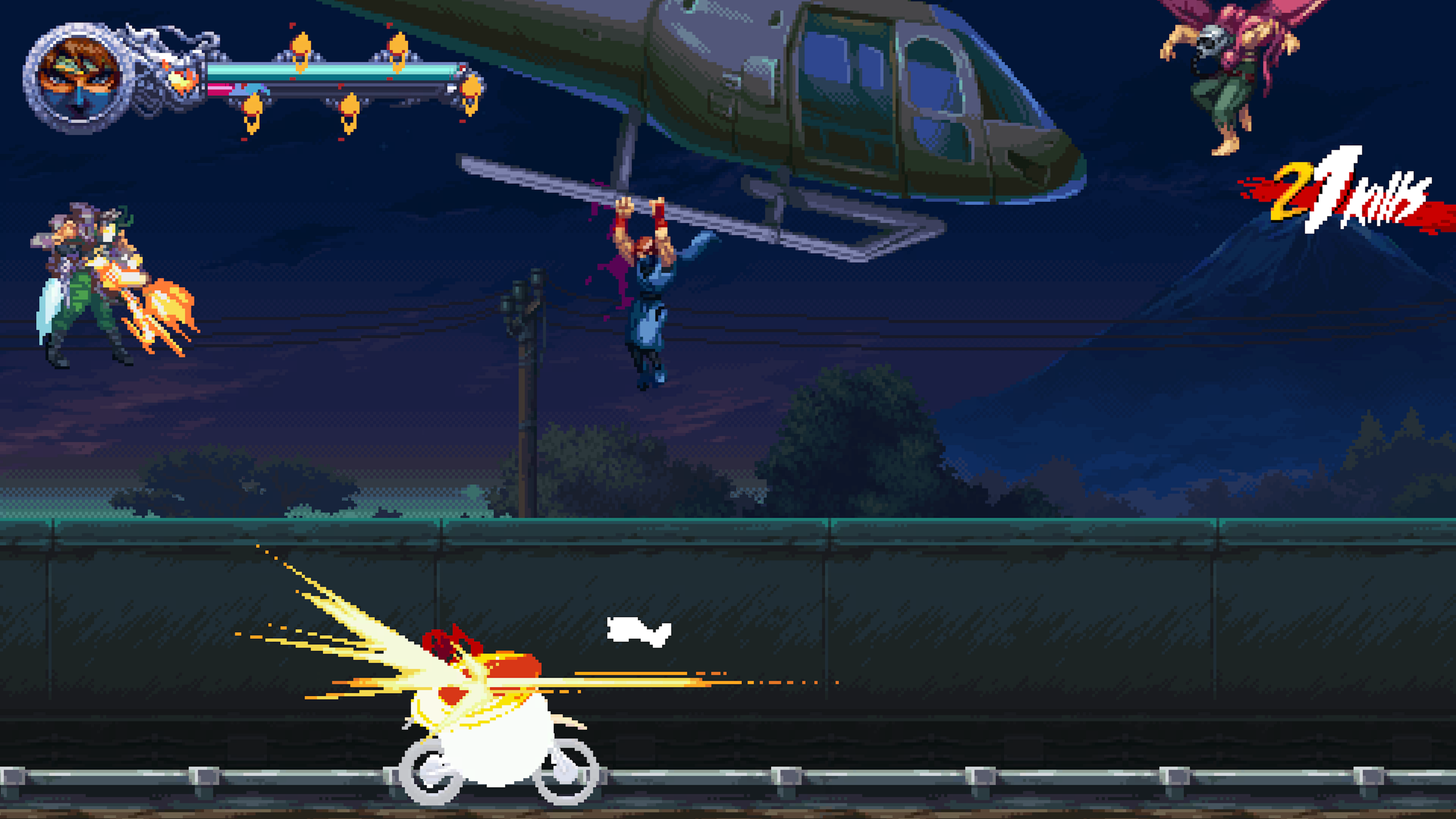
Spread out across nearly two dozen levels, the campaign follows a nice chunk of what the genre is known for. From your standard hack and slash levels to bike chases and racing through the ocean on a JetSki, there is a solid variety here, with some great choices in the environments and how varied their level design is. This is furthered by a double jump called Guillotine Boost, which causes you to bounce off projectiles and enemies, allowing you to reach places just out of reach. While the mechanic is pretty sound, the review build didn’t have vibration, so this caused the mechanic to feel off, in part because of the lack of vibrational feedback. Thankfully, the full release of the game will see a patch to include this.
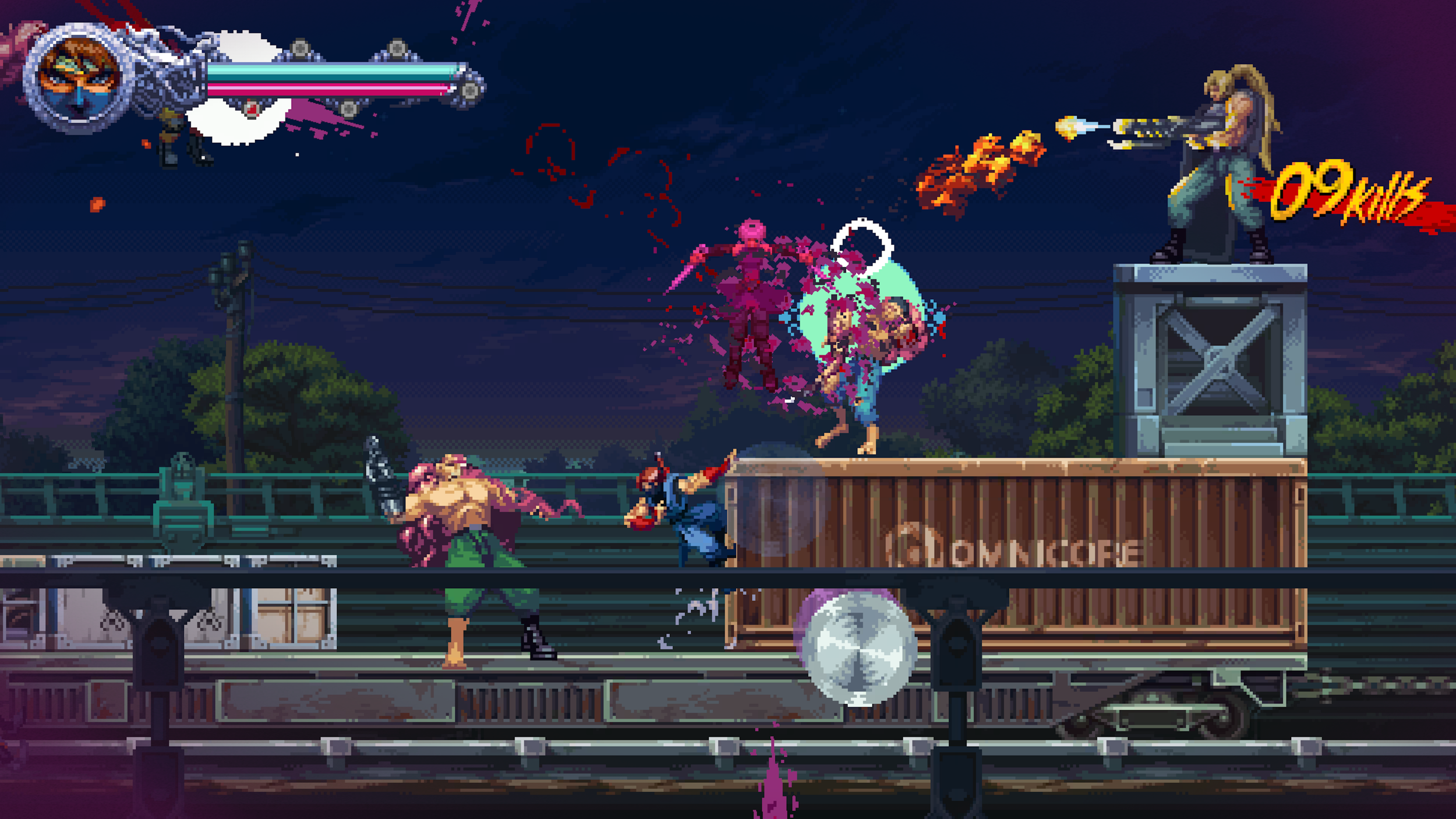
Apart from the campaign, you’ll also have Secret Ops missions, which require you to track down a collectible in a few levels to unlock them. During my initial playthrough, I found four of the eight missions present in the game. Each level also has skulls and beetles to find, allowing you to earn a better score for your explorational skills. You’ll also have a series of challenges per level to tackle, such as taking on the boss without getting hit or avoiding the pitfalls that plague many of the locations.
The general action is pretty damn satisfying, even if does lack the aforementioned depth. You attack with the X/Square button, jump with A/X, fire off your Kunai attacks with B/Circle, and dodge with the Right Bumper/RI. While you can use LB/L1 to perform the Guillotine Boost, it simply works better as a tap with A, as you can time it far better with the jump button. You also have Kumori’s personal attacks with Y/Triangle that are required for certain enemies.
Enemies can often have a blue shield around them or a pink one. These pertain to blue needing to be defeated with a melee attack, with pink using Kumori’s Spider Weapon attacks with Y/Triangle. These then trigger a Hypercharge attack that can kill any enemy in a single attack, or cause bosses to slam across the stage; they are that powerful. You can also sacrifice a bit of health to trigger these as well. However, the attack can fade out if you don’t use it in time, or if you accidentally whiff it before it can reach your target.
That right there is the extent of your combat options, apart from Kumori’s equipppable arsenal. Kumori can equip new weapons via the shop, which is how you spend the beetle currency you find. From chakram and grenades, to a series of four Kusari-Fundo that rotate around Kenji, she has a good amount of weapons to aid in their journey. Kenji himself, though, simply has his sword, and that’s it. Yes, the hack and slashing is fun, but as a character, he gets old very quickly.
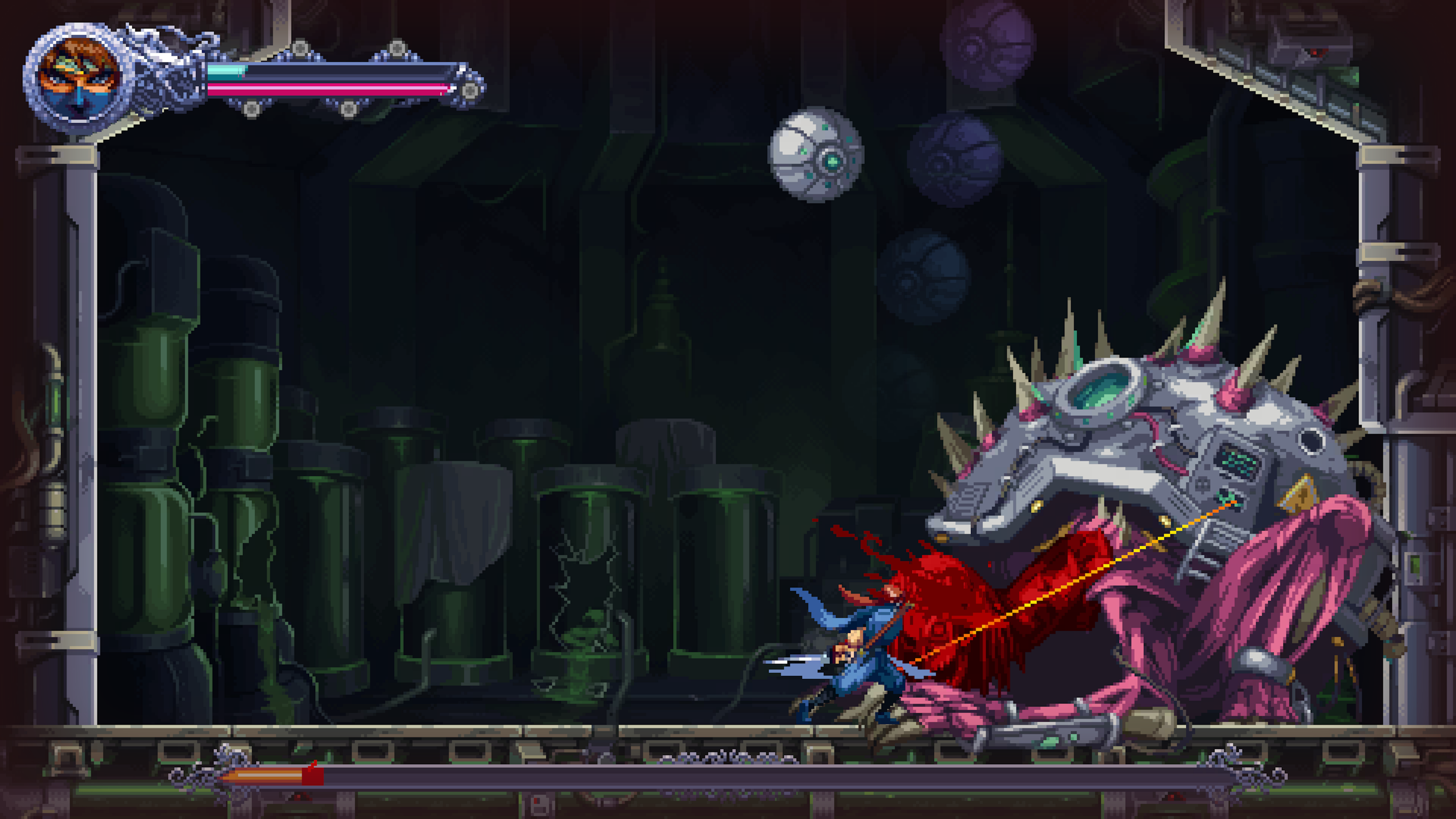
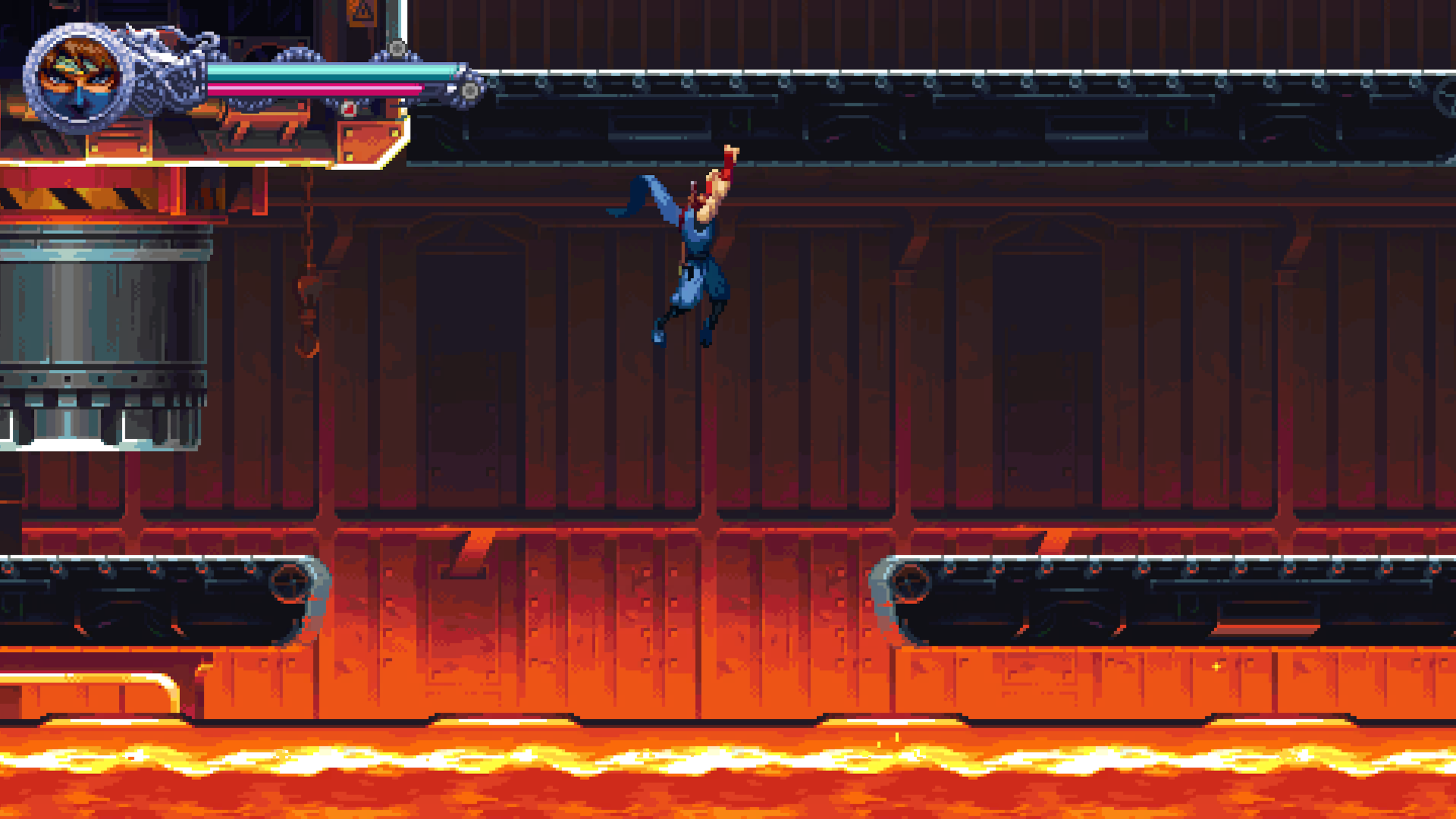
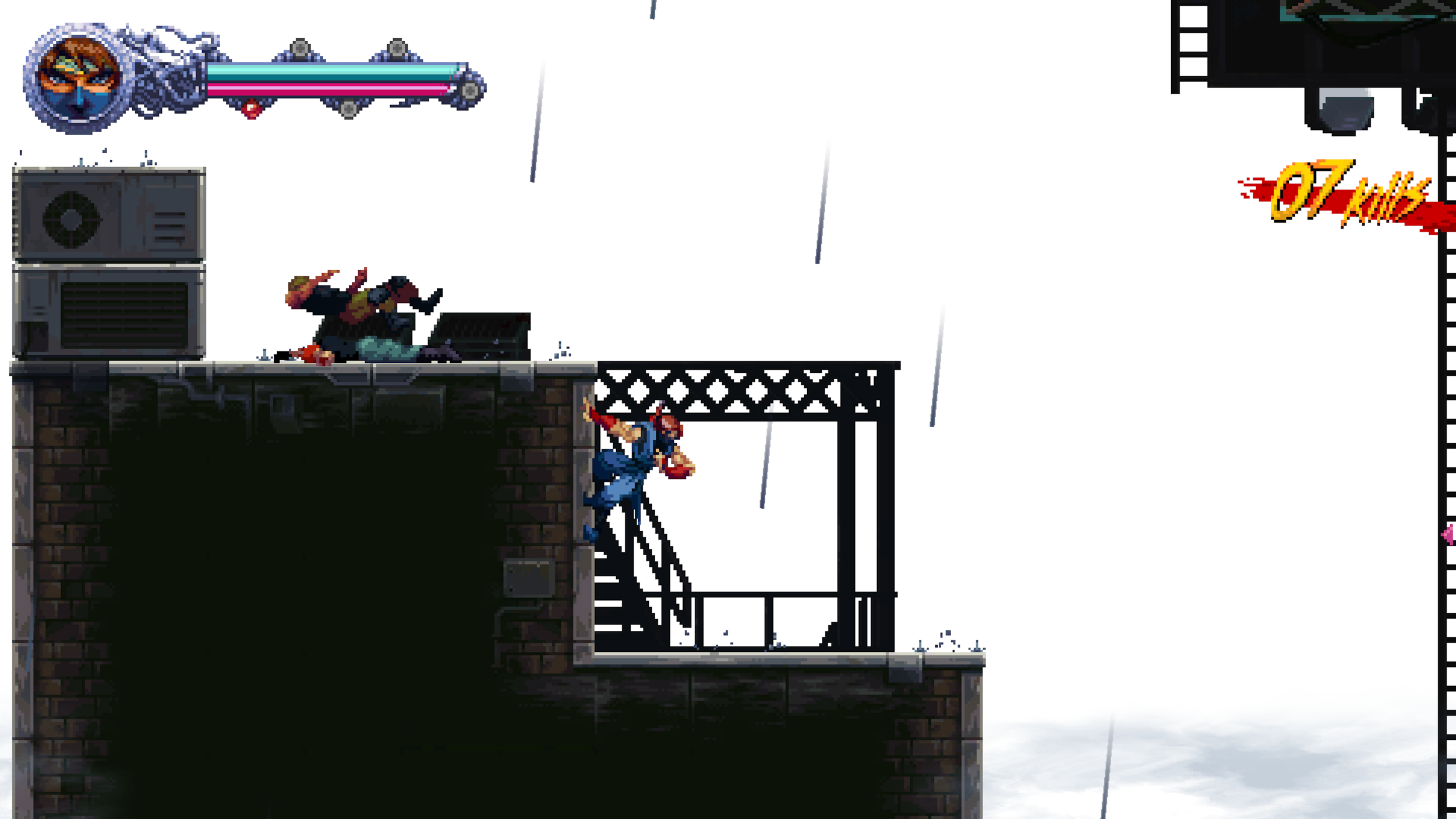
Now, don’t get me wrong, when you start to combine that with the Guillotine Boost, the game can have some amazing combat sequences, but the real drawback here is that Kenji cannot attack upwards or downwards, even when hanging on the ceiling above. This causes some odd placements of enemies and the reliance on Kenji only attacking on the same plane as his foe to feel jarring to how some of the environments are designed. Sure, the combat flow does still allow the game to be satisfying and a very challenging experience, but the lack of combat options makes the game harder than it needs to be, and lacks the depth to take on encounters on your terms.
Kumori’s efforts are not just simply through her Spider-Weapons, or the flashy special attack that you can use to either harm or heal, but that in controlling her in these bite-sized platform puzzles. You’ll find a demon gate periodically through each stage and then have to take on a 30-second or so platforming challenge while you hit orbs to have her energy maintain her presence. These either have you finding collectibles or opening a door, or blowing open a wall that Kenji is progress blocked on. It’s a shame the game wasn’t built around swapping places with each character instead, allowing Kumori to really shine instead of restricting her to being nothing more than a door switch. Personally, if the roles were reversed for a new game+ with Kenji being this spirit, and Kumori being the main playable character, then my issues with this system would be somewhat alleviated.
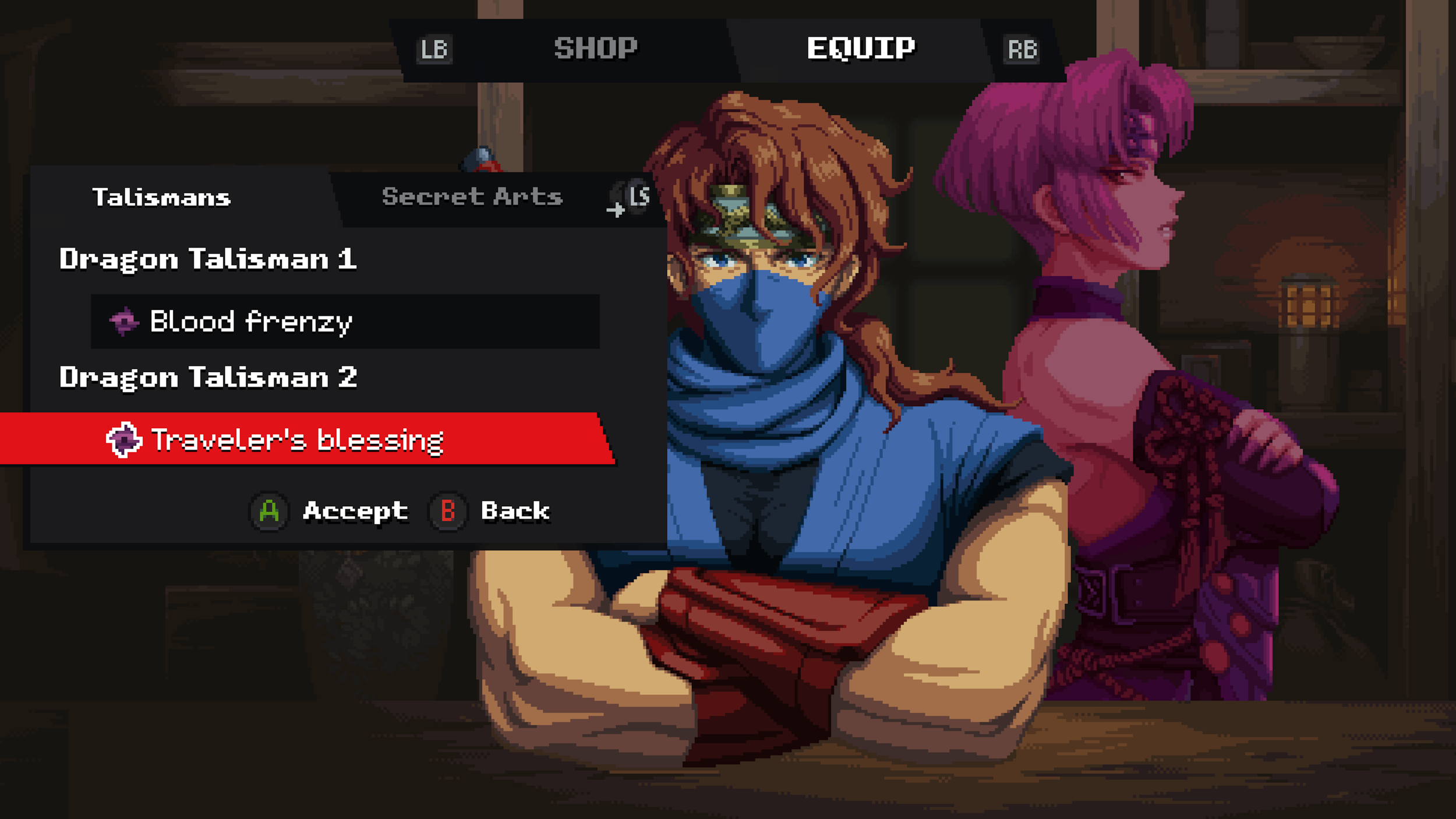
While you can equip weapons to Kumori, Kenji is limited to two talismans that either grant perks like regaining health through killstreaks or through checkpoints, or making the game harder, such as death returning you to the start of the stage, or removing healing altogether. Given the game is already hard, I only assume a small portion of the game’s audience will really dive into these harder settings. That said, a harder mode for the game does unlock upon an initial completion of the game.
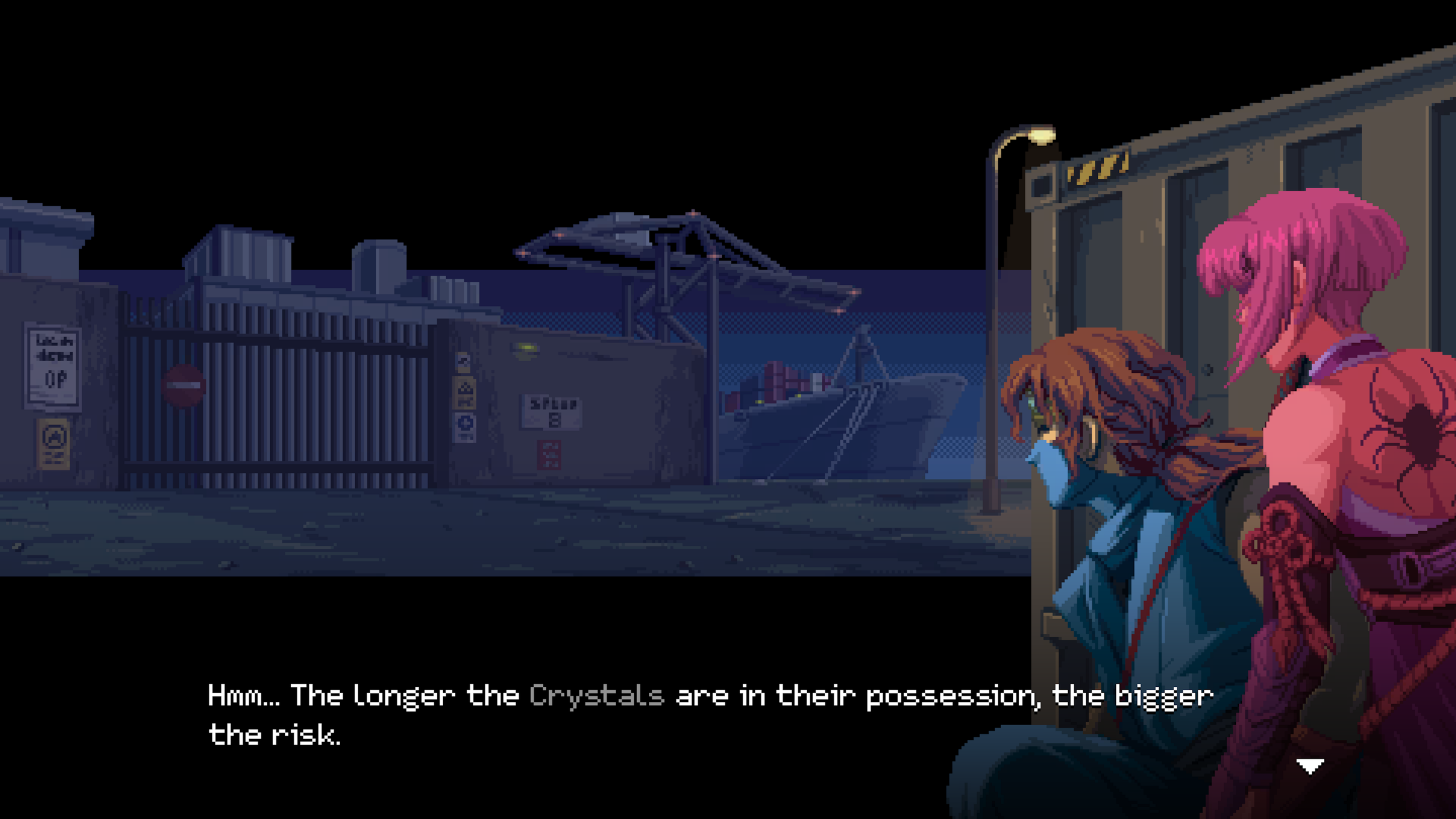
The story of Ragebound is one simply regulated to stopping a demon invasion. There are various characters that show up to either stop you or those with their own agenda, but the general story itself is fairly thin. However, the dynamic between Kenji and Kumori works extremely well. Their bantering back and forth as they are forced to work together is sound, allowing each of their styles and personalities to shine through.
One area that I feel Ninja Gaiden: Ragebound excels in is via its accessibility settings. You can remove hit flashes, or reduce the game’s speed, as well as remove the knockback you receive from colliding with an enemy or its attacks. You can adjust the Hypercharge and Guilltine’s settings as well. However, the real star is the ability to tune incoming damage. You can adjust it anywhere from 100% to 0% percent, should you want to just coast through and not worry about death. While a few encounters were extremely difficult, I opted for the 75% option through the back half of the game, which felt right when it came to how much damage I was receiving.
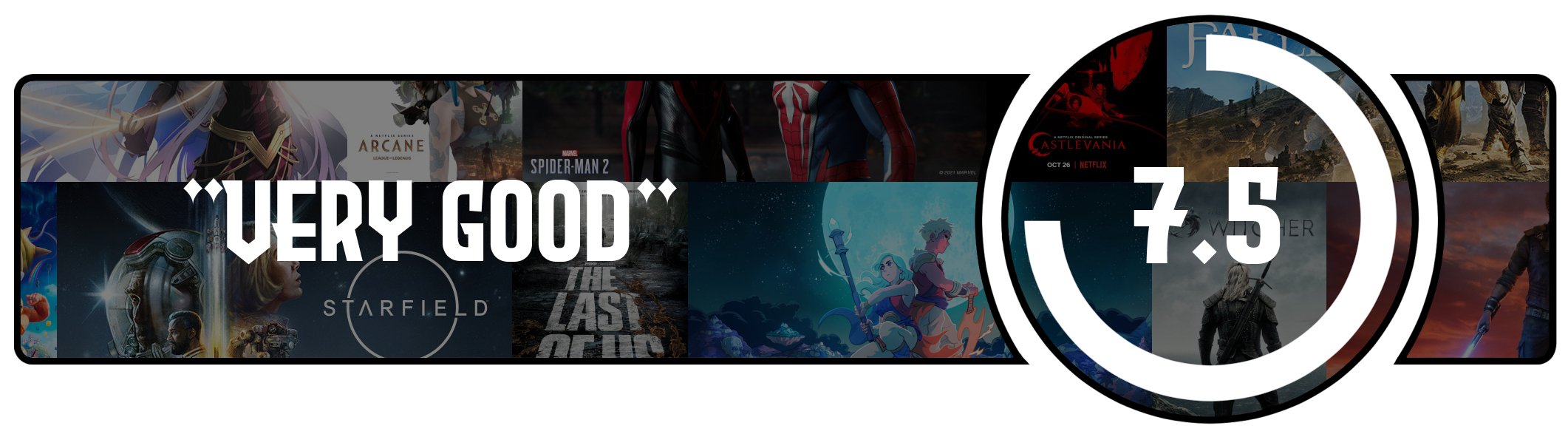
With some strong visuals and a fantastic soundtrack, Ninja Gaiden: Ragebound is a title that has a lot going for it despite some very glaring shortcomings. A lack of combat depth, and even the ability to attack upward or downward, could have really elevated this to be a top-tier experience. While the dynamic between the two protagonists is extremely fun, it is unfortunately overshadowed by Kumori being incredibly sidelined. Ragebound is fun, even great at times, but it lacks the depth needed for replayability, as you’ll see everything the game offers far too early.
Developer - The Game Kitchen. . Publisher - DotEmu, Joystick. Released - July 31st, 2025. Available On - Xbox One/Series X/S, PS4, PS5, PS5 Pro, Nintendo Switch, Switch 2, Windows. Rated - (T) Blood and Gore, Mild Language, Mild Suggestive Themes, Violence. Platform Reviewed - Xbox Series X/S. Review Access - Review code was provided by the publisher for the purpose of this review.
Jeff is the original founder of Analog Stick Gaming. His favorite games include The Witcher III, the Mass Effect Trilogy, Hi-Fi Rush, Stellar Blade, Hellbade: Senua’s Sacrifice, and the Legend of Heroes series, especially Trails of Cold Steel III & IV.