
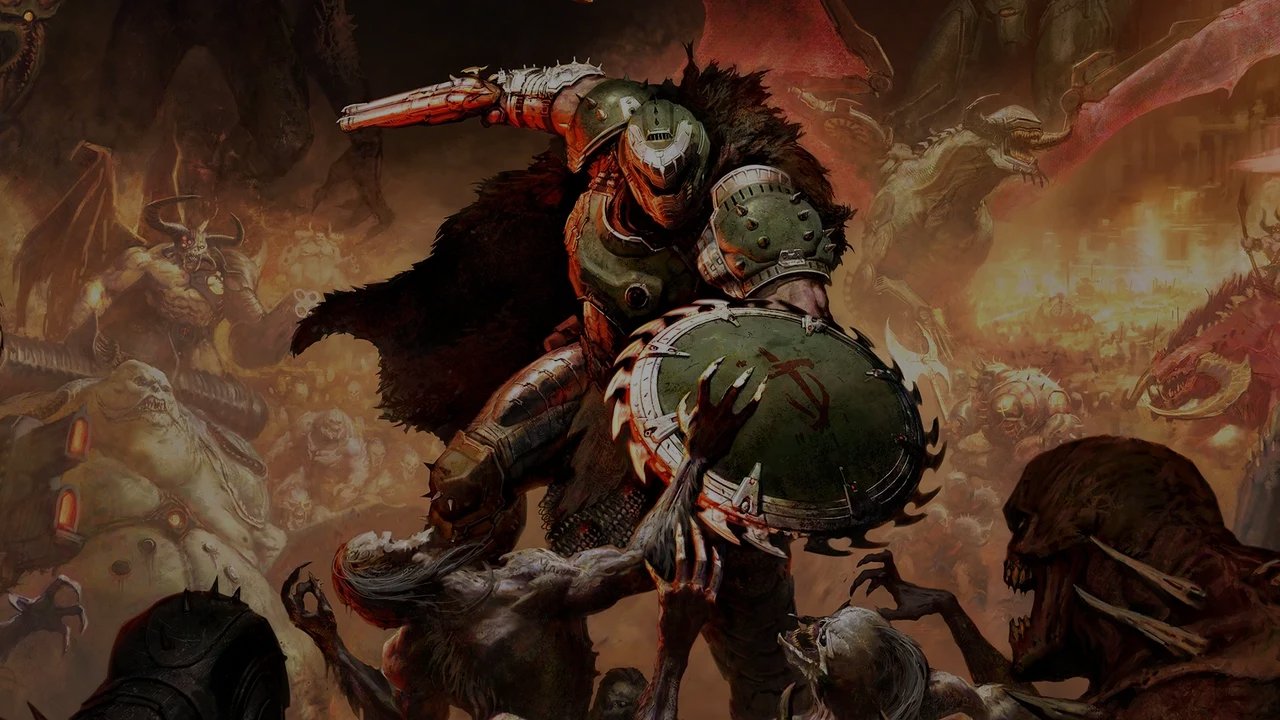
Meet your Mayker.
Doom 2016 was a standout reboot as it took a beloved brand and crafted one of the most bombastic shooters of our time. Punctuated by one of the best soundtracks to ever exist, not to mention its dynamic use in combat, its follow-up, Doom: Eternal, would shockingly outclass it in almost every way. So, when Doom: The Dark Ages was revealed, notably without composer Mick Gordon to handle its score, it would look to have massive slayer shoes to fill.
First and foremost, Doom: The Dark Ages is excellent. Its combat and aesthetic are outstanding, and some smart additions to gameplay make it a vastly entertaining experience. Still, the absence of Mick Gordon is felt across the entire experience as the new composer, Finishing Move, sadly misses the mark entirely, providing the least impressive score of the trilogy. While it doesn’t ruin the entire experience, it does cause Doom: The Dark Ages to not feel as action-packed or energized as the previous two games, which is a huge shame.
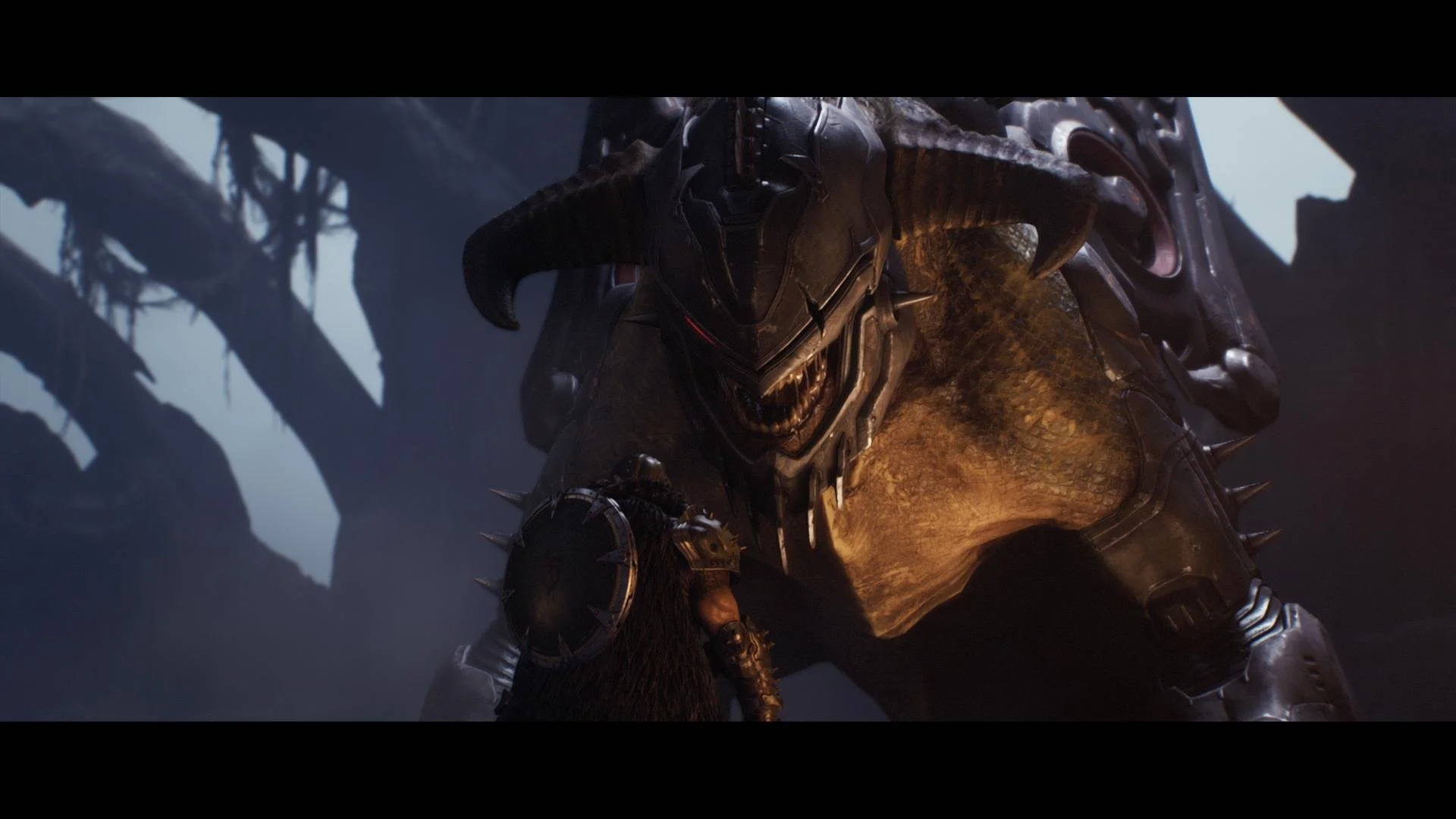
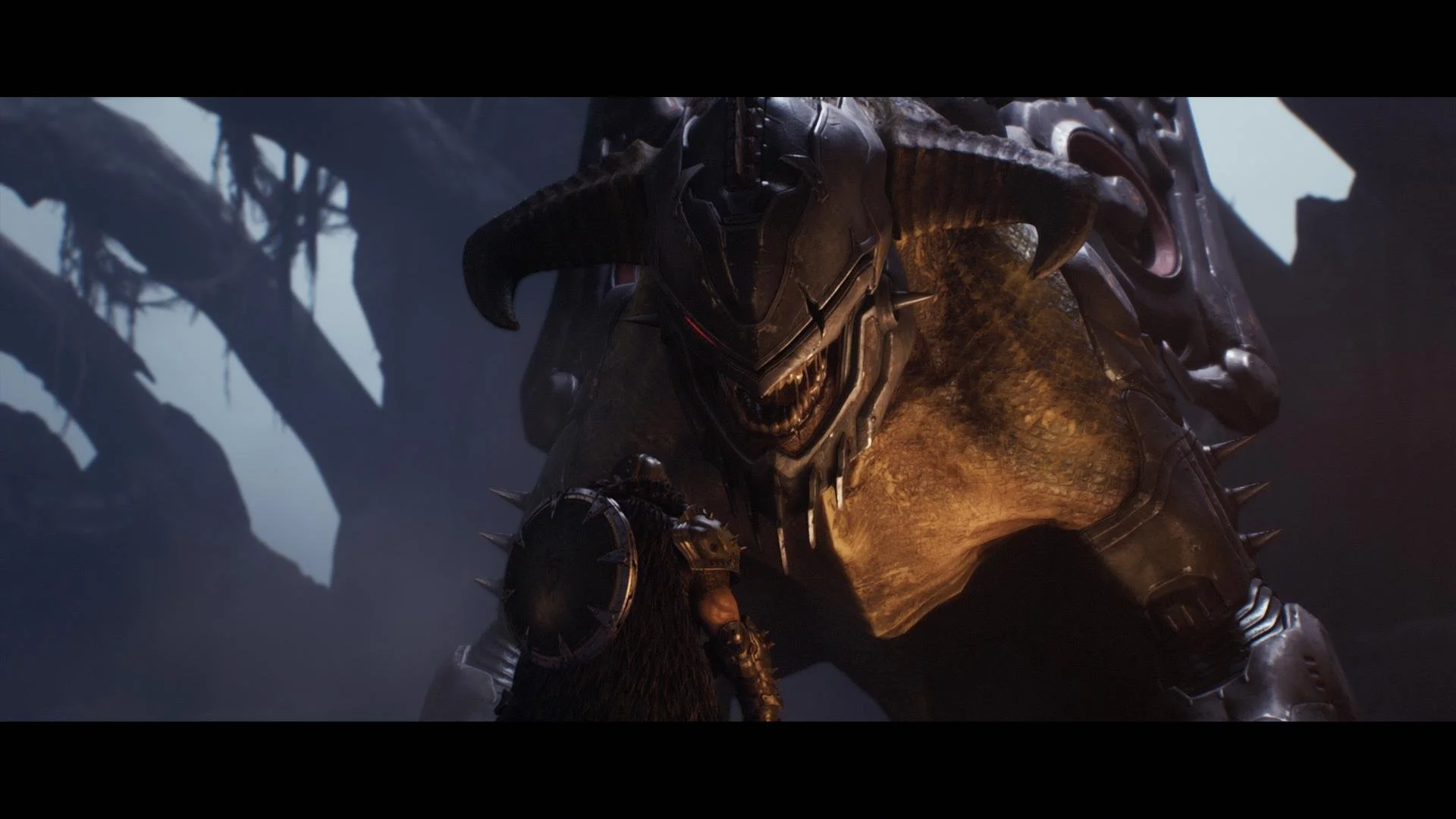
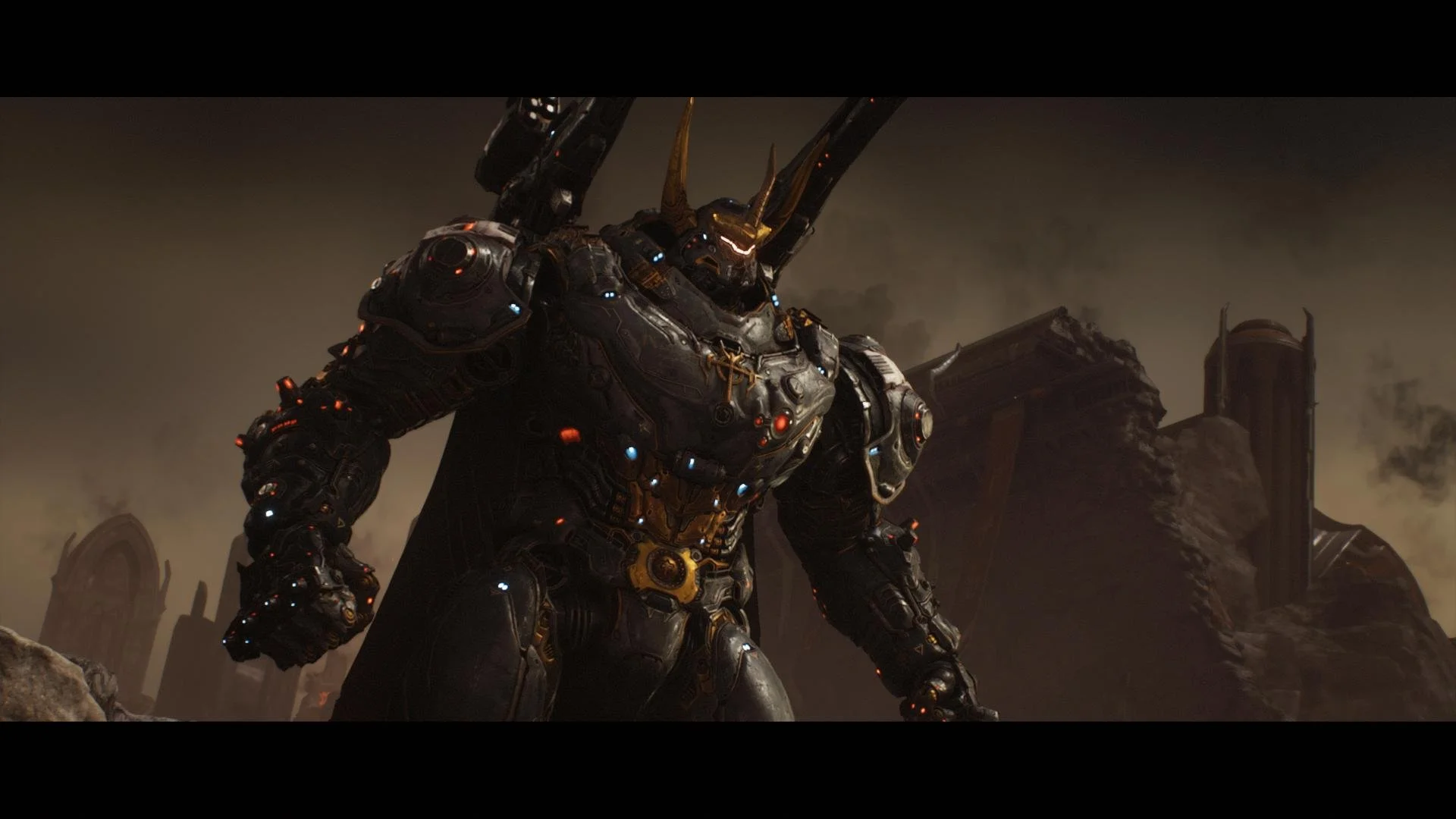
Doom: The Dark Ages serves as a prequel to the events of Doom 2016, taking us back to the era of dungeons and dragons. The Doom Marine here is a force known as the Slayer, a man who is the Mayker’s weapon to do with as they see fit, shackled with a tether that makes him their puppet. As the forces of hell are invading the lands, threatening the survival of the Night Sentinels of Argent D’Nur, the Slayer is cast down to the surface to decimate Hell’s forces, led by a man named Prince Ahzrak.
The campaign consists of 22 levels, with most finding their length at around 40 minutes, depending on your playstyle, desire to track down collectibles, and of course, the difficulty you want. While the traditional settings are there, there are countless sliders to aid in adjusting the difficulty even more, with changes to enemy health, how much damage you inflict, and far more. This is by far the most accessible Doom yet, and that is always a good thing, especially as this is a prequel, so there is no need to have played the prior two first, but you absolutely should.
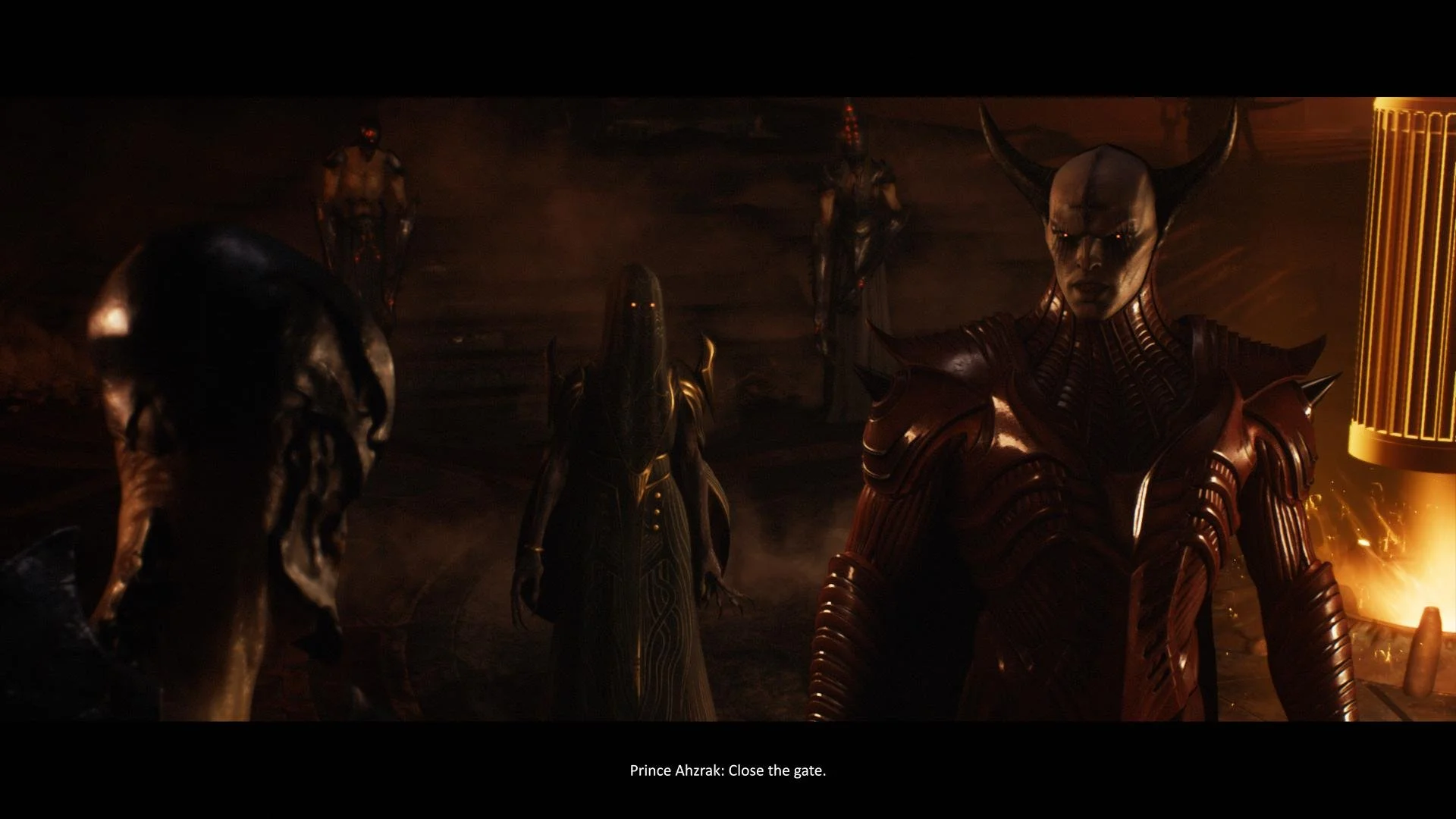
Doom 2016 and Eternal both had a fairly engaging story, but it was rarely a driving force of the games. Ripping and tearing Hell’s forces was the only narrative most players needed or really even wanted. That said, The Dark Ages has a far more engrossing story, one that sees the Slayer attempting to stop Prince Ahzrak from obtaining the Heart of Argent, a relic that contains the soul of the last wraith. While “keep away” stories are always predictable, because, let’s face it, we WANT to see what happens when they get this powerful object, I do enjoy the few twists that lead to that moment.
The Dark Ages likely provides me with my favorite iteration of the Slayer yet. There is a large focus on him as a character, especially with the tether, and his hatred and determination to defeat Hell’s minions is extremely entertaining. Given there are skins to unlock or have access to via different versions of the game, I loved seeing him in cutscenes to really allow those skins to shine. While he does utter a single word throughout the story, a lot of the context and narrative he provides is through some impressive facial capture to his eyes through the visor. It can be subtle from time to time, but his face always tells a story.
While you are unlikely to remember many names of the game’s characters, the few that are part of the central story are pretty solid, especially the arc that revolves around Commander Thira. There are also some interesting side characters surrounding Prince Ahzrak that sadly don’t really get the development they need, especially the Witch, who has her own agenda surrounding the Prince. Still, the story is there for those who want it, and the narrative built around the tether and what that eventually leads to is extremely satisfying.
Doom: The Dark Ages attempts to bring in some variety to the overall running and gunning. You’ll pilot a mech, fly atop your dragon, and man many a turret to eviscerate dozens of Hell’s minions. While these moments have elements that make them cool, such as the slow-motion effect of your dragon landing in front of you, or the shots of your mech kicking ass, the actual gameplay moments around them quickly become stale and repetitive. Sure, the first time out as a dragon is enjoyable, as is your first few fights in the mech, but given these moments never grow or evolve, it’s the same dodge-punch in the mech and the dodge-shoot as the dragon each and every time.
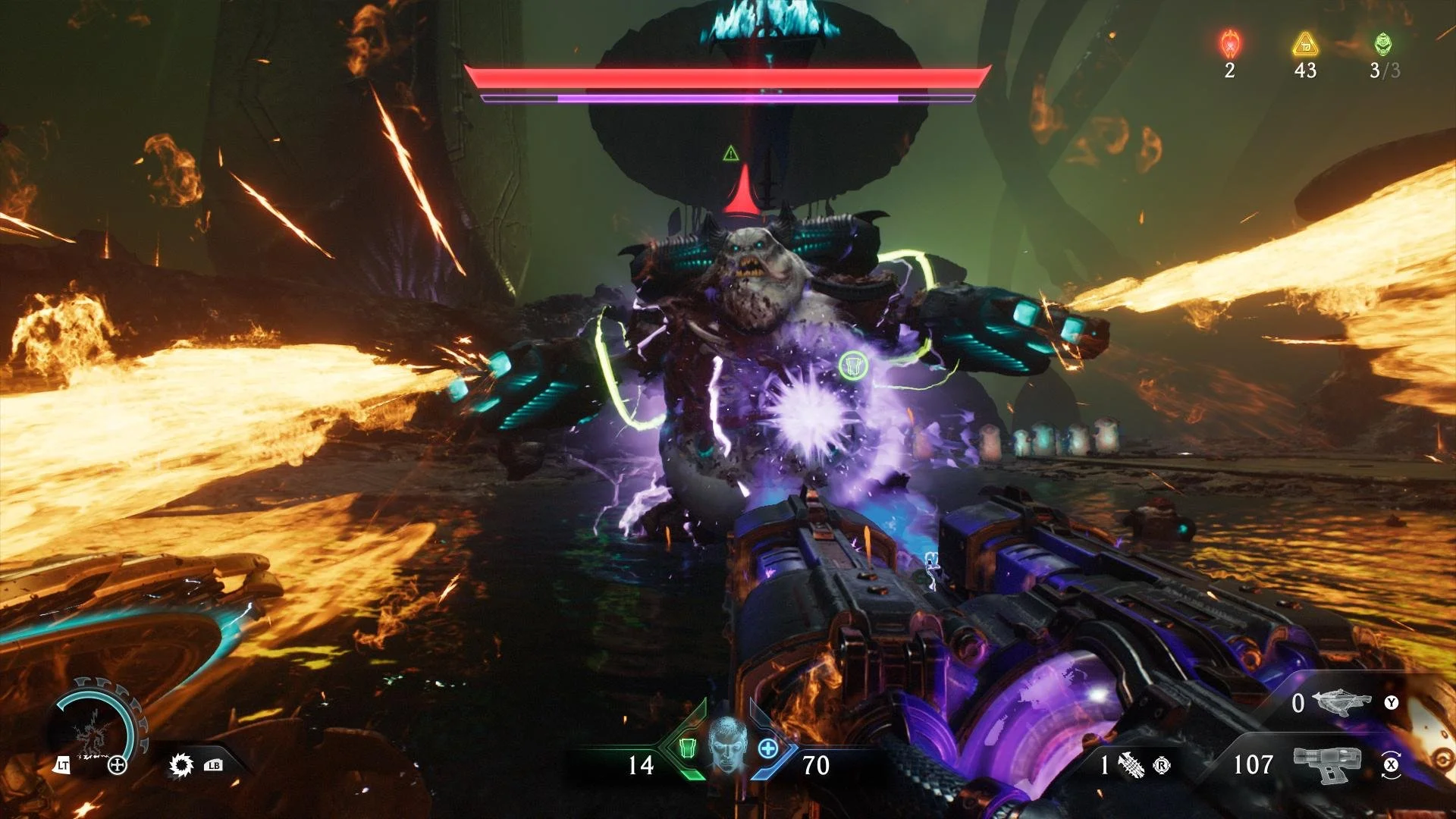
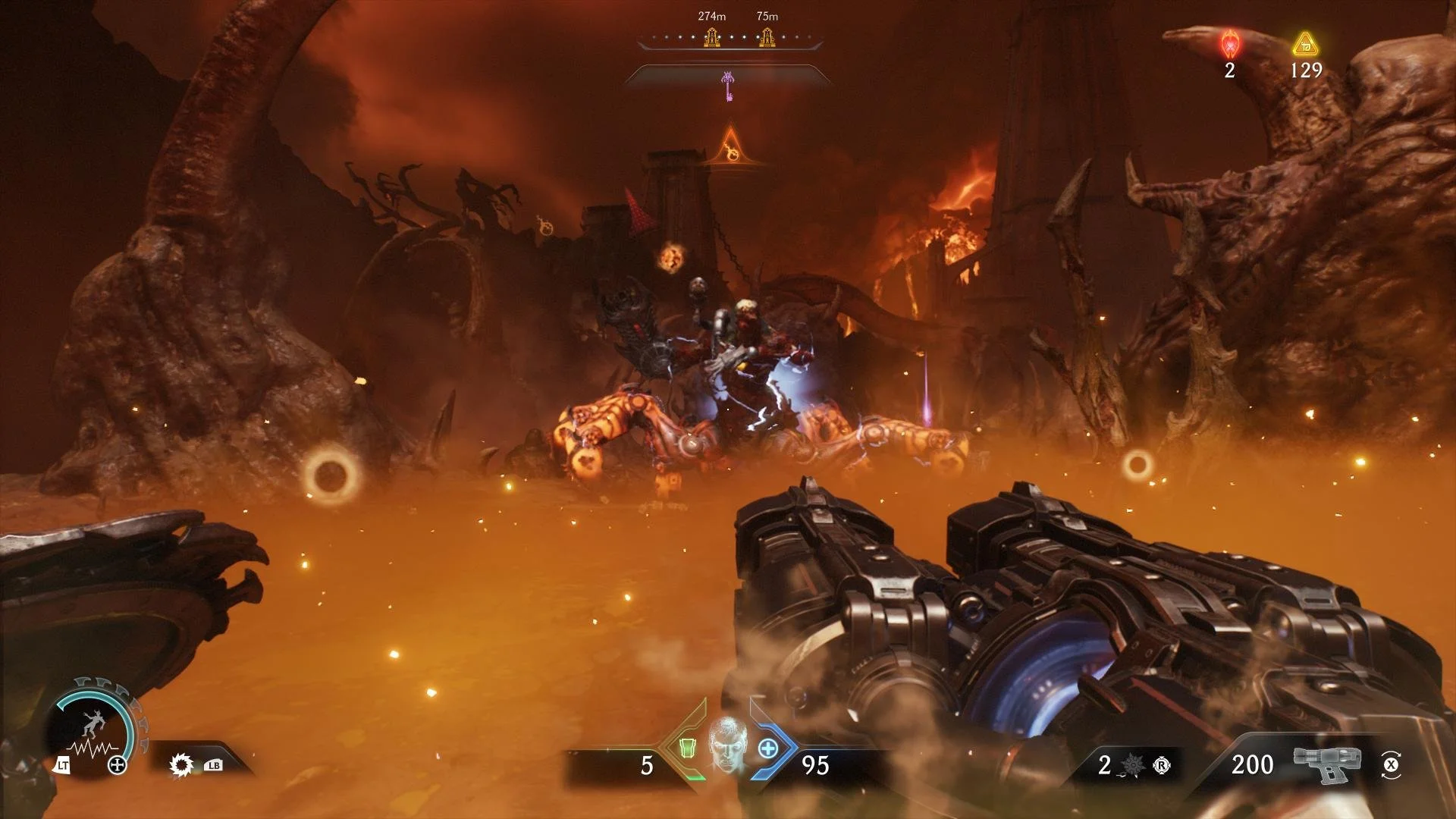
Where The Dark Ages leans away from Doom 2016 and Doom: Eternal is how its environment is dictated based on the inclusion of a shield. While the chainsaw is absent from The Dark Ages, the Slayer will have a shield that he can throw out, slice up demons, and perform parry strikes that will ricochet green blasts back to their host. Where this affects the environment is in its size. The previous two games have a mixture of your standard corridor environments while leaning into some large sections that had a lot of verticality. While you will find the odd corridor or small interior through this 15-20 hour gorefest, the bulk of The Dark Ages is spent in wide open areas that allow for you to have time to parry with the shield or benefit from the dash attack it provides.
This is where I am at odds with most of the game. The shield is a wonderful addition as you can close the gap to your enemy extremely quickly with a long-distance dash into them. While the Slayer doesn’t have a dash, which would have been fantastic here, the shield does provide a good sense of mobility that is a fine-enough compromise. Enemy shields can be peppered with ammo to cause them to become red-hot, allowing a shield toss to decimiate them in a far-reaching area attack. There are also moments in the game where you can throw the shield into designated areas to allow you to slingshot yourself across to new areas, secrets, and more. All in all, it’s a wildly impressive addition to gameplay that warrants the absence of the chainsaw.
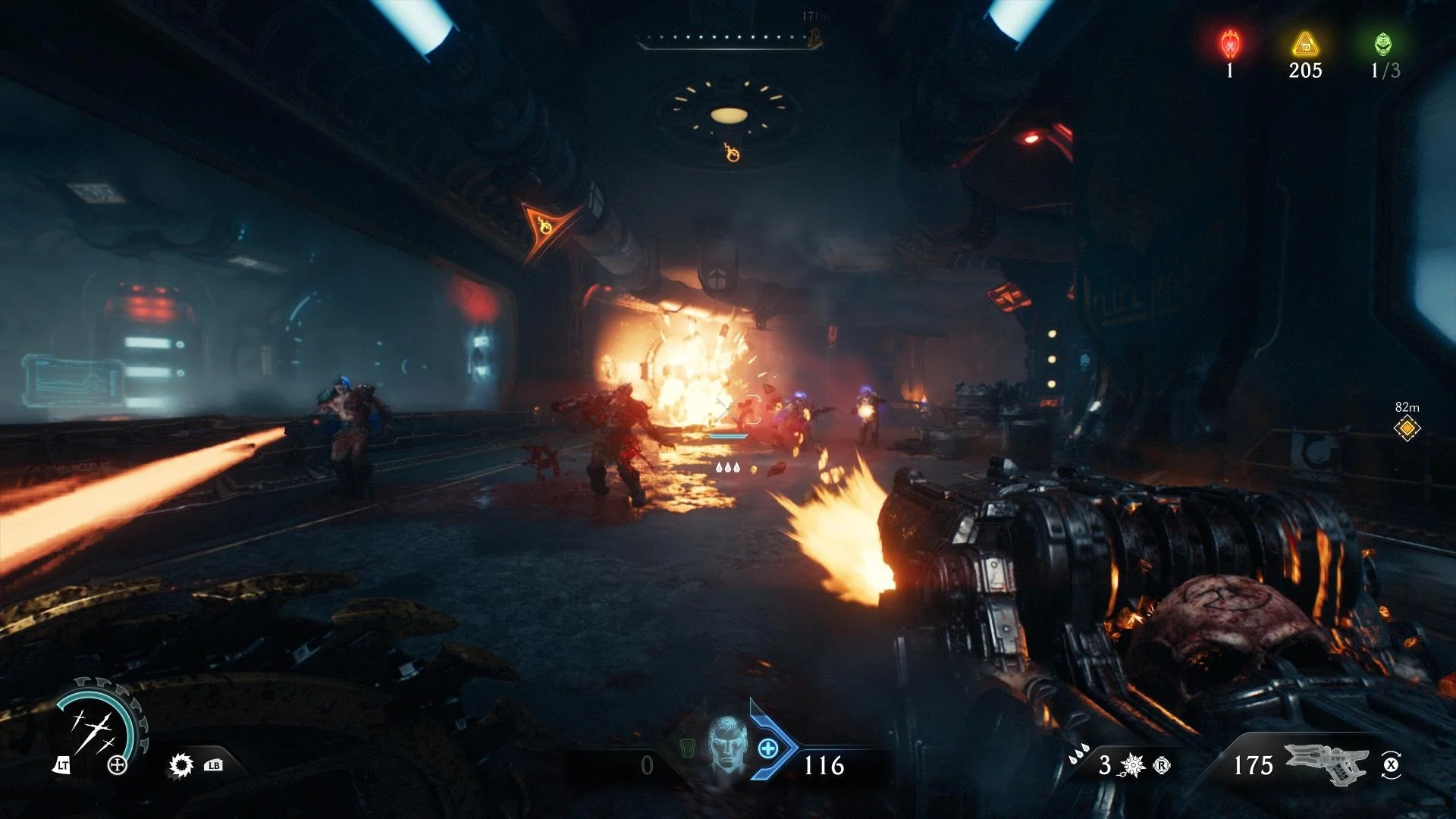
Still, the wide open areas feel odd in a Doom game, especially environments of this size. Sure, the combat is buttery smooth and wildly engaging, but there is a pause to the pacing and flow we’ve had in the previous games. I still attest that The Dark Ages is a very impressive and competent shooter, but the way in which I am sprinting around the environment and taking on dozens of foes all around me reminds me more of Serious Sam than what the last nine years have given us of Doom.
Each location is packed with secrets. From toys to various collectibles, there is a lot to explore. You’ll also have challenges per level that contribute to the completion percentage, such as killing enemies with a weapon in a particular way, to deflecting a set number of parries. Still, the map is very useful here as it will alert you to the purple or blue keys you need, the skulls that unlock a variety of doors, to those collectibles that can add an excuse to go off the beaten path. This is where the game can lean into the 20-hour mark if you intend on mastering each and every chapter.
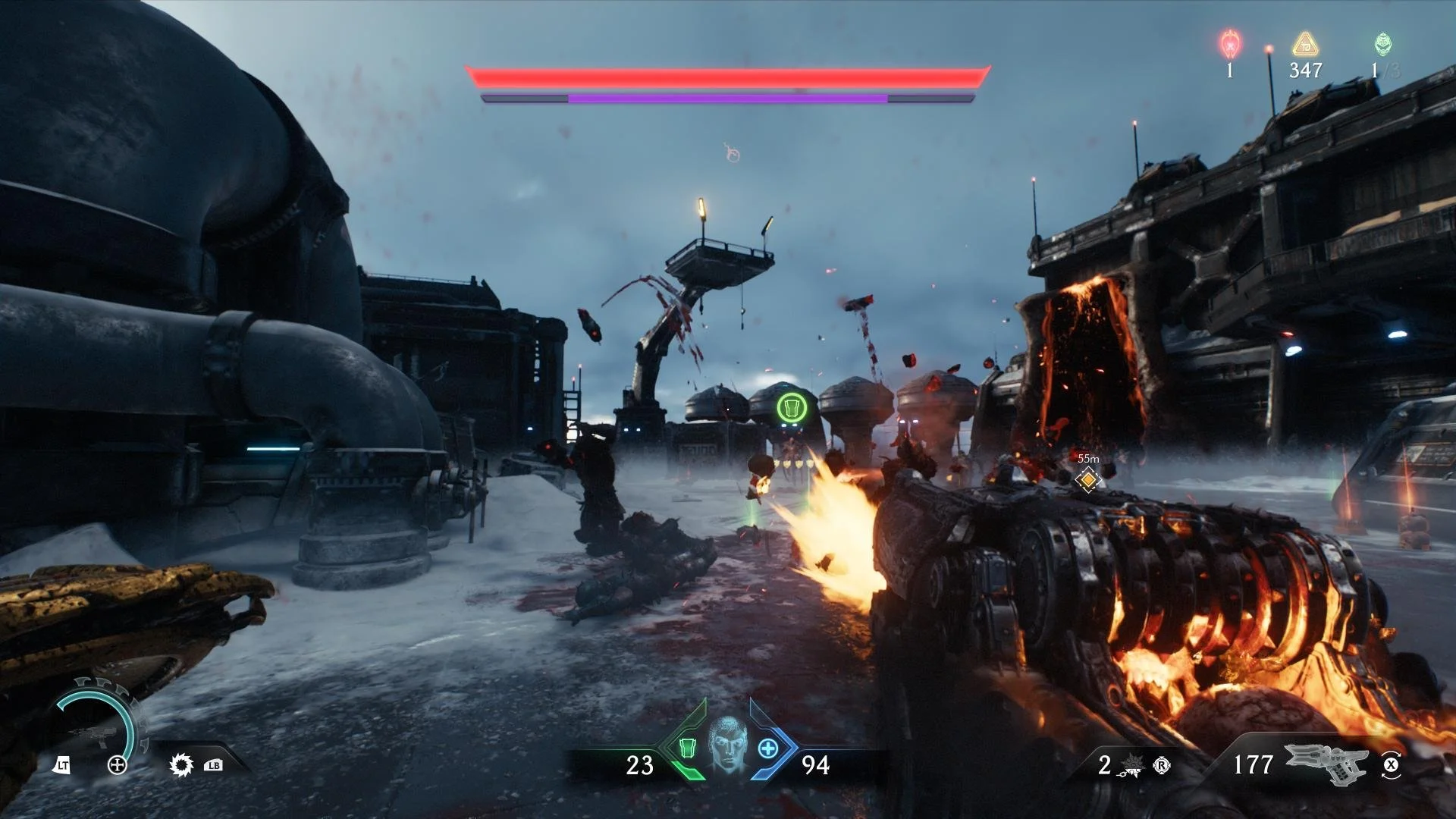
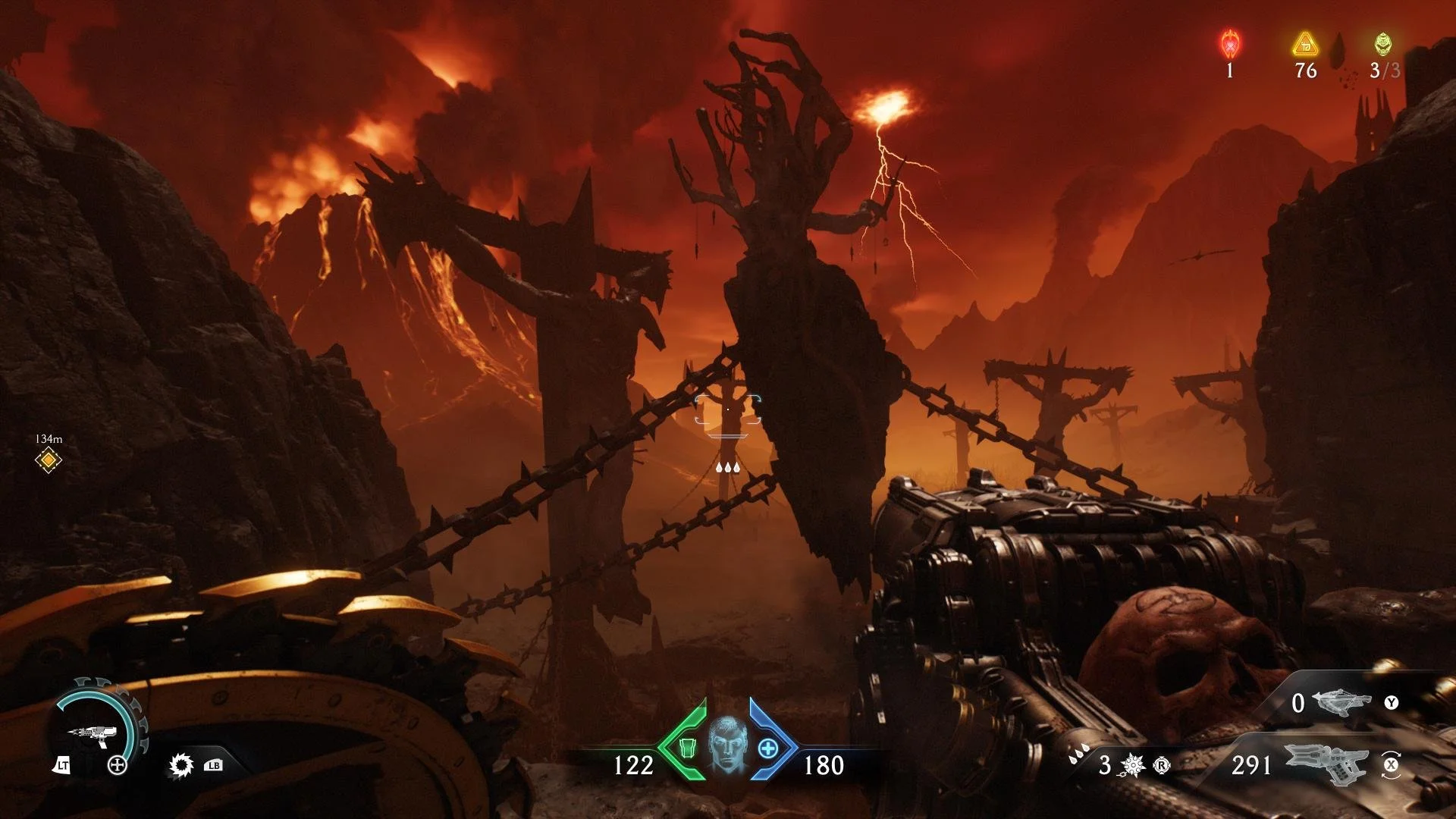
The environments never fail to impress visually as they all feel ripped off the covers of numerous metal albums with their mixture of fantasy, sci-fi, and what we think of the Middle Ages. Some locations are so impressive, you WANT to stop and take them in, even at the risk of ruining the pacing. The all-new ID Tech8 Engine is solid work, and I never once noticed a single technical blemish or drop in framerate whatsoever. And given the action can get incredibly intense, it’s a reliable and worthy engine for the Slayer.
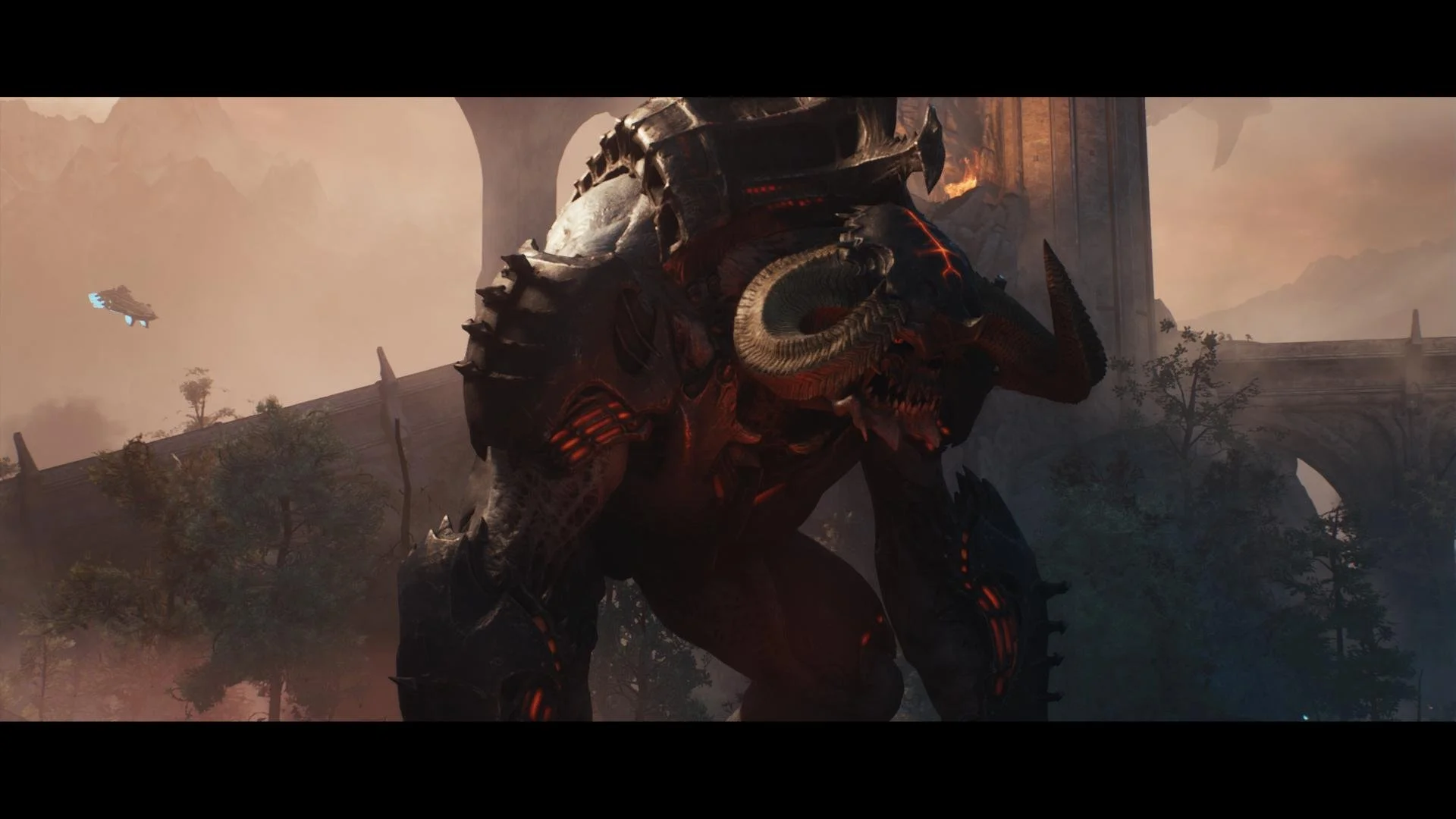
The Slayer will use a variety of new weaponry to gun down, mutilate, and eviscerate countless demons, bosses, and eventually, have to deal with Prince Ahzrak. The cast of demons is extremely impressive, with a decent variety of all tiers of monsters. While the new cacodemon is the only exception, as I flat-out hate its design, even grunts like the basic Soldier look incredible, to the nimble Pinky Riders that provide a duo of enemies to kill. The bloated Mancubus is another favorite, as these large tanky monsters are everywhere, providing some intense encounters as you maneuver around the fodder to take them down first.
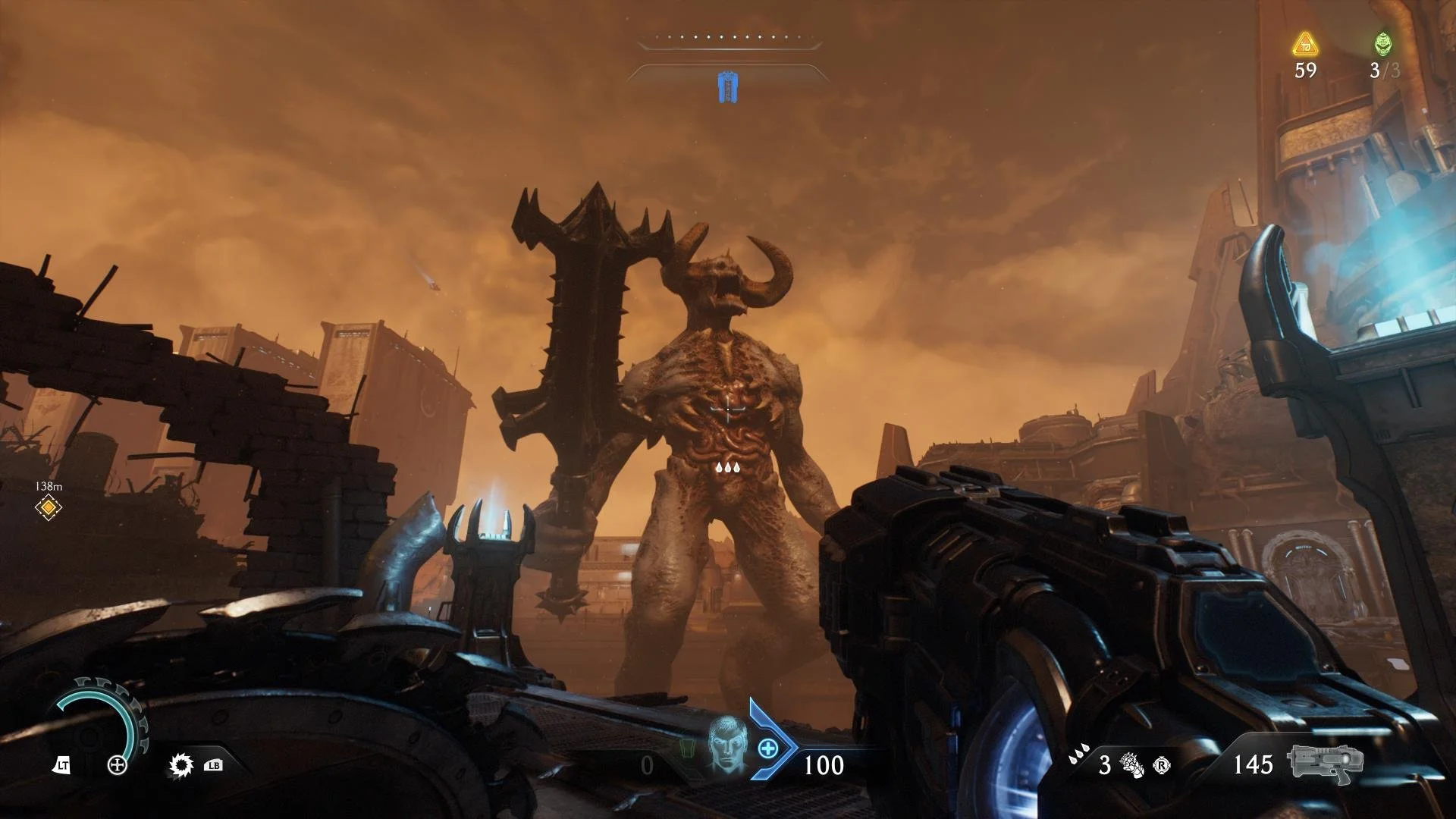
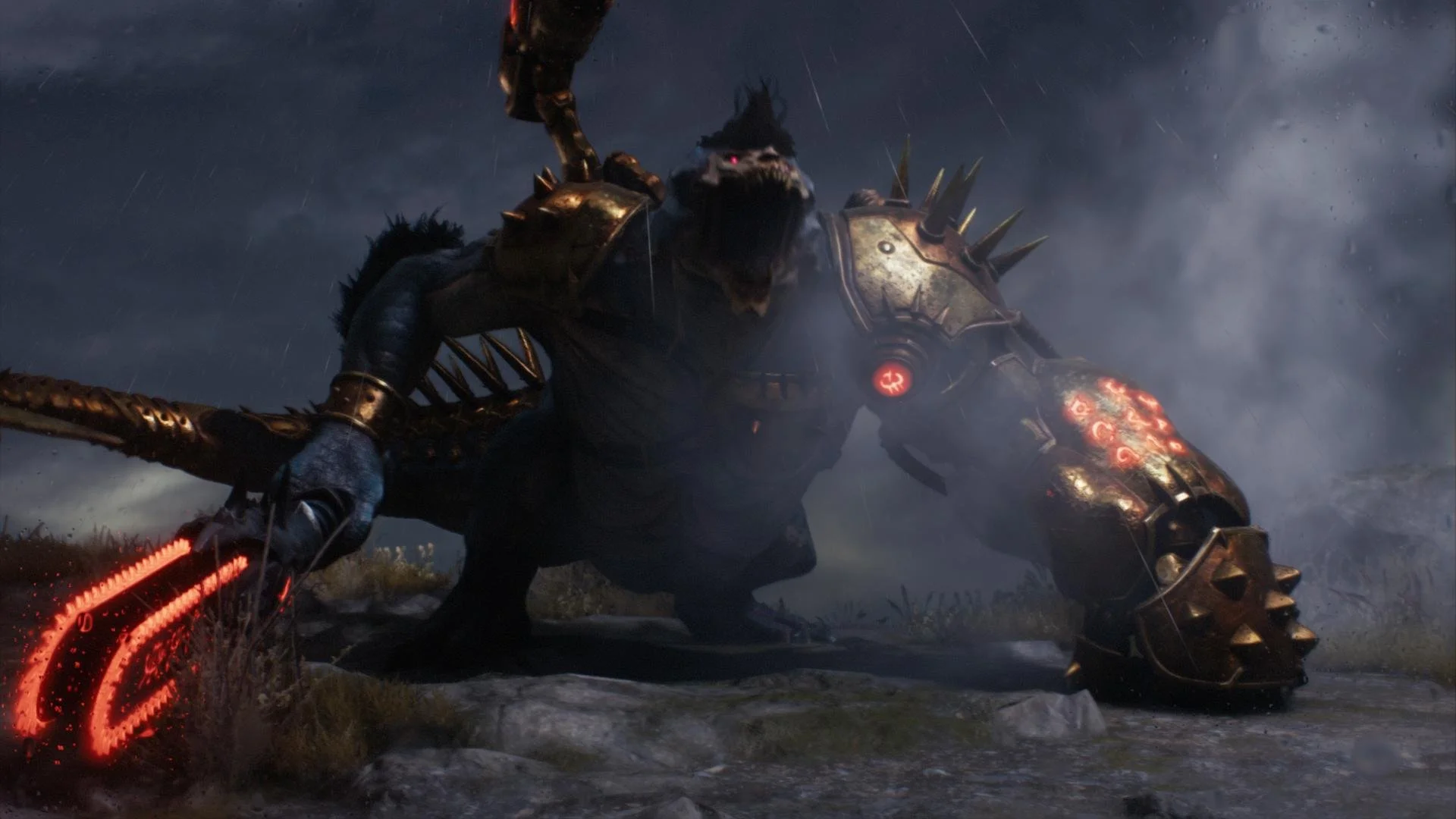
As you continue to butcher more of Hell’s minions, from Hellknights to Zombies, to the spidery Arachnotrons, I do have one major complaint with the use of some of its monstrous cast. Throughout the game, you’ll encounter bosses of those not part of the main story. From the robotic Vagary, to the impressive Cyberdemon, and the Aggadon Hunters, to the chainsaw-staff wielding Komodo, these encounters are great due to the variety of attacks they have, the health bars that never want to end, and the overall challenge to their battle. However, each of these encounters are just a prelude to weaker versions becoming regular enemies, removing the impact of those initial encounters. Sure, adding in more variety is one thing, but I would have preferred unique versions of those enemies to be added in as regular fodder instead of the same enemies, but far weaker.
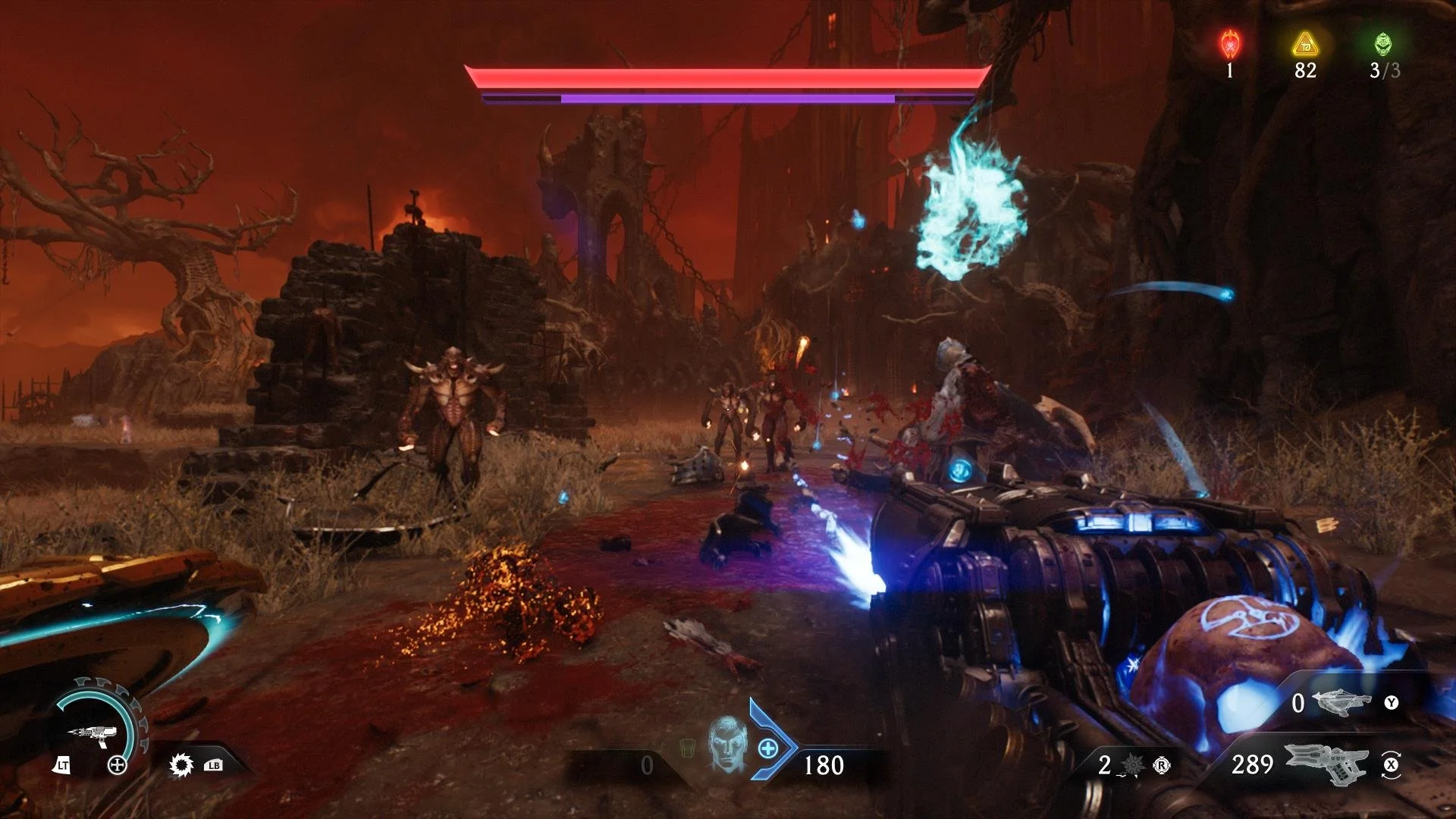
As you engage with certain areas of the map, you’ll find large forces of Hell occupying certain zones. Usually, you’ll have to defeat enough enemies to lower their morale to fight the boss in that area. These fights are largely structured to spawn in more foes once a kill limit has been hit. This can cause the fights to have a predictability to them, but that can work in your favor depending on the difficulty you have chosen. Regardless, this structure repeats constantly around the map, so you’ll know what you are getting into when you see these on the map as many of these fights are entirely optional.
What sucked the wind out its sails for me is that many of these encounters, or exploring the map, or backtracking to find secrets or more gold to use to upgrade my skills, was that so many locations were devoid of any music at all, sometimes even during combat. Sure, the ambience of Hell is one thing, and it does it quite well, but there were moments where the action was intense and the music just wasn’t there. Doom 2016 and Eternal had dynamic music that was engaging based on the action, making you feel like you were composing it on the fly. It made you feel like you could take on the world, here, that just doesn’t exist, and it makes The Dark Ages feel like any other shooter.
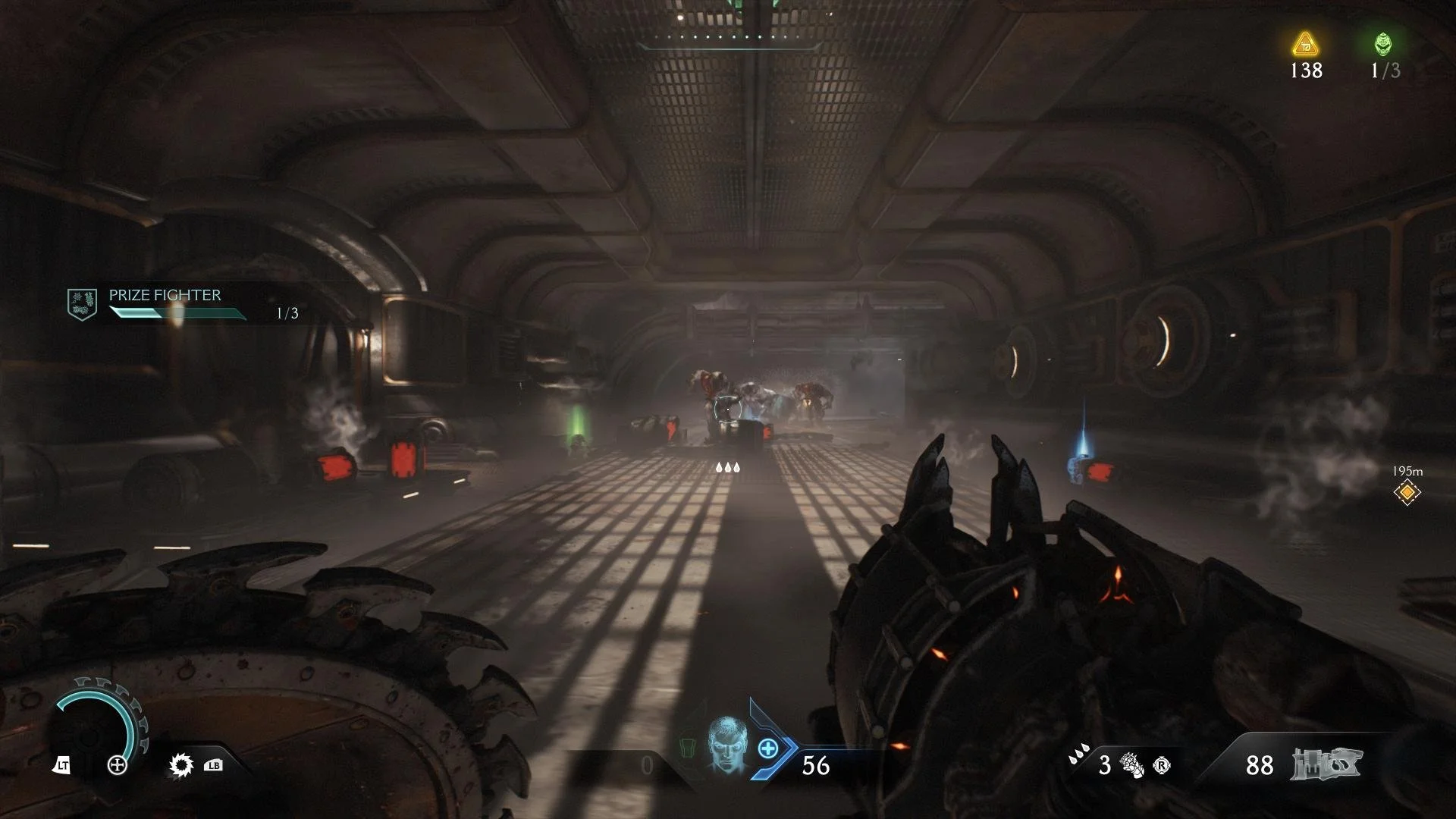
The weapons granted to the Slayer are fantastic. From the Super Shotgun to the Accelerator, to the Impaler and more, you have a dozen tools of destruction here to absolutely destroy any and all demonic forces that dare oppose the Slayer. While the weapon wheel isn't the greatest, which is odd since I don't recall it being an issue in previous games, you can keep two weapons on standby and switch between them. Each weapon also has a secondary alternative, such as swapping between your normal shotgun and the super shotgun. Upgrades will further the differences between them, such as adding a three-round burst to the normal shotgun. Upgrades are purchased with gold and other currency that you’ll find should you explore around each zone.
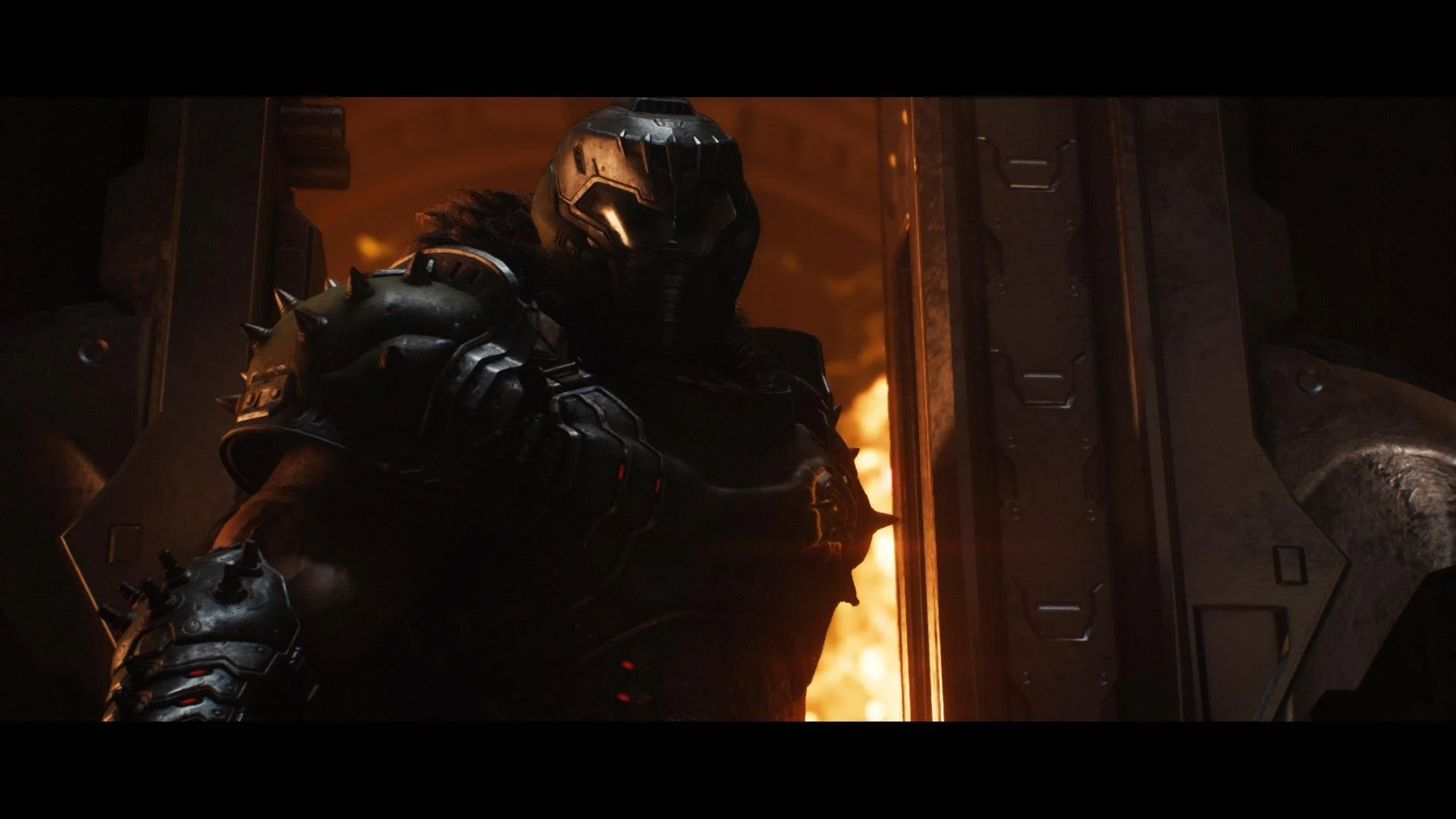
Shooting constantly feels fun, but the focus on the shield does make it almost feel like the guns are secondary to the experience. Shooting an enemy to the brink of death does allow for a melee strike to finish them off, or a glory kill which is now triggered with a jumping melee. While glory kills are still present, they feel like far less of a focus than before, which is a shame since they were a flashy way to get the job done. The need to jump does cause many of them to feel like the same animation as you tower above them and slam the shield into them, causing the chained spikes around the shield to saw right through them. Again, the shooting is solid and rarely disappoints, but can at times feel secondary to the addition of the shield.
In addition to the weapon upgrades, you'll have a few upgrades to the Slayer himself to improve their use of the shield. Your base upgrades can cause a shockwave to your parries, extending the reach of your shield toss, to attacks that empower your next throw. These upgrades come extremely quickly as I believe I was halfway through the game and had already unlocked them all. Other upgrades come to either your weapons as you improve certain aspects of them, to Runes that allow you to cause a ground fissure to your parry strikes, to my favorite, a personal turret that springs up on a successful parry. Your melee weapons will also see upgrades from the power gauntlet to the dreadmace, to the flail, which was always in my kit.
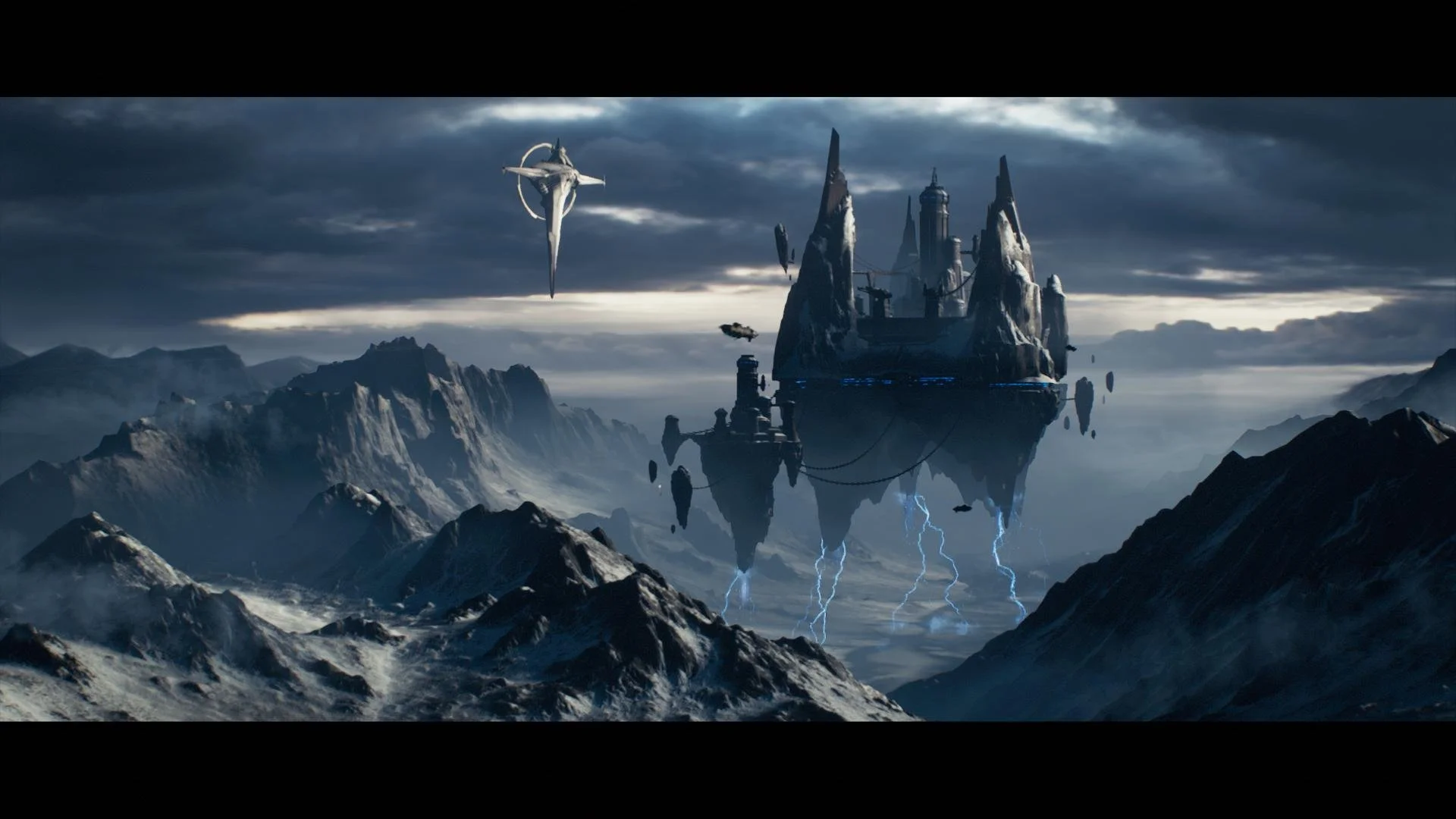
Using the new IdTech 8 engine, Doom: The Dark Ages is a gorgeous experience from top to bottom. Everything from the Slayer down to the most minor creature is wonderfully rendered, and despite the action getting incredibly chaotic, I never noticed a dip in performance on the Xbox Series X. Environments, however, steal the show with some of the most hellish landscapes we've seen in the series. While some of that design does suffer due to many open areas looking the same as the next, the moments between those encounters allow you to take in the incredible vistas. That said, when I finally found a few corridors, I breathed a sigh of relief and hunger for more of them.
Doom: The Dark Ages is often a perfect successor to the rest of the trilogy, with some fantastic weapons, a great addition with the shield, and an absolutely breathtaking aesthetic. Still, the bland soundtrack and wide-open areas zap the energy out of most encounters, resulting in a game that, while extremely well made, feels less like Doom and more like Serious Sam mixed with Painkiller, which isn’t ultimately a bad thing if you like those games. Still, The Dark Ages is wildly enjoyable and does provide some satisfying combat with the best version of the Slayer yet.
Developer - id Software. Publisher - Bethesda Softworks. Released - May 15th, 2025. Available On - Xbox Series X/S, PS5, Windows PC. Rated - (M) Blood and Gore, Intense Violence. Platform Reviewed - Xbox Series X. Review Access - Review code was provided by the publisher for the purpose of this review.
Jeff is the original founder of Analog Stick Gaming. His favorite games include The Witcher III, the Mass Effect Trilogy, Hi-Fi Rush, Stellar Blade, Hellbade: Senua’s Sacrifice, and the Legend of Heroes series, especially Trails of Cold Steel III & IV.