
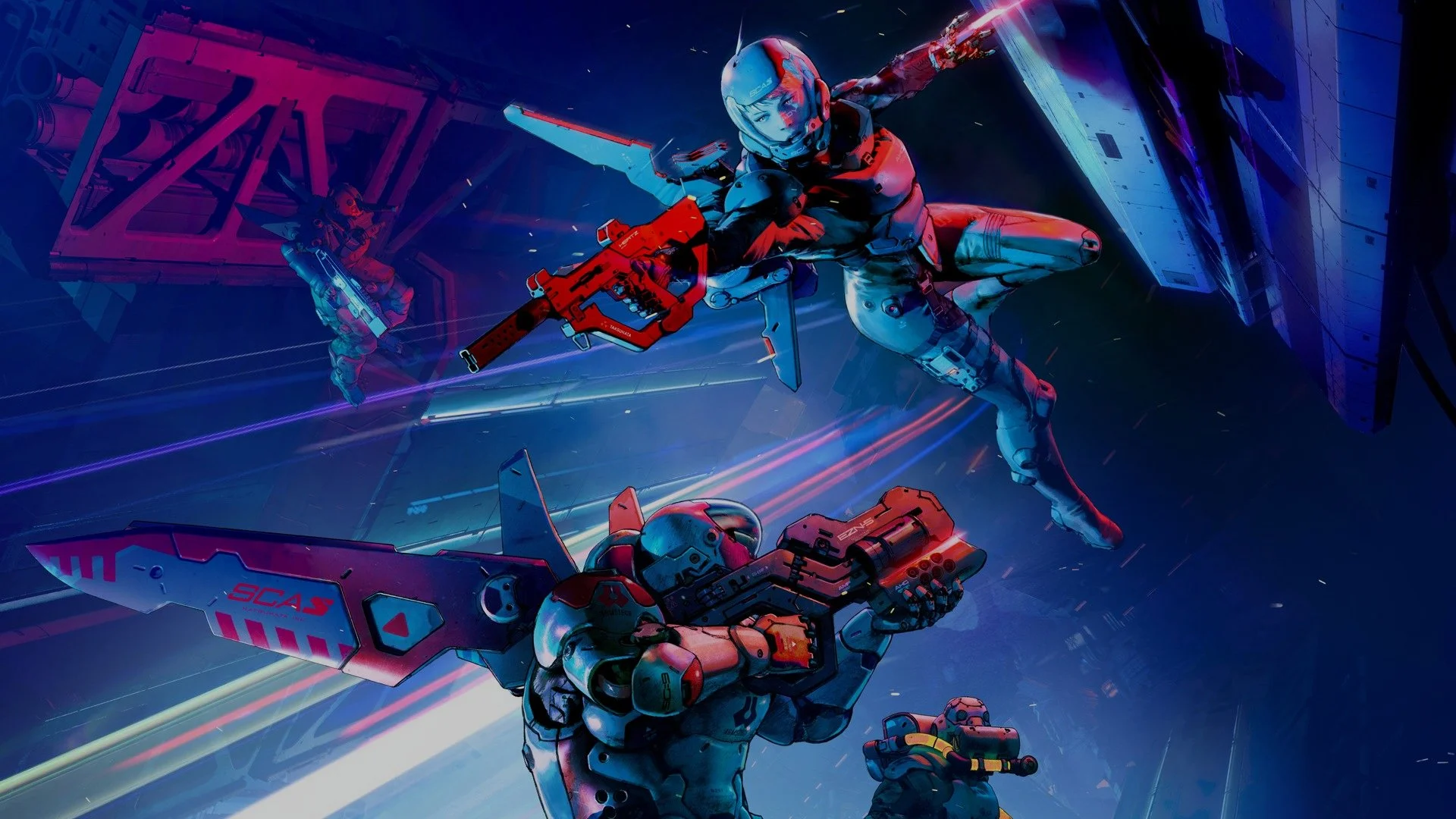
Give’em Hell, Hyper.
When Reikon Games released Ruiner at the tail end of 2017, I was obsessed with it. I explored every single area, completed everything the game offered, and even when I wasn't playing it, I was still thinking about it. That, and I had its soundtrack constantly playing on my drive to work. It's safe to say it is one of my all-time favorite games. So, when it was revealed that they were developing Metal Eden, a fast-paced cyberpunk first-person shooter, I was absolutely hyped. Thankfully, it not only lived up to my expectations but surpassed them in every way. With Metal Eden, Reikon Games has cemented themselves as one of my favorite developers in the industry.
Metal Eden is a fast-paced shooter that rarely lets up. It's a cyberpunk dystopian arena shooter drenched in the brilliance of the same aesthetic that made Ruiner such a visual feast. It's bombastic, fast-paced, and has some of the best-feeling gunplay I've ever experienced. It provides edge-of-your-seat encounters and rapid mobility that really gets the adrenaline pumping.
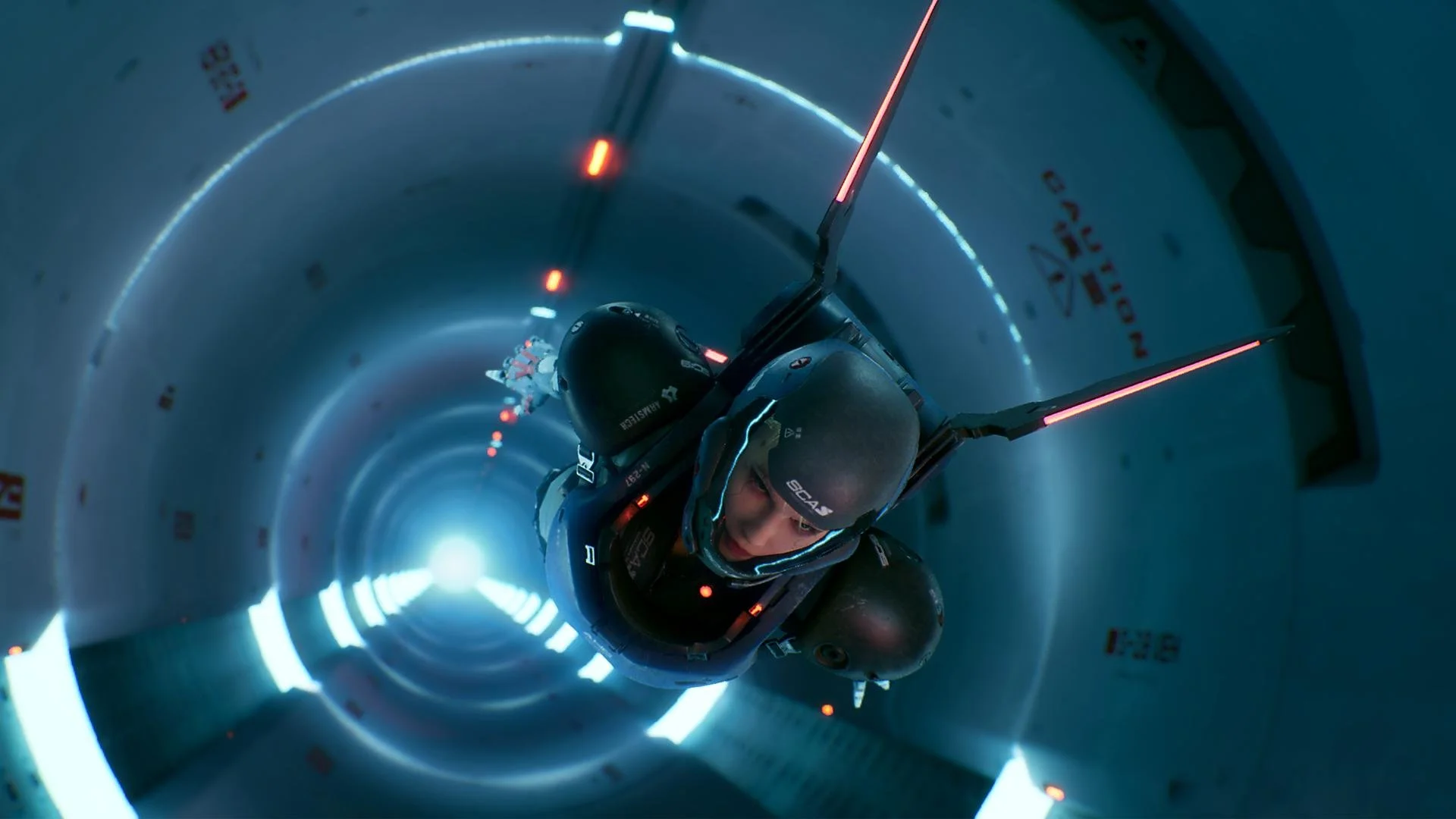
If Ghostrunner and Doom had a baby, with a small summer fling with Metroid, this would be that celebrated union. From the mobility to its gunplay, you'll rocket jump, glide, dash, wall-run, zipline, form into a sphere ala Samus, and grapple across the planet Mobius, eviscerating mechanical threats with a varied arsenal of guns across eight action-packed and kinetic-fueled missions.
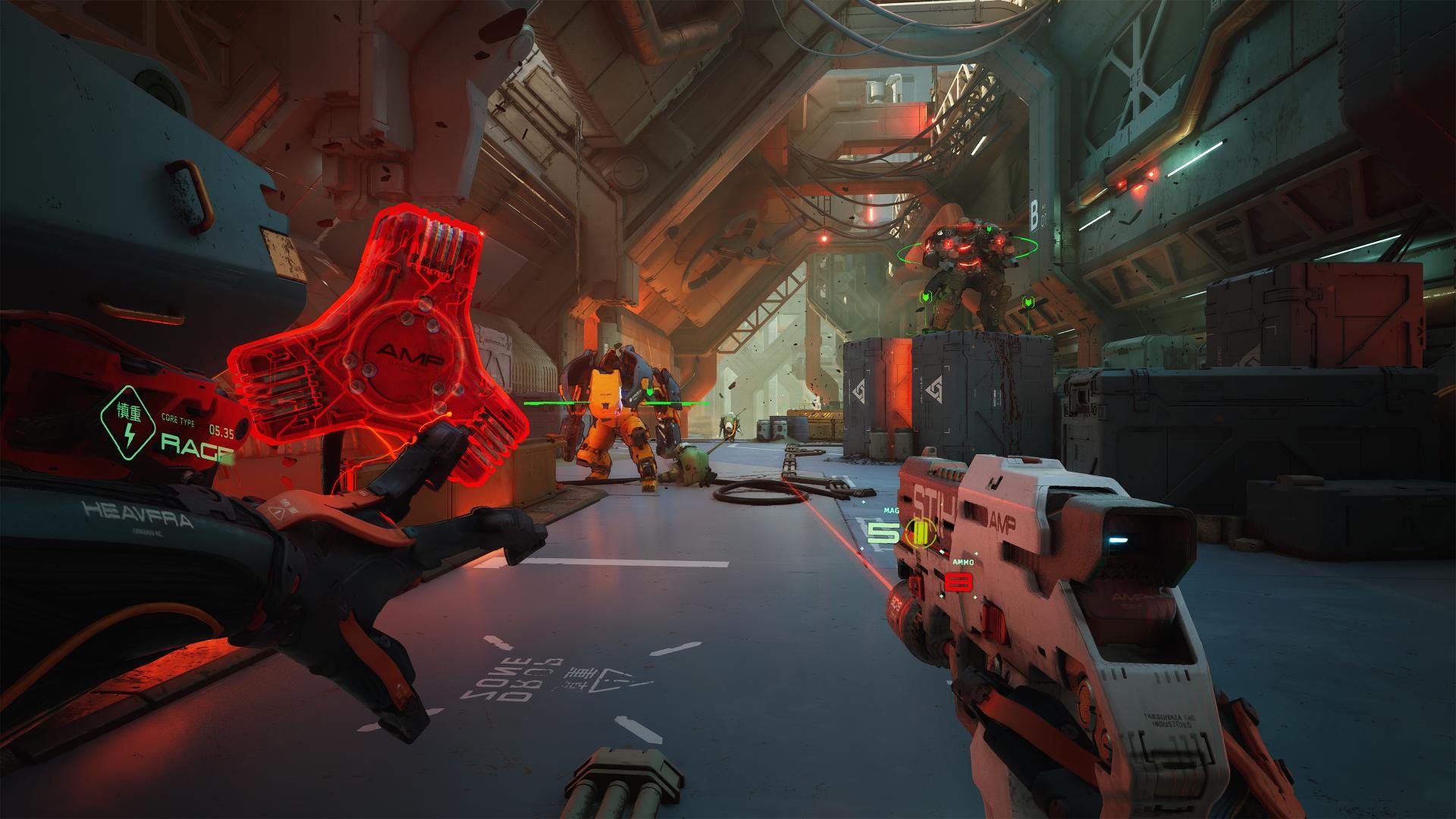
It's the type of shooter where you are not just thinking about the enemy currently in your crosshairs, but the two you see to your left, the four flying annoyances on your six, and the elite enemy on the other side of the arena. A path of execution forms in your head. You melee punch the foe at the end of your rifle, pulling his core free, then throwing it to the two on your left as they explode in a mist of dark fluids. As you spin around, you dash back, firing off a spray at those flying enemies. You hit two as you run to the wall, sprinting alongside it as you fire off a few sticky grenades at the elite. You break through his shield with a well-timed crack of the butt of your rifle, then pop the grenades, seeing him crumple in a mess of blood and oil. You feel the sting of a blast on your side. Right, the two flying enemies you missed earlier. You use your grapple to slingshot yourself into the air, swapping to your SMG as you pepper a few rounds directly at them. The final one explodes as you suddenly move in slow motion, as the field has been cleared, thus allowing you to move on. This took all of twelve seconds.
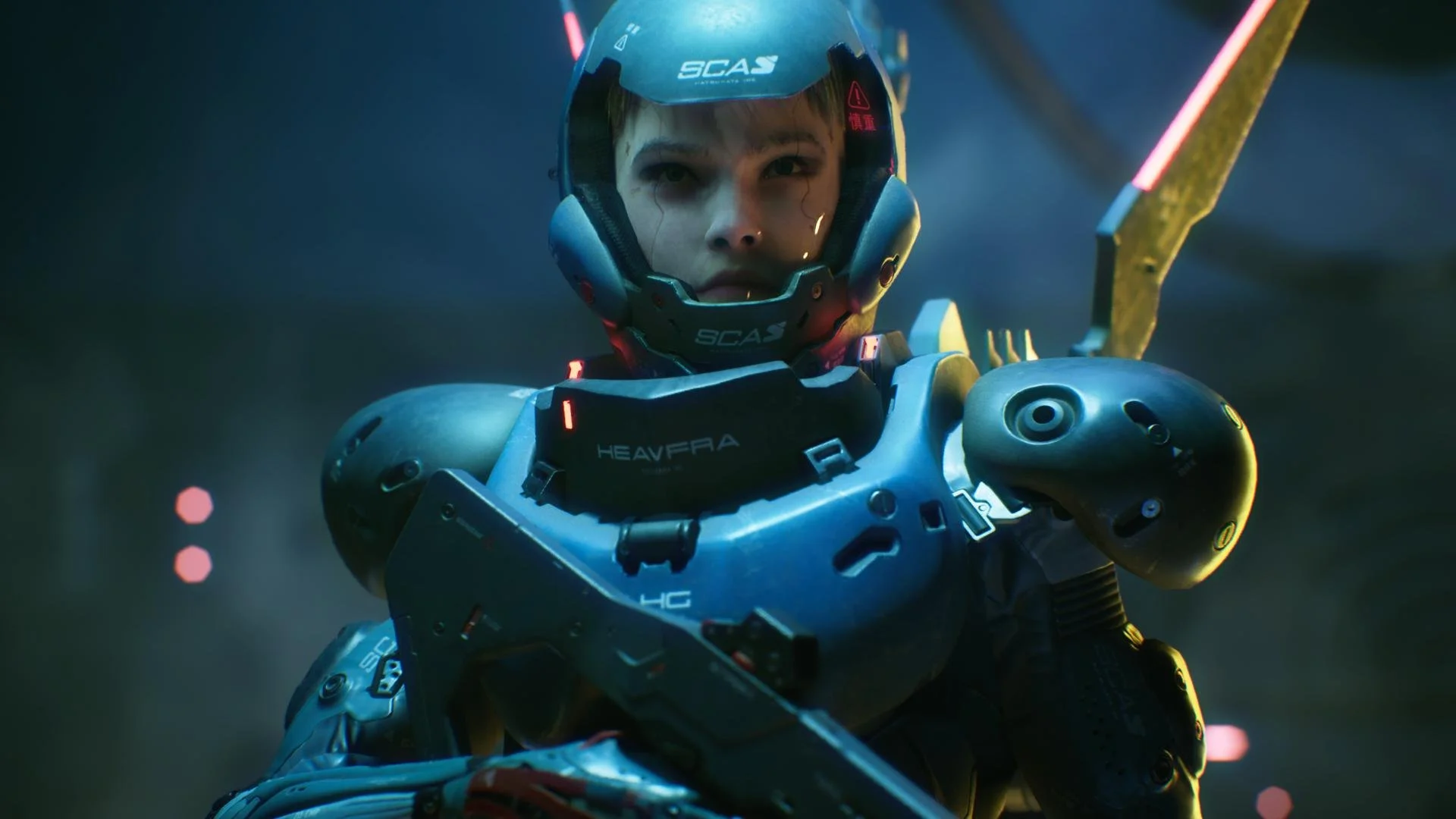
In the far future, humanity has expanded to the stars by digitizing their consciousness and injecting those ones and zeroes into new cybernetic bodies; essentially granting them immortality. However, a missing colony of sleeping residents has been discovered, and you, as Hyper Unit Aska, must absorb the cores of various mechanical monstrosities in an effort to save humanity. However, with plenty of mysteries to uncover and allies to aid in your fight, Aska will discover far more than she ever bargained for.
Aska has a gift; she cannot die. Sure, her body may fail, but another one will be constructed, and she will once again be catapulted into her mission; literally. Thankfully, Aska is not a silent protagonist. While her dialogue is minimal, allowing her two narrators to handle a lot of the exposition and narrative, you get a sense that, despite her allegiance to her superiors and her loyalty to the mission, she does, at certain points, start to see through the cracks in the truth.
You'll begin with Aska being sent to reach the planet's surface, fraught with dangers that she'll need to adapt to. You are joined by a sentient voice in your ear named Nexus. However, to see the mission through and unlock the elevator to the surface, Nexus will trade duties with an individual named the Operator. These two are wildly different. Nexus is largely calm, yet demanding, and very descriptive of the situation. The Operator, however, is very much an information broker who is only looking out for himself. Imagine Batman taking on his mission while Oswald Cobblepot was in his ear. While there is a loose thread surrounding the resolution to his arc, one I hope is explored in a potential sequel, his involvement in the story was absolutely engaging. Nexus may have his moments, but the Operator was a very enjoyable presence here.
While the story is certainly entertaining, being fed little bits of information as you start to piece it all together, Metal Eden is going to be a game that people will remember due to its combat. Sure, the payoff to the story is one wild ride, but slingshotting across the battlefield or wallrunning as you gun down hulking monstrosities with a series of impactful weaponry is going to be the conversation built around this game. Doom 2016, Eternal, and The Dark Ages, as well as Ghostrunner, all feel great, offering fast-paced gameplay, tight controls, with the latter and Eternal having a lot of platforming elements that sync with its gameplay to impressive degrees. Metal Eden clears each of those titles with some of the most satisfying weapons, gunfeel, and platforming in years.
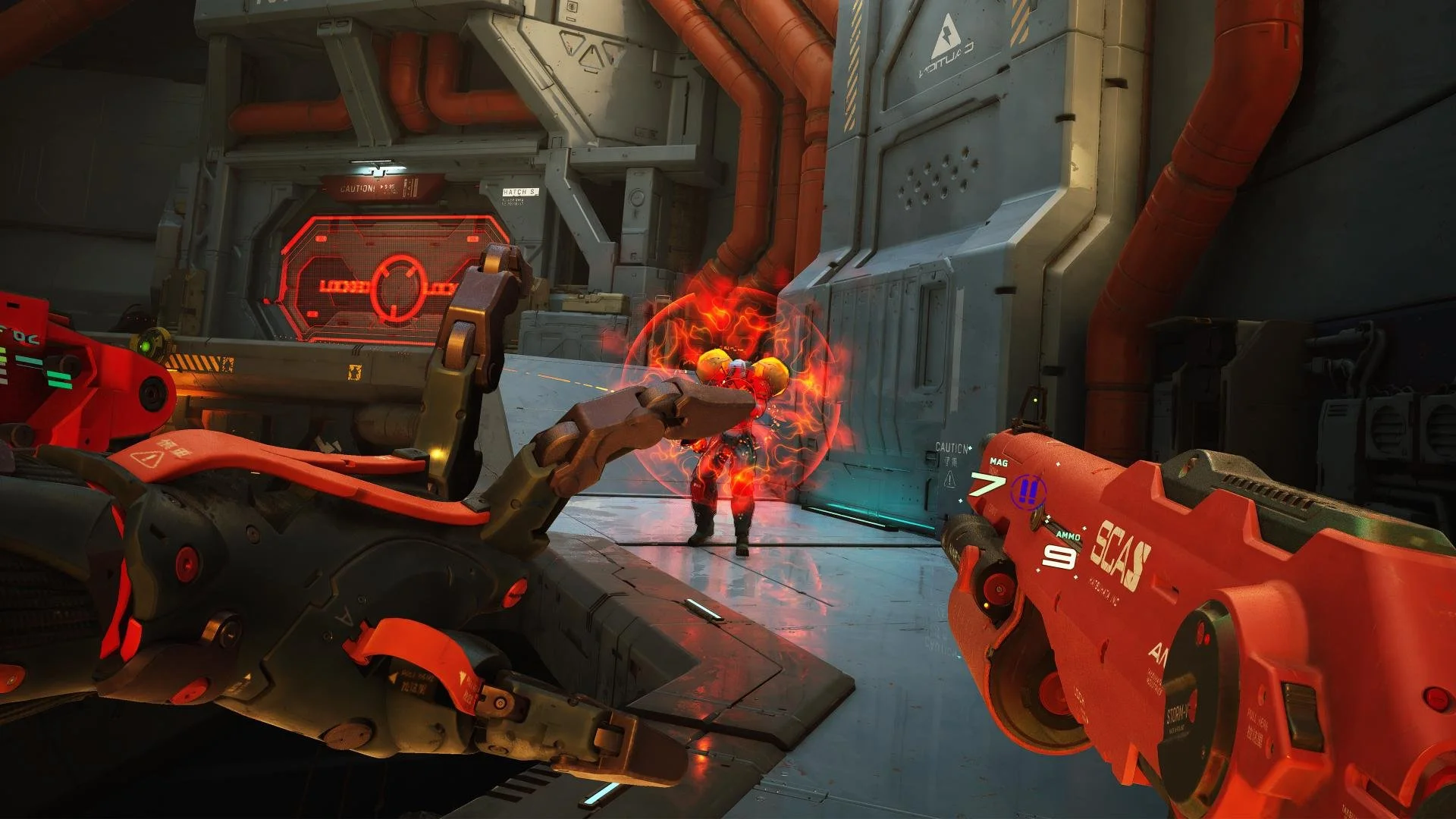
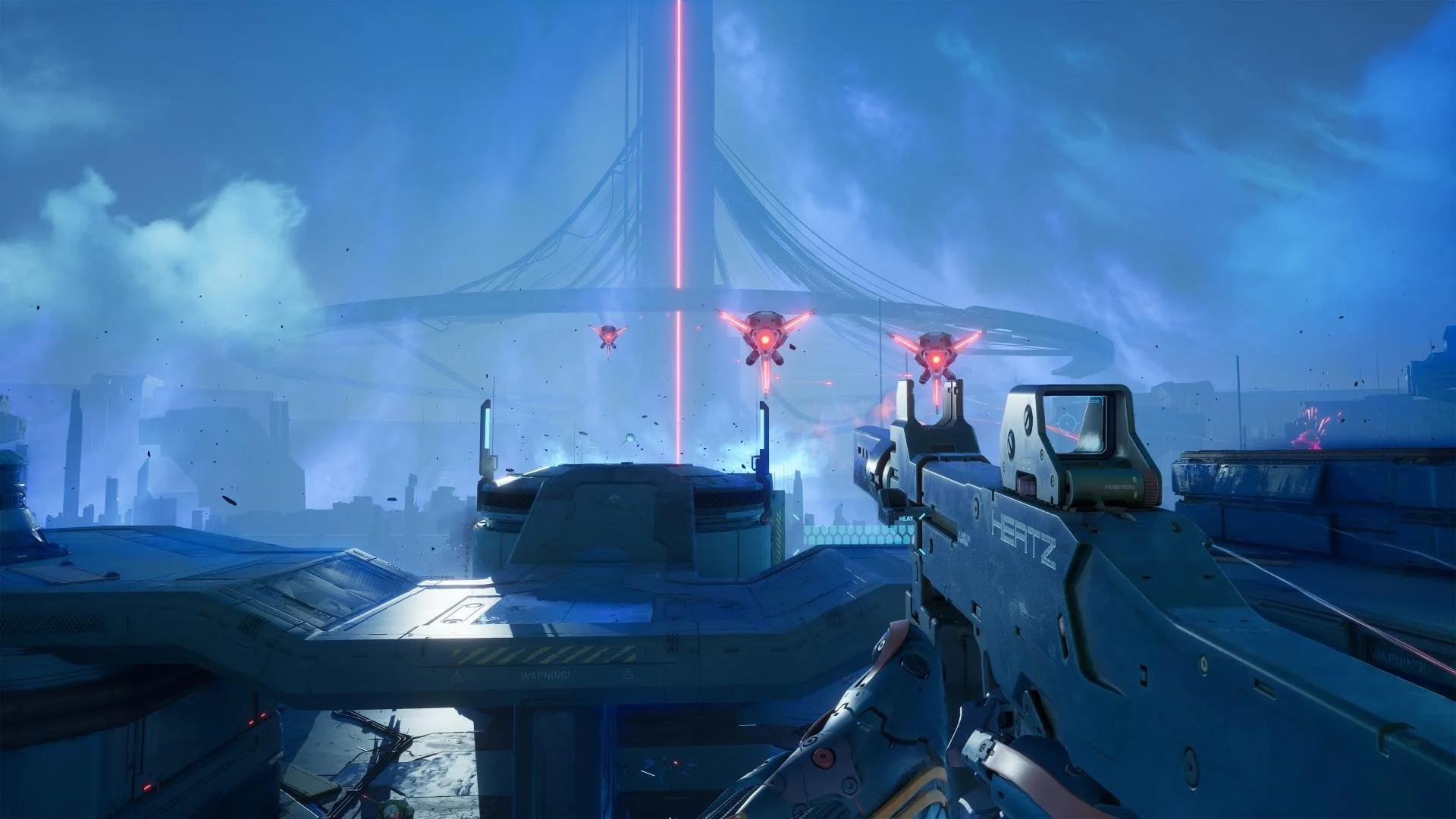
Aska will have access to seven weapons. You’ll start with a small caliber pistol called the Hertz AP, which can tend to overheat quickly until upgraded a bit. The U9 Supra is next, a large caliber pistol that has a slower rate of fire. The TAS-9 is a pump-action shotgun that packs a punch, and the EZN-5 follows as an energy rifle that can short out shields. The Zenit SMG is a personal fave of mine with some great recoil, and the AM3 grenade launcher is an obsession. Last, but certainly not least, is the best weapon in the game, and I’ll leave that one a secret. It can absolutely decimate anything in its path, but it does feature a smaller clip as a result. Shooting feels incredibly tight, with a perfect mix of hitbox detection and recoil. It's been so fine-tuned that every single weapon feels wonderful to wield. And, with different upgrades to each weapon, you can easily swap to customize your weapon to fit the situation.
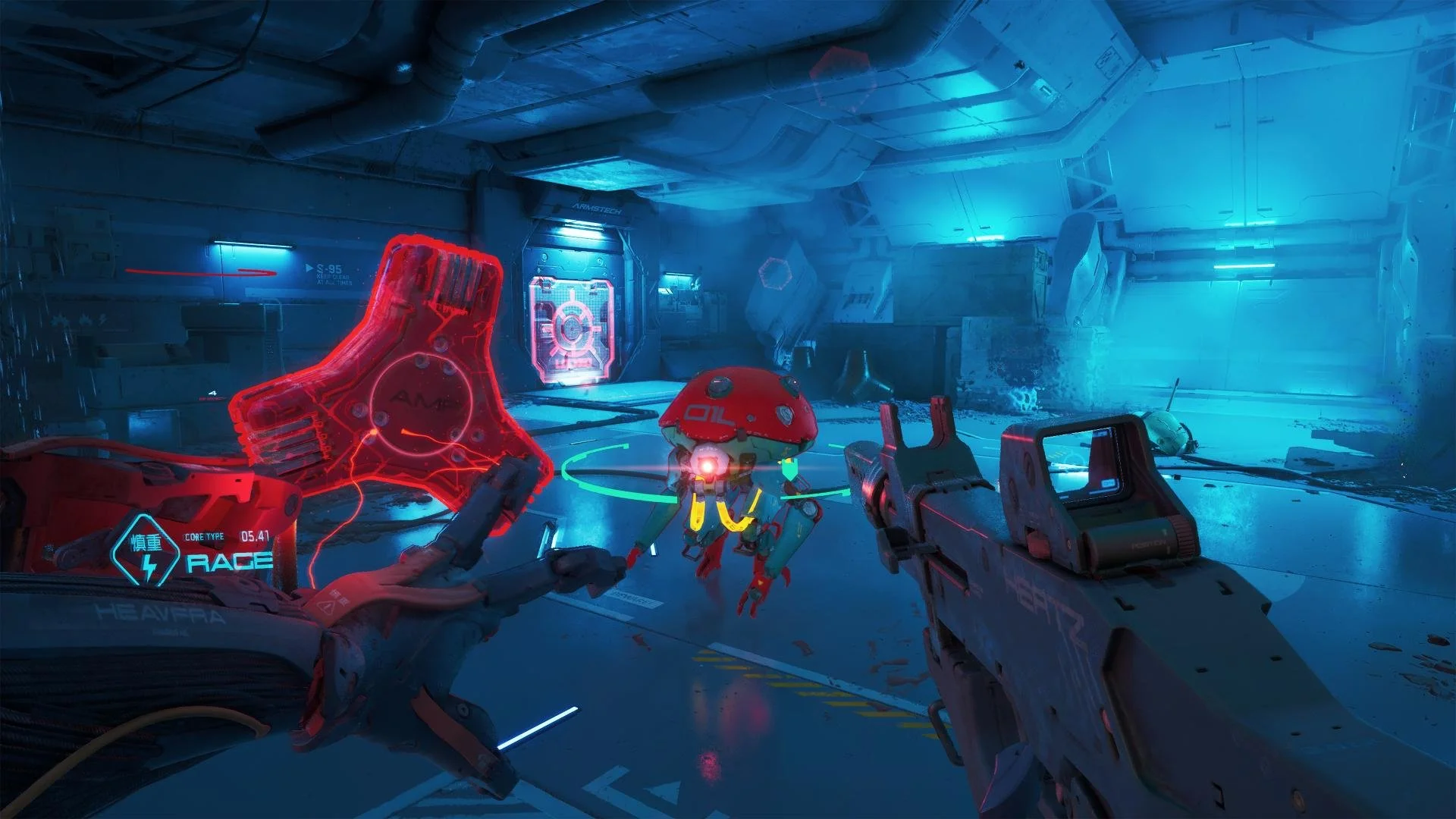
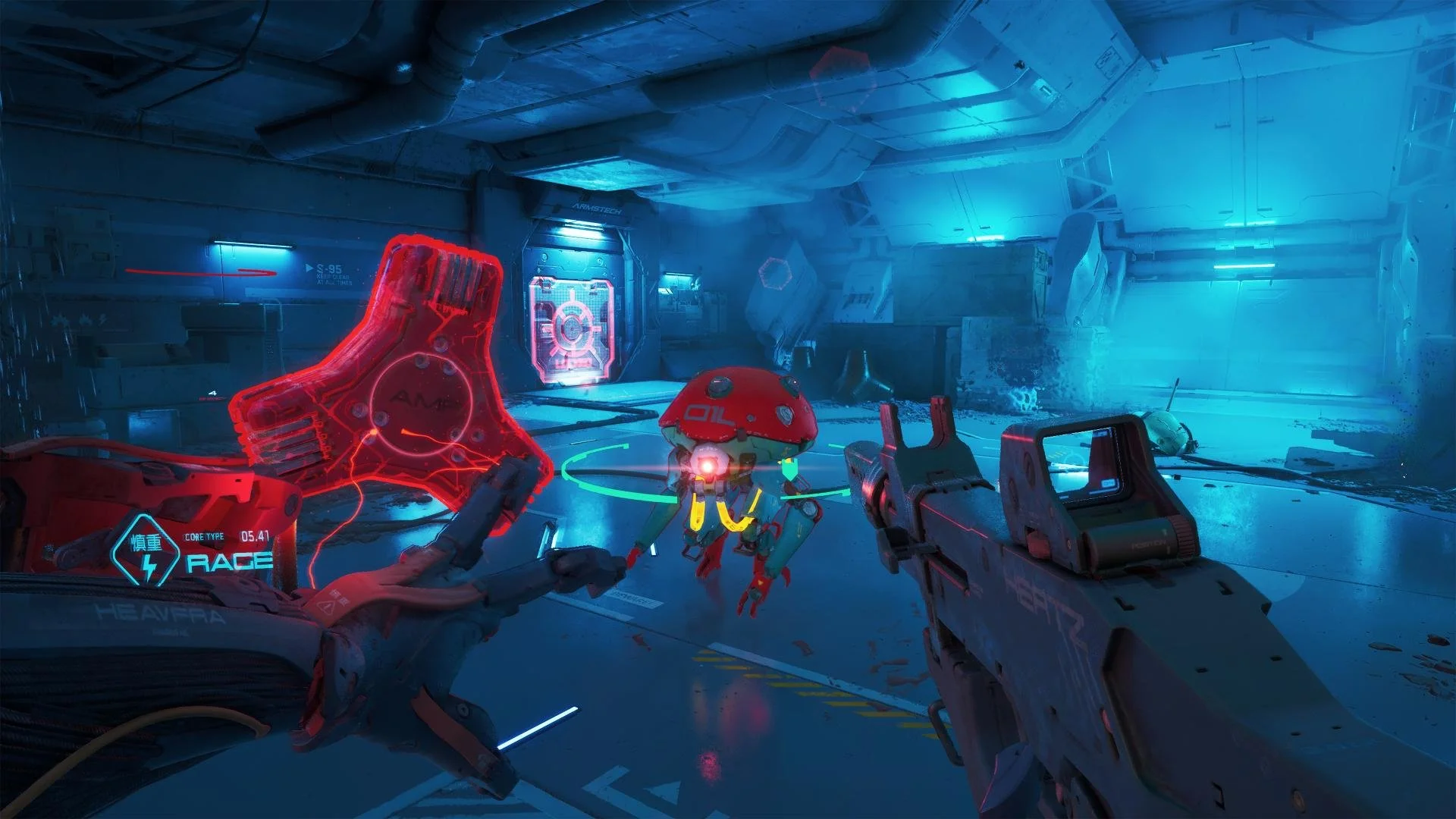
Each weapon either damages the enemy’s physical form or a shield that prevents damage to the host. That said, only a few enemies actually have this shield. You can melee their shield to dismantle it, leaving them vulnerable for a few precious seconds. This leaves them vulnerable to ripping their core out, either using it to throw as an explosive, or to boost your own power for a short period of time.

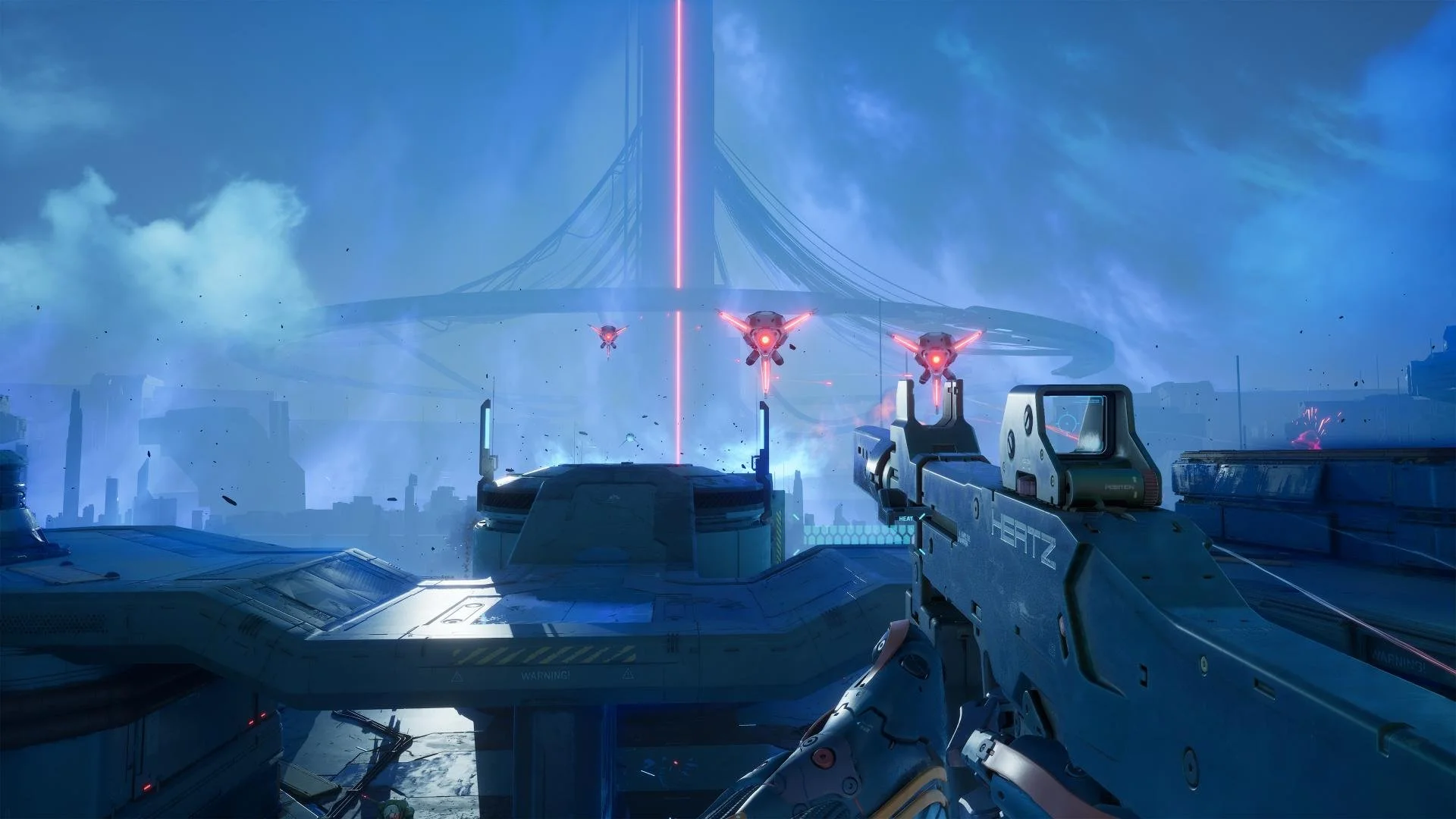
While the game could survive and be entertaining as just your typical run and gun shooter, it is the mobility that really takes its combat to another level. Aska uses fuel to jet around or to dash, so you can have a combination of your own as you expend that fuel. If you wish to put together several dashes and jumps, you have the freedom on how to do this. Some longer jumps have refills in the air, allowing you to keep going. You can wall run on particular surfaces, usually in very convenient places, and use grapple points to slingshot around. There are countless lifts to bounce into the air, and a series of ziplines that connect areas together. Some ziplines have you switching tracks or using energy weapons to discharge a shield that acts as an obstacle, shorting out a field so you can progress through. That said, that last example was used only a small handful of times.
Aska can also take the form of a sphere, at least in a few levels. This is the Metroid comparison I referred to before, well, apart from Aska seemingly being inspired by Samus herself. You can roll, sprint, and fire off an electrical charge while in the sphere form. This attack is mostly for small pesky enemies rather than anything of significant size. You'll also charge nodes as you roll into them, but ultimately, this is the only part of the game that feels completely underwhelming and incomplete, as if a huge chunk of the game was removed that would have allowed this to actually be something.
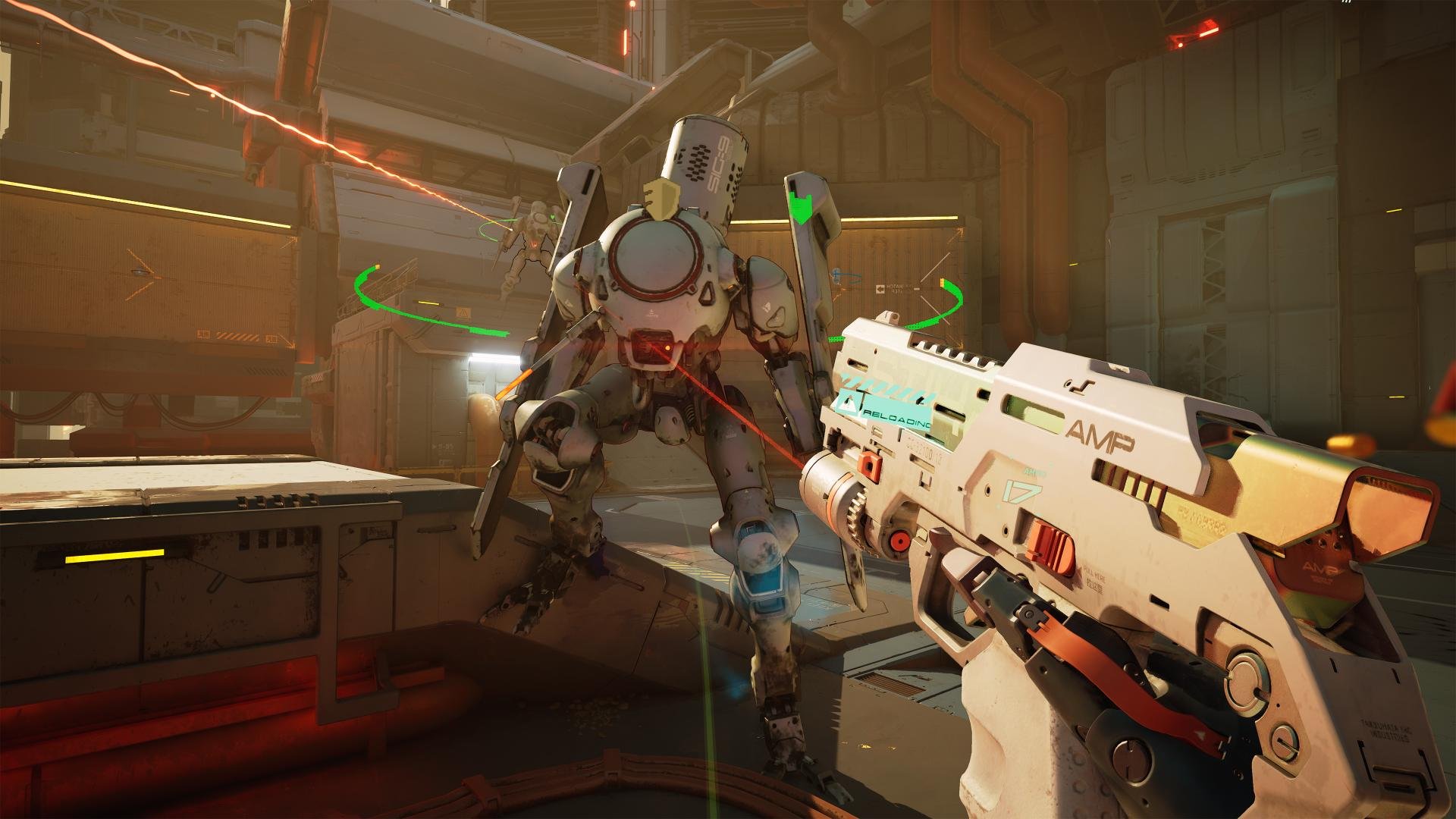
Aska will have three skill trees to work with as she focuses on tracking down four Arc cores to rescue the human citizens from their digital slumber. These focus on three areas; Body Suit, Core Ripping, and Core Power. The Body Suit details upgrades that are part of Aska herself. From her hover ability, pulling pickups from further away, to melee attacks reloading your weapon, it’s crucial to get a few of these upgrades for some nice quality of life features. As you’ll be ripping cores out of enemies to either toss them as an explosive, or gain additional shield, health, or a boost to your melee, you’ll want to invest deep here to really take advantage of this mechanic. This skill tree is centered around that boost you get by injecting their core into you. Core Power is the final tree and rounds out a few upgrades such as granting armor shards from armored enemies, a shockwave that appears when you break a foe’s armor, to being able to perform two punches on a single core consume. It’s a solid tree, but does play second fiddle to the other two.
Weapons also see an upgrade path, as you can fundamentally change how they act in combat. These are upgraded via currency you earn as you pull off insane acts of carnage or what you find all around you, often in dead ends or other areas you can briefly explore. It allows each piece of your arsenal to feel drastically different from each other, even more than they already do. It also benefits the replayability of going with the alternative. For example. The EZN-5 energy rifle can see your base upgrades: the Frost upgrade that fires off a freezing burst, or a plasma bomb. The frost tree then expands to being able to fire off a second burst, to the frost build-up dealing more frozen damage. However, if you take the plasma route, it provides a remote detonator for the plasma bomb, and finally, a bigger radius and knockback. This example alone takes the same weapon down very different routes. That said, the SMG’s grenade launcher is amazing.
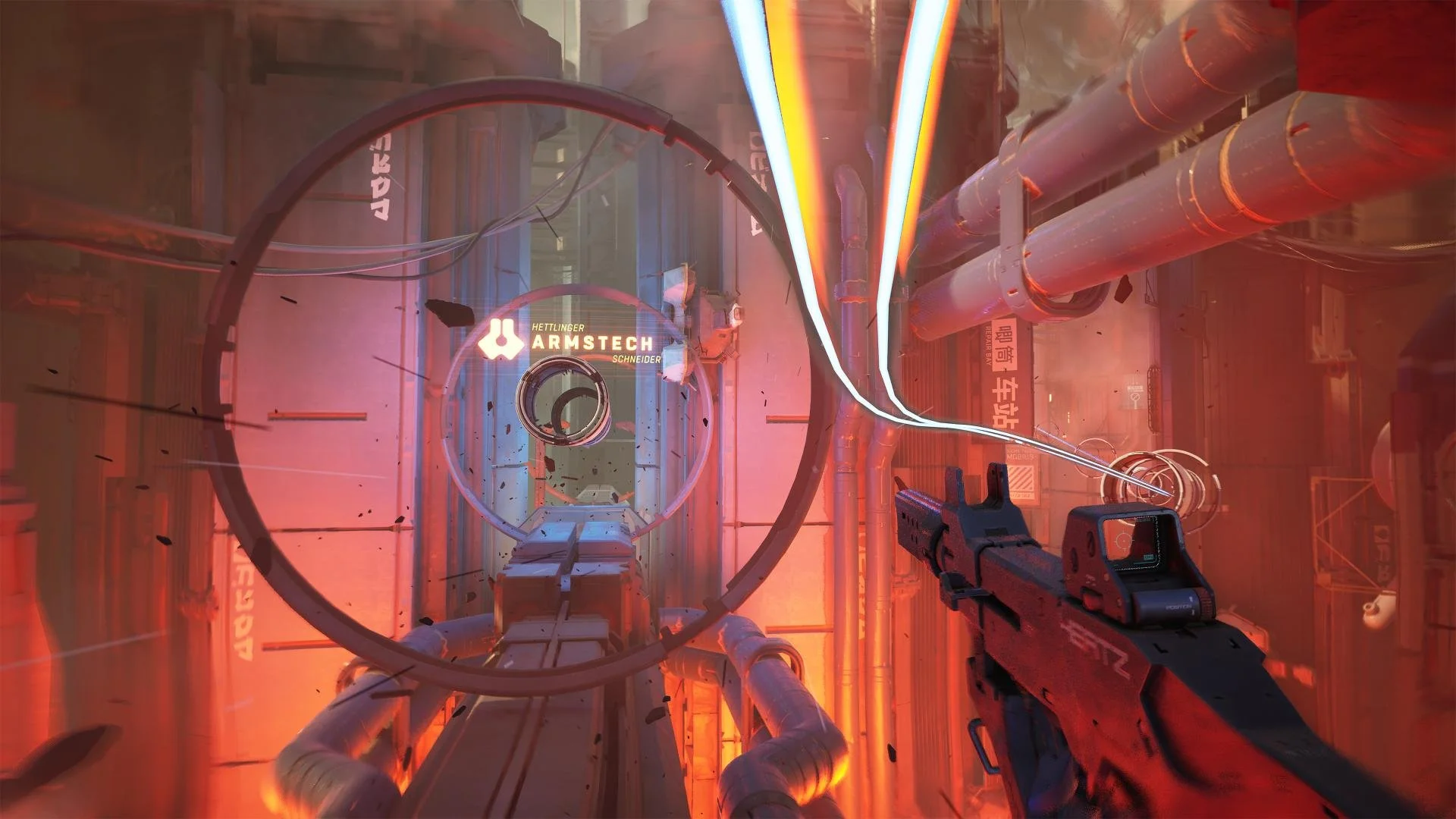
Baked in neon lights and some strong moments of colorful and futuristic locales, there is a wild scale to this game when you are ziplining around these huge areas, and yet it can provide some small, intimate, and linear environments that are filled with enemies, violence, and a pulsating soundtrack. Everything looks fantastic, and despite anything that takes place in these colorful and violent areas, I never experienced a single dip or stutter as everything ran like butter. Ruiner had a wonderful aesthetic that I still can picture in my head, complete with some stunning hand-drawn visuals, and Metal Eden continues that trend, with a gorgeous palette of vibrancy and a wonderful use of contrast.
If I had to knock Metal Eden for anything, it would be a few smaller nitpicks. There are rotating towers that have impeccable aim, almost unfairly so. These can be turned off if you hit their “eye”. However, this only places them in a cooldown. While I understand their intention here, these are nothing more than an annoyance. Lastly, considering how good the main boss encounters are, I could have done with a few more, and maybe some additional enemies as the repetition of certain types does start to become routine after a while.
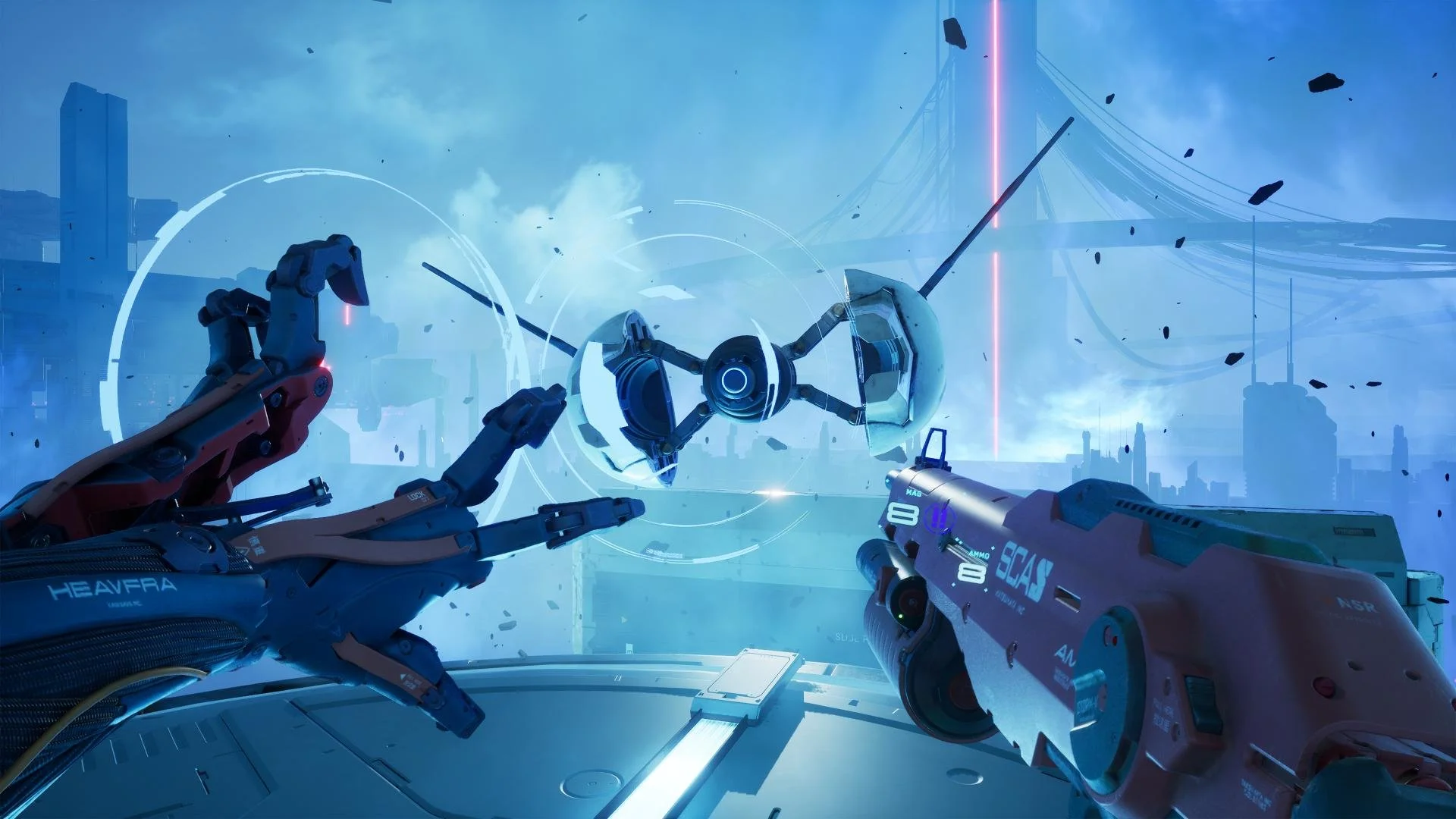
Metal Eden represents everything I love about videogames. It also helps that it has likely the best gunplay of a shooter in the past several years. While its story may not grab most players, its focus on constant action and creative platforming certainly will. Reikon has crafted a stunningly brilliant cyberpunk shooter here that is a testament to their creative vision and an absolute pleasure to experience.


Developer - Reikon Games. Publisher - Plaion, Deep Silver. Released - September 2nd, 2025. Available On - Xbox Series X/S, PS5, PC. Rated - (M) Blood and Gore, Intense Violence. Platform Reviewed - Xbox Series X/S. Review Access - Review code was provided by the publisher for the purpose of this review.
Jeff is the original founder of Analog Stick Gaming. His favorite games include The Witcher III, the Mass Effect Trilogy, Hi-Fi Rush, Stellar Blade, Hellbade: Senua’s Sacrifice, and the Legend of Heroes series, especially Trails of Cold Steel III & IV.