
Don’t Rune my crops.
Rune Factory is a popular video game series that fuses a few different gaming staples together to craft colorful worlds full of vibrant landscapes and populated with many endearing characters. Are you looking for a bit of an adventure with an action RPG? They got you covered there. Do you wanna take a relaxing break and take in a little farming? They have that too! You want to play a main character with a memory like a steel trap that spans their whole life unbroken? Uh, well… You’ll get to work on that as well. You will be able to do all this and much, much more, with the new addition to the series: Rune Factory: Guardians of Azuma!
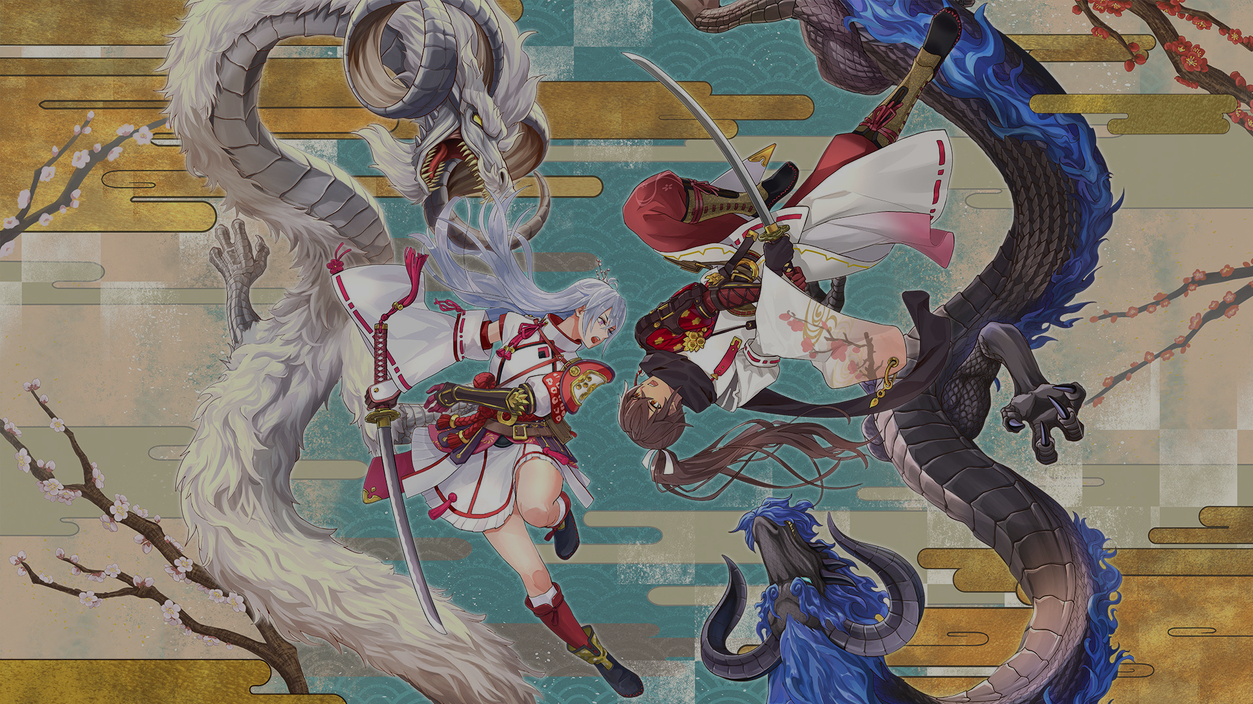
Your story opens up with a short introduction to the amnesiac main character. Much like in the previous entries to the series, you can pick from two protagonists: Subaru and Kaguya. The story, starting location, progression, etc, largely does not change in regards to who you pick, so choose whoever you like. Once your character wakes up from a fitful dream, you are greeted by Iroha, a girl with a sunny and helpful personality. Through a conversation between the two, you are given a brief glimpse of your sudden arrival half a year ago, in which you plummeted through the sky unconscious and crash-landed through the temple roof that you now reside in.
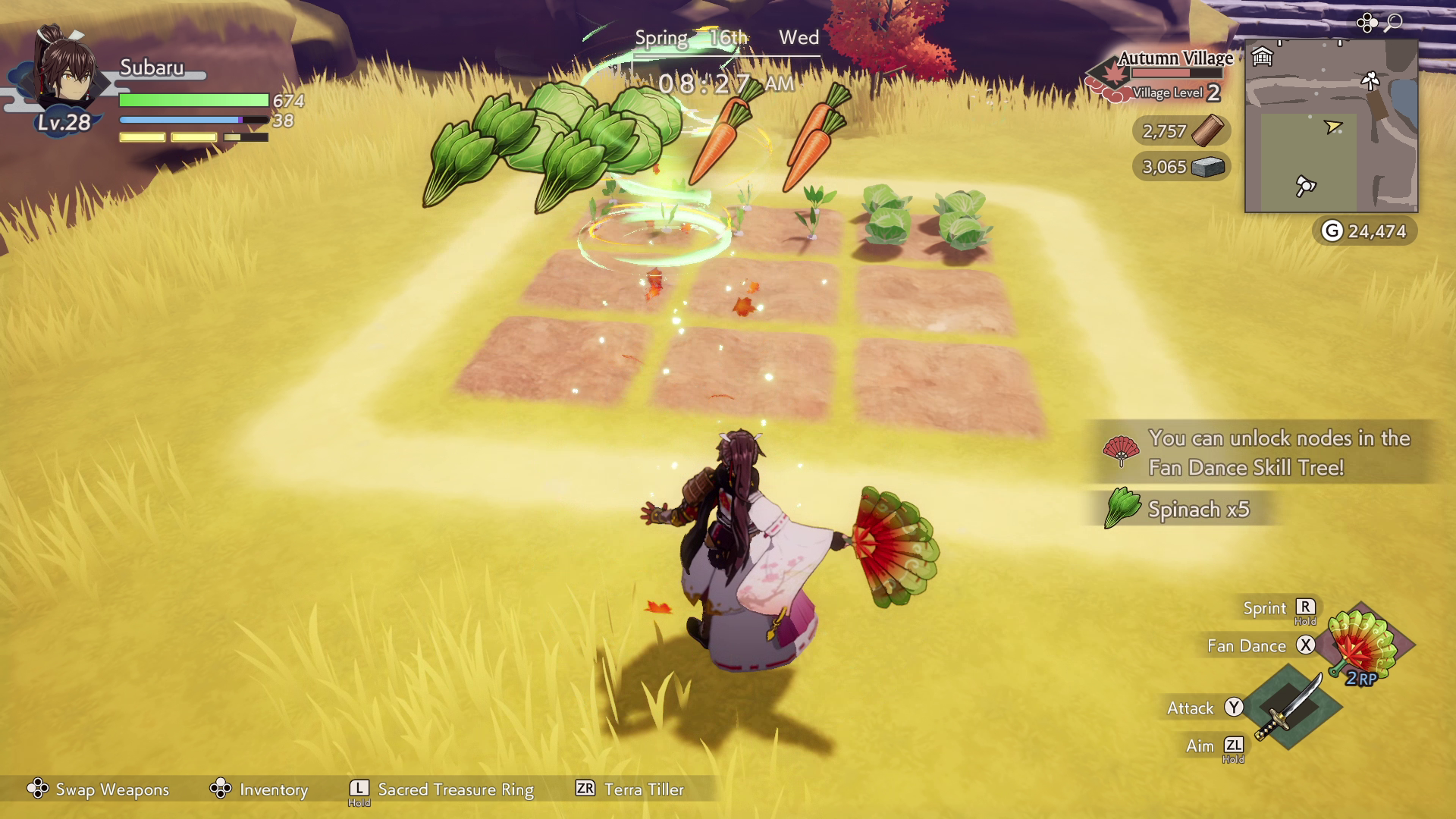
After this chat is finished, you are swiftly swept up into a few bustling activities to help the struggling village. These tasks serve to introduce you to the basic starting mechanics of the game, the Spring village’s handful of remaining residents, and also your new adorably fluffy partner, whom you come to affectionately name Woolby. As you do these things, you will quickly discover that the village’s woes are only a small part of a larger whole. 50 years prior, the entire lands of Azuma were rent asunder by a great catastrophe known to all as the Celestial Collapse. It tore continents apart, threw land masses skyward, and halted the flow of runes, which is, in a sense, the world’s blood.
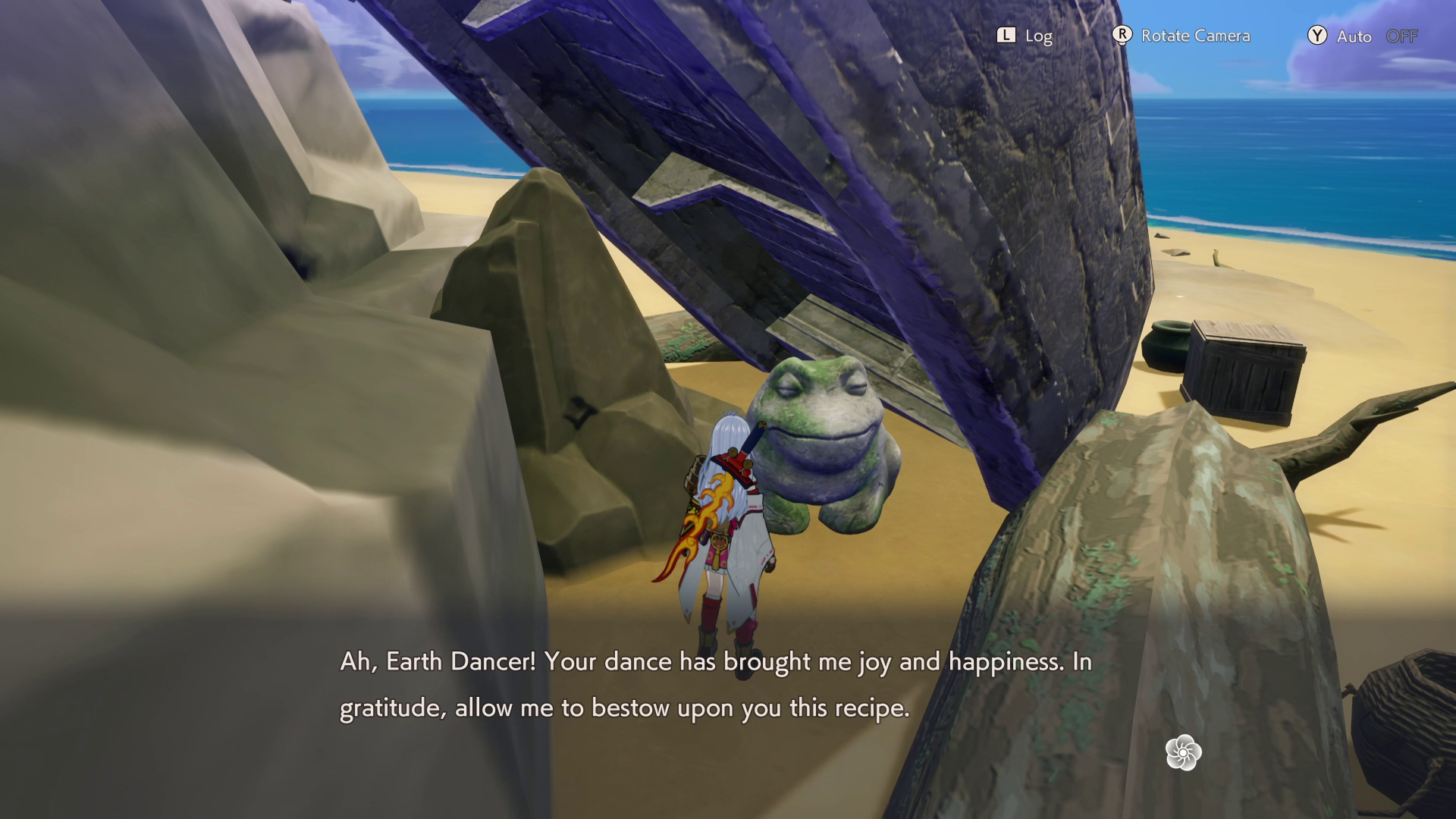
Since then, life has become stagnant. Crops ceased to be abundant, and fearful villagers vacated their homes in the hopes to try and survive, only to be scattered or turned into monsters by the terrible curse of the Blight that plagues whatever is left. Worse still, the very Gods of the seasons that seemed to be the hearts and protectors of the people had all but disappeared. It is up to you, as the Earth Dancer, Guardians of Azuma’s equivalent of the Earth Mate, to find the wayward Gods and save the lands and people of Azuma.
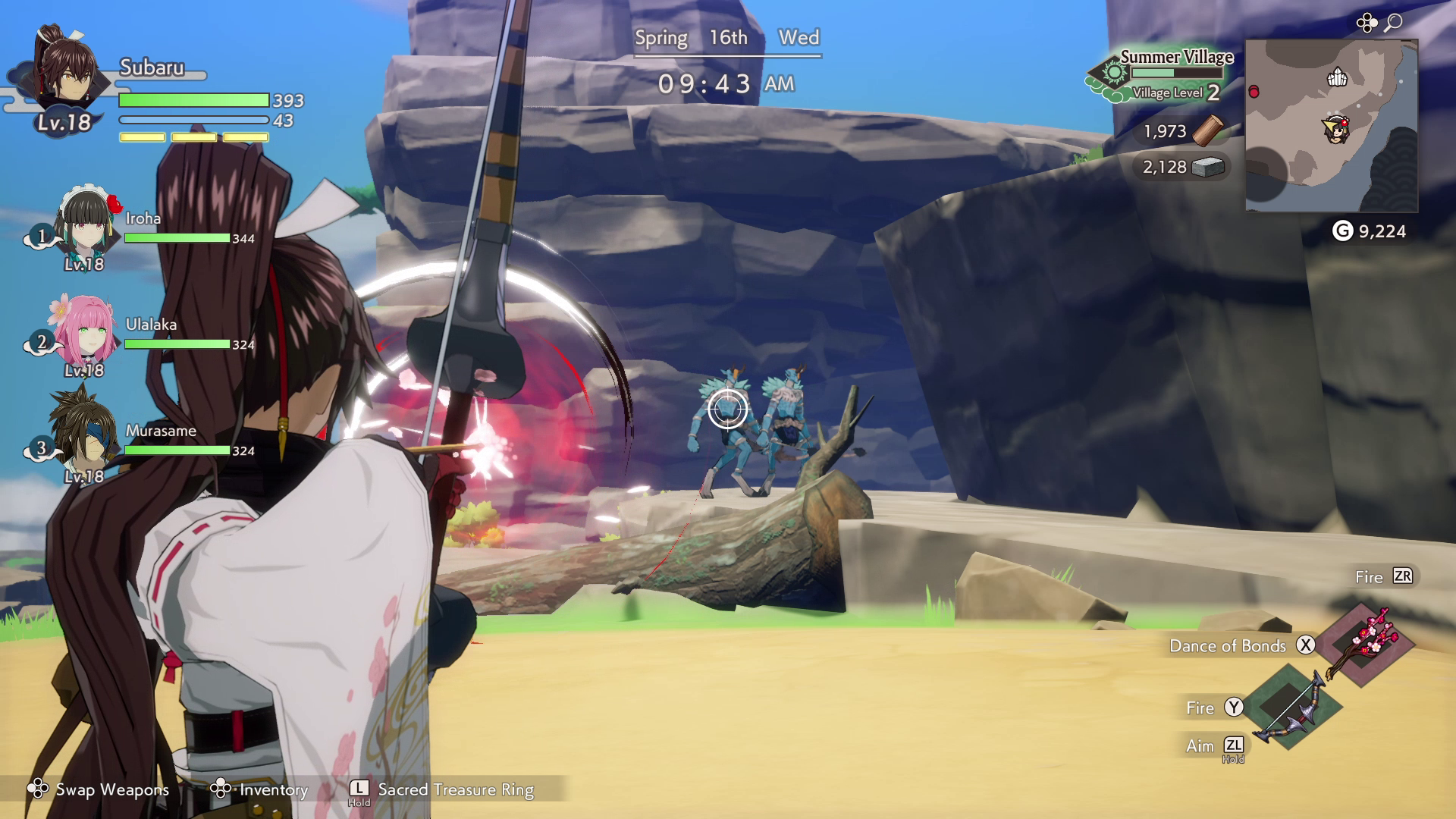
In the beginning, you get much of what you expect from a Rune Factory game. A wonderful and sprawling story to sink your teeth into, crops to farm, interesting monsters to battle and eventually win over, and of course, a host of friends to make and take with you on your journeys. Should your heart flutter with any of the friends you make, romance is also an option, complete with heartwarming side quests. This new edition to the series, however, simplifies these systems in some ways, removing a lot of the more tedious and frustrating parts, but adds new and refreshing systems to them in other ways.
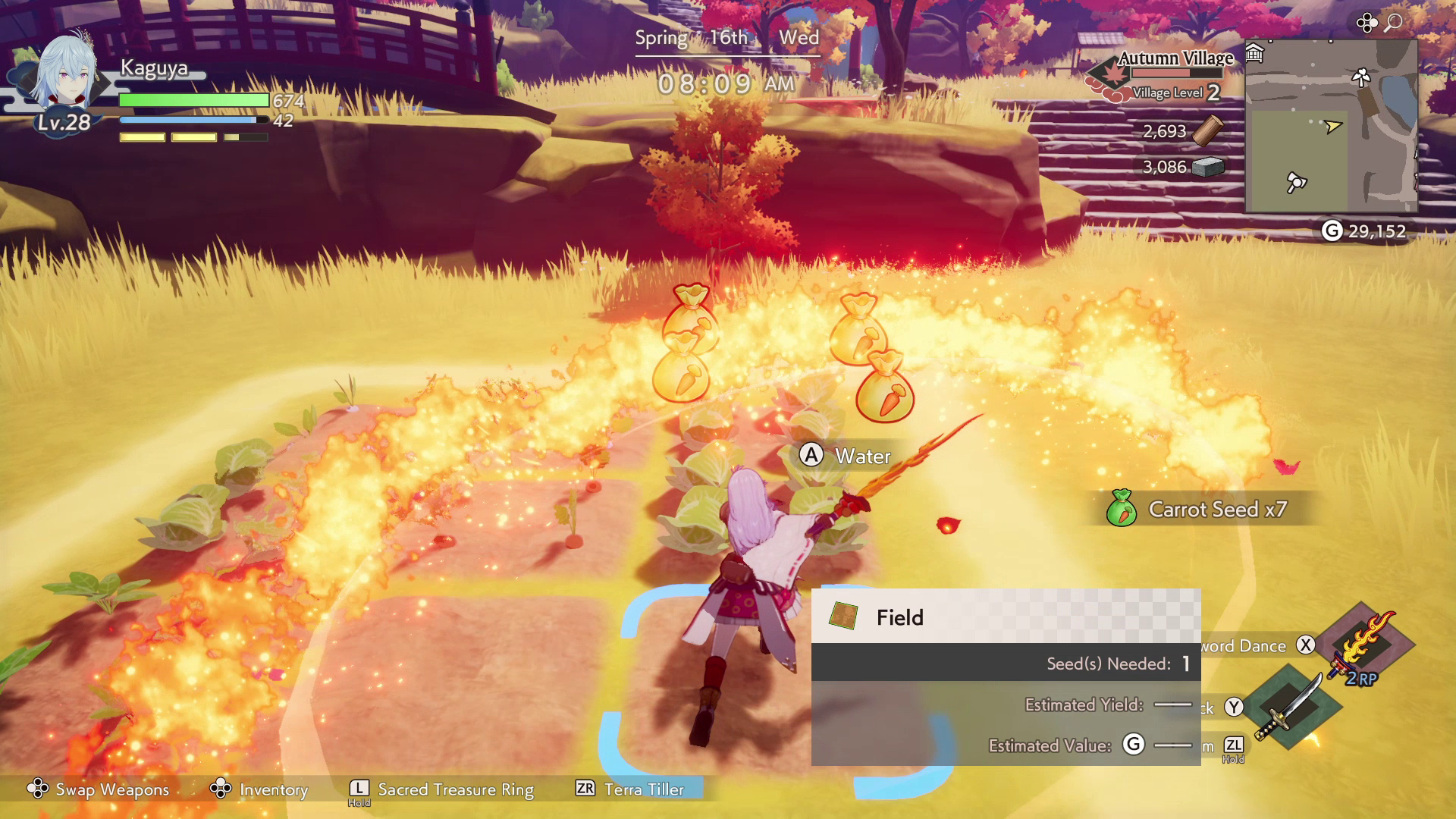
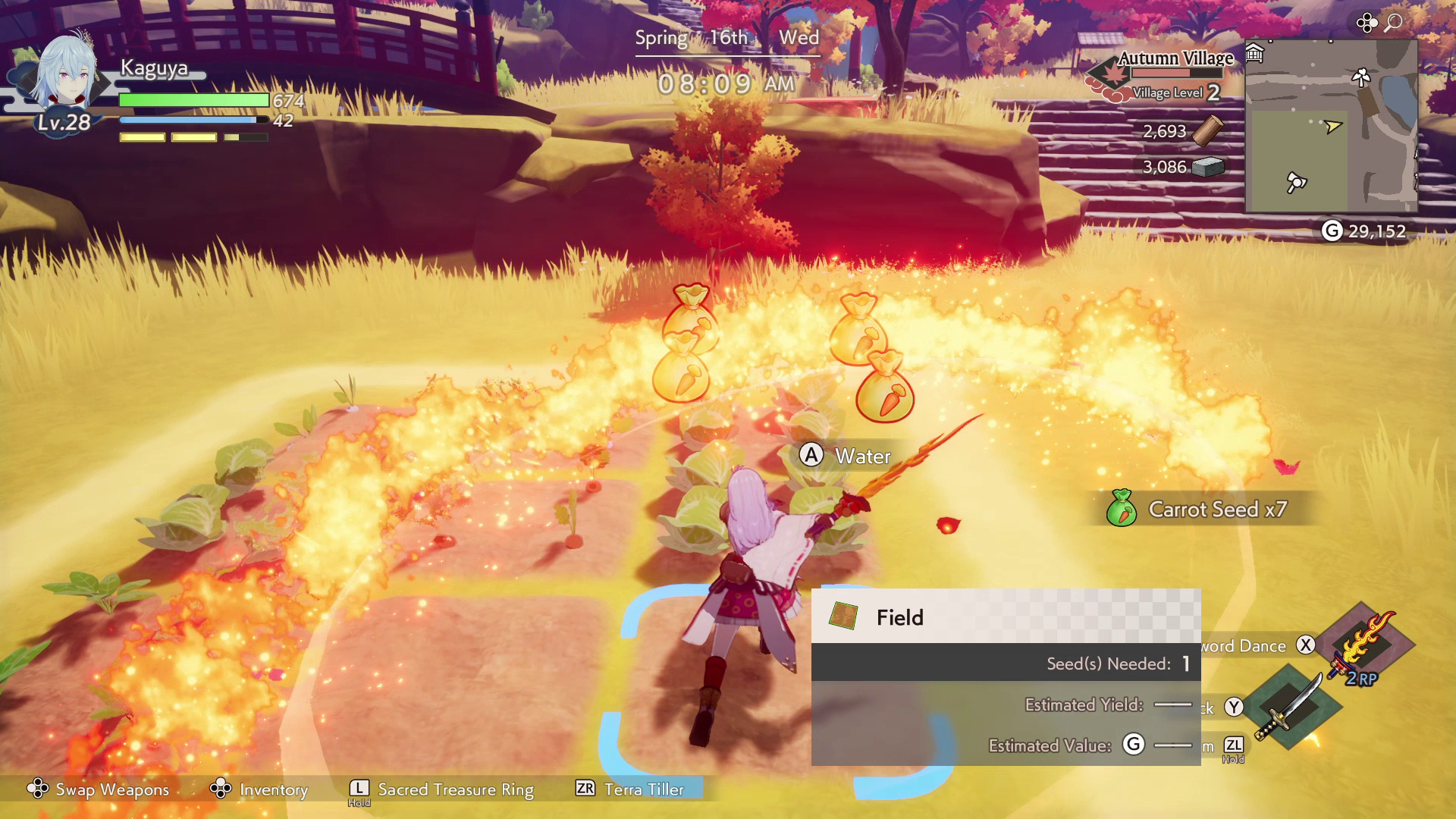
Farming is a much more streamlined experience than in other Rune Factory games, allowing you more freedom to do what you want during the day, rather than agonising over how to budget your meager energy reserves. In Rune Factory 5, for example, everything you did consumed your energy, and it could be frustrating to some players trying to plan how best to use it, whether it was creating food items, crafting, swinging your tools.. Well, the list goes on. Guardians of Azuma does away with this and opts to rely on the simplicity of the player's choice of what to do during the day, capping you off at midnight when your character begins to get tired and starts to lose health and rune points (RP). You pass out once you reach zero or 5 am, whichever happens first, and wake up in whichever temple you last slept in, and take a loss of a small fraction of experience earned through your activities of the day. So, it is smart to manage your time and pace yourself. However, if you personally want to stay up past 5 am playing this, I won’t judge you.
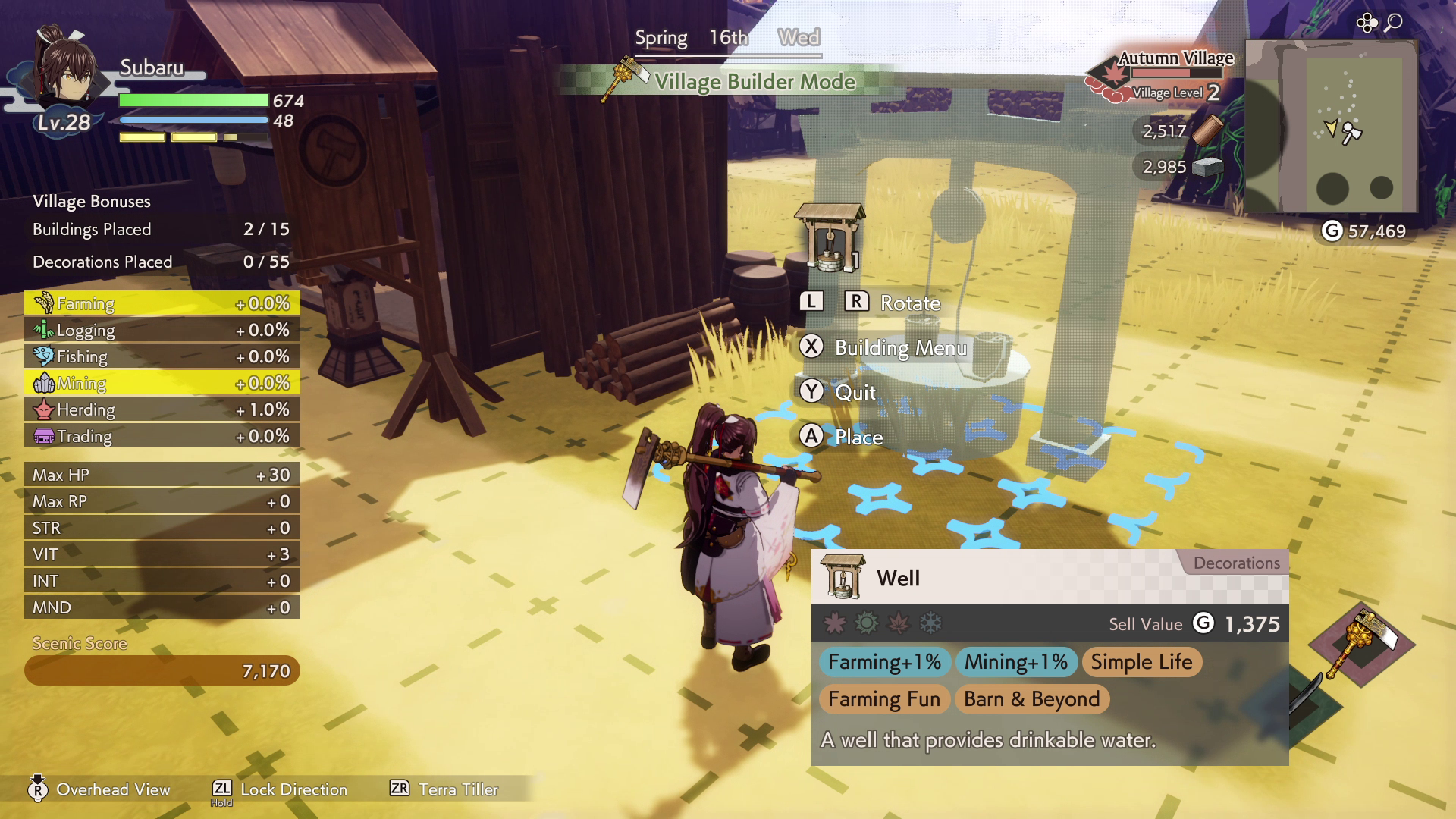
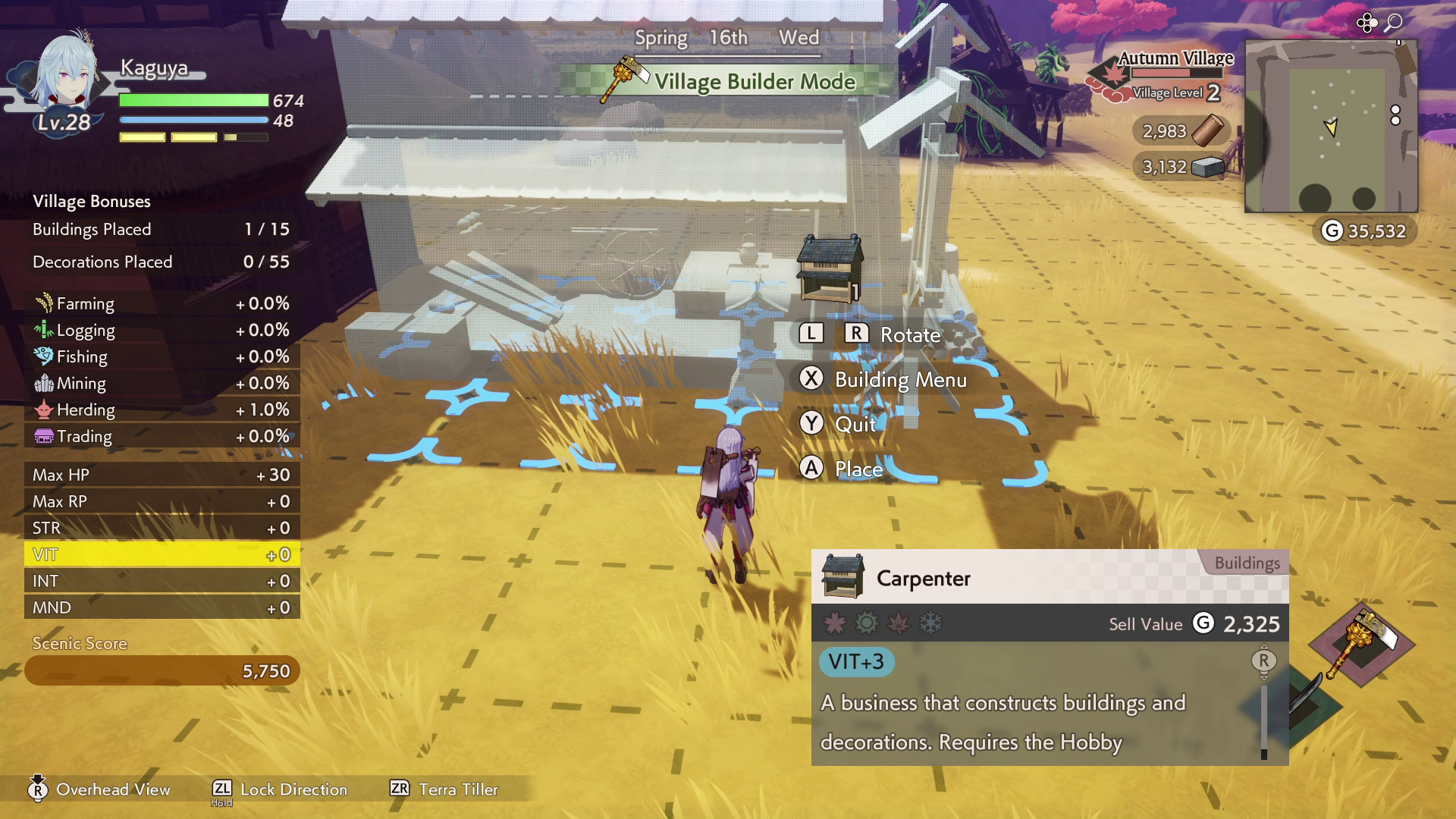
The villages you care for feel vibrant and lived in thanks to the new village management mechanic. You can construct shops, crafting workshops, houses, various merchant carts, and even many different decorations that can help your residents feel happy or even work better. And speaking of the villagers working, each person who comes to reside has varying degrees of talents and abilities that will make whatever job you give them the best fit. That being said, this brings me to really the only gripe I have discovered while playing the game. When you give villagers farming jobs, they will do it with gusto! Which can be very handy when you are in the middle of a harrowing story quest and just want to adventure for a bit. They can do everything from watering to harvesting and even planting. The problem arises when you don't come back for a few days or even a few hours to check crop progress.
Whatever seeds you have, they will plant randomly in any village regardless of what seasonal village they are in.. You can not specify what seeds and where. If you are like me and enjoy a crisply organized field, you can understand the disappointment when you come back to a massive, clustered mess of vegetables, flowers, and grains from every season and varying stages of growth. I usually have to spend at least 20 to 30 minutes setting it all back to normal, and that includes traveling to each village to see what was planted where. It can be frustrating, to say the least. Perhaps this is something they may eventually update, such as adding AI tools to prevent this randomness, but until then, I must pop by every day and check what was done in place of my hard work.
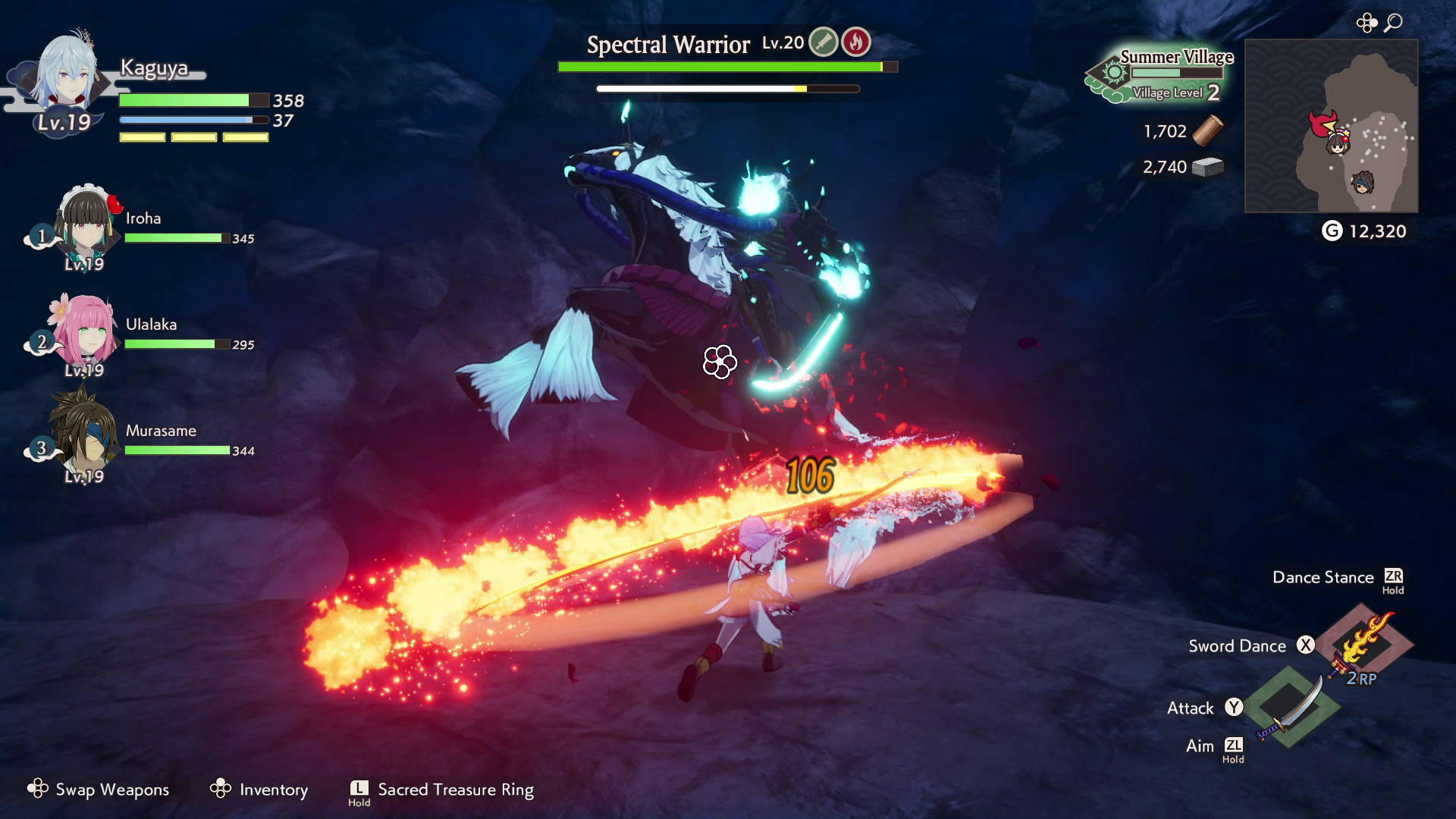
Exploring the many villages, biomes and lands of Azuma has been made easy and is a wonderful experience! You will be introduced to each of these through where the story guides you, and from there are free to roam and discover by foot or unlock once you gain a new sacred treasure with unique abilities. What I do enjoy is that the fast travel system is easy and expanded on by points of interest that you can also use when the dragon statue save point doesn't get you quite close enough.
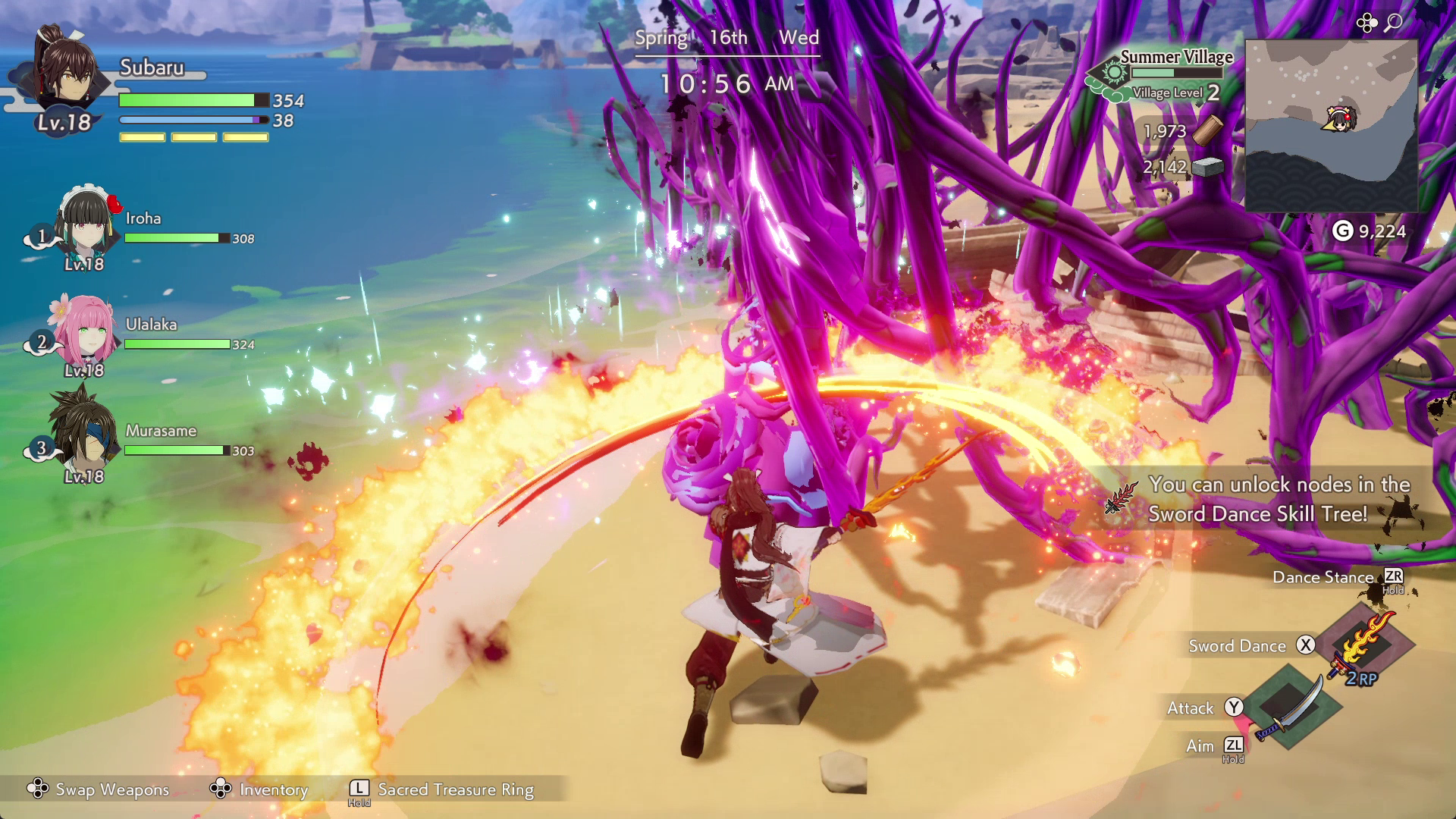
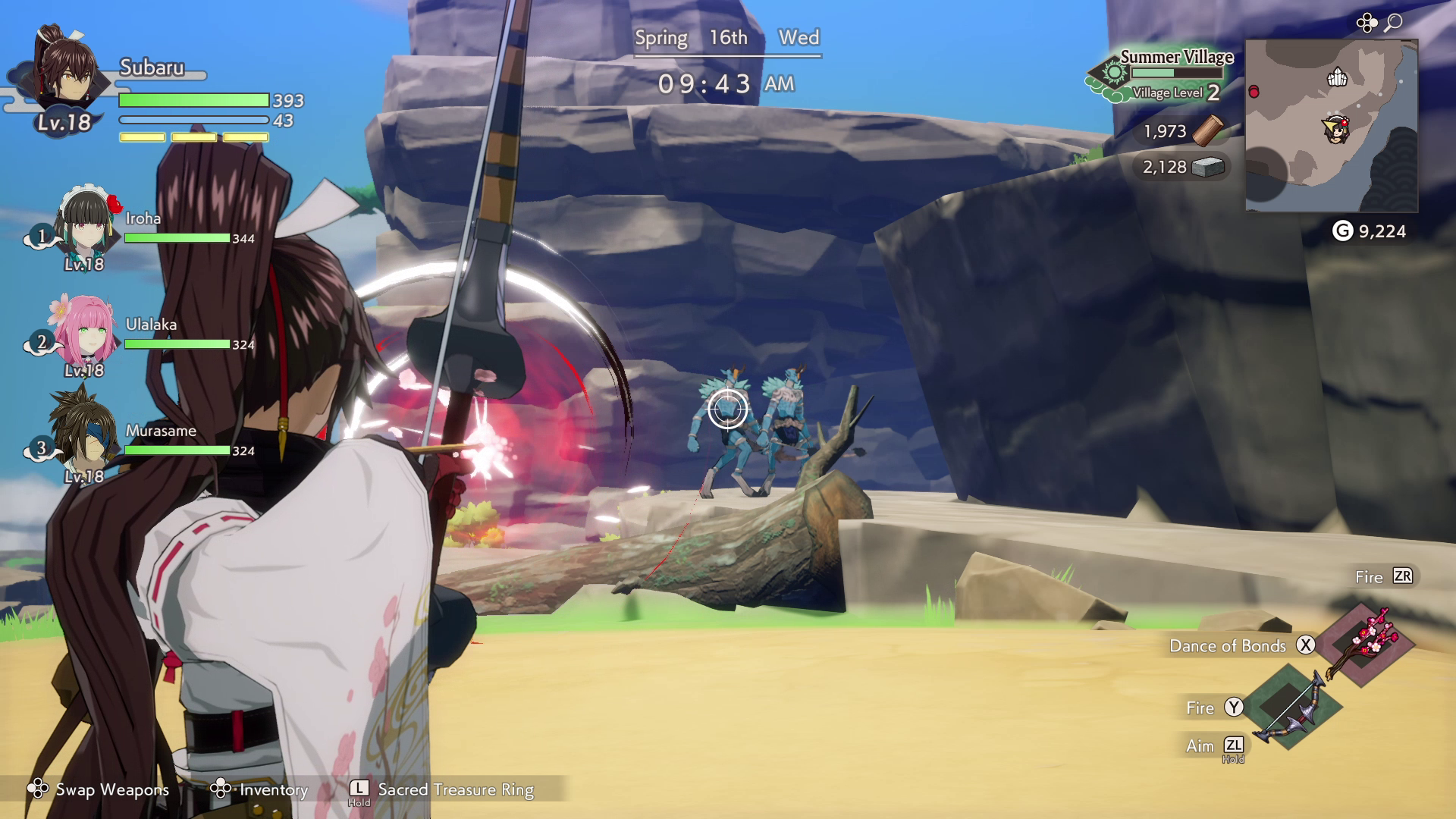
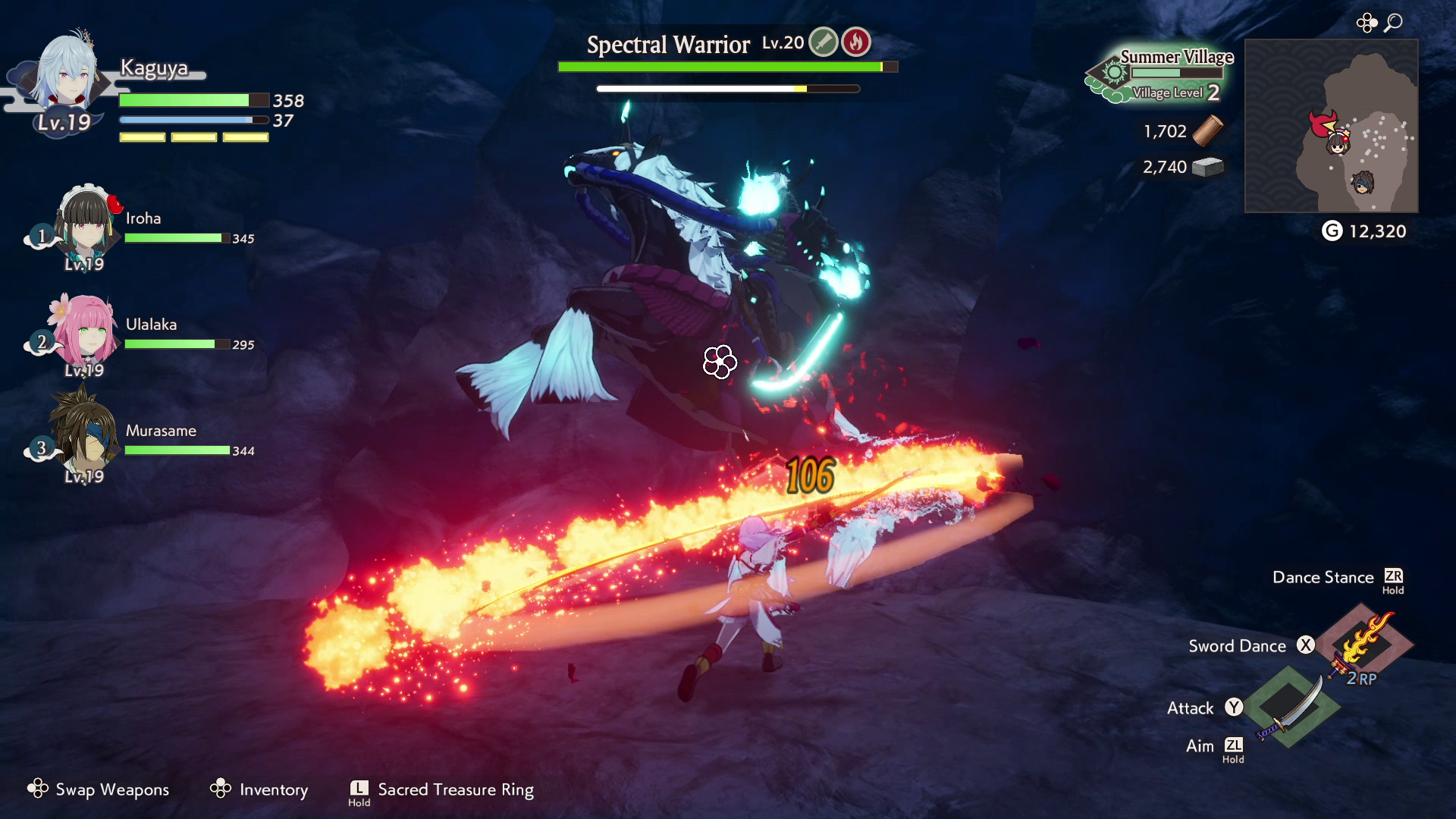
There is more of an emphasis on the RPG elements this time around. The fighting system is well-organized, fluid, and at times flashy and super fun! The combat can be done through easy button presses and combined with whatever seasonal sacred treasure that suits the situation. For example, fighting monsters in the snowy winter region, you may want to equip fire-based weapons or just have the fire-aligned summer sacred treasure equipped to supplement with special attacks. All of this can be easily switched on the fly and making the combat easy to learn and simple to use. For each weapon, you have skill trees now that will utilize that specific weapon's experience pool, or you can make use of the general experience pool when you are short on points for a skill. The general experience pool is accumulated from completing various village building levels and tasks, and can be used wherever you would like. Just bear in mind what you have left in there before throwing all of those points into a weapon, and have nothing left to put into general skills.
In this simplified system, there have been many mixed feelings. Some say it makes it too bare bones and too easy, even on the hardest settings, while some have nothing but compliments and flowers to shower on the developers. Given my time with the game, I have to say that while Guardians of Azuma is a bit easier than previous entries, I find the added mechanics and streamlining to other systems as a breath of fresh air. Being a new addition to the series, I can see them wanting to craft something new and exciting to experience, and I very much appreciate the efforts.
Now, here should be a good point to break and talk about the inner workings of GoA! The game was made available across multiple platforms, PC, Steam Deck, Switch, and the newly released Switch 2. As of yet, there haven't been any announcements for a PS4/5 and XBOX Series X/S version. PC offers the best experience, boasting a potential of reaching 240fps. Steam Deck, of course, generally plays the game well, but struggles when it comes to some open areas or action-heavy combat when the battlefield is overpopulated by monsters and fight animations. This could be combated by utilizing some settings and DLSS support to optimize performance. I haven't myself gotten my hands on a Switch 2, but was very generously treated to a copy of GoA for my Switch for the purpose of this review. Switch performance is as anyone would expect.
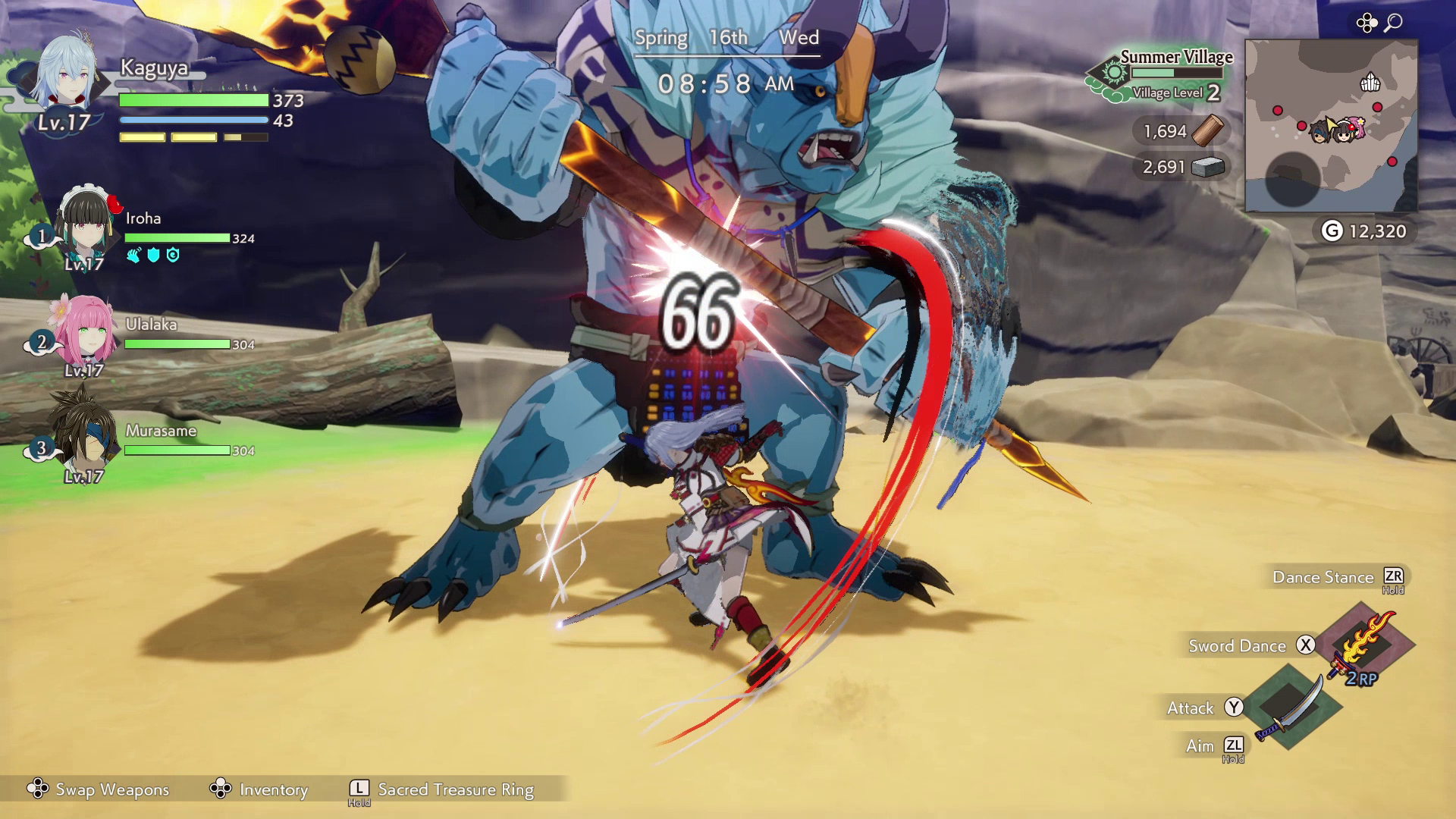
Visually and performance-wise, the game runs quite well. When you start to really populate your villages with people, decorations, crops, and monsters, I noticed some slow loads, pop-ins from a distance as I approached, and of course, screen tearing and stuttering in combat-heavy areas. The Switch 2 does update a bit of the graphics and performance issues, offering a smoother experience, but still suffers from a little lag at the spots I mentioned concerning its predecessor. To me, all in all, the Switch's performance was much better than I had initially expected. I tend to prefer my RPGs and Sims on my Switch for portability and naturally gravitate to said platform for my Rune Factory needs.
While I was still a little disappointed or distracted by the pop-ins of certain things, or minor screen tearing, I was largely too engrossed in the stunning offering of GoA to be too terribly upset. My gripes were minor and not game-breaking enough to tear me away. The story, pacing, activities, and even the superb voice acting that gives life to all of your friends and villagers alike are all expertly done and draw you in with magnificent ease. While Guardians of Azuma does a lot to mainstream much of what has come before, the seeds planted throughout previous entries nonetheless bloom here in radiant splendor.
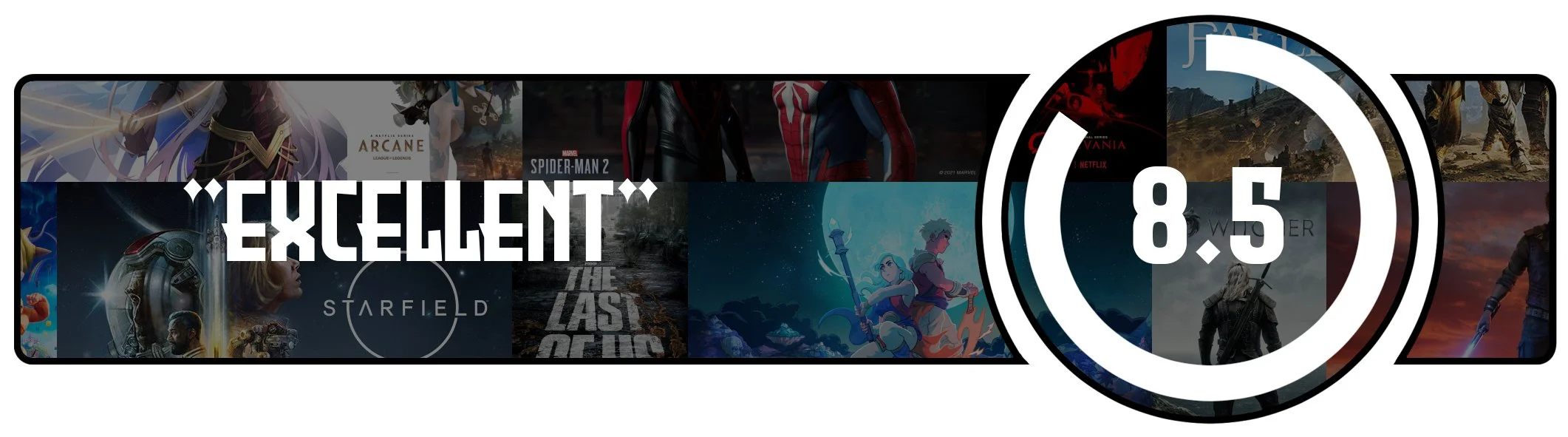
Developer - Marvelous. Publisher - Marvelous, XSEED Games, Marvelous Europe Limited. Released - June 4th, 2025. Available On - Nintendo Switch, Nintendo Switch 2, PC. Rated - (T) Fantasy Violence, Language, Mild Suggestive Themes, Use of Alcohol. Platform Reviewed - Nintendo Switch (Handheld/Docked) Review Access - Review code was provided by the publisher for the purpose of this review.
Rebecca is a huge fan of JRPG’s, RPG’s, and Survival Horror. From Silent Hill to Resident evil. Xenogears and Final Fantasy. When she isn’t tinkering with skill trees or equipping the right rifle to take down numerous monsters, you can find her farming away on Stardew Valley.