
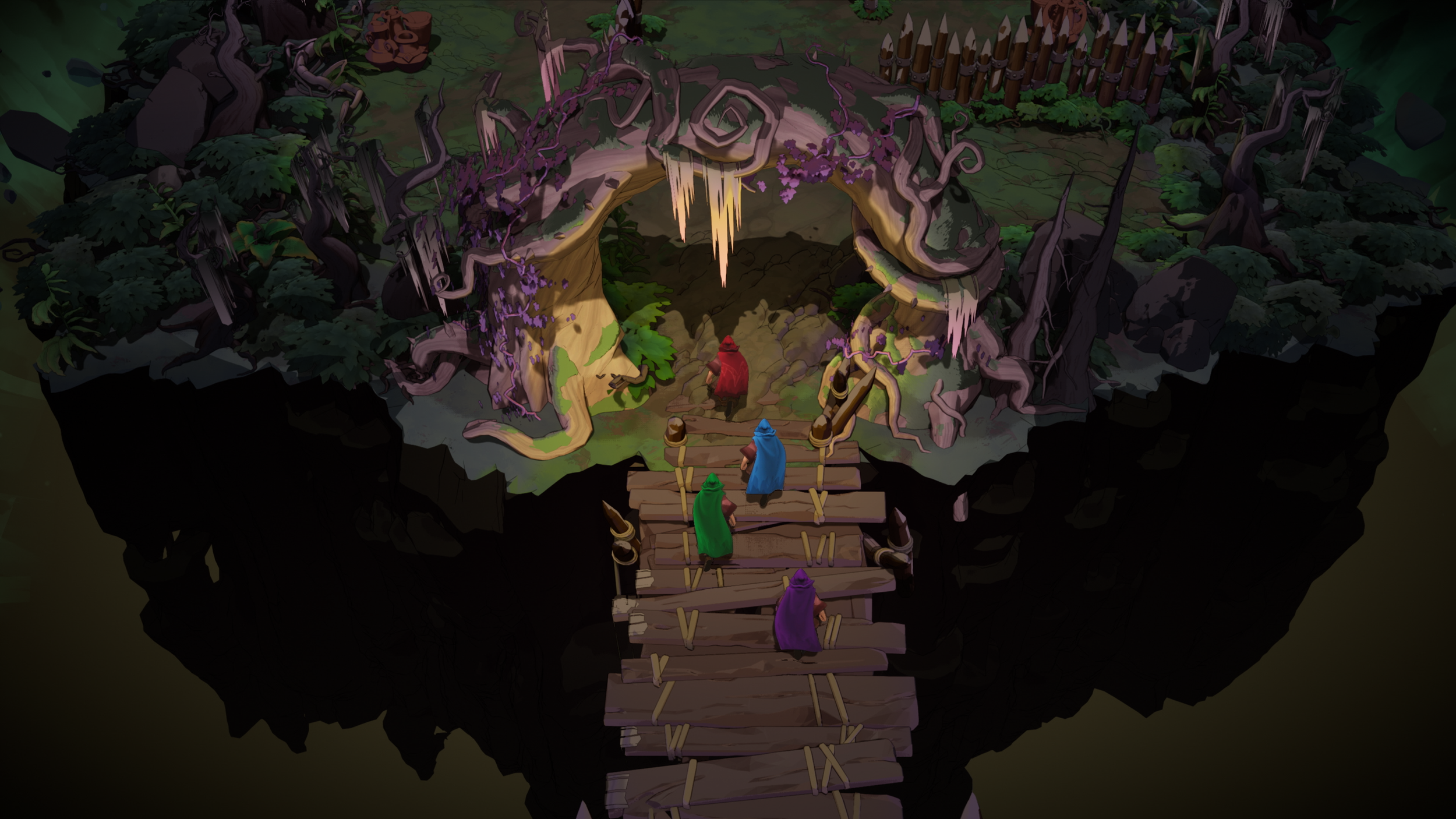
Wizard of Mediocrity.
The original Wizard of Legend was a game I stumbled upon while browsing the Nintendo eShop, and it was a game I found a solid couple of hours of enjoyment with. When Wizard of Legend 2 was announced, I was surprised to see that Contingent99 was not the developer; instead, the game was developed by Dead Mage, with the Publisher Humble Bumble once again behind the scenes. With a new developer, would Wizard of Legend maintain its identity, or would several games over the past seven years influence what would be delivered? Well, it’s a bit of both, but mostly the latter.
It’s impossible to gauge how influential Hades has been as a game. Countless roguelikes or roguelites have borrowed much of its design, but often not copying exactly why that game was so beloved, and likely what is set to make its sequel yet another Game of the Year contender. Wizard of Legend had a charming and pixelated appeal with a decent roguelike system, focusing more on your character and progression than trying to flesh out the world around you. Wizard of Legend 2 is clearly aiming for its experience to be more like Hades than its predecessor, and I don’t think that was the right call.
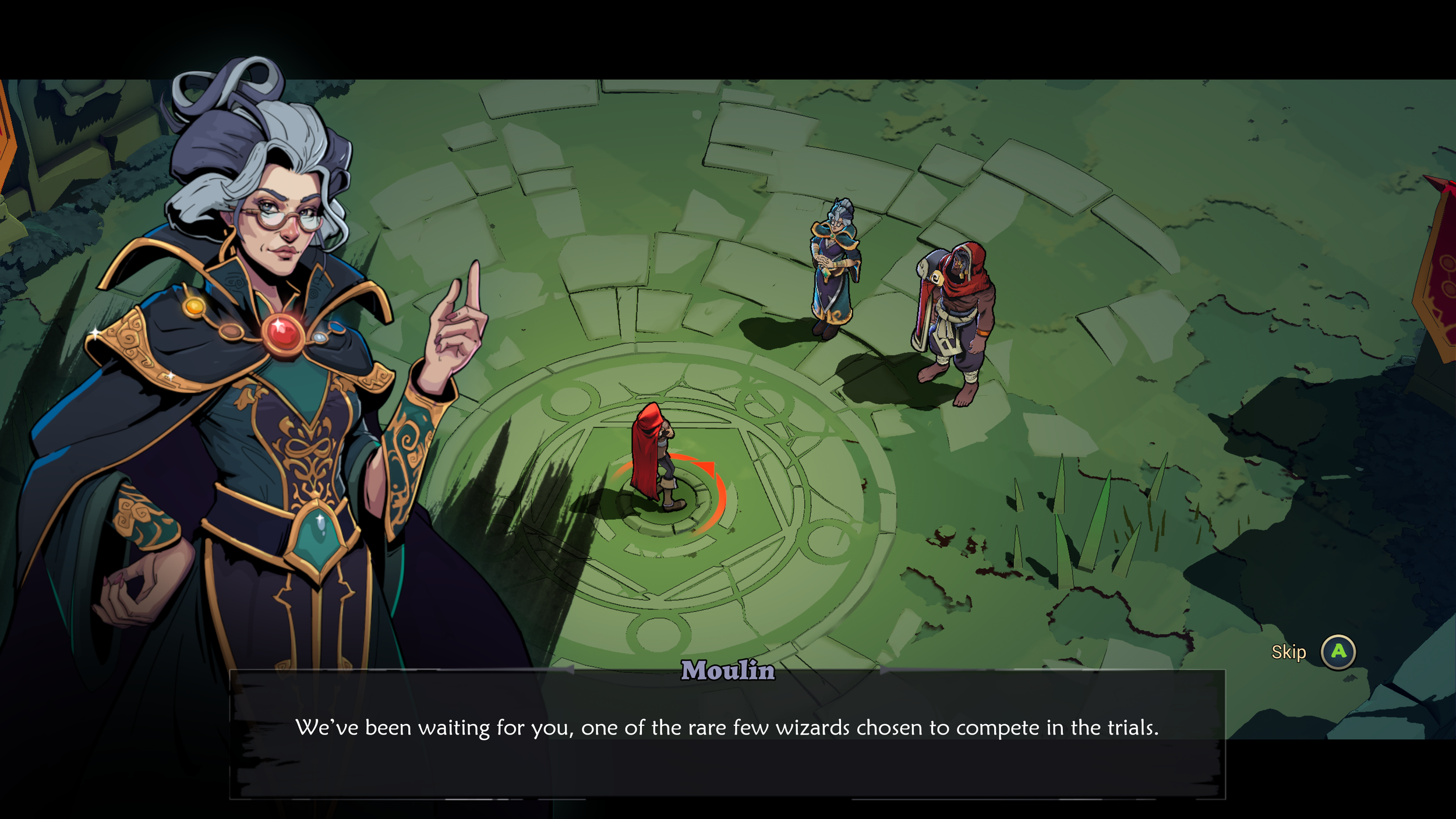
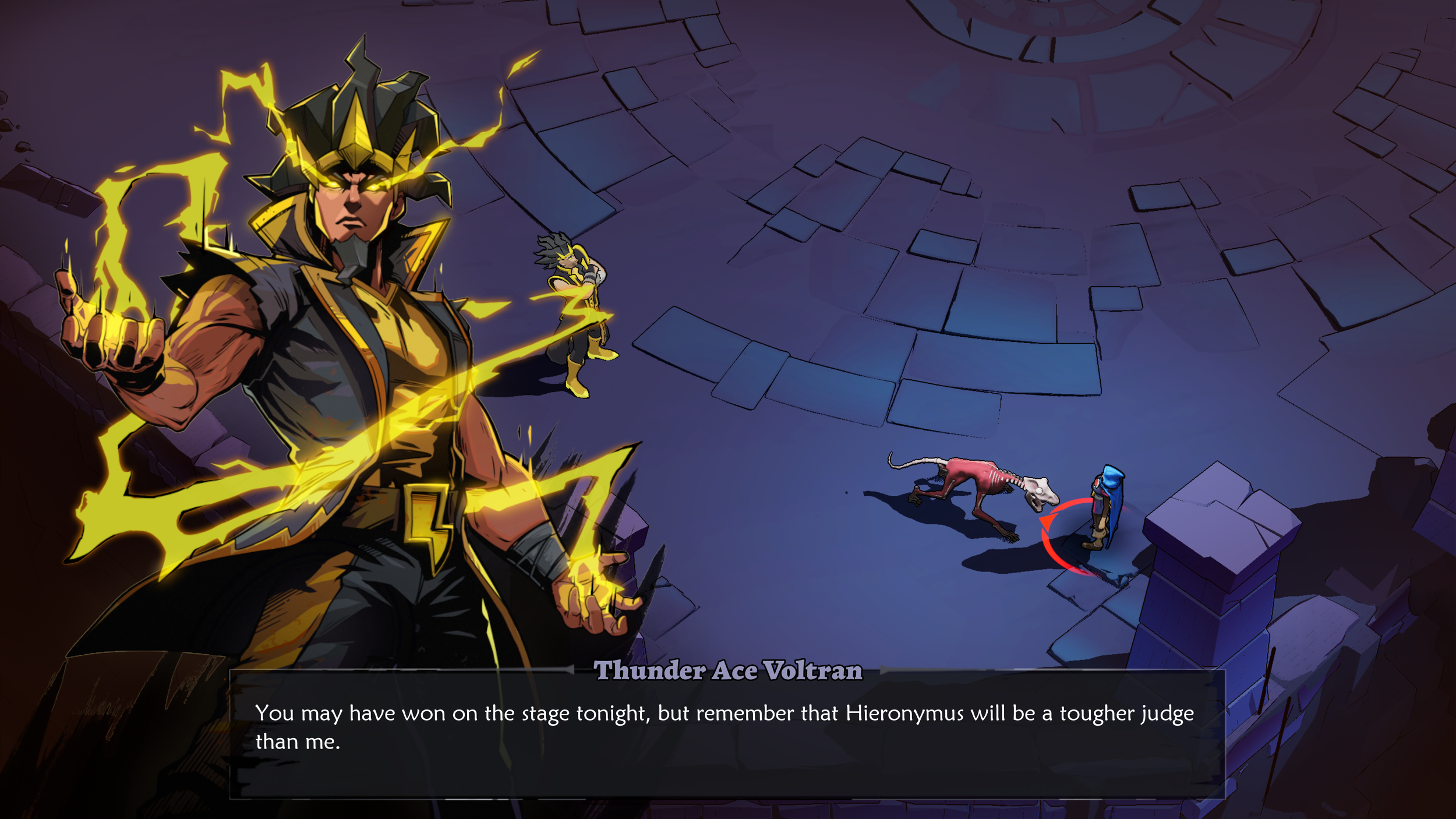
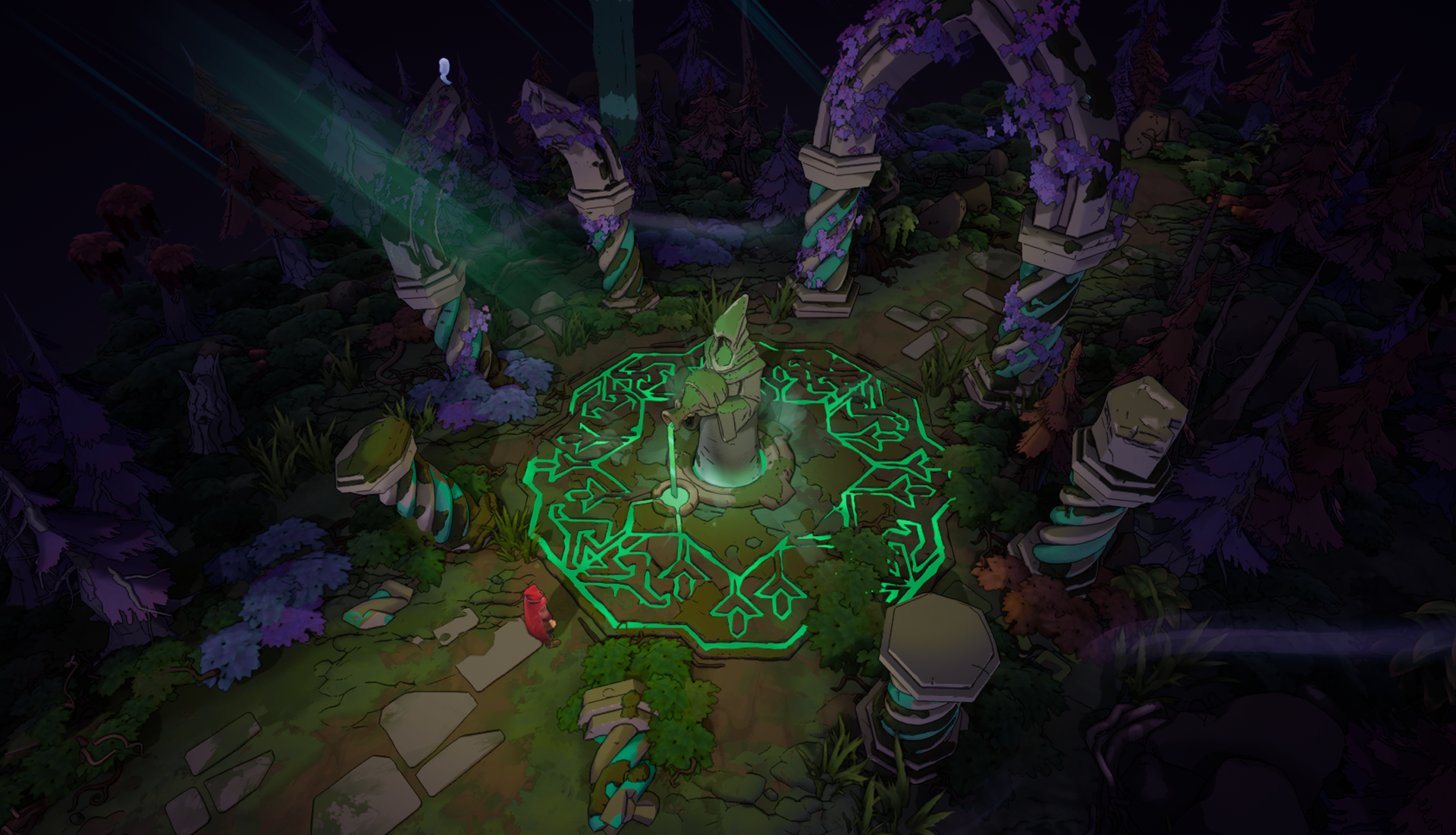
Where Dead Mage takes inspiration from with Hades is certainly the game’s visuals and aesthetic. The isometric viewpoint, the character portraits, and the ways items themselves look in menus all feel very inspired. Even as you venture out on your trials, the combat and approach to the game’s design clearly pull from Supergiant Games’ masterpiece in ways that lose the feel and vibe from the original game. However, by adapting your game only half of what made Hades so special, you need to have the remainder of your game stand as tall, and that just hasn’t been done here. Sure, the game is competently made, but that isn’t enough here.
Despite the attempt to really make its characters hit and attempt to convey a story, Wizard of Legend 2 fails at this, regardless of its presentation, and the care to give these characters voices. Any character in this game can spout out exposition and how to obtain your goal of being a Wizard of Legend, but they are all simply just a shopkeeper that you’ll engage with only a handful of times before they simply become a menu for buying new arcana or relics. While I do enjoy that Madame Moulin will reference a relic you’ve been wearing, that is about as much depth as this cast receives.
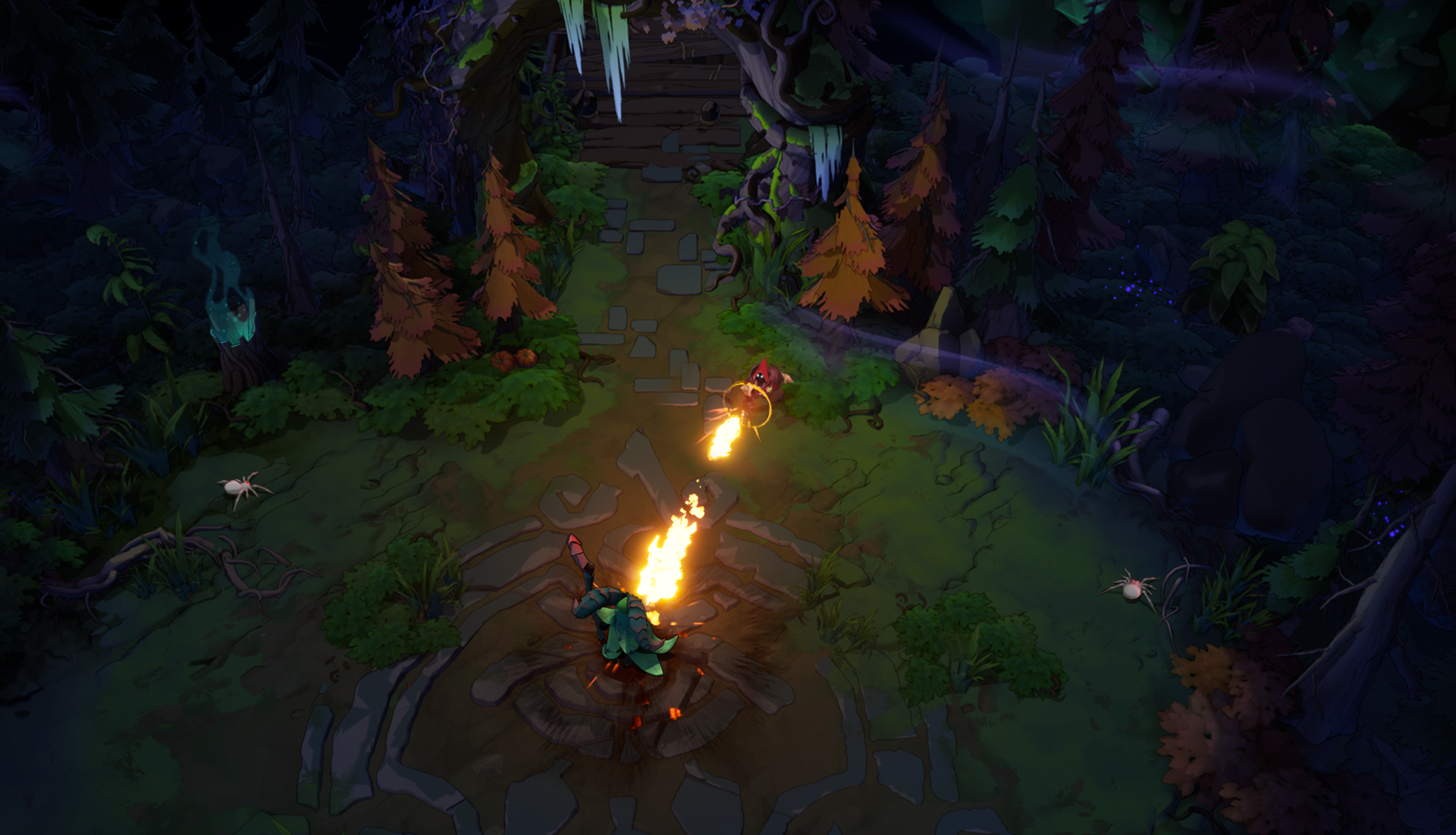
Wizard of Legend 2 is a roguelike that has you venturing out into procedurally generated lands to conquer other Wizards and various beasts on your trek to become a Wizard of Legend. The general gameplay loop remains from one level to the next across four biomes: forest, desert, sky citadel, and chaos. It can be played either single-player or having up to three other players join you. However, I do have to point out a crucial flaw to the game’s online component and something that I think will see the game lose a massive part of its audience, apart from the die-hard players who are lucky enough to have a friend or two playing it as well. That issue? Zero matchmaking or lobbies. This game is invite-only, and there is no cross-play as well. This game lives or dies by your friend list, and if they have a copy of the game. There is no friend-pass a la Split Fiction/It Takes Two, and this, to me, is the game’s biggest issue. I can understand no matchmaking, but why not make an online lobby to find other players? Part of why Towerborne is so fun, is that I can easily find other players to play with. Sure, Xbox has the Looking for Group feature, but at the time of this writing, only one guy has posted “Add me so we can play later.” This is a huge miss and absolutely wild to see in 2025.
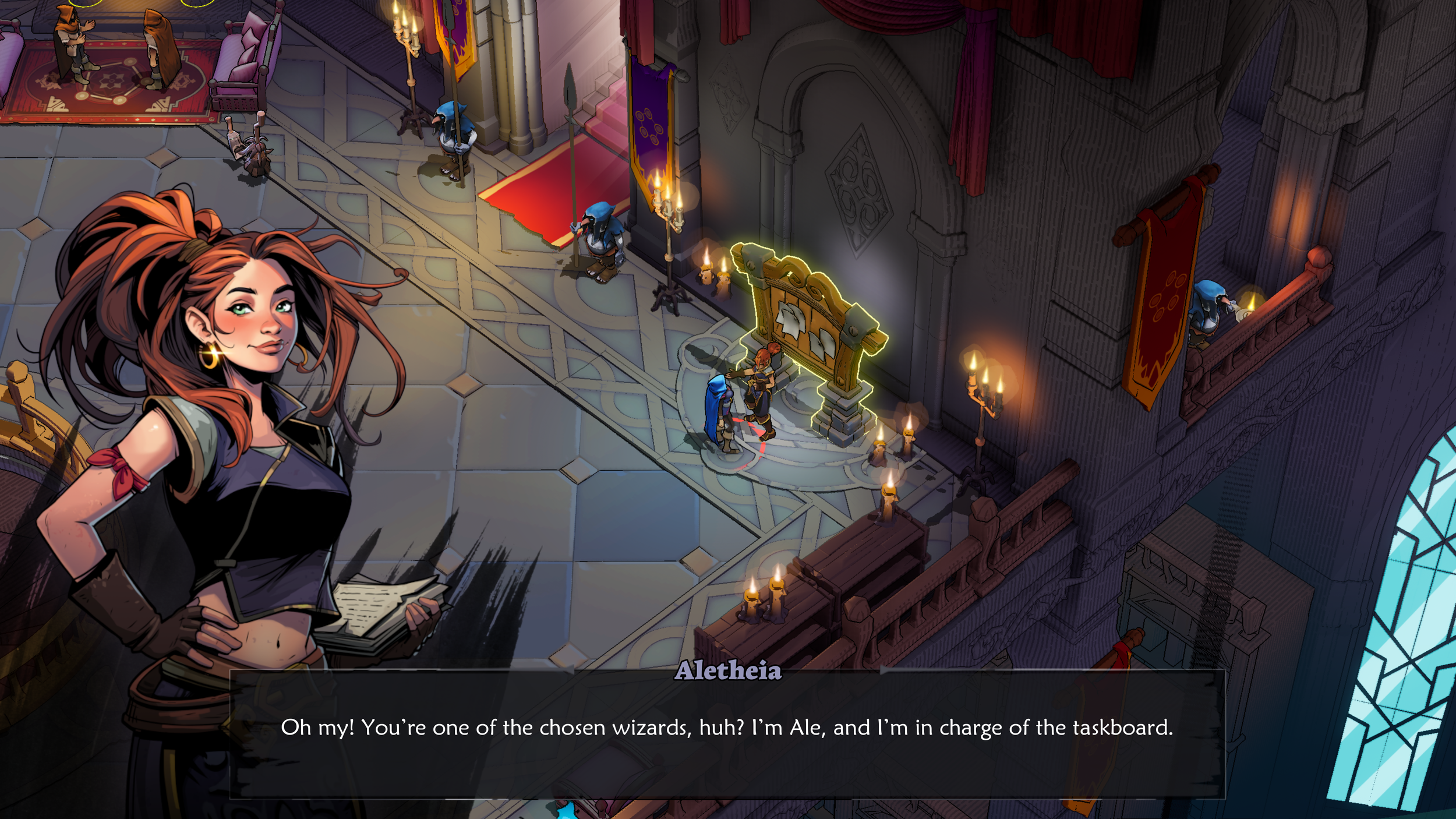
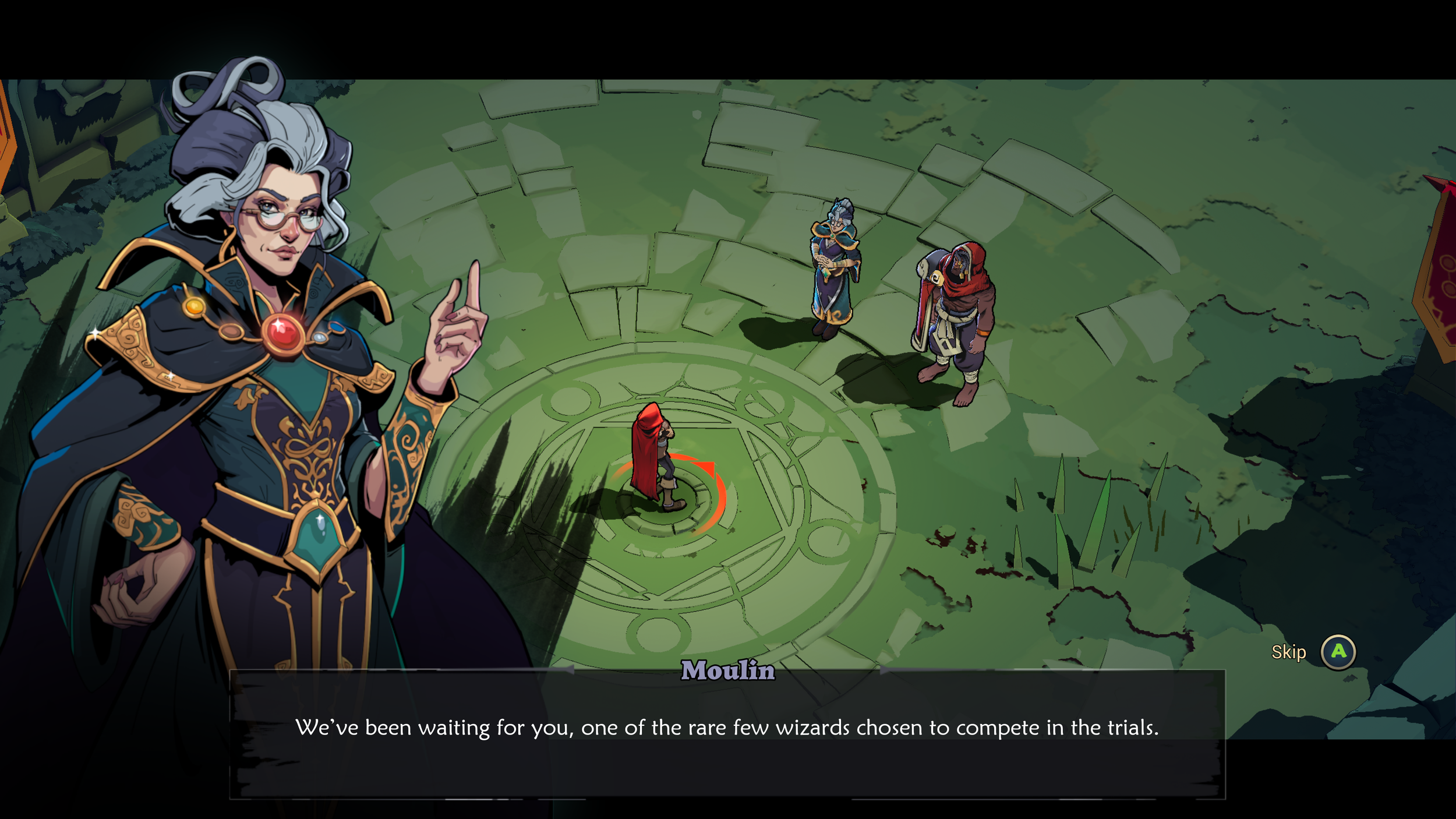
Wizard of Legend 2 begins with you being summoned to compete in the Wizard of Legend trials. You are greeted by Serjik: Keeper of the Arcane Secrets, and Madame Moulin: historian of the relics and trials. While these two certainly sound important and should be pillars of the story, they are essentially just future shopkeepers and amount to nothing more. You’ll meet more characters that offer other services such as Aletheia, who sports the best artwork in the game, as well as showing you various tasks you can complete for currency. There is also the Talking Mirror, who is used to equip medallions that alter your stats, to Nazradin, who is the Trials Warden, and is who can set the difficulty of the game as well as equipping passive perks like starting with more health or an instant allowance of coin.
Throughout each run, you’ll also meet more characters that offer their goods and services, such as upgrading your arcane skills, purchasing all-new ones, and much more. These characters show up randomly, but you’ll always find the main shopkeeper as he offers healing, at least to one player, but more on that later. Each character has gorgeous artwork and some decent voice acting, but lacks any character growth or depth.
Your wizard can be customised to be either male or female, with a host of options to deck you out in new gear. These cosmetic options include the color and style of your cloak, your wristguard, hat, or the symbol on the back of your cloak. While your gear does not have any traits or stats, the medallions serve as a way to inject that into your character’s arsenal of passive abilities. These cosmetic options are very limited, but do allow you to at least look different than your friends, helping you keep focus of your character in battle and not theirs. It’s a shame new cosmetics were not found out in the trials, because what is here is very barebones.
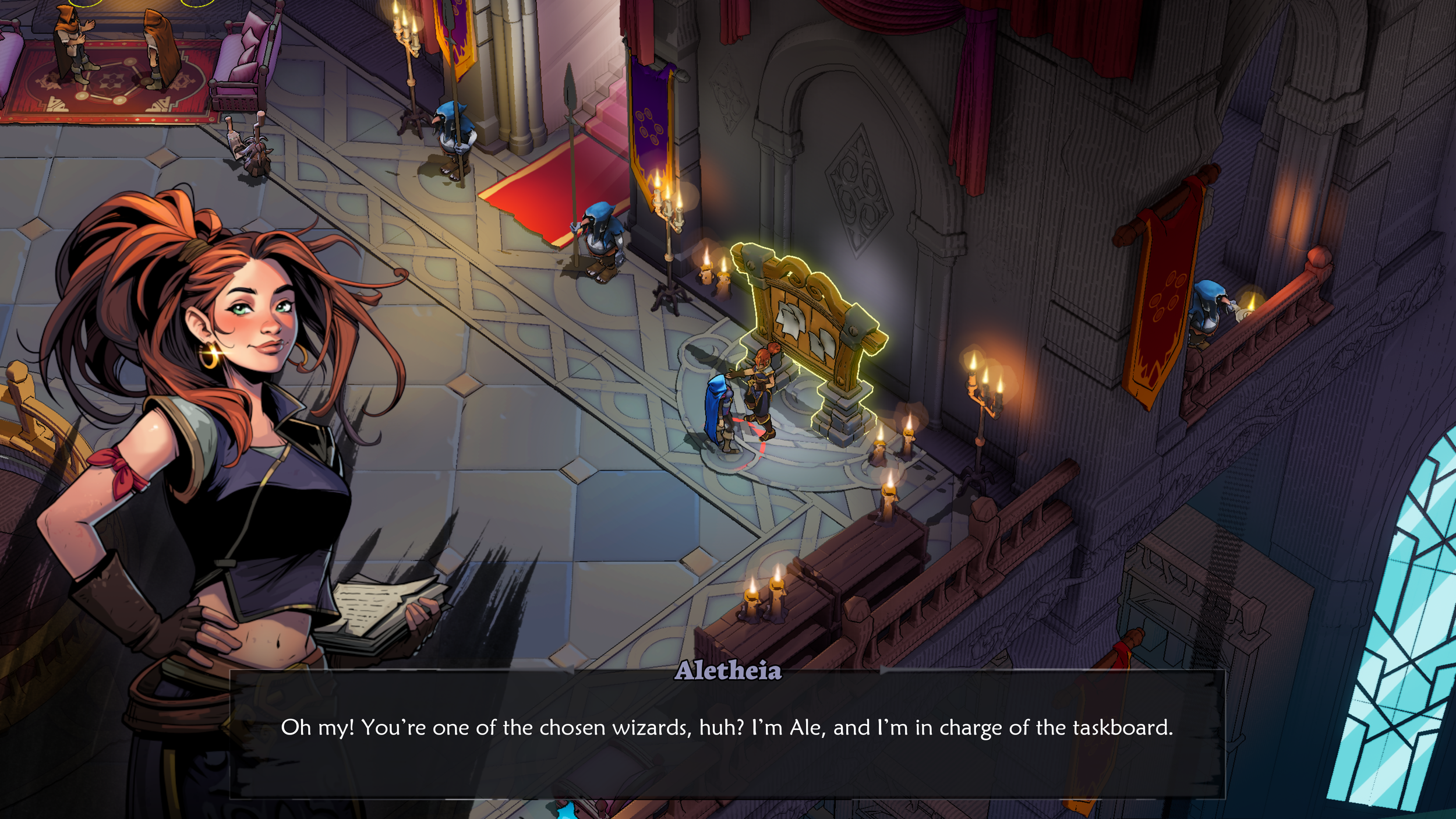
Your wizard will have a few basic skills to work with; a basic attack, a dash attack, your signature skills, which serve as your ultimate, and a standard attack that is essentially a special attack that has a more costly cooldown. These arcane skills can be purchased from Serjik and then equipped via the book next to him. There is also a training yard to test them out. Sadly, unlike when you choose your beginning arcane element, there is no display that shows you what this skill does, you sort of have to guess based on the information you have in front of you.
You’ll also browse Madame Moulin’s relics, which include items that will burn other enemies, a hand that floats alongside you with a ice sword (despite the image showing a flaming dagger), a voodoo doll that deals 10% more damage for each status effect on an enemy, to countless more. BerserKing Sandwhich was my favorite, as it allows you to heal 40% of the damage by attacking enemies. This saved my ass plenty of times, especially given the very limited ways to heal or recoup health.
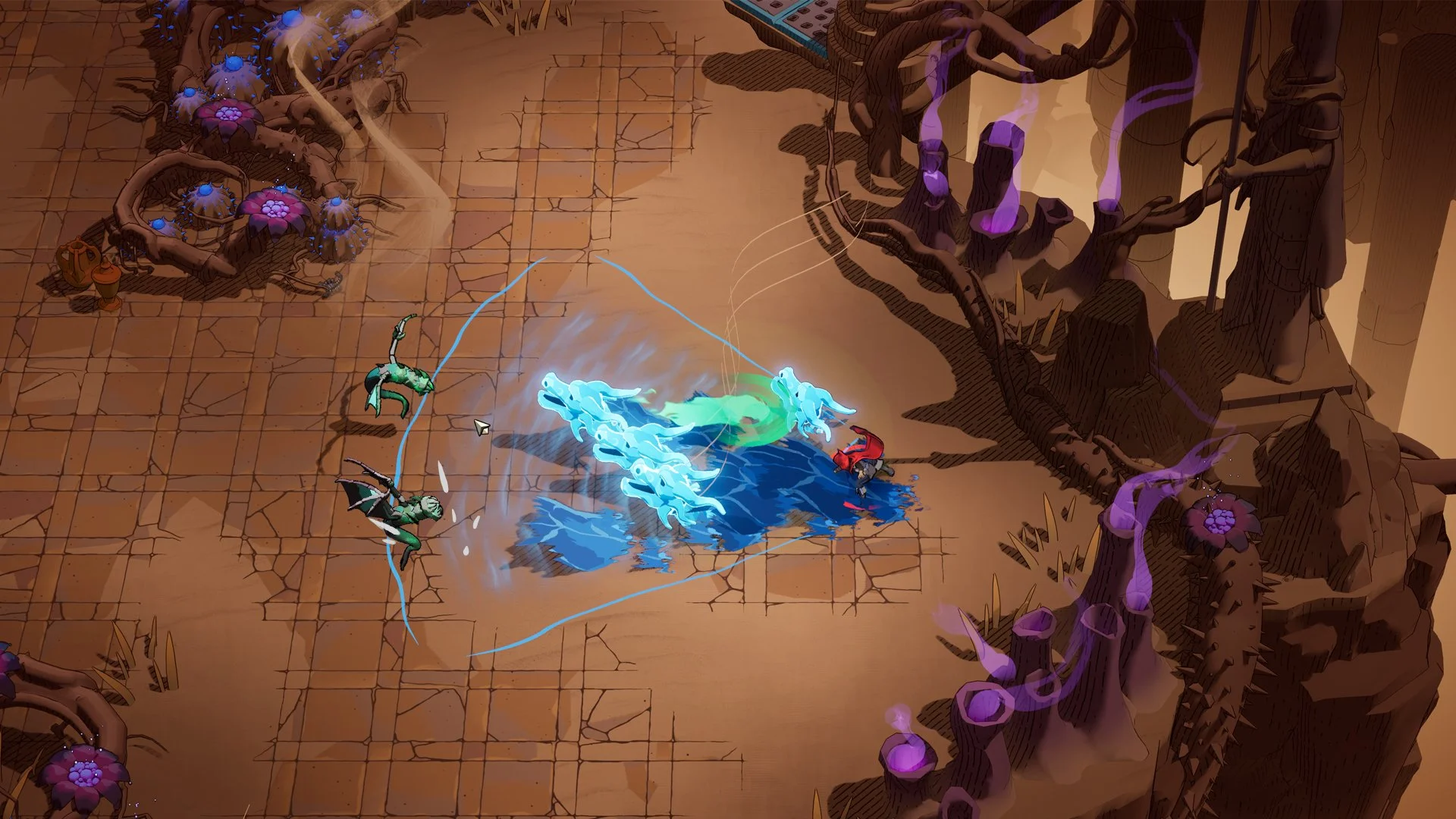
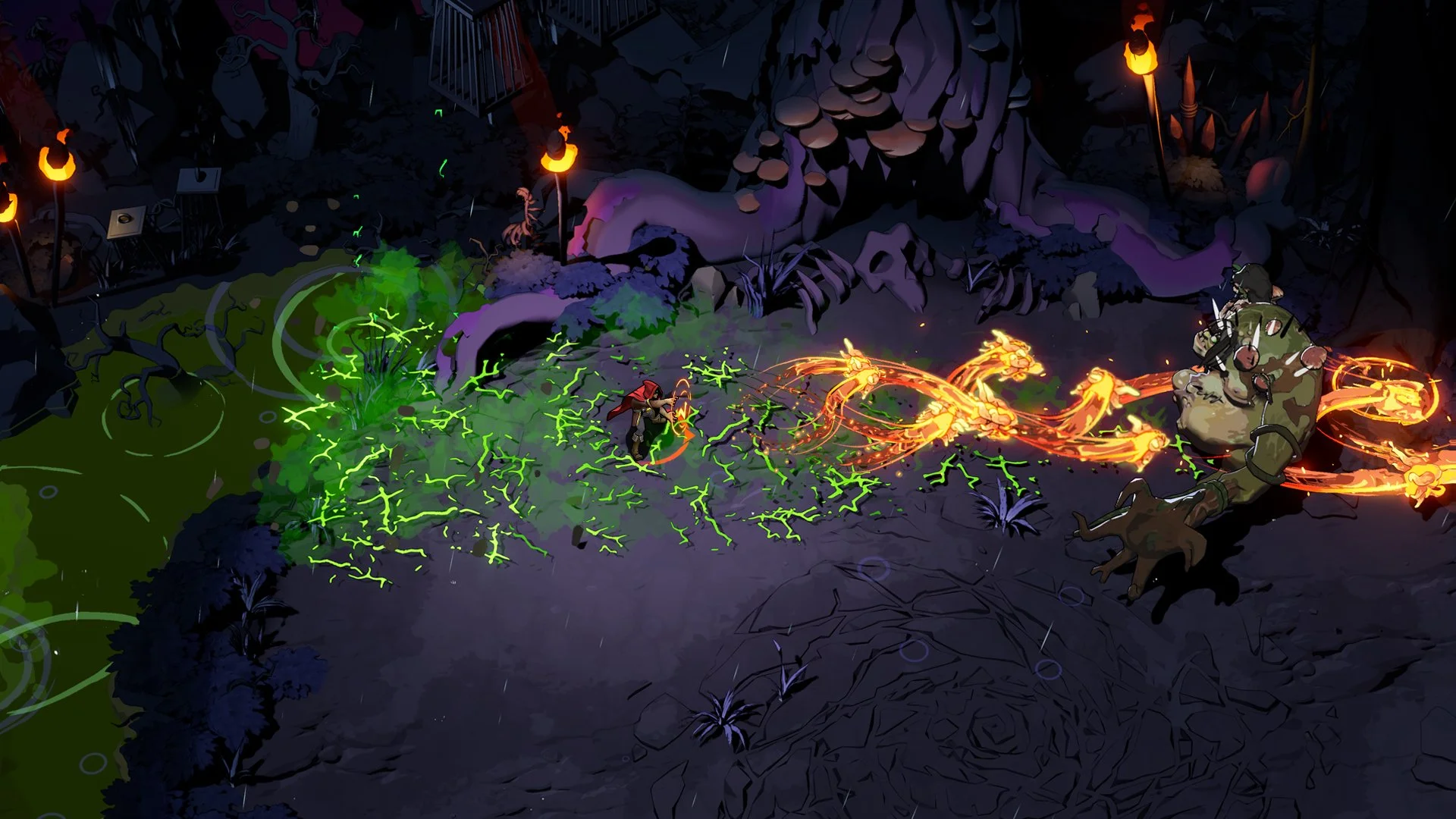
You have five elements to work with, and no, Leeloo isn’t one of them. You have Fire, Earth, Air, Lightning, and Water. Each attack you have is a variation of those elements. From rock fists to electrical punches, water daggers, and wind-powered punches and kicks, there is a good variety here, and attacks feel solid to pull off regardless of the skill. Cooldowns feel very generous, allowing you to constantly pull off attacks and dodge out of the way. Your dodge even feels quick, with leaving a trail of whatever element you have backing it.
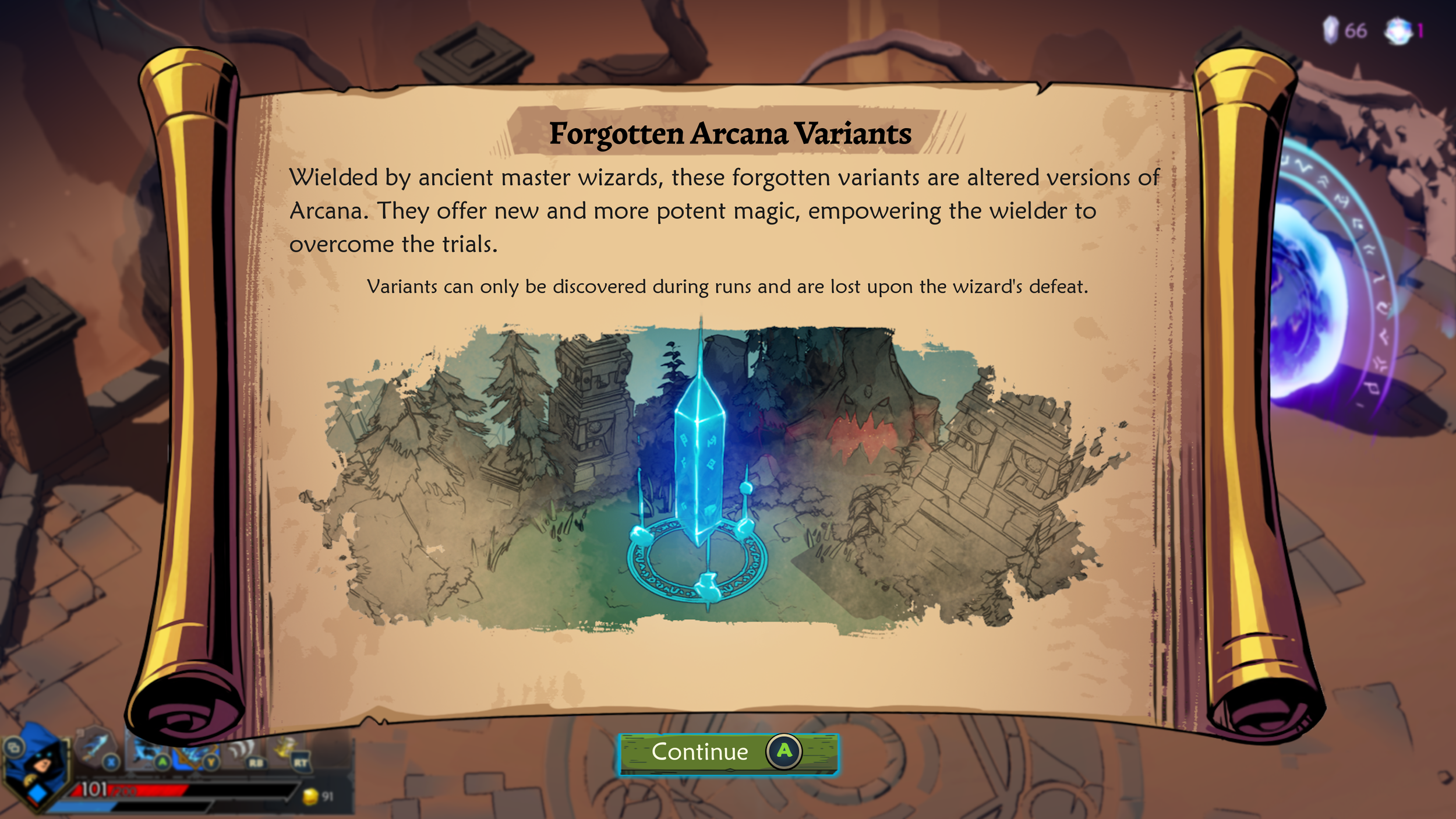
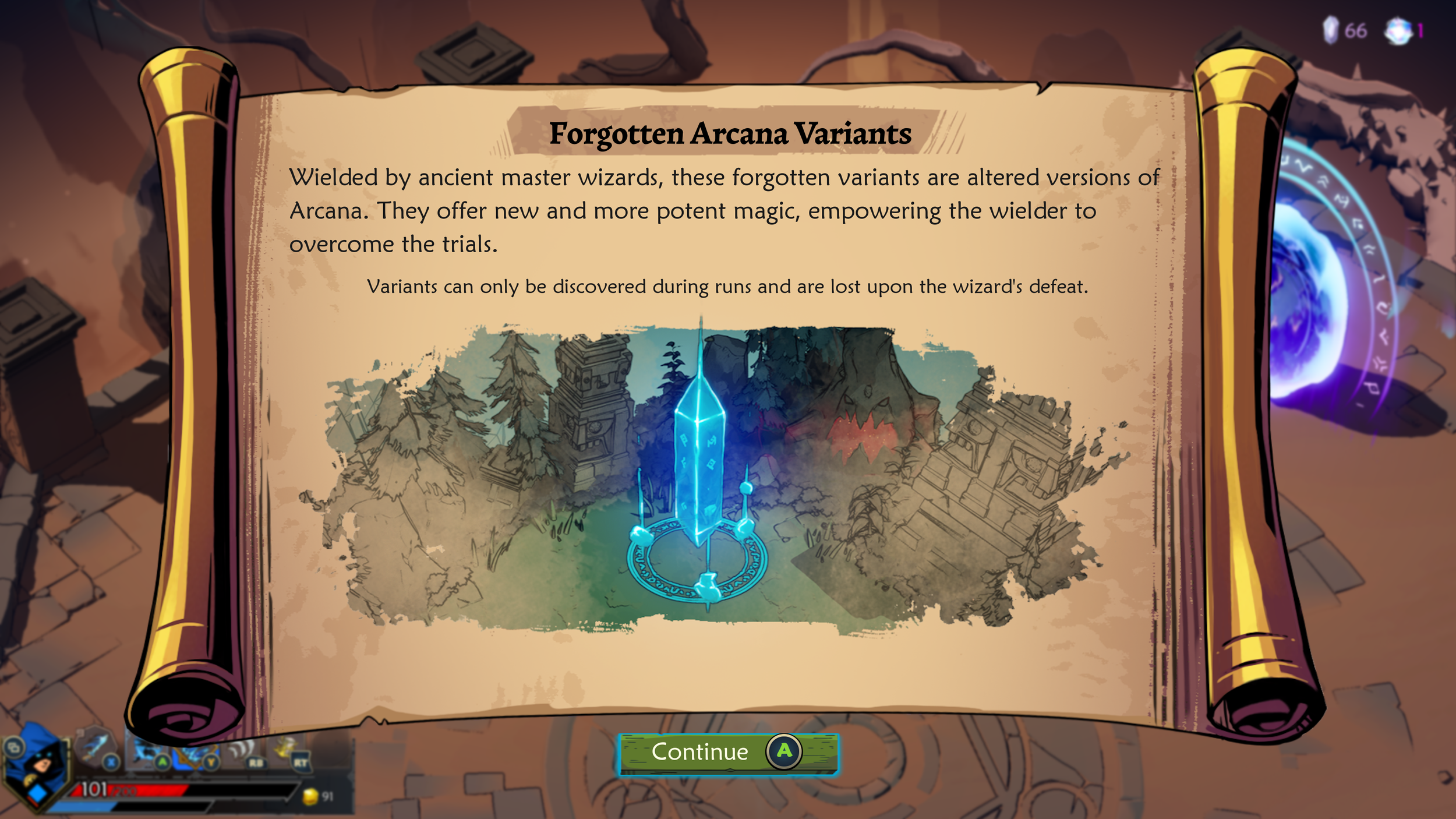
Finding your basic attack, or at least one that you enjoy, is your first task. I loved the Earth Punches since they covered a good distance, and who doesn’t want Boulder Fists that are bigger than your own body? However, against some of the bosses, I would end up with some sort of projectile to keep my distance, especially against one of the more monstrous types. Your signature attack has a charge that builds up, such as the Volt Surge that normally fires off an electrical blast, but when charged up, it sends electrical waves in all directions, doing a lot of damage in a massive area. And with over 75 Arcana that have a total of over 150 variants, there is a lot here to mix and match to find a build that works for you, especially if you want to stick solely to one element or sample the whole damn platter.
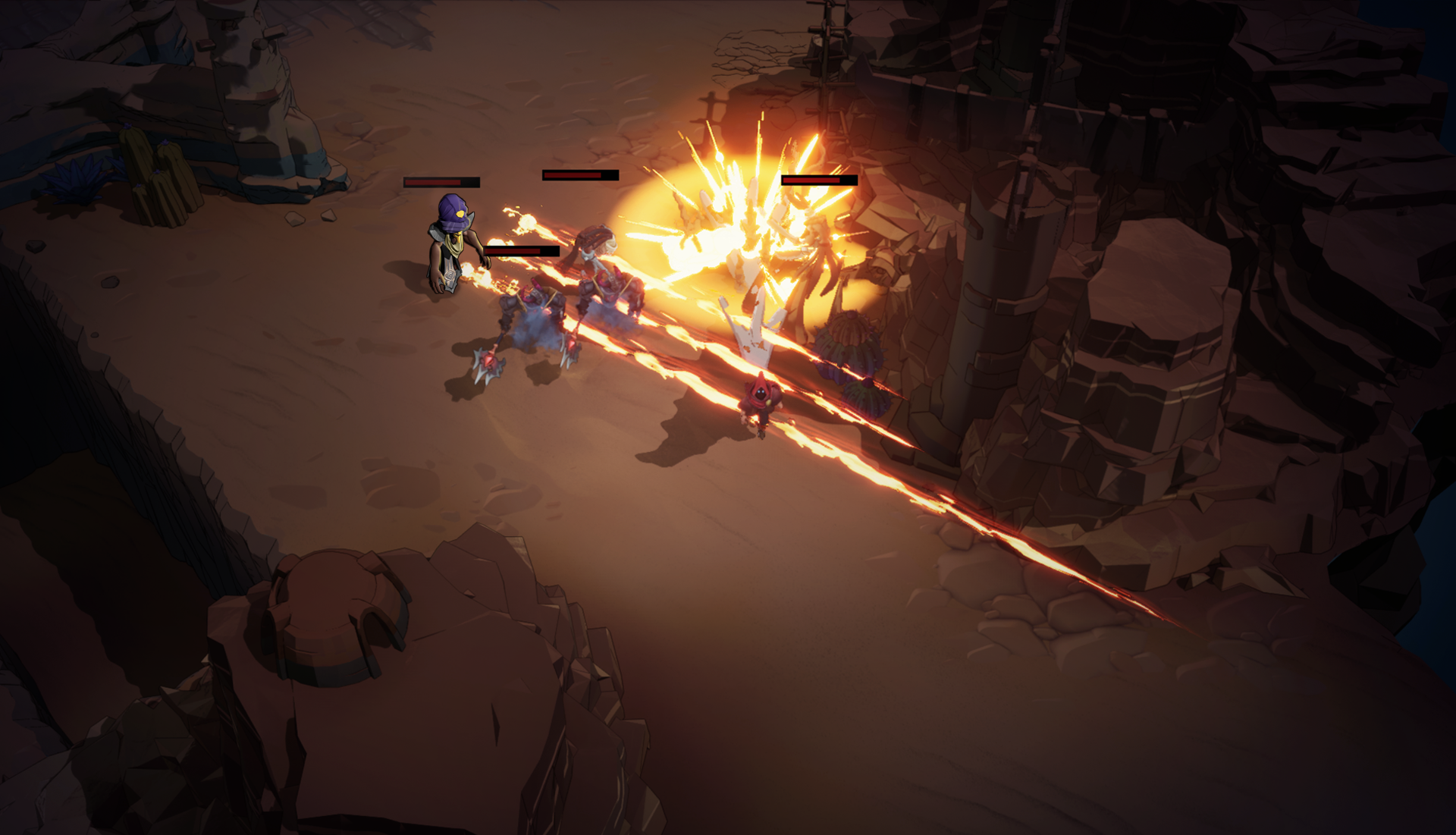
Now, combat feels fast, but a tad slower than the first game. Some animations here have a starting animation for when the attack begins, which can leave you open for a split second. Now, in co-op, this isn’t as much of an issue since you have a friend keeping an eye on you, and vice versa. Still, while combat does feel solid and very functional, I did prefer the combat in the original a tad more. Still, the Hades approach to how some of the attacks work does look great with the updated visuals and the ways in which the variety hits all the signature and standard arcana; the game is certainly a looker.
Co-op is sadly hit and miss, despite the lack of lobbies or matchmaking. The actual act of co-op leaves a lot to be desired. In co-op, nothing is instanced, so anything you pick up is yours, leaving your friends out in the cold. That chest that contains an Arcana? Yeah, only one player can pick it up. Anything in the shops? Disappears from your menu of options when another player buys it. This feels like such an easy fix to instance everything, and without a change to this, it really limits what you can experience in co-op. Sure, you can drop anything you don’t want, and allow the other player to pick it up, which helps with the lack of gold one player might have, but it doesn’t solve the bigger issue here.
Each biome has a series of enemies that are exclusive to each biome. However, the Wizard fights, and the challenge battles you encounter, are all the same characters. Sometimes you’ll fight the Ice Wizard first or the Fire one, or maybe the Earth one, but make no mistake, you’ll see the other ones as you move on. Even a battle with a particular monster is repeated as well. This game lacks the variety of battles or the changes as you progress. It causes these encounters to become stale since repetition is part and parcel with this genre. With so many arcana, it’s a shame the elemental wizards were not just procedurally generated bosses that would have unique combinations of powers and their outfits. That way, each run would truly feel unique. Sadly, that isn’t the case. Hell, why not make the bosses some of the combinations that players themselves have made. Imagine squaring off against the AI of what your friend has constructed themselves.
Once you start to work on your build, understand the mechanics of the bosses, and how this game is structured, you can complete a run fairly easily with little reason to continue once you have really found your footing. The story is really not there and the cast of characters are forgettable placeholders for essentially just being a shop. There is sadly zero variety in the boss encounters, and each run, despite the variety in your combat options, starts to bleed into the next, making for a very paint-by-numbers approach to a roguelike. Progression doesn’t feel satisfying, and while adding new arcane can really make an impact to your build, the progression for your own character just isn’t there.
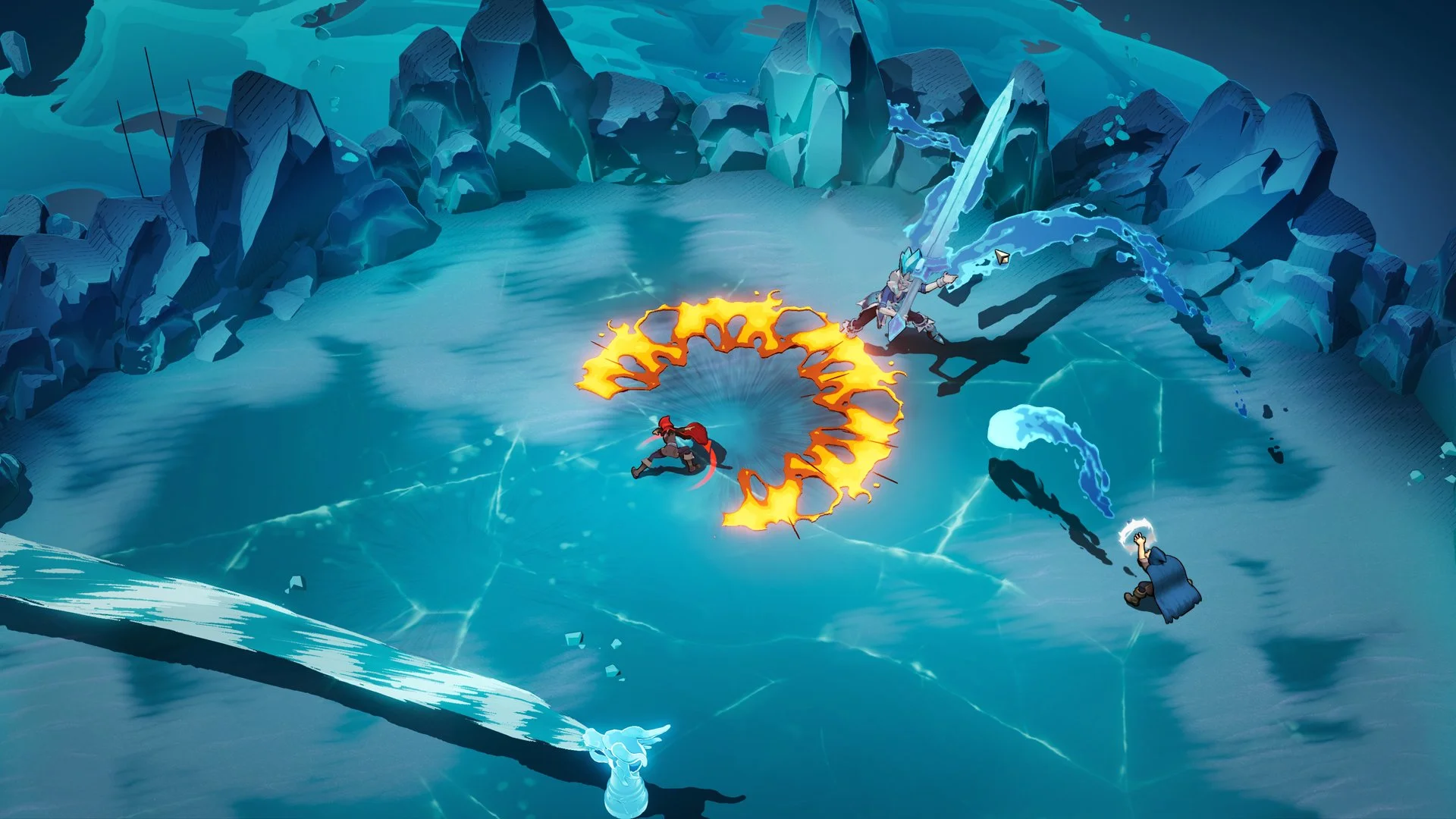
Wizard of Legend 2 may look considerably more detailed than its predecessor, and have some extremely satisfying combat, but the core elements that make this game what it is, just are not there. The story, characters, and progression are extremely lacking, and with no way to find players with ease, you have to rely on friends having this game or randoms that may not engage in voice chat to help coordinate. What Dead Mage has crafted here has incredible promise, but the full release at launch feels half-baked and designed around being a single-player experience that just happens to allow for co-op, without the instance loot and balance to pull it off. You can easily have a solid few hours of fun here, but I don’t see many players seeing it through to become the titular Wizard of Legend.

Developer - Dead Mage. Publisher - Humble Bumble. Released - June 12th, 2025. Available On - PS5, Xbox Series X/S, PC. Rated - (E 10+) Fantasy Violence, Tobacco Reference, Mild Language. Platform Reviewed - Xbox Series X. Review Access - Review code was provided by the publisher for the purpose of this review.
Jeff is the original founder of Analog Stick Gaming. His favorite games include The Witcher III, the Mass Effect Trilogy, Hi-Fi Rush, Stellar Blade, Hellbade: Senua’s Sacrifice, and the Legend of Heroes series, especially Trails of Cold Steel III & IV.