
Samus 117
Metroid has always been a series I've experienced from afar, apart from a few entries that I've dabbled in but never fully committed to. That changed with Metroid Dread, the long-awaited entry in the traditional Metroid series. It was not only a vastly enjoyable game, it still stands as the best game, in my opinion, that Nintendo has ever published.
While the Prime series has its fans, I was never sold on Metroid being in 3D. It felt slower, and the Metroidvania aspects that I loved felt few and far between, at least when compared to previous entries. When Prime received its remaster, I did enjoy it, but like most titles in the franchise, I lost interest halfway through. So, with the release of Prime 4, I decided to give it a shot, to see if Retro took an approach that felt Metroid to me, a casual fan. After wrapping credits and achieving the “good” ending, obtaining about 70% of all upgrades, I can confidently say that I was beyond disappointed with it. While the name Metroid is on the box, Samus’s newest adventure felt more like a mediocre Halo game than what I wanted from a Metroid experience. It rarely feels like a Metroidvania and follows a linear approach that I was a fan of.
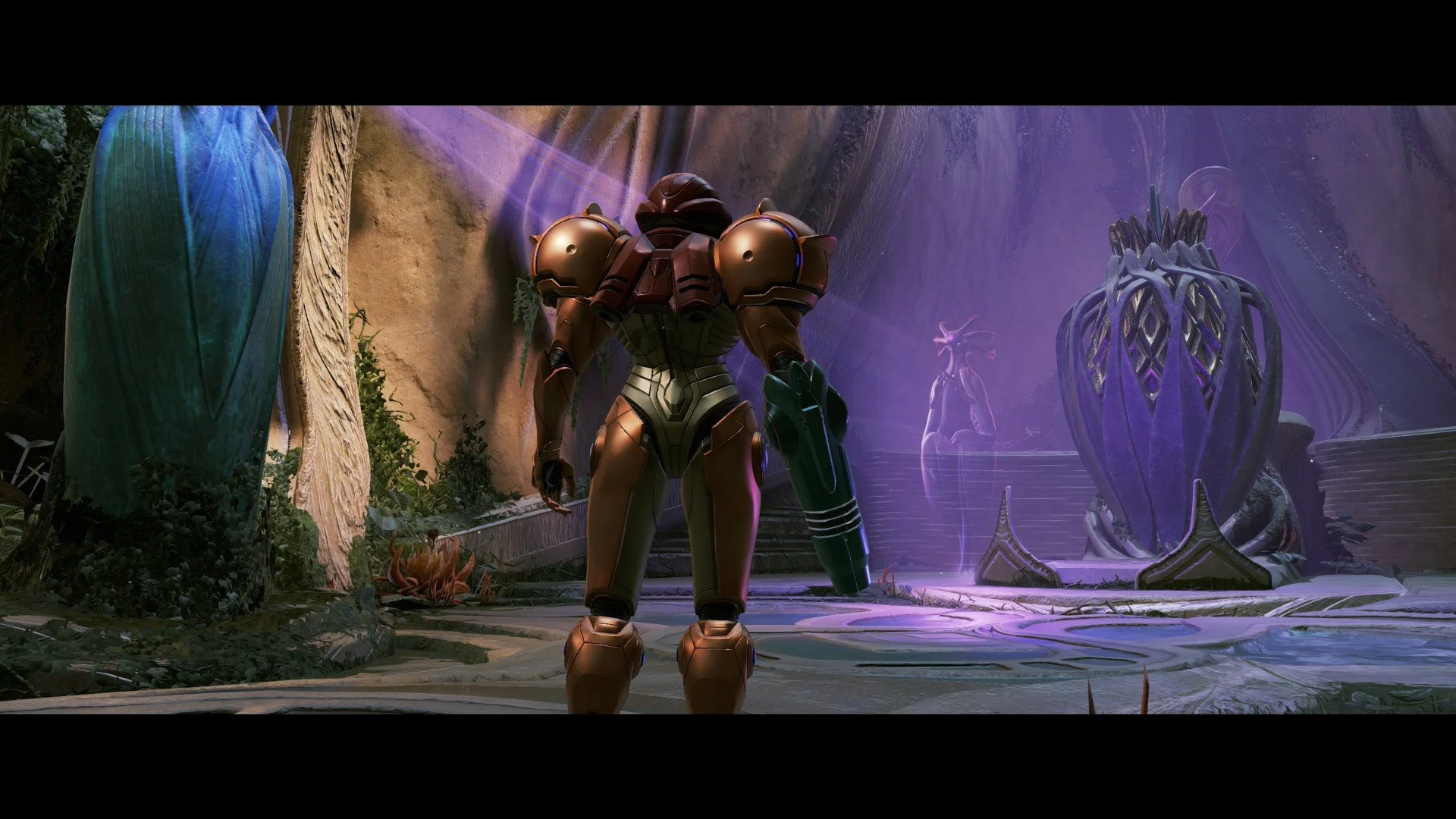
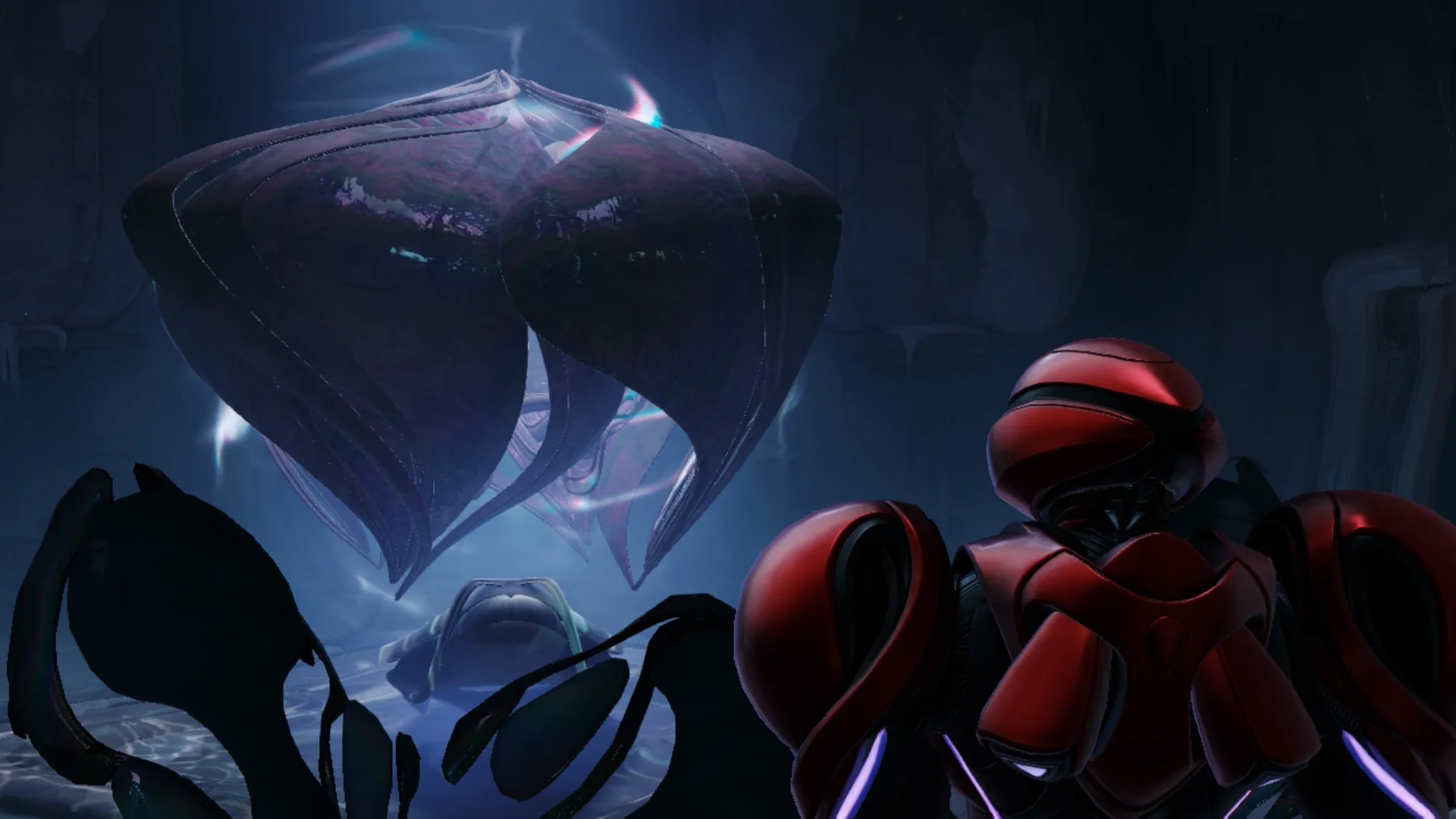
The premise of Metroid Prime 4 is that Samus and a small assortment of Federation Forces find themselves transported to a mysterious world, where Samus will interact with holograms of a long-dead civilization, fend off waves of monstrous forces, and discover the fate of this world's inhabitants.
Right off the bat, Metroid Prime 4 feels like Halo. You're plunked down on a new planet, fight enemies that share some visual similarities to the covenant, and look to discover the history of a long-dead race. Add in vehicular transportation from area to area, a character named Sarge, and you start to see aspects of the Halo franchise appear. Hell, some members of the current team at Retro even worked on Halo in the past.
Metroid has always been a series about finding a new ability and then using that to traverse new ground, unlock new areas, and engage in tightly controlled combat encounters. While Prime 4 has some aspects of a Metroidvania built into its structure, these are only a few isolated moments where that design is even present. In most cases, you have the odd area that opens to reveal a room with a missile or energy upgrade, such as burning away cobwebs with a flame shot, or using the cold shot to open up a locked door in underground ruins. However, using those abilities rarely opens up huge sections of a map, and this makes Metroid Prime 4 feel small.
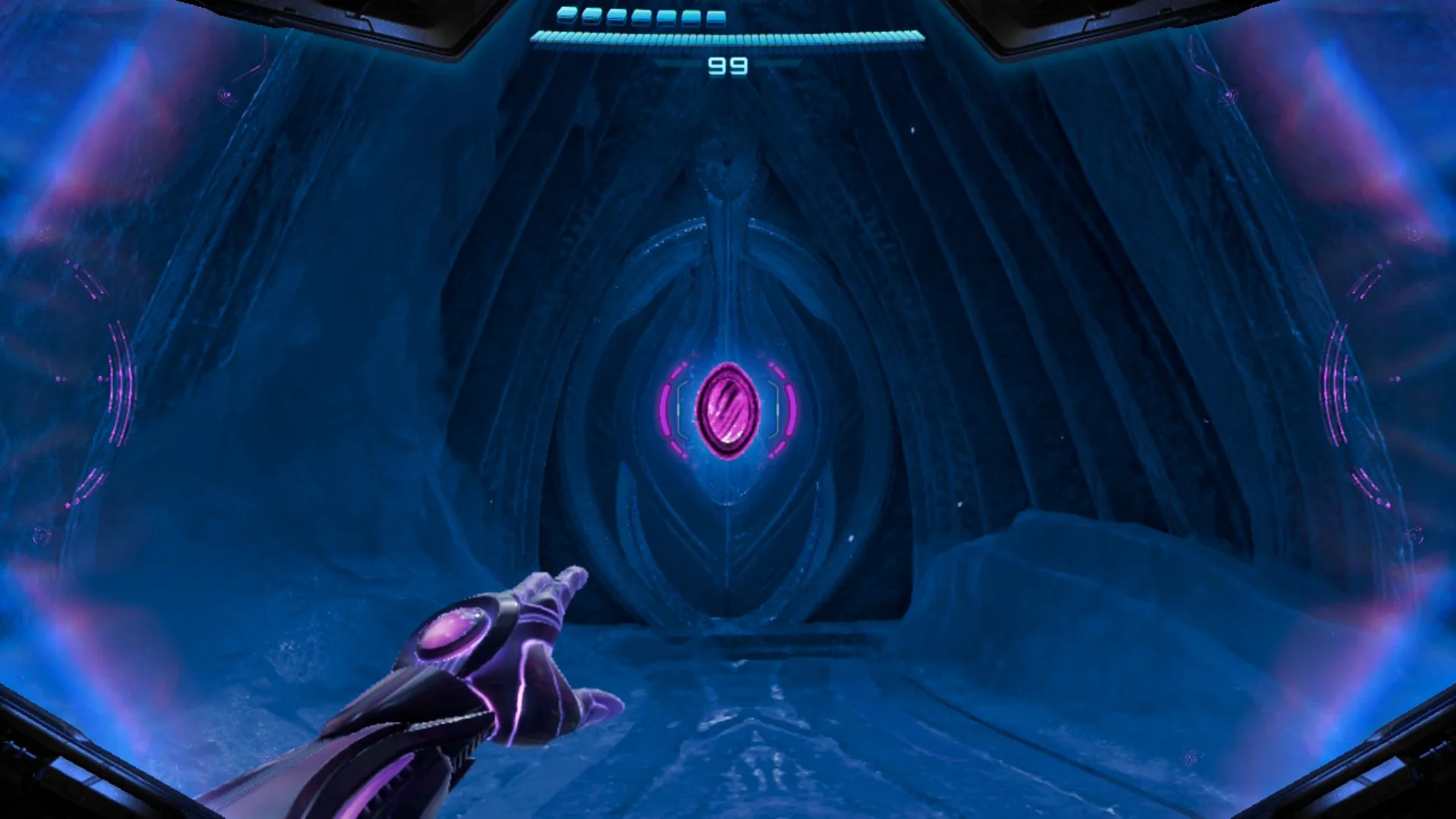
Across the planet, Viewros, you have five main areas to explore, feeding them to us in similar ways a Zelda game would offer up their dungeons. You have Fury Green, Volt Forge, Ice Belt, Flare Pool, and the Great Mines. While these areas have some gorgeous aesthetics, few offer up a variety of paths, and some feel built to simply move you in the right direction. Additional areas are present, such as a Galactic Federation base and the Chrono Tower, but these are blink-and-you-miss-it zones that bookend the experience.
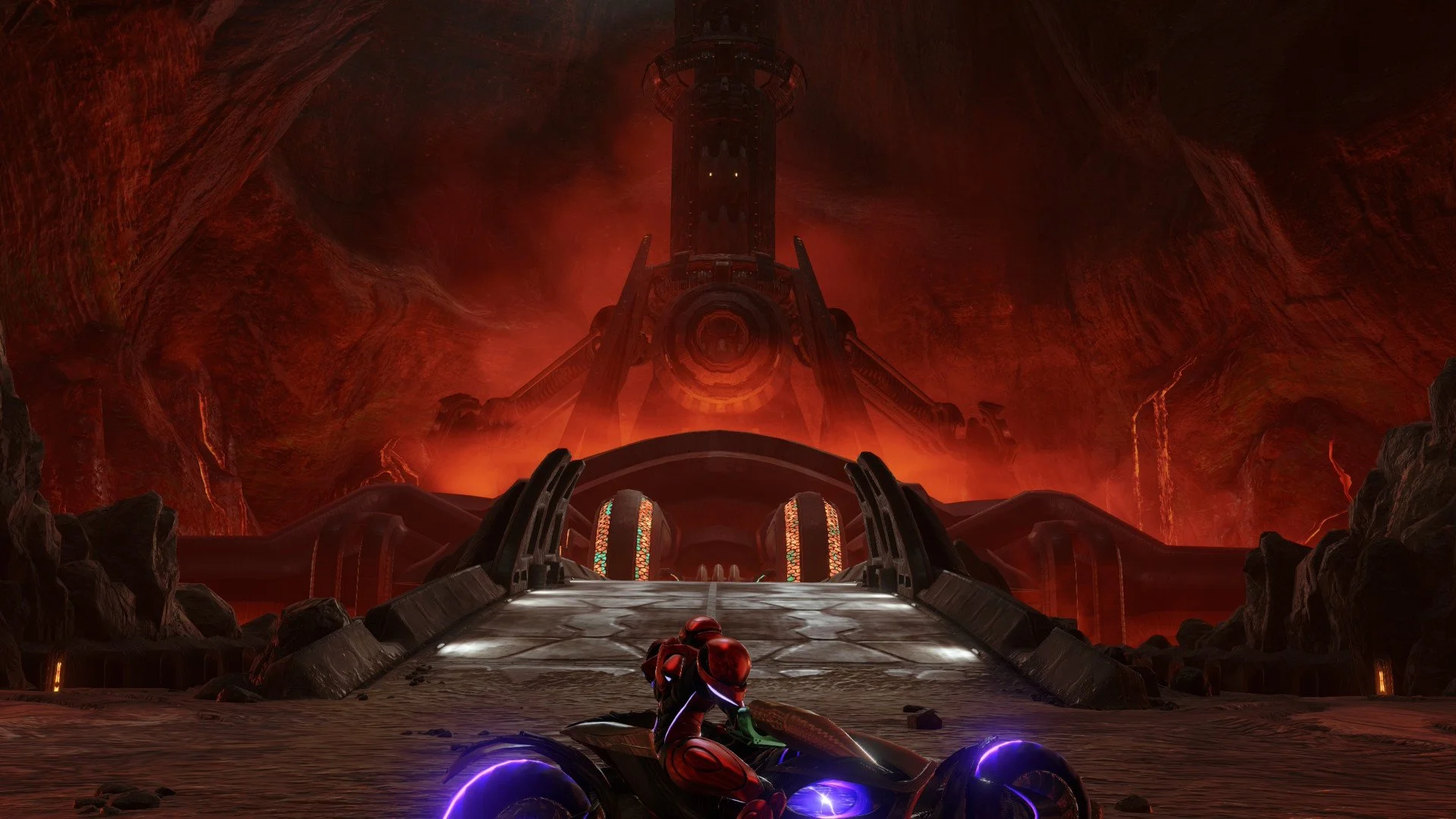
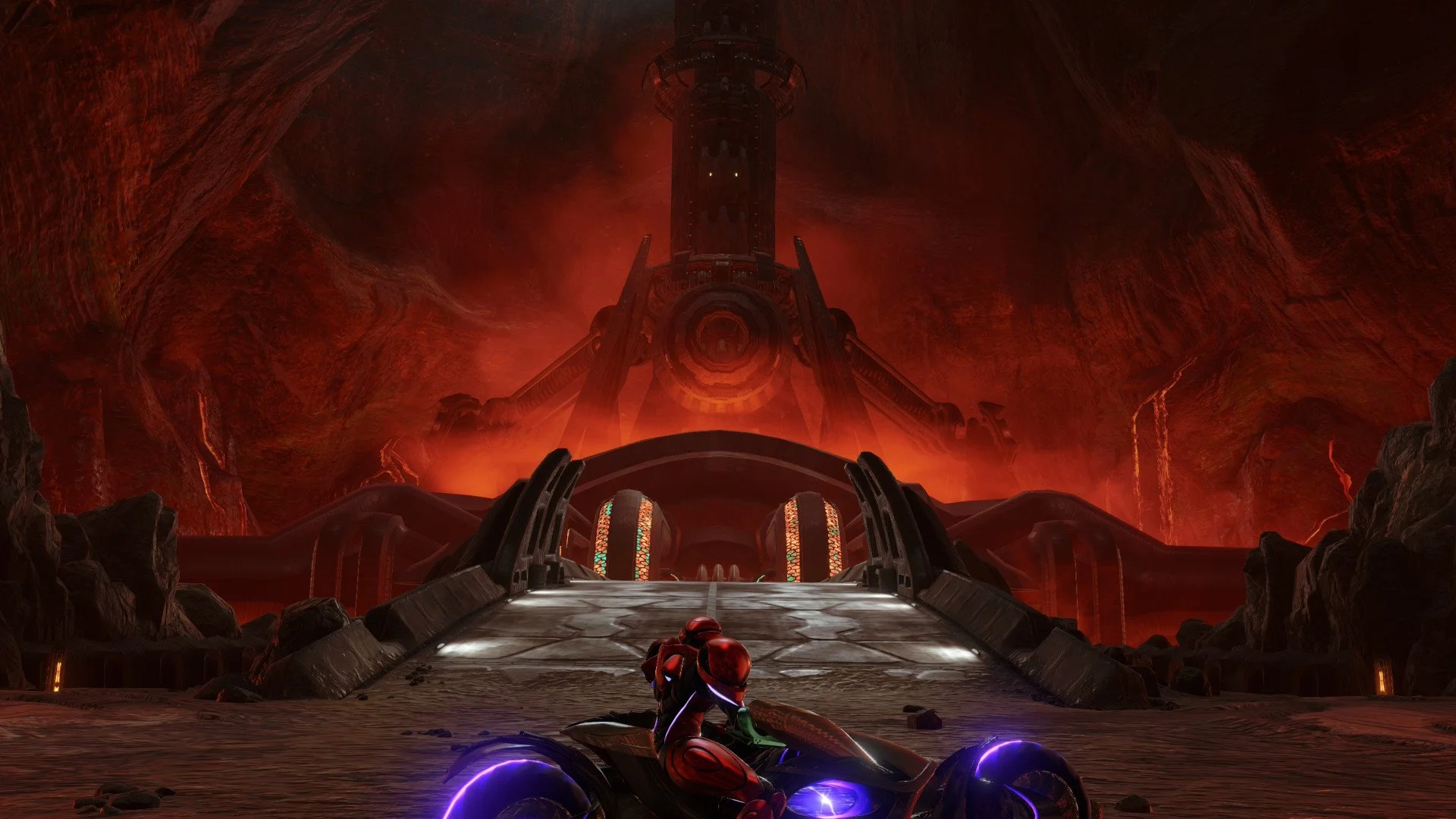
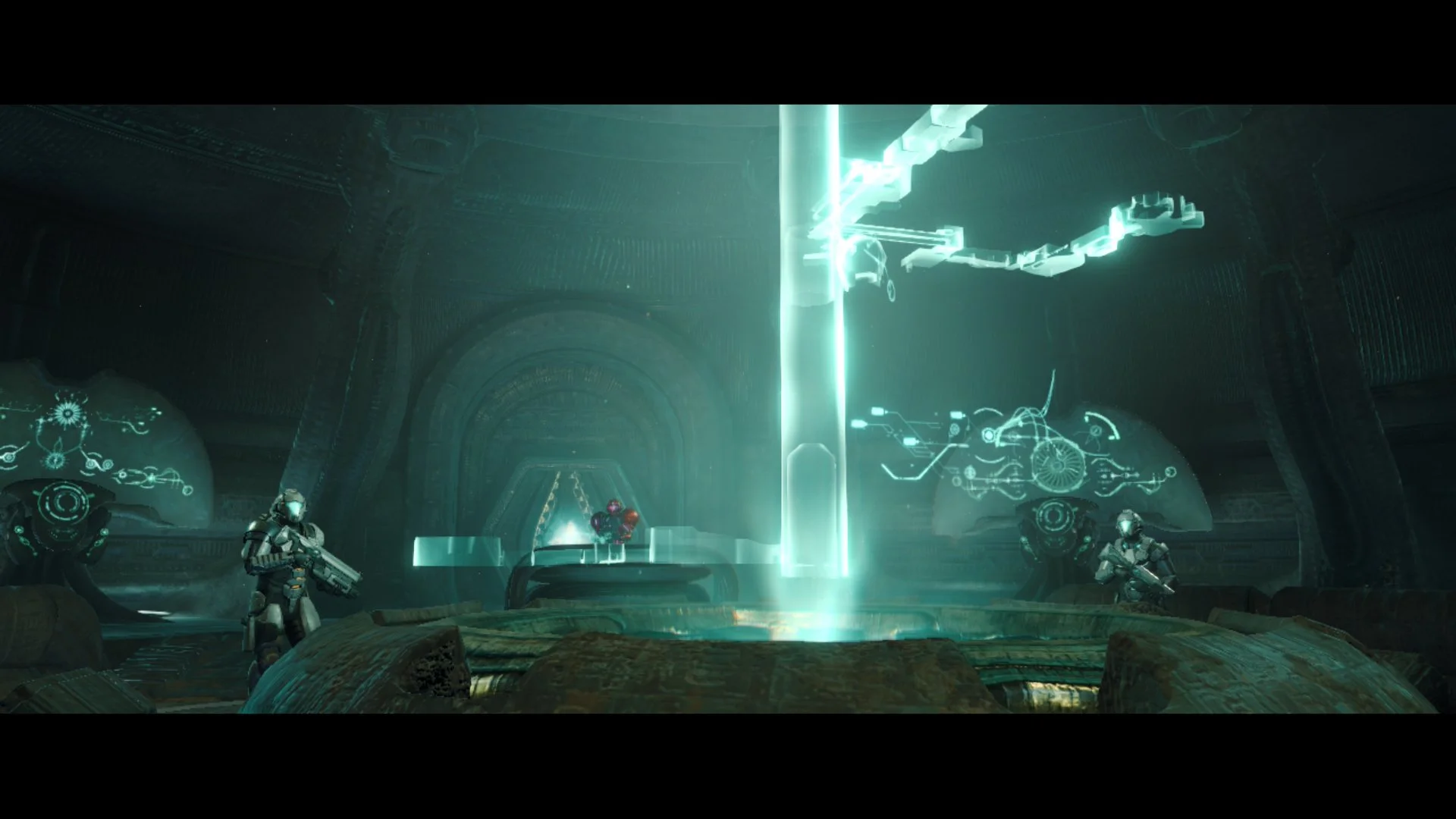
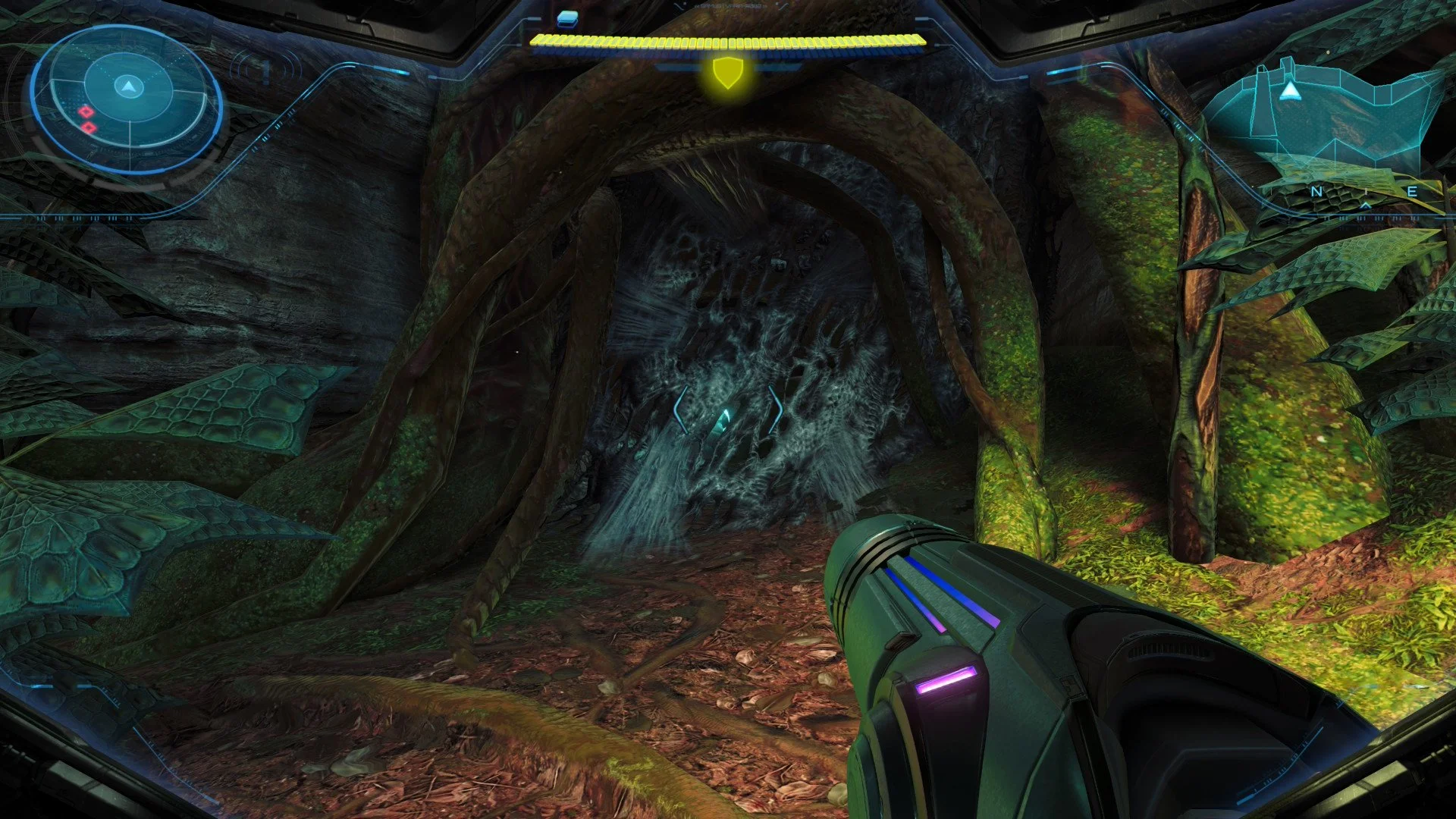
Fury Green is your first true location, with it containing your home base and acting more like a tutorial zone than a stage built to offer much more. It's a lush jungle that is a fairly tightly structured location with limited areas and few unlockable zones. Volt Forge is a high-tech industrial area filled with machinery charged by intense lightning strikes. The Ice Belt, which is the most visually pleasing of the bunch, has a lot of ‘The Thing’ vibes, with underground labs topped off with harsh blizzards and low visibility. The Flare Pool is a lava-filled zone that gives the bike something to do rather than just motor around the desert. The Great Mines is exactly what you think, and has some narratively fun and action-packed moments with your team.
Sol Valley, the desert that distances these areas apart, is vast and while you'll find the odd point of wreckage or the rare underground ruin, the whole landscape is incredibly boring and empty. The bike, named Vi-O-La, is fun to control, with a lock-on weapon that helps with the odd encounter. It's strange that while you have races to get you familiar with the handling and features of the bike, there are no races across this desert, or anything to make the bike more than a way to cross this desert.
One thing you'll be made aware of, constantly, is that the desert is filled with green crystals. You're told earlier that you'll need them to power the memory fruit, the essence that makes up this race and its legacy. However, you need a lot of crystals. And when I mean a lot, I mean it. You’ll feel like you are mining thousands of crystal formations.
Now, I often smashed the bike into as many as I could find, but the game still required me to spend upwards of an hour to gather enough to grow the memory fruit. This grinding took a game that I was already feeling bored by and forced me to grind away at these resources just to proceed for zero payoff. Sure, there is a narrative reason for the memory fruit, but its resolution is only through the final cutscene that you'll have zero interest in. As you hit milestones by collecting these green crystals, you'll earn upgrades. The last upgrade you get provides you with a crystal radar. Why this wasn't the first upgrade, I have no idea, but it was a needless exercise in frustration and should not have been here. What this tells me is that out of my 12 hours with the game, they had likely less than 8 hours of game here.
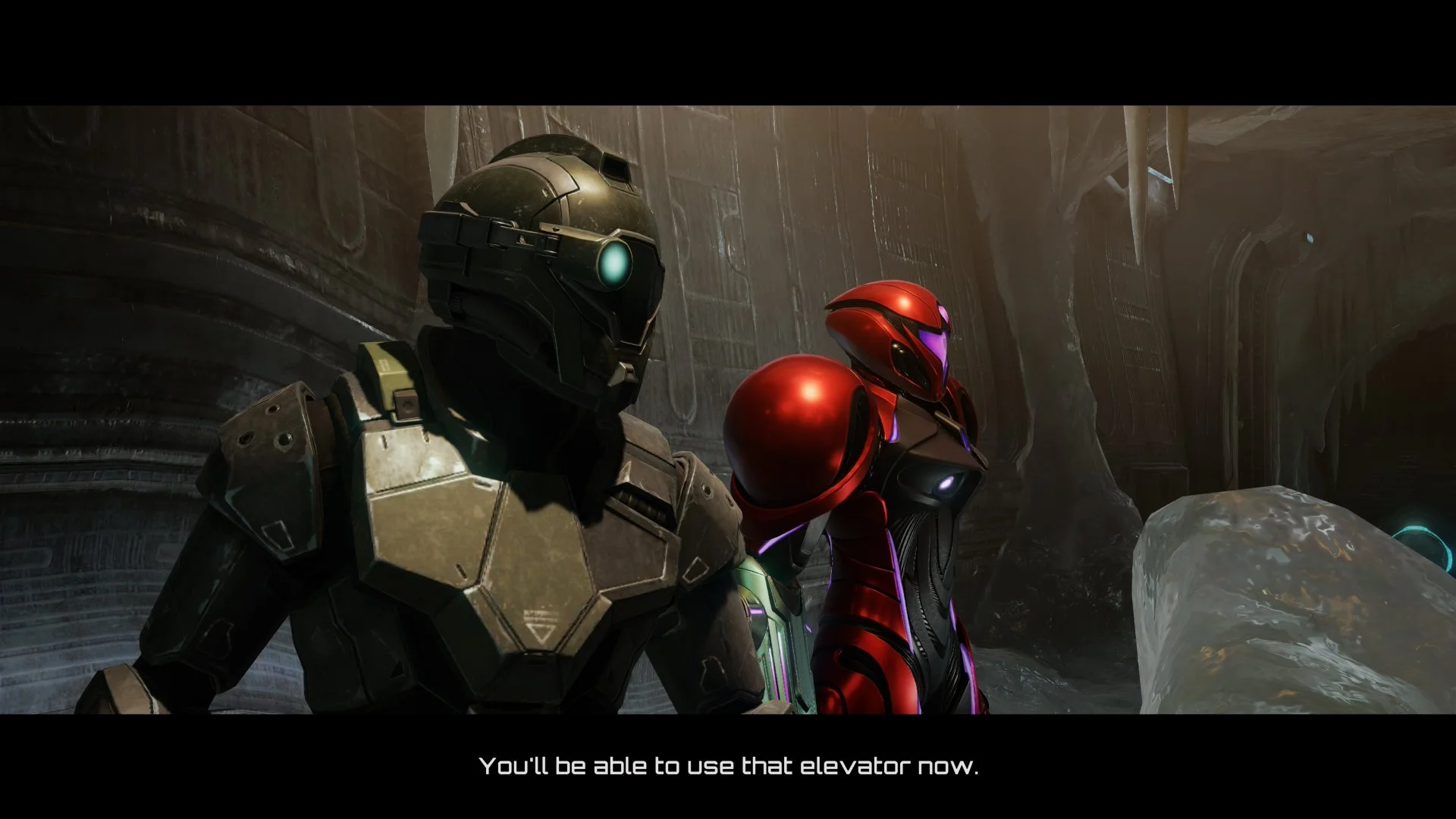
Across this 12-15 hour journey, you'll meet up with a few of the Federation Forces, Myles MacKenzie, Nora Armstrong, Ezra Duke, who goes by “Sarge”, Reger Takobi, and VUE 995, While I do like the characters, and can even tolerate MacKenzie, to a point, his incessant voice in your ear gets old, fast. About 45 minutes into my hour-long crystal grind, he asks if I have been collecting crystals. I think during my whole playthrough, he said this about 40 times. Also, whenever you get a new upgrade, he will constantly tell you that you can find new things in old areas with said upgrade. Aside from him constantly alerting you to things you can do, there is a radio function on the map for him. While these alerts were optional and accessed through the radio, I don't know. Still, his active presence in the game via the numerous cutscenes is more or less fine, and by the end of the game, I enjoyed his character.
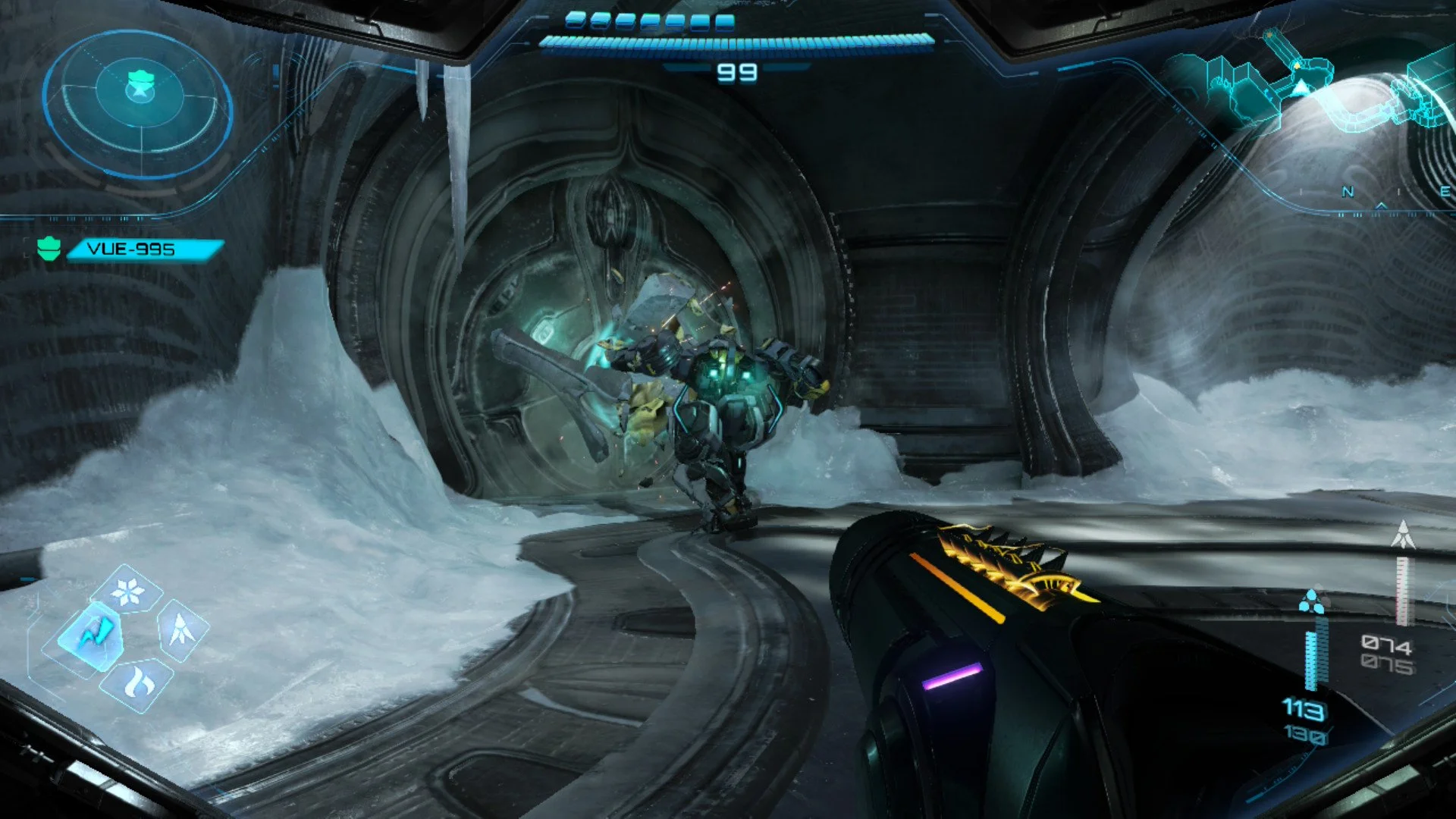
Sarge, Nora, Reger, and VUE-995 are the better of the four. Nora is a Samus super fan, with Sarge being a pretty stereotypical leader who understands Samus’s value. VUE-995 is a battle android that handles a lot of the heavy lifting and is a great addition. However, the best character in the game is Reger Takobi, as he is an experienced soldier who has strong beliefs and even saves Samus from a pretty intense battle. He is also used sparingly, and his final interaction with Samus is well thought out. While it is unclear if we will see this collective of companions again, I do hope they reappear in a later entry.
What sadly drags down the use of these characters is Samus's inability to even converse with them. Samus doesn't speak a single word, and this makes some conversations or moments lose their impact, especially an emotional moment that would have been heightened even more with Samus actually saying something. I get it, she isn't a woman of many words, but Samus has talked before, and the lack of anything here just misses the mark when characters are directly asking her questions, and she just stares at them blankly, forcing them to continue the conversation on their own. It's awkward.
While each character on their own is more or less pretty good, their involvement in major moments in the game really solidified their importance to the story and to Samus herself. That said, their resolution of said importance felt lacking, and I wish the game's “true” ending had done something different than just the same ending, but with Samus removing her helmet. Seeing the true ending was a complete letdown.
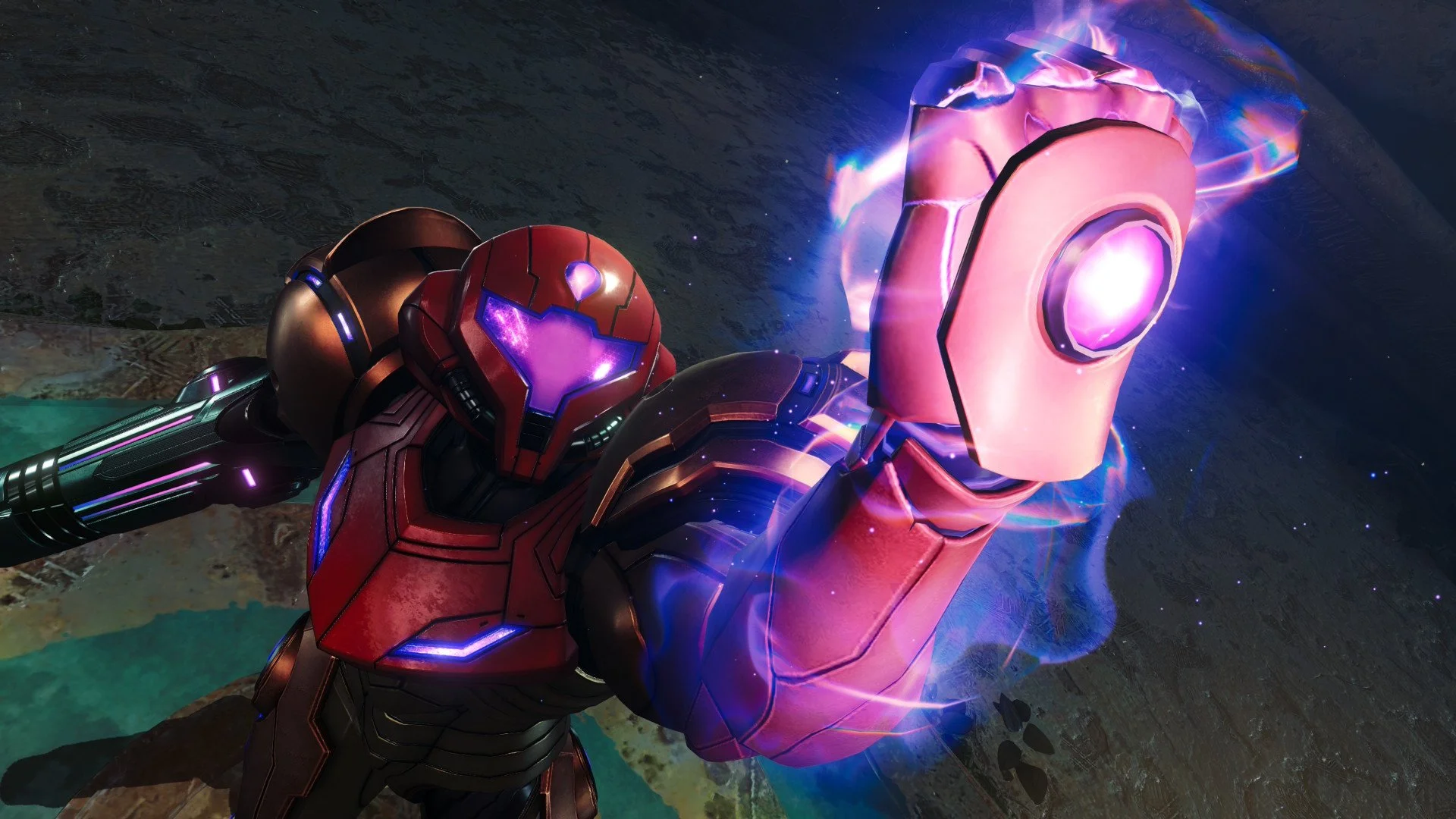
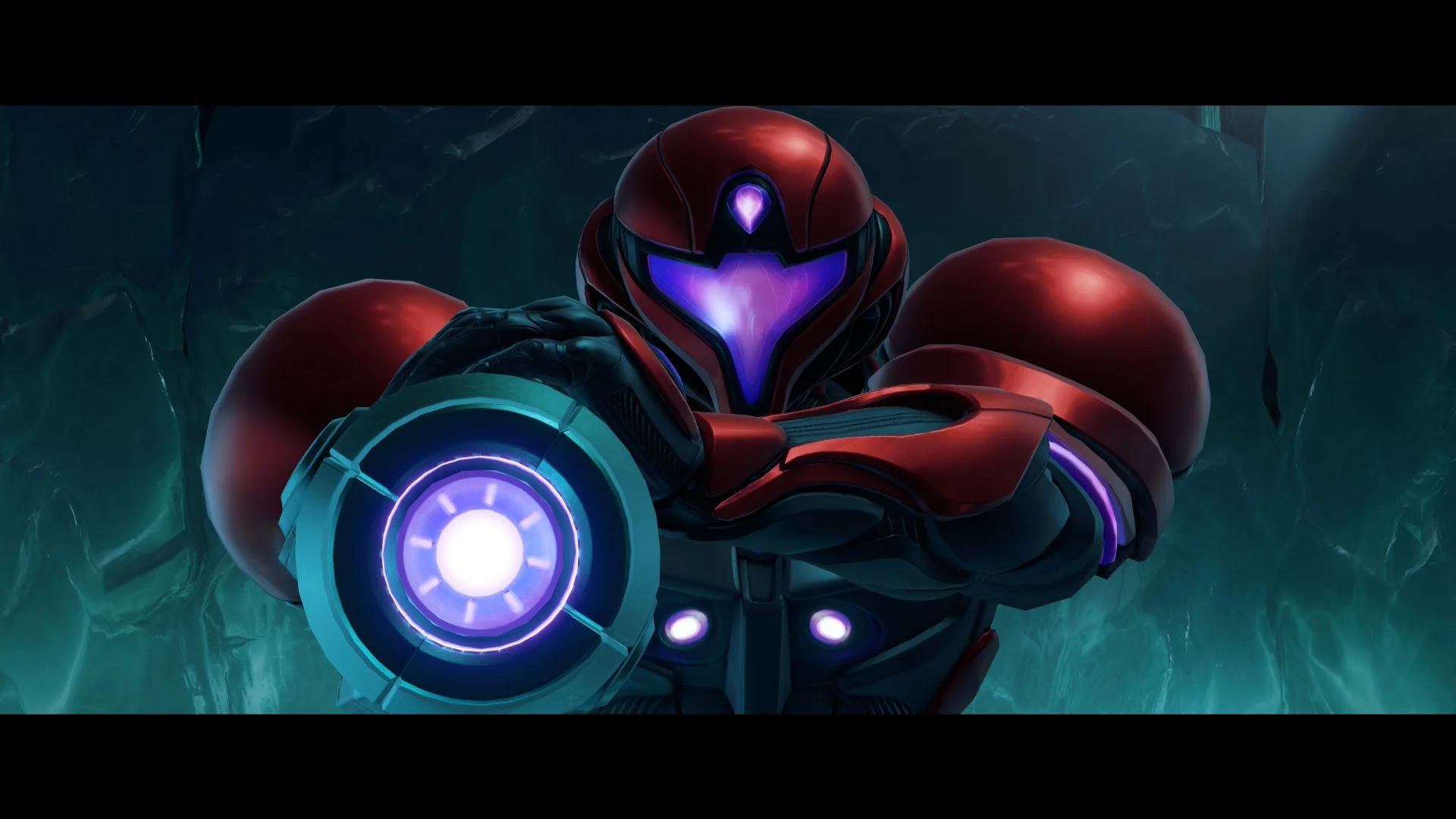
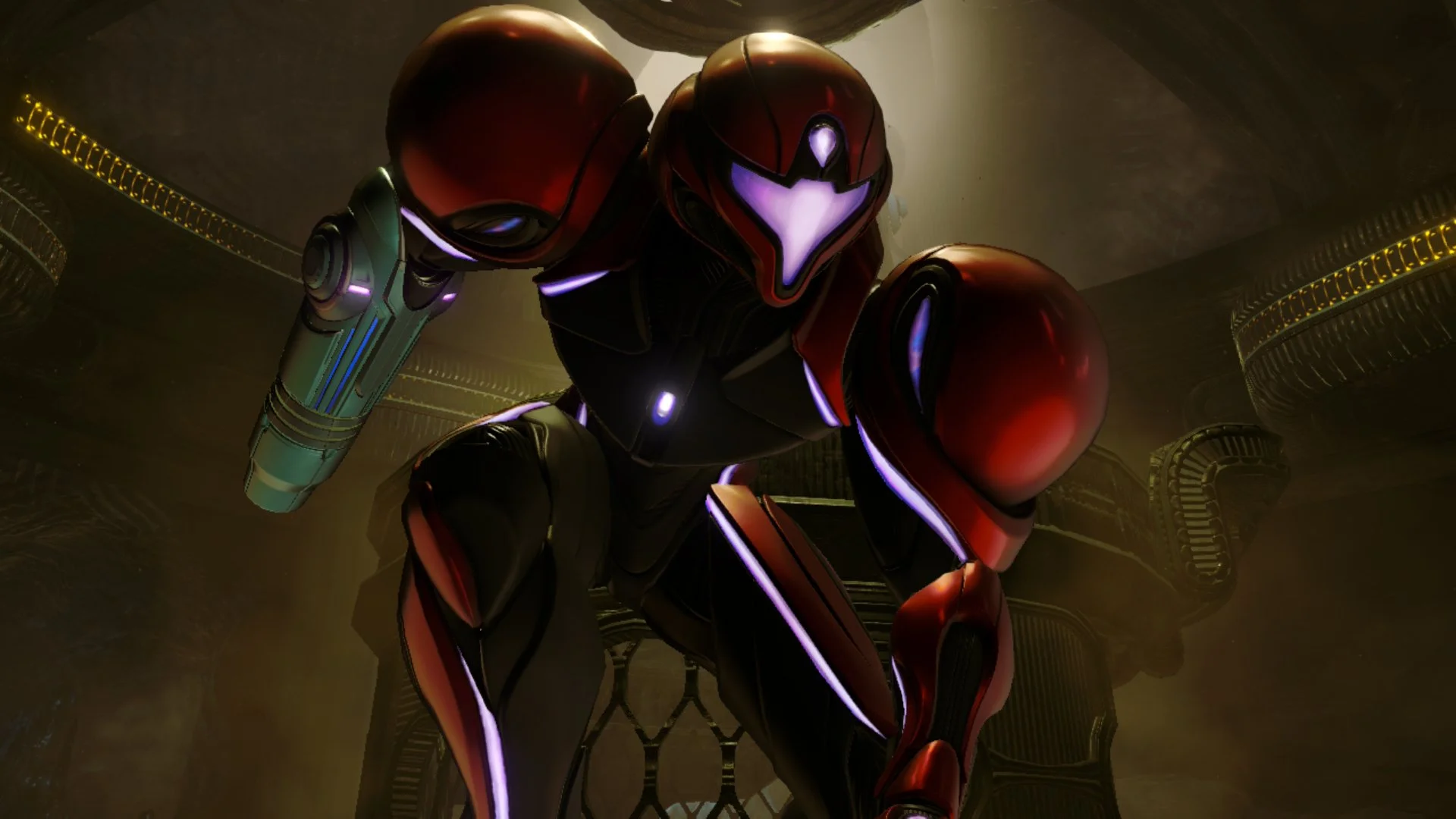
Abilities-wise, there isn't much here we haven't seen before. As Samus is deemed the Chosen One by this race of long-extinct beings, she is granted psychic power. So instead of just the same moves Samus has to regain yet again (she really needs to do something about that…), these are more or less the same abilities but with “Psychic” titled next to them. That said, there are a few cool new weapons that, while great, rarely felt useful. You have a grappling hook that is fun, but rarely featured in the progression of the game, and felt used mostly for tracking down hidden and out-of-reach upgrades. The control beam allows you to manually direct a psychic blast, and the ability to form a psychic bomb and direct it outside of your morph ball was a neat trick that I think I used three times. Again, there are some cool ideas here, but they were so rarely used that I can't help but feel the game saw a massive change in structure and omitted their importance as a result.
While Sylux is projected to us as the big bad villain, they are woefully underdeveloped and dramatically one-note. Hell, Mr. X or Nemesis from Resident Evil 2 and 3 felt leagues more defined than this guy. While we understand that they have a grudge against Samus, and the super secret ending offers us a glimpse at why, they were simply a poorly executed villain that is nothing more than a revenge seeker, rather than actually contributing to any sort of meaningful connection to Samus. The secret ending is obtained by having a 100% completion on everything, and then a cutscene will play after the main ending, showing you the origins of Sylux. Honestly, you can either unlock this via the Amiibo or by just watching it on YouTube. It's not worth it.
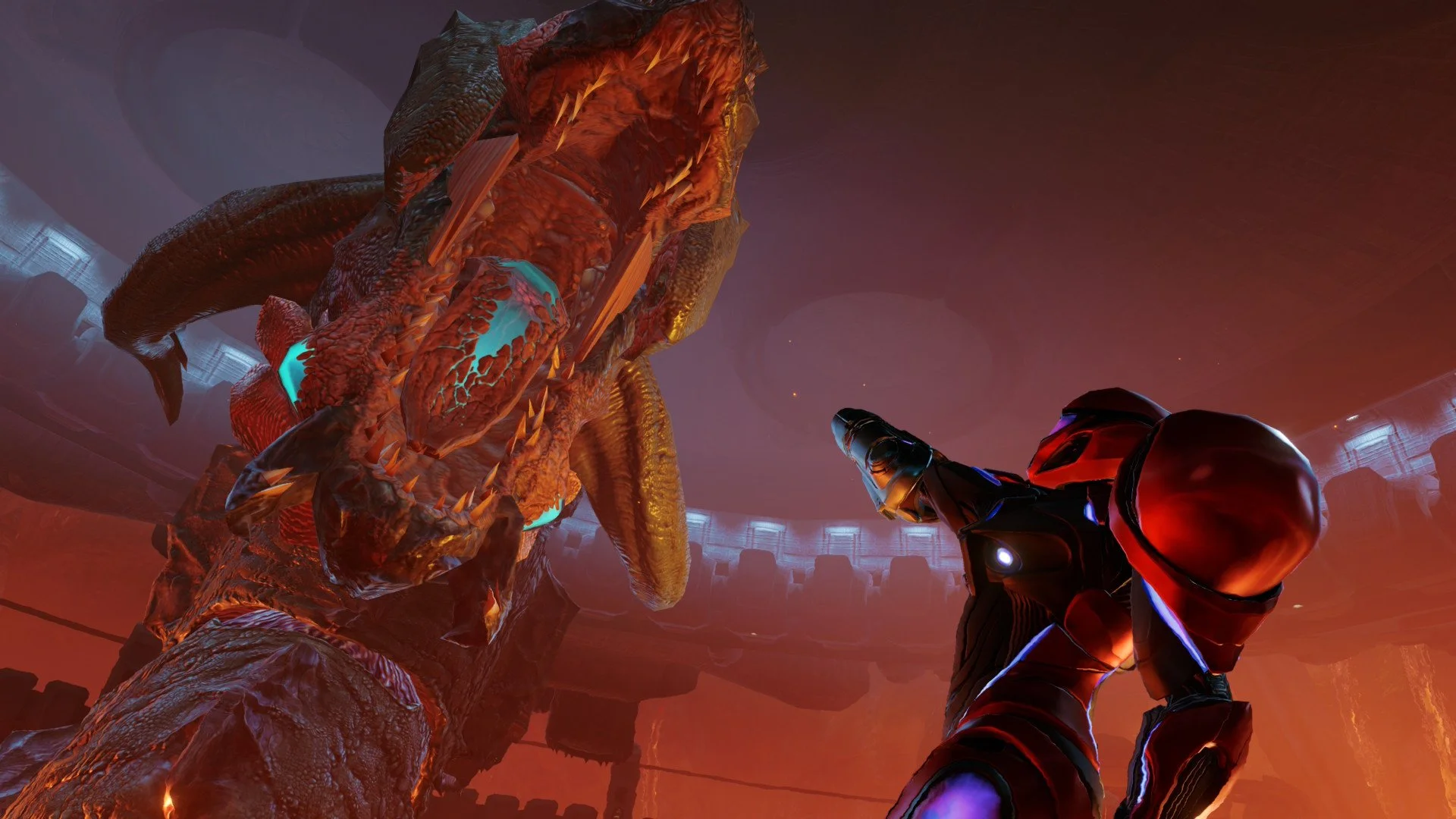
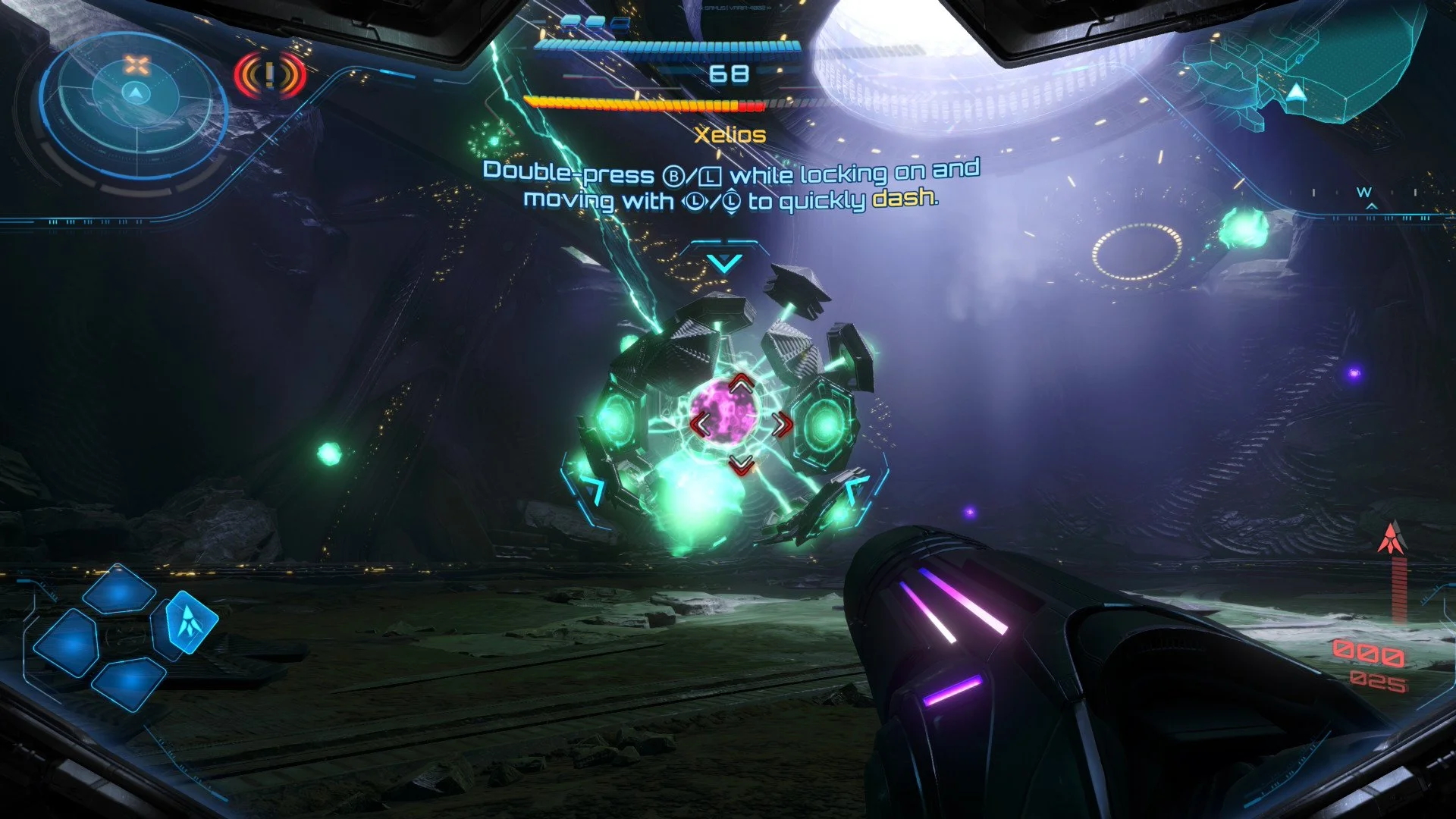
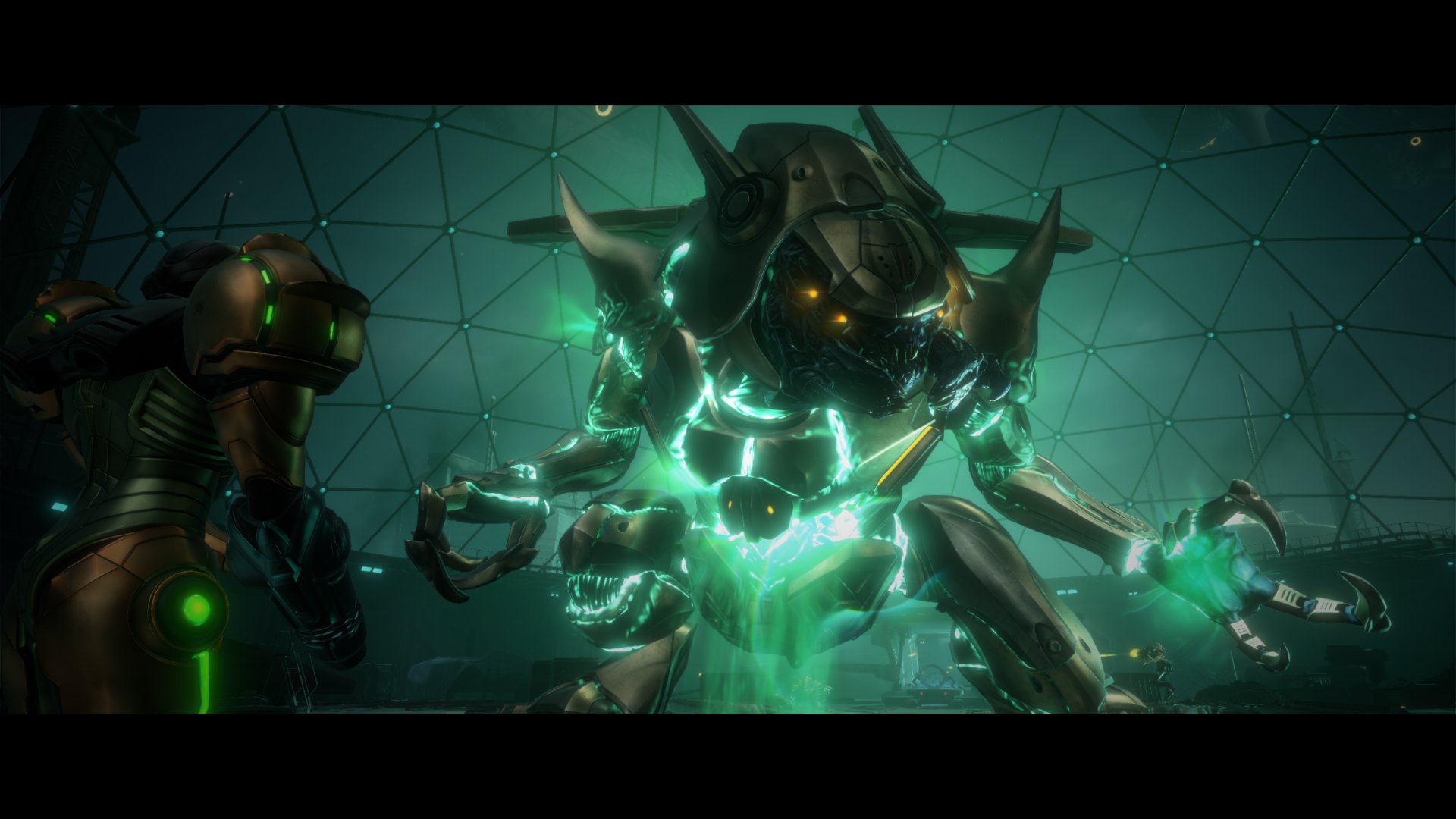
Each area you explore has its own boss, and most are wonderfully designed, at least aesthetically. However, they lean too far on just having a noticeable weak point. You can scan the boss to understand its weakness, but you'll easily figure out that its glowing areas are weak points, and attacks focused there will aid in taking it down. Still, I did enjoy the boss battles, but as the combat is far slower than that of Metroid Dread, the intensity of the encounters just wasn't terribly impressive or engaging.
Present across the Prime series is the ability for Samus to scan objects. This is where a lot of the story is present. While some descriptions help expand certain story beats, enemies, doors, or other interactables, these go too far in simply telling you how to use these objects instead of subtly pointing you in the right direction. The same goes for bosses as it simply tells you how to defeat it. It feels too streamlined and generous in how to overcome your obstacle. Also, why do we need to scan every single door we go through? It's a door, we get it.
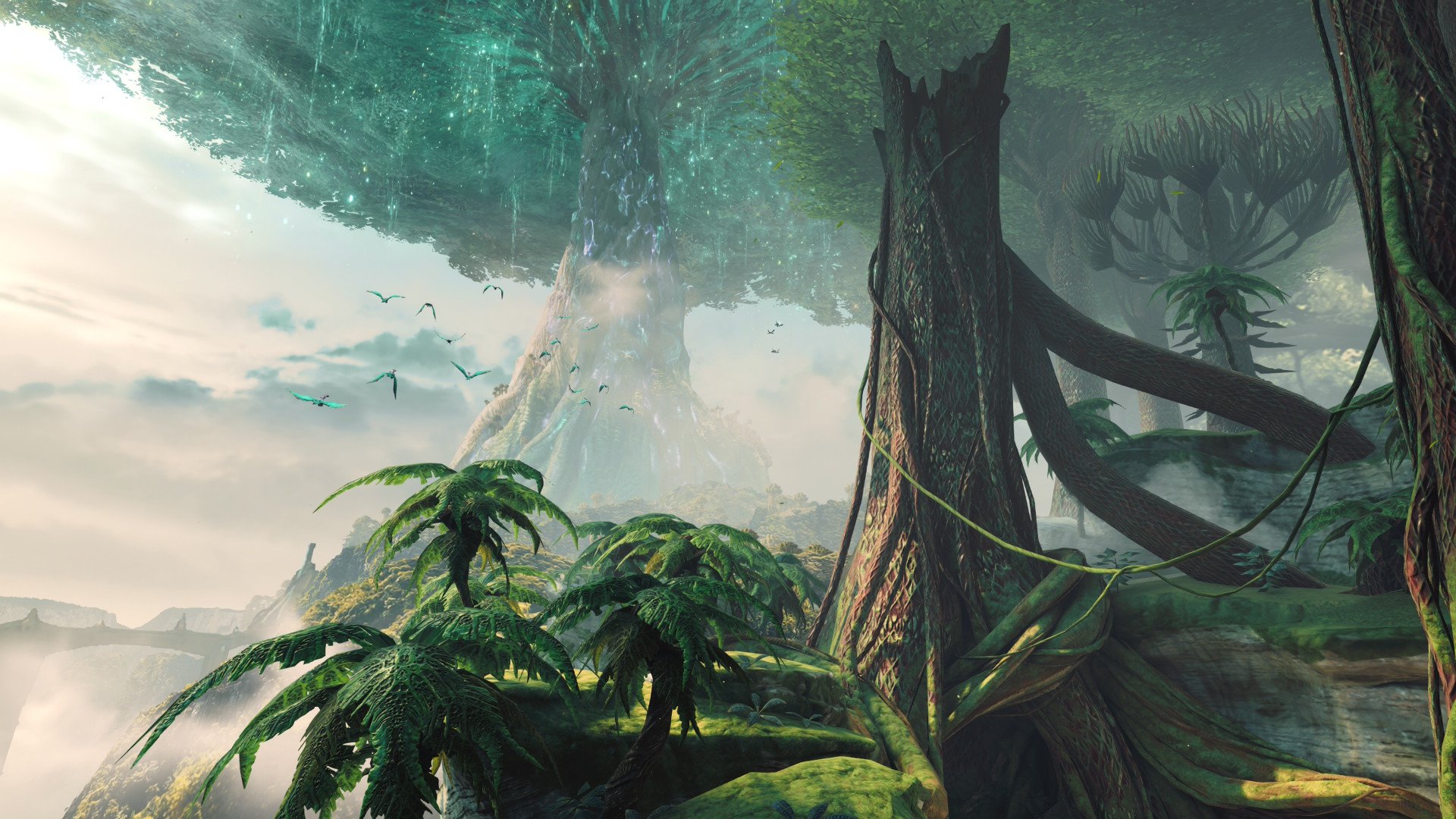
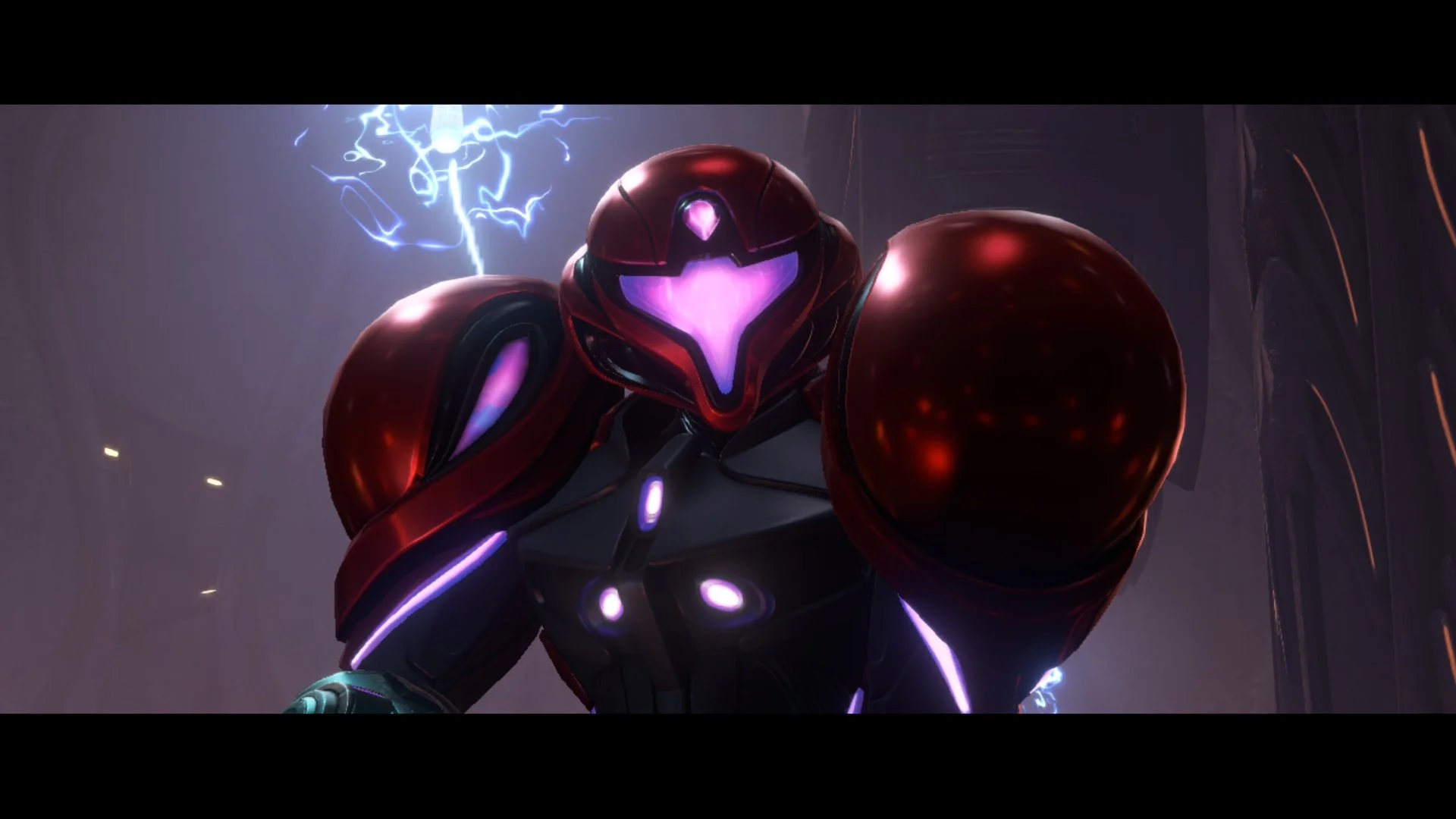
My entire playthrough was on the Switch 2. I played about half of the game portably at 120fps at 720p and then at 60fps 4K on my TV. While the added framerate did help with aiming, it wasn't exceptional or felt like it really changed the game. Still, the visuals are fantastic, with some absolutely superb art direction. All in all, this is the best-looking game on Switch 2, at the moment. The Switch version is still quite the looker, but it does suffer a bit in the visual clarity and framerate you find in the Switch 2 version.
The Switch 2 version also allows for the ability to use the Joycons as a mouse, allowing for extremely precise aiming. As I played on the couch, like most people, this method felt awkward and wasn't something I stuck with for more than 10-15 minutes as I tried out this novelty. You can use motion aiming, which is available on both Switch consoles, but AI opted just for the regular controller controls, as that was one reason I never really played the original Wii Metroid Prime games. Motion controls just ain't my thing.
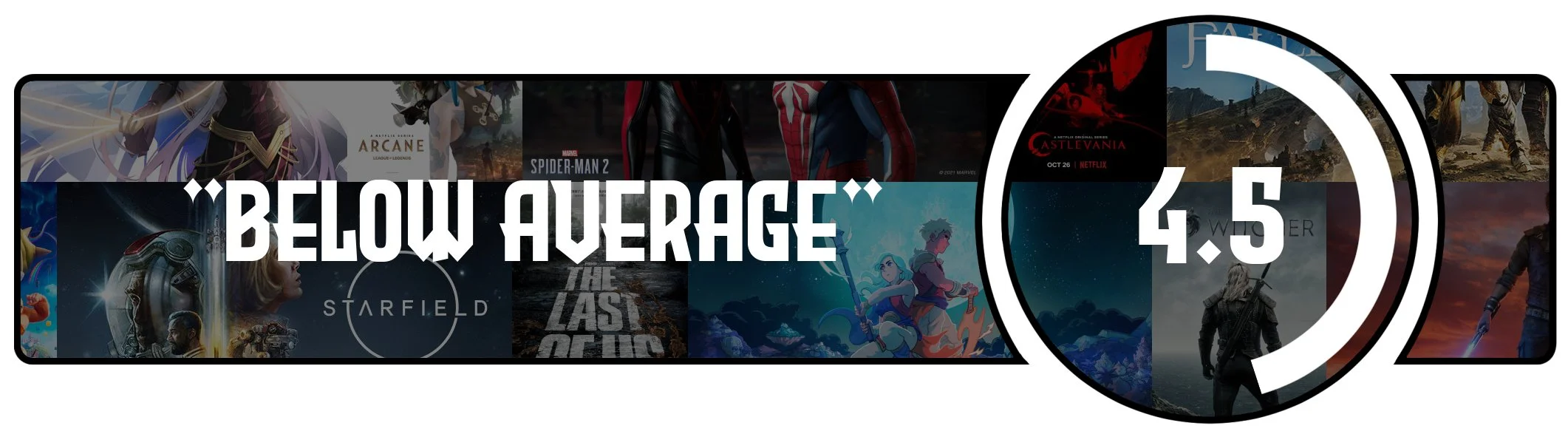
I really wanted to like Metroid Prime 4. Hell, I spent the $100 CAD for the game (and 2 of the overpriced Amiibos…), and now it's destined to be traded in. Metroid Prime 4 deviated too far from the format that makes the series. Vast areas of the game are underused and boring, and there aren't enough new features to really justify this entry. This feels like a game they were just trying to get to market, given its troubled development. When it comes to the future of Metroid, I'll stick with Mercury Steam, thanks.
Developer - Retro Studios.
Publisher - Nintendo. Released - December 4th, 2025. Available On - Nintendo Switch, Nintendo Switch 2. Rated - (T) - Animated Blood, Violence. Platform Reviewed - Nintendo Switch 2.
Review Access - Metroid Prime 4: Beyond - Nintendo Switch 2 Edition was purchased by the reviewer for the purpose of this review.
Jeff is the original founder of Analog Stick Gaming. His favorite games include The Witcher III, the Mass Effect Trilogy, Hi-Fi Rush, Stellar Blade, Hellbade: Senua’s Sacrifice, and the Legend of Heroes series, especially Trails of Cold Steel III & IV.