
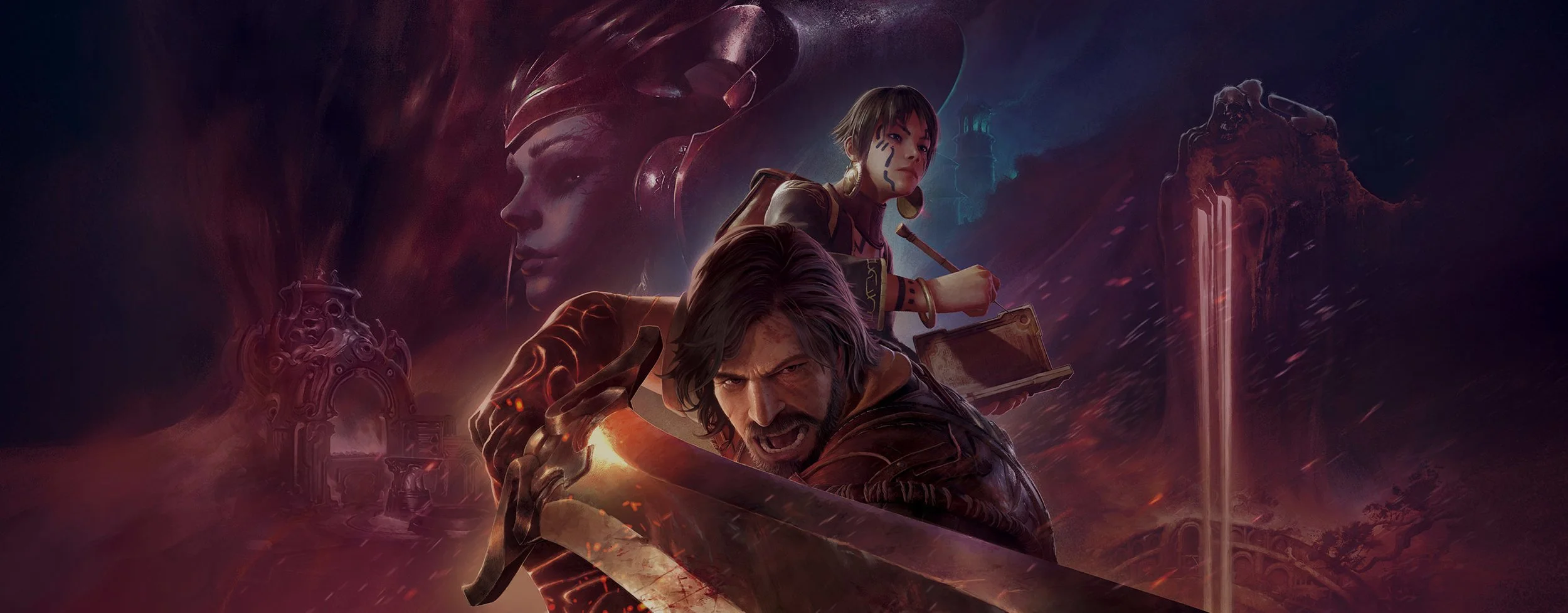
Forging the unknown path.
While many may know Mercurysteam from Castlevania: Lords of Shadow and their eventual masterpiece with Metroid Dread, I've been a fan of the team ever since they began with the likes of Scrapland and Clive Barker's Jericho. 2010’s Castlevania: Lords of Shadow, however, would cement the studio as one to watch out for, given the confidence and execution of the finished product.
While the bulk of the industry is focused on Unreal Engine 5, Blades of Fire continues the use of the Mercury Engine, a proprietary engine that Mercurysteam has been using since 2004. While Blades of Fire is not a visually impressive title, it does allow the experience to feel of the era Blades of Fire is imitating. If someone was to tell me this was an enhanced port or remaster of an Xbox 360 game, I'd fully believe you.
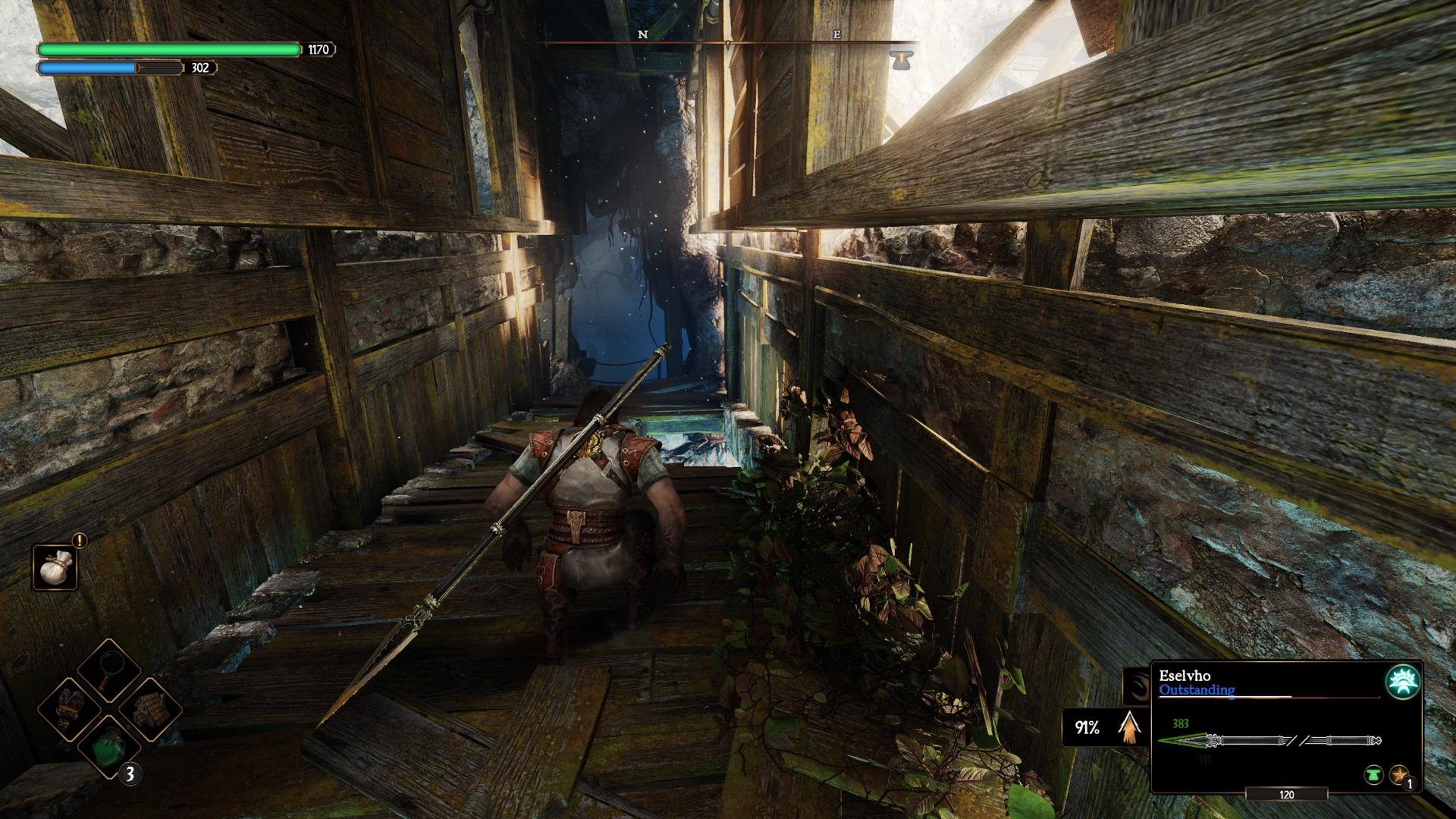
Blades of Fire is a straightforward game in what gameplay avenues are open to you. Its design philosophy is fully committed to the Xbox 360 era, with limited mobility to exploration to allow basic elements like rocks or logs to hinder your path with the complete inability for the character to jump even the most trivial gap. And yet, you’ll have contextual moments that have the character leap further than those minuscule spaces. With a large focus on combat, and forging your own weapons, Blades of Fire does at least excel in those elements, mostly, even if they don't support the length of this incredibly bloated adventure.
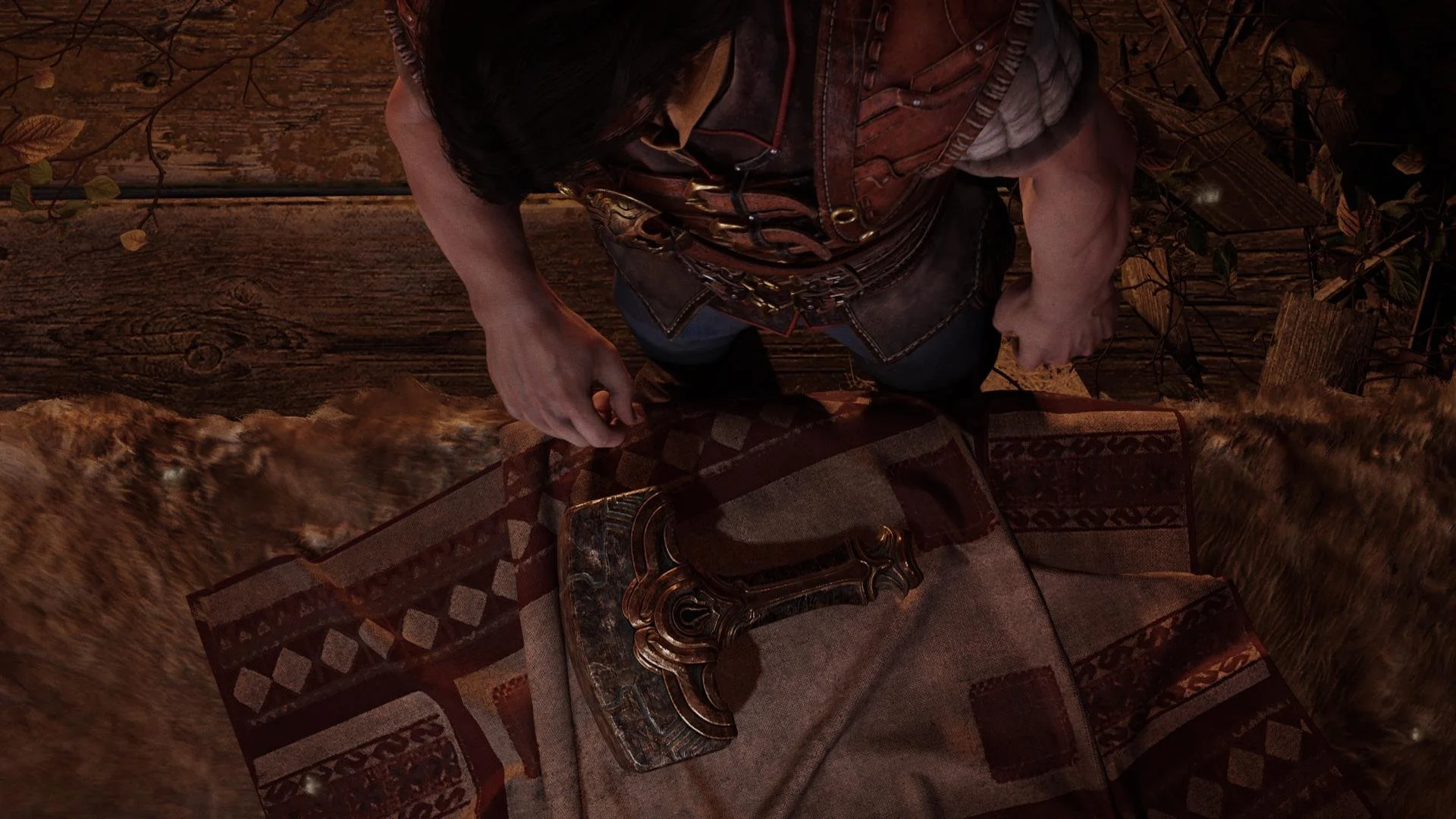
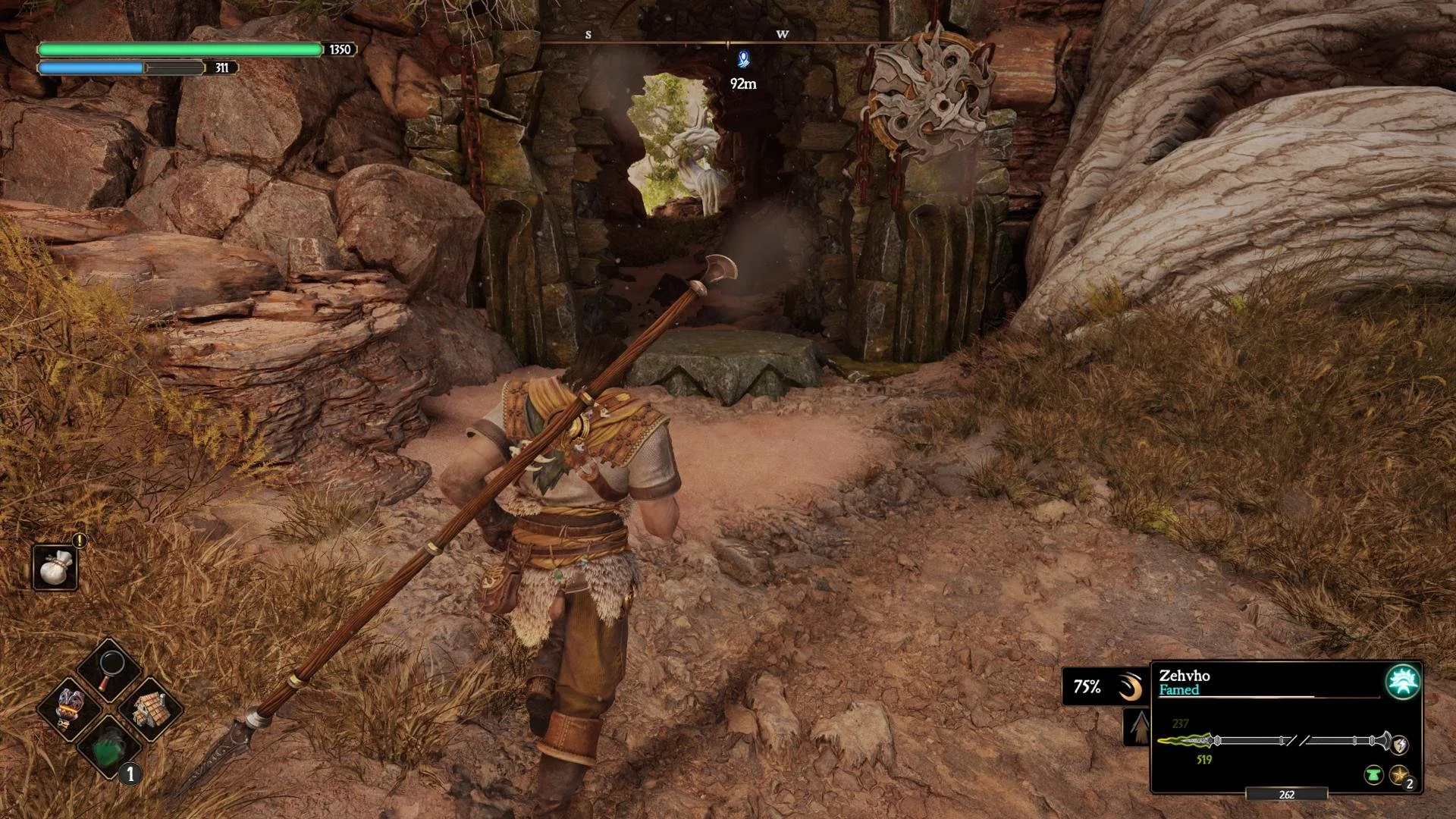
Blades of Fire resembles that classic type of game that was over and done with in about 10-12 hours. However, Blades of Fire is easily 50 hours at minimum, with repeated playthroughs likely taking you around 30-35 hours since you’ll know where you're going. At first, I assumed there was no objective marker, and technically, you won't see one, unless you go into the options and click “show next objective” which has a bizarre invisible cooldown to when it can be used again. This is the most bizarre menu option I've ever seen. Apart from this weird placement of a very crucial design element, you'll generally rely on directions mentioned by the character, even if they only mention it once or twice, and rarely ever again. Out of my 60+ hours, I would say that at least 20 of that was getting lost, especially given the sometimes vague directions or if they gave a direction at all. There is an objective to gather a hammer for a statue at the forge, and there is zero indication of where that is. This is largely how every objective is, creating a situation where you’ll stumble upon it randomly after getting lost for hours on end.
While Castlevania: Lords of Shadow was inspired by the original God of War series, Blades of Fire seems to follow in the steps of the 2018 reboot. While it does share in some Soulslike elements, such as savage difficulty spikes, respawning foes, and parries and blocks, this adventure does nonetheless play the role of the old school third-person action adventure game, one that feels almost intentionally dated as a result. While the dated result isn’t technically an issue with the game, the absence of some common modern design elements can sour the overall experience.
Blades of Fire is a homage to a title near and dear to the studio itself. Severance: Blade of Darkness was developed by the founders of Mercurysteam, and the title shares some aspects for sure. While not connected in any real way to the game, it is nonetheless a spiritual continuation in many regards. After checking out the title for the purpose of this review, I'd love to see some sort of remaster for the game.
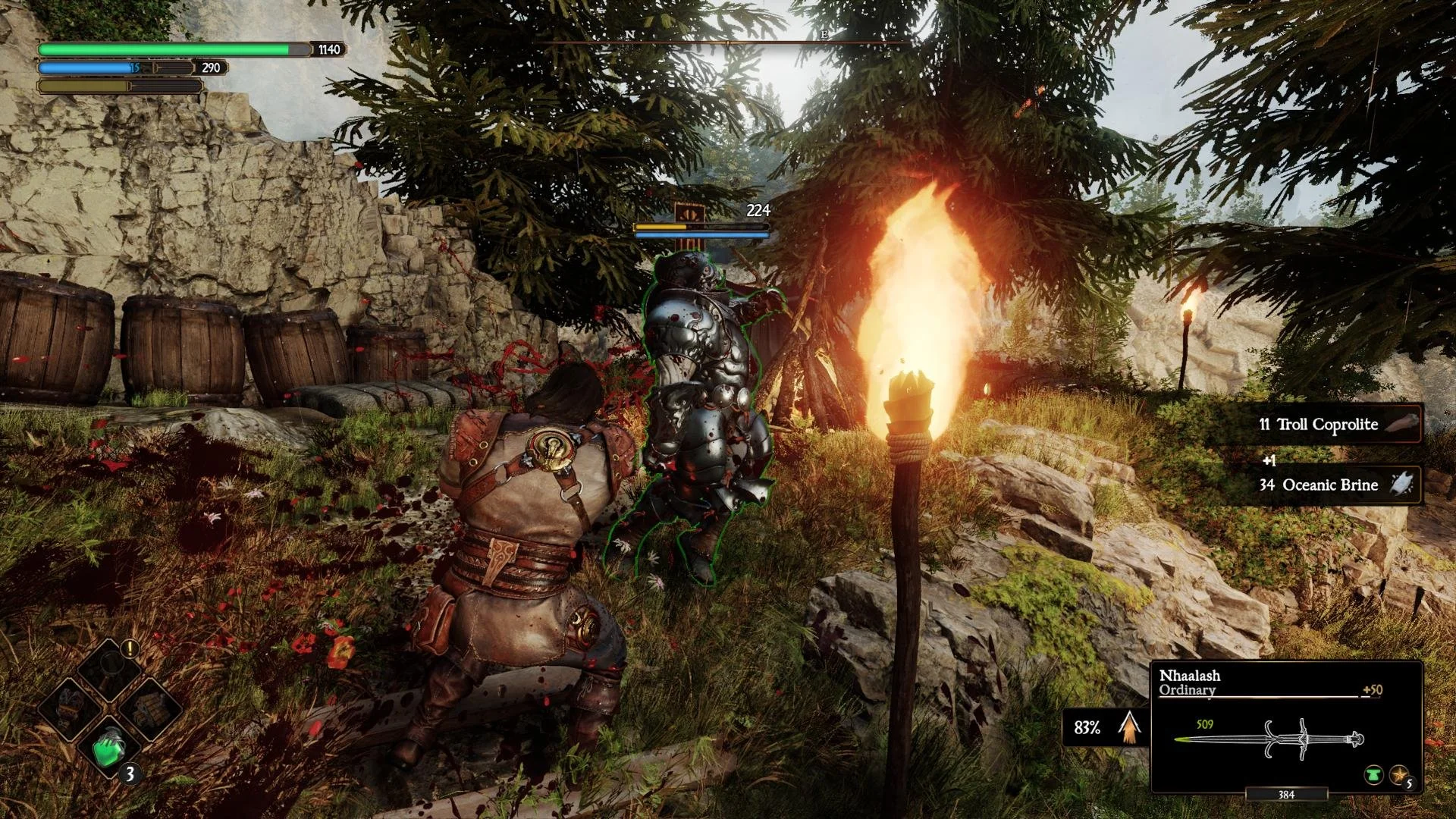
Blades of Fire is a revenge story. As you are reacquainted with an old friend, he is tragically killed, and while his killer is brutally put down right then and there, the real threat, the Queen, is the cause of this unfortunate murder. While the motivation is there, there is more to this story. The victim was on his way to meet you, his charge responsible for holding onto a package for you, and it ends up being a legendary hammer, one of the ancient objects that once crafted the world. As the Queen has turned all metal to stone, you wield the ability to once again forge steel.
You play as Aran de Lira, a blacksmith who has taken on the task of killing the Queen. You learn more about him as time goes on, and while the actor does a fair enough job with some poorly written dialogue, his performance almost feels like I was listening to Matt Berry attempting to do a very serious role, devoid of his normal comedic inflections. Regardless, Aran’s connections to the Queen, and the past they share, is interesting and is fairly well handled. I just wish the game’s story from moment to moment was more about this than the small bite-sized narratives we get in each zone.
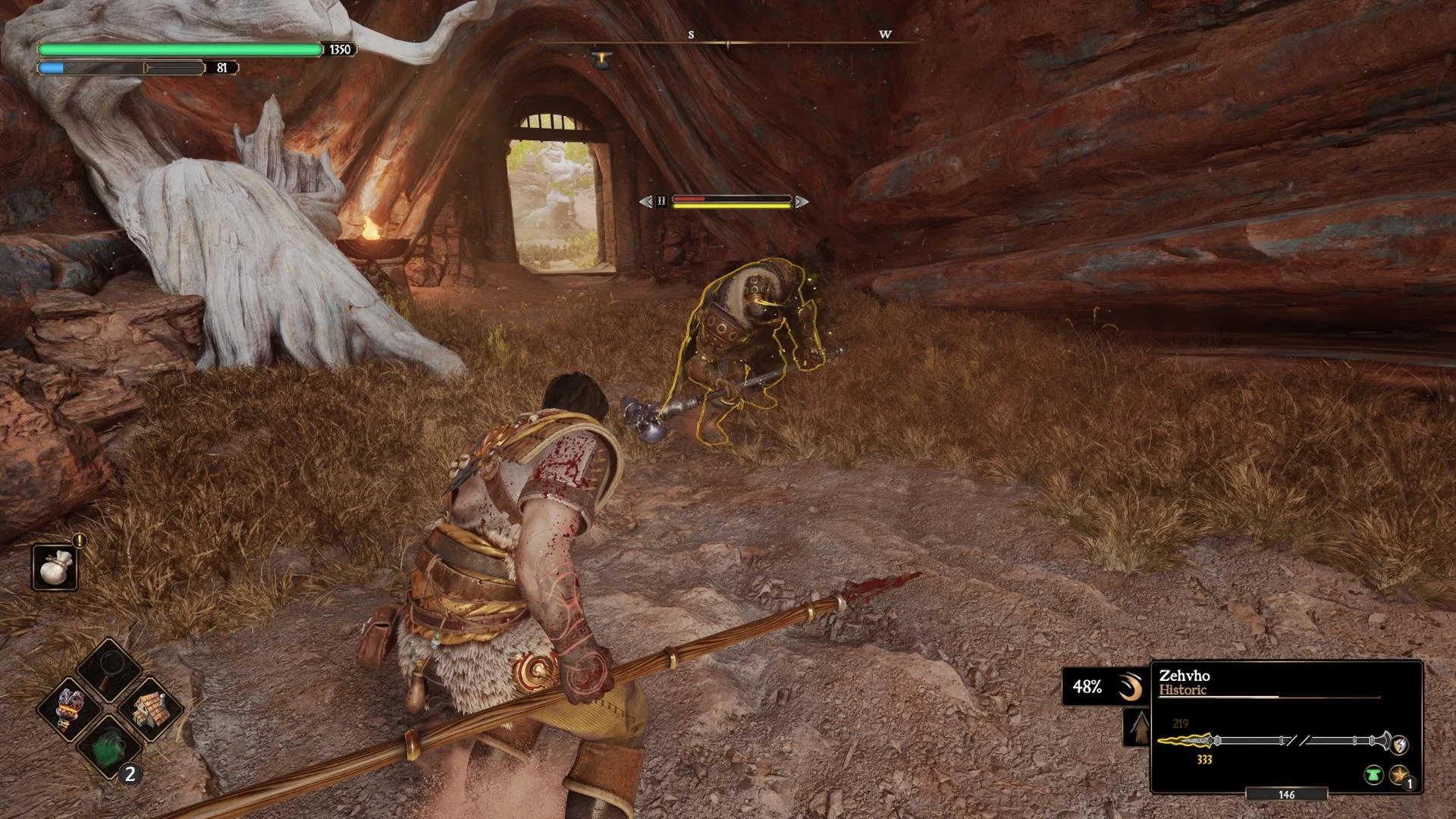
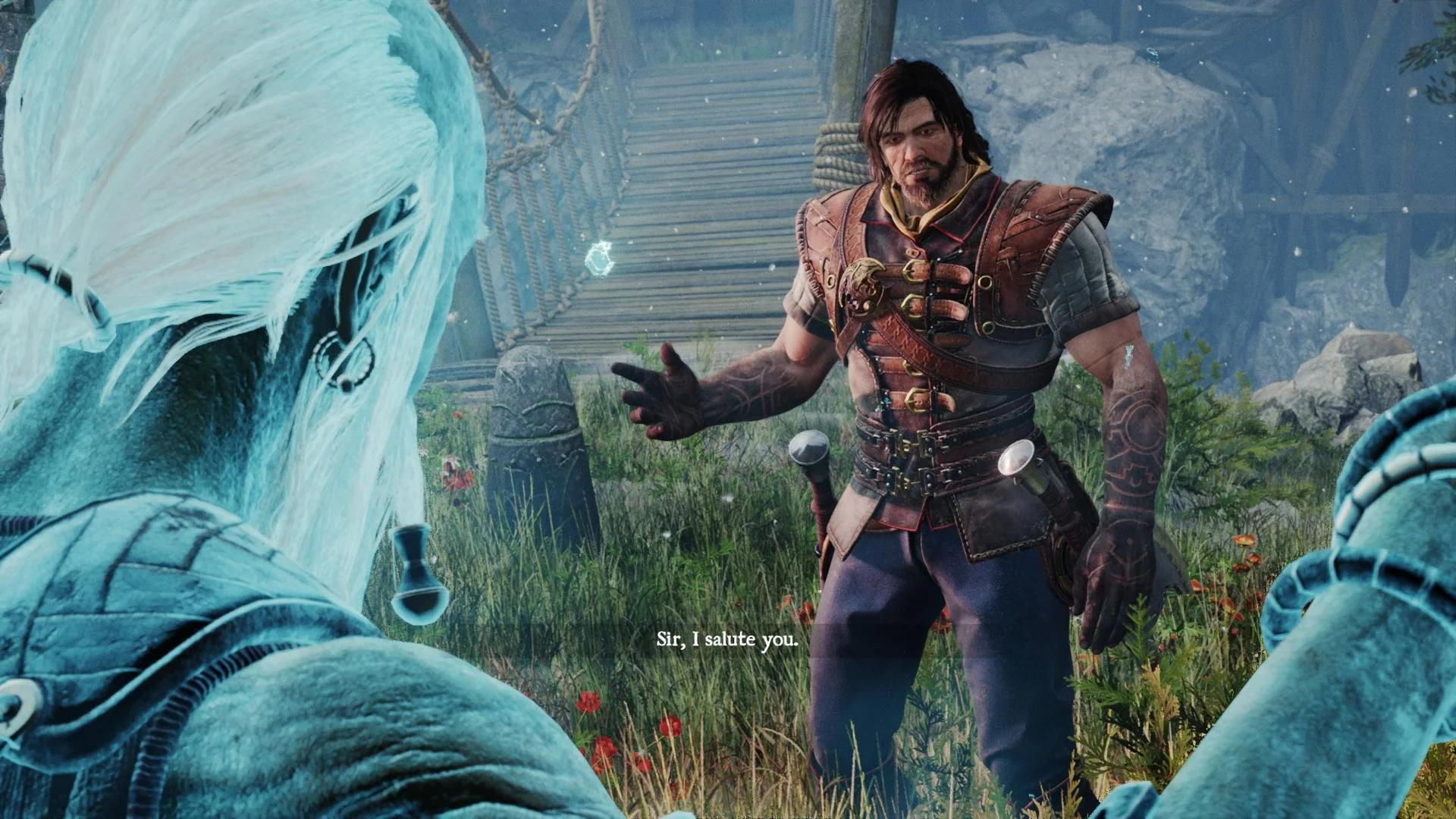
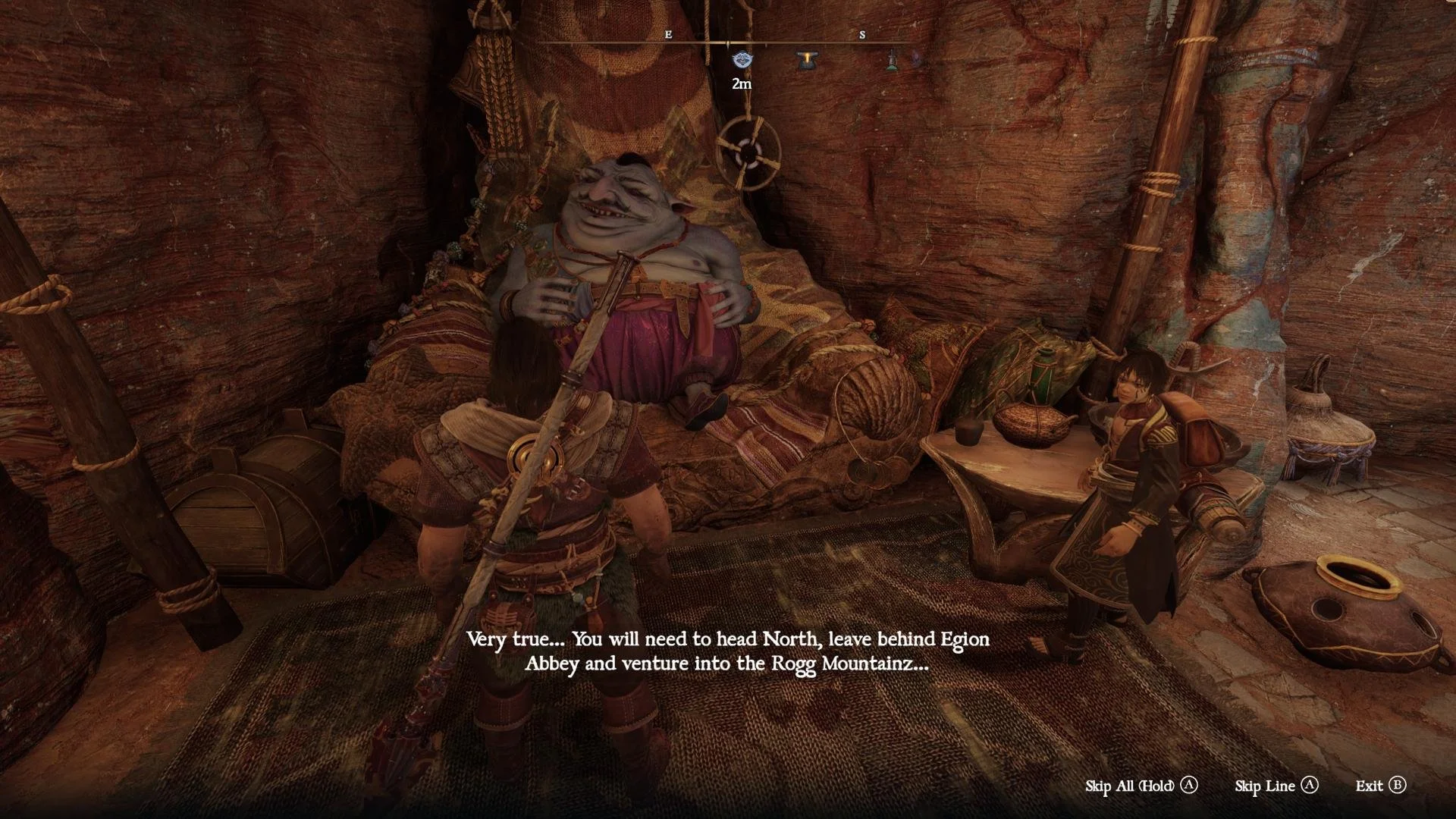
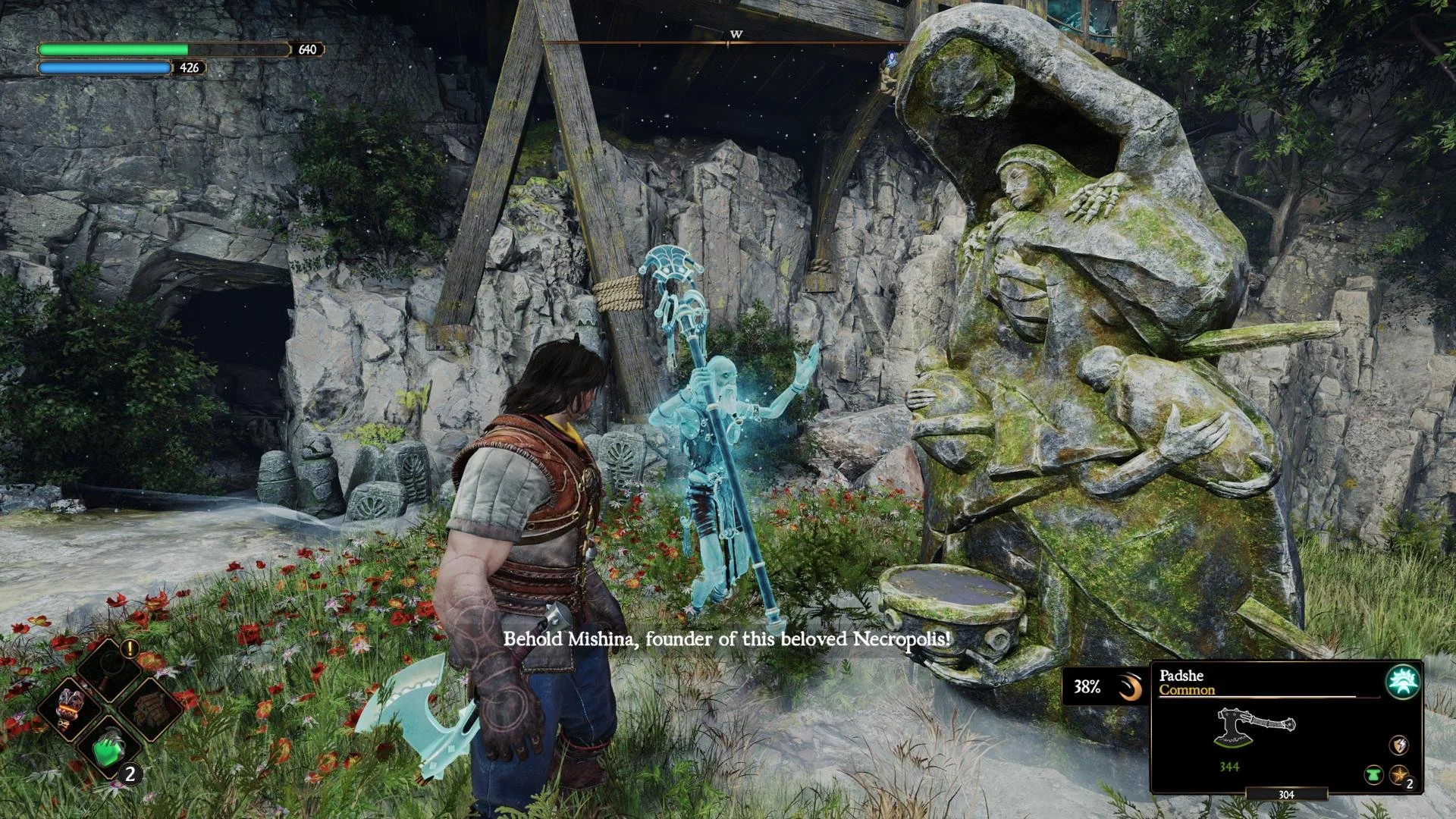
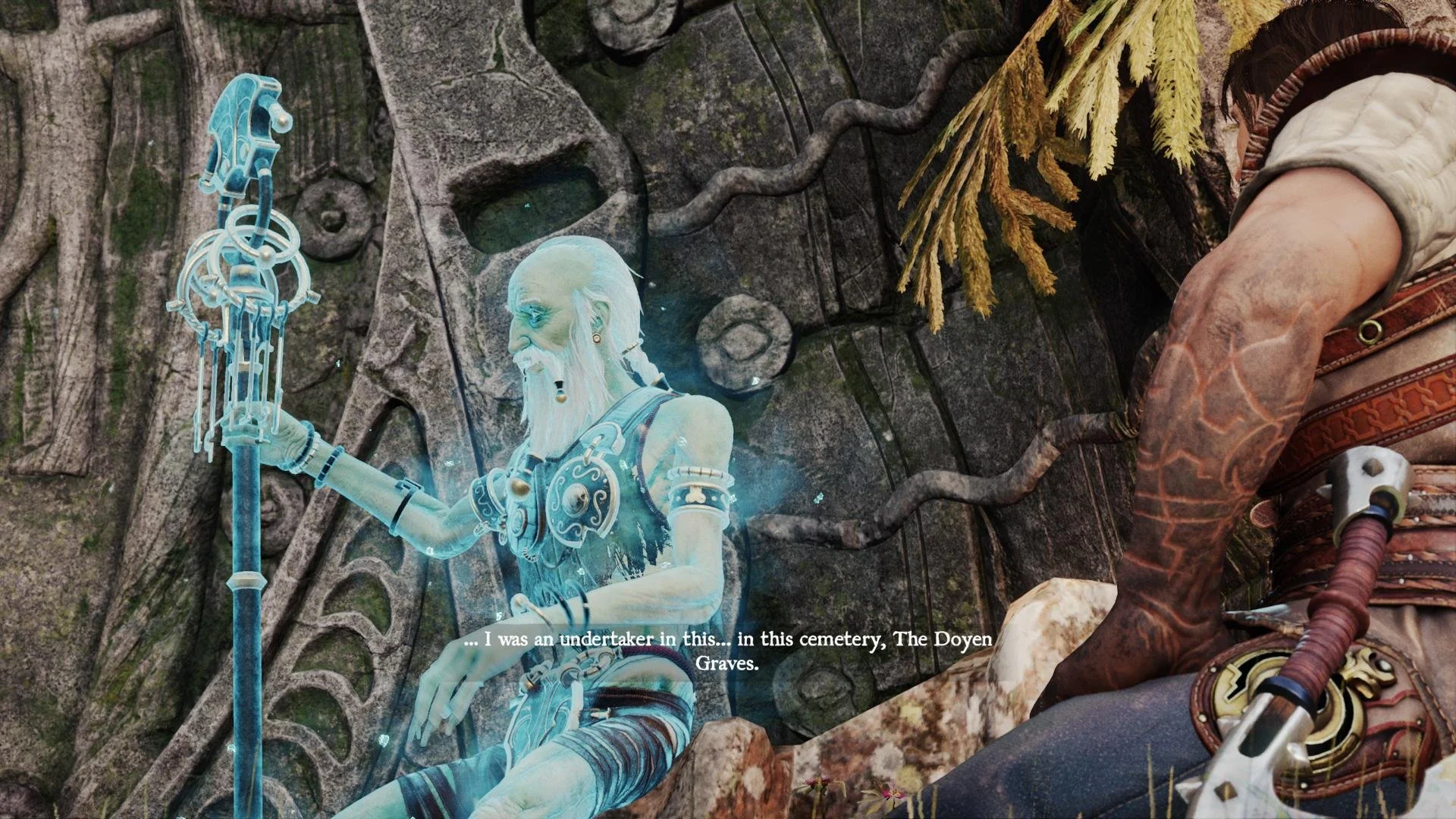
The various threats that come into play are fine enough, but few are exciting. There are countless allies that Aran will encounter, such as an odd troll that is playing the part of an ousted King, an elderly spirit that is handy at forgetting things, to a small skeletal child that has clung onto life for hundreds of years. These, and more, make up a fine enough cast, but in the case of the spirit, his repeated dialogue flat-out ruined the character for me. In fact, even Adzo has a host of repetitive dialogue, especially when you summon him from your camp.
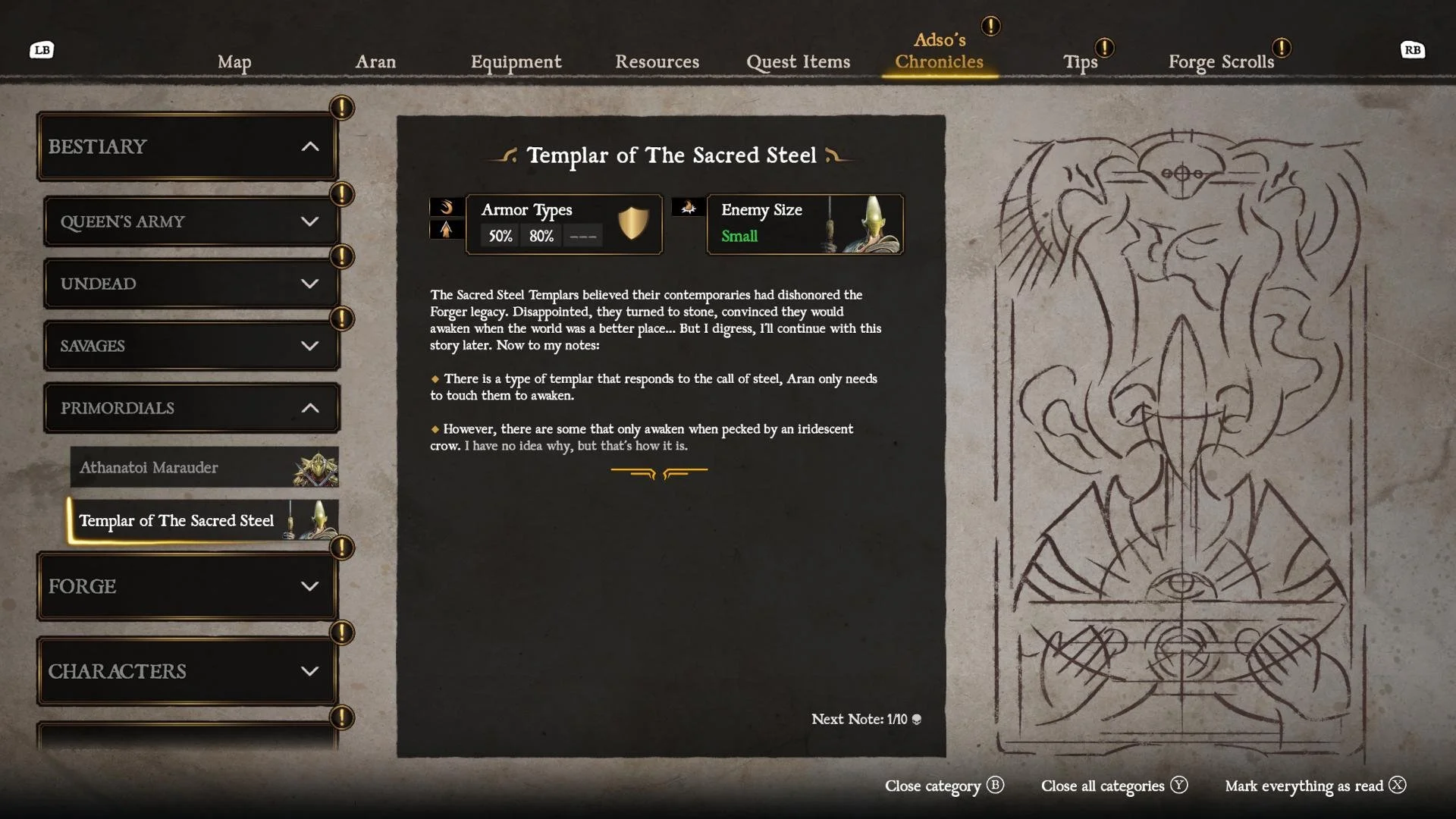
Aran won't be alone, as while he is gifted the hammer by that dear old friend, it was at the cost of his life. However, his friend’s charge, Adzo, then joins him on this journey as a way to honor his mentor and teacher. With a short break from mourning his mentor, Adzo is plucky, often joking, and feels out of sorts here, especially given his recent loss. Adzo doesn't participate in combat, but is useful in cataloging the monsters and locations they will see on this journey. He can also solve puzzles that require his intellect, and help with switches that require two people. That said, you can send him back to camp to sketch out things for his journal, or keep him summoned with you to aid in any eventual puzzles.
The hammer is the key point to this game, it allows Aran to craft weapons and forge steel into a powerful arsenal. Forging weapons is the direct design element to Blades of Fire, a feature set to have it stand apart from any other action adventure game on the market. With a wide array of weapons to craft, and different ways to wield them, it allows Blades of Fire to succeed in its mission, mostly.
As you defeat enemies, you'll earn materials needed to forge weapons. Some species need to be vanquished a set number of times before the weapon design is available. Then, you'll use those materials to craft swords, polearms, daggers, hammers, tridents, spears, axes, and far more, each with several designs and alternatives of their own. Each weapon will also have unique pieces you can track down via statues that require you to present a weapon of its type in tribute. You can also dismantle weapons you no longer use, or take experienced weapons, those that have killed a set number of enemies, to an NPC that can convert them into rare resources.

Materials and parts play a huge factor in how your weapon turns out. Do you favor damage, durability, or its stamina usage? You'll have plenty of different metals to work with, and each will affect the weapon in different ways. I often found a balance between stamina and damage, as I got used to making my weapon repairable several times over. Still, you'll often want to grind and kill larger foes to earn the more rare materials.
However, forging isn't so much having the resources and materials, you have to use the hammer to line up the metal to a horizontal line. Now, this isn't meant to be the more realistic approach like we had in Kingdom Come Deliverance II, but something a tad more arcade-like. You'll move the hammer around to raise or lower values on a meter that looks like you are playing a rhythm game. I've found that starting at one side and lowering to raise the lines later to be more effective, but everyone will likely find their own way to solve this, especially given the tutorial is pretty much useless.
Forging the weapon to the highest standard will result in more stars. You'll also find items in the world that raise the total value you can forge to. These stars represent the ability to repair the weapon. The lower the stars, the less times you can repair it. That said, being able to relinquish the weapon for a heaping of resources, does make the star value only good for the weapons you'll really want to maintain. This forging system isn't revolutionary or impressive, but it is unique, I'll give it that.
Exploration and combat are the other two pillars that make up Blades of Fire. Exploration is a bit of a double-edged sword here, given you have very little guidance apart from being told to go west or something equivalent. There is that oddly placed objective marker to use, but apart from a line of dialogue you can bring up that vaguely mentions your goal, it is, as I've said already, very easy to get lost. While I do find this approach interesting, it didn't really suit what type of game this is, and I could see it driving people away from it or failing to finish it. A game like Elden Ring offered a huge world to explore, so getting lost and finding your own way was part of the experience. Linear routes and typical adventure games don’t often have the need for secrecy about what they want from you, so its use here is questionable.
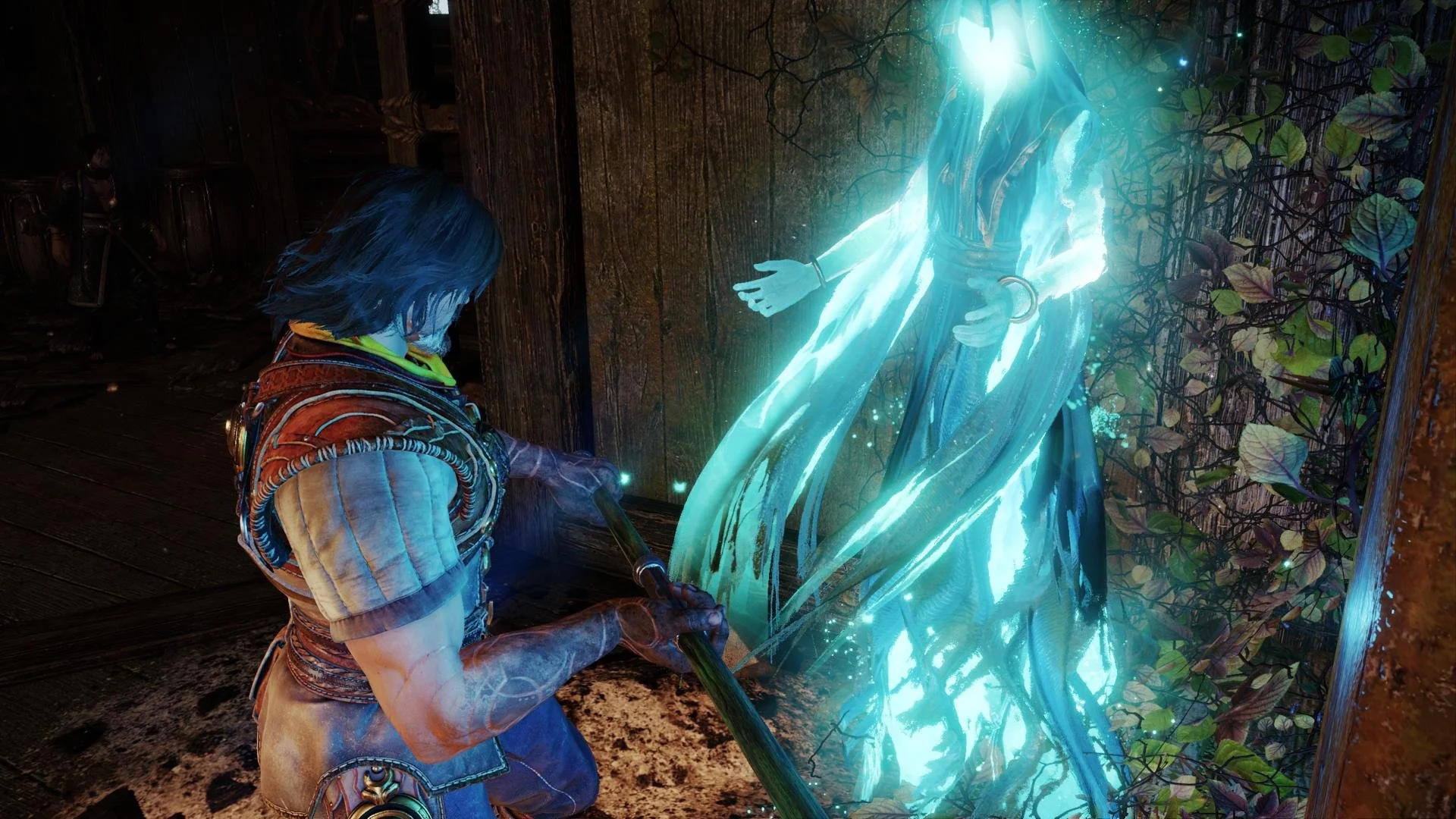
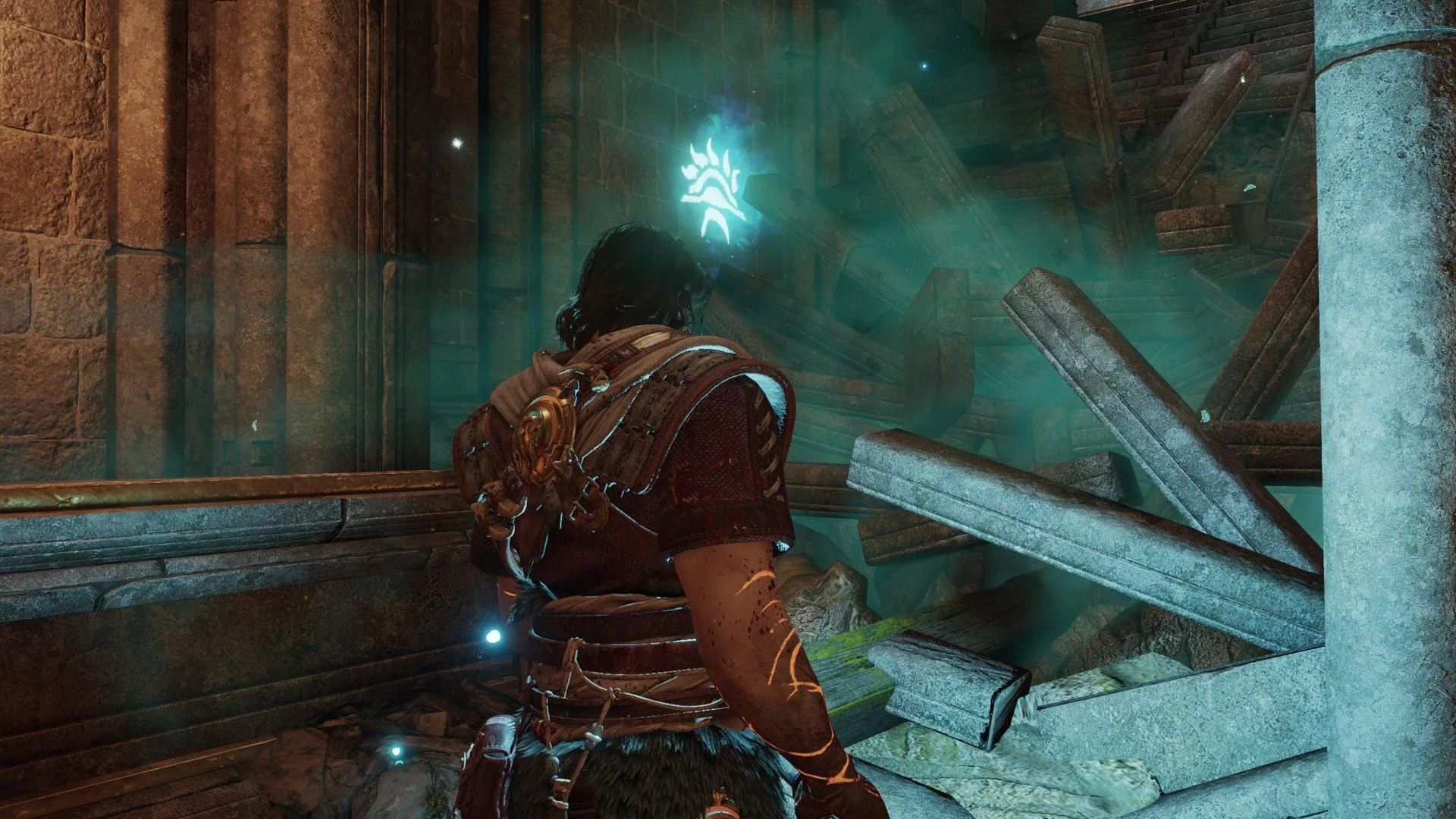
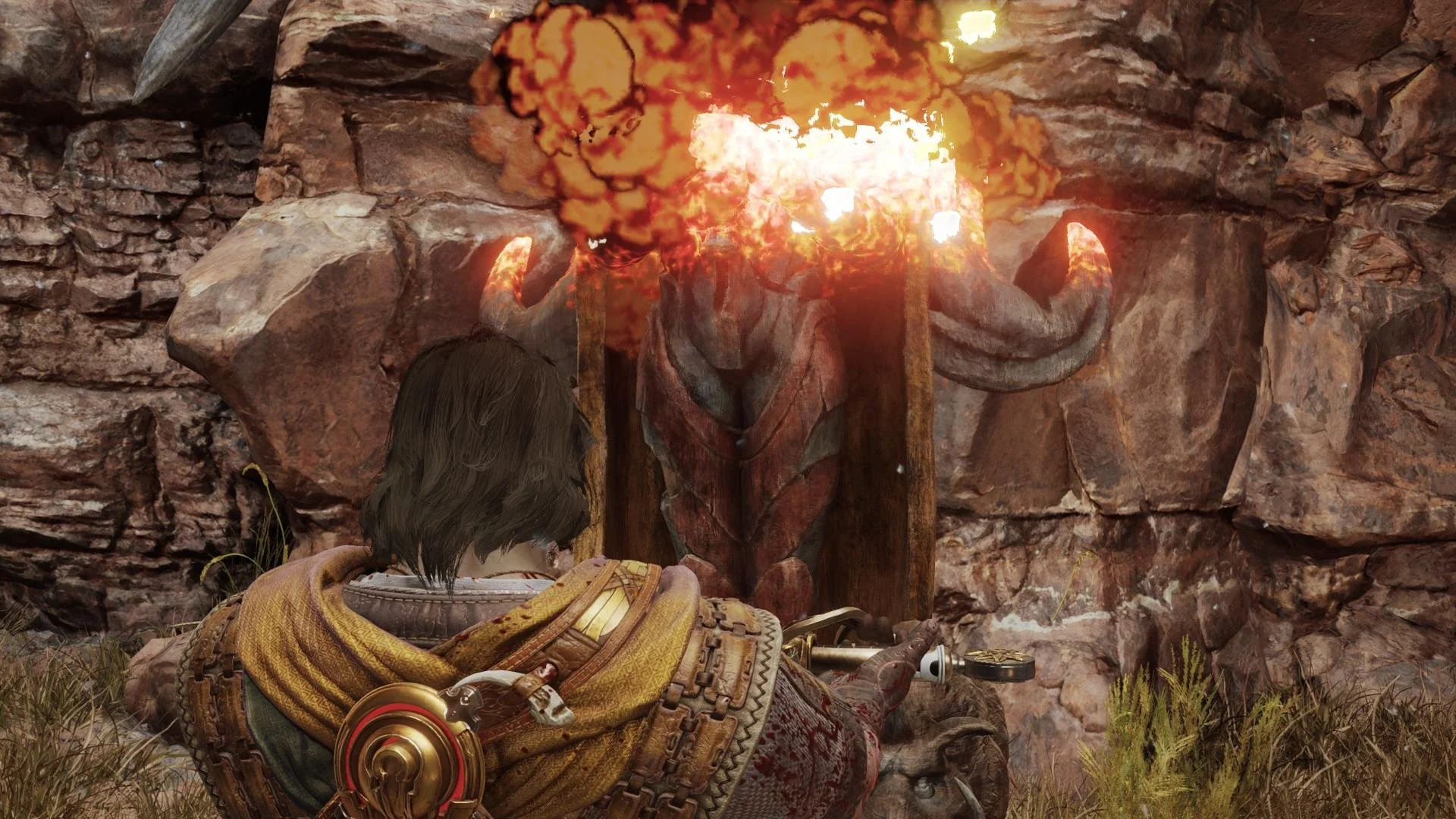
As you explore, you’ll find statues that can grant powers to a specific weapon. These statues, named the Blue Lady, can grant various powers such as Time and Light. Time will rewind and reconstruct areas, such as broken stairs or pathways, where Light will vary from providing a light source or an illuminated bridge. That said, the first time you gain it, the mobs of enemies you need to navigate with the light were a pain in the ass as once that light goes out, as you won’t really know the reason why.
Environments follow a fairly linear pathing, but do have plenty of shortcuts and doors, and ladders to kick down that result in finding older areas or faster access to the anvil, the game's comparable bonfire. While this game does echo some of the traits of a soulslike, it mostly adapts things like the bonfire, shortcuts, and the drastic difficulty spikes, one of which is outright awful. Otherwise, this is an action adventure game in the vein of the recent God of War games. If anything, it's a hybrid of sorts, especially as Aran himself doesn't level up exactly, it is his weaponry that is to blame for his increases in power.
Throughout the world, you'll find chests that contain one of a few potential items. Health items that when collected in groups, will boost your maximum health; the same occurs for stamina as well. Otherwise you'll find scrolls that boost certain aspects of your forging, such as boosted star values to certain weapon types to other factors to make your forging more effective.
Each area is home to several anvils, which allow you to rest, which respawn enemies, and to their use as a fast travel point. Anvils also allow Aran to transport himself to the Forge, where he can safely craft these weapons. I do have to point out that it is bizarre that you teleport to the left of the anvil and not the right, forcing you to move around it every time to get to where you'll design the weapons and actually forge them.
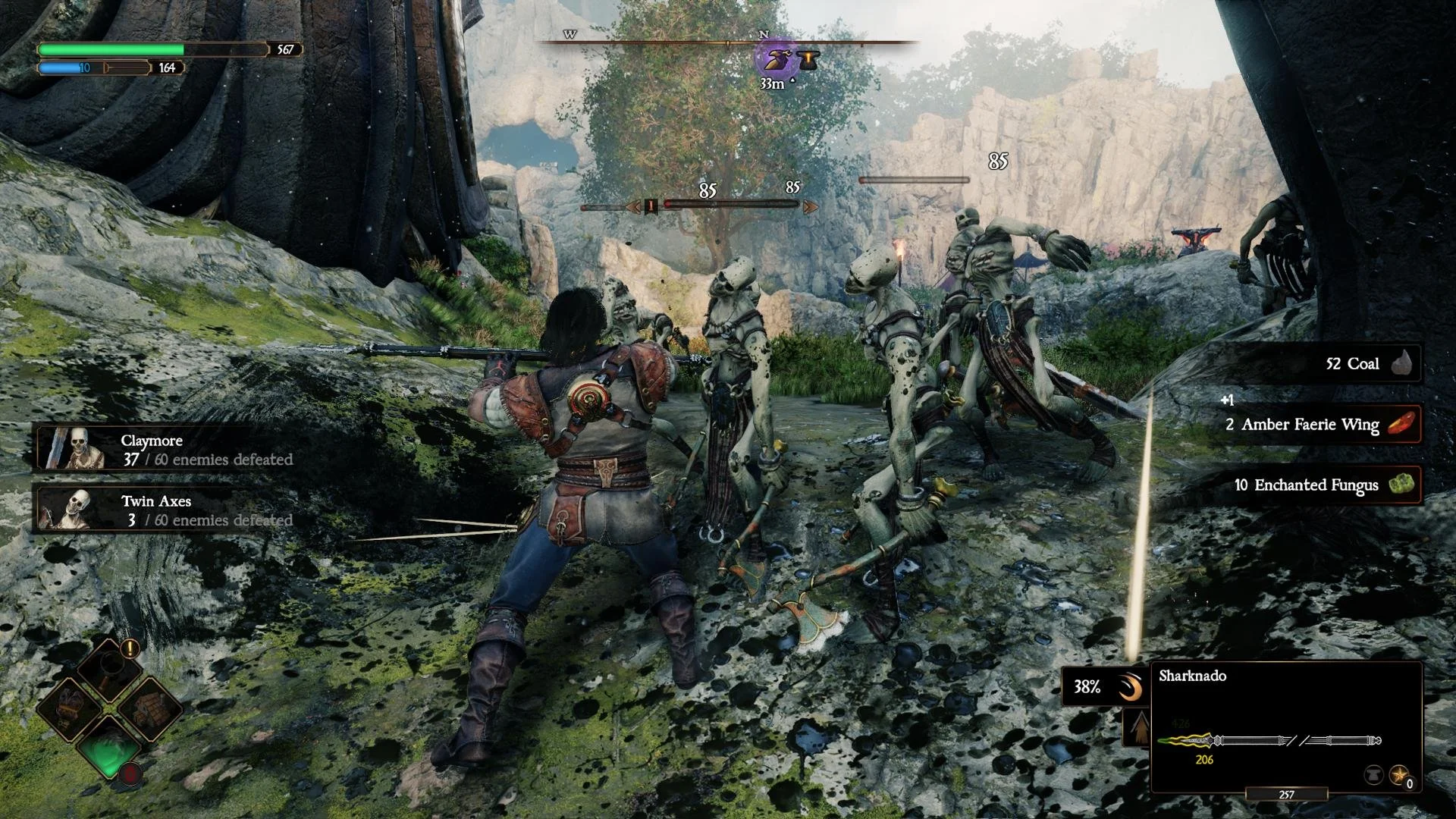
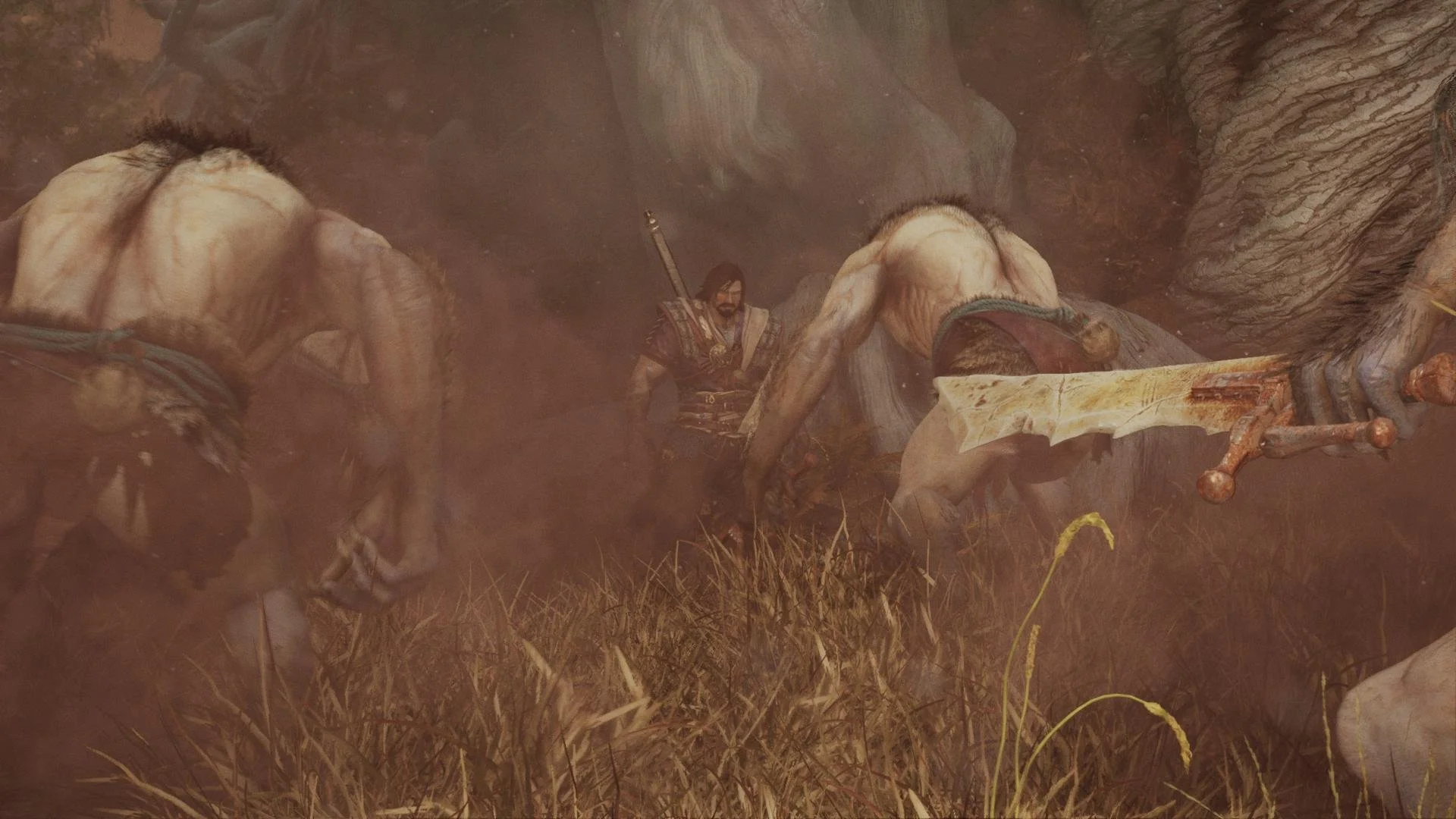
Combat is where Blades of Fire can shine, but also suffer, especially if you have certain deal breakers when it comes to some aspects of combat. Combat works where each of the face buttons; XYAB, are your attacks. X swings from the left, B from the right, with Y and A then capping off your highs and lows. Each can be held down, but enemies can interrupt your attacks, and they will. This is a huge annoyance when you are fighting more than two enemies, especially those with ranged attacks in tight corridors.
If you swing from the left and right in those tight corridors, you'll hit the wall and not your enemy. However, instead of slashing, you can stab, removing the obstacle of hitting the walls. That said, your weapon has to have the ability to stab in order for a direct frontal assault. How you go about combat will vary on how the enemy is positioned. If they have a shield, and how they approach you, you'll need to swap positioning on the weapon if it has the secondary attack stance.
It's a solid system that has one major drawback, at least for myself. You can have four weapons at the ready, and I really wish the game slowed down when I would bring up the weapon selection tool and then swap between them. This is a major issue when taking on the bosses as they can cleave most of your health in no time as you attempt to swap between weapons. And, since health is only replenished at anvils, you really have to find the right moment to swap a weapon while you are fighting with multiple enemies, the camera, and the environment.
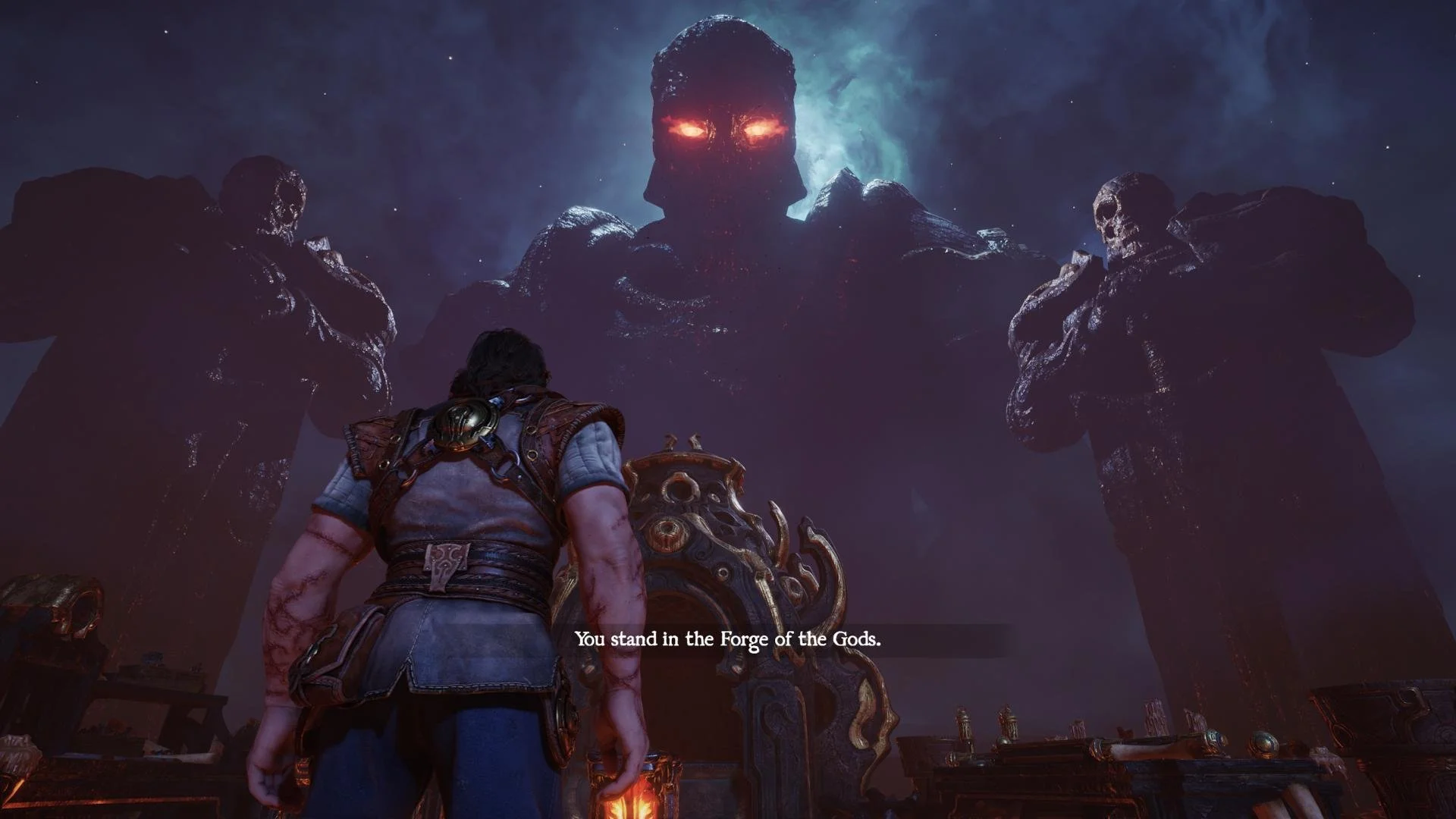
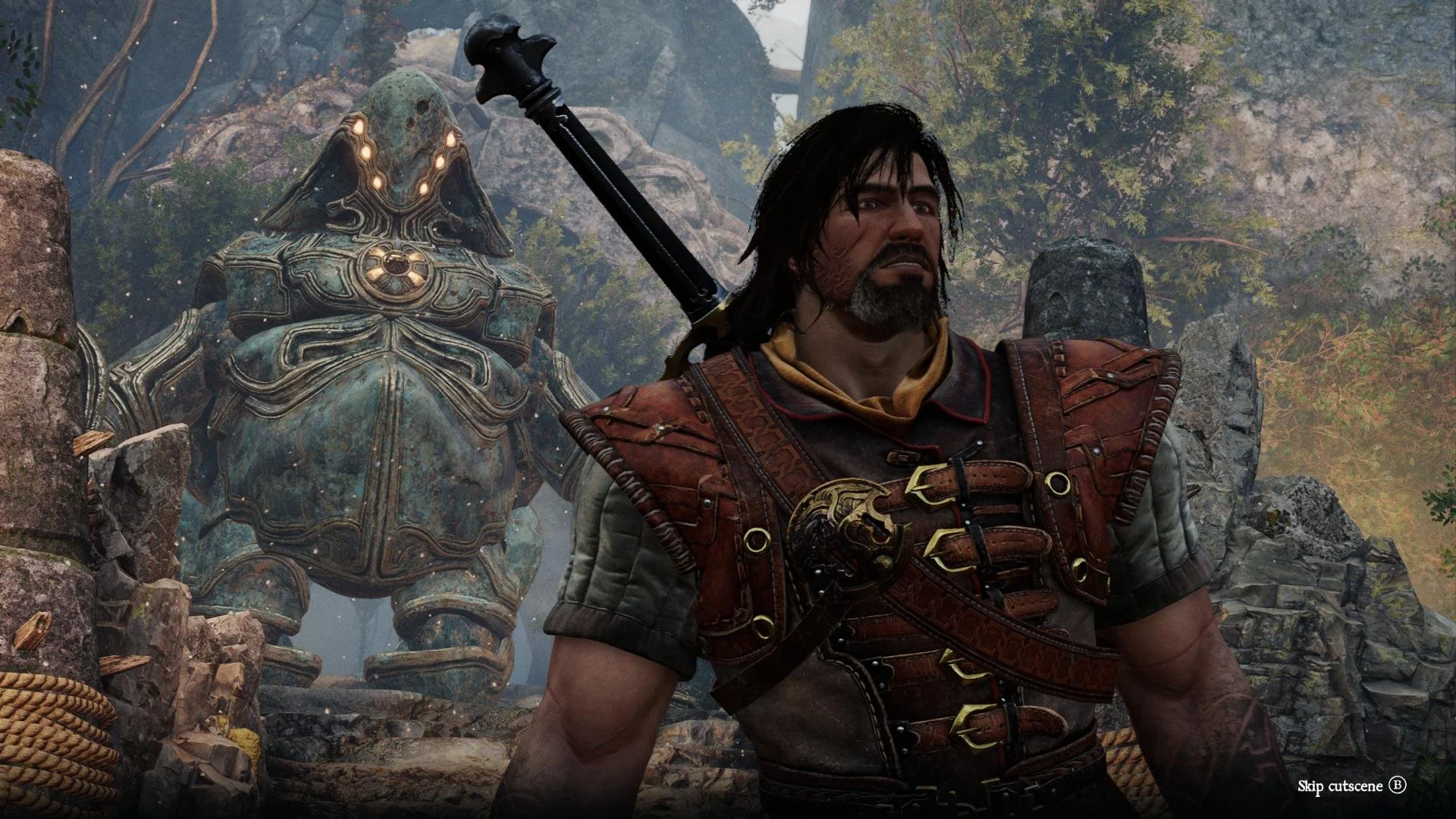
To add to why this is a very notable issue, enemies will have an outline around them that illustrates if that weapon will deal damage or bounce right off them. Red means that you cannot break their armor, yellow can get the job done but wear out your weapon faster, and green is where you'll know you'll do some damage and likely cleave off huge chunks of their health. Sometimes, enemies will have a red head, yellow arms, and green legs, detailing how you should attack them and from what direction. If you are fighting several foes at once, you'll need to swap between weapons, stances, and even pause the game to find new weapons to try. By not slowing down gameplay, you have to juggle this form of discovery while avoiding damage and getting stuck in a corner due to the game's lacking camera.
For the most part, combat does feel good. It's crunchy, violent, and when you actually can wind up a heavy attack, you can often skewer any of the various fodder in one jab. Stamina plays a huge part in combat as depleting it will result in Aran being sluggish and slow, often looking winded and out of breath. While stamina can recharge on its own, it is pitifully slow. However, blocking with the weapon will recharge it faster. Unfortunately, when you are surrounded by several enemies, especially those who have projectiles, blocking can often leave yourself vulnerable. It also doesn’t help that the dodge is mostly a side-step at best.
While the game does have three difficulties, labeled as different types of metal, the spikes impact even the easiest challenge and often zap the fun out of the game. The game's first major boss, his second form is a pain in the ass, becoming the first wall I slammed into about 6-7 hours in. Thankfully, I discovered I could cheese him around the pillars. In fact, that is how I stopped the majority of bosses, making them a series of repeated affairs, despite their unique designs.
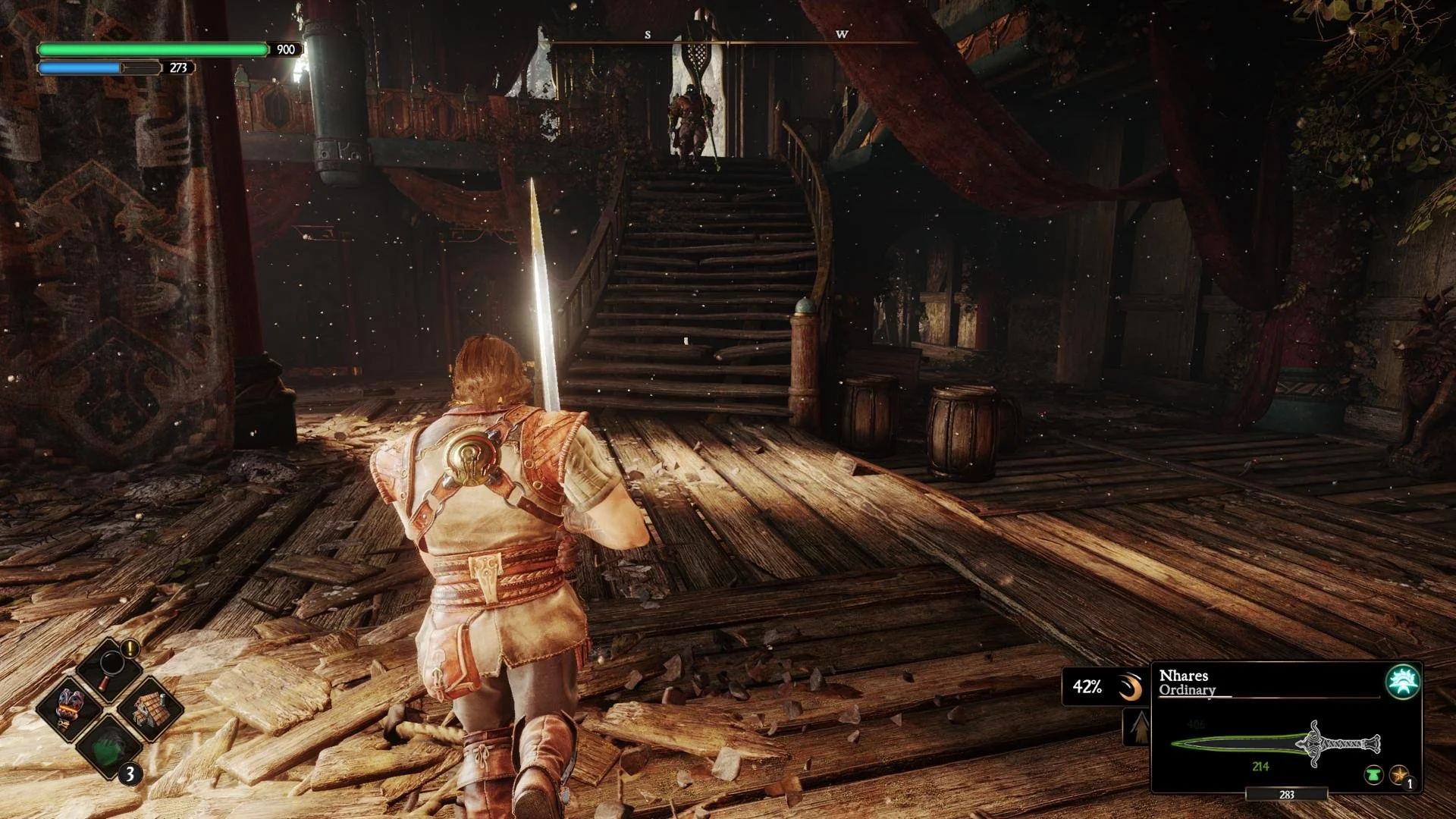
The Mercury Engine may have been suitable during the 360 era, but it certainly lacks what it needs to compete here. Load times are sizable, even just to load up for the forge table or rest, and the game's overall visuals look dated right off the bat. I do like the character designs, as both leads look fine, as does the Queen, who has the best design in the game. The bosses also share in some fun designs. I just wish the game looked modern, especially as we have small teams like Sandfall Interactive executing on Unreal Engine 5 and crafting one of the best-looking games this year with Clair Obscur: Expedition 33.
Blades of Fire has moments where I do tend to forgive some of its blatant issues, but around every corner is a reason I tended to lose my interest in what it was offering. The combat and weapon systems are great when they work, but those moments only come so often. If Blades of Fire proves anything, it is that the Mercury Engine is well past its prime, only able to provide last-gen visuals at best, with poor optimization on those long loading times. Had Blades of Fire been a 12-15 hour tighter experience with better pacing, a more direct way to communicate on where to go, then much of what it offers could have been salvaged from what we ultimately got. Blades of Fire isn’t bad by any means, but a huge step back for a studio that previously had forged one of the best games ever made.
Developer - Mercury Steam. Publisher - 505 Games. Released - May 22nd, 2025. Available On - Xbox Series X/S, PS5, Windows PC. Rated - (M) Blood and Gore, Intense Violence, Strong Language. Platform Reviewed - Xbox Series X. Review Access - Review code was provided by the publisher for the purpose of this review.
Jeff is the original founder of Analog Stick Gaming. His favorite games include The Witcher III, the Mass Effect Trilogy, Hi-Fi Rush, Stellar Blade, Hellbade: Senua’s Sacrifice, and the Legend of Heroes series, especially Trails of Cold Steel III & IV.