

A Rift Apart.
Ever since Fallout: New Vegas, fans have wanted Obsidian to dive back into that sandbox, to produce another action RPG spectacle that provided real choices, engaging characters, immersive environments, and a superbly written narrative. Six years ago, Obsidian delivered on that, albeit in the form of a new IP: The Outer Worlds. This spacefaring adventure was fantastic from top to bottom and showed that even some years later, Obsidian could still deliver the goods.
While the original The Outer Worlds was initially published by Private Division, Outer Worlds 2 is now a wholly owned Microsoft IP, and the conversation around it also dives into the current climate of Microsoft’s role in the gaming industry. From massive layoffs to the increased price of its console and its rise in cost of its subscription service in Game Pass, on which The Outer Worlds 2 is available through, it has somewhat overtaken much of the conversation away from what The Outer Worlds 2 is, objectively, a truly fantastic game. Now, that said, The Outer Worlds 2 also releases two years after Starfield, a heavily decisive release that is a similar style of game due to both relying on the Bethesda formula that is starting to see the tank run a bit dry.
Now, I truly believe that The Outer Worlds 2 is much improved over its predecessor, as well when compared to the likes of Starfield itself. Starfield, sadly, didn't hit for me, offering a boring world, forgettable characters, and a lacking narrative. Despite my attempt to forget that game and how much of it disappointed me, it unfortunately did lessen my personal excitement for The Outer Worlds 2, given the strong similarities due to its aging formula. This is obviously no fault of what Obsidian has produced, but it was something that stayed in the back of my mind as I would experience a little burnout on spending some 30+ hours on Obsidian’s latest entry. It's the classic case of “It's not you, it's me…”.
Obsidian has been a very busy studio as of late. Earlier this year, they delivered Avowed, a title that I really wanted to give more time to. Then, this summer, they co-developed Grounded 2 with Eidos Montreal, albeit a title that is still in early access. Having a third release in a calendar year is insane, making them one of Microsoft’s key studios to watch. Hell, given their track record, they are one of the best studios in the industry.
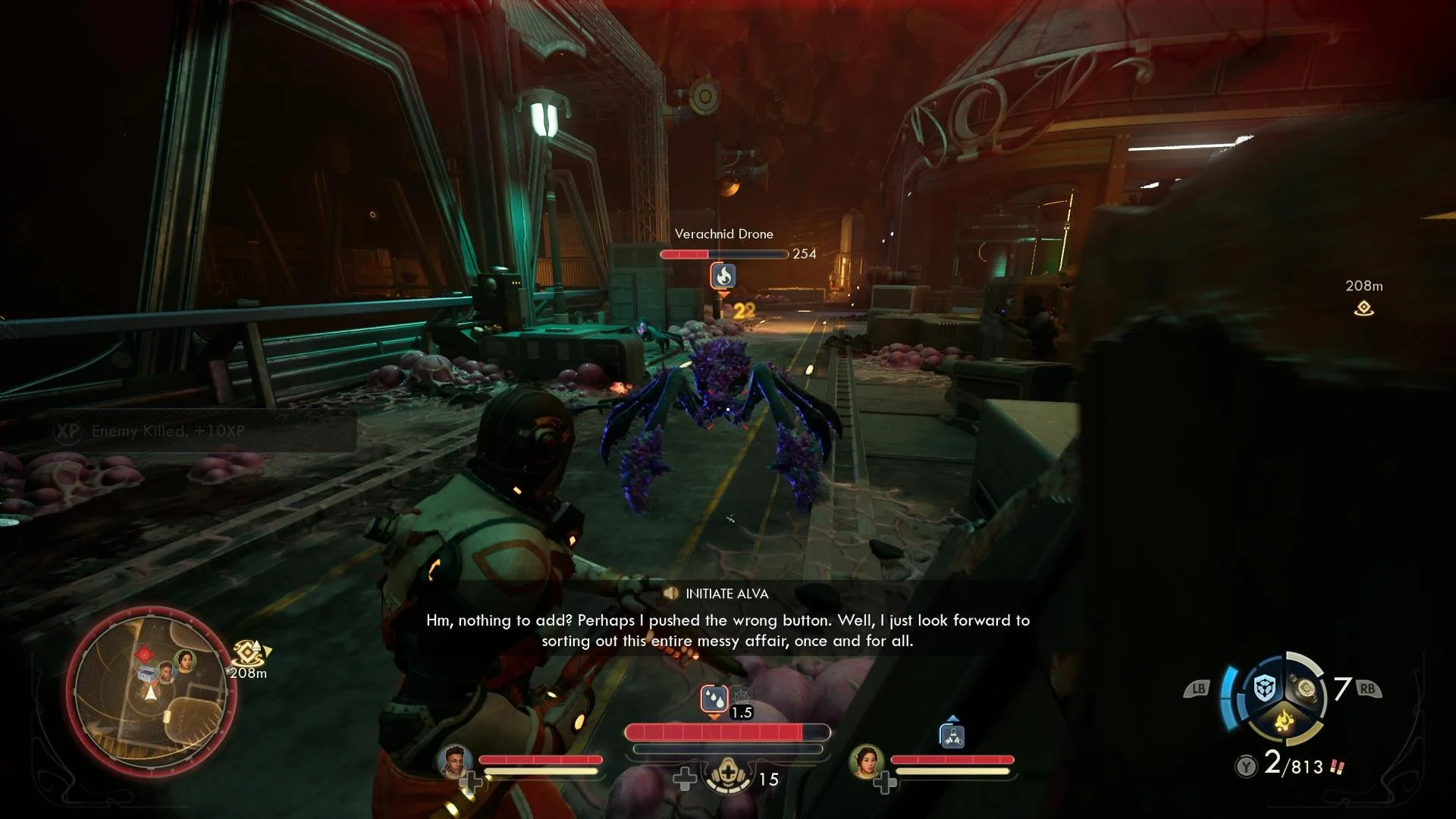
The Outer Worlds 2 features a ton of improvements over the original; these vary from core systems completely overhauled, a slicker UI, and a fully functional third-person mode that is a huge step over what Avowed offered. Apart from aspects of the overall formula, nearly every system has been improved, all presented via Unreal Engine 5, an engine that Obsidian uses to damn near perfection, at least based on my experience on Xbox Series X. Did I experience glitches or oddities during my time with the game? Absolutely, but not a single one soured my time here. Other parts of the game? Well, that is a different story.
The Outer Worlds 2 isn't necessarily a direct sequel, but it does have a few moments that players of the original will point out, given their relevance to the story, the IP, or the connection to Obsidian's environmental storytelling. Players could easily pick this game up with absolutely no knowledge of the original and still have a great time, especially given the penchant this series has for replaying its story and making wildly different decisions.
In fact, it’s almost hard to even touch upon much of the story due to so many maze-like ramifications of how to move the story around, the alliances you make, and the characters you recruit or don’t, should you want to pass them up. However, one underlying narrative that is present is the rifts that are appearing all over the Arcadia star system, apparently apparitions that are due to the skip drives that allow people to travel the stars. These anomalies have affected the entire system, with each faction having its own idea on how to utilize these strange and dangerous phenomena. In fact, a cult has formed to worship these anomalies, labeling themselves as the Glorious Dawn, with their members eager to sacrifice themselves to the rifts to become, as they say, “reborn”. In fact, one town has a rift right near its entrance, and yes, I attempted to become reborn myself. It didn't work.
I will say that the story doesn't quite have a major impact or real breakthrough until the game's final few hours. There are no big reveals given the flexibility of its connecting parts. It's engaging, sure, but you won't really be on the edge of your seat. The real draw is being able to mould the surrounding narratives that connect to the rifts, the factions’ intent on how to control them, and how they relate to your own personal goals.
While you can certainly play Outer Worlds 2 your own way, siding with either The Order of the Ascendant, a science-based faction that broke away from the Protectorate, or Auntie’s Choice, a capitalistic corporation that was formed due to a hostile takeover of Spacer’s Choice. Each choice, no pun intended, will flavor one of several endings. Now, that said, you can side with both, attempt to form some sort of alliance between the two, or forgo them entirely as you attempt to wrestle control of the rifts from a different faction entirely.
To reach the end of this journey, you’ll interact with a host of unique characters, some pivotal to the story, some minor, but all can have some effect on where you end up. This is especially true with characters pivotal to the story, such as the leader of the Order, Ruth, to Auntie Cleo herself, or the various politicians and leaders of subsections between these factions. The choices you make, or can make, given your own personal stats, allow you the freedom, or even the lack of said freedom, to see your mission carried out how and if you can. If you lack a certain stat, several avenues of pushing the story forward can result in failure or a need to find another path. I attempted to move through some of the big conversations that could have resulted in peace or some sort of neutrality, but, as most often, it came down to bullets and not words saving the day. That said, a pacifist run, at least one locked in with finger quotes, is possible, but it all comes down to how you spec your character.
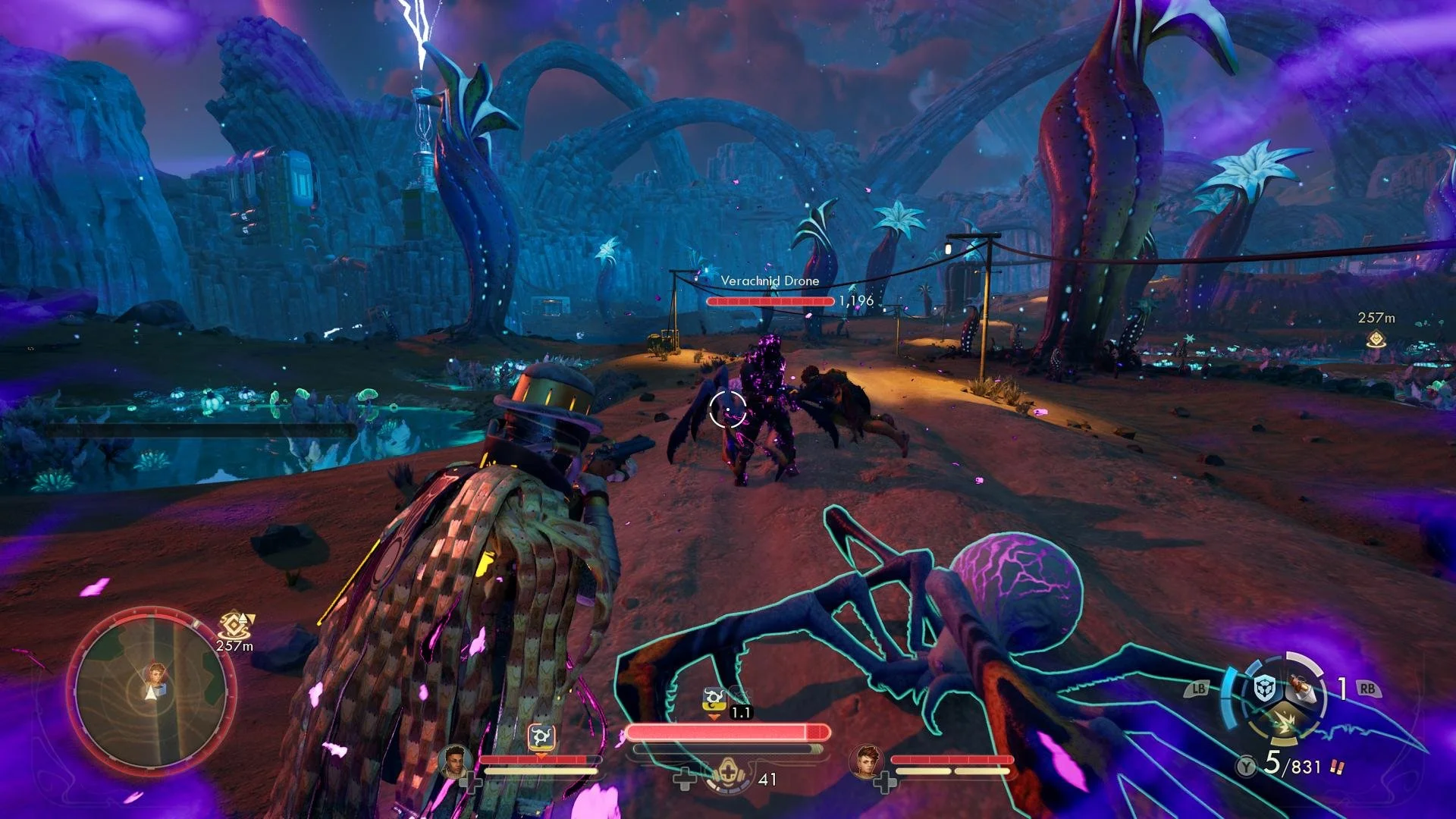
The Outer Worlds 2 doesn’t allow for any sort of respec’ing, as the story and its choices are hardwired into how your character is initially spec’d out. Do you come barging in as the strong and gruff soldier, a linguist who offers sweet words, or a professor who is educated enough to solve the most trying scientific equations? With a variety of backstories to carve into your characters’ past, you can sort of maneuver through large chunks of this story with little to no friction. However, the way you progress, from locked doors or difficult security systems, changing the minds of those have carved their line in the sand, to rewiring mechs or hiding in the shadows, moving quietly through vents; the how, the why, and the where, becomes things that you’ll look to master as you attempt to use your stats and perks to their fullest.
What also sets The Outer Worlds 2 apart from the likes of Starfield is its penchant for humor. I laughed out loud when we had wrapped up tearing through a Protectorate facility, to find a communication button to their security office. My reply? Well, the same line Han Solo used in A New Hope. I cackled. There is a humor to The Outer Worlds that is found everywhere. From its cast, to even weapon and item descriptions, a solid joke is never far away. Some of the replies were so funny that while they would lead me down a violent path, or a humorous one, I often went for the joke, unless it was towards my companions, and I wanted to be on their good side.
In The Outer Worlds 2, you play as the Commander, a figurehead who is the captain of the Incognito. You have a crew, a mission, and while it doesn’t exactly go your way, you wake up a decade later and find the state of Arcadia to be in turmoil. You’ll be given two companions right from the start. Niles, who has aspired to be the best Agent the Earth Directorate has ever seen, essentially follows in your footsteps, as it were. He is also joined by his robot ally, VAL, short for well… Valerie. Now, before I dig into the companions, I found this part of the game to be in stark contrast to what I enjoyed in the first game. In The Outer Worlds, I loved every companion except for one, whereas here, I only really connected with Aza.
Now, don’t get me wrong, each companion can have some sort of good moment here and some satisfaction from their personal side quests, but as for the characters themselves, I just wasn’t on board. Niles is the good soldier, the guy who is morally wanting to make Arcadia a better life. This makes him the Captain America of the group and is more or less pretty boring. VAL, much like SAM from The Outer Worlds, is the robot character that doesn’t have much going on. Inez, a grafted soldier with a third arm, has a neat backstory, some fun abilities, and some good traits to bring into battle, but I found her overall personality to be bland, and her conversations with the crew just didn’t tickle me as much as the likes of Pavarti and Ellie in The Outer Worlds. She sort of felt like the female version of Niles, just a bit weirder.
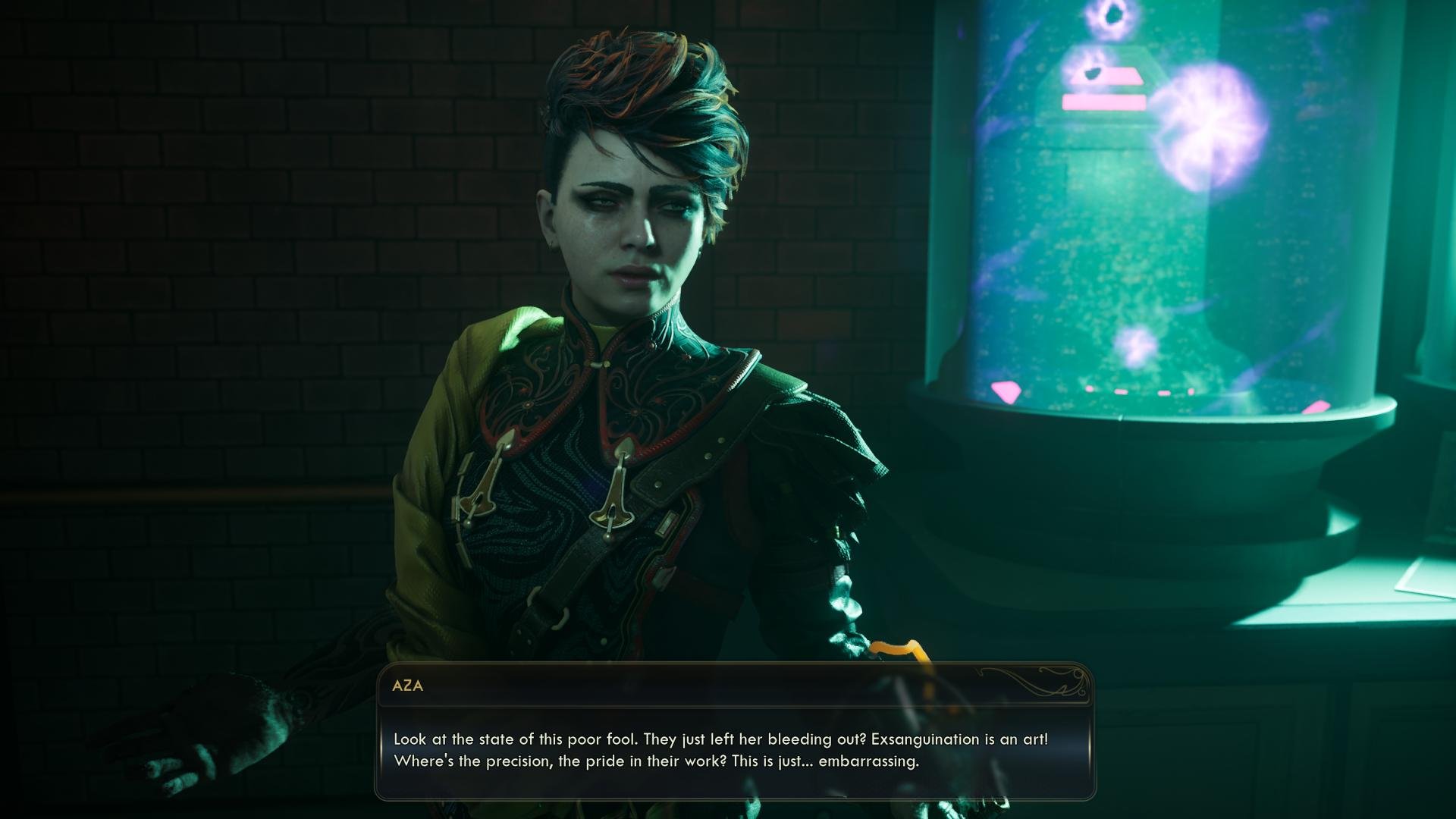
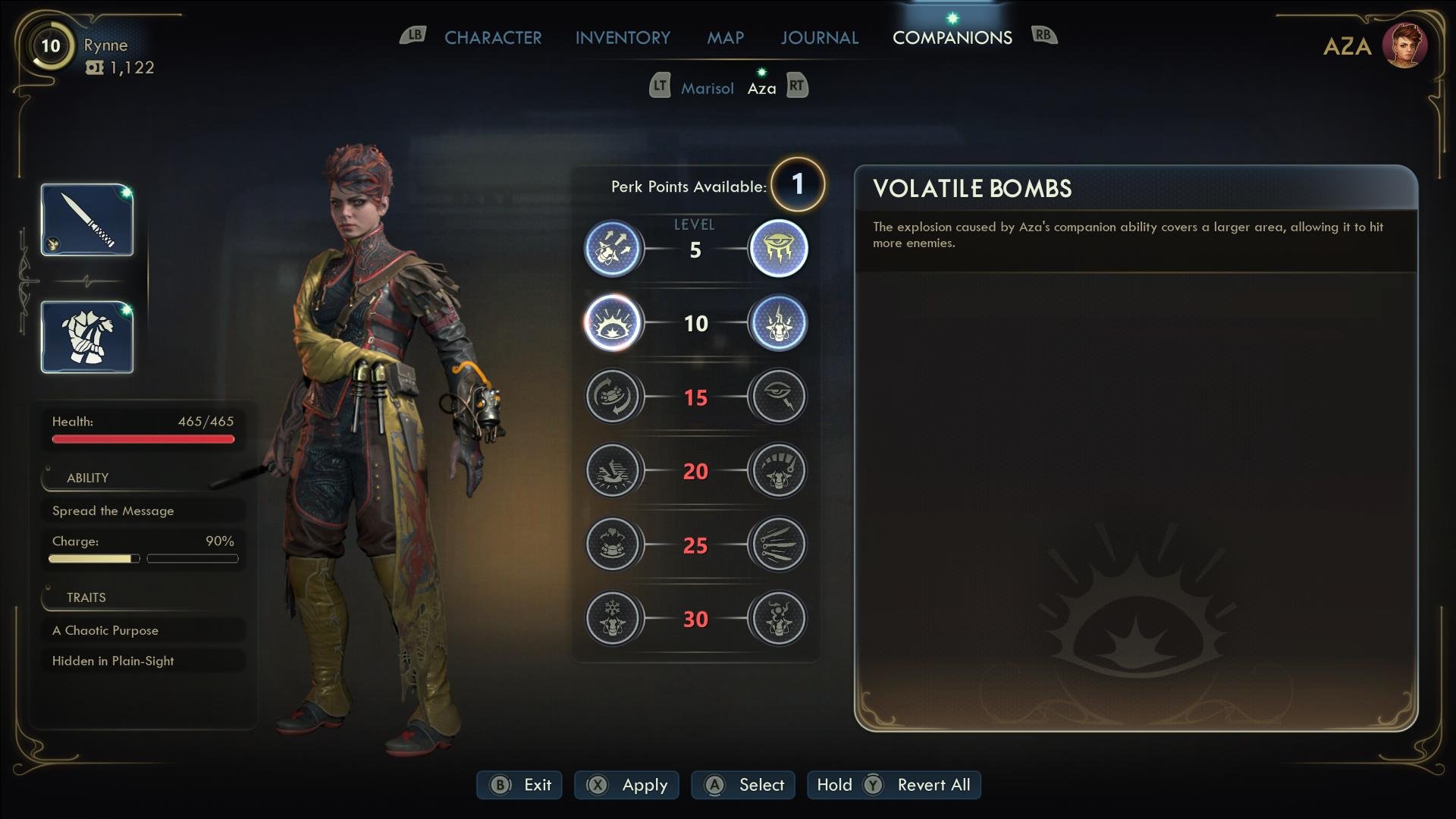
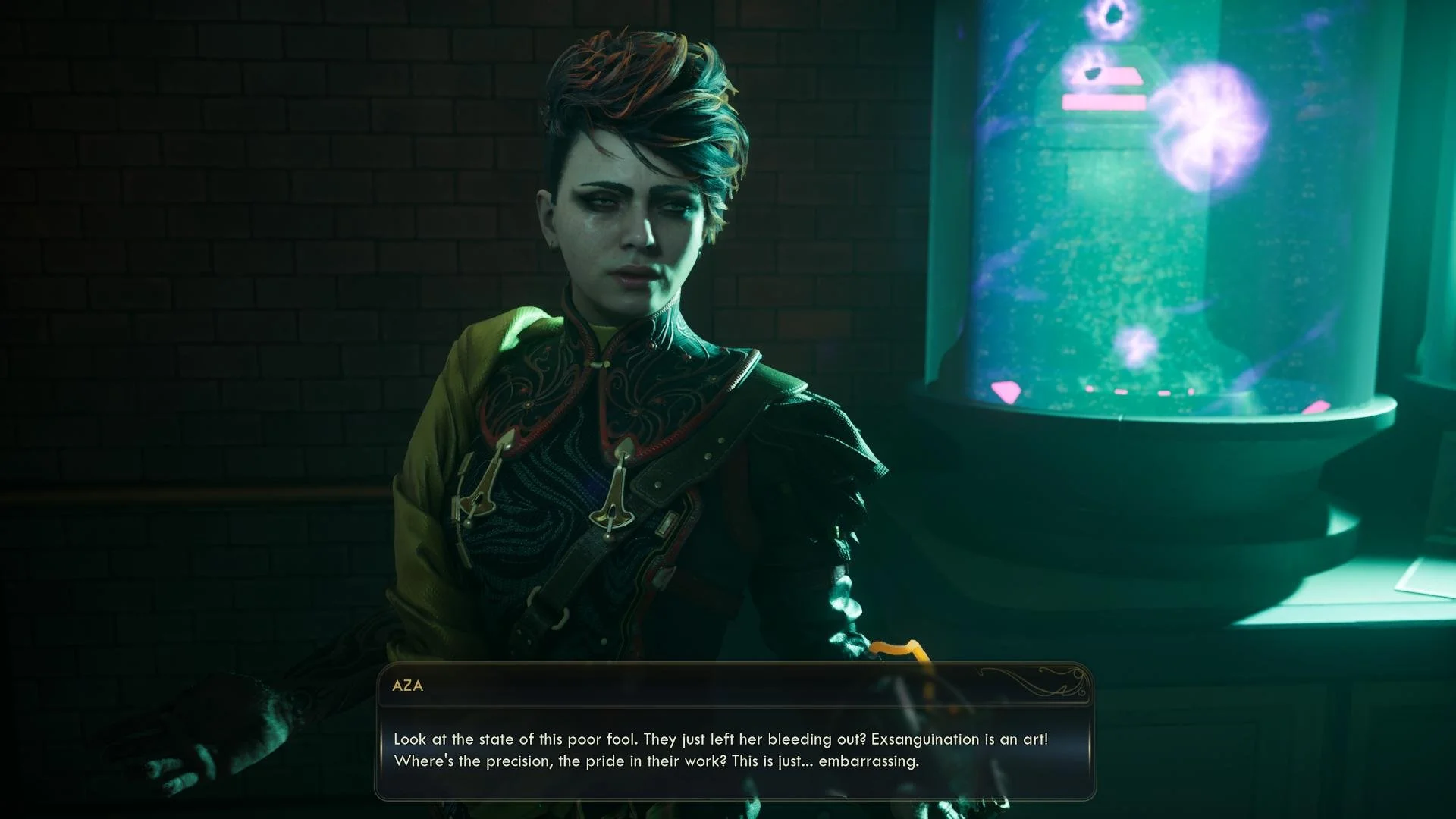
Tristan, who is easily missable if you don’t frequent a certain bar, could have been a fascinating character, but I lacked the stats to really rein him in, and his hunger for revenge and doing his duty ended up ruining him during my playthrough. He is a member of the Protectorate and a soldier who is sworn to duty. Aza, whom I recruited early, never left my party unless I couldn’t take her somewhere she wasn’t wanted. She is a member of that crazy cult I mentioned earlier and was a hoot. Man, I wish Ellie was in this game solely to hear the banter they would share. Aza is hungry for murder, and I gave her plenty of it. Marisol started out as a character I wasn’t sure I was going to dig, and while she did finally grow on me, I still never found her to be anything more than mildly interesting. Marisol has a deep history in Arcadia, and one that is bound in mystery, until you need to know certain facts.
My main crew largely consisted of Aza and then swapping around to either Marisol or Tristan, largely due to their abilities. Marisol, due to her ability to stun targets and have them take critical damage, to Aza, who can stagger enemies with heavy physical damage, but let’s be honest, she could have the worst ability and she’s still a keeper. Tristen was also a stand-in due to his giant hammer and the damage he could inflict. Now, that said, I don’t know if I really found that my companions did much damage, regardless of how I spec’d them. You can’t change their gear, but as you push through their personal storylines, you do get mod kits that give you choices of how their powers are used. I think if there is any big flaw in The Outer Worlds 2, it is every system applied to your companions, and the companions themselves. Personally, I’ll take the first game’s group over this one's any day.
The structure of The Outer Worlds 2 is where I am personally starting to get slightly burnt out of the Fallout/Elder Scrolls formula. It is here in all its conversational zoom in glory, and doesn't really reinvent itself from what we've seen before. If there was one trait I hated in Skyrim, it was being overencumbered. Thankfully, you can pick up anything and everything here and not have to worry about any sort of weight limit. Regardless of my issues with the structure of the game, the formula does still work, but I do wish Obsidian would sort of make it their own and alter aspects of it to feel fresh and new. It was fitting when they made Fallout: New Vegas, but they really needed to stand out and not just be another Bethesda.
While the main story will certainly keep you busy, there is a wealth of solid side quests to tackle, even away from your companion quests. Perilous Journey to the Grove, for example, is an early quest that you absolutely should tackle right away. You’ll see a guy plummet to his death with a trapped group of people in a building that is high up, trapped with no way down. By taking the boots off the human pancake, you gain the ability to double jump. It’s a fun and breezy quest and provides a utility that is absolutely essential. Some quests also have you make choices on who to choose and follow with additional quests. As you approach Fairfield, you’ll meet both Milverstreet, who is a top hat-wearing song and dance man who has some potential quests for you, but taking Kaur’s side, who is often at odds with Milverstreet’s leadership, has more action-focused work. However, you’ll want to take Milverstreet initially, at least to unlock Inez, who is missable if you stick only to Kaur’s side.
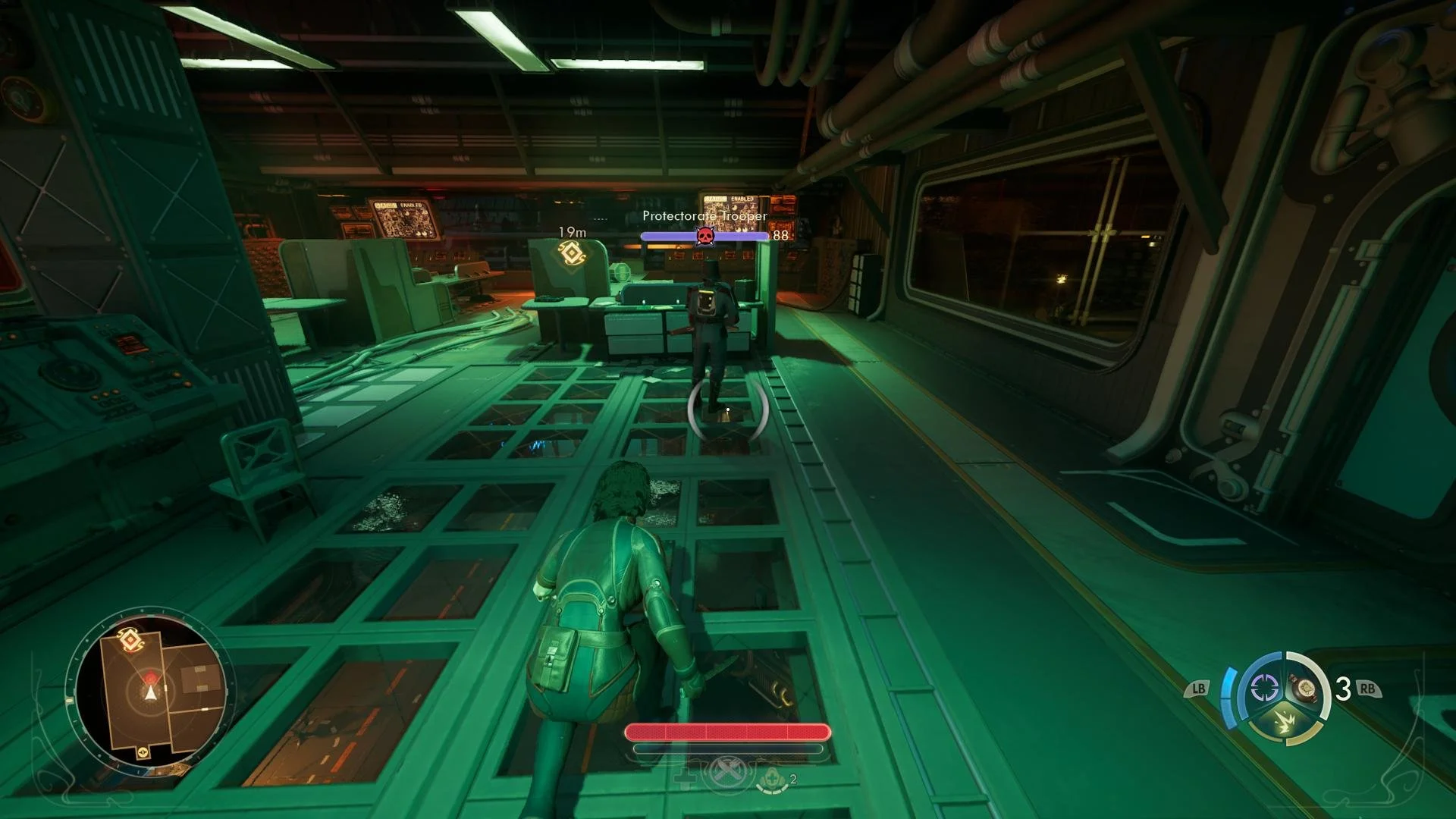
With either a focus on third person or first person, combat will certainly feel different to how you engage with it. Aside from one platforming challenge, I played The Outer Worlds 2 exclusively in third person as I just found it far more engaging this way, especially with the wealth of armor choices.
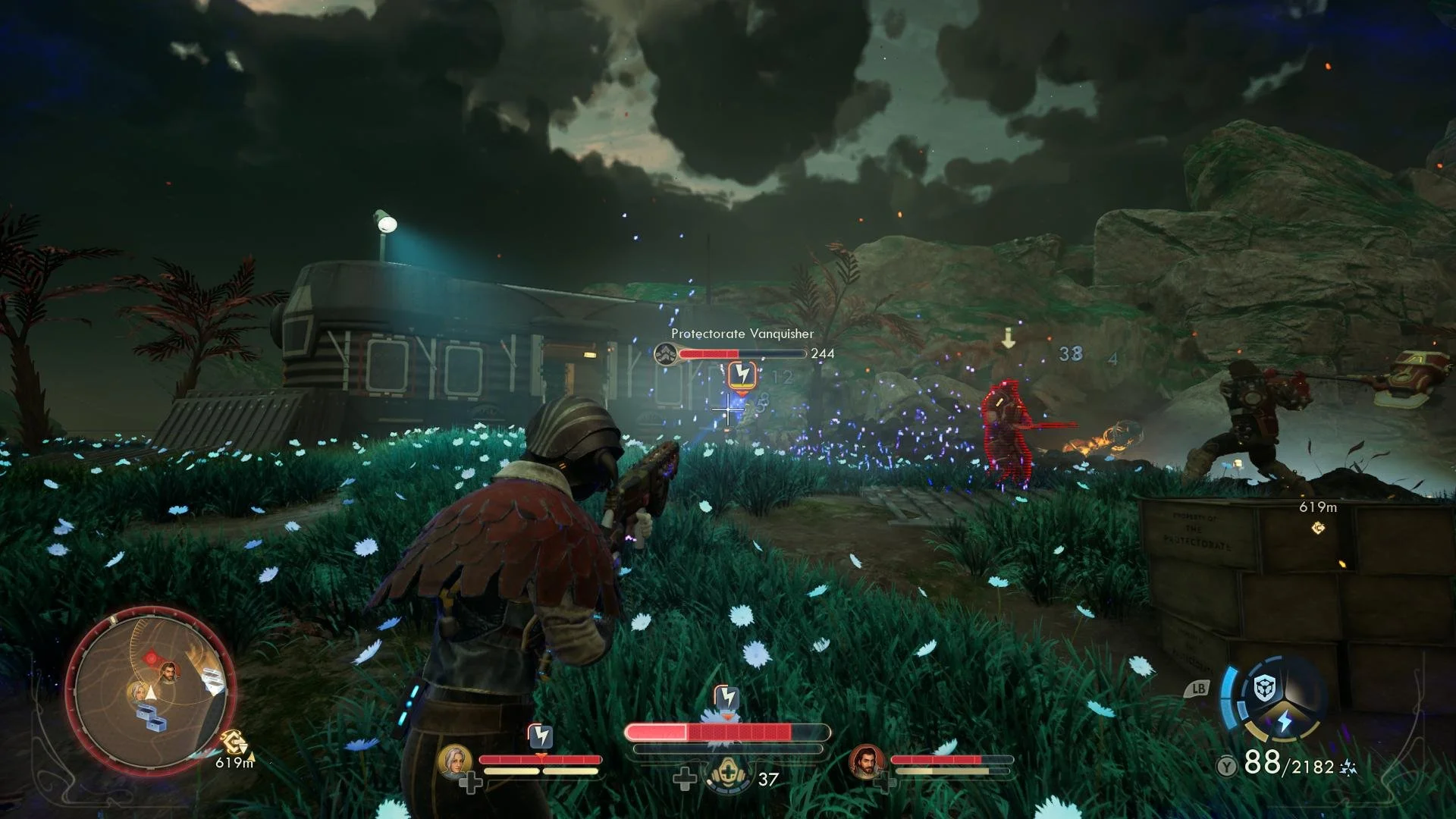
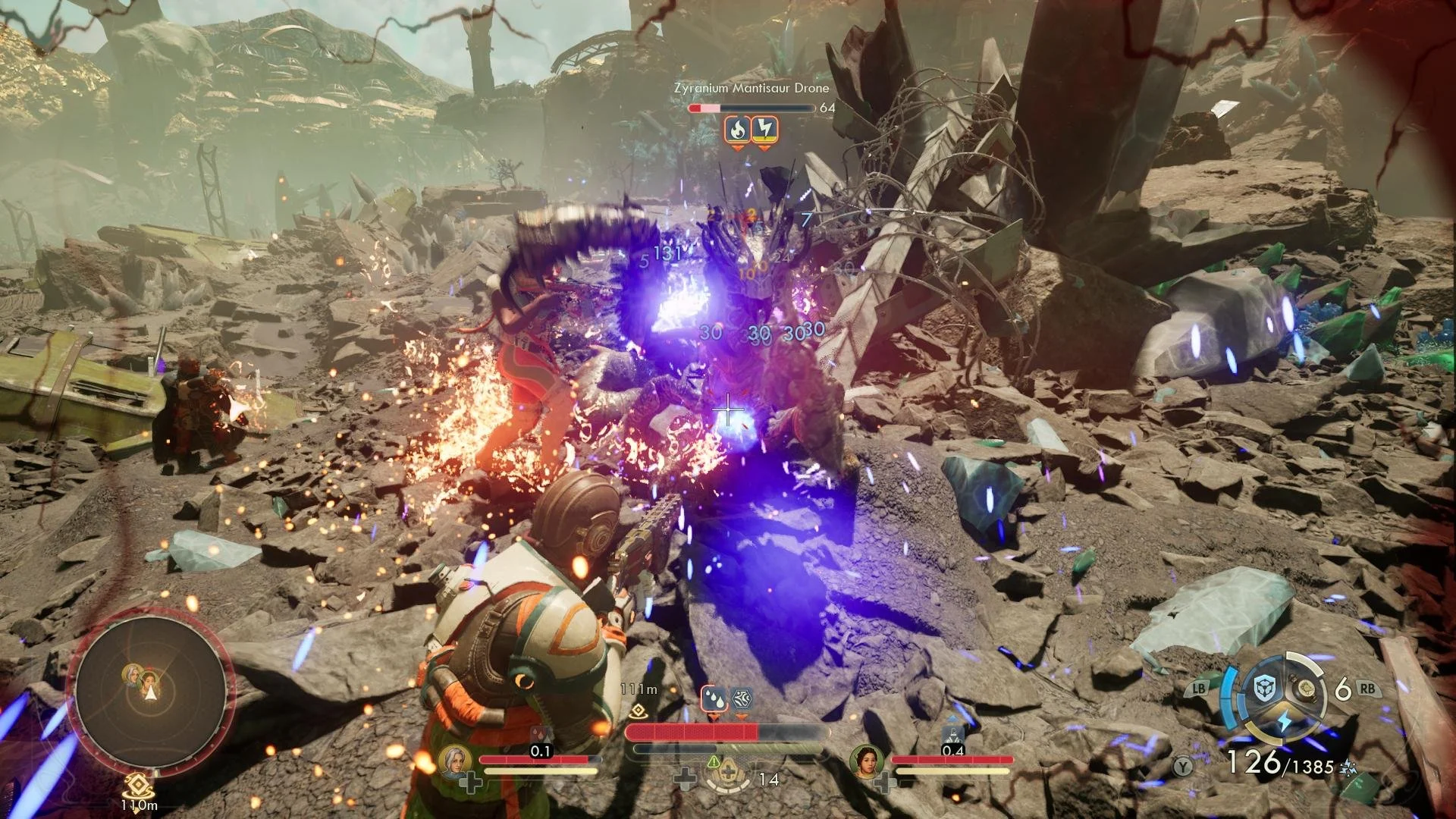
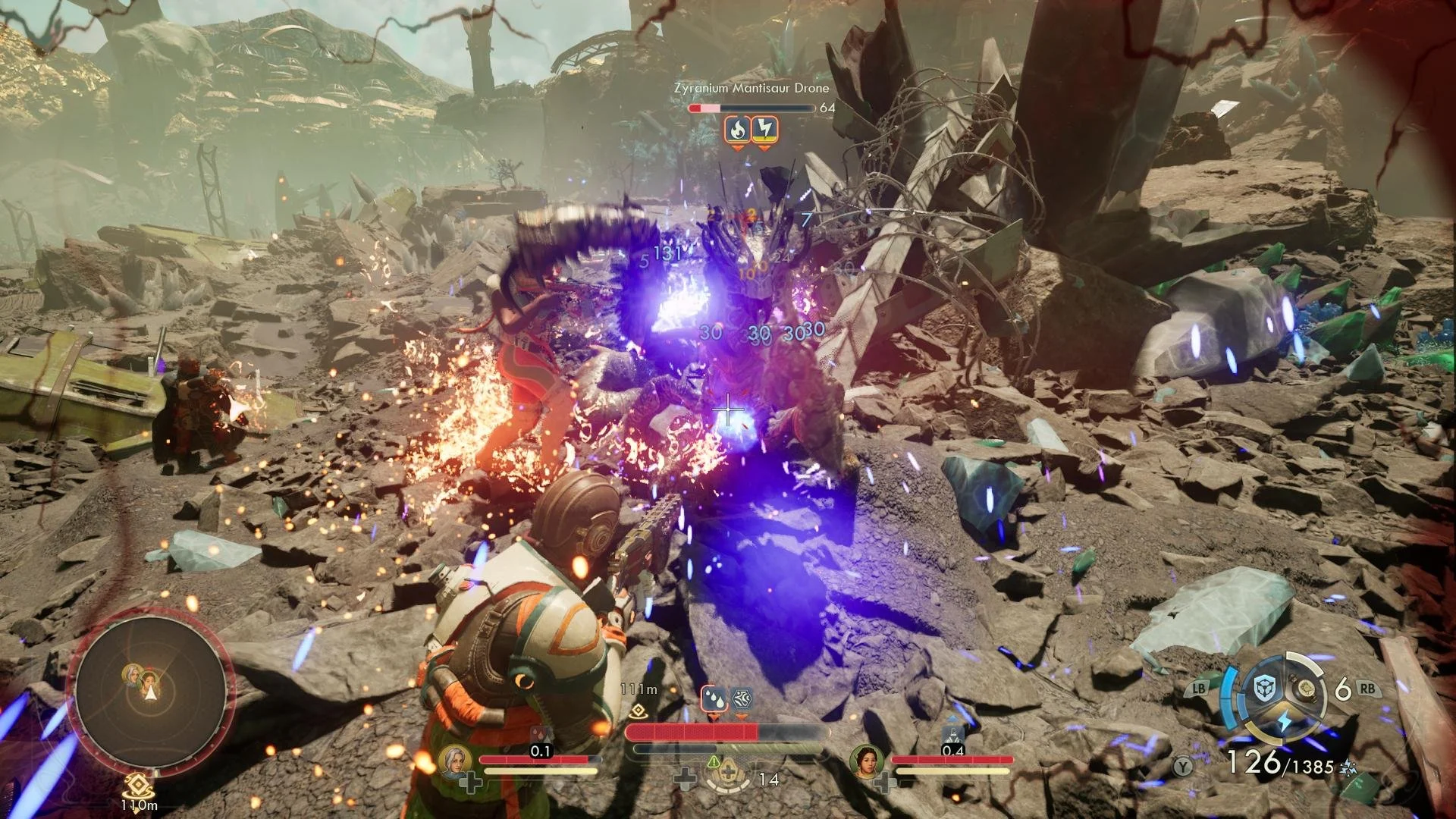
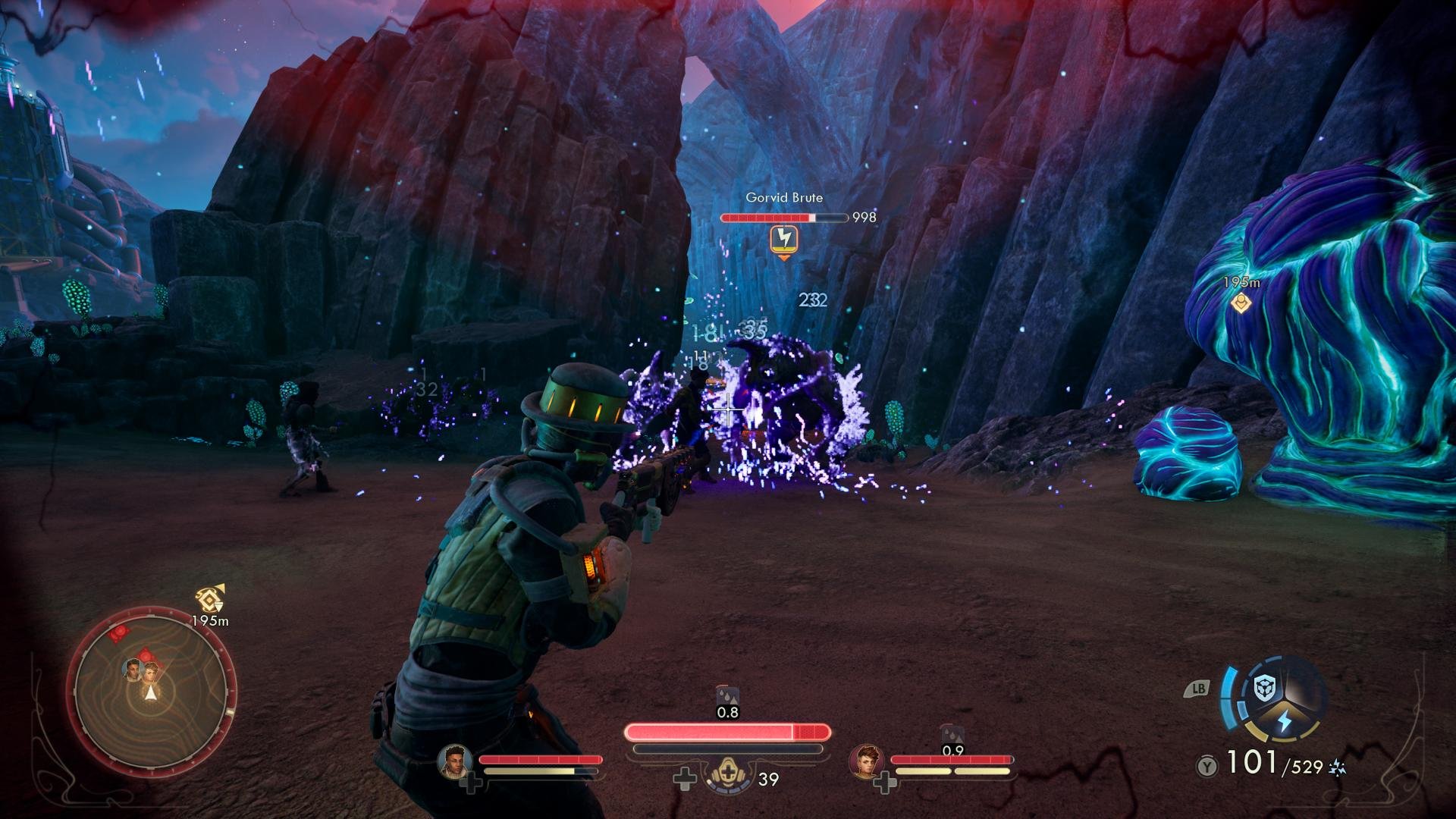
Gunplay feels considerably better with what feels like a deeper range of weapons with a good handle on its near dozen elemental effects. In fact, a shock machine gun, with a generous clip, was my go-to rifle, especially with a weapon mod to increase its clip size to 190, allowing me to gun down dozens of soldiers before needing to reload. And, with no weapon degradation, it stuck with me for the entirety of the game, occasionally swapped to various pistols, rifles, hammers, swords, and more. And, with a vast array of unique weapons to track down, you're never left wanting for some extra firepower.
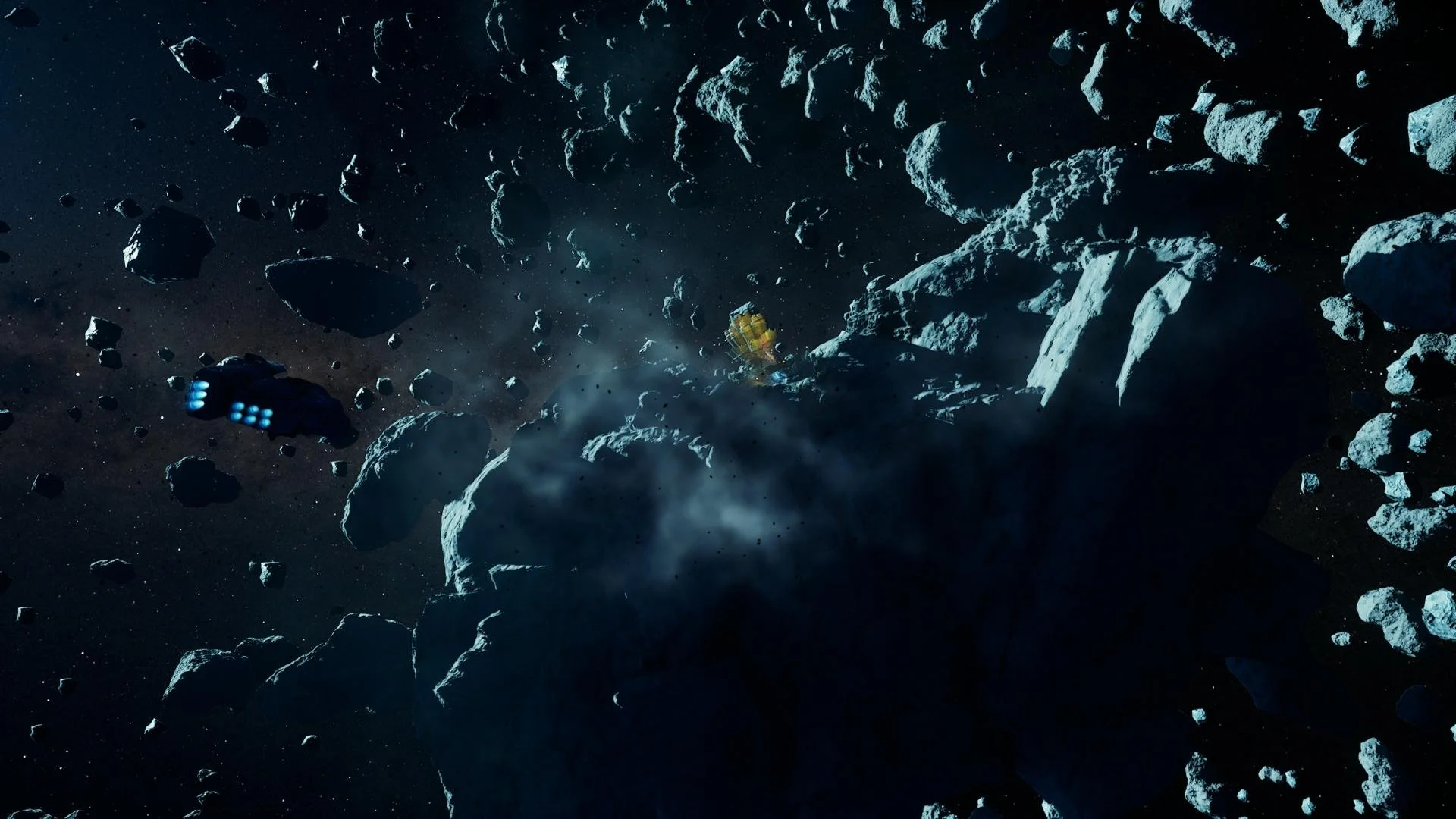
Adding to the combat are tactical gadgets, such as grenades of all sorts of flavors, shields to block radiation, or even an acidic gadget to make bodies disappear, should you not want to leave a body to be discovered. You can have one gadget at the ready, but an easily held button can bring up your gadget wheel to swap when needed. These are primarily found as you progress through the story, and I didn't miss the majority of these essential gadgets.
Character progression is far more focused on being a specialist in certain stats than that of a jack of all trades. You'll have a dozen skills to sink points into, such as science, medical, gun, speech, and more, that are heavily used for skill checks across all aspects of conversation and exploration. For example, a strong focus on speech and leadership can really rein in your companions and often negate the need for some boss encounters entirely, whereas having a high intellect in science can aid in quickly solving a late-game equation that normally has you venturing all over the environment, scraping together notes and logs to find the same information.

Every other level also has you choosing from a total of 90 perks. These usually focus on increasing certain stats, armor rating, to allow you to shoot while sprinting or sliding. That said, some perks are rather odd, such as serial killer, which allows you to occasionally tear out their heart to earn more health, to secret recipe, which adds more explosive damage. There are countless perks that can help tailor a build to be nearly indestructible.
Unreal Engine 5 has been a decisive engine due to certain performance issues. However, I didn't have many issues based on what the engine is often known for. Most of my issues were characters getting stuck in the environment, pockets of geometry where I could jump down into but not out, or the odd moving to the side when attempting a straight jump.
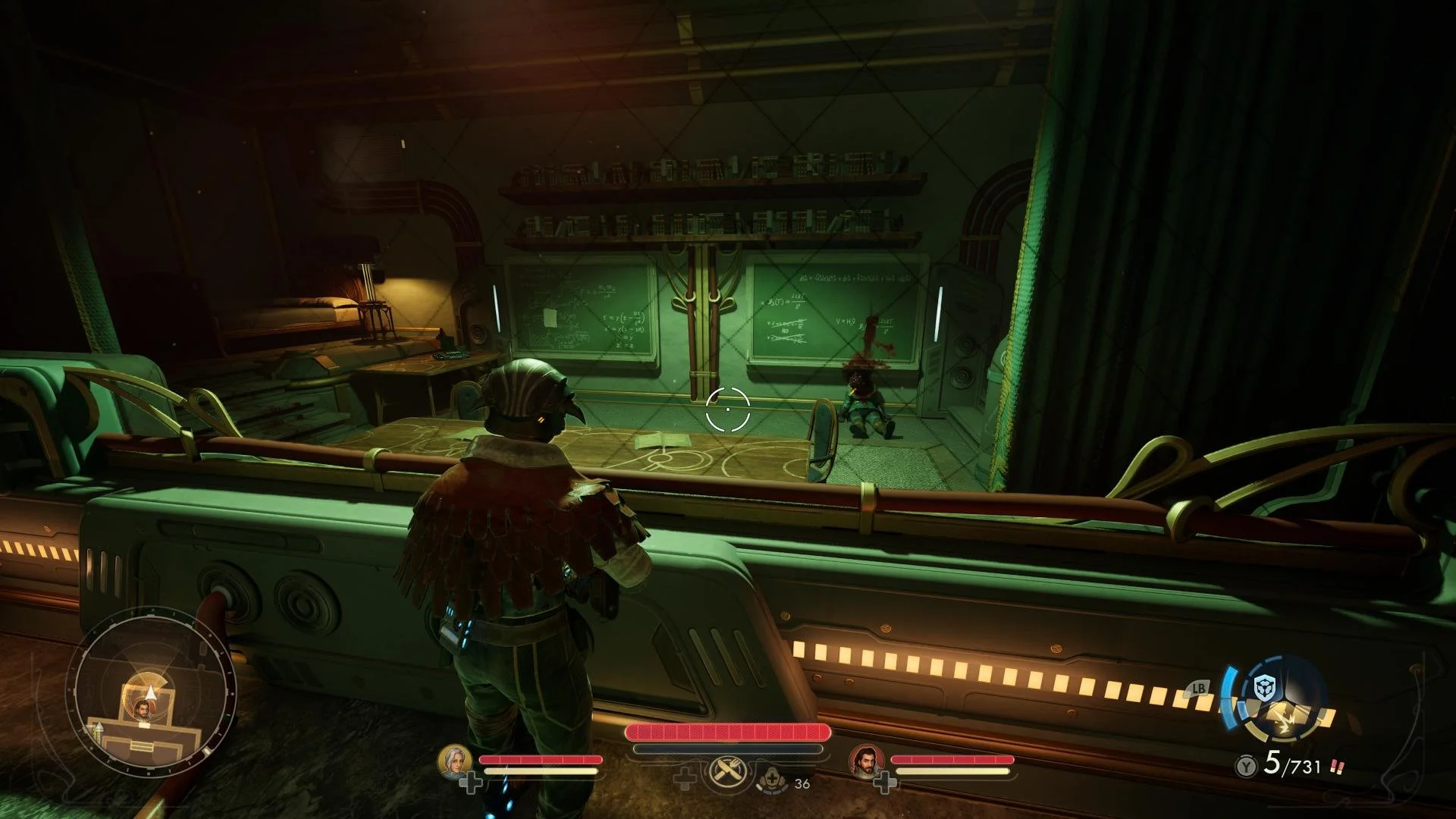
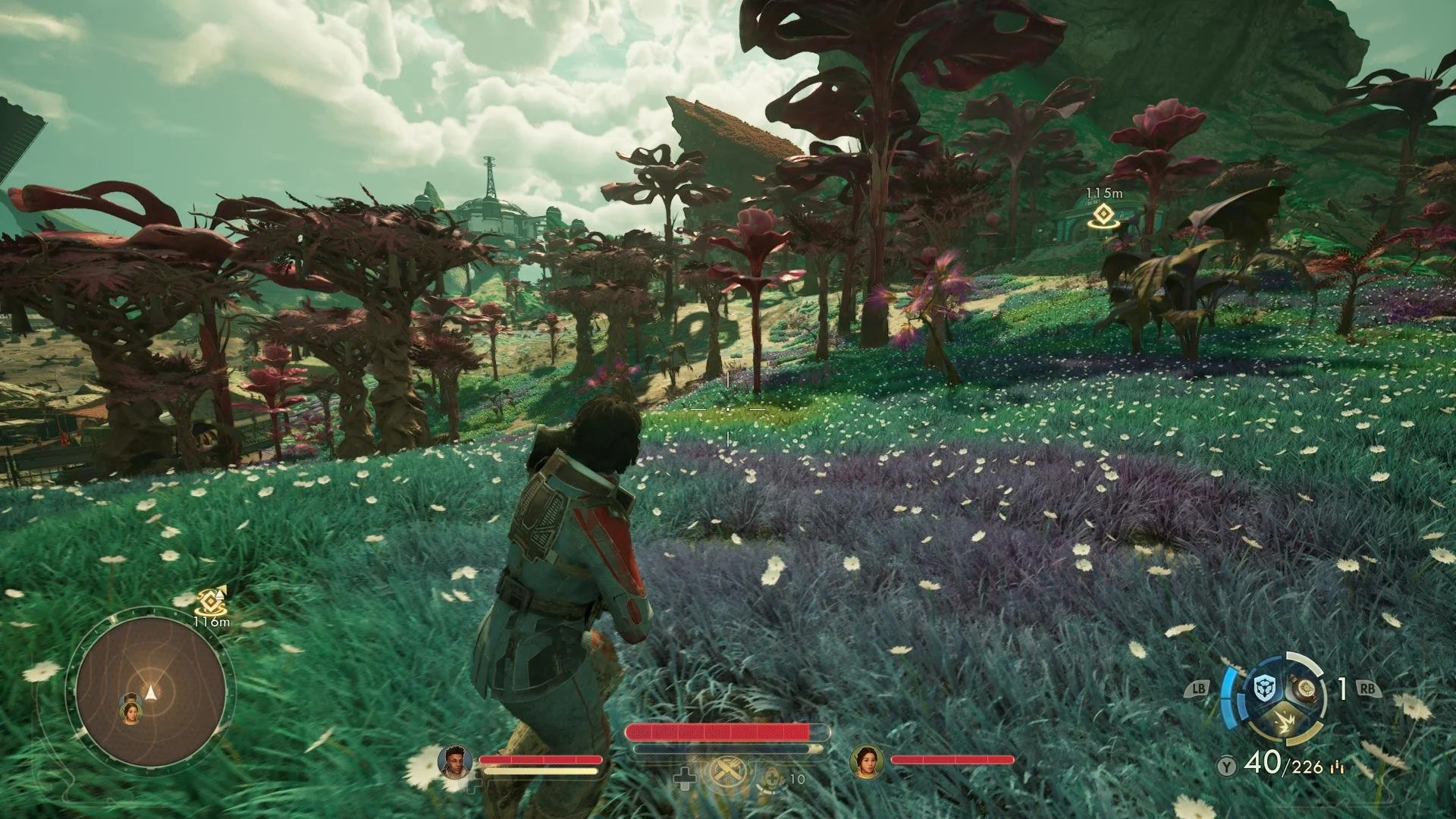
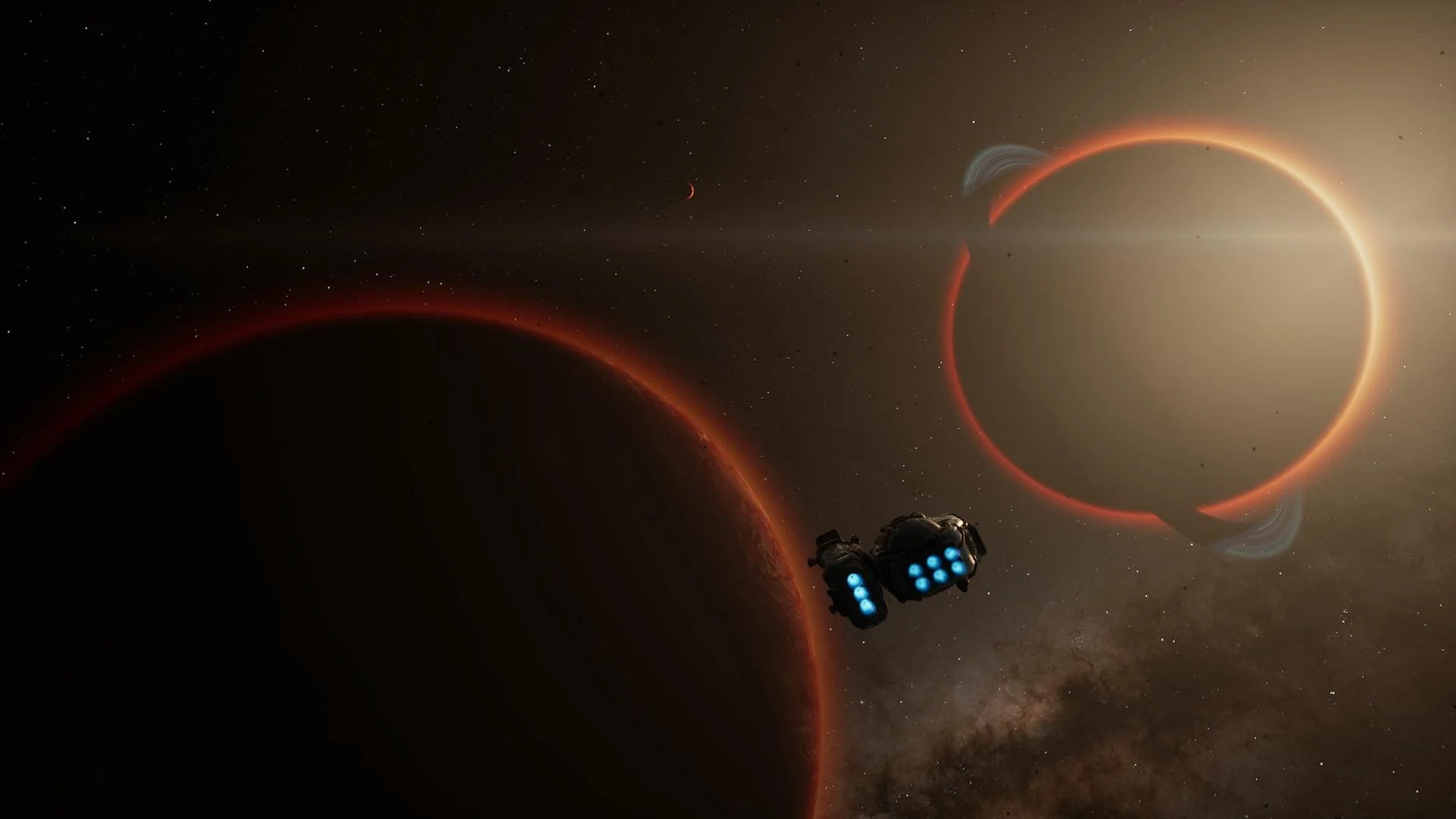
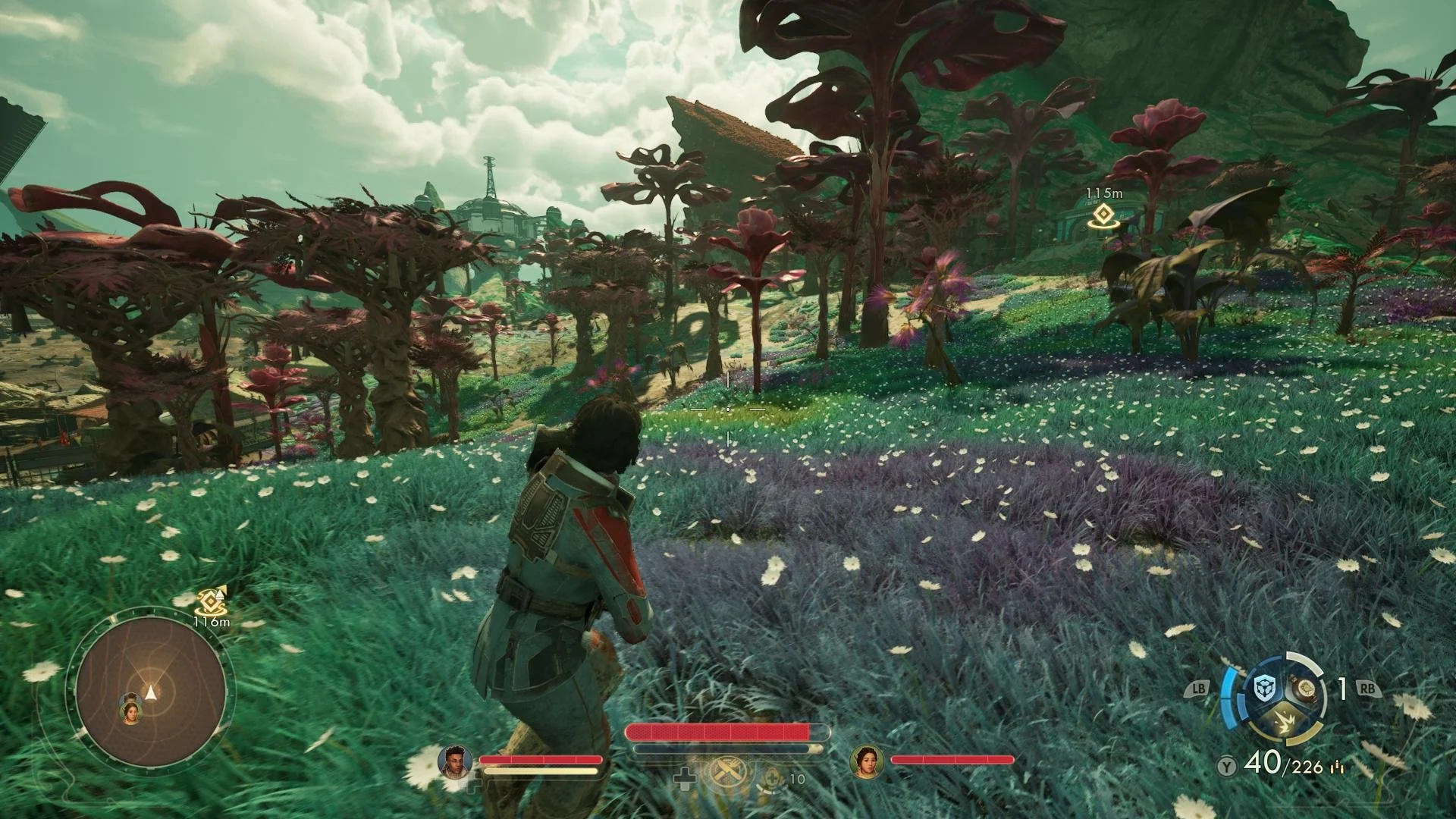
As you planet hop across Arcadia, from swamp fields to snow-capped mountains, each locale is remarkably stunning. I do wish the people looked as good as the opening cutscene, as some facial animations can look downright bad, especially a junior protectorate officer in the late game that tracks down Tristan, as you could count the frames on her facial animations with one hand. Other than some disappointing character models for non-essential NPCs, The Outer Worlds 2 is visually superior to its predecessor.
The Outer Worlds 2, despite any criticism I can give it, is a more improved sequel that excels in every area except for its bland group of companions, who rarely bring anything exciting to the experience, save Aza, who is a treasure and I would die for her. The Bethesda-era formula is starting to show its age and needs some freshening up, should a third entry be in the works. Still, I rather enjoyed the main story and the vast array of choices, paths, and builds you can muster, making this a game that few will follow in the same footsteps, allowing for one truly personalized tale of space-faring hijinks.
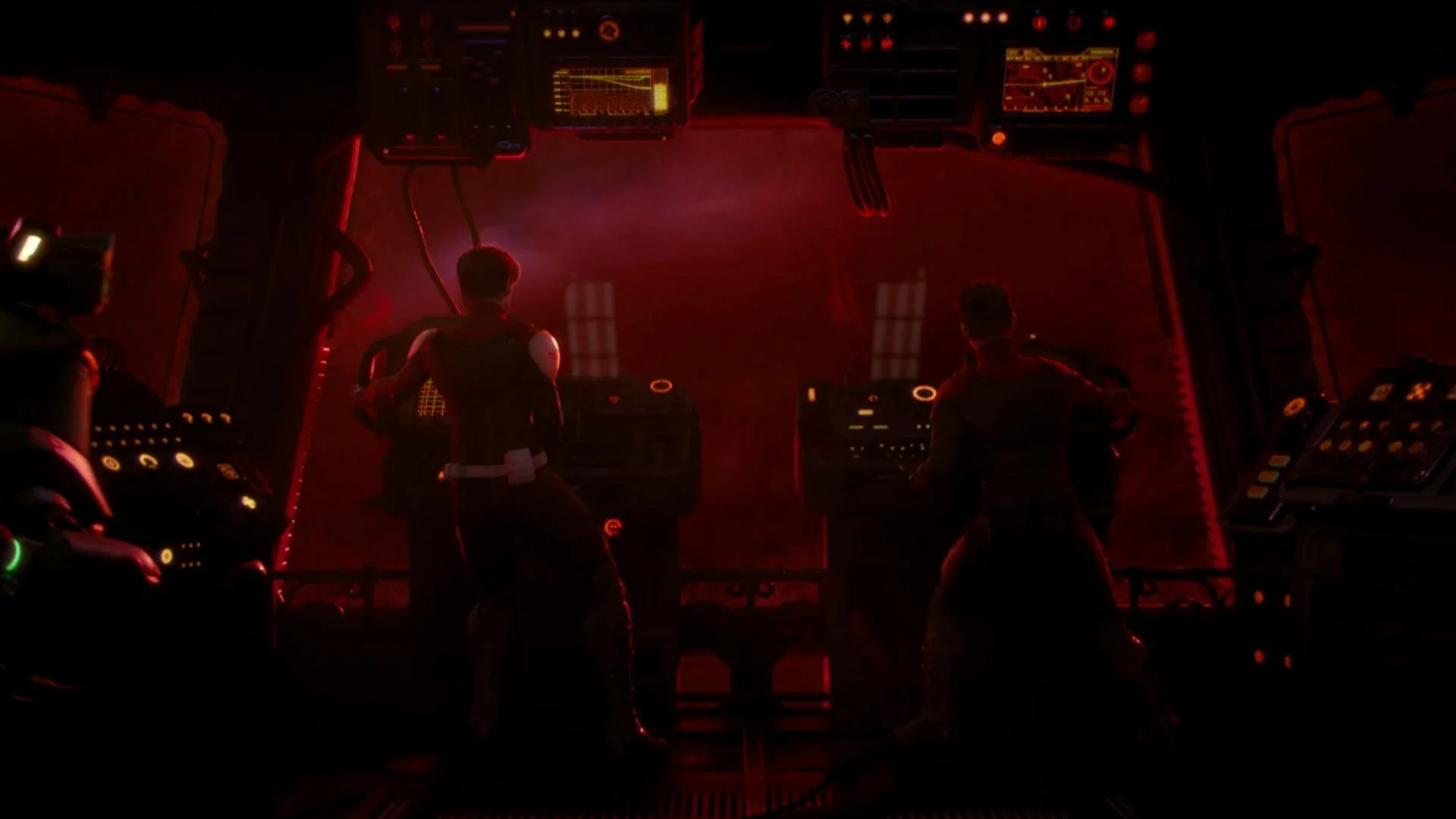

Developer - Obsidian Entertainment.
Publisher - Xbox Games Studios. Released - October 29th, 2025. Available On - Xbox Series X/S, PS5, PC. Rated - (M) - Blood and Gore, Intense Violence, Strong Language. Platform Reviewed - Xbox Series X.
Review Access - Review code was provided by the publisher for the purpose of this review.
Jeff is the original founder of Analog Stick Gaming. His favorite games include The Witcher III, the Mass Effect Trilogy, Hi-Fi Rush, Stellar Blade, Hellbade: Senua’s Sacrifice, and the Legend of Heroes series, especially Trails of Cold Steel III & IV.